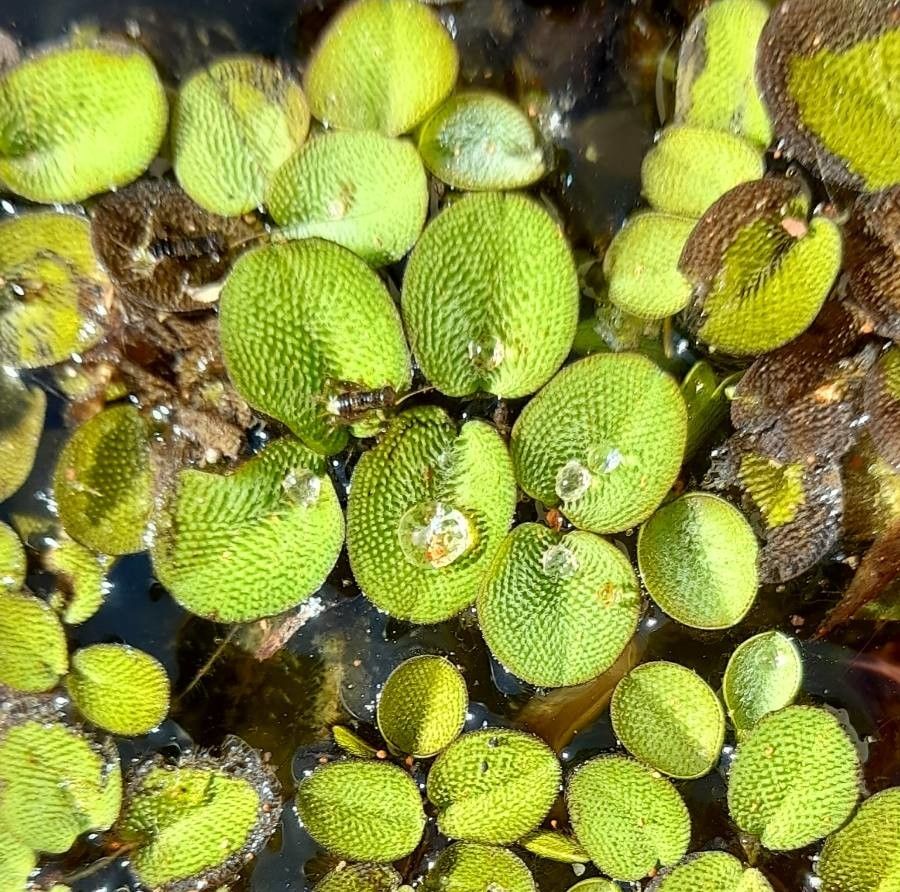
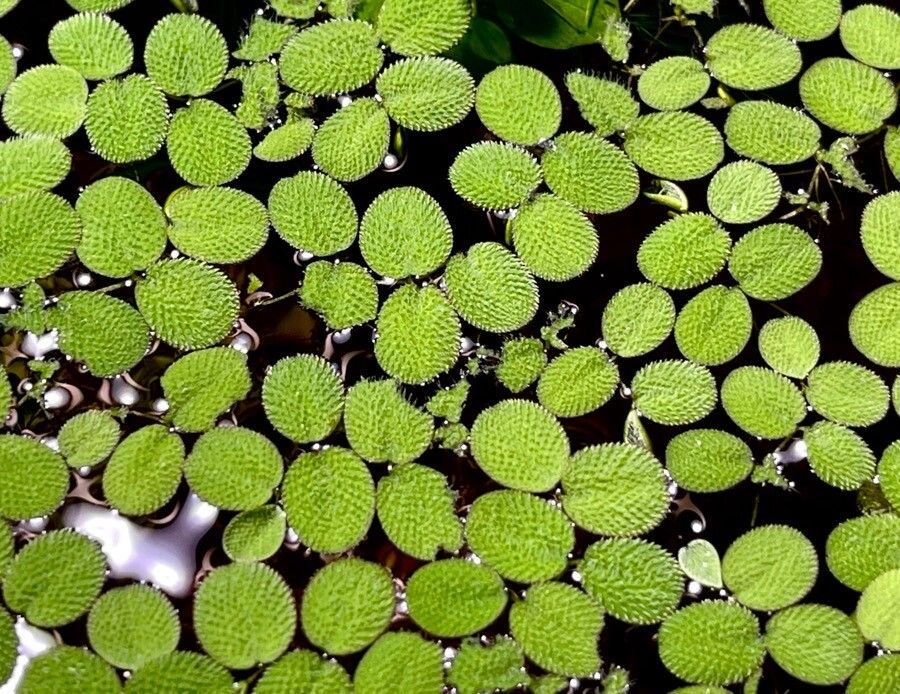
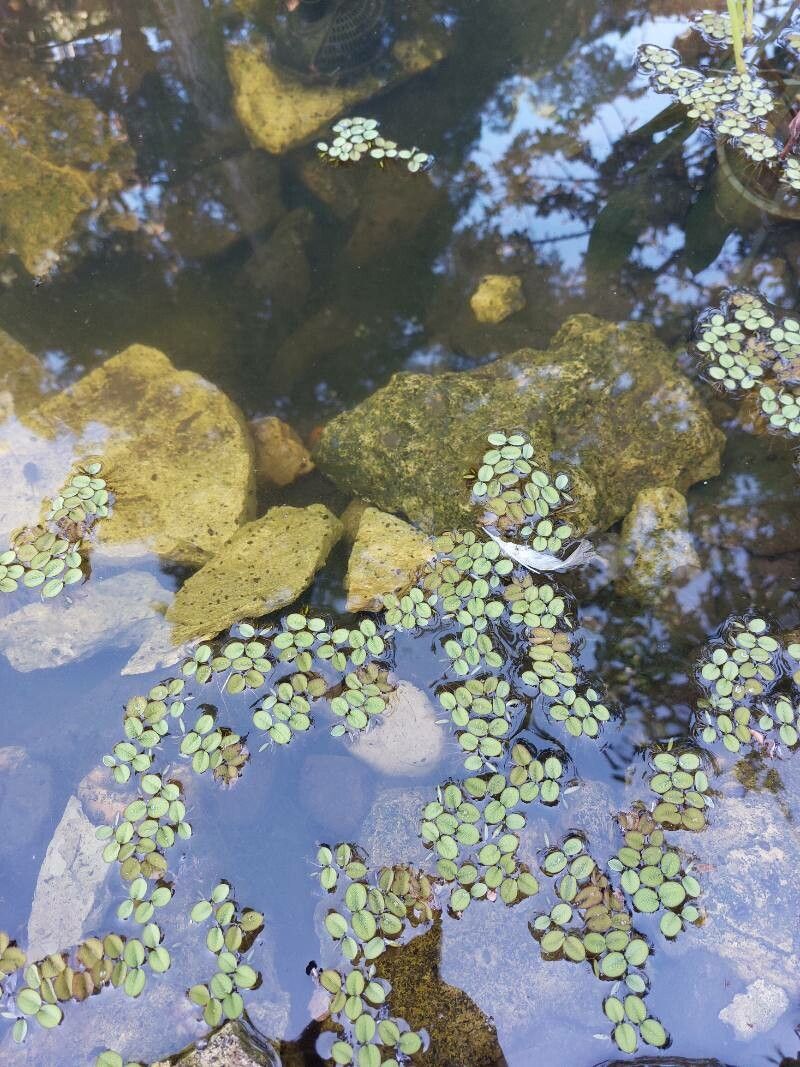
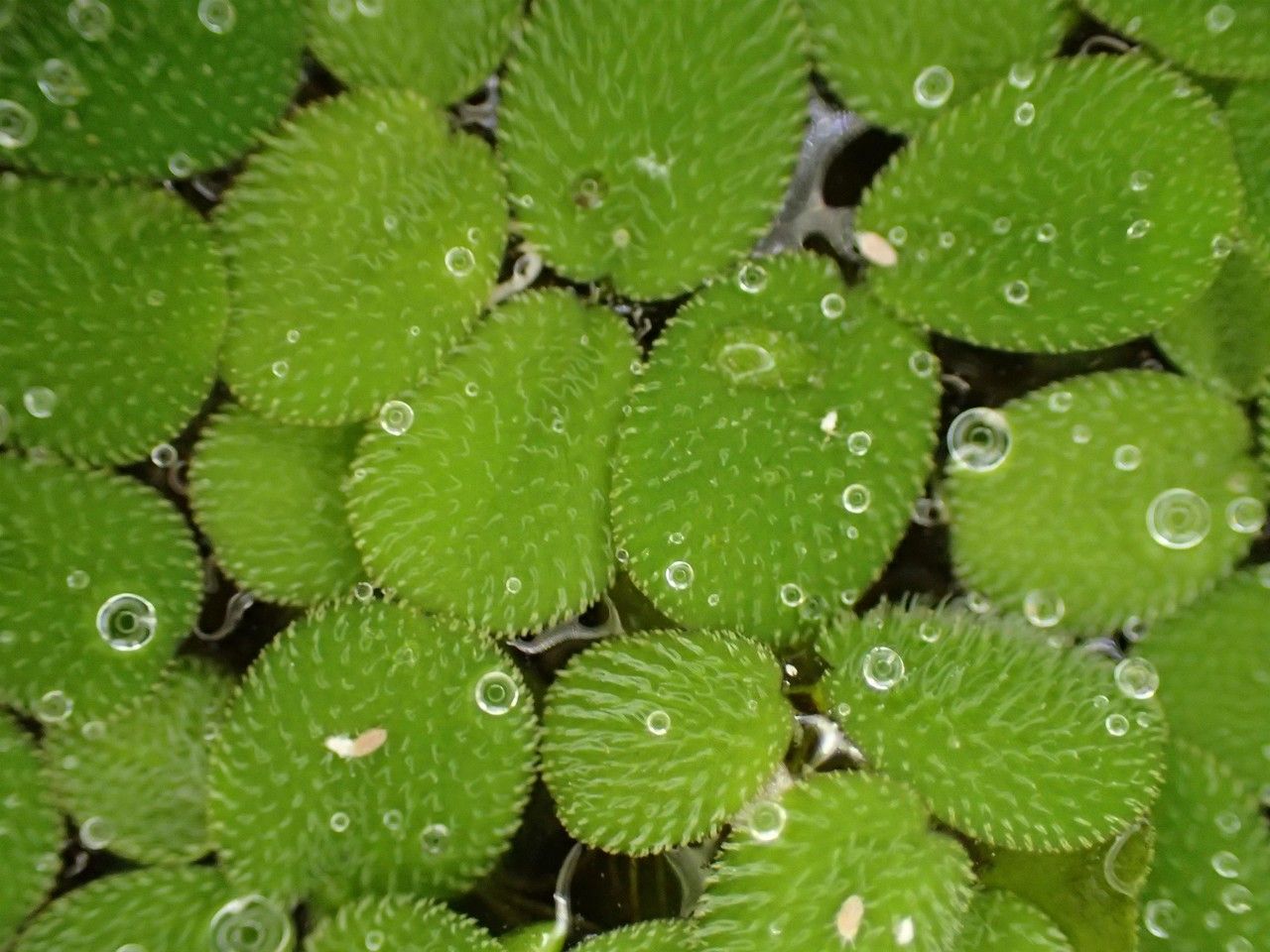
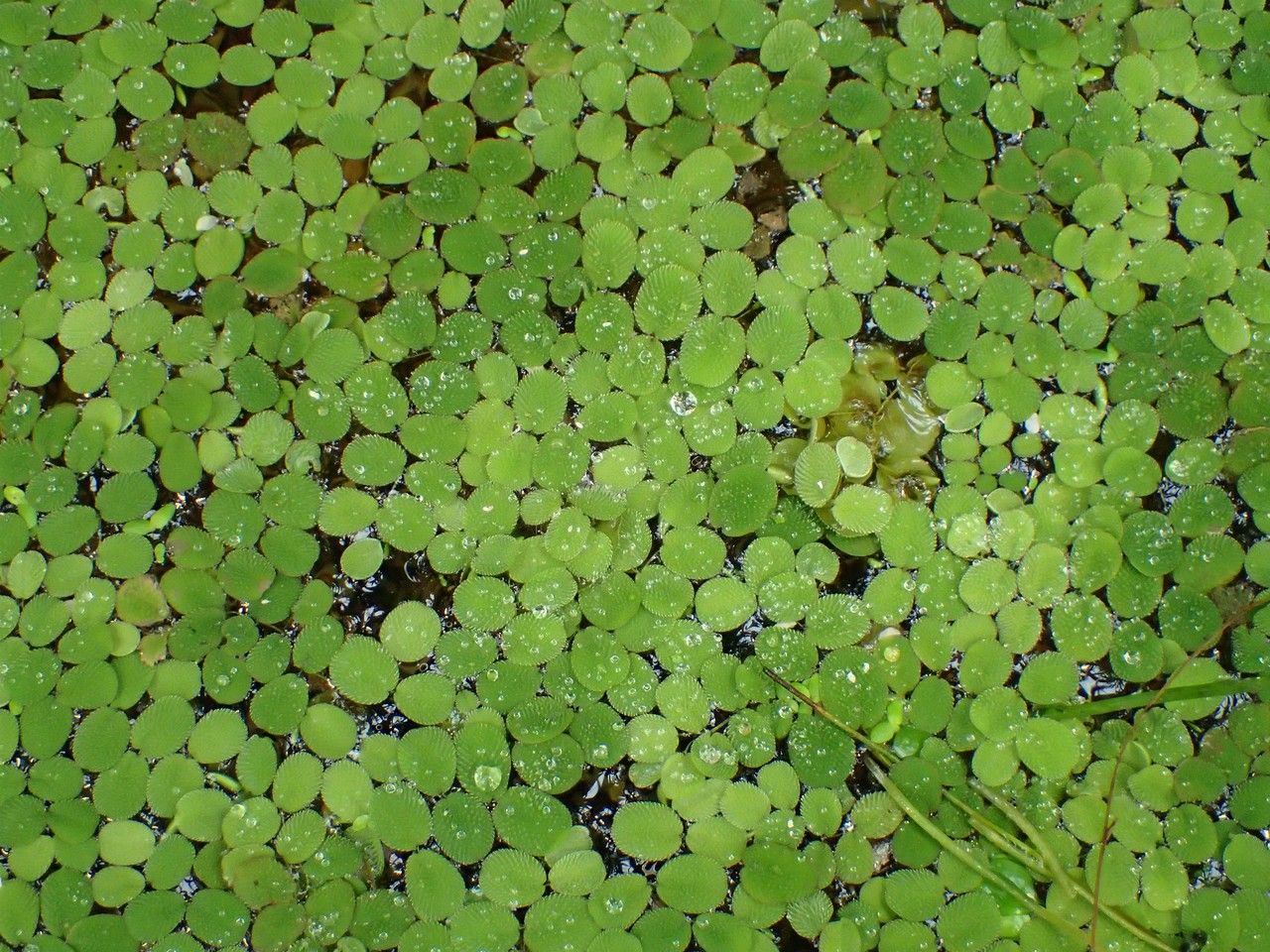
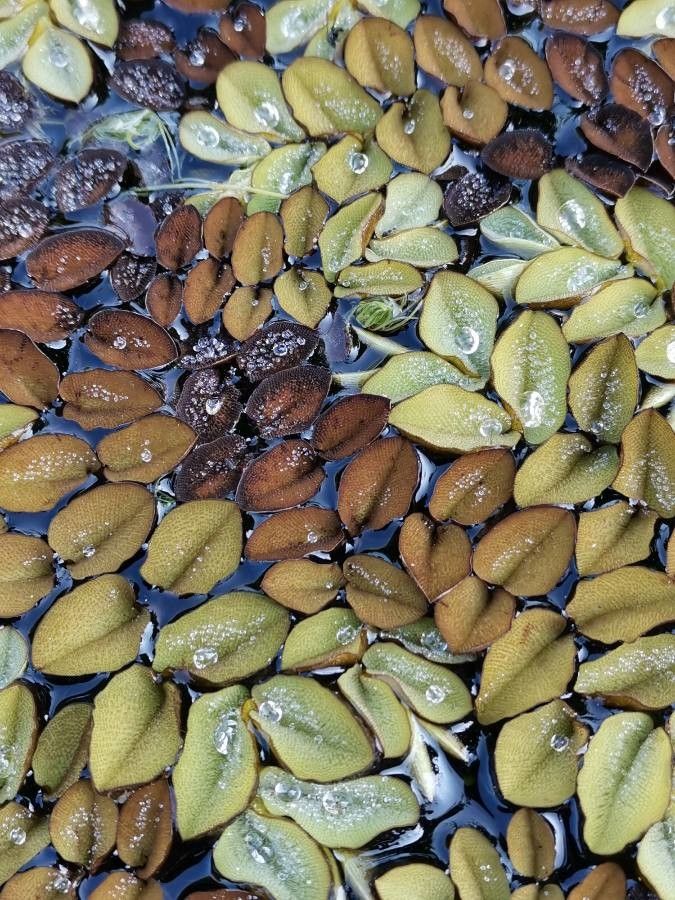
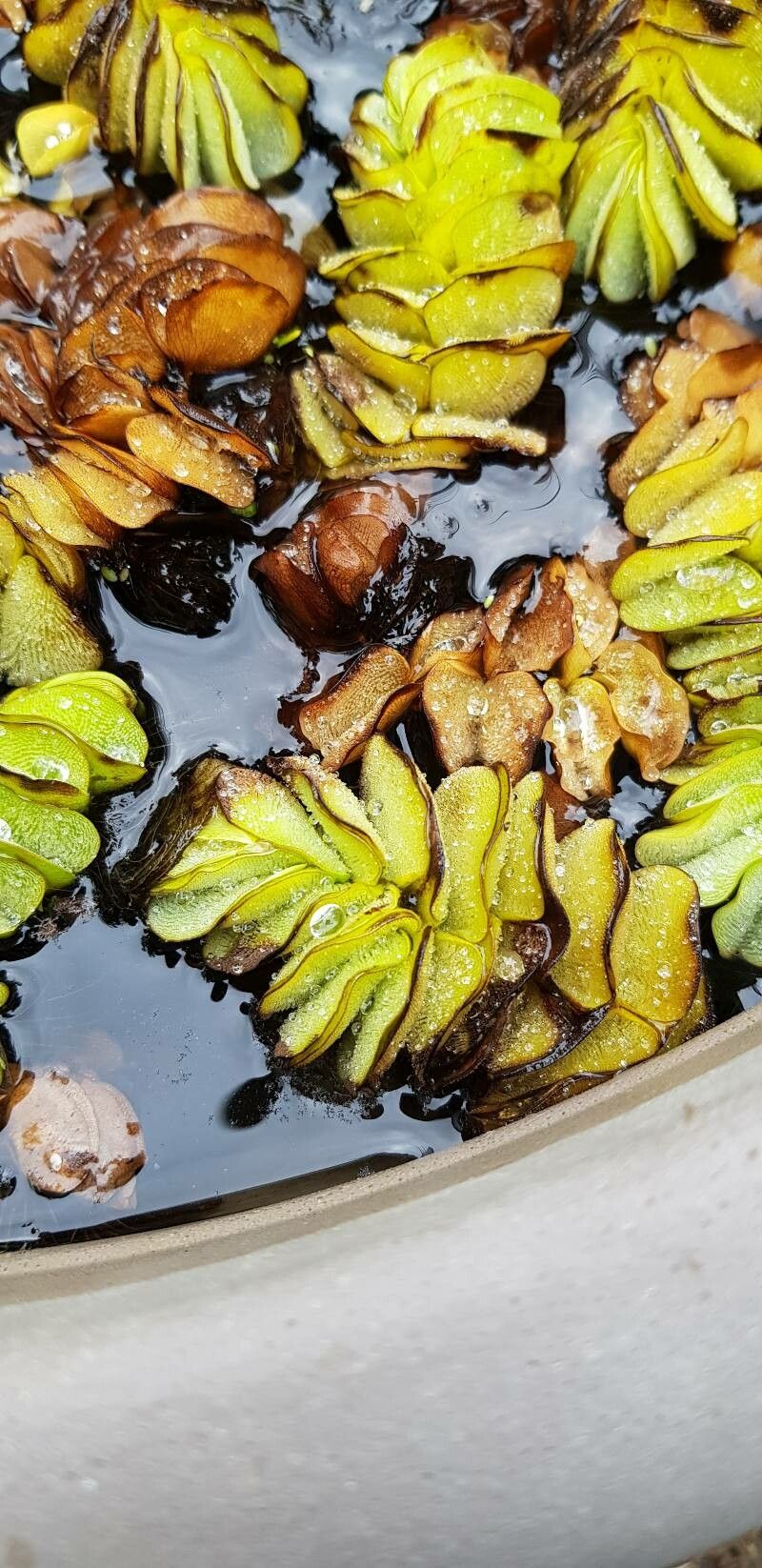
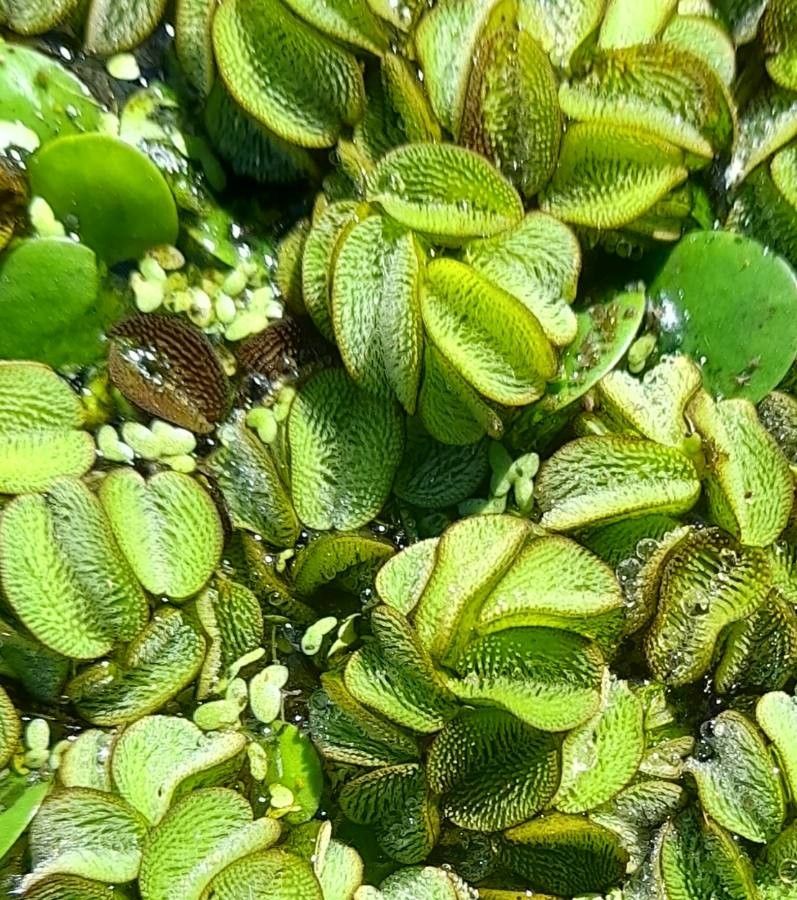
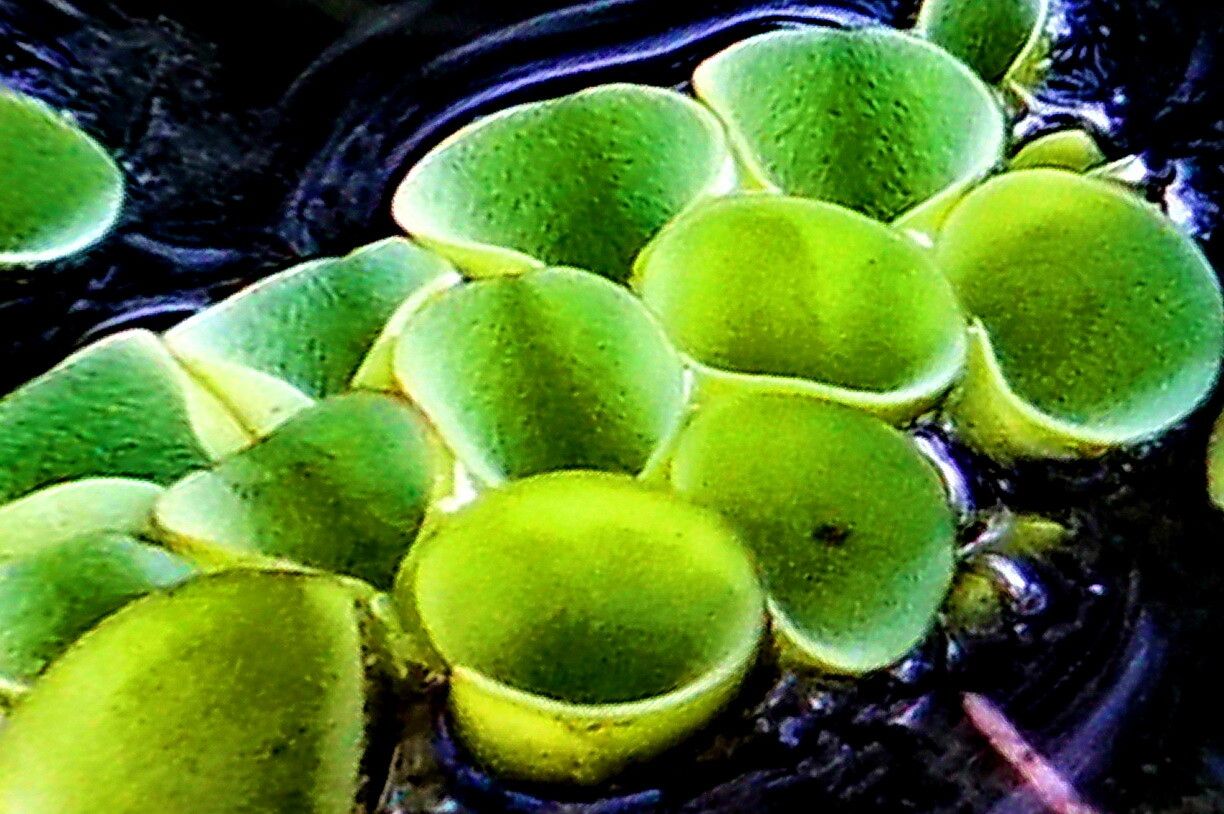
Salvinia minima is a species of aquatic, floating fern that grows on the surface of still waterways. It is usually referred to as common salvinia or water spangles. Salvinia minima is native to South America, Mesoamerica, and the West Indies and was introduced to the United States in the 1920s-1930s. It is classified as an invasive species internationally and can be detrimental to native ecosystems. This species is similar to but should not be confused with giant salvinia, Salvinia molesta.
Water spangles has good resistance to disease and is generally not prone to illnesses. However, it can be vulnerable to pests and diseases present in its surroundings. Such infections are usually mild. Care-wise, this plant requires moderate maintenance. It should be pruned regularly to maintain an attractive appearance and healthy growth. Applying fertilizer can also encourage flowering. Water spangles is suitable for anyone with an outdoor space, such as a garden or patio, and does not demand much experience in plant care. It may need more attention when grown indoors.
How to keep Salvinia Minima.
Light
Water spangles grows most vigorously in partial sun, although it can tolerate periods of full sun or complete shade. Coming from a variety of light environments, it adapts well to different light conditions. Too much sun can wither the plant, while too little light may impede its growth.
Water
Water spangles originally come from freshwater habitats and prefer environments that mimic their tropical origins. They require moderate watering every week to maintain the right moisture and humidity levels. When grown outdoors, water spangles thrive in nutrient-rich waters that are free from pollutants, which promotes healthy growth.
Temperature
Water spangles is adapted to native climates with temperatures between 68 and 100 °F (20 and 38 ℃). It favors warm conditions and grows best within this range. During cooler seasons, consider moving the plant to a warmer location to maintain its growth.
Pruning
Water spangles are characterized by their small, floating leaves and thrive in aquatic environments. To prevent overcrowding and decay while maintaining water quality, it's best to prune them from early to late spring. Regular trimming every few weeks encourages balanced growth and helps sustain a healthy aquatic ecosystem.
Botanical profile.
- Plant Type
- Herb
- Life Cycle
- Annual, Perennial
- Genus
- Salvinia
- Family
- Salviniaceae
- Hardiness Zone
- 7-11
- Mature Height
- 6 cm
- Mature Spread
- 5 cm to 10 cm
- Leaf Color
- Light Green, Pale Green
- Leaf Type
- Evergreen
- Planting Time
- Autumn
- Native Area
- Uruguay, Colombia, Belize, Cuba, Paraguay, Argentina, Honduras, Mexico, Guatemala, Bolivia, Venezuela, Peru, Brazil, El Salvador, Nicaragua, Ecuador, Costa Rica, Panama
Other names.
Reader questions.
How should I water my Water spangles in the best way?
There are several ways to water Water spangles, such as using a garden hose, watering can, or any other common watering tool. This plant is not too particular about the type of water it receives, as it can thrive with rainwater, tap water, or filtered water. However, it's best to avoid watering from overhead, as this can harm the leaves and flowers and potentially cause disease. A drip irrigation system is often the most effective method for watering Water spangles. These systems evenly and directly apply water to the soil. For container-grown Water spangles, you can use a cup, watering can, or tap water to water the soil directly.
Why should I put fertilizer on my Water spangles?
Not all plants require additional fertilizers because they can naturally obtain the necessary nutrients for growth. Water spangles, like other plants, rely on nutrients to facilitate growth and perform internal functions. Nitrogen, phosphorus, and potassium are essential nutrients for plants and contribute to various functions. In particular, nitrogen plays a crucial role in fostering foliage growth. Water spangles may struggle to acquire sufficient nitrogen from the soil, which is why some gardeners opt to supplement this nutrient by providing nitrogen-rich sources to feed Water spangles.
What are the sunlight requirements for Water Spangles?
Water Spangles thrive when exposed to partial sun, approximately 3-6 hours of sunlight daily, but they can also grow in full sun or full shade conditions, which means more than 6 hours of sunlight. It's essential to observe the movement of sunlight in your garden to find the optimal balance of light and shade that ensures the well-being of your plants.
What temperatures are ideal for Water Spangles?
Water Spangles, or Salvinia minima, is best suited to environments with temperatures ranging from 68 to 100 °F (20 to 38 °C). It thrives in warm environments and shows strong cold resistance. While it typically does not require special frost protection, if temperatures are expected to drop below -15°C, it is important to provide the plant with cold protection by covering it with materials such as soil or straw. Additionally, watering the plant abundantly before the first freeze in autumn helps keep the soil moist and supports the plant during winter and early spring.
What should I do if I give my Water spangles too much or too little water?
To remedy underwatering Water spangles, simply water the plant more regularly when you notice it lacks moisture. Overwatering can be a more serious issue, potentially leading to diseases and plant decline or death. To prevent this, choose a suitable location with ample sunlight for soil drying and good drainage to avoid waterlogged soils. If you have overwatered Water spangles in a pot, consider transferring it to a new pot with better drainage and loose soils.
When should I fertilize my Water spangles for the best results?
Water spangles generally grows well, but it benefits from monthly fertilization during its active growth period in spring and summer. However, during fall and winter when the plant is less active, fertilization is not necessary as it requires fewer nutrients. You'll know it's time to start fertilizing when you observe new growth. The fertilization schedule remains the same whether the plant is outdoors or indoors in a container. If your Water spangles is in a container, you can hold off on fertilization for the first one to two months. Container plants typically have nutrient-rich potting soil, so you should start fertilizing only after the plant has been in the same soil for a while.
How do Water Spangles adapt to different light conditions?
Water Spangles exhibit vigorous growth under partial sun exposure but can also tolerate periods of total sun or complete shade. Originating from varied light environments, they're adaptably resilient. Excessive sunlight may cause the plant to wither, while insufficient light can impede its growth. In inadequate natural light conditions, particularly during the winter or in less sunny spaces, artificial lighting can be a significant boon, facilitating faster, healthier growth. LED lights are a popular indoor plant lighting solution, catering to specific wavelength needs. Full sun plants typically require 30-50W/sq ft of light, partial sun plants 20-30W/sq ft, and full shade plants 10-20W/sq ft, with the light source placed 12-36 inches above the plant for 8-12 hours per day to mimic natural daylight conditions.
How should you care for Water Spangles during low temperatures?
Water Spangles is cold-tolerant, best thriving when the temperature remains above 20°C. During winter, it's crucial to ensure the temperature stays above 0°C. If temperatures fall below -15°C, the plant may not show noticeable changes immediately but could experience a decrease in sprouting or fail to sprout in the spring. If this happens, it's recommended to remove any parts of the plant that have failed to sprout in spring.
How often do I need to water my Water spangles?
Water spangles requires regular watering throughout the growing season. In the spring, water the plant once a week. As the season progresses and it gets warmer, you may need to water it two to three times a week. However, be careful not to exceed this rate as it can harm the plant. It's important to keep the soil relatively moist, but not wet, regardless of how often you water. When watering Water spangles in a pot, you'll need to increase the frequency. Soil in pots can heat up and dry out faster than ground soil. In most cases, water container-grown Water spangles a few times per week, compared to just once a week for plants in the ground.
When is it not a good time to fertilize my Water spangles?
To ensure the health of your Water spangles, avoid fertilizing it if it is not in good condition, such as if it has a disease or insect pests. Additionally, do not fertilize a dehydrated plant as it can worsen the problem. It is important to only fertilize plants that are already healthy. When watering, be cautious not to splash fertilizer onto the leaves or stem, as it can result in burned spots. Unless you are using a specific fertilizer designed for foliage application, ensure that the fertilizer does not directly contact the plant.
What symptoms indicate inadequate light for Water Spangles?
When Water Spangles are grown indoors with insufficient light, several symptoms may surface, including smaller new leaves compared to older ones, leggy or sparse growth due to increased spacing between leaves or stems, and faster leaf drop as the plant conserves resources. These conditions also lead to slower or no new growth, with the plant entering survival mode. Insufficient sunlight can result in pale or irregularly colored new leaves, indicating a lack of chlorophyll and essential nutrients. Excessive sunlight exposure can cause chlorosis (yellowing leaves), sunscald (pale, bleached areas on leaves or stems), leaf curling as a defense against water loss, wilting from increased transpiration, and leaf scorching characterized by brown, dry edges on the leaves.
What steps should be taken if Water Spangles are exposed to high temperatures?
In conditions where the temperature rises above the optimal range for Water Spangles, specifically if it exceeds 38°C, the plant's leaves may become lighter, curl, become susceptible to sunburn, and in severe cases, the entire plant might wilt and dry. To mitigate this, trim away the sunburned and dried parts of the plant. Relocating the plant to a shaded area during the intense midday and afternoon sun, or using a shade cloth for protection, can be beneficial. Additionally, watering the plant in the morning and evening will help keep the soil moist and support the plant's health during high temperatures.