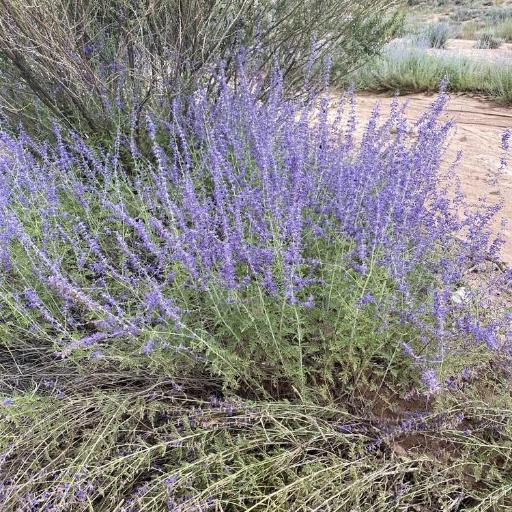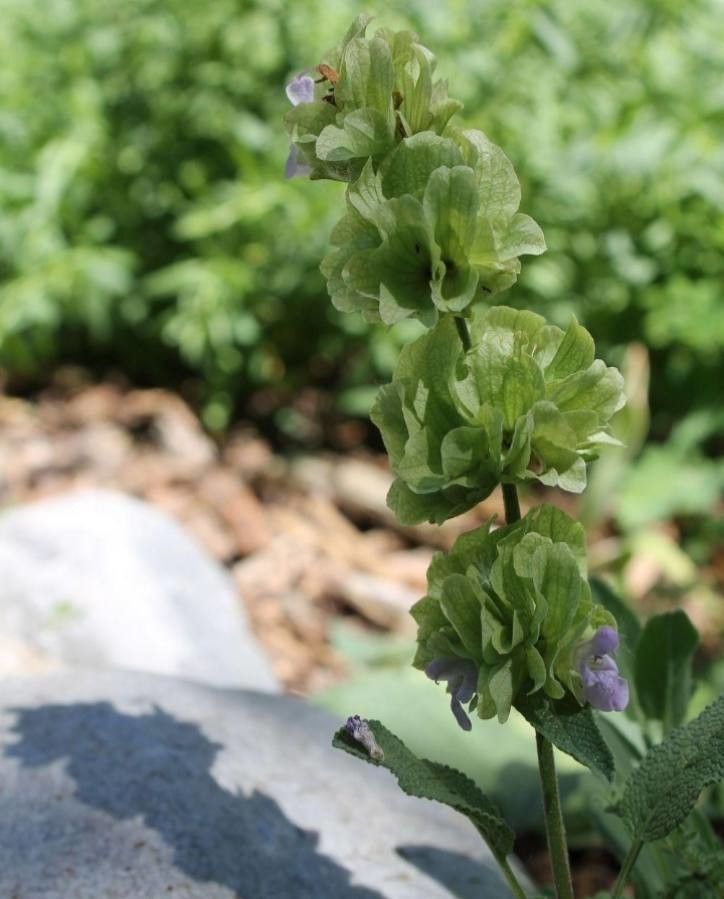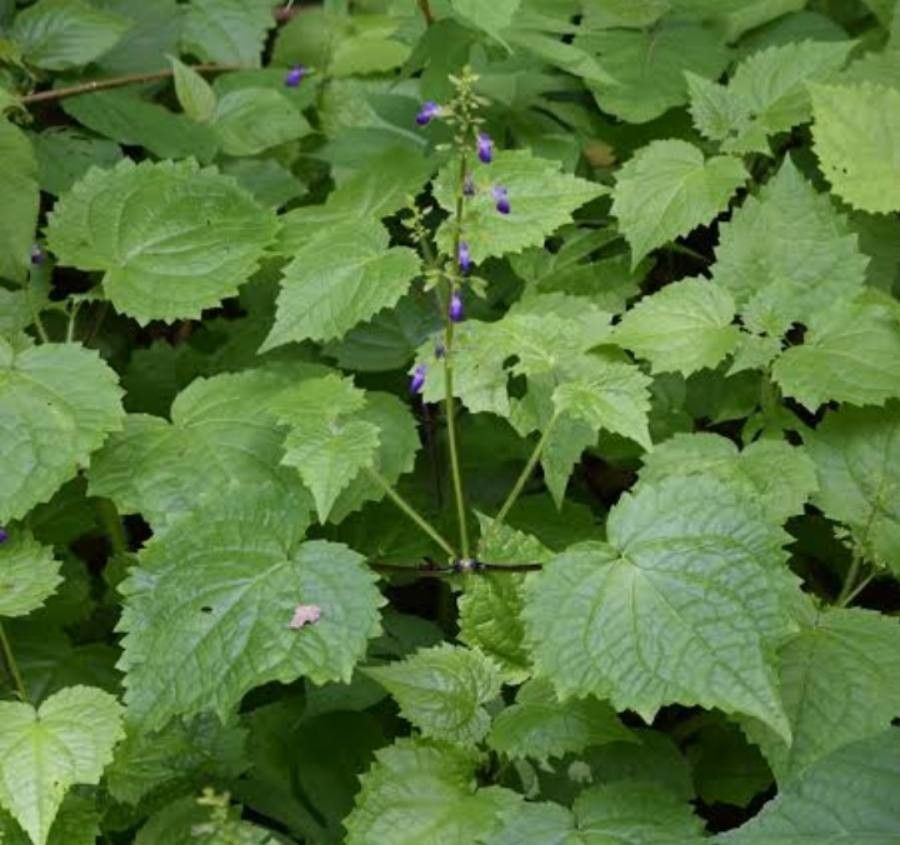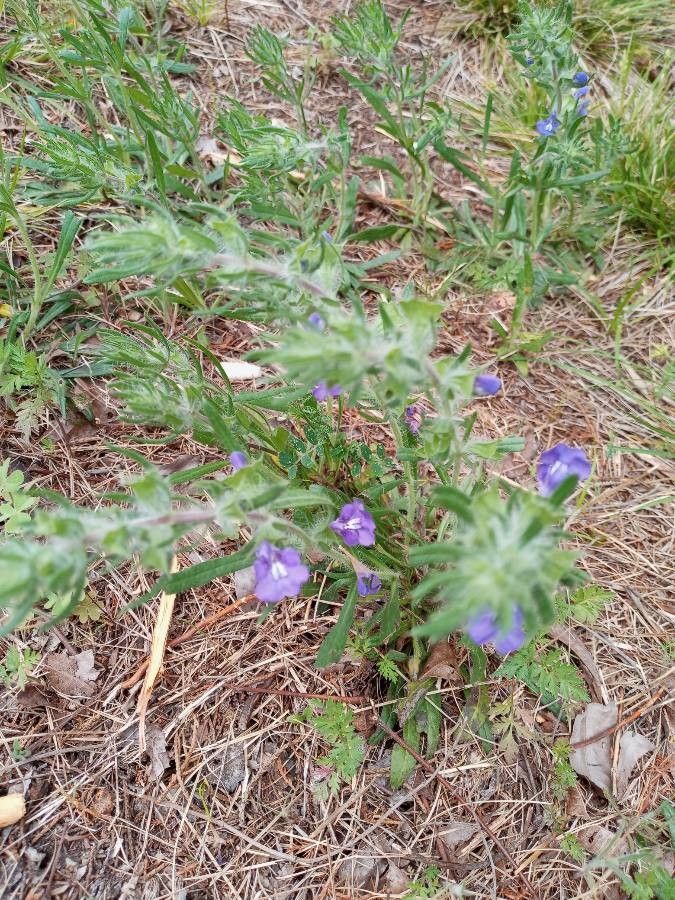
Salvia texana, commonly called Texas sage, is a species of flowering plant in the mint family (Lamiaceae). It is native to North America, where it is found in northern Mexico, and in the U.S. states of Texas and New Mexico. Its natural habitat is dry areas on limestone soils, in prairies or over rock outcrops.It is an herbaceous perennial that grows 1 to 1.5 ft (0.30 to 0.46 m) tall. It has with hairy lanceolate-oblanceolate leaves. The flowers are purple-blue. It resembles Salvia engelmannii in appearance, but has a longer bloom period, smaller and darker flowers, and unopened green buds at the top of the plant.
Texas sage is fairly resistant to disease and generally not prone to illness. Still, it can be vulnerable to pests and diseases present in its environment, although these problems are typically minor. As for care, the plant needs moderate maintenance. It should be pruned regularly to keep a tidy appearance and support healthy growth. Fertilizing can also encourage more blooms. Texas sage is a good choice for anyone with outdoor space, like a garden or patio, and does not demand extensive gardening experience. It may, however, need more attention when grown indoors.
How to keep Salvia Texana.
Light
Texas sage flourishes in places where it receives sunlight for most of the day, yet it can endure in locations that get a moderate amount of sun for parts of the day. Strong sunlight can encourage its growth, but excessive exposure can be damaging. It has its roots in environments with abundant sunlight.
Water
Texas sage is well-suited for arid conditions and is highly tolerant of drought. It requires minimal watering, usually just once a week, and prefers well-drained soil with occasional deep watering. This plant thrives in outdoor settings and excels at conserving water, making it an excellent choice for xeriscaping.
Temperature
Texas sage comes from regions with moderate climates and performs best when temperatures are between 50 and 95 °F (10 to 35 ℃). If conditions are colder or warmer, measures like providing shade or adding mulch can help satisfy the plant's insulation needs.
Fertilizer
The best time to fertilize a Texas sage is in early spring, when it is coming out of dormancy and entering active growth. Fertilizing supplies essential nutrients needed for healthy growth. Although Texas sage has relatively low fertilizer requirements, applying fertilizer once a year can improve its survival and encourage better, longer-lasting flowers.
Pruning
Texas sage is known for its vibrant blooms and resilience, and it thrives when properly pruned. The best time for pruning is from early to late spring. During this period, remove dead branches and shorten long stems. This process helps to enhance the plant's shape, improve air circulation, and reduce the risk of disease, ultimately boosting flowering and overall health.
Pot & Repot
To thrive and avoid root rot, Texas sage must have excellent drainage when planted in pots.
Botanical profile.
- Plant Type
- Herb
- Life Cycle
- Perennial
- Genus
- Salvia
- Family
- Lamiaceae
- Hardiness Zone
- 6-9
- Mature Height
- 30 cm to 61 cm
- Mature Spread
- 30 cm
- Leaf Color
- Green
- Leaf Type
- Deciduous
- Flower Color
- Blue, Purple
- Flower Size
- 1.78 cm to 2.54 cm
- Bloom Time
- Mid spring, Late spring, Early summer
- Planting Time
- Spring
- Harvest Time
- Summer
- Native Area
- Mexico
Other names.
Reader questions.
What are the sunlight requirements for Texas sage (Salvia texana)?
Texas sage, or Salvia texana, flourishes in environments where it is bathed in the sun's rays for most of the day, requiring full sun exposure of above 6 hours of sunlight. It can also manage in partial sun, with about 3-6 hours of sunlight. However, it's essential to observe how sunlight moves through your garden to find the perfect balance of light and shade for your plants, ensuring they thrive. Inadequate sun exposure can lead to symptoms like smaller leaves, leggy growth, faster leaf drop, and slower or no new growth, among others. Overexposure can cause chlorosis, sunscald, leaf curling, wilting, and leaf scorching.
What is the ideal temperature range for Texas sage to thrive?
Texas sage, or Salvia texana, thrives best in moderate climates with temperatures ranging from 50 to 95 °F (10 to 35 °C). It has strong cold resistance and usually does not require special frost protection measures. However, in regions where winter temperatures are expected to drop below -25°C (-13°F), providing cold protection by covering the plant with soil or straw may be necessary. Additionally, watering the plant abundantly before the first freeze in autumn, ensuring the soil remains moist and enters a frozen state, helps prevent drought and water scarcity during winter and early spring.
How do artificial lights support the growth of Texas sage indoors?
When natural sunlight is insufficient, artificial lights provide essential support for Texas sage's indoor growth, especially in winter or less sunny spaces. LED lights are recommended because they offer customizable wavelengths needed by plants. For full sun plants, 30-50W/sq ft of artificial light is required, partial sun plants need 20-30W/sq ft, and full shade plants should have 10-20W/sq ft. The light source should be placed 12-36 inches above the plant to mimic natural sunlight and should stay on for 8-12 hours per day to simulate natural daylight hours, promoting faster, healthier growth.
How does Texas sage react to low temperatures?
Texas sage is notably cold-tolerant, thriving best when temperatures are above 10°C (50°F). During winter, it's crucial to keep the plant above -15°C (5°F). However, when temperatures fall below -25°C (-13°F), there may not be any noticeable changes during winter, but there could be a decrease in sprouting or even no sprouting at all come springtime. If this happens, it is recommended to remove any parts of the plant that have failed to sprout in spring.
What are common symptoms of inadequate or excessive sunlight in Texas sage, and how can they be addressed?
Inadequate sunlight in Texas sage can manifest as small leaves, sparse growth, faster leaf drop, paler new leaves, or a complete pause in growth. Excessive sunlight might cause chlorosis, sunscald, leaf curling, wilting, and leaf scorching. To address light issues indoors, gradually move plants closer to south-facing windows or use artificial lights, ensuring they get at least 6 hours of direct sunlight or corresponding artificial light daily. Outdoors, slowly transition plants to sunnier locations to avoid shock. For ground plants, consider pruning obstructions or transplanting to sunnier spots. Note that parts of the plant damaged by poor light may not recover, but new growth should be healthy with proper light exposure.
How does Texas sage react to high temperatures?
In the summer, it's essential to keep Texas sage below 35°C (95°F). When temperatures exceed 38°C (100°F), the leaves may become lighter in color, prone to curling, susceptible to sunburn, and in severe cases, the entire plant may wilt and dry out. To address this, trim away the sunburned and dried-up parts of the plant. Move the plant to a location that offers shade from the midday and afternoon sun, or utilize a shade cloth. Additionally, ensuring the soil is moist by watering the plant in the morning and evening can help mitigate the effects of high temperatures.