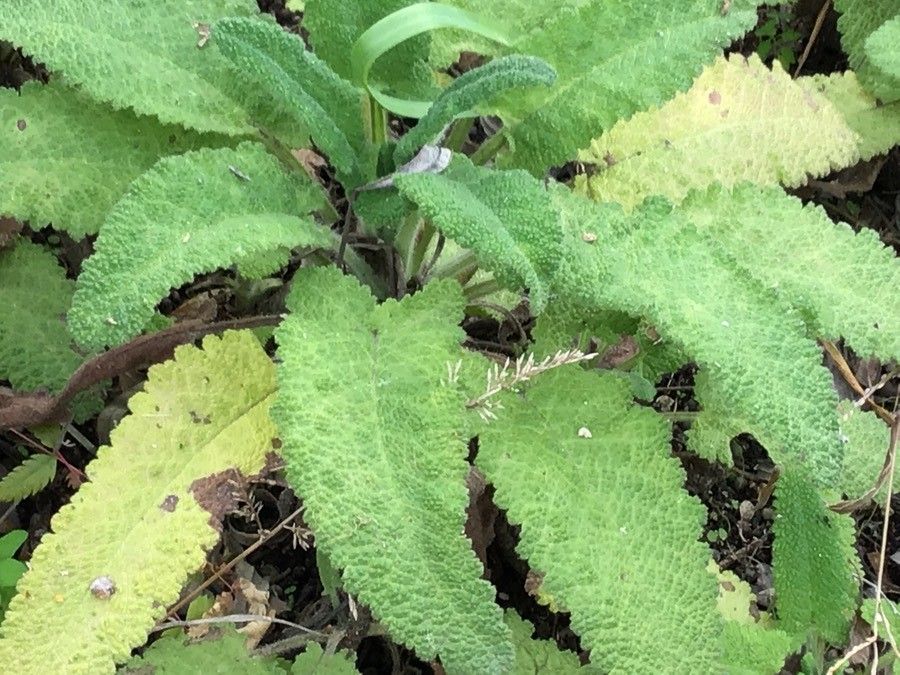
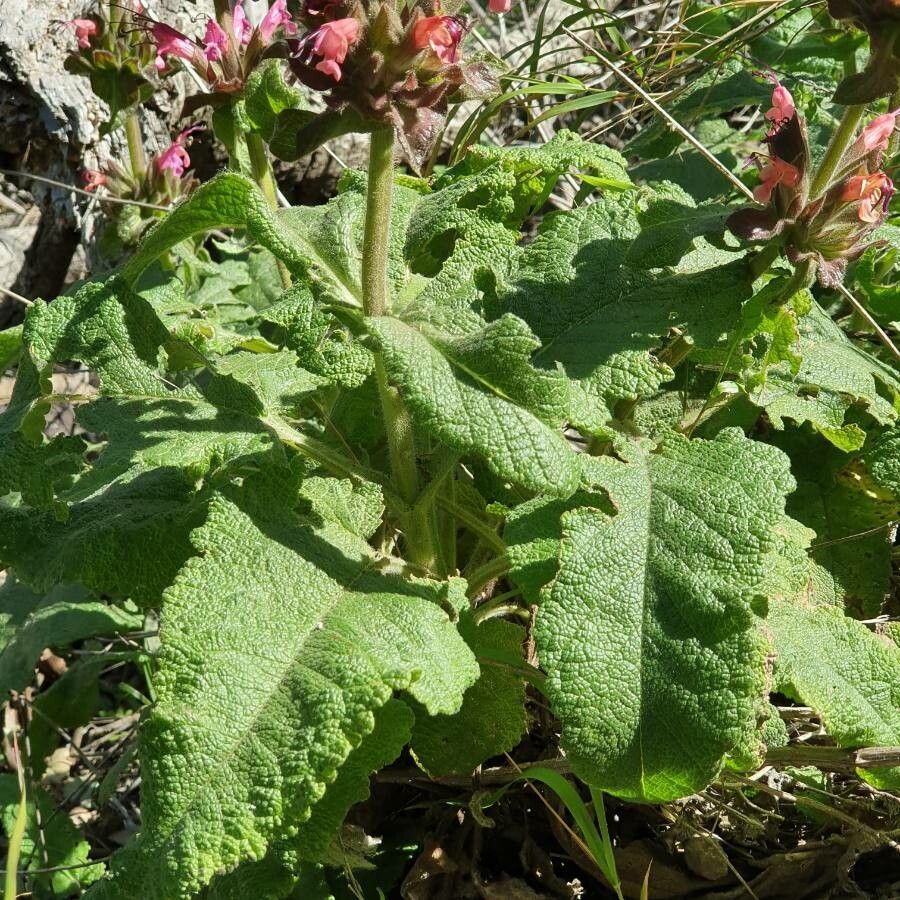
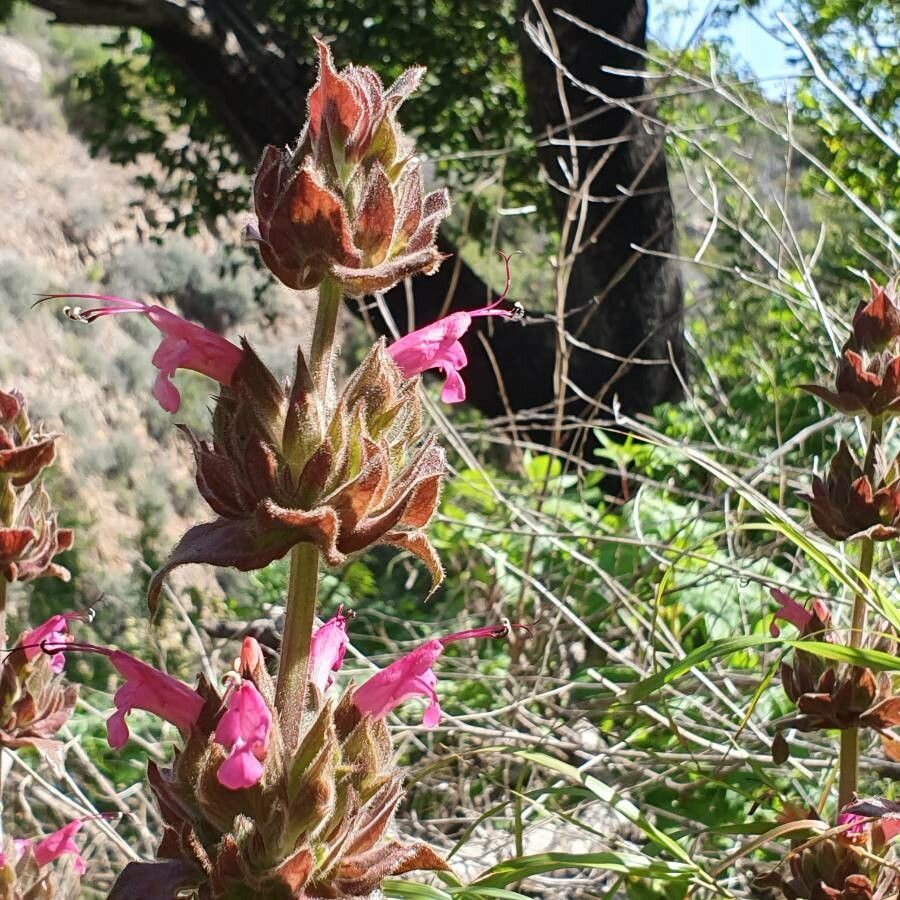
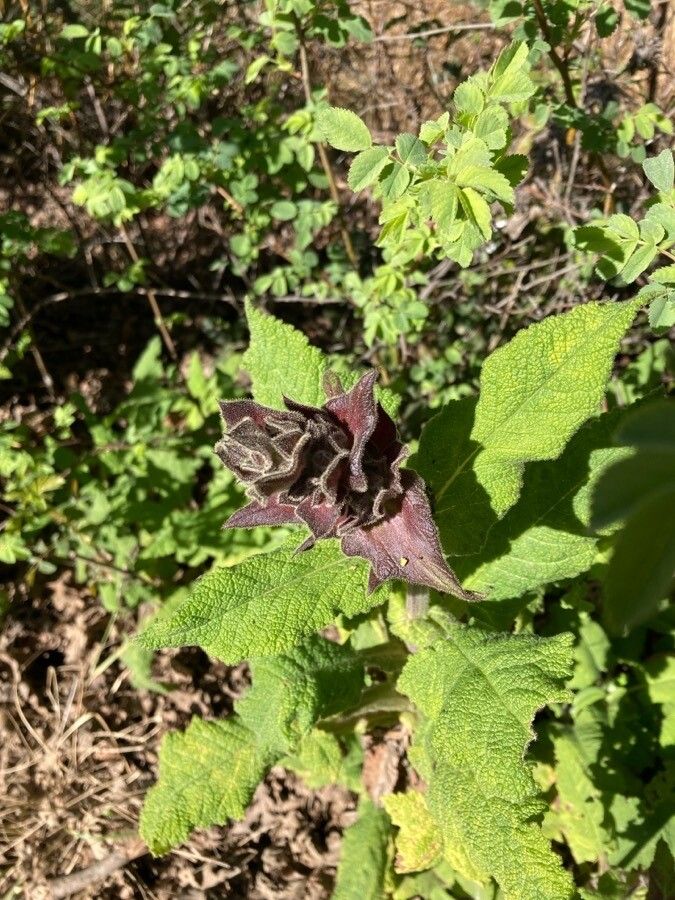
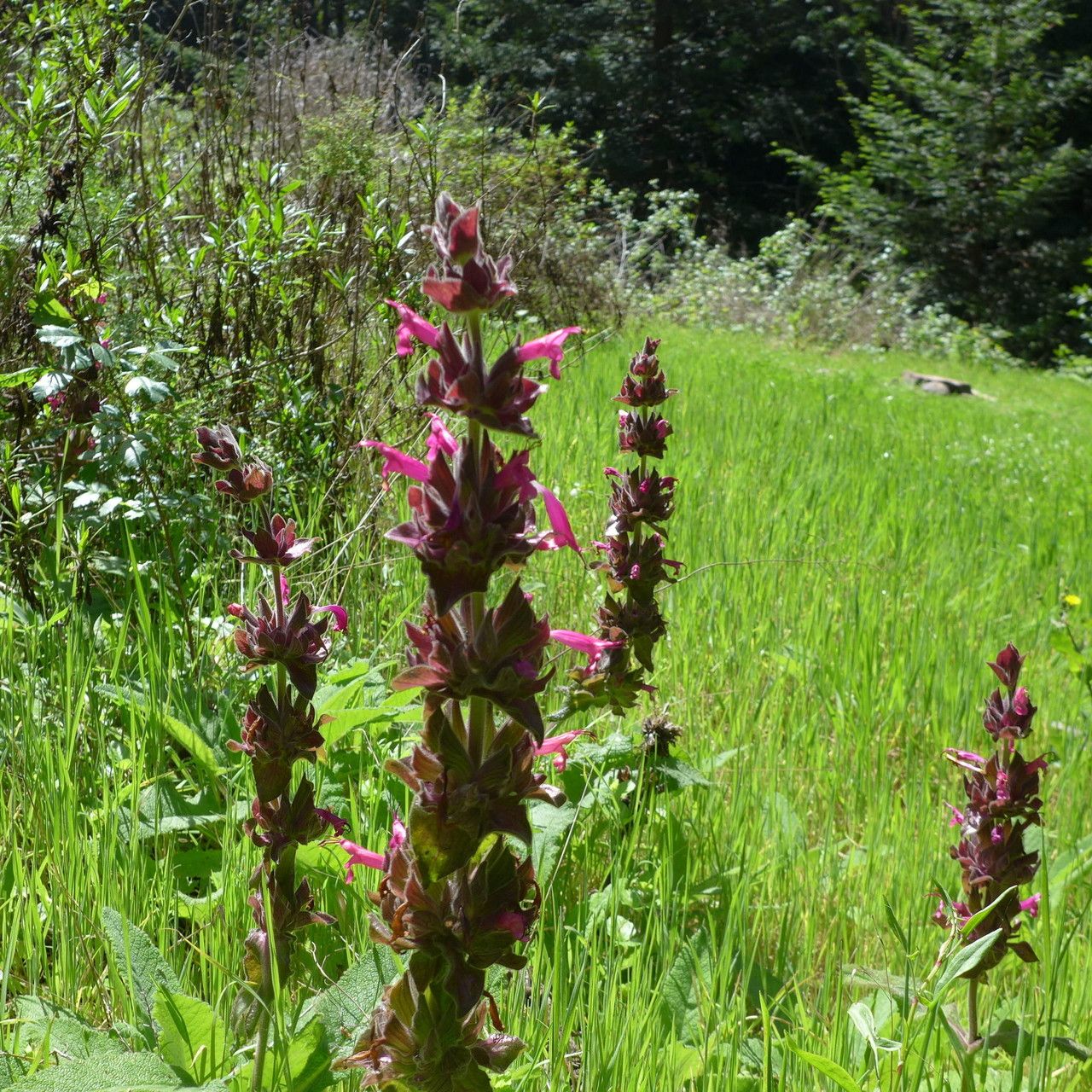
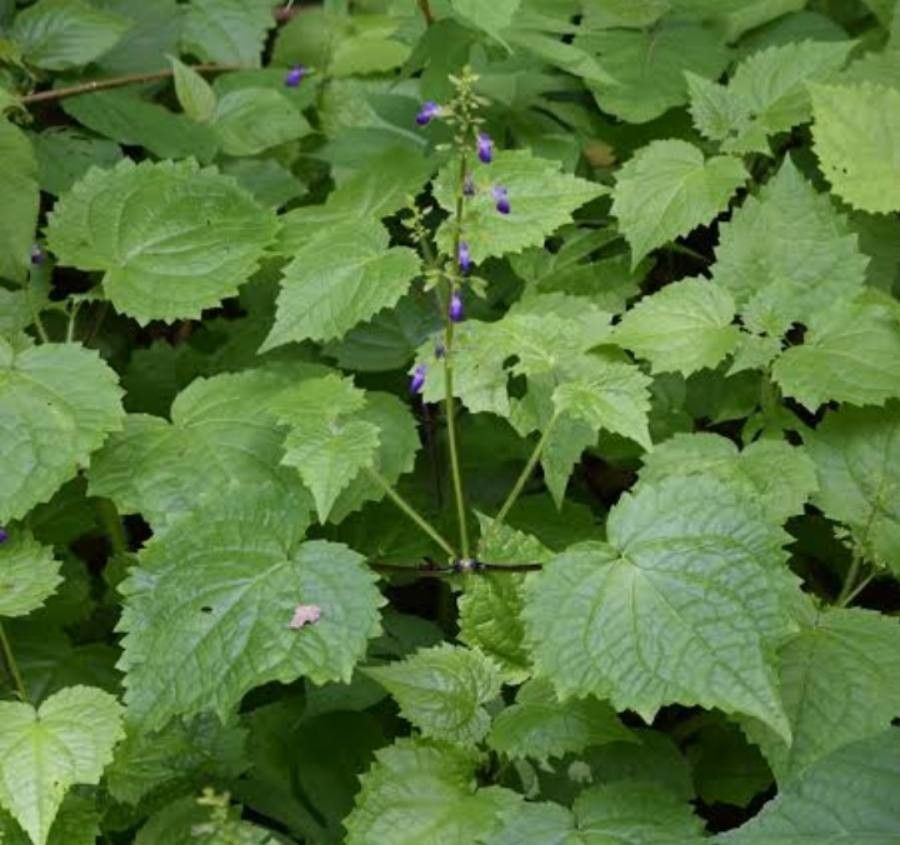
Salvia spathacea, commonly known as Hummingbird Sage or Pitcher Sage, is a perennial herbaceous plant native to California and Baja California. It belongs to the mint family and can grow up to 3 feet tall. The plant features large, dark green leaves that are slightly hairy and emit a pleasant aroma when crushed. Its tubular-shaped flowers, which come in bright pink or purple, attract hummingbirds and bees for pollination.
Hummingbird Sage thrives in partial shade or filtered sunlight and prefers well-draining soil that is moist but not waterlogged. While it can tolerate drought conditions once established, it requires regular watering during the growing season for optimal growth.
Native Americans have traditionally used the plant for medicinal purposes, such as treating colds, headaches, and respiratory problems, due to its anti-inflammatory properties. Additionally, it has culinary applications, including use in teas or as a seasoning in cooking.
Overall, Salvia spathacea is an attractive ornamental plant that provides nectar for pollinators while also offering practical benefits in traditional medicine and culinary arts.
California Hummingbird Sage has strong disease resistance and is usually not vulnerable to illnesses. Still, it can be affected by pests and diseases present in its environment. Such infections are typically mild. Regarding care, this plant has moderate maintenance needs. It should be pruned regularly to preserve its appearance and support healthy growth. Fertilizing can also assist in encouraging flowering. California Hummingbird Sage is appropriate for anyone with an outdoor area, like a garden or patio, and does not demand extensive care experience. It may need more attention when cultivated indoors.
How to keep Salvia Spathacea.
Light
California Hummingbird Sage performs best when it receives abundant sunlight each day. Cultivate it in conditions similar to its native habitat, where light streams into forest clearings. Although it can tolerate partially shaded locations, its growth may be limited and its vigor may decline. Both excessive sunlight and too little light can impede growth and cause the plant to become unhealthy.
Water
California Hummingbird Sage, native to Mediterranean climates, thrives in semi-arid conditions. It has moderate drought tolerance and benefits from dry spells between weekly waterings. As an evergreen perennial, the water requirements of California Hummingbird Sage depend on the moisture retention of its foliage throughout the seasons.
Temperature
California Hummingbird Sage does well in temperate climates, ideally where temperatures range from 59 to 95 °F (15 to 35 ℃) in its original habitat. For optimal growth, adjustments may be necessary during harsh winters or very hot summers.
Fertilizer
The ideal time to fertilize a California Hummingbird Sage is in early spring, as it emerges from dormancy and begins active growth. Fertilization supplies important nutrients for healthy development. Although California Hummingbird Sage has relatively low fertilizer requirements, annual fertilization can improve its survival and encourage better, longer-lasting flowers.
Pruning
The California Hummingbird Sage features aromatic leaves and vibrant flowers. To promote new growth, prune it from early to late spring. Remove spent flowers and weak stems to improve airflow, and thin out the plant to prevent disease and ensure healthy flowering.
Pot & Repot
To thrive properly, California Hummingbird Sage needs excellent drainage when planted in pots.
Botanical profile.
Other names.
Reader questions.
How should I water my California Hummingbird Sage plant?
To ensure the health of the California Hummingbird Sage, it is recommended to use filtered water at room temperature for watering. Tap water may contain harmful particles, so filtering is beneficial. Considering the plant's origin in a warm environment, it is advisable to avoid using cold water, as it could potentially shock the plant. Overhead watering should also be avoided, as it may cause issues with the foliage. Instead, it is best to thoroughly soak the soil with filtered room temperature water. This helps moisten the roots and promote their spread through the soil, facilitating nutrient absorption.
Why do I have to put plant food on my California Hummingbird Sage?
Fertilization is important for the California Hummingbird Sage because it provides necessary nutrients for the plant's growth both above and below the ground. While the overall fertilization needs for this plant are relatively low, annual fertilization can greatly benefit it and improve flower longevity. Those who want their California Hummingbird Sage to thrive should consider regular fertilization.
What are the sunlight requirements for California Hummingbird Sage?
California Hummingbird Sage thrives best with ample sunlight, reminiscent of its native habitat's conditions where light pours into forest clearings. It requires more than 6 hours of sunlight (full sun) for optimal growth but can also manage in about 3-6 hours of sunlight (partial sun). However, growth may be stunted and health may decline in less than ideal light conditions. An overdose or lack of adequate sunlight can inhibit its growth, leading to an unhealthy plant. It's crucial to watch how sunlight moves through your garden, choosing spots that provide a balanced environment for your plants.
What are the ideal growing conditions for California Hummingbird Sage?
California Hummingbird Sage thrives in temperate conditions, with the ideal temperature range being 59 to 95°F (15 to 35°C). It has a strong resistance to cold, making special frost protection measures generally unnecessary. However, in regions where winter temperatures may drop below -15°C, it's important to provide cold protection by covering the plant with soil or straw. Additionally, watering the plant abundantly before the first freeze in autumn, to keep the soil moist, helps prevent drought and water scarcity during winter and early spring.
What should I do if I give too much or too little water to my California Hummingbird Sage plant?
Overwatering is a much more common issue than underwatering when it comes to the health of your California Hummingbird Sage. When this species gets too much water, its stems and leaves can wilt and turn yellow. Prolonged overwatering can also lead to diseases like root rot, mold, and mildew, which can be fatal to the plant. While underwatering is less likely, it is still possible, and if it happens, you may notice brittle, brown leaves on your California Hummingbird Sage. It is important to be vigilant for signs of overwatering when caring for your California Hummingbird Sage. Some diseases caused by overwatering, like root rot, cannot be reversed if you wait too long. If you notice early signs of overwatering, reduce your watering schedule right away. You should also check the soil quality. If it drains poorly, replace it with a loose, well-draining potting mix. Conversely, if you see signs of underwatering, simply water more frequently until the signs improve.
When should I fertilize my California Hummingbird Sage?
For best results, it is recommended to fertilize your California Hummingbird Sage during the late winter to early spring when it is transitioning from its dormant phase to active growth. Fertilizing at this time promotes healthy growth and a strong start to the season. Although early spring is the most beneficial time, fertilizing in the fall is also acceptable. However, it is not recommended to fertilize during the summer and winter seasons.
How can I use artificial lighting for California Hummingbird Sage indoors?
When natural sunlight is insufficient, especially in winter or less sunny spaces, indoor plants like California Hummingbird Sage require adequate lighting for optimal growth. Artificial lights offer a viable solution. LED lights are popular for indoor plant lighting as they provide specific wavelengths needed by plants. Full sun plants need 30-50W/sq ft, partial sun plants 20-30W/sq ft, and full shade plants 10-20W/sq ft of artificial light. Place the light source 12-36 inches above the plant, mimicking natural sunlight, ensuring the plant receives 8-12 hours of light per day.
How does low temperature affect California Hummingbird Sage, and what are the solutions?
California Hummingbird Sage is cold-tolerant, best thriving above 15°C. During winters, it should be kept above -10°C. If temperatures fall below -15°C, there may not be immediate visible damage during winter, but a decrease in sprouting or no sprouting at all might be observed in spring. To mitigate these effects, remove any parts of the plant that have failed to sprout in spring.
How often do I need to water my California Hummingbird Sage plant?
If your California Hummingbird Sage is in a pot, the most accurate way to determine if it needs water is by checking the soil with your finger. If the top two to three inches of soil are dry, it's time to water it. For outdoor California Hummingbird Sage plants grown in the ground, you can use a similar method. When the first few inches of soil have dried out, it's time to water. Typically, during spring and early fall, watering once a week is sufficient. However, during extremely hot weather, watering may need to be increased to twice a week or more. Nevertheless, mature and well-established California Hummingbird Sage plants have the ability to tolerate drought conditions.
When is it best to not add fertilizer to my California Hummingbird Sage?
To properly care for your California Hummingbird Sage, it is recommended to only fertilize it in late winter or early spring. This plant has minimal fertilization needs, so a single annual feeding during this time is sufficient. It is important to avoid fertilizing throughout the rest of the growing season (spring, summer, and fall) as excessive fertilization can cause problems. However, if you missed fertilizing in spring, it is acceptable to feed the plant in the fall. Additionally, there is no need to fertilize during the winter when the plant is in a dormant phase and not actively growing.
What are the symptoms of inadequate lighting for California Hummingbird Sage?
Inadequate lighting can cause several symptoms in California Hummingbird Sage, such as smaller new leaves, leggy or sparse growth, faster leaf drop, slower or no new growth, lighter-colored new leaves, chlorosis (leaves turning yellow), sunscald, leaf curling, wilting, and leaf scorching. These symptoms indicate the plant's struggle with light conditions, either too much or too little, affecting its health and growth.
What impact does high temperature have on California Hummingbird Sage, and how can these issues be addressed?
In summer, it's important to keep California Hummingbird Sage below 35°C to prevent stress. Should the temperature exceed 41°C, the plant's leaves may lighten, curl, and become prone to sunburn. In severe cases, the entire plant may wilt and dry. To address heat stress, trim away sunburned and dry parts, relocate the plant to a shaded area or use a shade cloth to protect it during the midday and afternoon sun. Additionally, watering the plant in the morning and evening helps keep the soil moist and reduces stress.