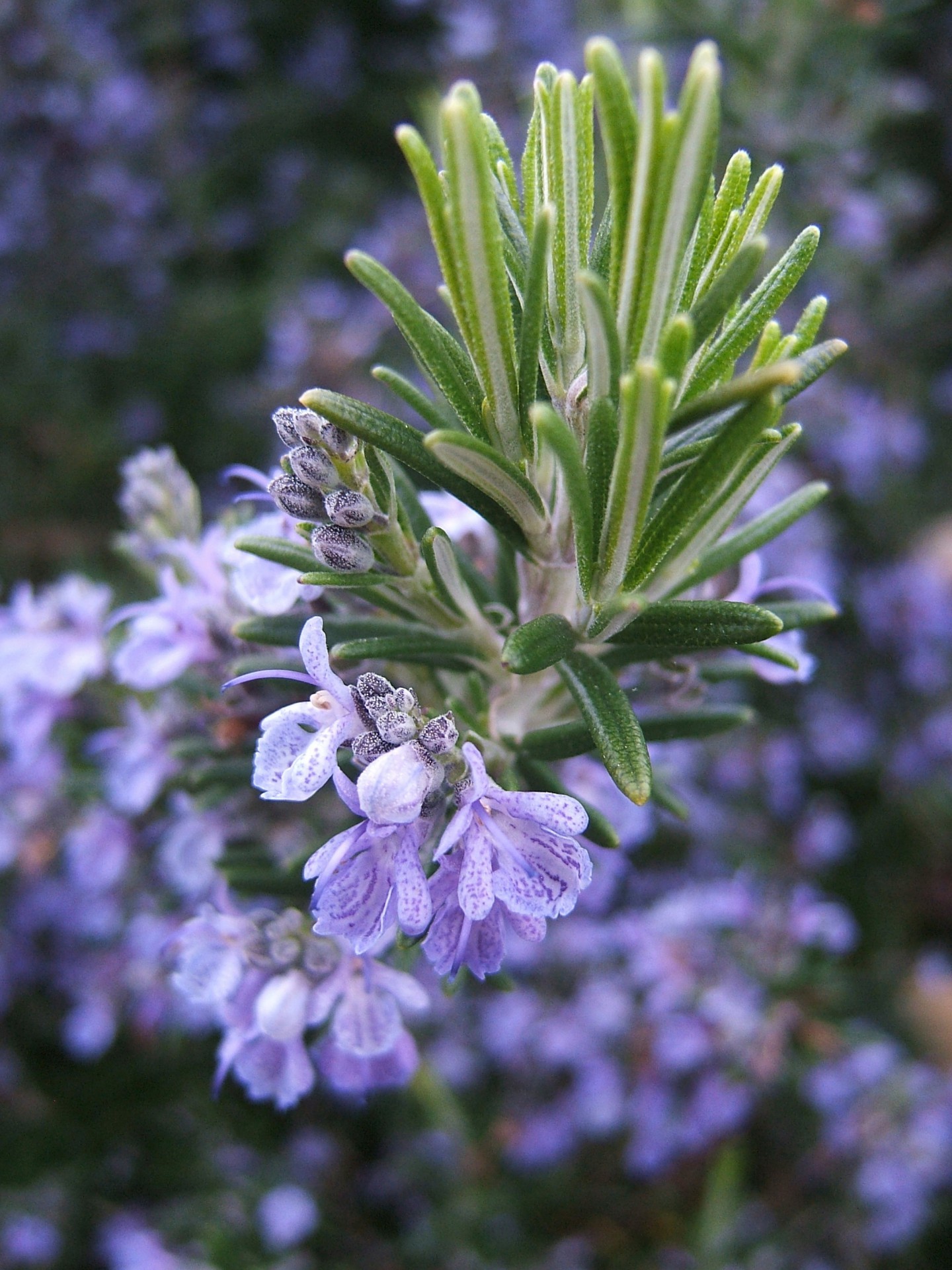
Salvia rosmarinus, synonym Rosmarinus officinalis, commonly known as rosemary, is a shrub with fragrant, evergreen, needle-like leaves and purple or sometimes white, pink, or blue flowers. It is a member of the mint family, Lamiaceae.
Rosemary: The name of this plant is derived from a combination of "rose" and "Mary." Here, "Mary" symbolizes the Virgin Mary. After the mid-nineteenth century, when flower names became popular, the plant became commonly known as "herb rosemary."
Rosemary has a fairly high resistance to disease and is generally not likely to suffer from illnesses. Still, if the plant is kept in poor conditions it can become more vulnerable to disease. It also experiences only a small number of insect pests. Regarding care, this plant's needs are moderate. It requires ample sunlight because inadequate light can make it more prone to disease and cause sparse growth. It is commonly kept indoors, so it may need to be moved to a bright spot on a regular basis. The plant does not need frequent watering. In general, Rosemary is appropriate for most people, though it is best for those who can provide strong light conditions.
How to keep Salvia Rosmarinus.
Light
Rosemary needs a large amount of light to grow vigorously. Native to a habitat with abundant sunlight, rosemary performs best in places that imitate those conditions. It can, however, tolerate areas with less consistent light. Adequate light promotes flowering and boosts fragrance, but too much or too little can result in weak growth or fewer blooms.
Water
Rosemary flourishes in a Mediterranean climate, where it prefers well-drained soil and plenty of sunlight. While it can tolerate dry spells, rosemary benefits from weekly watering to achieve optimal growth. As an evergreen plant, it requires consistent moisture to maintain its vibrant foliage, making it perfect for outdoor planting in areas with regular rainfall.
Humidity
This plant will thrive in moderate humidity, which is probably the level in your home. However, misting it a few times a week can be very beneficial. Make sure the room has good ventilation.
Temperature
In its native growth environment, rosemary does well in temperatures between 59 and 100.4 ℉ (15 to 38 ℃). These temperate woody plants prefer a temperature range of 55 to 100 ℉ (12.8 to 37.8 ℃) and can tolerate occasional frosts, but prolonged exposure to freezing temperatures can damage them. During hotter months, provide supplemental irrigation and shade to ensure they don’t dry out. In cooler months, cover them with cloths at night to protect from frost.
Fertilizer
Fertilize your Rosemary in early spring to encourage healthy growth. Regular feeding improves its overall health, producing vigorous growth, increased tolerance of harsh conditions, and stronger resistance to pests and diseases. Stick to a set fertilizing routine for your Rosemary to maintain foliage that is richly colored and lush in appearance.
Pruning
Rosemary is an evergreen shrub known for its aromatic, needle-like leaves and blue flowers. To promote dense growth and enhance both the health and ornamental value of the plant, prune it in late spring after it has finished flowering. When pruning, trim back one-third of the new growth. Using the right timing and technique for pruning will benefit the plant significantly.
Pot & Repot
When repotting Rosemary, choose a pot 1-2 inches (2.5–5.1 cm) larger with ample drainage. Use a well-draining potting mix. Repot in spring or fall, ensuring that the root ball is slightly lower than the rim of the flower pot. Water thoroughly after repotting and place it in a warm spot with indirect sunlight.
Botanical profile.
- Plant Type
- Shrub
- Life Cycle
- Perennial
- Genus
- Salvia
- Family
- Lamiaceae
- Hardiness Zone
- 8-11
- Mature Height
- 0.61 m to 1.83 m
- Mature Spread
- 0.61 m to 1.22 m
- Leaf Color
- Green, Gray
- Leaf Type
- Evergreen
- Flower Color
- Lavender
- Flower Size
- 2.54 cm
- Bloom Time
- Early spring, Mid spring, Late summer, Fall, Winter
- Planting Time
- Spring, Autumn
- Harvest Time
- Late spring, Summer, Fall, Winter