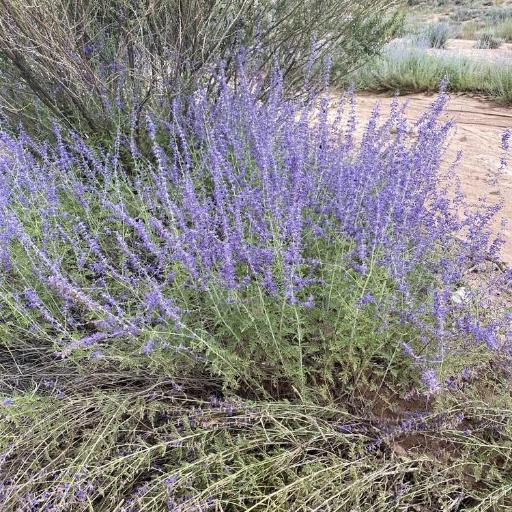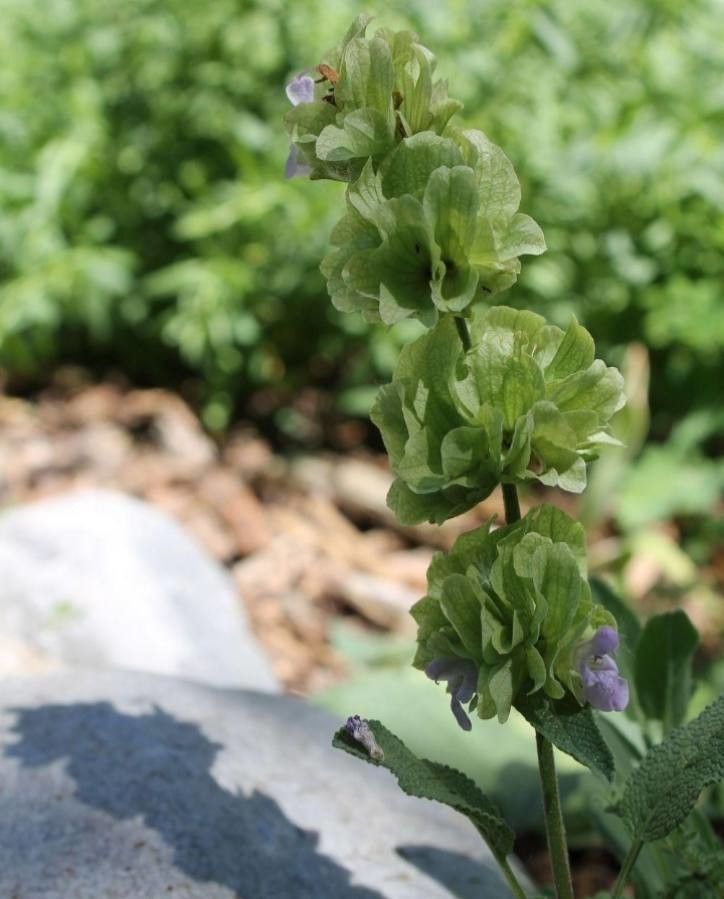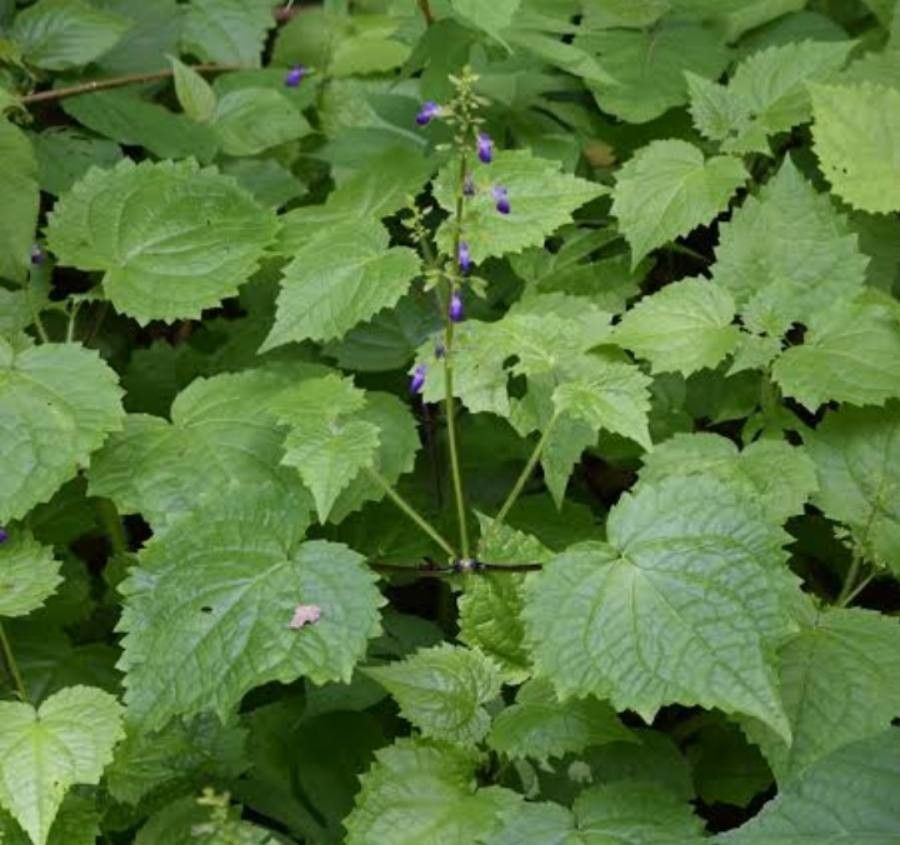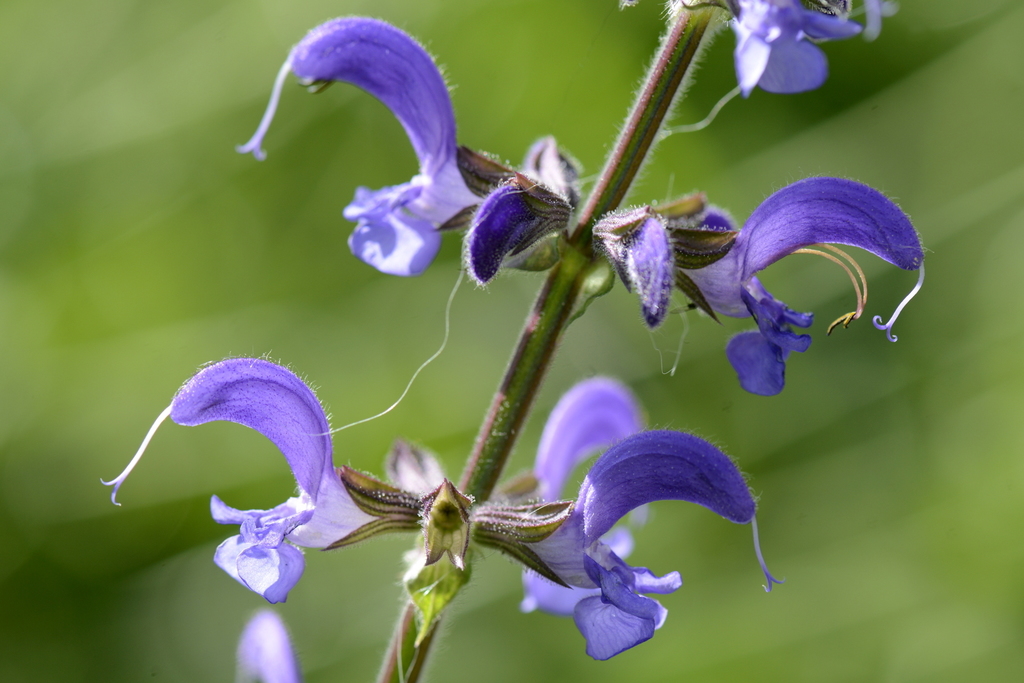
Salvia pratensis, the meadow clary or meadow sage, is a species of flowering plant in the family Lamiaceae, native to Europe, western Asia and northern Africa. The Latin specific epithet pratensis means "of meadows", referring to its preferred habitat. It also grows in scrub edges and woodland borders.
Meadow Sage: The plants in the Salvia genus are commonly referred to as sage. To differentiate each species, they are often named based on their distinct characteristics. For instance, this particular sage is known as meadow sage because it typically thrives at the edges of brush and woodland areas. The Latin term "pratensis," which means "meadow," is added to its name to reflect this tendency.
Meadow sage is fairly resistant to diseases and usually does not fall ill easily. Nevertheless, it can be vulnerable to pests and diseases present in its environment. Such infections tend to be mild. In terms of upkeep, this plant requires moderate maintenance. It should be pruned regularly to maintain a neat appearance and encourage healthy growth. Fertilizing can also aid in boosting flowering. Meadow sage is well suited to people with outdoor spaces like a garden or patio and does not demand extensive care experience. It may need more attention when cultivated indoors.
How to keep Salvia Pratensis.
Light
Meadow sage prospers in places that receive plenty of sunlight each day, though it can tolerate sites with moderate illumination. Coming from open habitats, full sun encourages its vigorous growth. Its light needs are not greatly affected by its stage of development. Too little or too much light can stunt its growth or cause wilting.
Water
Meadow sage flourishes in meadows, where it prefers consistent moisture but can withstand short periods of dryness. To keep it healthy, it requires weekly watering. While usually cultivated outdoors, it benefits more from natural rainfall during the growing season, which enhances its flowering potential better than artificial irrigation.
Temperature
Meadow sage is native to temperate regions and prefers temperatures of 32 to 90 ℉ (0 to 32 ℃). In warmer areas it favors partial shade to avoid overheating in summer, while in cooler areas it benefits from full sun. In summer it may need regular watering to offset the higher temperatures.
Fertilizer
The ideal time to fertilize a Meadow sage is in early spring, as it comes out of dormancy and starts active growth. Fertilization supplies essential nutrients for healthy development. Although Meadow sage has relatively low fertilizer needs, yearly fertilization can improve its survival and encourage better, longer-lasting flowers.
Pruning
To ensure meadow sage thrives, it's important to prune it properly in early spring. Begin by removing any dead stems and trimming back the flowering stems once they have finished blooming. Additionally, perform light pruning to maintain the plant's size. These practices enhance the plant's appearance, prevent disease, and encourage healthy growth.
Pot & Repot
When repotting Meadow sage, select a pot 1–2 inches (2.5–5.1 cm) larger with ample drainage. Use a well-draining potting mix. Repot in spring or fall, making sure the root ball sits slightly below the rim of the flower pot. Water thoroughly after repotting and place it in a warm spot with indirect sunlight.
Toxicity
It does contain a high level of thujone, which can be toxic. Reports say that heating the sage into an infusion eliminates much of the chemical. It is listed in the FDA's list of herbs generally regarded as safe.
Further reading →
The toxicity and danger assessments provided are for reference only. We do not assure their accuracy, so it's crucial not to depend on them. Seek professional advice when necessary for accurate guidance.
Botanical profile.
- Plant Type
- Herb
- Life Cycle
- Perennial
- Genus
- Salvia
- Family
- Lamiaceae
- Hardiness Zone
- 3-7
- Mature Height
- 0.91 m to 1.52 m
- Mature Spread
- 30 cm to 37 cm
- Leaf Color
- Green
- Leaf Type
- Deciduous
- Flower Color
- Purple, Blue
- Flower Size
- 30.48 cm
- Bloom Time
- Late spring, Early summer, Mid summer
- Planting Time
- Spring
- Harvest Time
- Mid summer
- Native Area
- Europe, Asia
Other names.
Reader questions.
How much water does my Meadow sage plant need?
When watering your Meadow sage, it's important to be generous with the amount of water you give. If the top few inches of soil are dry, give the plant a thorough watering until the soil is soaked completely. The water should be enough to make excess water flow out of the drainage holes at the bottom of the pot. If you don't see any excess water draining out, you may not have given enough water. However, be careful not to let the water sit and accumulate in the soil, as this can be harmful to the plant. On the other hand, if water is not draining well from the pot, it could indicate that the soil is not draining properly, which is not good for the plant's health. If the plant is outdoors, 1 inch of rain per week should be enough.
Why should I put fertilizer on my Meadow sage?
Meadow sage relies on fertilization for its growth and development. It provides essential nutrients for both the above-ground and below-ground parts of the plant. Although Meadow sage doesn't require a lot of fertilization, it can benefit from annual fertilization, which helps maintain its health and promote longer-lasting flowers. Therefore, regularly fertilizing Meadow sage is recommended for those who want their plants to thrive.
What are the sunlight requirements for Meadow Sage?
Meadow sage, or Salvia pratensis, thrives best in areas where it can receive abundant daily light. It requires full sun, defined as more than 6 hours of sunlight a day, but can also grow in partial sun, which is about 3-6 hours of sunlight a day. It's crucial to observe how sunlight moves through your garden to choose locations that provide a good balance of light and shade, ensuring the plants' optimal growth and happiness.
What is the preferred temperature range for growing Meadow sage?
Meadow sage, or Salvia pratensis, thrives in temperate regions with a preferred temperature range of 32 to 90°F (0 to 32°C). This makes it versatile, able to grow in various climates as long as the conditions within this temperature range are met.
How should I water my Meadow sage?
To properly water the Meadow sage, it is best to use filtered water at room temperature or slightly warmer. Tap water may contain harmful particles, so filtered water is preferred. Since the Meadow sage is native to warm environments, it is important to avoid using cold water as it can be a shock to the plant. Additionally, overhead watering should be avoided as it can cause issues with the foliage. Instead, water the plant by applying filtered room temperature water directly to the soil until it is thoroughly soaked. This helps to nourish the roots and promote their growth and nutrient absorption.
What is the ideal time to fertilize my Meadow sage?
The best time to fertilize a Meadow sage is in late winter to early spring. This is when the plant is coming out of its dormant phase and starting to actively grow. Fertilizing at this time promotes healthy growth and helps the plant thrive. It is also okay to fertilize in the fall, but it's not recommended to feed the Meadow sage during summer and winter.
How does lighting affect the growth of Meadow Sage?
Lighting plays a significant role in the growth and health of Meadow Sage. Originating from open habitats, this plant benefits from full daylight, which promotes vigorous growth. Regardless of its stage of development, Meadow Sage requires ample light for optimal performance. Insufficient or excessive light can either stunt its growth or cause wilting. To supplement natural light, especially in less sunny spaces or during winter, artificial lighting can be utilized. Indoor plants may require 30-50W/sq ft of artificial light for full sun plants, 20-30W/sq ft for partial sun plants, and 10-20W/sq ft for full shade plants. Choosing the right type of artificial light, such as LED lights, and setting the appropriate distance (12-36 inches above the plant) and duration (8-12 hours per day) are critical for mimicking natural sunlight conditions.
How does Meadow sage react to different sun exposures in varying climates?
In warmer regions, Meadow sage prefers partial shade to protect it from overheating during the summer months. Conversely, in cooler climates, it benefits from full sun exposure to maximize growth and flowering potential. This adaptability helps it to flourish across a wide range of environments.
What should I do if I give my Meadow sage too much water or too little water?
Overwatering and underwatering both harm Meadow sage, although overwatering is more common. When Meadow sage gets too much water, its stems and leaves wilt and turn yellow. Overwatering for a long time can cause root rot, mold, and mildew, which can kill the plants. Meadow sage is fairly drought-tolerant, so underwatering is less likely. However, it can happen, causing brittle and brown leaves. It's crucial to recognize the signs of overwatering early to prevent irreversible damage. If you see these signs, reduce watering immediately. Check the soil quality for poor drainage and replace it with well-draining potting mix if necessary. If signs of underwatering are present, simply increase watering until the signs cease.
When is the best time to not fertilize my Meadow sage?
To avoid overfertilization and complications, it is best to only fertilize Meadow sage in the late winter and early spring. This plant has low fertilization needs and a single annual feeding is sufficient. However, if you forgot to fertilize in spring, it is okay to feed it in the fall. It is important to refrain from fertilizing during the rest of the growing season to prevent overfertilization. Additionally, there is no need to fertilize during the winter as the plant is in a dormant phase and does not produce new growth.
What are the signs of inadequate lighting for Meadow Sage?
Meadow Sage shows several symptoms when exposed to inadequate lighting. These include smaller new leaves compared to older ones, leggy or sparse growth due to longer spaces between leaves or stems, faster leaf drop as the plant conserves resources, slower or halted growth, and lighter-colored or chlorotic leaves indicating a lack of chlorophyll and nutrients. Excessive sunlight exposure can lead to sunscald, leaf curling, wilting, and leaf scorching, showing damage on leaf surfaces. These symptoms help identify whether the plant needs adjustments in its light exposure.
What are Meadow sage's water requirements during the summer?
During the summer, Meadow sage may require regular watering to cope with higher temperatures, especially in areas where the climate is at the warmer end of its preferred range. Adequate hydration helps it to maintain health and vitality during these potentially stressful periods.