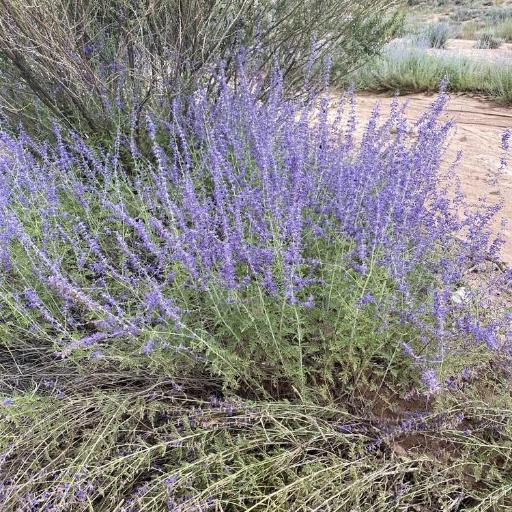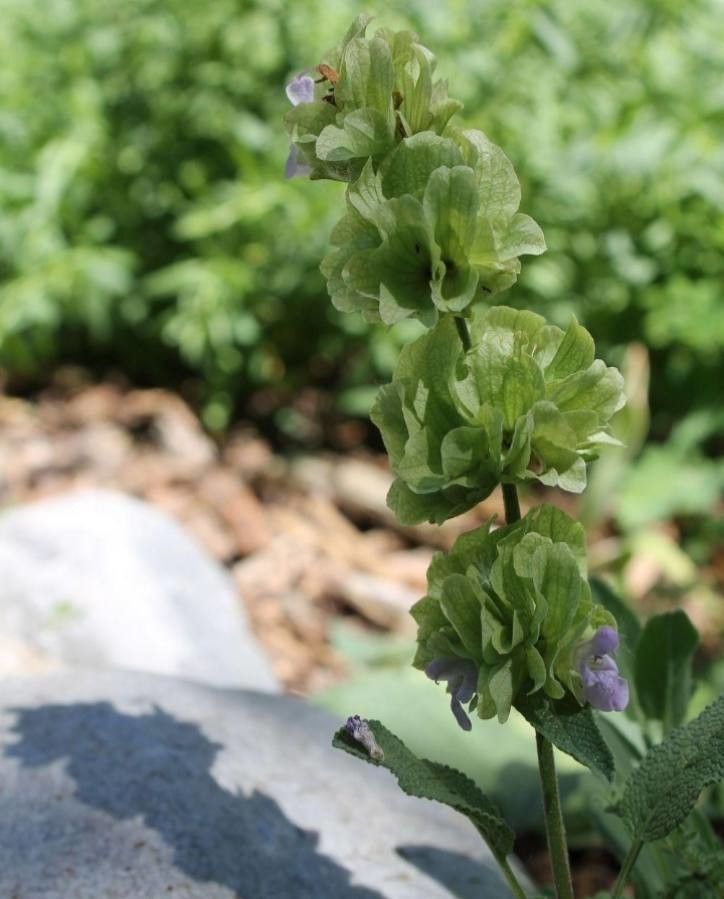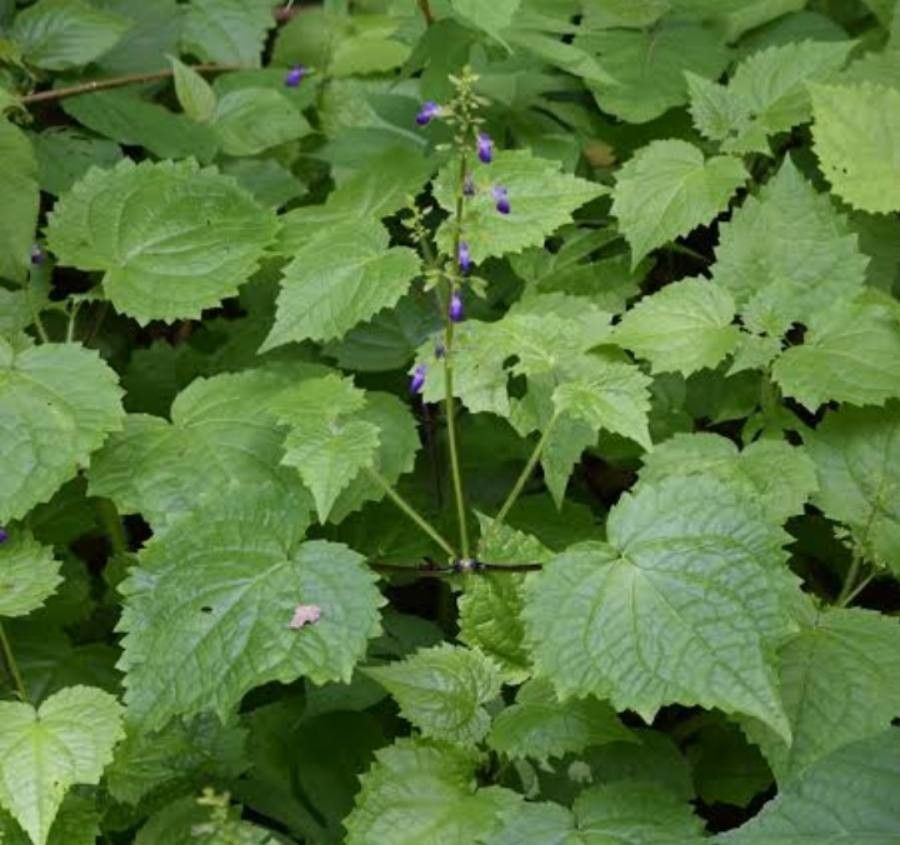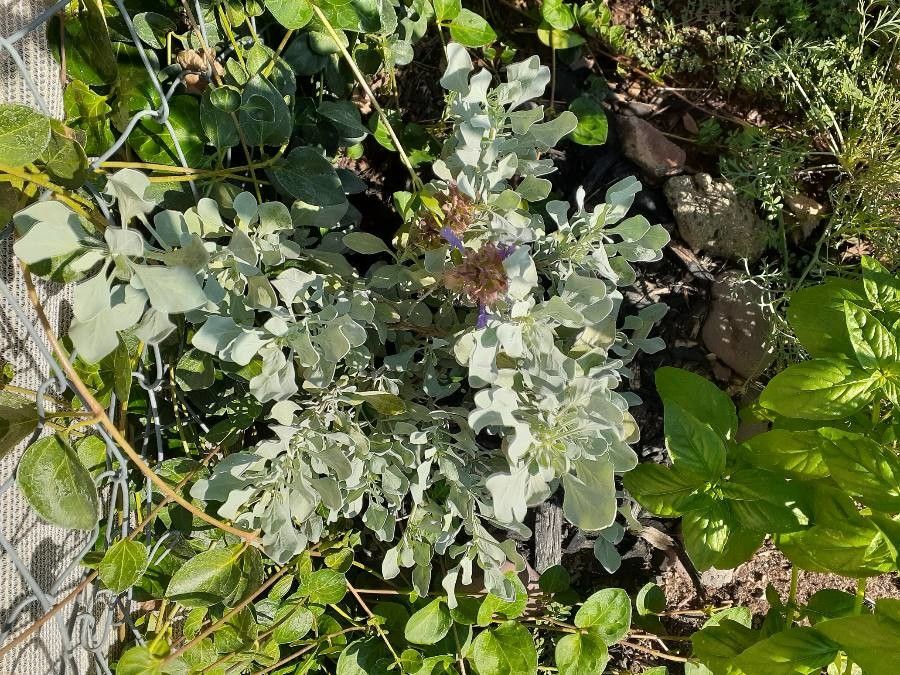
Salvia pachyphylla (Blue sage, Mountain desert sage) is a perennial shrub native to California, Nevada, and Arizona. In California, it grows between 5,000 to 10,000 ft (1,500 to 3,000 m) elevation on dry rocky slopes, blooming from July to September. It reaches 1 to 2 ft (0.30 to 0.61 m) high, with blue-violet flowers, rarely rose, growing in dense clusters. In the course of a study of the chemical composition of the flora used in Latin American traditional medicine, Ivan C. Guerrero and coworkers have performed phytochemical studies of extracts of the aerial parts from Salvia pachyphylla and Salvia clevelandii . The major secondary metabolites were isolated from these species and the in vitro cytotoxic effects against five human cancer cells were reported for eight of the compounds obtained: carnosol, rosmanol, 20-deoxocarnosol, carnosic acid, isorosmanol, 7-methoxyrosmanol, 5,6-didehydro-O-methylsugiol, 8β-hydroxy-9(11),13-abietadien-12-one, 11,12-dioxoabieta-8,13-diene, and 11,12-dihydroxy-20-norabieta-5(10),8,11,13-tetraen-1-one, and pachyphyllone.
Blue sage demonstrates strong resistance to disease and is typically not vulnerable to illnesses. With respect to care, this plant is fairly low-maintenance. When grown outdoors it needs only light watering, and larger specimens usually do not require pruning. Smaller plants, however, should be cut back after they finish blooming. Blue saget is appropriate for anyone with an outdoor area, such as a garden or a deck, and does not need extensive care experience.
How to keep Salvia Pachyphylla.
Light
Blue sage is native to open habitats, such as sunny meadows and forest margins, which supply plenty of light. It performs best in Full Sun but can also endure Partial Sun, adjusting well to different sunlight levels.
Water
Blue sage is well-suited for arid climates, thanks to its exceptional drought tolerance. It requires infrequent watering, usually only once every one to two weeks. As an evergreen herb, blue sage retains its foliage throughout the year, which helps it conserve water during dry periods.
Temperature
Blue sage is highly adaptable to a range of climates, tolerating both hot summers and cold winters. That said, it has a preferred temperature range for optimal growth. If temperatures rise too much, the plant can experience heat and humidity stress, which may lead to its death. In areas where temperatures near the lower limit of its cold tolerance, providing insulation to protect the plant is important.
Fertilizer
Timing is essential for fertilizing Blue sage. Apply fertilizer in early spring and continue every month until early summer. Fertilizer encourages attractive blooms and supplies energy during both dormant and active growth periods.
Pruning
For optimal growth, it is important to prune blue sage in early spring. This involves removing any dead stems and shaping the plant, which encourages new growth. Pruning in this way improves air circulation, prevents the plant from becoming leggy, and aligns with its natural growth cycle. To achieve the best results, avoid heavy pruning or cutting back to old wood.
Botanical profile.
- Plant Type
- Shrub
- Life Cycle
- Perennial
- Genus
- Salvia
- Family
- Lamiaceae
- Hardiness Zone
- 5-9
- Mature Height
- 61 cm to 91 cm
- Mature Spread
- 61 cm to 91 cm
- Leaf Color
- Gray, Silver
- Leaf Type
- Evergreen
- Flower Color
- Purple
- Flower Size
- 2.03 cm to 3.05 cm
- Bloom Time
- Summer
- Planting Time
- Spring, Summer
- Harvest Time
- Late summer, Early fall, Mid fall