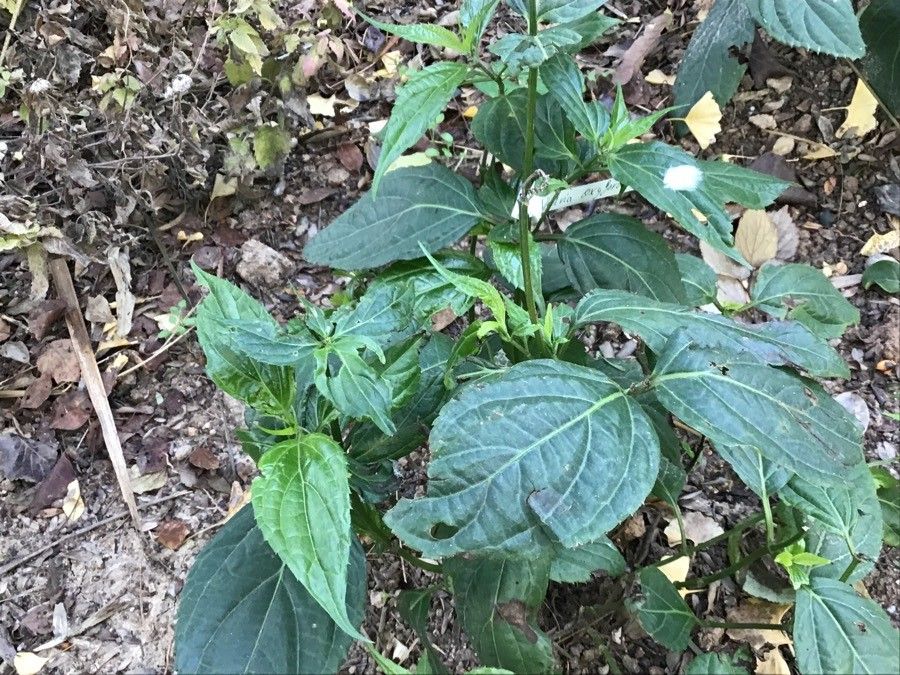
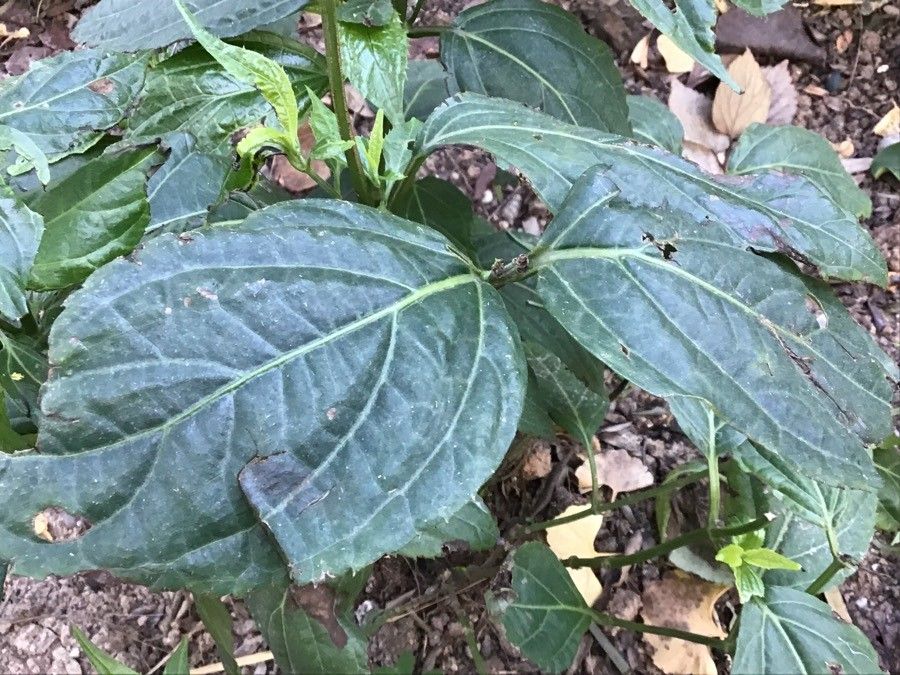
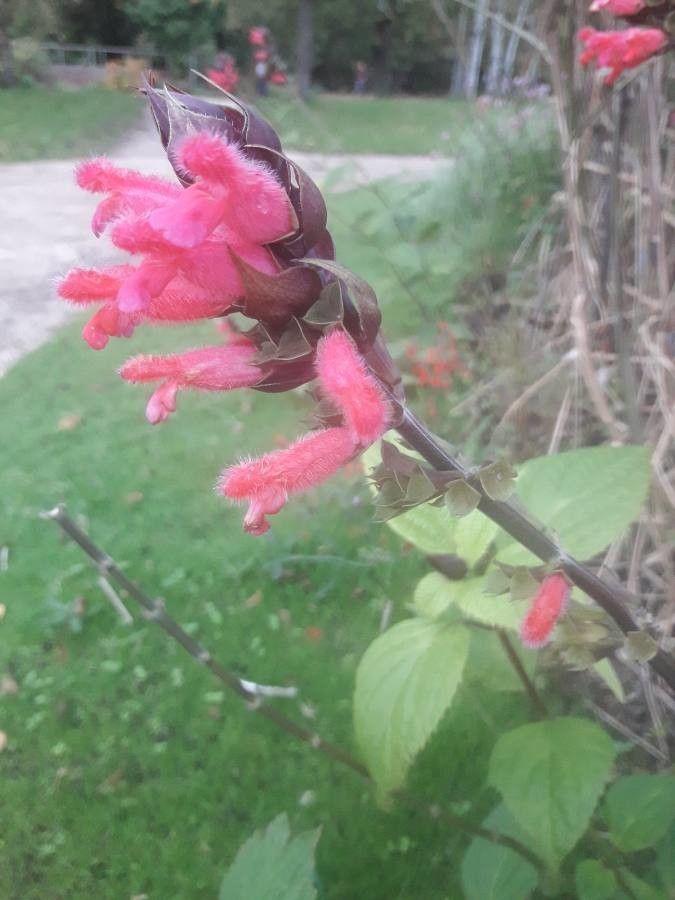
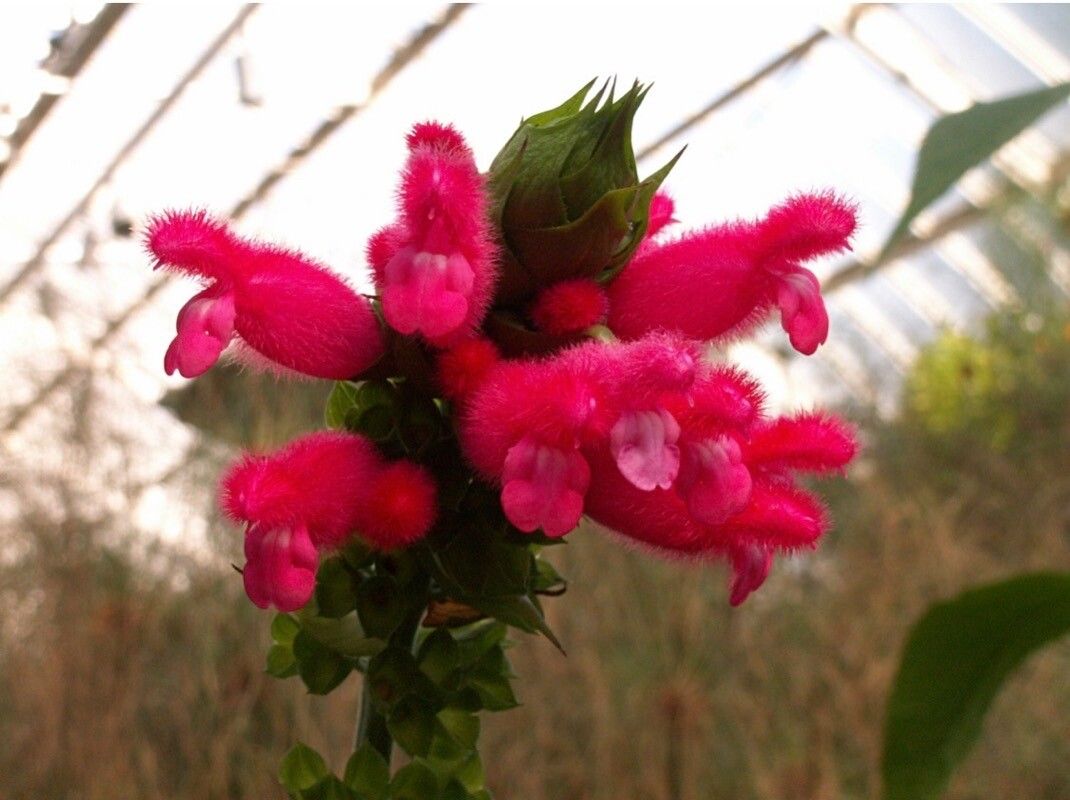
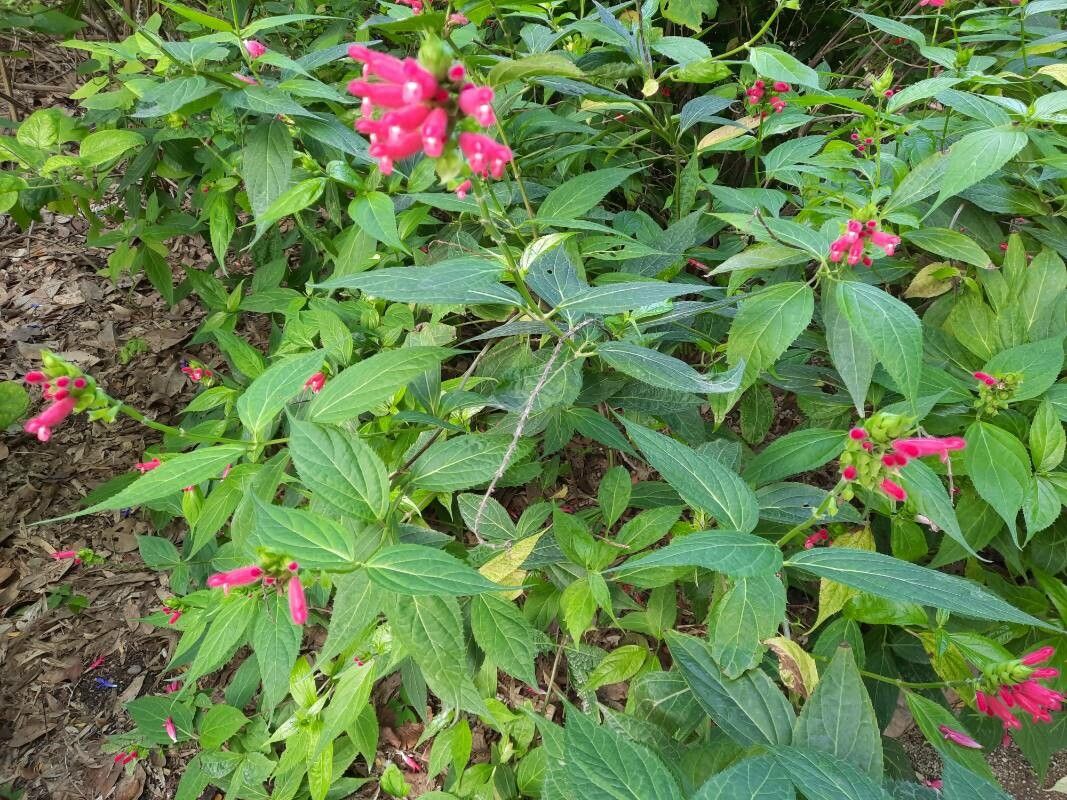
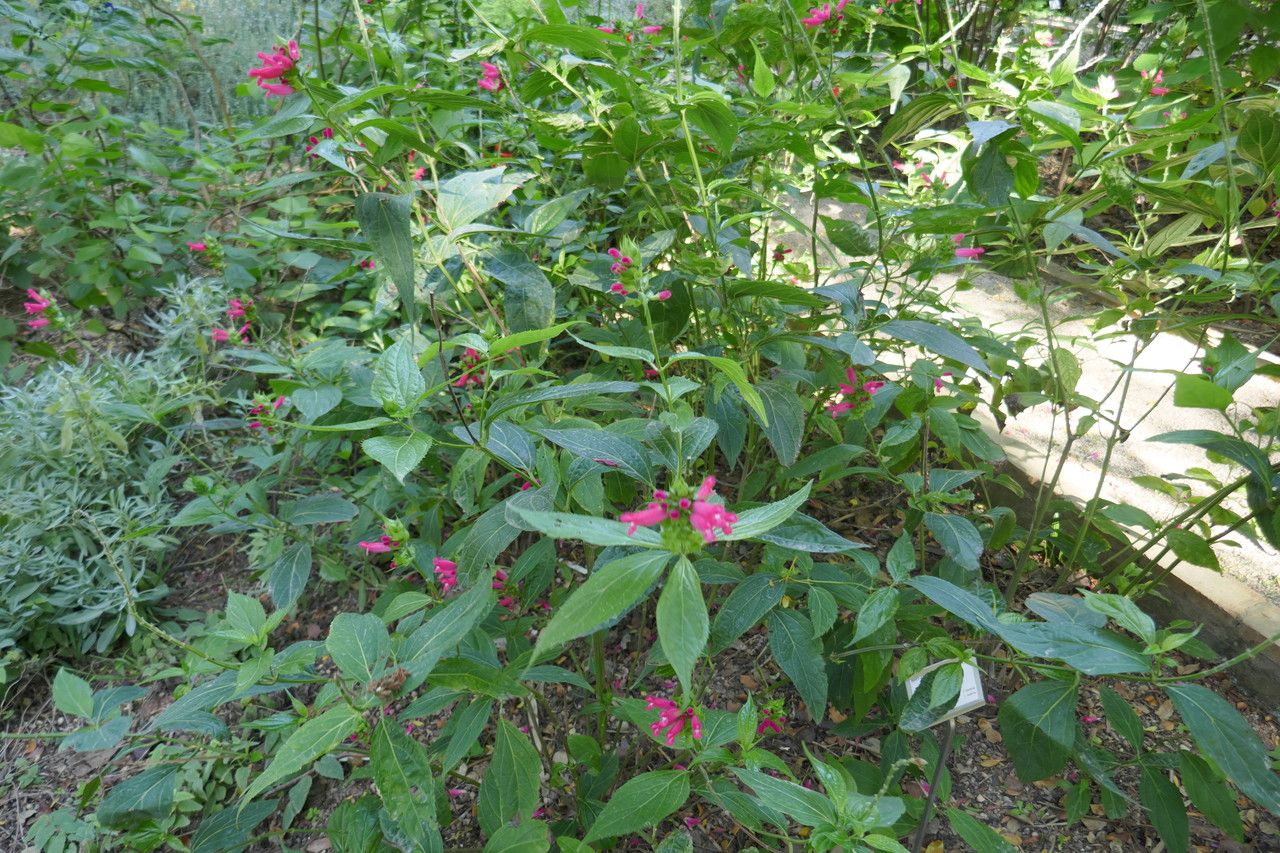
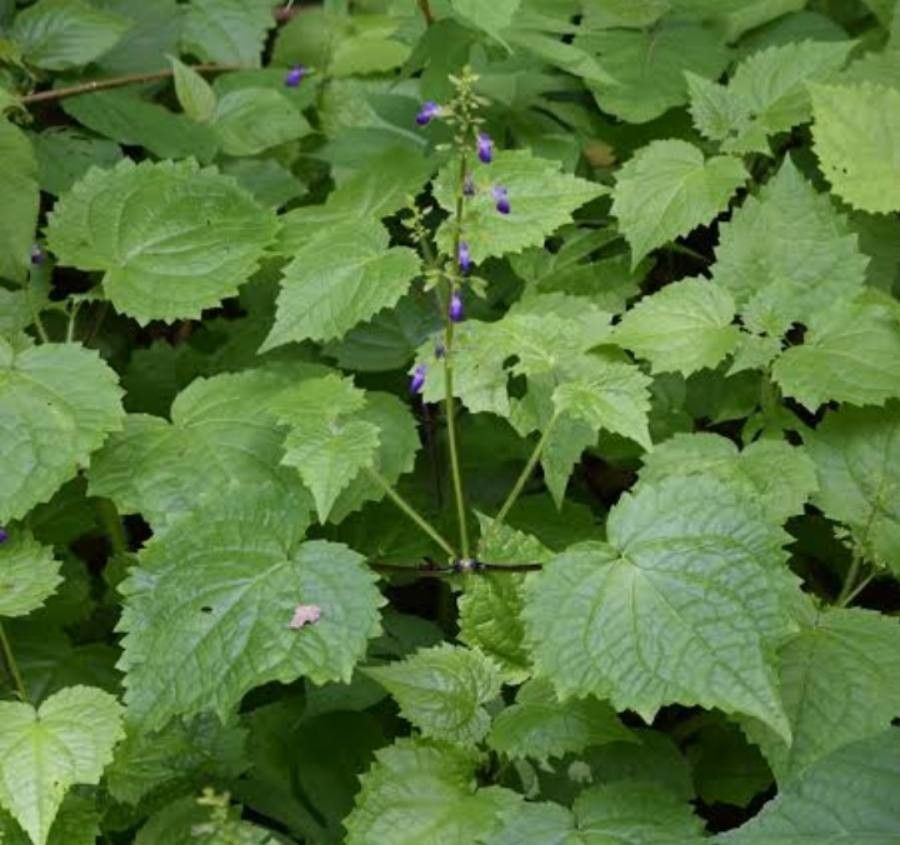
Salvia oxyphora is a herbaceous perennial flowering plant that is endemic to the foothills and lower eastern slopes of the Andes in Bolivia. It is found growing in disturbed rocky slopes above streams in moist subtropical forest at 300 to 2,200 m (980 to 7,220 ft) elevation. It is widespread from the Peruvian border, in the Andean cordillera, to the Santa Cruz area. The plant apparently needs disturbed ground to become established, as it is not found growing in undisturbed areas. In spite of its wide distribution, distinct populations tend to be very small, typically only one to ten plants. Observed plants, both herbarium specimens and wild plants, apparently do not have seeds, possibly due to loss of its native pollinator. For that reason, the wild populations of the plant are vulnerable, though many nurseries carry the plant as of 2012.Salvia oxyphora grows to 1 to 1.5 metres (3.3 to 4.9 ft) high, with lanceolate to ovate leaves that are 7 to 22 cm (2.8 to 8.7 in) long and 3 to 7 cm (1.2 to 2.8 in) wide. The inflorescence consists of terminal bracteate racemes that are approximately 7 cm (2.8 in) long when young, extending to a 20 cm (7.9 in) long spike. The corolla is red, 3 to 4 cm (1.2 to 1.6 in) long, with fine hairs that can be sparse to dense. The flowers are pollinated by hummingbirds, similar to most red-flowered Salvia species, thought it differs from other Salvia in that the anthers are within the upper lip of the corolla.Salvia oxyphora was first collected by German botanist Otto Kuntze in 1892 in the Corani area near Cochabamba, Bolivia, and described by John Isaac Briquet in 1896. A surviving S. oxyphora specimen from Kuntze is held at the New York Starr Virtual Herbarium.
Fuzzy Bolivian sage is fairly disease-resistant and typically does not suffer from many illnesses. However, it can be vulnerable to pests and diseases present in its surroundings. Such infections are generally mild. Regarding care, the plant needs moderate maintenance. Regular pruning is necessary to preserve an attractive appearance and encourage healthy growth. Applying fertilizer can also help stimulate flowering. Fuzzy Bolivian sage is suitable for people with outdoor spaces like a garden or patio and does not demand extensive care experience. When grown indoors, it may require more attention.
How to keep Salvia Oxyphora.
Light
Fuzzy Bolivian sage is a sun-loving, perennial herbaceous plant that comes from open habitats and commonly grows in meadows and grasslands. It prefers full sun but can also tolerate partial sun.
Water
Drought-resistant varieties of fuzzy Bolivian sage require minimal watering during the summer and need it only during drought conditions. In contrast, tender varieties and young plants should be watered regularly, providing about 2.5 cm (1 inch) of water every 7 to 10 days, to prevent the soil from drying out completely.
Temperature
Fuzzy Bolivian sage can tolerate a broad range of temperatures, but its presence may still be constrained by particular combinations of moisture and heat. It grows best in warm summer conditions with sufficient rainfall or watering. Extended stretches of cloudy, rainy weather or prolonged high temperatures can raise the chance of Fuzzy Bolivian sage dying. During winter, adequate protection from the cold can help the plant survive.
Fertilizer
For Fuzzy Bolivian sage, the primary time to fertilize is early spring, when flowers are beginning to form. Using the proper fertilizer promotes improved blooms and helps Fuzzy Bolivian sage produce attractive flowers. Fertilizing in early spring supports strong flowering throughout the season and supplies energy for dormant growth phases.
Pruning
Fuzzy Bolivian sage is known for its vibrant pink flowers and soft, fuzzy leaves. To encourage optimal growth and prolonged blooming, it's best to prune it annually in early spring. Start by trimming any dead stems and shaping overgrown branches. Regular deadheading will help promote blooming, and maintaining good air circulation around the plant will reduce the risk of disease. Remember to use clean, sharp tools for the best results.
Botanical profile.
- Plant Type
- Herb
- Life Cycle
- Perennial
- Genus
- Salvia
- Family
- Lamiaceae
- Hardiness Zone
- 8-11
- Mature Height
- 61 cm to 91 cm
- Mature Spread
- 40 cm to 61 cm
- Leaf Color
- Green, Dark Green
- Leaf Type
- Deciduous
- Flower Color
- Red
- Flower Size
- 2.03 cm to 3.05 cm
- Bloom Time
- Summer, Early fall, Mid fall
- Planting Time
- Spring, Summer, Autumn
- Harvest Time
- Late summer, Fall, Early winter
- Native Area
- Bolivia