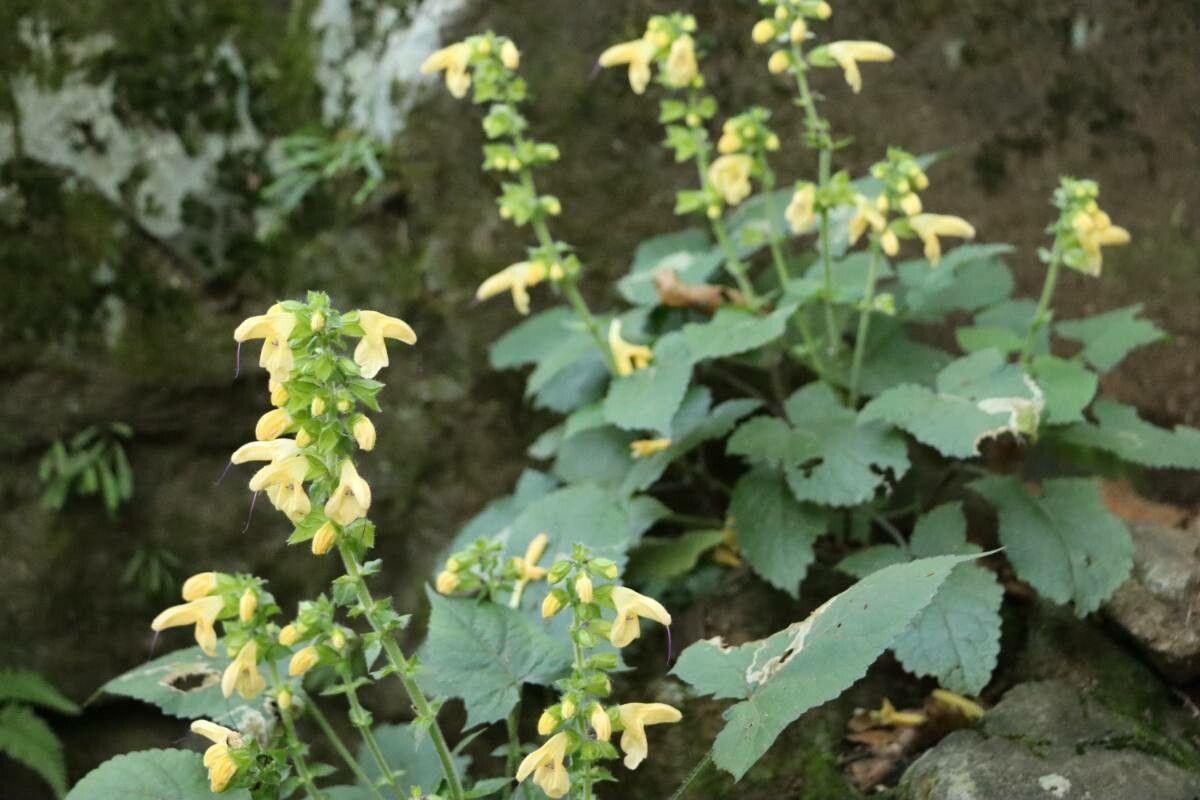
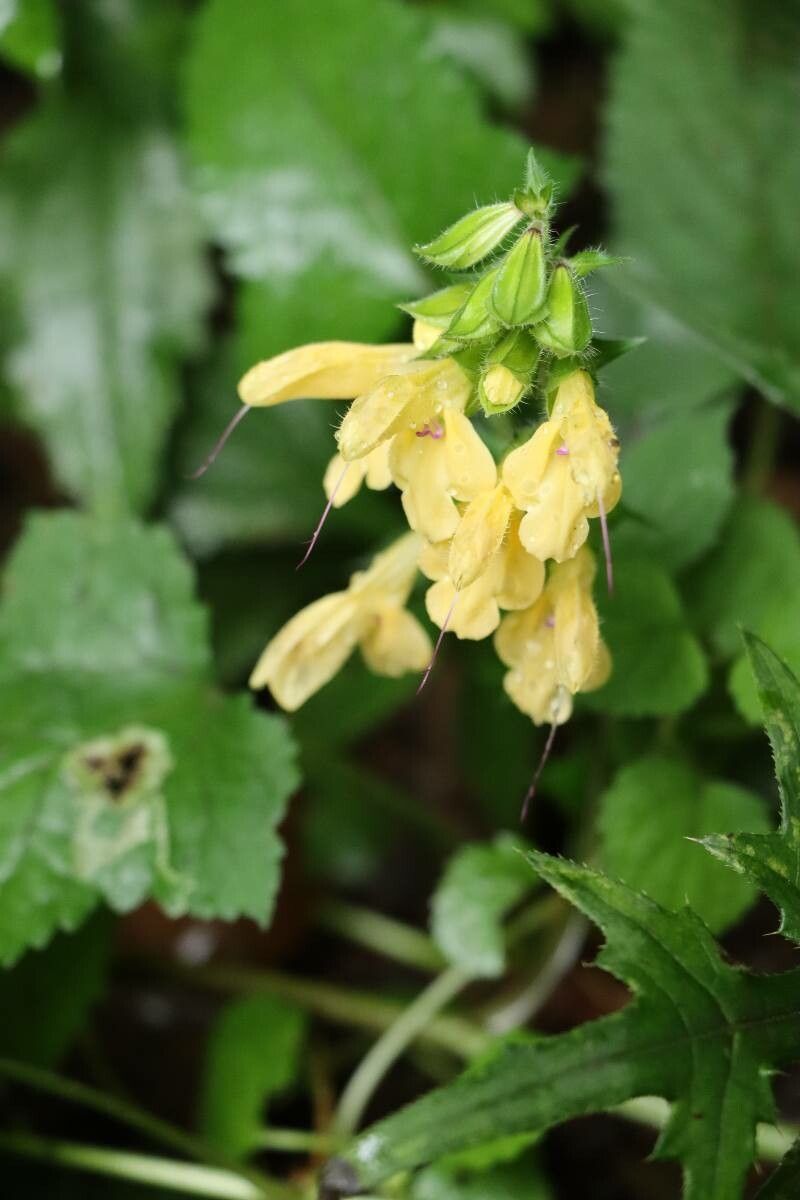
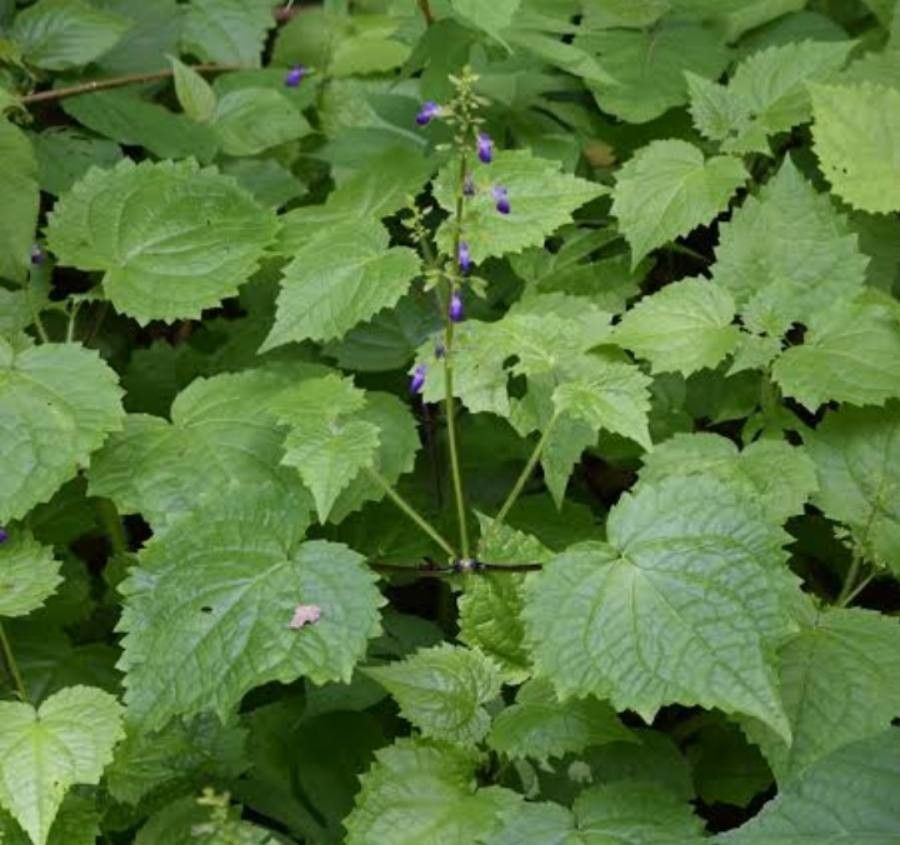
Salvia nipponica is a perennial plant that is native to Japan and Taiwan. Stems grow from 20 to 50 cm, with triangular-ovate to triangular-hastate leaves that are typically 2 to 7 cm by 1.3 to 6 cm. The 2.2 to 2.4 cm flowers have many hairs, with a yellow corolla that has a red spot.
Japanese yellow sage has good resistance to disease and generally isn't prone to illness. That said, it can be vulnerable to pests and diseases present in its environment. These problems are usually mild. Regarding care, the plant is of moderate maintenance. It should be pruned regularly to maintain appearance and healthy growth. Fertilizing can also help encourage flowering. Japanese yellow sage is suitable for anyone with outdoor space, such as a garden or patio, and doesn't demand extensive gardening experience. It may need additional care when grown indoors.
How to keep Salvia Nipponica.
Light
Japanese yellow sage grows best in full sun but can also tolerate gentler light. Its development improves when it gets long hours of sun, including strong midday rays. Conversely, insufficient sunlight causes poor growth. Native to an environment with abundant sunshine, the plant is naturally adapted to those conditions.
Water
Japanese yellow sage flourishes in the moist and humid conditions typical of Japan's forest understories. This woodland perennial thrives in consistently moist soil and requires weekly watering. It is best suited for temperate climates with evenly distributed rainfall and is often grown outdoors to take advantage of natural moisture.
Temperature
Japanese yellow sage is native to temperate climates and favors temperatures from 50 to 95 °F (10 to 35 ℃). In cooler seasons, gradually change the temperature for indoor planting, avoiding abrupt drops.
Fertilizer
The ideal time to fertilize a Japanese yellow sage is in early spring, when it is coming out of dormancy and starting active growth. Fertilization supplies essential nutrients for healthy growth. Although Japanese yellow sage has relatively low fertilizer needs, annual feeding can improve its survival and encourage better, longer-lasting flowers.
Pruning
Japanese yellow sage is known for its vibrant yellow flowers and fragrant leaves. To help it thrive, proper pruning is essential. Start by removing damaged stems, cutting off spent flowers, and thinning out overcrowded sections. Prune from early to late spring to encourage bushier growth and improve flowering, giving your garden a healthy and attractive appearance.
Pot & Repot
For Japanese yellow sage to thrive in pots, it needs excellent drainage.
Botanical profile.
- Plant Type
- Herb
- Life Cycle
- Perennial
- Genus
- Salvia
- Family
- Lamiaceae
- Hardiness Zone
- 6-9
- Mature Height
- 30 cm
- Mature Spread
- 61 cm
- Leaf Color
- Green, Dark Green
- Leaf Type
- Deciduous
- Flower Color
- Yellow
- Flower Size
- 2.29 cm to 2.29 cm
- Bloom Time
- Late summer, Early fall, Mid fall
- Planting Time
- Spring
- Harvest Time
- Mid fall, Late fall, Early winter
Other names.