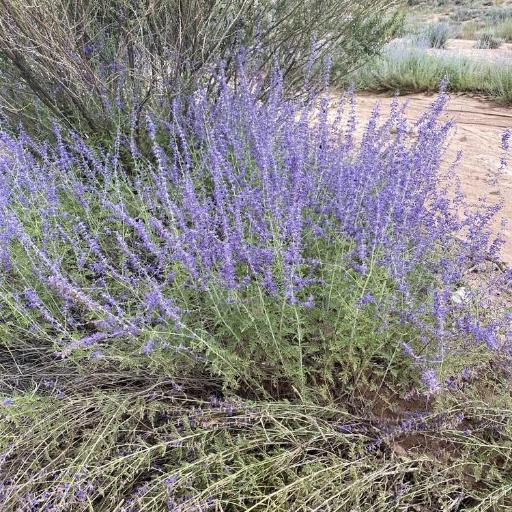
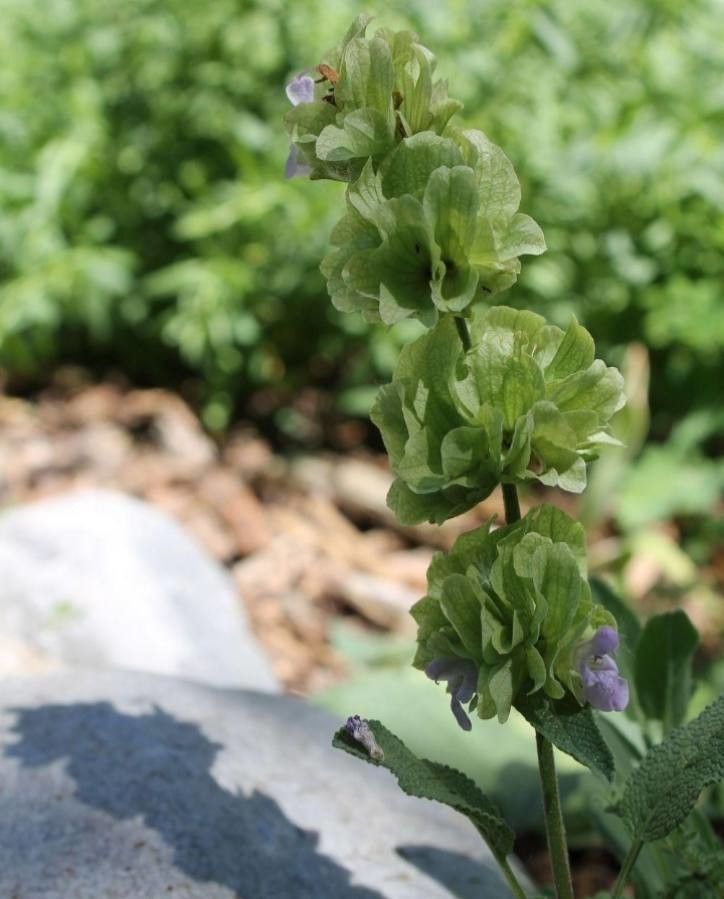
Salvia mohavensis (Mojave sage) is a species of sage endemic to the Mojave Desert. It is a low rounded shrub growing to 1 m tall with small opposite evergreen leaves 1.5–2 cm long, which are dark green or may appear nearly gray due to a covering of fine white hairs. The 2 cm long flowers are pale blue with protruding stamens, and occur in headlike whorls that occur singly at the tip of the stem. It blooms from April to June.
Mojave sage has strong disease resistance and is usually not susceptible to illnesses. This plant is fairly low-maintenance. Planted outdoors, it needs only minimal watering, and larger specimens typically do not require pruning. Smaller plants, however, should be pruned after they finish blooming. Mojave sage is well suited for anyone with outdoor space, such as a garden or a deck, and does not demand extensive care experience.
How to keep Salvia Mohavensis.
Light
Mojave sage is native to open settings like sunlit meadows and the boundaries of forests, where there is plenty of light. It flourishes under the Full Sun, but it also can withstand Partial Sun, indicating its great adaptability to different levels of sunlight.
Water
Drought-resistant varieties of Mojave sage require minimal watering, mostly during periods of drought. However, tender varieties and young plants need about 2.5 cm (1 inch) of water every 7 to 10 days to prevent the soil from becoming completely dry.
Temperature
Mojave sage demonstrates good temperature adaptability, tolerating high heat and wider temperature fluctuations. In hot conditions, attention should be paid to watering and providing suitable shade to avoid sunburn. Conversely, Mojave sage is relatively sensitive to low temperatures; while it can endure some cold, very cold conditions may cause frost damage.
Fertilizer
The timing for feeding Mojave sage is critical. Administer fertilizer starting in the early spring and continue on a monthly basis until the beginning of summer. Fertilization aids in the creation of beautiful flowers and supplies energy during periods of dormancy and active growth.
Pruning
Mojave sage is a drought-tolerant shrub known for its fragrant foliage and vibrant blooms. To encourage growth, you should prune it in early spring. During this time, remove any damaged stems and trim away spent flowers to ensure continuous blooming. Thinning out older branches will also improve air circulation. Additionally, regular light pruning helps maintain the plant's shape and overall health.
Botanical profile.
- Plant Type
- Shrub
- Life Cycle
- Perennial
- Genus
- Salvia
- Family
- Lamiaceae
- Hardiness Zone
- 7-10
- Mature Height
- 30 cm to 61 cm
- Mature Spread
- 30 cm to 61 cm
- Leaf Color
- Gray, Green
- Leaf Type
- Deciduous
- Flower Color
- Lavender, Purple
- Flower Size
- 2.03 cm to 3.05 cm
- Bloom Time
- Mid spring, Late spring, Early summer
- Planting Time
- Spring, Summer
- Harvest Time
- Summer
- Native Area
- Mexico