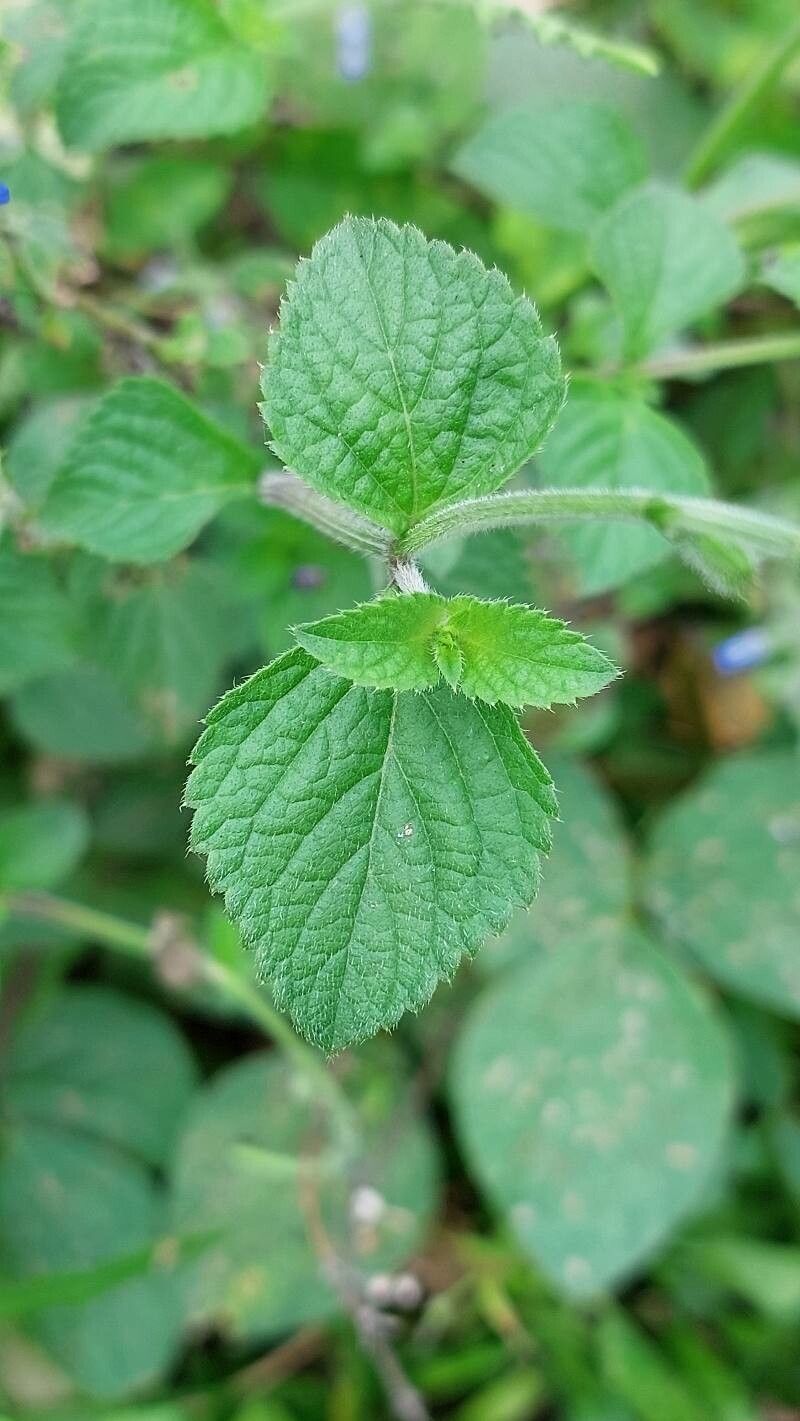
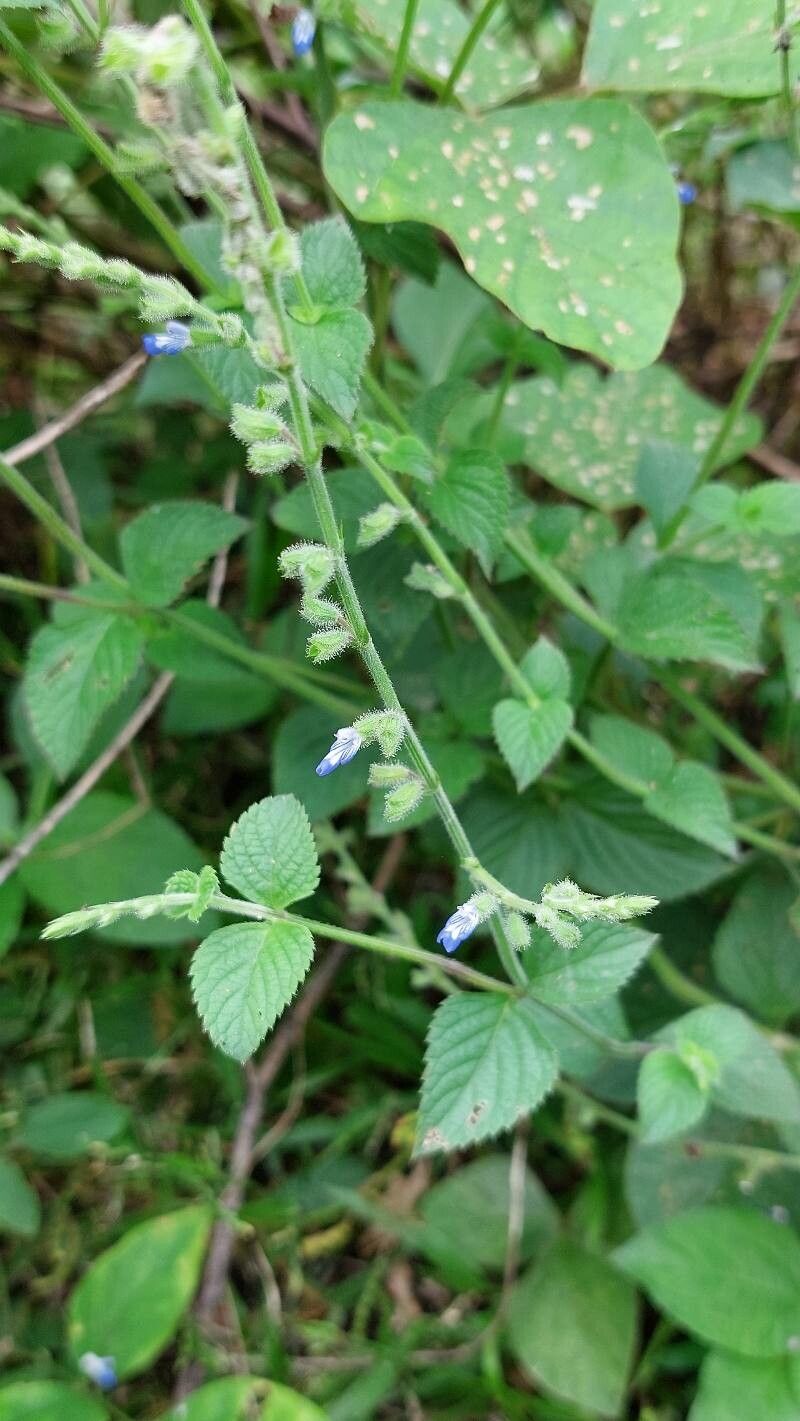
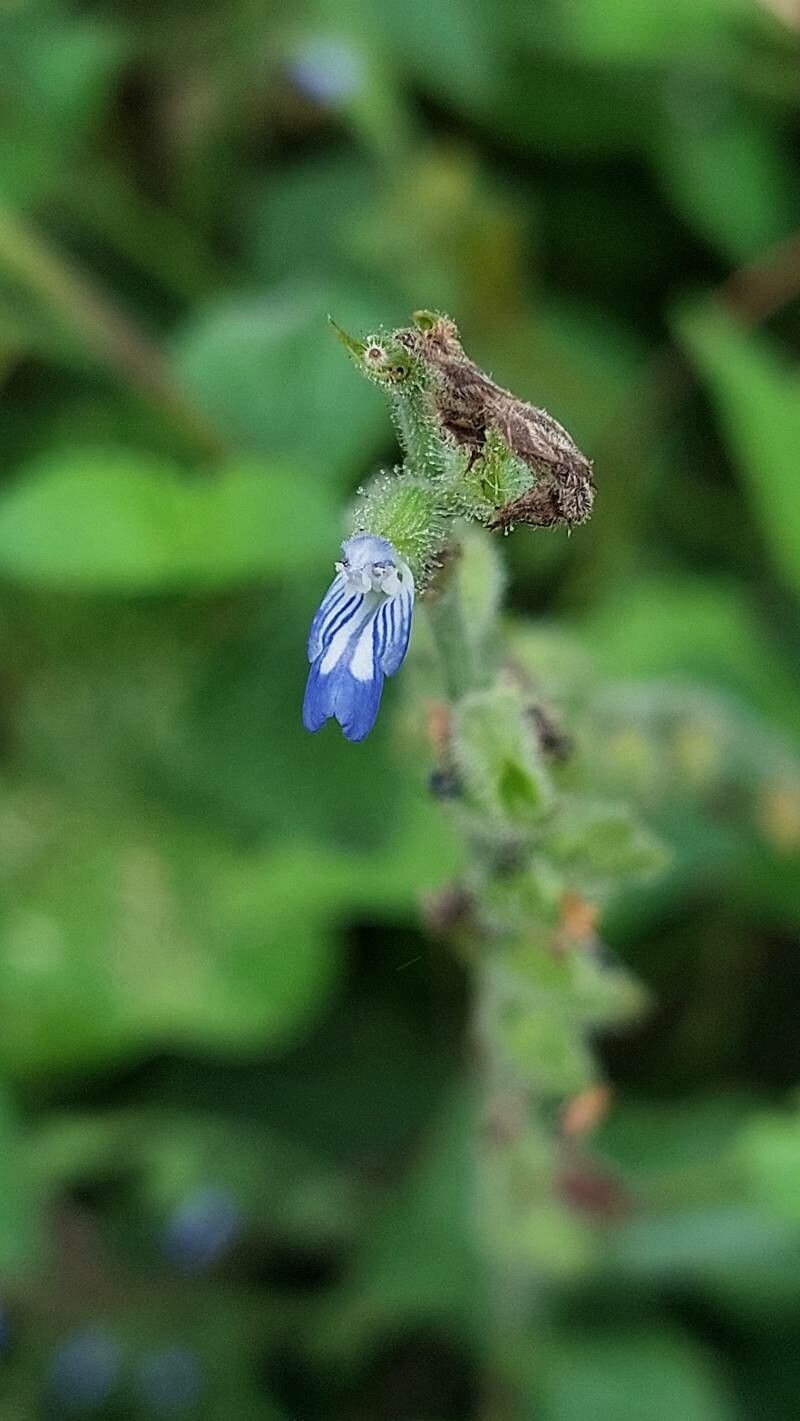
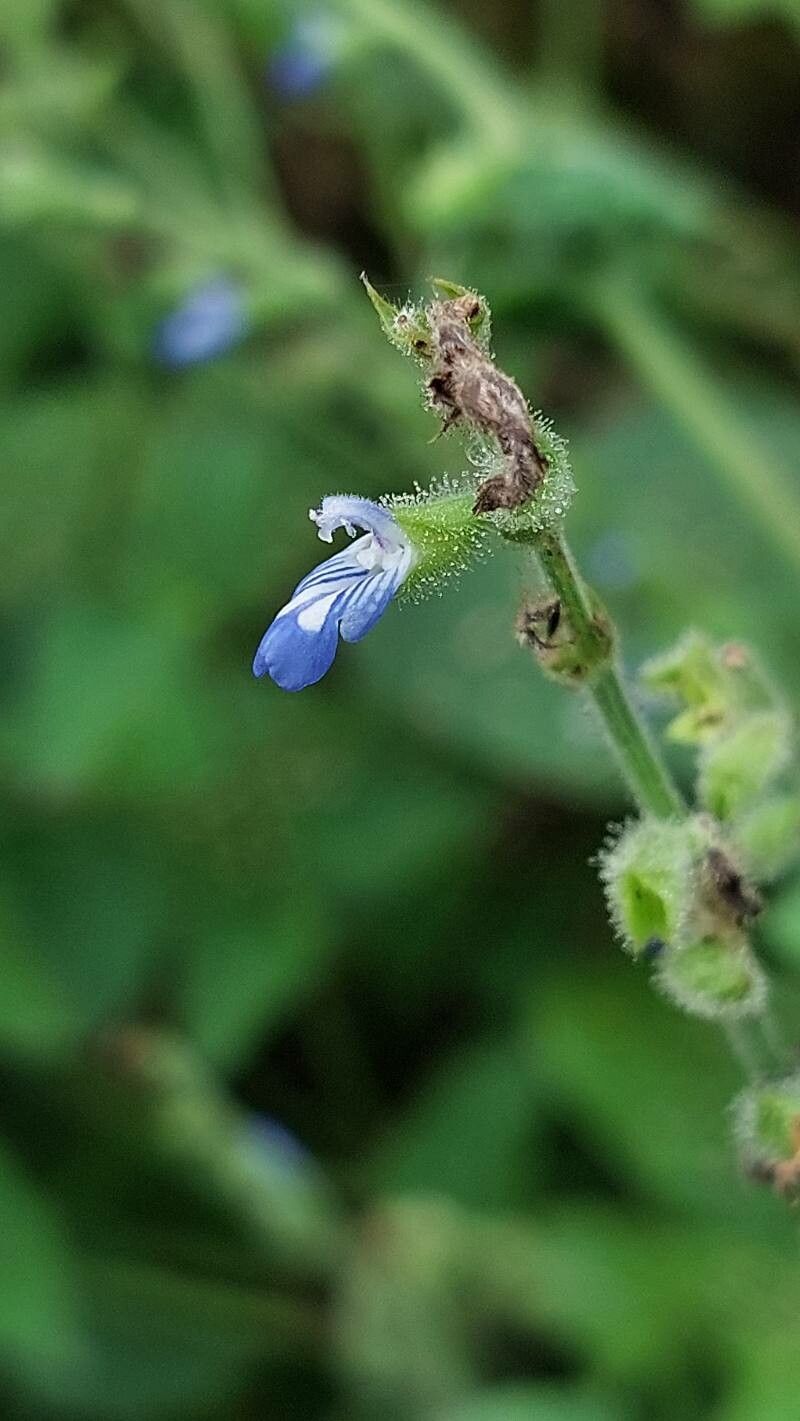
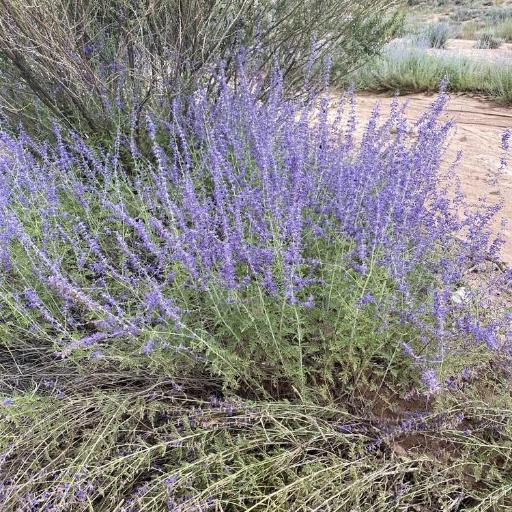
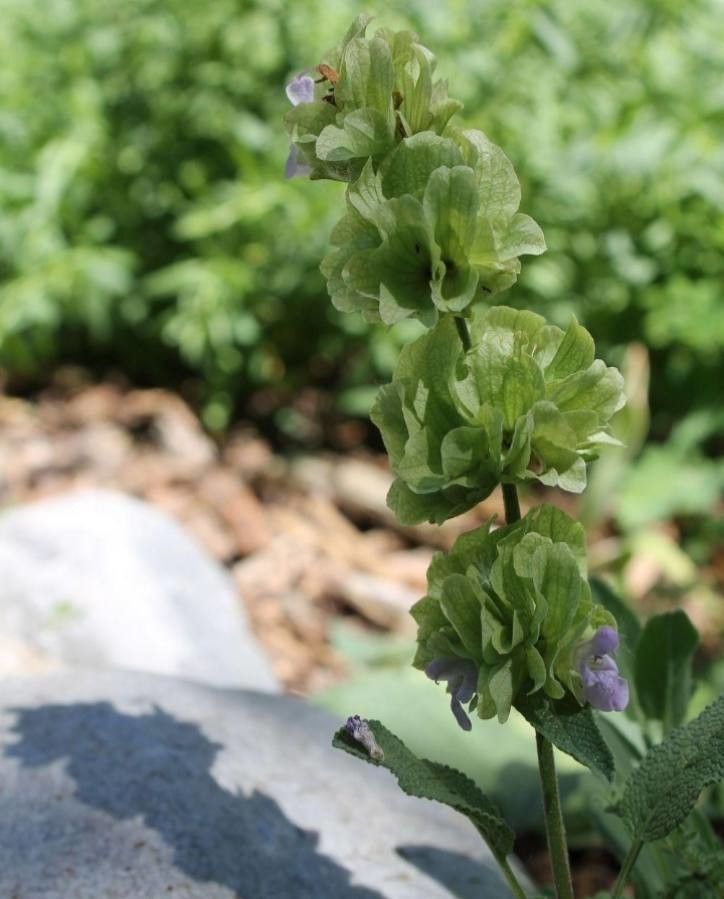
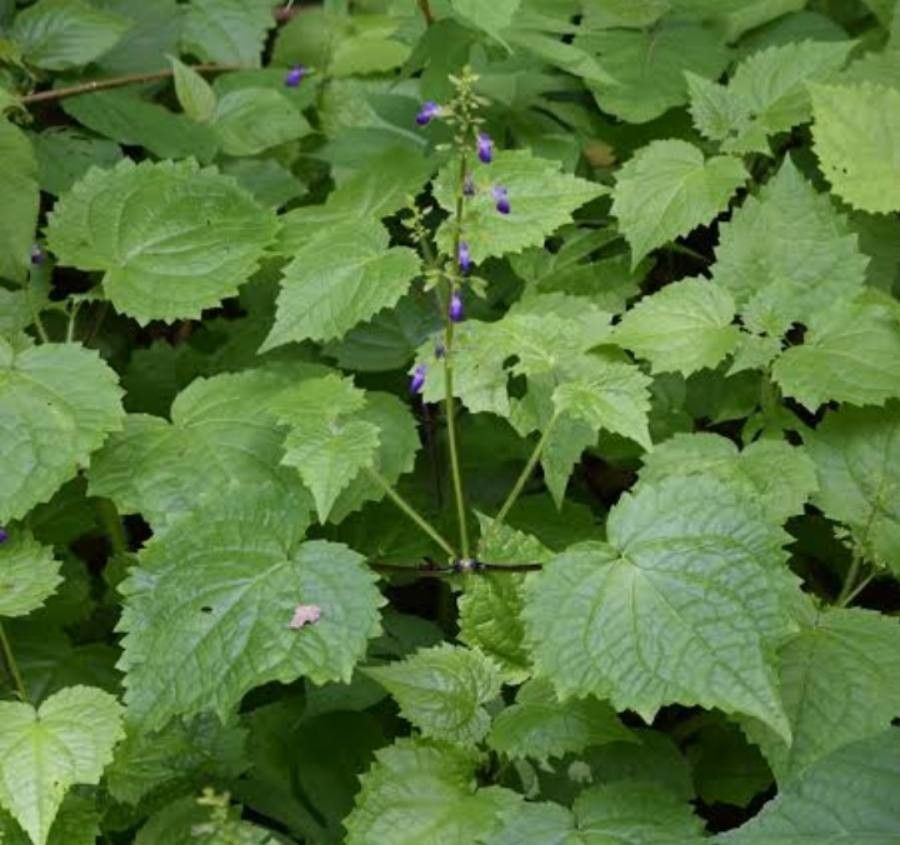
Salvia misella, commonly known as tropical sage, is an annual herb growing throughout tropical America, often found in semi-arid regions on disturbed bushy ground, from sea level to 2,200 metres (7,200 ft). It is similar and perhaps closely related to Salvia occidentalis, with a longer calyx and a 5 millimetres (0.20 in) blue flower.
Tropical sage is fairly resistant to disease and generally not prone to illnesses. However, it can be vulnerable to pests and diseases present in its surroundings, and such infections are typically mild. As for care, this plant needs moderate maintenance. It should be pruned regularly to keep a good appearance and healthy growth. Fertilizing can also help encourage flowering. Tropical sage is suitable for people with outdoor spaces like a garden or patio and does not demand much experience in plant care. It may need more attention if grown indoors.
How to keep Salvia Misella.
Light
Tropical sage originates from habitats like forest understories and rocky terrain, where it grows in natural shade. It prefers partial sun but can tolerate both full sun and full shade, reflecting its versatile, hardy nature.
Water
Tropical sage, native to warm and humid environments, flourishes in high humidity and consistent moisture. To promote lush growth, it's crucial to water it once a week. If you're growing tropical sage outdoors, it's important to consider its flowering cycle. Providing sufficient water during the blooming period boosts flower production and enhances the plant's overall vitality.
Temperature
Tropical sage comes from tropical areas, where the climate is generally warm and humid. Consequently, it is adapted to high heat and moisture. It is sensitive to sudden temperature changes and prefers a steady thermal environment, so avoiding indoor temperature fluctuations is important. It generally cannot tolerate cold and needs warmer conditions to grow. If the surrounding temperature falls too low, growth may halt or the plant could die.
Fertilizer
Proper fertilization is vital for Tropical sage's health and appearance. Fertilize Tropical sage during summer, repeating the application monthly throughout summer. The nutrients fuel growth and help maintain the plant's structures. Fertilization enhances Tropical sage's flower display, ensuring the best blooms.
Pruning
Tropical sage is a low-growing herbaceous perennial known for its aromatic leaves and vibrant flowers. To encourage bushier growth and more blooms, it is best to prune the plant from early to late spring. Pruning during this time also improves airflow and helps prevent disease.
Botanical profile.
- Plant Type
- Herb
- Life Cycle
- Perennial
- Genus
- Salvia
- Family
- Lamiaceae
- Hardiness Zone
- 9-11
- Mature Height
- 15 cm to 25 cm
- Mature Spread
- 0.91 m to 1.52 m
- Leaf Color
- Green
- Leaf Type
- Semi-evergreen
- Flower Color
- Lavender
- Flower Size
- 0.51 cm
- Bloom Time
- All year round
- Planting Time
- Summer, Autumn
- Harvest Time
- All year round
- Native Area
- Colombia, Cuba, Honduras, Mexico, Guatemala, Venezuela, Peru, El Salvador, Nicaragua, Ecuador, Costa Rica, Jamaica
Other names.