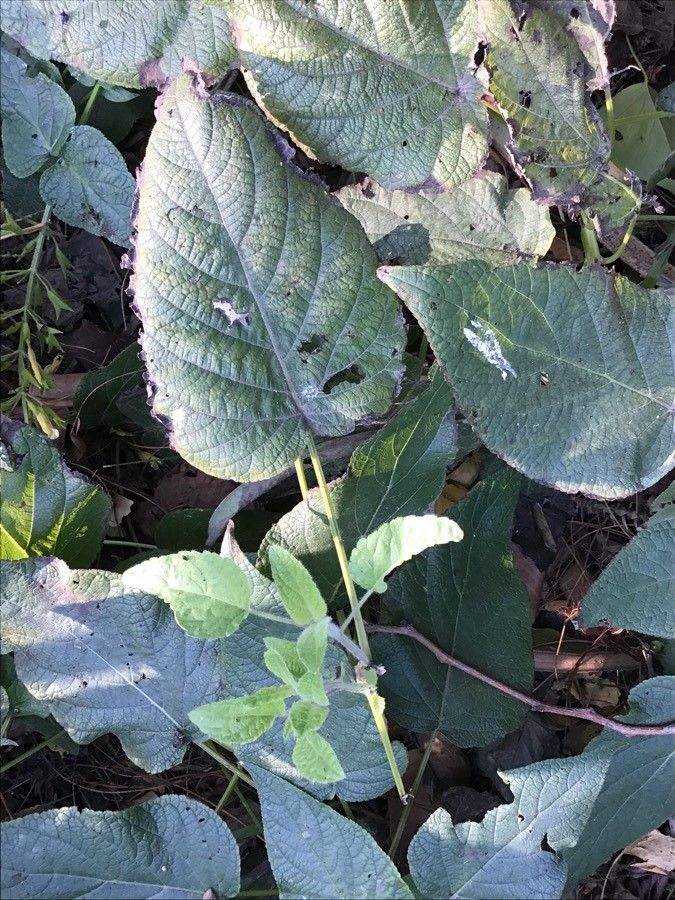
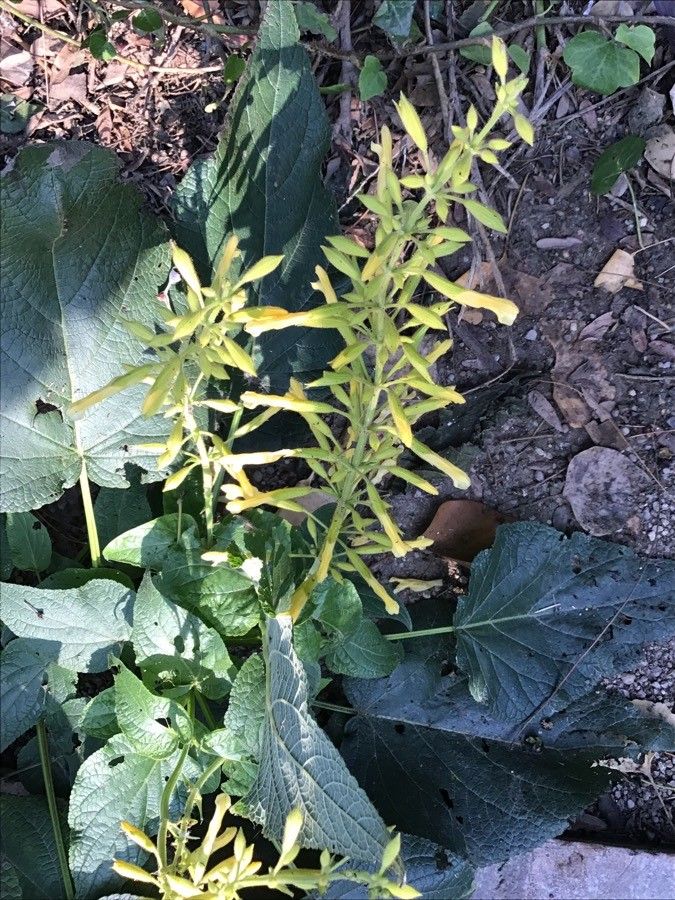
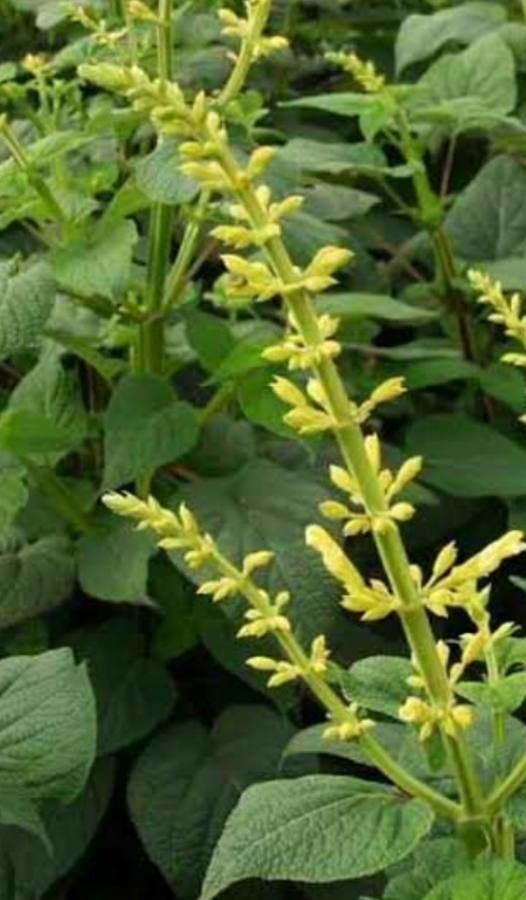
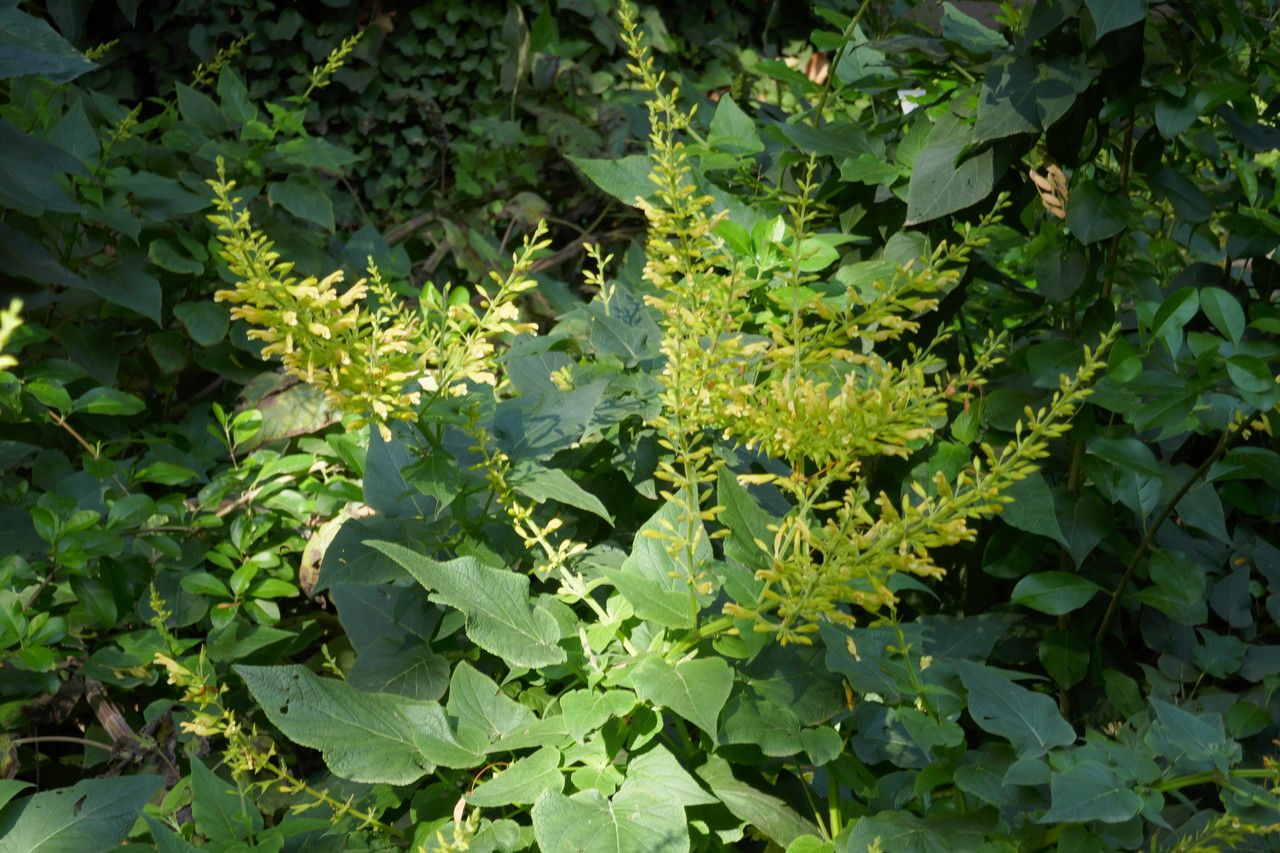
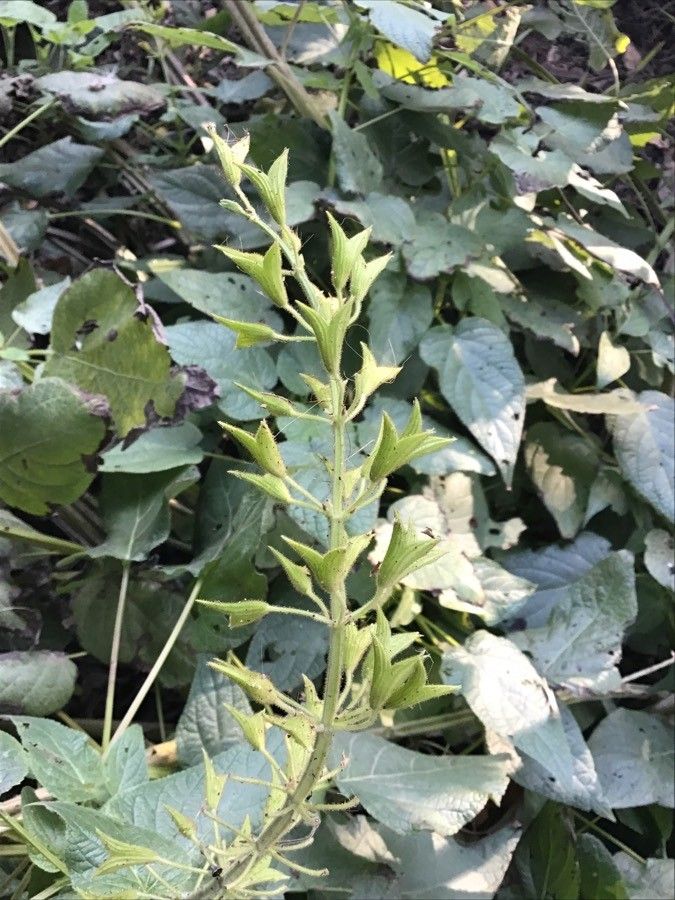
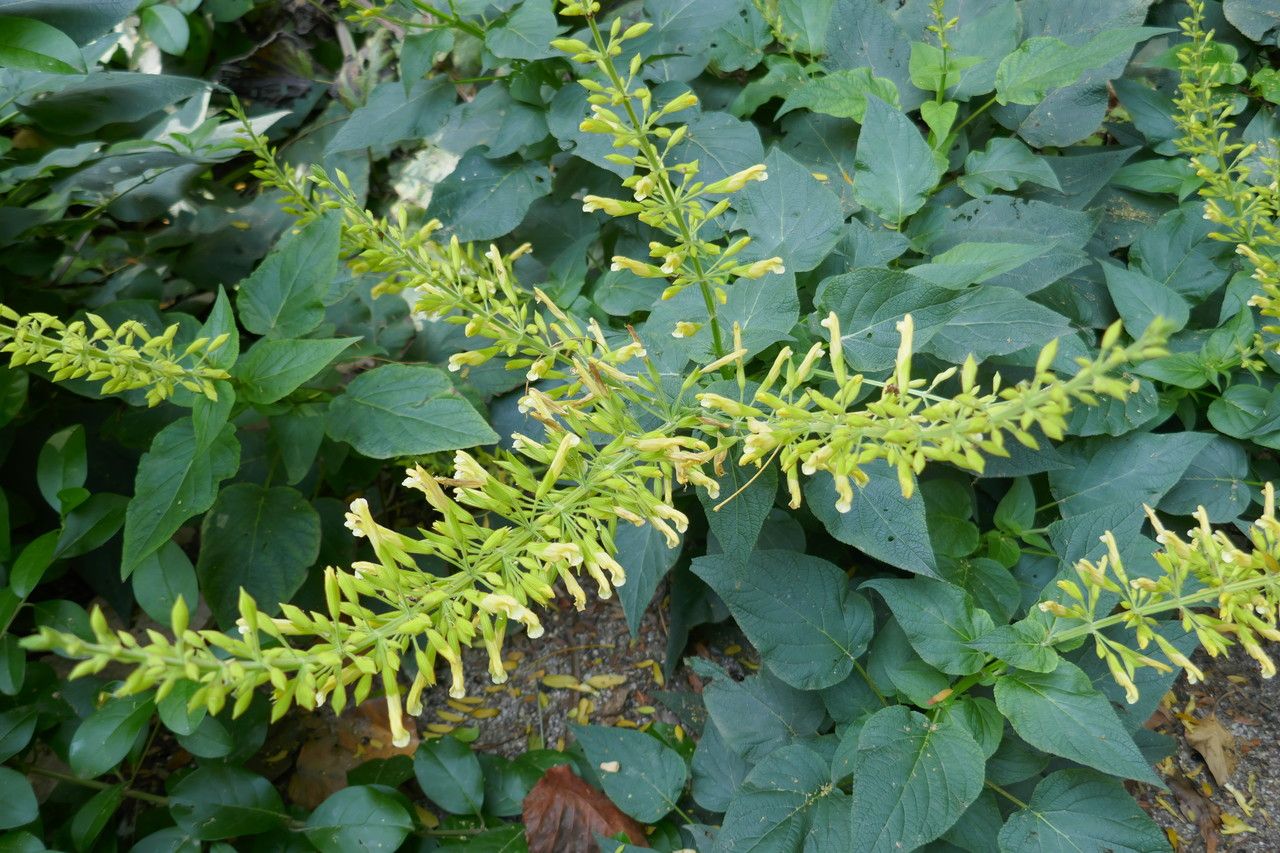
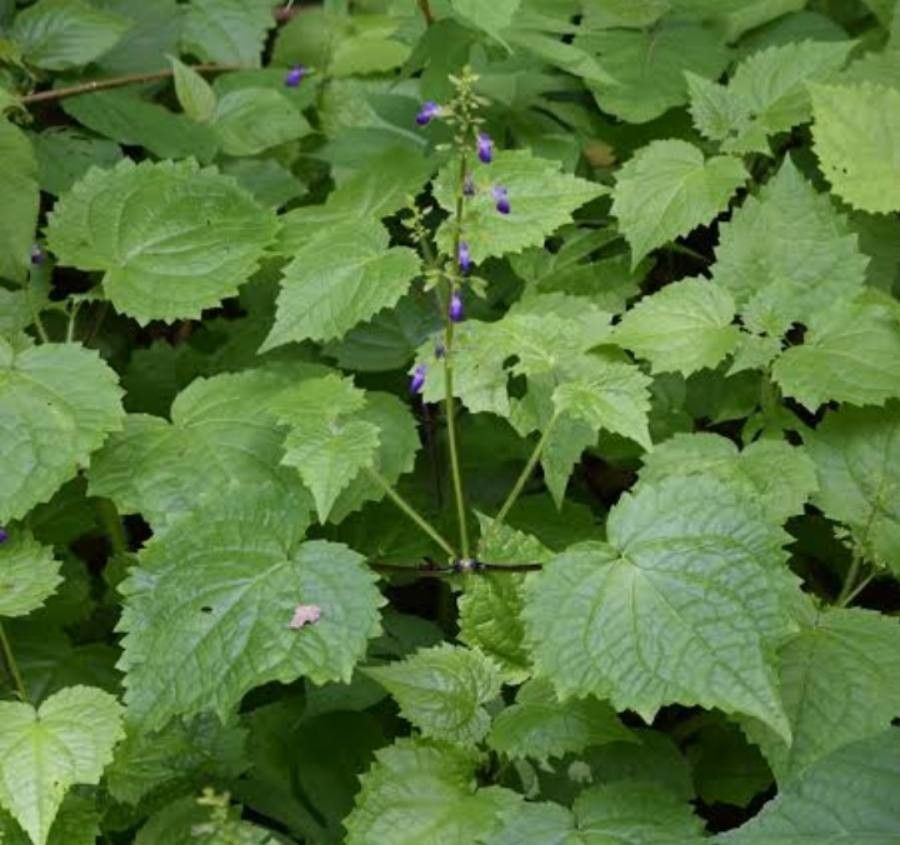
Salvia madrensis (Forsythia sage) is a yellow-flowered Salvia native to the Sierra Madre Oriental mountain range in Mexico, growing at 4,000–5,000 elevation in warm, wet areas. The specific epithet "madrensis" refers to the high mountains where it grows.Salvia madrensis spends the first part of the growing season putting out 4–7 foot stems that are thick (2 inches) and square, with ridges on each corner emphasizing the squareness. The rough, heart-shaped spinach-green leaves are widely spaced on the stem, graduating in size from large at the bottom to smaller at the top, giving a lush covering to the plant. Numerous 12 inch inflorescences are covered with softly colored butter-yellow flowers held in whorls. The calyces are aromatic and covered with sticky glands. Blooming begins in late autumn, lasting until frost.
Forsythia sage has good resistance to diseases and usually does not tend to get sick. However, it can be vulnerable to pests and diseases present in its surroundings. These infections are typically not serious. For care, this plant needs moderate upkeep. It requires regular pruning to keep a neat appearance and support healthy growth. Fertilizing can also help encourage flowering. Forsythia sage is appropriate for anyone with outdoor space, such as a garden or patio, and does not demand extensive experience in plant care. It may need more attention when grown indoors.
How to keep Salvia Madrensis.
Light
Forsythia sage naturally occurs in habitats like forest understories and rocky sites, where it grows in natural shade. It prefers partial sun but can tolerate both full sun and full shade, reflecting its hardy, adaptable character.
Water
Forsythia sage grows best in moderately moist soil, as it prefers consistent moisture for optimal development. Water the plant every 1 to 2 weeks, letting the soil dry out slightly between waterings. While it is commonly grown outdoors, applying mulch can help retain moisture during its active growing season.
Temperature
Forsythia sage adapts well to temperature, tolerating high heat and wide temperature fluctuations. In hot weather, attention should be paid to watering and suitable shade should be provided to prevent sunburn. However, Forsythia sage is less tolerant of low temperatures; while it can endure some cold, excessively low temperatures can cause frost damage.
Fertilizer
The best time to fertilize a Forsythia sage is in early spring, when it is coming out of dormancy and beginning active growth. Fertilization supplies essential nutrients needed for healthy growth. Although Forsythia sage has relatively low fertilizer requirements, applying fertilizer annually can boost its survival and encourage better, longer-lasting flowers.
Botanical profile.
- Plant Type
- Herb
- Life Cycle
- Perennial
- Genus
- Salvia
- Family
- Lamiaceae
- Hardiness Zone
- 8-11
- Mature Height
- 2.13 m
- Mature Spread
- 1.22 m
- Leaf Color
- Forest Green, Dark Green
- Leaf Type
- Evergreen
- Flower Color
- Yellow
- Flower Size
- 2.03 cm to 3.05 cm
- Bloom Time
- Fall
- Planting Time
- Spring, Summer, Autumn
- Harvest Time
- Mid fall, Late fall, Early winter
- Native Area
- Mexico