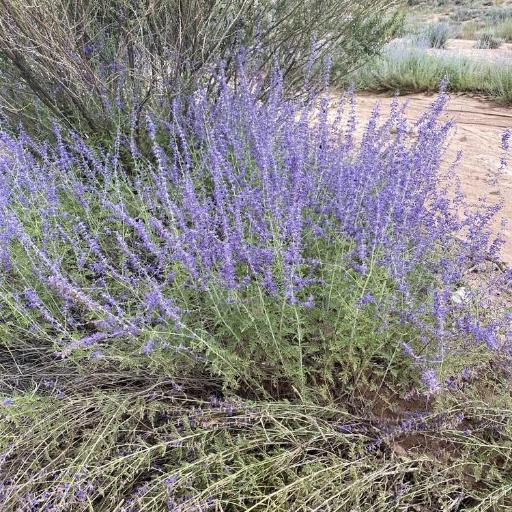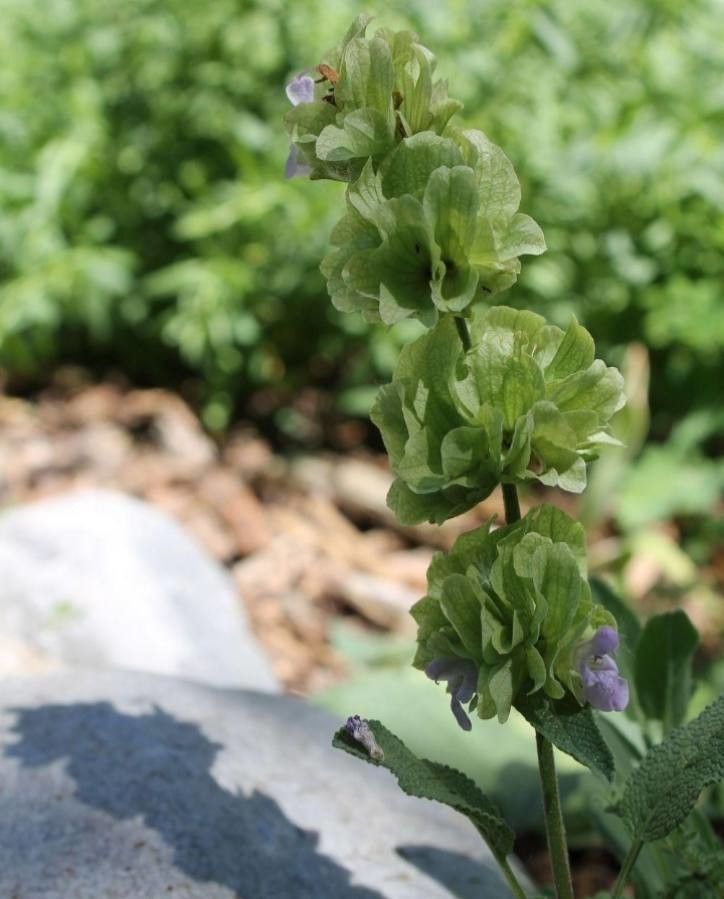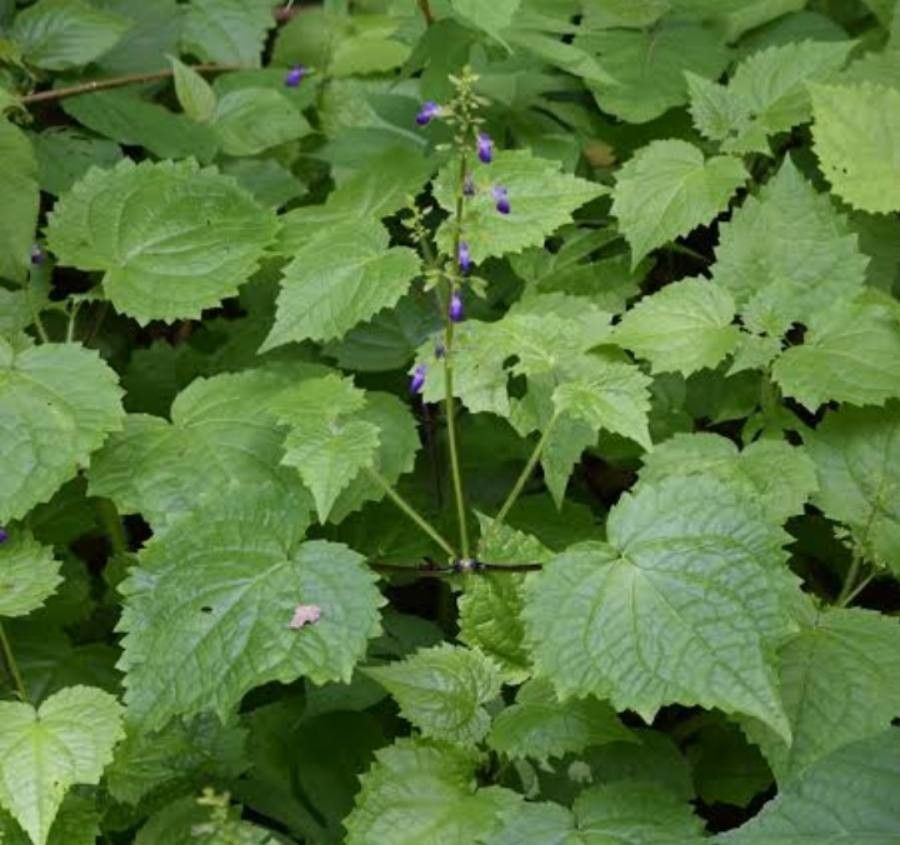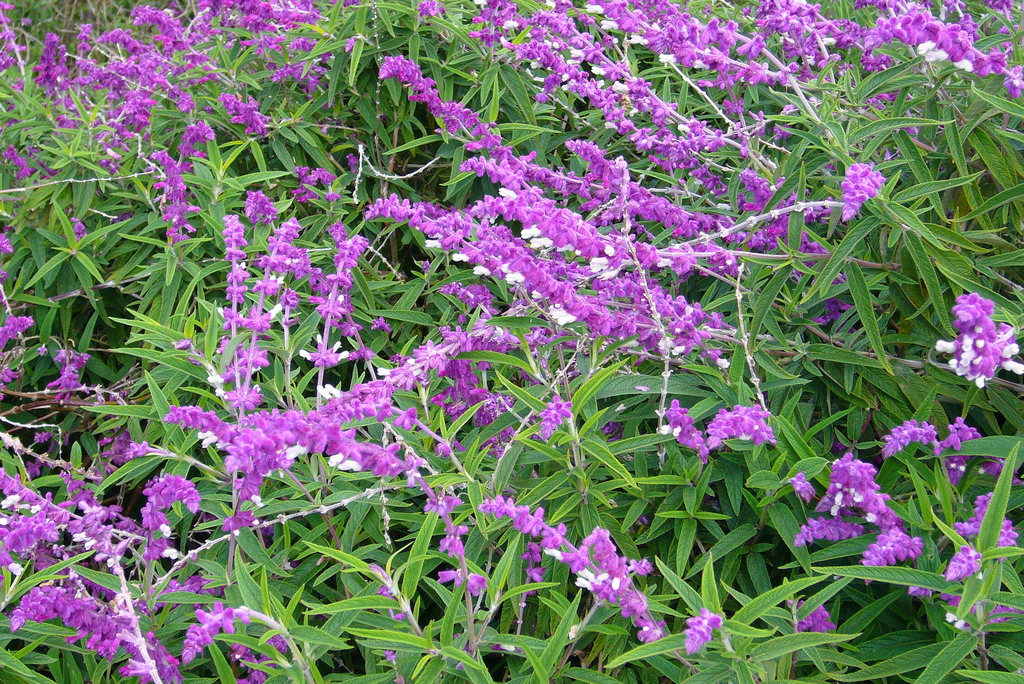
Salvia leucantha, commonly known as Mexican bush sage or velvet sage, is a perennial shrub native to Mexico and Central America. As a member of the mint family, it is celebrated for its striking purple or white flowers that bloom in the fall. This plant can grow up to 3 to 4 feet in height and width. Its soft green leaves are covered in fine hairs, giving them a velvety texture.
Mexican bush sage thrives in full sun and well-drained soil. While it is drought-tolerant once established, regular watering during hot summer months is beneficial. The plant attracts pollinators like bees, butterflies, and hummingbirds with its nectar-rich flowers.
For centuries, indigenous people of Mexico have used Salvia leucantha for its anti-inflammatory properties. In modern herbal medicine, it is also recognized for its calming effects and used as an anti-anxiety agent.
Although Mexican bush sage resembles other sage plants with its purple or pink "flowers," its true flowers are actually white. The vibrant purple structures are not flowers but rather calyces, which are cup-shaped parts from which the actual flowers emerge. While the real flowers of the Mexican bush sage are few, the plant as a whole remains quite attractive. FUN FACT · FROM THE LIBRARY
Overall, Salvia leucantha is an attractive ornamental plant that brings color and texture to any garden, along with its medicinal benefits.
Mexican Bush Sage is a species within the Salvia genus, part of the aromatic group known as 'sage.' As its common name suggests, this bushy type of sage is native to Mexico.
Mexican Bush Sage is fairly disease-resistant and typically not prone to ailments. Nevertheless, it can be affected by pests and diseases present in its environment. These problems are usually mild. For care, this plant needs moderate maintenance. It should be pruned regularly to keep a neat appearance and promote healthy growth. Fertilizing can also encourage more blooms. Mexican Bush Sage is well suited for anyone with outdoor space, such as a garden or patio, and does not demand extensive gardening experience. It may need extra attention when grown indoors.
How to keep Salvia Leucantha.
Light
Mexican Bush Sage grows best where it receives the most sun. It copes with reduced light, though this may diminish its vigorous growth. In its native habitat it is used to full sun, which promotes flowering. Prolonged lack of adequate sunlight can inhibit bud formation, while excessive sun exposure can weaken its vigor.
Water
Mexican Bush Sage thrives in tropical climates, where it prefers consistent moisture but can tolerate occasional dry spells. Watering it weekly helps maintain its vibrant foliage and blooms. Typically grown outdoors, this plant flourishes in temperate gardens when provided with balanced soil moisture and temperatures, making it an excellent choice for such settings.
Humidity
This plant will thrive in moderate humidity, which is probably the level in your home. However, misting it a few times a week can be very beneficial. Make sure the room has good ventilation.
Temperature
Mexican Bush Sage is native to warm climates and does best in temperatures from 68 to 95 °F (20 to 35 ℃). In colder settings, it is advisable to protect the plant from winter frost.
Fertilizer
The best time to fertilize a Mexican Bush Sage is in early spring, when it’s coming out of dormancy and starting active growth. Fertilization supplies essential nutrients needed for healthy growth. Although Mexican Bush Sage has relatively low fertilizer requirements, applying fertilizer annually can improve its survival and encourage better, longer-lasting blooms.
Pruning
Mexican Bush Sage is known for its vibrant purple flower spikes and aromatic leaves. To encourage blooming and maintain a healthy plant, it's best to prune between late winter and early spring. Trim the plant back to its base and remove any spent flowers. This helps improve air circulation, boosts overall plant health, and ensures a compact shape, which supports vigorous growth and abundant flowering.
Pot & Repot
Repot your Mexican bush sage every 2 to 3 years in early spring, using a container that is one size larger than the previous one. Choose well-draining soil and place the plant in bright, indirect light to aid its recovery. Water the plant regularly, making sure not to overwater, to encourage the growth of its unique, velvety purple flowers.
Botanical profile.
- Plant Type
- Herb
- Life Cycle
- Perennial, Annual
- Genus
- Salvia
- Family
- Lamiaceae
- Hardiness Zone
- 7-10
- Mature Height
- 1.22 m
- Mature Spread
- 46 cm
- Leaf Color
- Green, Gray, Silver
- Leaf Type
- Evergreen
- Flower Color
- Purple, White
- Flower Size
- 2.03 cm
- Bloom Time
- Mid summer, Late summer, Early fall
- Planting Time
- Spring
- Harvest Time
- Mid summer, Late summer, Fall
- Native Area
- Honduras, Mexico, Venezuela, El Salvador, Costa Rica, Panama
Other names.
Reader questions.
How should I water my Mexican Bush Sage?
To properly water the Mexican Bush Sage, it is recommended to use filtered water at room temperature. Tap water should be avoided because it may contain harmful particles. This plant prefers warmer water as it comes from a warm climate and cold water can be a shock. Instead of overhead watering, it is best to soak the soil with filtered room temperature water. This helps the roots absorb moisture and nutrients, promoting healthy growth.
Why is it important to add fertilizer to my Mexican Bush Sage plant?
Fertilization is important for the Mexican Bush Sage for various reasons. It helps the plant grow by providing important nutrients for both above and below ground growth. Although the overall fertilization needs for a Mexican Bush Sage are low, annual fertilization can be very beneficial. It helps keep the plant alive and may even enhance the quality and longevity of its flowers. Therefore, if you want your Mexican Bush Sage to look its best, annual fertilization should be maintained.
What are the sunlight requirements for Mexican Bush Sage?
Mexican Bush Sage thrives best in full sunlight conditions, requiring above 6 hours of sunlight daily to maintain healthy growth and vibrant blossoms. It can also adapt to partial sun, about 3-6 hours of sunlight, but this may affect its lush growth. It's important to observe the movement of sunlight through your garden to identify the best spots that provide a balance of light and shade, ensuring the optimal growth of your plants.
What is the native climate for Mexican Bush Sage?
Mexican Bush Sage, or Salvia leucantha, is native to balmy climates and thrives in temperatures ranging from 68 to 95 °F (20 to 35 °C). It demonstrates strong cold resistance and generally does not require special frost protection measures during the winter. However, if temperatures are expected to drop below -15°C, precautions should still be taken. To protect the plant from frost, covering it with materials like soil or straw can be effective. Additionally, watering the plant abundantly before the first freeze in autumn to ensure the soil remains moist is recommended, helping to prevent drought and water scarcity for the plant during winter and early spring.
What should I do if I give my Mexican Bush Sage too much or too little water?
Overwatering is a more common problem than underwatering for Mexican Bush Sage. When overwatered, the stems and leaves may wilt and turn yellow. Over time, this can lead to diseases such as root rot, mold, and mildew, which can be fatal for the plant. Mexican Bush Sage has decent drought tolerance, so underwatering is less likely. However, if it does occur, the leaves may become brittle and brown. It's important to detect signs of overwatering early and reduce watering immediately. Assess the soil quality and replace it if it drains poorly. If underwatering is the issue, simply water more regularly.
When should I fertilize my Mexican Bush Sage?
The best time to fertilize a Mexican Bush Sage is in late winter to early spring when it is coming out of dormancy and starting to grow. Fertilizing at this time promotes healthy growth for the upcoming season. Fertilizing in the fall is also acceptable, but it is not recommended in summer or winter.
How does sunlight affect the growth of Mexican Bush Sage?
Sunlight plays a crucial role in the health and blossoming of Mexican Bush Sage. Originating from environments with abundant sunlight, it achieves optimal growth and flowering under full sun exposure. Inadequate sunlight can lead to discouragement of budding, while overexposure might impair the plant's stamina. For indoor plants, artificial lighting can be a vital solution in locations with insufficient natural sunlight, promoting healthier growth. Types of artificial light, their placement, and duration of exposure should be carefully considered to mimic natural sunlight conditions.
How does low temperature affect Mexican Bush Sage and what are the solutions?
Mexican Bush Sage is cold-tolerant and performs best when temperatures are above 20°C, requiring to be kept above 0°C during winter. If temperatures fall below -15°C, the plant might not exhibit noticeable changes during winter, but there could be a decrease in sprouting or even no sprouting at all during springtime. To mitigate this, in spring, gardeners should remove any parts of the plant that have failed to sprout as a solution to help the plant recover and grow.
How frequently should I water my Mexican Bush Sage?
If your Mexican Bush Sage is in a pot, the most precise way to determine whether it needs water is by checking the soil. Stick your finger in the soil, and if the top two to three inches are dry, then it's time to water it. If you're growing the plant outdoors in the ground, you can use the same method. When the top few inches of soil have become dry, it's time to water. Typically, during spring and early fall, you'll need to water the plant about once a week using this method. However, during extremely hot weather, you may need to increase watering to twice a week or more. Keep in mind that mature, well-established Mexican Bush Sage has a good ability to tolerate drought.
When is it better to not add fertilizer to my Mexican Bush Sage?
It is best to only fertilize your Mexican Bush Sage in late winter or early spring. This plant has low fertilization requirements, so a single annual feeding is enough. Avoid fertilizing during spring, summer, and fall to prevent overfertilization and its complications. However, if you missed fertilizing in the spring, you can still feed the plant in the fall. Also, refrain from fertilizing during the winter when the plant is in a dormant growth phase and does not produce new growth.
What symptoms indicate inadequate sunlight for Mexican Bush Sage?
Symptoms of inadequate sunlight in Mexican Bush Sage include smaller new leaves, leggy or sparse growth, faster leaf drop, slower or no new growth, and lighter-colored new leaves. Additionally, chlorosis, sunscald, leaf curling, wilting, and leaf scorching are indicators that the plant is either receiving too little or too much sunlight. These symptoms point to the plant's struggle to photosynthesize efficiently, either due to insufficient light for energy production or excessive sunlight leading to damage.
How does high temperature affect Mexican Bush Sage and what are the solutions?
During the summer, keeping the Mexican Bush Sage below 35°C is crucial. If temperatures exceed 41°C, the plant's leaves may lighten in color, become prone to curling, suffer from sunburn, and, in severe cases, the entire plant may wilt and dry up. To help the plant cope with high temperatures, it is recommended to trim away any sunburned and dried-up parts. Moving the plant to a location with shade from the midday and afternoon sun, or using a shade cloth to provide shade, can also be beneficial. Watering the plant in the morning and evening to keep the soil moist is advised to further support the plant’s health during high temperatures.