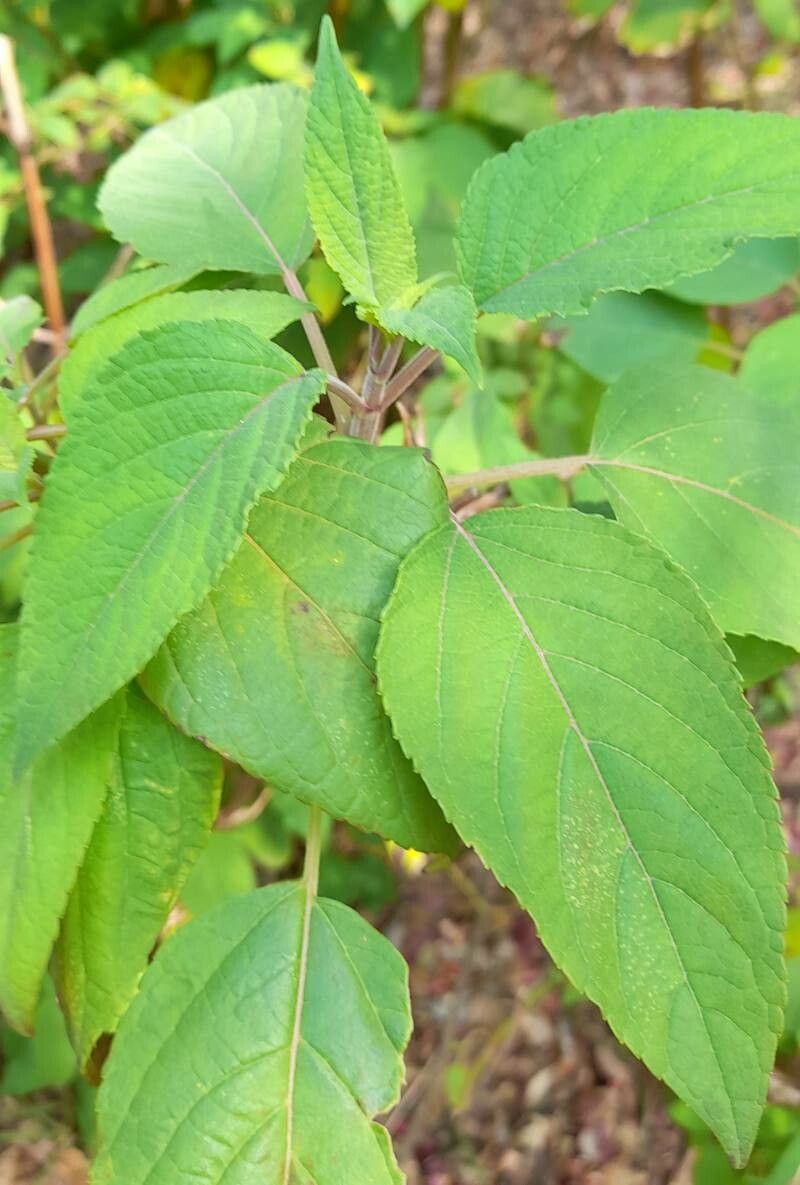
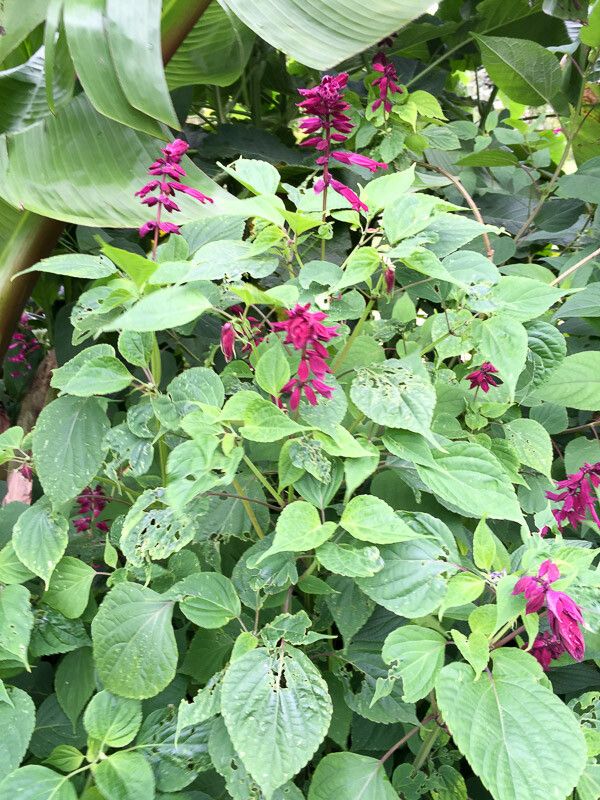
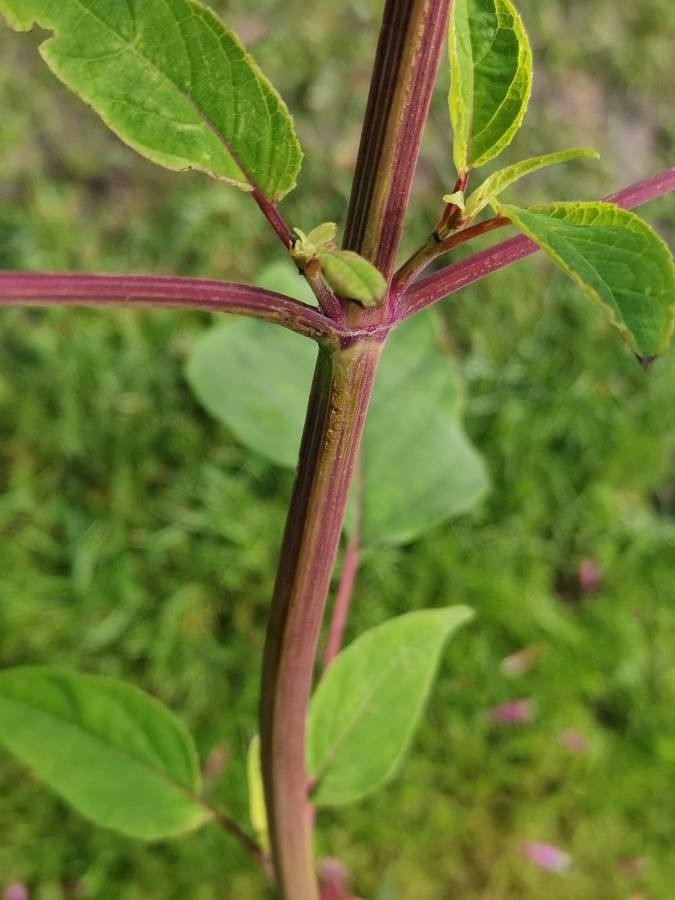
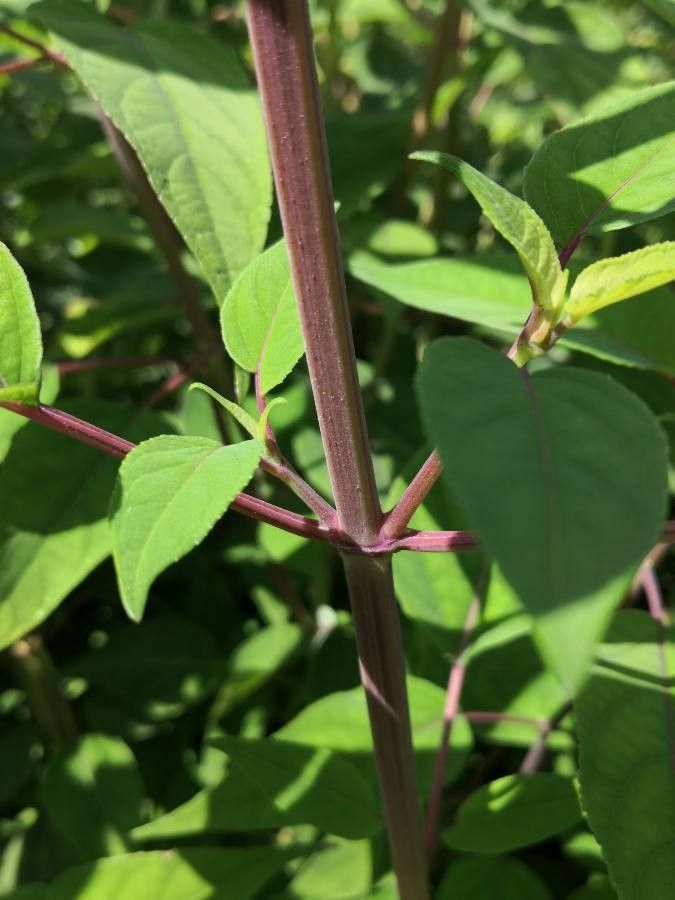
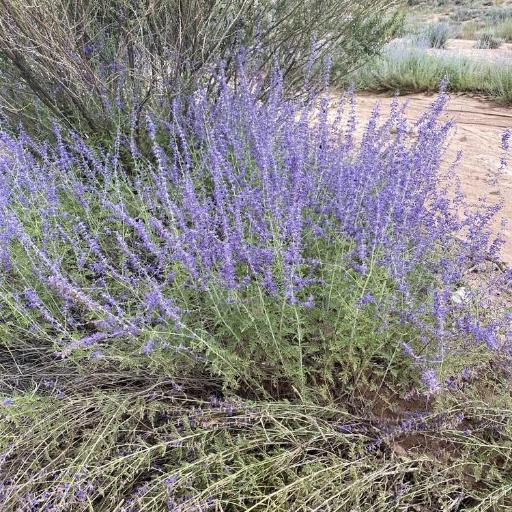
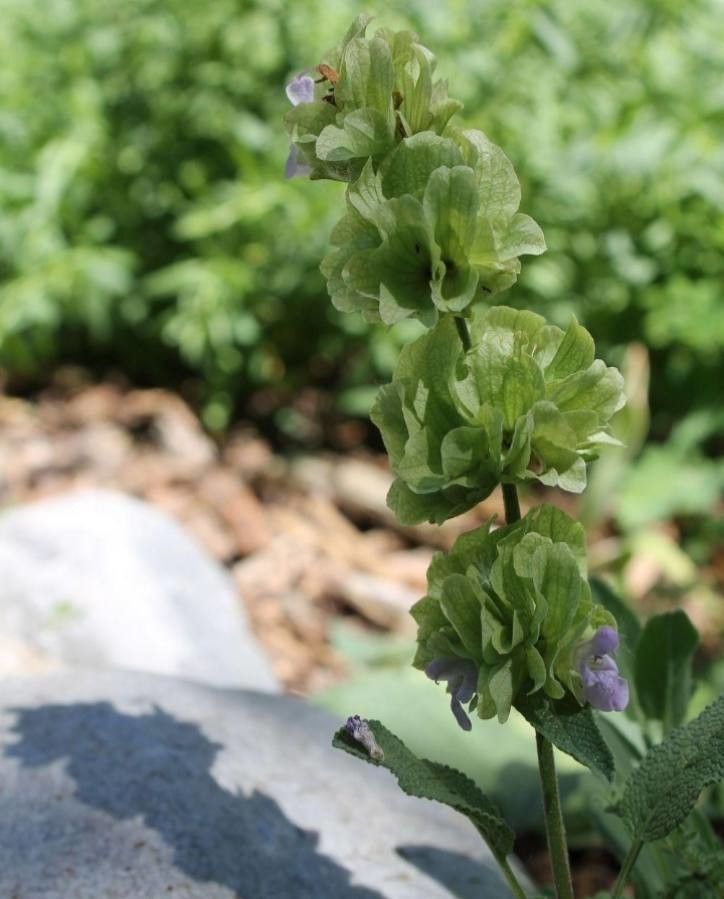
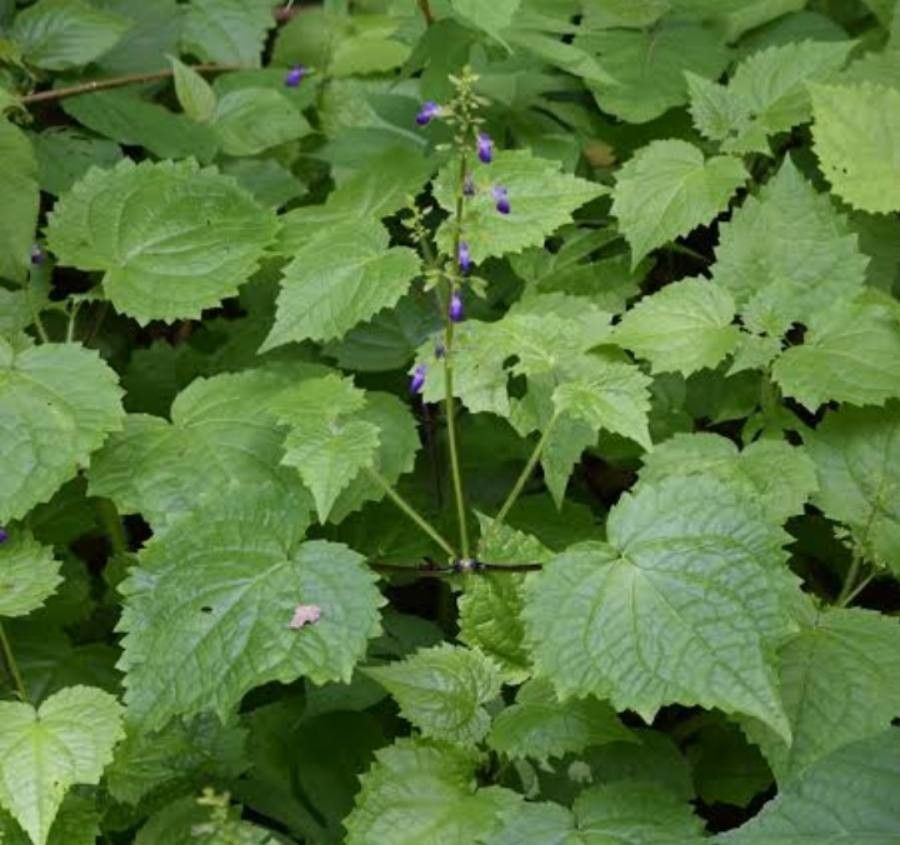
Salvia involucrata, commonly known as Rosebud Sage or Tarahumara Chia, is a perennial herbaceous plant from the mint family. Native to Mexico and Central America, it can grow up to 1.5 meters tall and features large, heart-shaped, dark green leaves with a velvety texture.
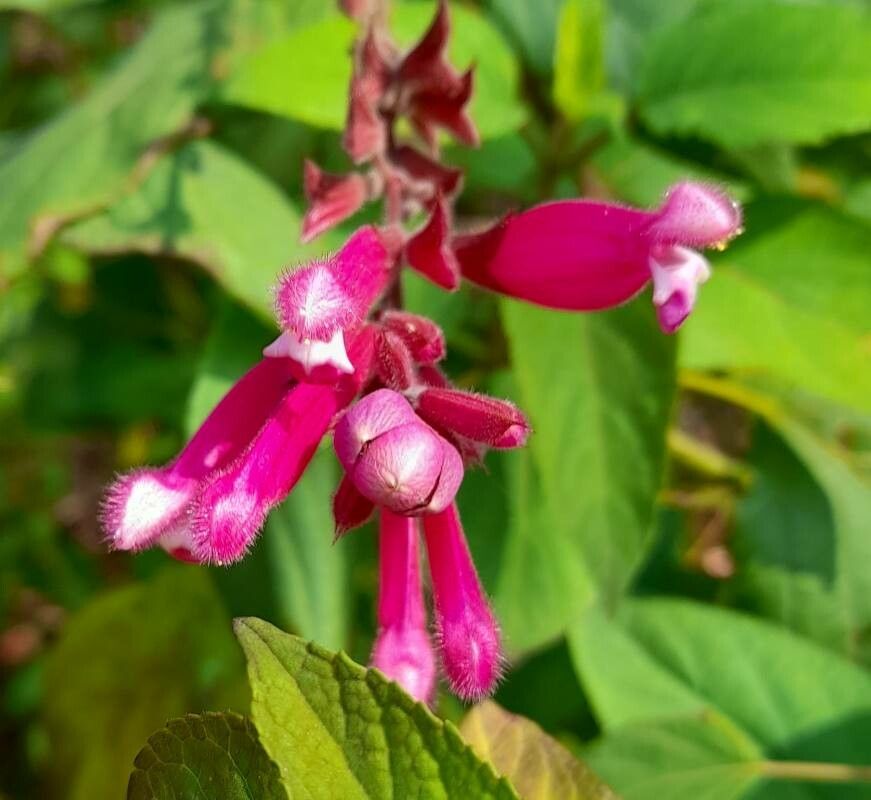
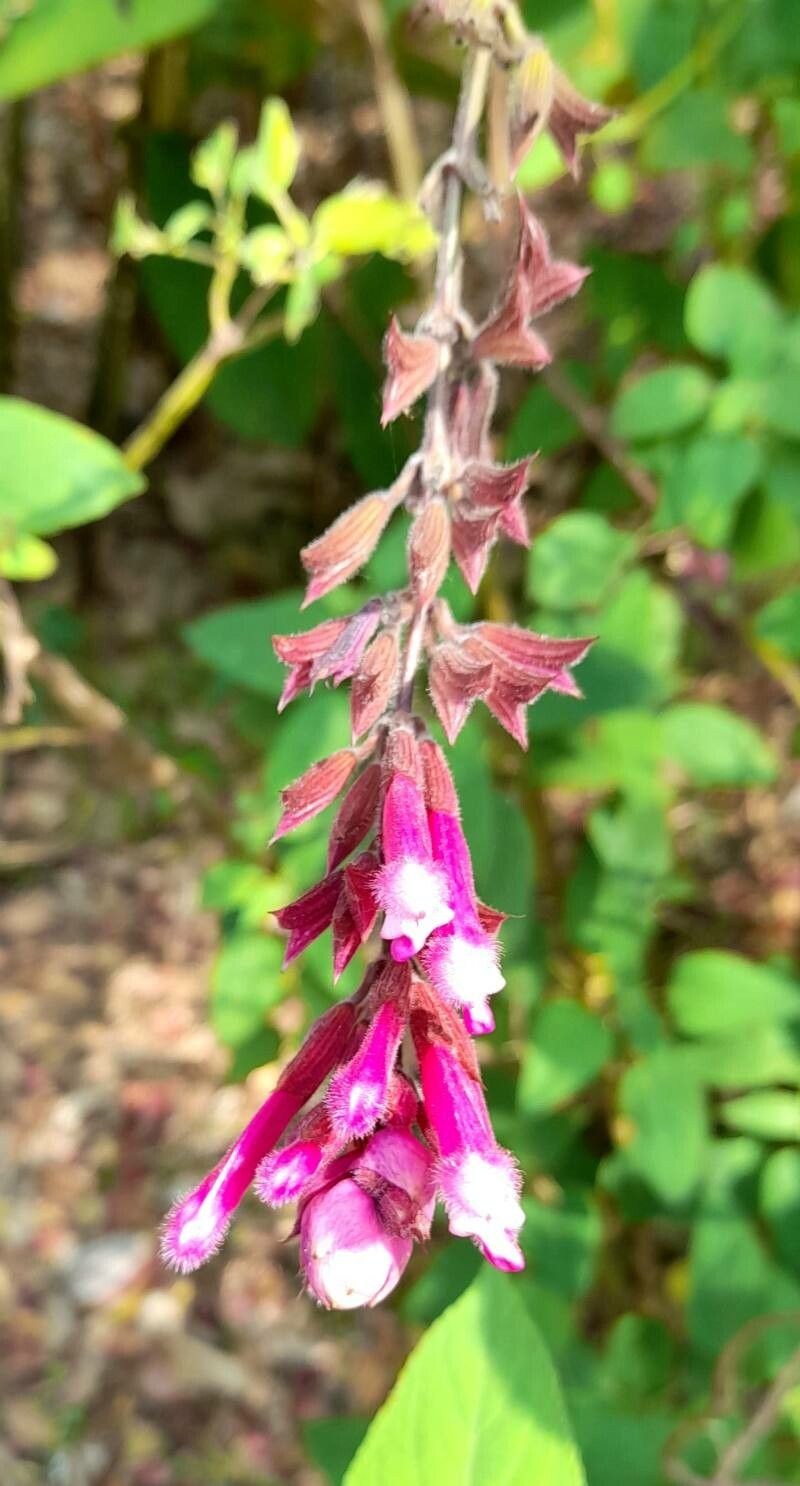
One of the most striking features of Salvia involucrata is its vibrant flowers. These tubular flowers are arranged in clusters at the top of the stems and exhibit a bright pink or magenta color with white markings on their lower lips.
Rosebud Sage thrives in well-drained soil and full sun but can also tolerate partial shade. It blooms from mid-summer to fall, attracting pollinators such as bees, butterflies, and hummingbirds.
Indigenous people have used Salvia involucrata for centuries due to its anti-inflammatory properties, which can help alleviate pain caused by arthritis and other inflammatory conditions.
Overall, Salvia involucrata is an attractive ornamental plant that adds vibrant color to any garden while also offering medicinal benefits for those who seek them.
Roseleaf sage has good resistance to disease and is generally not prone to illnesses. However, it can be affected by pests and diseases present in its surroundings. These problems are usually mild. In terms of care, the plant requires moderate maintenance. It should be pruned regularly to keep a neat appearance and support healthy growth. Fertilizing can also encourage flowering. Roseleaf sage is well suited for people with outdoor spaces, such as a garden or patio, and does not need extensive gardening experience. It may demand more care when grown indoors.
How to keep Salvia Involucrata.
Light
Roseleaf sage is a perennial, herbaceous plant that favors sunny locations and comes from open habitats, frequently occurring in meadows and grasslands. It prefers full sun but can also tolerate partial sun.
Water
Roseleaf sage thrives best when it receives balanced moisture, typically needing water every 1-2 weeks. While it can withstand short periods of drought, the plant prefers soil that is consistently moist. As an evergreen, roseleaf sage retains its lush foliage throughout the year. This quality makes it an excellent choice for indoor cultivation where humidity levels can be controlled.
Temperature
Roseleaf sage adapts well to temperature, tolerating higher heat and wider temperature swings. In hot weather, it's important to watch watering and provide suitable shade to prevent sunburn. On the other hand, Roseleaf sage is relatively sensitive to cold; it can handle some chill, but very low temperatures may cause frost damage.
Fertilizer
The best time to fertilize a Roseleaf sage is in early spring, as it comes out of dormancy and starts active growth. Fertilization supplies essential nutrients for healthy development. Although Roseleaf sage has relatively low fertilizer requirements, feeding it once a year can improve its survival and encourage better, longer-lasting blooms.
Pruning
Roseleaf sage is known for its striking blooms and fragrant leaves. To encourage growth, prune this plant from early to late spring by removing damaged stems and thinning out dense areas. Cutting back one-third of the plant can foster a bushier appearance. Regular pruning also improves the plant's health and prevents it from becoming leggy. For the best results, be sure to use clean, sharp tools.
Botanical profile.
- Plant Type
- Herb
- Life Cycle
- Perennial
- Genus
- Salvia
- Family
- Lamiaceae
- Hardiness Zone
- 8-11
- Mature Height
- 1.22 m
- Mature Spread
- 91 cm
- Leaf Color
- Green
- Leaf Type
- Semi-evergreen
- Flower Color
- Red, Purple, Pink
- Flower Size
- 3.05 cm to 5.08 cm
- Bloom Time
- Mid summer, Late summer, Fall, Early winter
- Planting Time
- Spring, Summer, Autumn
- Harvest Time
- Fall, Early winter, Mid winter
- Native Area
- Mexico, Guatemala
Other names.