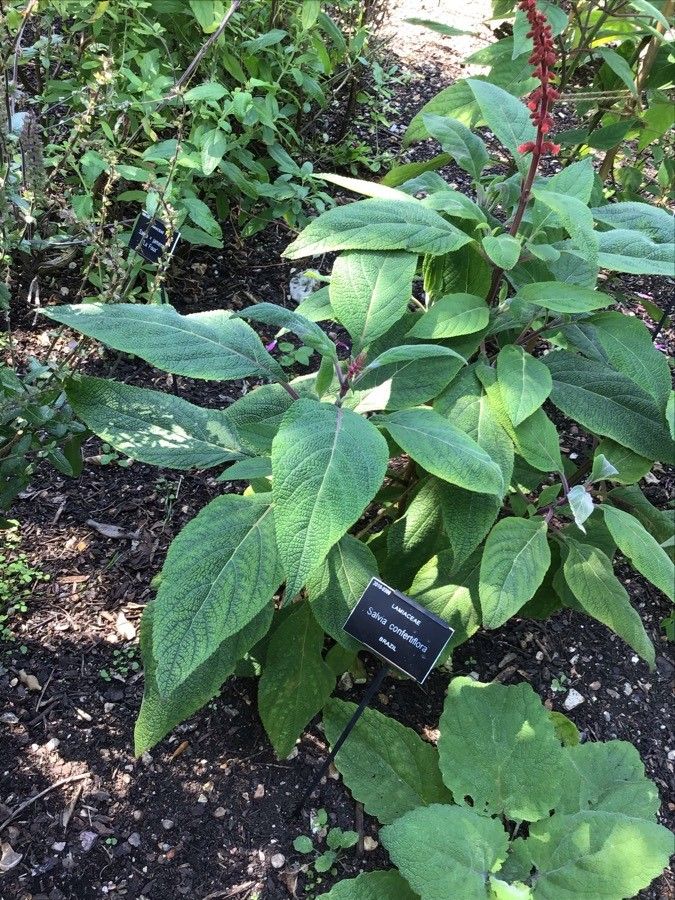
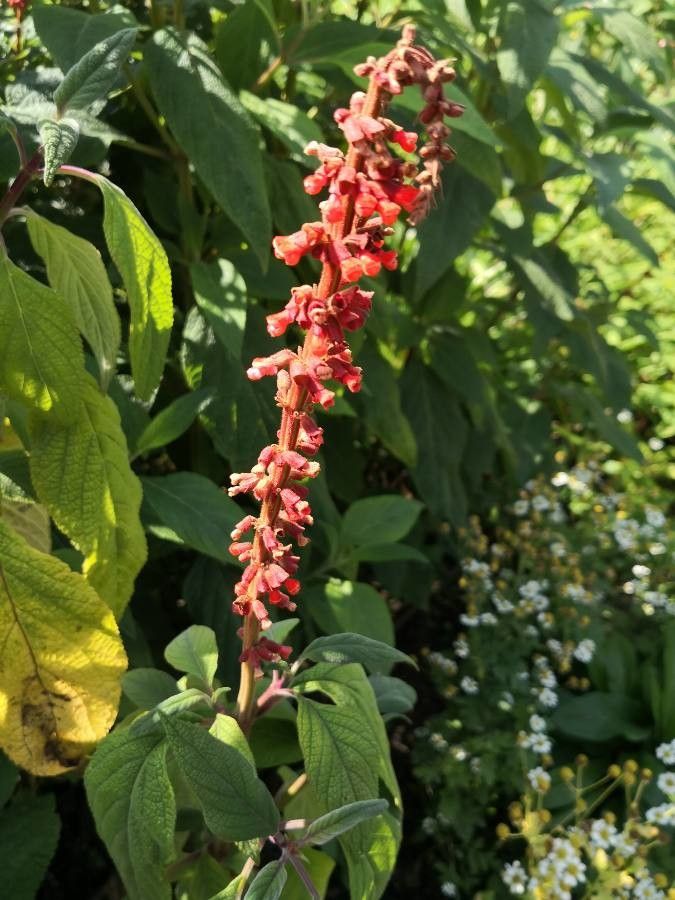
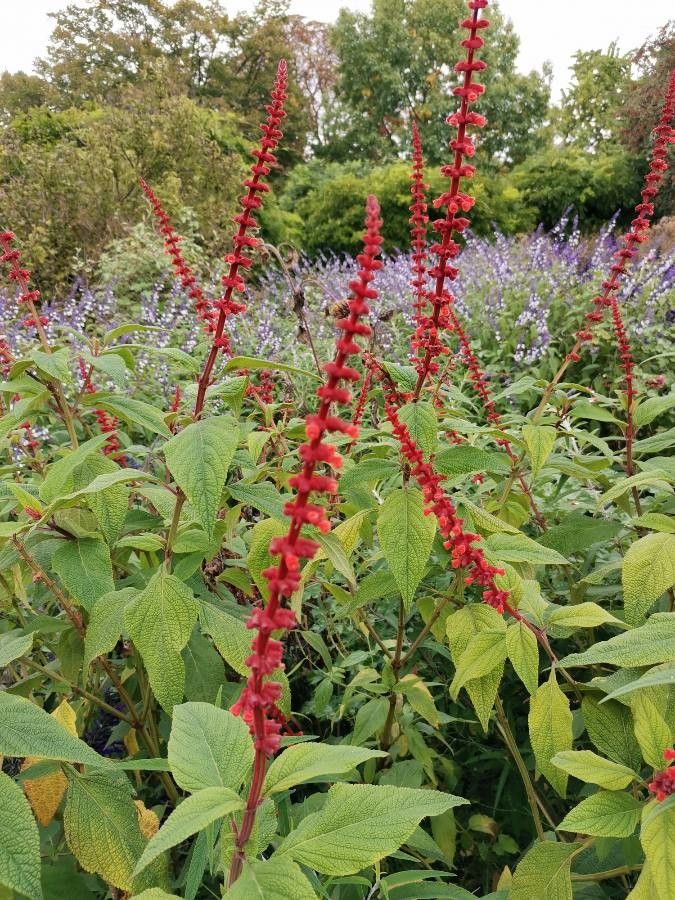
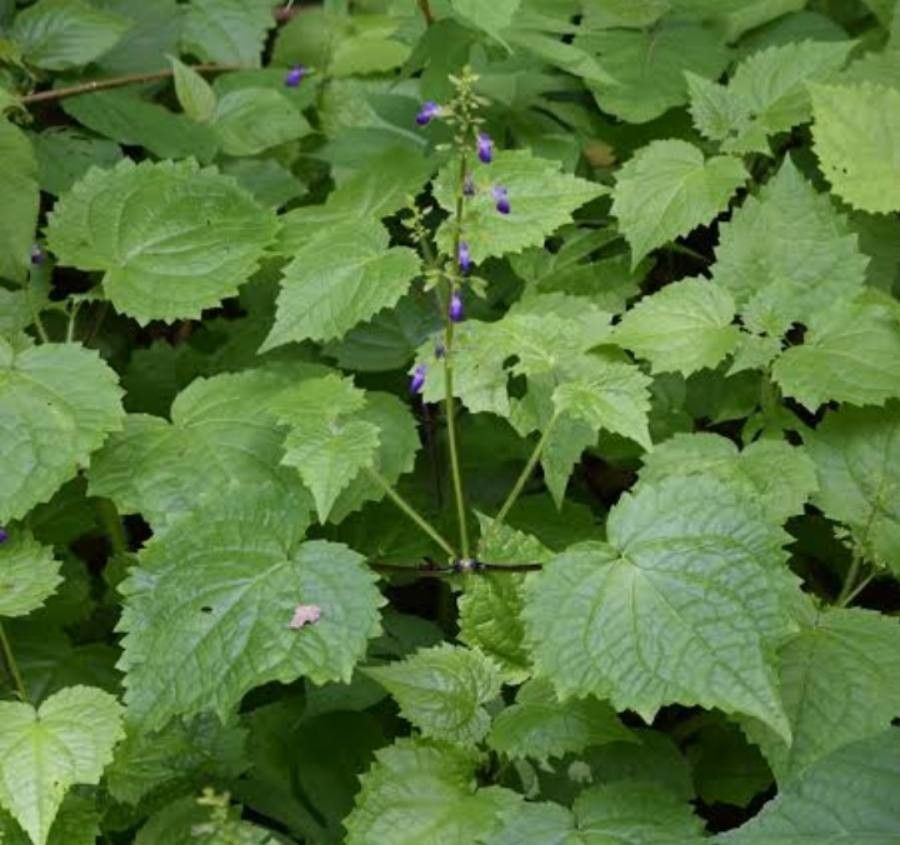
Salvia confertiflora, commonly known as red velvet sage, is a stunning perennial plant that belongs to the mint family. Native to Brazil, this plant can grow to heights of 4-6 feet and spread 3-4 feet wide. It features velvety, bright red flowers that bloom in late summer and fall, offering a unique and striking appearance.
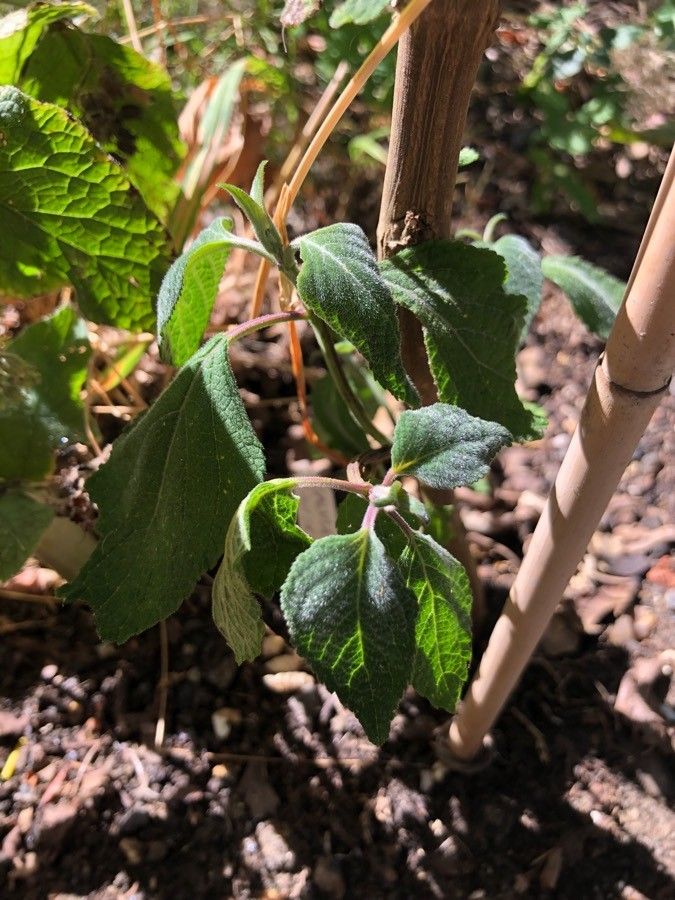
The leaves of Salvia confertiflora are dark green with a slightly hairy texture and emit a pleasant aroma when crushed or brushed against. While the plant prefers full sun, it can also tolerate partial shade.
Salvia confertiflora is an excellent choice for gardeners looking to attract hummingbirds and butterflies, as it serves as a crucial nectar source for these pollinators.
The plant requires moderate watering during its growing season but should be watered sparingly in the winter months when it goes dormant. Regular pruning after the flowering season helps maintain its shape and encourages new growth.
In summary, Salvia confertiflora is an eye-catching addition to any garden or landscape due to its unique appearance, attractive flowers, easy maintenance, and ability to attract pollinators.
How to keep Salvia Confertiflora.
Water
Salvia confertiflora thrives best in an environment with a consistent water supply, needing watering every 1-2 weeks. As an evergreen plant, it retains moisture in its leaves throughout the year, which decreases its need for frequent watering.
Fertilizer
In rich or clay soils, Salvia confertiflora does not require any fertilizer. As a light feeder, it benefits from some compost when grown in poor soil and can be given slow-release fertilizer when planted. However, using too much fertilizer can cause rapid and unstable growth.
Pruning
Salvia confertiflora showcases tall spikes of red-orange flowers. To promote bushier growth and vibrant blooms, prune the plant in early spring. Regular deadheading will extend the flowering period, while maintaining adequate foliage helps protect the plant. Pruning also enhances air circulation, reduces the risk of disease, and improves the plant's overall vitality.
Botanical profile.
Other names.