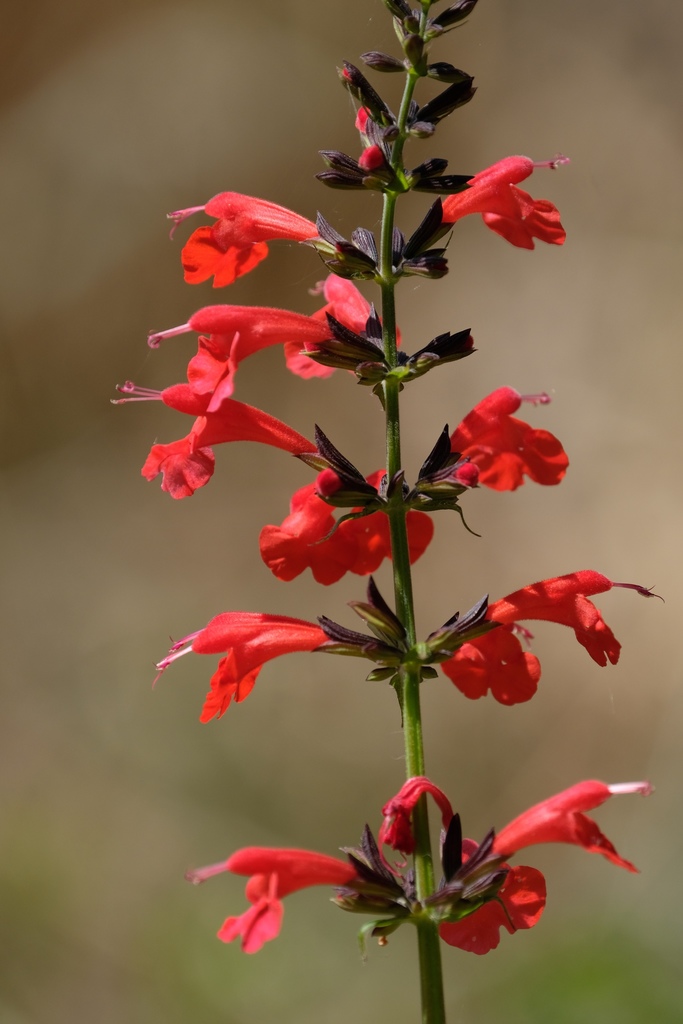
Salvia coccinea, the blood sage, scarlet sage, Texas sage, or tropical sage, is a herbaceous perennial in the family Lamiaceae that is widespread throughout the Southeastern United States, Mexico, Central America, the Caribbean, and northern South America (Colombia, Peru, and Brazil). At one time Brazil was considered to be where it originated, but its diploid chromosome count now points to Mexico as its place of origin.
Scarlet sage has strong resistance to disease and generally does not tend to suffer from illnesses. Still, it can be vulnerable to pests and diseases found in its environment. Such infections are typically mild. Regarding care, this plant needs a moderate level of maintenance. It should be pruned on a regular basis to keep a neat appearance and encourage healthy growth. Applying fertilizer can also aid in increasing flowering. Scarlet sage is appropriate for anyone with an outdoor area like a garden or patio, and it does not demand extensive gardening experience. It may need more attention when cultivated indoors.
How to keep Salvia Coccinea.
Light
Scarlet sage grows best in locations with abundant sunlight, though it can cope with reduced sun exposure. Originating from environments with high sun levels, the plant's health can be impaired by insufficient light. Excessive sun, however, generally does not cause significant harm.
Water
Scarlet sage flourishes in tropical environments where there is consistent moisture and high humidity. It thrives with weekly watering and can withstand short periods of dryness. Ideally grown outdoors, it attracts pollinators and requires evenly moist soil during the growing season to boost its foliage and flowering.
Temperature
Scarlet sage is naturally accustomed to a warm environment, indicating a preference for temperatures from 68 to 95 °F (20 to 35 ℃). Seasonally adjusting conditions to meet its temperature requirements could improve its growth potential.
Fertilizer
The best time to fertilize Scarlet sage is in early spring, when it is coming out of dormancy and starting active growth. Fertilization supplies essential nutrients for healthy development. While Scarlet sage has relatively low fertilizer requirements, giving it fertilizer once a year can improve its survival and encourage better, longer-lasting blooms.
Pruning
Scarlet sage is known for its vibrant red flowers. To encourage bushier growth and extend the blooming period, prune the plant from early to late spring. Regularly remove spent flowers and dead stems, and thin out dense areas to improve air circulation. Use clean, sharp tools to minimize the risk of disease. For detailed care instructions, consult horticultural guides.
Pot & Repot
When repotting Scarlet sage, select a container 1-2 inches (2.5–5.1 cm) larger with good drainage. Use a well-draining potting mix. Repot in spring or fall, making sure the root ball sits slightly below the rim of the pot. Water thoroughly after repotting and place it in a warm spot with indirect sunlight.
Botanical profile.
- Plant Type
- Herb
- Life Cycle
- Perennial, Annual, Biennial
- Genus
- Salvia
- Family
- Lamiaceae
- Hardiness Zone
- 6-10
- Mature Height
- 30 cm
- Mature Spread
- 30 cm to 76 cm
- Leaf Color
- Green
- Leaf Type
- Deciduous
- Flower Color
- Red
- Flower Size
- 2.54 cm
- Bloom Time
- Late spring, Summer, Early fall
- Planting Time
- Spring
- Harvest Time
- Summer, Fall
- Native Area
- Bahamas, Belize, Cuba, Honduras, Mexico, Guatemala, Venezuela, El Salvador, Nicaragua, Jamaica
Other names.
Reader questions.
How should I water my Scarlet sage?
To properly water Scarlet sage, it's best to use filtered water at room temperature. Tap water may have harmful particles, so filtering it is important. The reason for using room temperature water is that Scarlet sage is used to warmer climates and cold water can be a shock. It's also advised to avoid watering from above to prevent issues with the foliage. Instead, thoroughly soak the soil with filtered room temperature water. This helps nourish the roots, allowing them to spread and absorb nutrients effectively.
Why is it important to add fertilizer to my Scarlet sage plant?
Fertilization is important for the Scarlet sage for various reasons. The main benefit is that it provides essential nutrients for both above and below ground growth. However, the Scarlet sage's fertilization needs are generally low, and it can sometimes survive without it. Nevertheless, regular fertilization can greatly benefit the plant, helping it stay alive and promoting the development of longer-lasting, more beautiful flowers. Therefore, those seeking to enhance the appearance of their Scarlet sage should remember to fertilize it annually.
What are the sunlight requirements for Scarlet Sage?
Scarlet Sage requires full sun, which means it thrives in areas that receive above 6 hours of sunlight daily. However, it can also grow in partial sun, receiving about 3-6 hours of sunlight. It's essential to watch how sunlight moves through your garden to select spots that offer a balance of light and shade to ensure the best conditions for your Scarlet Sage, promoting its happiness and health.
What is the ideal temperature range for Scarlet sage to thrive?
Scarlet sage is best suited to a warm environment, thriving in temperatures ranging from 68 to 95 °F (20 to 35 °C). To optimize its growth, it's beneficial to adjust its setting seasonally to meet these temperature requirements. Despite its strong cold resistance, it's crucial to provide protection if winter temperatures are expected to drop below -25°C by covering the plant with soil or straw. Additionally, watering the plant generously before the first freeze in autumn helps ensure the soil remains moist and enters winter well-hydrated, protecting the plant from drought and water scarcity during the colder months.
What should I do if I give my Scarlet sage too much water or too little water?
Overwatering and underwatering are both harmful to your Scarlet sage's health, but overwatering is more common. When Scarlet sage receives too much water, its stems and leaves may wilt and turn yellow. Prolonged overwatering can also lead to diseases like root rot, mold, and mildew that can kill the plant. Underwatering is less likely for Scarlet sage as it can withstand drought, but it is still possible. When underwatering occurs, the leaves will become brittle and brown. To care for your Scarlet sage, it is crucial to recognize the signs of overwatering early. Some diseases, like root rot, cannot be reversed if you wait too long. If you notice initial signs of overwatering, reduce your watering schedule immediately. Additionally, check the quality of the soil and replace it with a well-draining potting mix if it drains poorly. If your Scarlet sage shows signs of insufficient water, simply increase your watering frequency until the signs subside.
When should I fertilize my Scarlet sage for the best results?
The best time to fertilize a Scarlet sage is during late winter to early spring when it is transitioning from dormancy to active growth. Fertilizing at this time promotes healthy growth and a strong start to the season. While it is generally recommended to fertilize in early spring, it is also acceptable to fertilize in the fall. However, it is not advisable to fertilize during summer and winter.
How does insufficient or excessive sunlight affect Scarlet Sage?
Scarlet Sage grows best in abundant sunlight but can tolerate lesser sun exposure. Insufficient sunlight hampers the plant's health, leading to issues like small or pale leaves, leggy growth, and even a halt in growth. On the other hand, excessive sun exposure can lead to chlorosis, sunscald, leaf curling, wilting, and leaf scorching. All these conditions signify the plant's struggle with balancing light absorption for photosynthesis.
How does low temperature affect Scarlet sage and what are the solutions?
Scarlet sage exhibits cold tolerance and performs best when the temperature stays above 20°C. During winter, it is crucial to ensure the temperature does not fall below 0°C. If temperatures plunge below -25°C, the plant shows resilience during winter, but you may observe reduced sprouting or even a lack of sprouting when spring arrives. To counteract this, in spring, remove any parts of the plant that have failed to sprout, which helps encourage new growth and maintains the health of the plant.
How often do I need to water my Scarlet sage plant?
If your Scarlet sage plant is in a pot, the easiest way to know if it needs water is to stick your finger into the soil. If the top two to three inches of soil feel dry, then it's time to water it. If you have Scarlet sage growing outside in the ground, you can use the same method to test the soil. When the first few inches of soil have dried out, it's time to give it water. Typically, during the spring and early fall, watering once a week is sufficient. However, in extremely hot weather, you may need to water it twice or even more per week. It's worth noting that mature and well-established Scarlet sage plants can tolerate drought conditions quite well.
When should I not put fertilizer on my Scarlet sage plant?
To prevent overfertilization and complications, it is best to only fertilize your Scarlet sage in late winter and early spring. This plant has low fertilization needs, so a single annual feeding is sufficient. If you missed fertilizing in spring, you can feed it in the fall. Avoid fertilizing during the growing season, including winter when the plant is dormant and not producing new growth.
Can artificial lighting be used for Scarlet Sage, and if yes, how?
Yes, artificial lighting can be utilized for Scarlet Sage, especially when natural sunlight is inadequate. Indoor plants benefit greatly from artificial lights, like LED lights, which can mimic the required wavelengths of light. For full sun plants, 30-50W/sq ft is needed, while partial sun plants require 20-30W/sq ft. The light source should ideally be placed 12-36 inches above the plant, ensuring it receives 8-12 hours of light daily to mimic natural daylight hours.
How does high temperature affect Scarlet sage and what measures can be taken?
In the summer, it's important to keep the Scarlet sage's environment below 35°C. Exposure to temperatures above 41°C can cause the leaves to lighten in color, become prone to curling, suffer from sunburn, and in extreme cases, cause the entire plant to wilt and dry out. To mitigate these effects, trim away any sunburned and dried-up parts of the plant promptly. Moving the plant to a shadier location or using a shade cloth to protect it from the midday and afternoon sun can prevent further damage. Additionally, watering the plant in the morning and evening can help keep the soil moist and support the plant's health during hot weather.