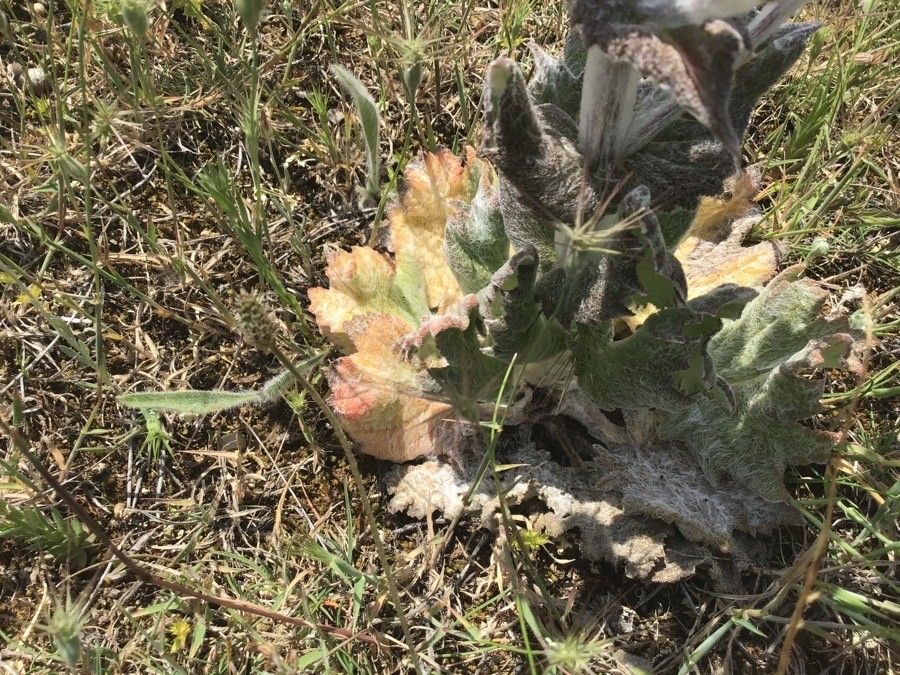
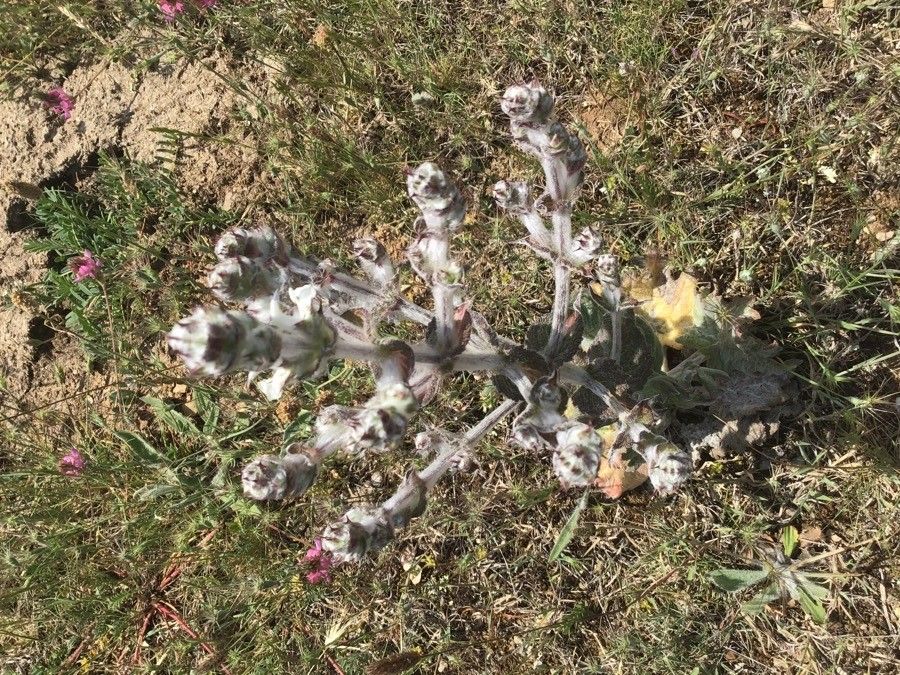
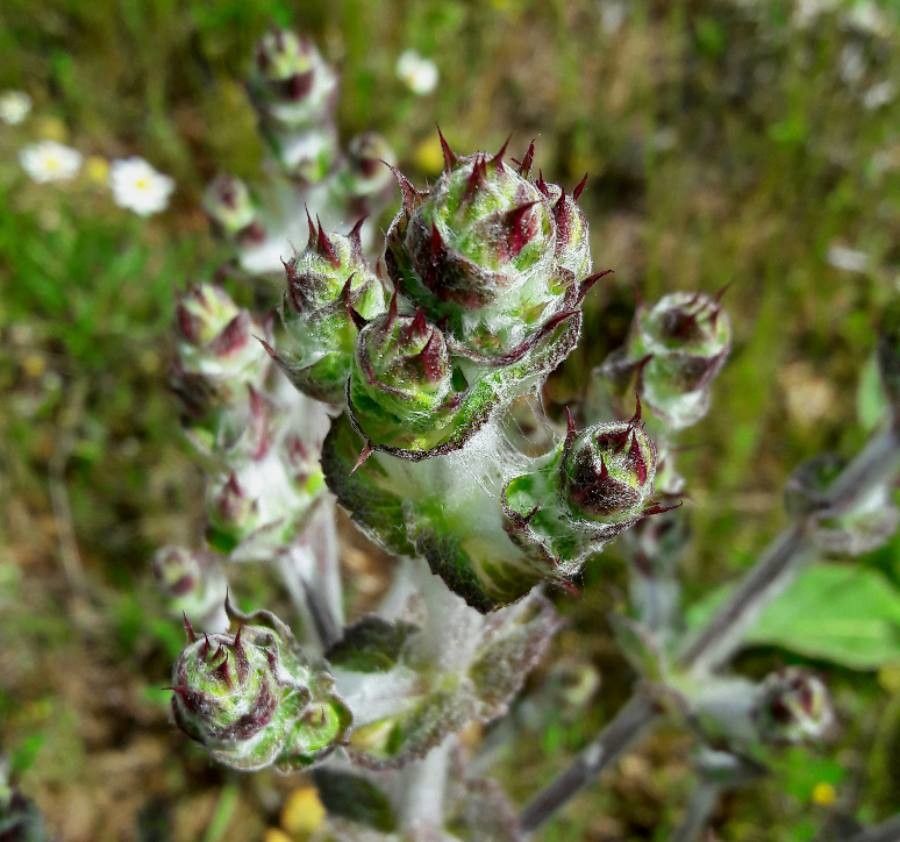
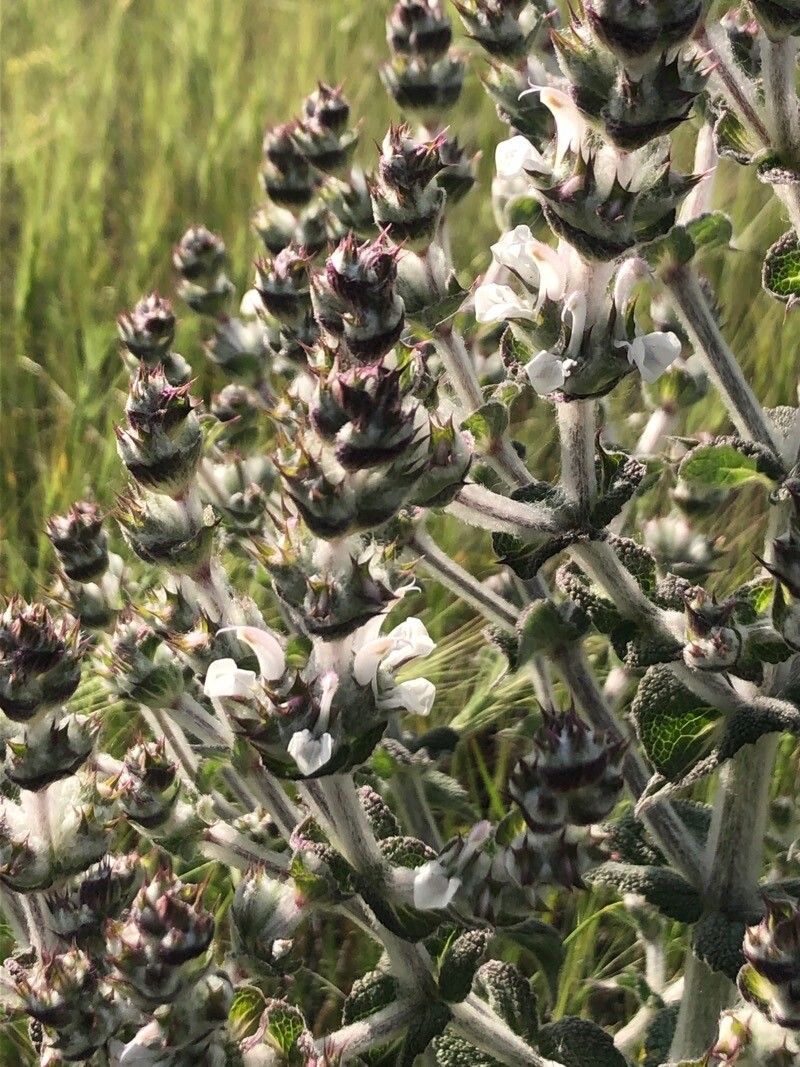
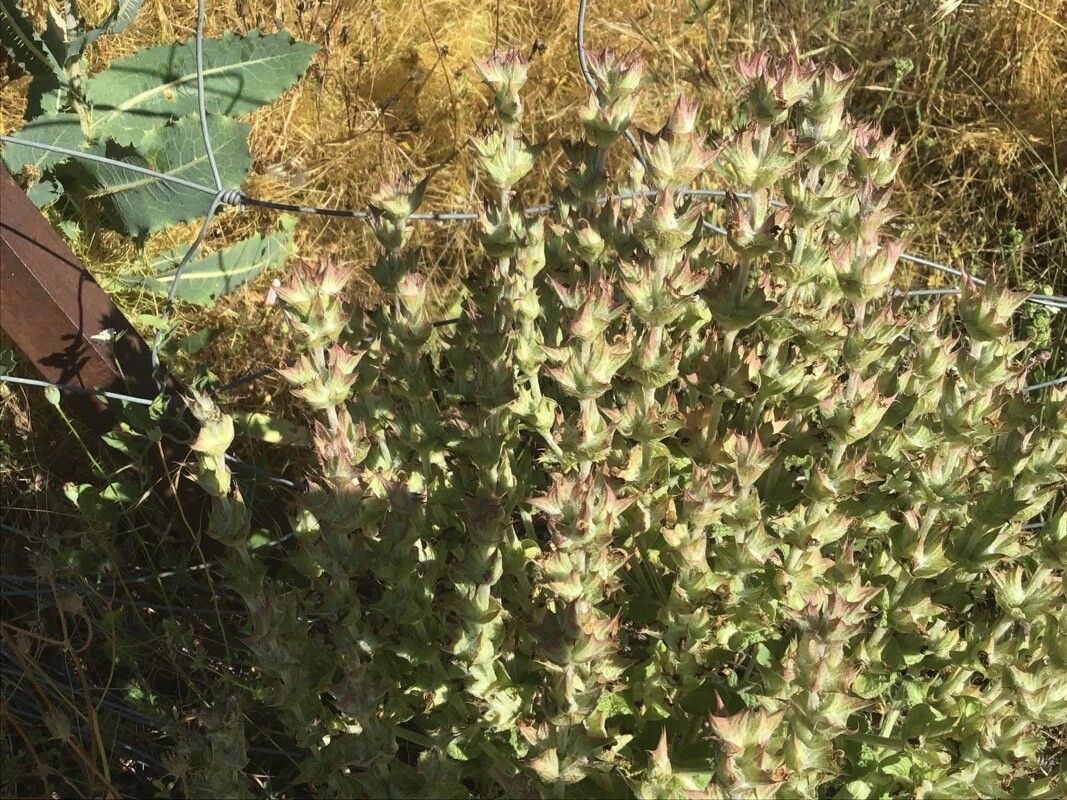
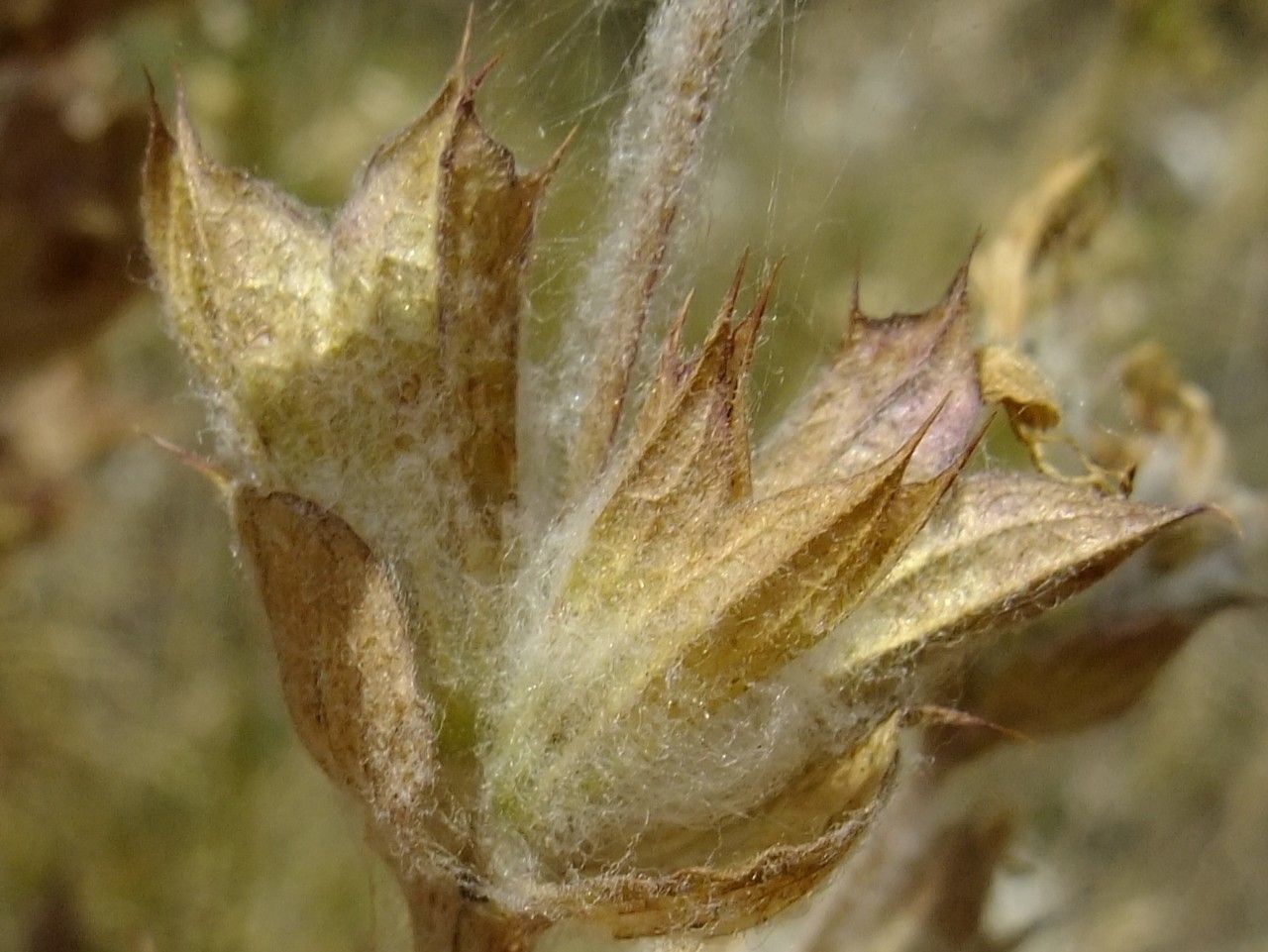
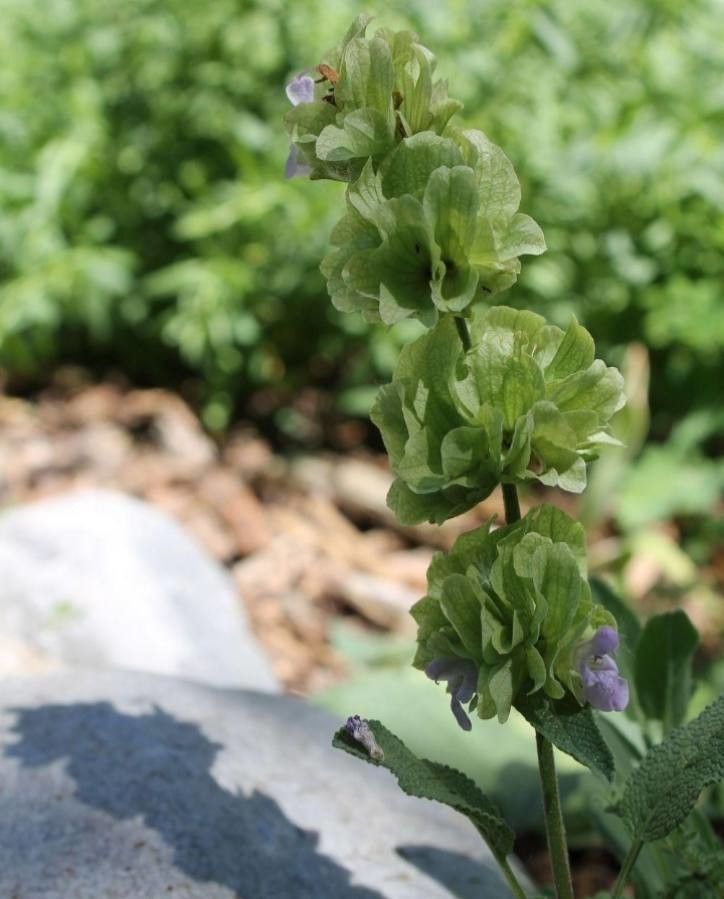
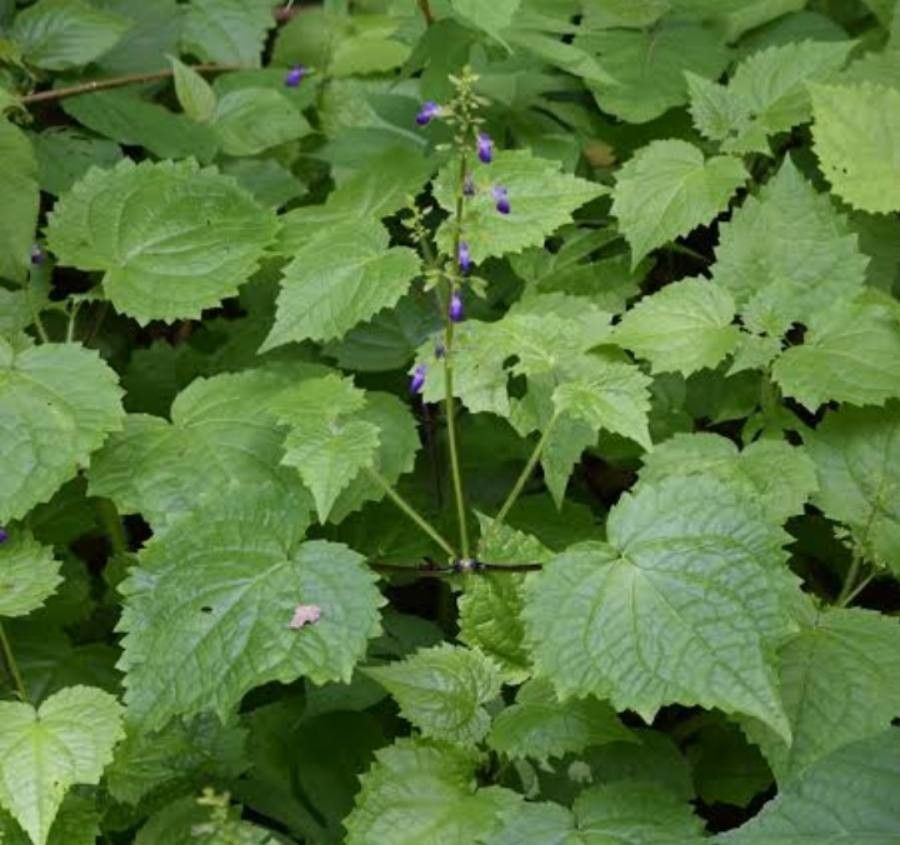
Salvia aethiopis is a species of perennial plant known by the common names Mediterranean sage or African sage. It is best known as a noxious weed, particularly in the western United States. It is native to Eurasia and was probably introduced to North America as a contaminant of alfalfa seed. It is a weed of rangelands and pastures. It is unpalatable to livestock, it disrupts native floral communities, and it becomes a physical nuisance due to the similarity of the persistent dried stems to tumbleweed. The weevil Phrydiuchus tau is used as an agent of biological pest control on this plant. Boya and Valderde examined a sample of Salvia aethiopis. Acetone extracts of the root furnished a new orthoquinone diterpene, aethiopinone (4,5-seco-5,10-friedo-abieta-4(18),5,6,8,13-pentaen-l1,12-dione). This compound was isolated in 0.15% yield from the dry roots.
African sage is fairly disease-resistant and generally not prone to illness. However, it can be affected by pests and diseases that exist in its environment. These problems are usually minor. Regarding care, the plant requires moderate maintenance. It should be pruned regularly to keep a good appearance and encourage healthy growth. Fertilizing can also help boost flowering. African sage is suitable for someone with outdoor space, such as a garden or patio, and does not demand extensive plant care experience. It may need more attention when grown indoors.
How to keep Salvia Aethiopis.
Light
African sage does best with steady sunlight, mirroring the plentiful brightness of its native habitat. It can tolerate lower light levels, but will grow more slowly. Too much sun can scorch the leaves, while too little light often leads to leggy stems and fewer flowers.
Water
African sage thrives in semi-arid environments due to its significant drought tolerance. It benefits from being watered weekly and from outdoor conditions, including natural rainfall, which supports its growth cycle as an evergreen herb.
Temperature
African sage is native to warm regions and grows best at temperatures of 68 to 95 °F (20 to 35 °C). It adapts reasonably well to cooler conditions, but to achieve robust growth it is strongly recommended to keep temperatures within that range. Seasonal adjustments should be made during colder months.
Fertilizer
African sage requires consistent fertilization to encourage flowering but is intolerant of excess. It should receive small amounts of fertilizer frequently throughout its life cycle, especially during peak periods of active growth and while it is flowering. You should continue feeding your African sage until it stops blooming.
Pruning
African sage has gray-green leaves and tall flower spikes. To promote growth and flowering, prune the stems down to the base in early to late spring. Also, be sure to remove any dead or diseased wood. This practice not only enhances the plant's vigor but also helps control its tendency to spread aggressively.
Pot & Repot
To thrive, African sage needs excellent drainage in pots. This prevents water from accumulating, which can cause root rot. Good drainage is crucial for healthy growth and helps prevent fungal diseases.
Botanical profile.
- Plant Type
- Herb
- Life Cycle
- Biennial, Perennial, Annual
- Genus
- Salvia
- Family
- Lamiaceae
- Hardiness Zone
- 5-10
- Mature Height
- 30 cm to 91 cm
- Mature Spread
- 30 cm
- Leaf Color
- Green, Gray
- Leaf Type
- Deciduous
- Flower Color
- White
- Flower Size
- 1.27 cm
- Bloom Time
- Early summer, Mid summer
- Planting Time
- Spring, Autumn
- Harvest Time
- Late summer, Early fall
- Native Area
- Turkey, Austria, Czech Republic, Slovakia, Cyprus, Bulgaria, Armenia, Greece, Croatia, Ukraine, Serbia, Uzbekistan, Russia, Hungary, Italy, Kazakhstan, Spain, France, Iran, Ethiopia, Romania, Turkmenistan, Portugal
Other names.
Reader questions.
How should I water my African sage plant?
To properly water the African sage, it is recommended to use filtered water at room temperature. Tap water may contain harmful particles for the plant's health. The African sage prefers warm environments, so cold water should be avoided to prevent any shock. Furthermore, it is best to avoid watering from overhead as it can lead to issues with the foliage. Instead, gradually apply filtered room temperature water to thoroughly saturate the soil. This method benefits the plant by providing moisture to the roots and aiding in the absorption of nutrients.
Why should I add fertilizer to my African sage?
African sage is known for its colorful, leafy foliage, which requires nitrogen and potassium for rapid growth. These nutrients also help with root development and anchoring the plant into the soil. Additionally, nitrogen promotes taller and fuller plants.
What are the sunlight requirements for African sage?
African sage thrives in full sun, needing more than 6 hours of sunlight daily to flourish. It can also grow in partial sun, with about 3-6 hours of sunlight, but growth may be slower. It's crucial to observe the movement of sunlight in your garden to choose locations that offer an optimal balance of light and shade, as this will ensure the plant's well-being. Overexposure to sun can lead to leaf scorch, while insufficient light might cause lankier stems and fewer flowers.
What are the ideal growing conditions for African sage?
African sage, or Salvia aethiopis, is indigenous to warm climates, thriving best in temperatures ranging from 68 to 95 °F (20 to 35 °C). While it has a strong adaptation to cooler weather, maintaining this temperature range is crucial for its flourishing growth. The plant has considerable cold resistance, thus special frost protection measures are not generally required during winter. However, in extreme cold conditions where temperatures are expected to drop below -25°C, it's important to protect the plant by covering it with soil or straw. Additionally, watering the plant abundantly before the first freeze in autumn to ensure the soil remains moist can help prevent drought and water scarcity during winter and early spring.
What should I do if I give too much or too little water to my African sage plant?
Overwatering is a more common issue for African sage and can cause wilting, yellowing, and diseases like root rot. Underwatering is less common, but can lead to brittle, brown leaves. It's important to notice signs of overwatering early to prevent irreversible damage. Reduce watering if signs are present and check soil drainage. If underwatering is the issue, increase watering until signs improve.
When should I fertilize my African sage plant?
African sage are classified as heavy feeders due to their rapid growth, large leaves, and high water content, making them in need of a lot of nutrients. In order to avoid deficiency symptoms and stunted growth, the plants require fertilizer continuously throughout their growing season, from germination until senescence. It was previously believed that as African sage leaves start changing colors in the autumn, their nutrient requirements significantly decrease, allowing for a reduction or cessation of fertilizer applications. However, research has shown that even after maturity, providing small amounts of nitrogen fertilizer can be beneficial. This minimal fertilization will not greatly impact the coloration of the leaves, while helping to maintain the lower leaves' health by preventing them from turning yellow and falling off.
What essentials should be considered for growing African sage?
Growing African sage successfully requires mimicking its native habitat's abundant light conditions. Consistent exposure to sunlight is essential, but the plant can tolerate lighter sun exposure, albeit with implications like slower growth. Overexposure and underexposure can cause leaf scorch and sparse growth, respectively. When natural sunlight is limited, especially during winter or in less sunny interiors, artificial lighting can be a practical solution to provide adequate light for optimal growth. LEDs are preferable for indoor plants, offering customizable wavelengths. Full sun plants need 30-50W/sq ft, partial sun 20-30W/sq ft, and full shade 10-20W/sq ft of artificial light. The light should be placed 12-36 inches above the plant and kept on for 8-12 hours daily to mimic natural daylight conditions.
How does low temperature affect African sage and what are the solutions?
African sage is cold-tolerant, best thriving above 20°C and ideally kept above 0°C during winter. If temperatures fall below -25°C, while there might not be noticeable changes during the winter, there could be a decrease in sprouting or even a lack of sprouting in spring. To combat this, in spring, it's recommended to remove any parts of the plant that have failed to sprout as a solution to this issue.
How frequently should I give water to my African sage?
If your African sage is in a pot, the most precise way to determine if it needs water is to stick your finger in the soil. If the top two to three inches of soil feel dry, it's time to water. If you have your African sage planted outdoors in the ground, you can use the same method to test the soil. If the first few inches of soil are dry, it's time to water. In the spring and early fall, you will typically need to water once a week using this method. In very hot weather, you may need to water twice a week or even more. However, mature and well-established African sage plants have an impressive ability to withstand drought.
When should I not add fertilizer to my African sage?
Sometimes, fertilizer can actually harm African sage instead of helping it, especially if the plant is already stressed for another reason. It's best to avoid using fertilizer if the African sage is struggling with diseases like leaf spot, black rot, or blackleg, or if it has insect problems such as aphids, spider mites, or whiteflies. When fertilizer is added to these conditions, it further weakens the plant and makes it more susceptible to other pests or diseases. It's also important to avoid fertilizing when the soil surface has become hardened or too dry. In these cases, the plant's roots are at a higher risk of being burned by the fertilizer. Instead, water the potting soil slightly until it is moist, and then apply the fertilizer.
What are the symptoms of light deficiency in African sage?
When African sage does not receive sufficient light, it may display several symptoms indicating light deficiency. These include smaller new leaves, leggy or sparse growth, faster leaf drop, slower or no new growth, and lighter-colored new leaves. Conditions like chlorosis, sunscald, leaf curling, wilting, and leaf scorching also manifest either due to excessive sunlight or insufficient light. Recognizing these symptoms early can help in taking corrective measures to improve the plant's exposure to light.
How does high temperature affect African sage and what are the solutions?
During the summer, it's critical to ensure that African sage's temperature does not exceed 35°C. Exposure to temperatures above 41°C can cause the leaves to lighten in color, become prone to curling, susceptible to sunburn, and, in severe cases, lead the entire plant to wilt and dry. To address these issues, trim away the sunburned and dried-up parts of the plant. Moving the plant to a location with shade from the midday and afternoon sun, or utilizing a shade cloth, can provide relief. Additionally, watering the plant in the morning and evening helps keep the soil moist, further mitigating the risk of heat damage.