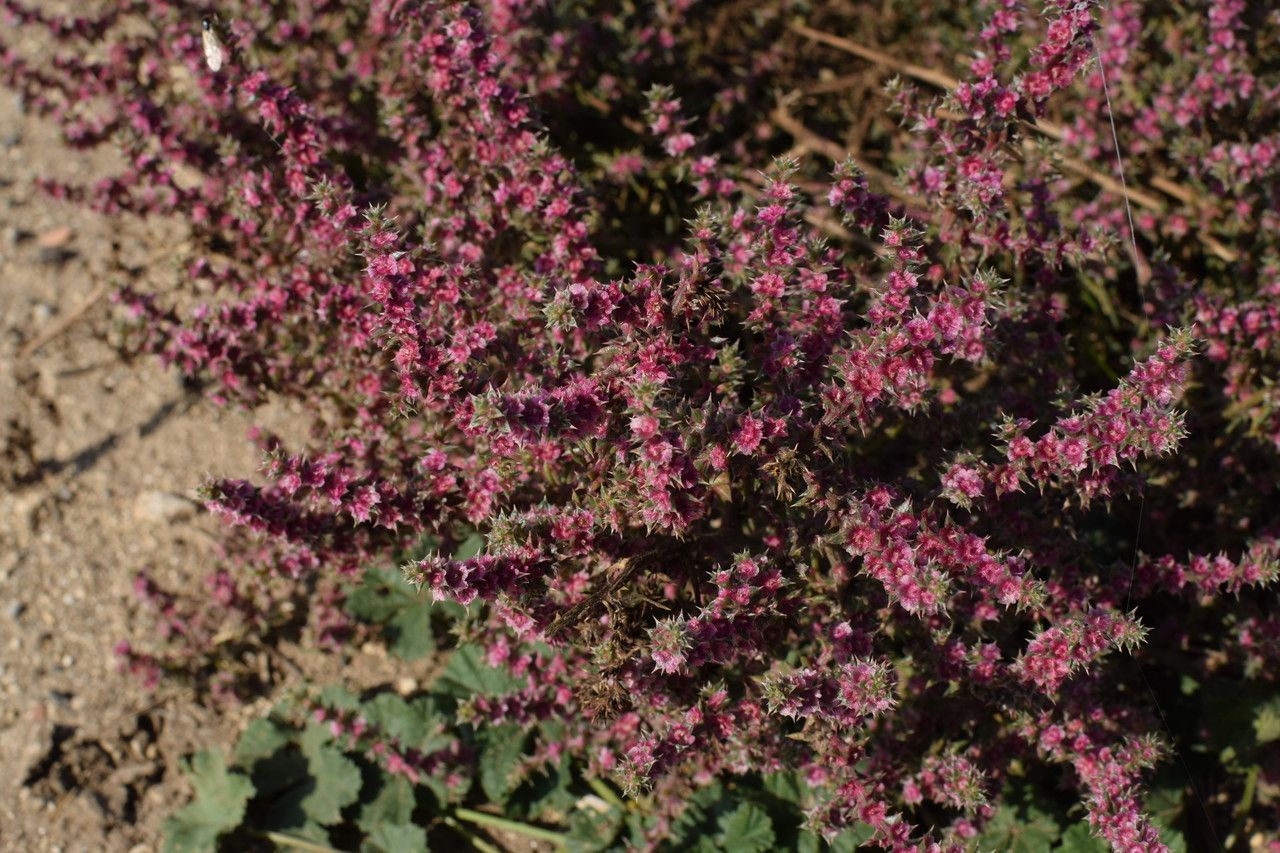
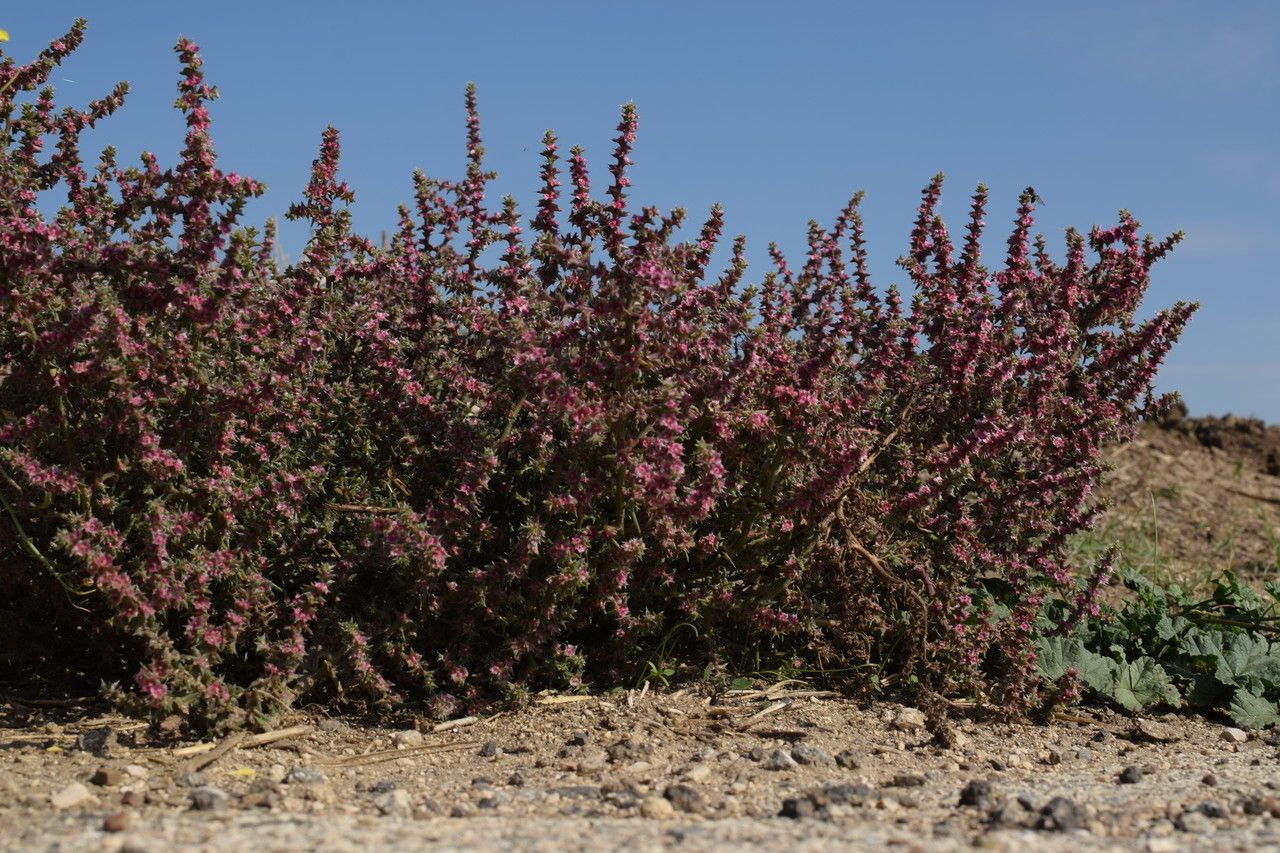
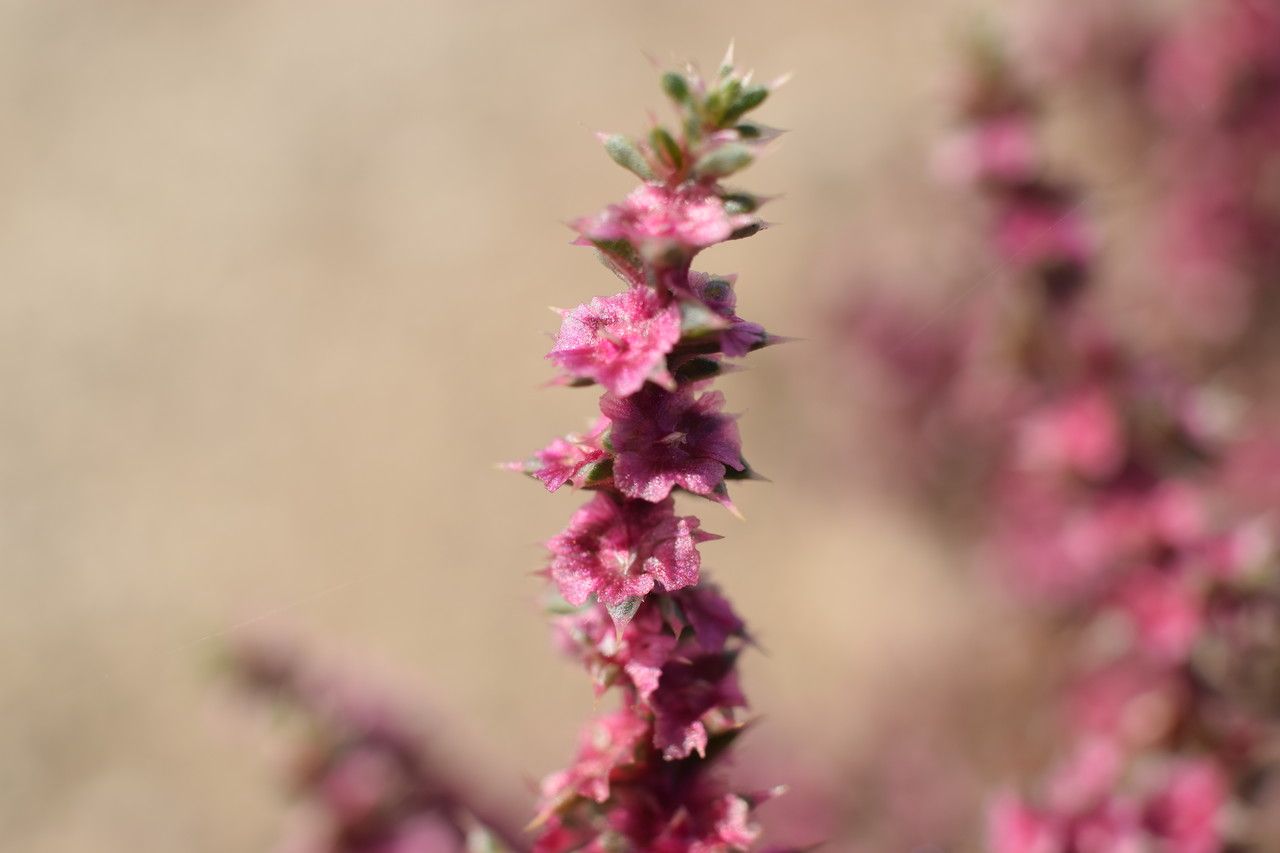
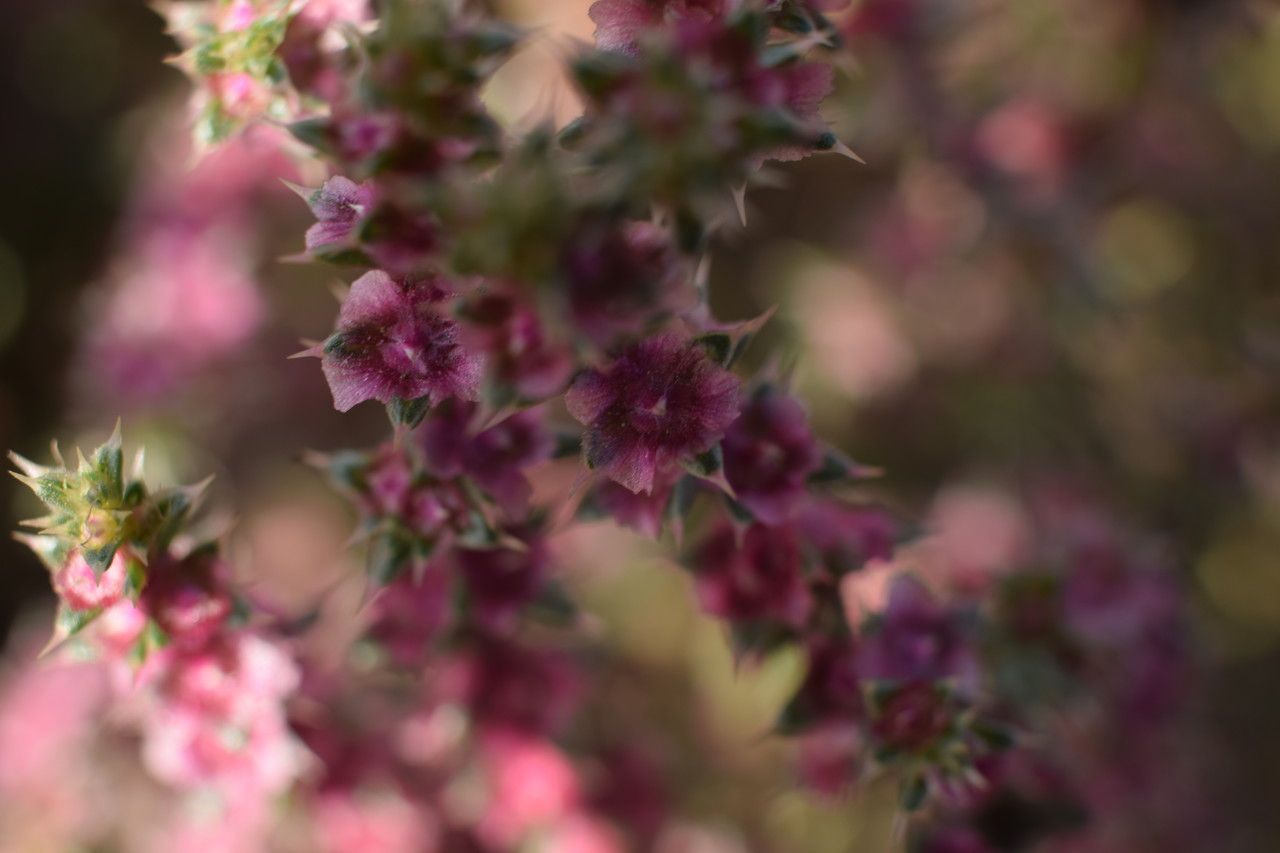
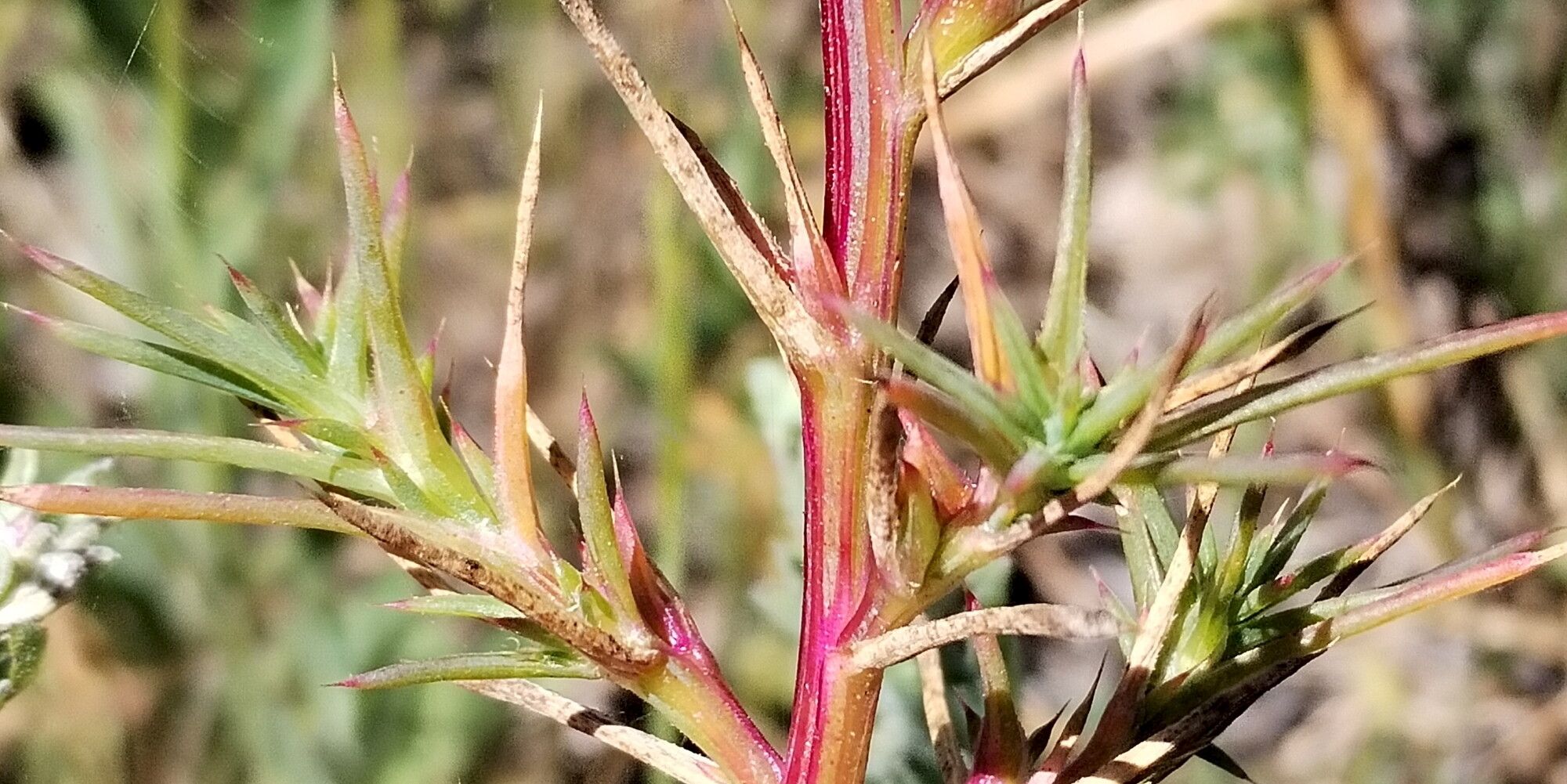
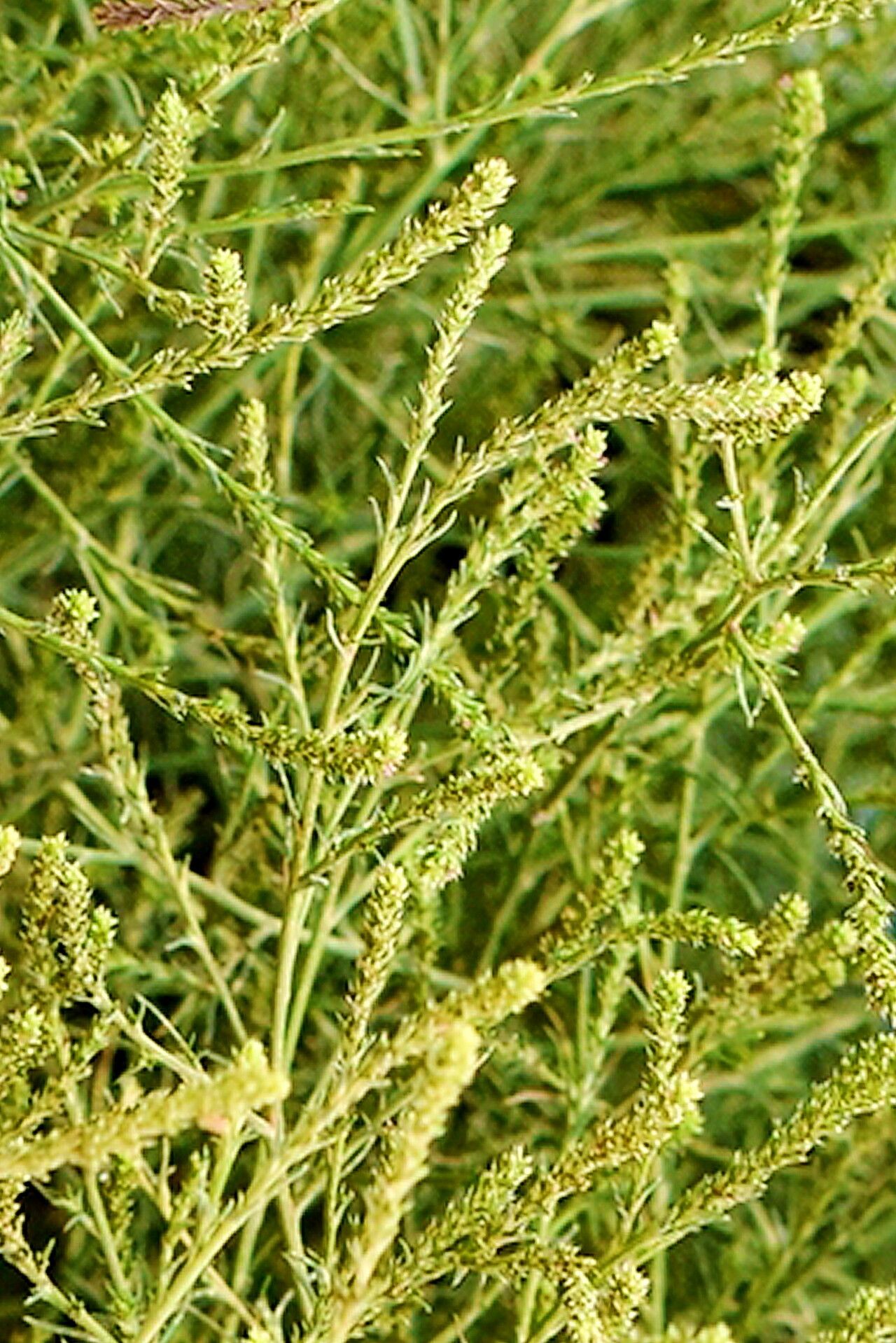
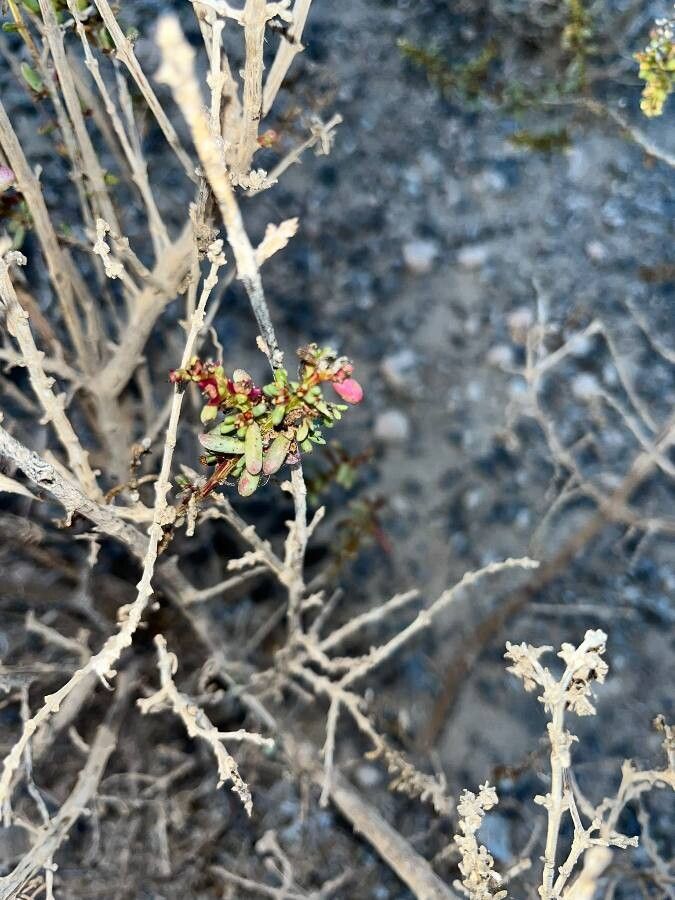
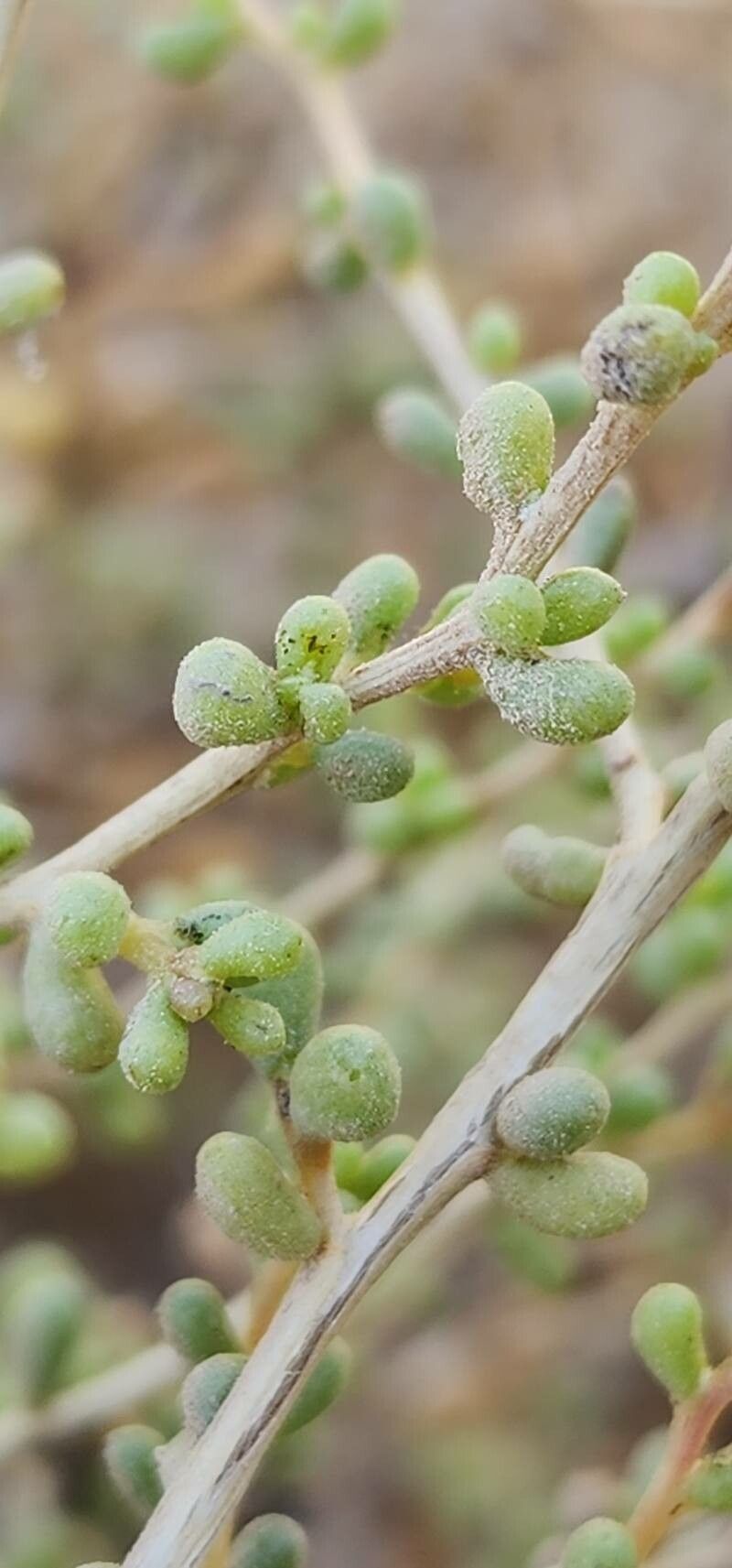
Kali tragus is a species of flowering plant in the family Amaranthaceae. It is known by various common names such as prickly Russian thistle, windwitch, or common saltwort. It is widely known simply as tumbleweed because in many regions of the United States, it is the most common and most conspicuous plant species that produces tumbleweeds. Informally, it also is known as "'salsola", which was its generic name until 2007.For a brief phase during its youth, it may be grazed but afterwards becomes too spiny and woody to be edible to most wildlife and livestock (if it is not processed first). Mature specimens are often more than a meter in diameter. As its fruits mature, the diaspore of the plant dies, dries, hardens, and detach from its root. This detached anatomical part of Kali tragus is called a tumbleweed, which is why Kali tragus is colloquially called "tumbleweed" (although there are many other plant species that also produce tumbleweeds). Once mature, dry, and detached from the plant, this tumbleweed will tumble (i.e. roll) due to the force of the wind. As this dead structure tumbles in the wind, it gradually degrades and falls apart, thereby spreading (possibly as many as 200,000) seeds. If it happens to come to rest in a wet area then it can germinate rapidly, even with very small amounts of moisture. It has a high tolerance of salinity and can successfully compete with many native plants in certain environments, such as along sea beaches and especially in grassland, desert, or semiarid regions. Consequently, it now occupies a wide variety of habitats. Native to Eurasia, Kali tragus has proven to be highly invasive as an introduced species and rapidly became a common ruderal weed of disturbed habitats throughout the world. The tumbleweed's tumbling is known to damage non-native plants and environments and its highly flammable nature also sometimes helps wildfires spread, especially during windy conditions. An ignited tumbleweed may spread a fire across firebreaks and may even ignite buildings or structures that it stops against.
Tumbleweed is fairly disease-resistant and is usually not prone to illnesses. Nevertheless, it can be affected by pests and diseases present in its environment. These problems tend to be mild. As for care, the plant requires moderate maintenance. It should be pruned regularly to preserve a good appearance and healthy growth. Fertilizing can also support flowering. Tumbleweed is well suited to anyone with outdoor space, such as a garden or patio, and does not demand extensive care experience. It may need more attention when kept indoors.
How to keep Salsola Tragus.
Light
The tumbleweed does best when it gets abundant sunlight throughout the day. It can also endure reduced light for short periods. Native to areas with plentiful light, its growth is optimal under those conditions. Too much or too little sunlight may affect the plant’s wellbeing, resulting in less vigorous growth.
Temperature
Used to milder climates, tumbleweed favors temperatures of 68 to 95 °F (20 to 35 ℃). Accordingly, try to reproduce these conditions by keeping it warm in spring and fall, and slightly cooler but still above freezing during winter months.
Fertilizer
Tumbleweed responds well to regular, dilute applications of fertilizer to encourage healthy leaf growth. You should fertilize Tumbleweed about once a month in the summer. Nitrogen is vital for foliage, and adding nitrogen-rich sources helps Tumbleweed thrive.
Botanical profile.
- Plant Type
- Herb
- Life Cycle
- Annual
- Genus
- Salsola
- Family
- Amaranthaceae
- Hardiness Zone
- 7-8
- Mature Height
- 91 cm
- Mature Spread
- 30 cm to 91 cm
- Leaf Color
- Green, Dark Green
- Leaf Type
- Deciduous
- Flower Color
- White, Pink
- Flower Size
- 0.20 cm to 0.25 cm
- Bloom Time
- Early summer, Mid summer
- Planting Time
- Spring, Summer, Autumn
- Harvest Time
- Mid summer, Late summer
- Native Area
- Libya, Egypt, India, Turkey, Sweden, Austria, Slovakia, Namibia, Montenegro, Pakistan, Croatia, Slovenia, Morocco, Yemen, Belarus, Zimbabwe, Uzbekistan, Russia, Germany, Iraq, Indonesia, Estonia, Romania, Latvia, South Korea, Belgium, Botswana, Netherlands, Portugal, Saudi Arabia, France, Tajikistan, Tunisia, Czech Republic, South Africa, Cyprus, Bulgaria, Armenia, Poland, Greece, Ukraine, Lebanon, China, Serbia, Afghanistan, Lithuania, Norway, Syria, Hungary, Kyrgyzstan, Kazakhstan, Italy, Spain, Switzerland, Denmark, Mongolia, Finland, Iran, Albania, Azerbaijan, Ireland, United Kingdom, Kuwait, Algeria, Turkmenistan
Other names.