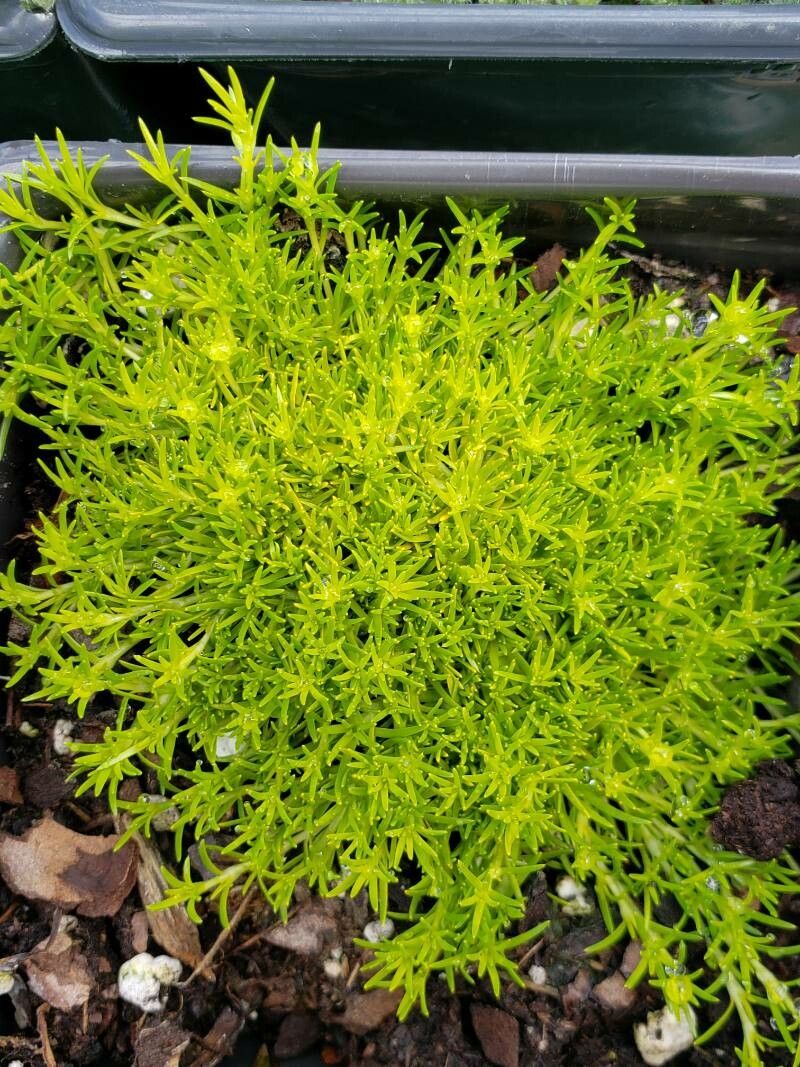
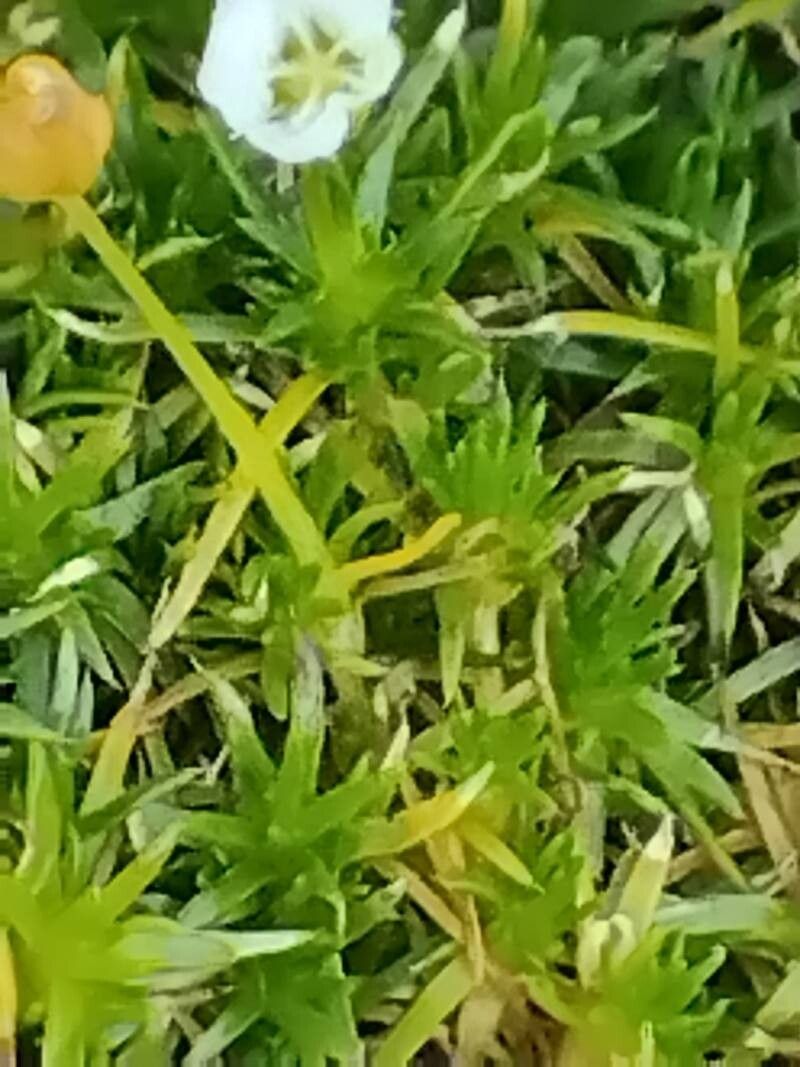
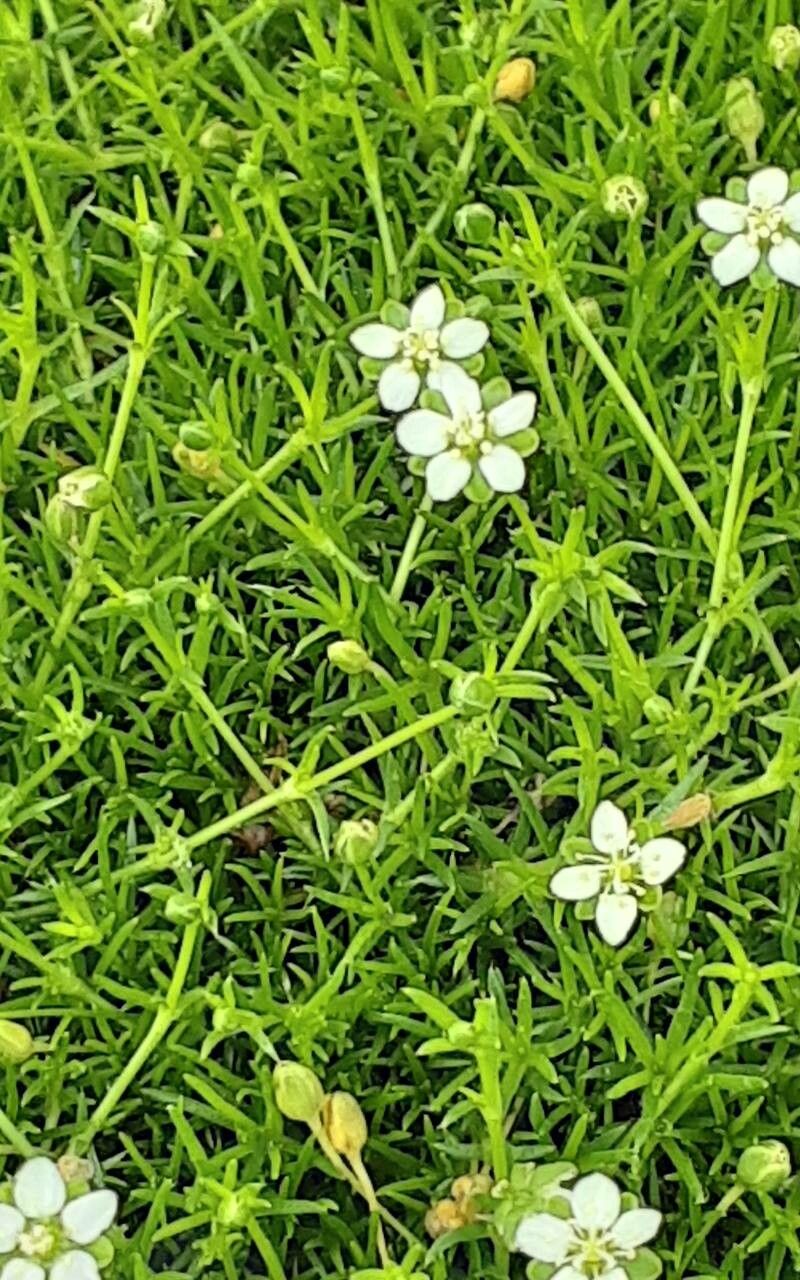
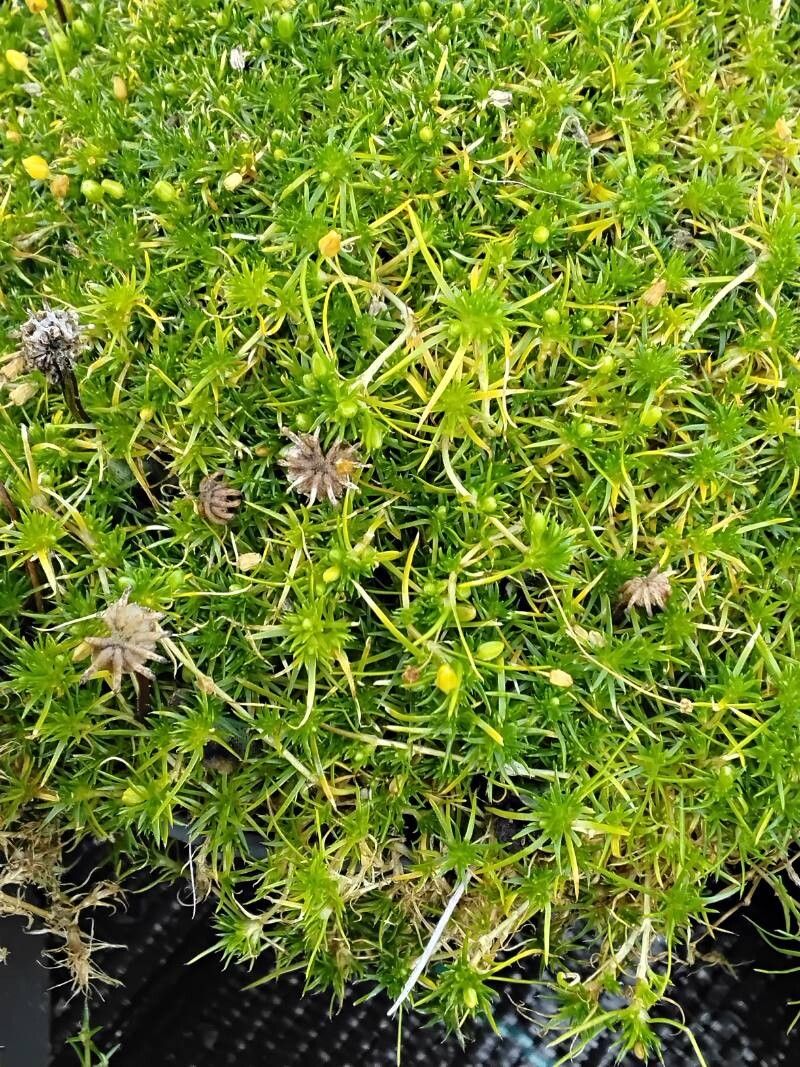
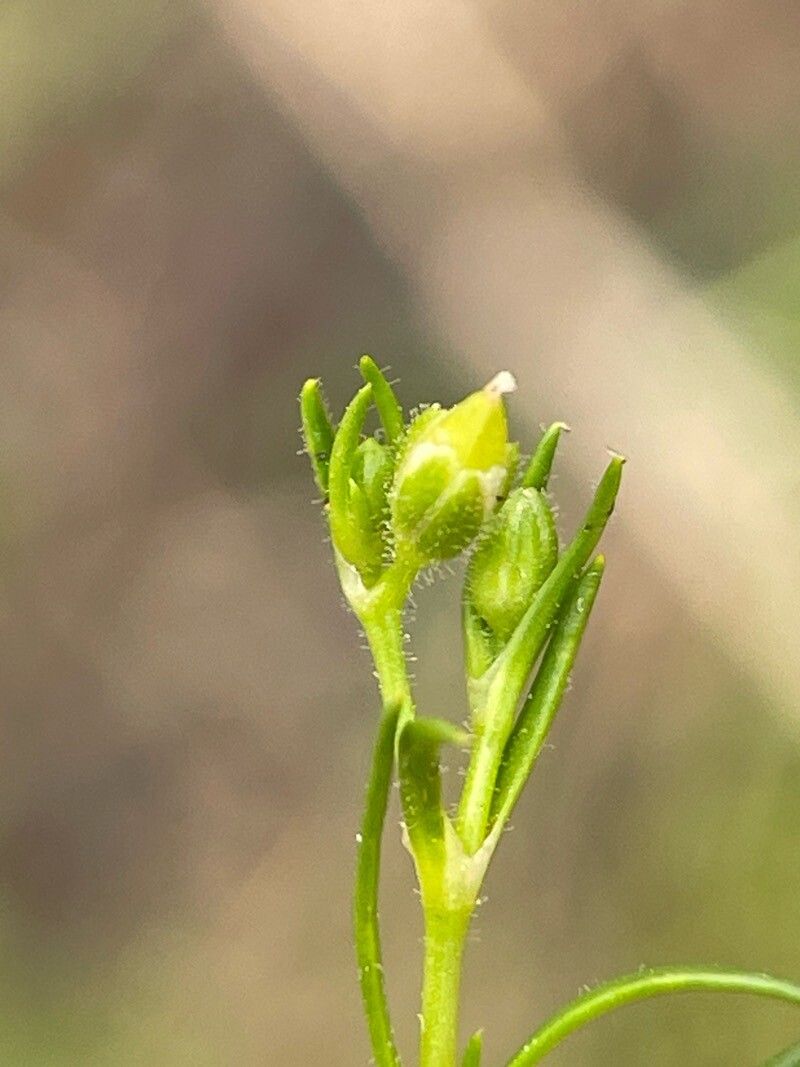
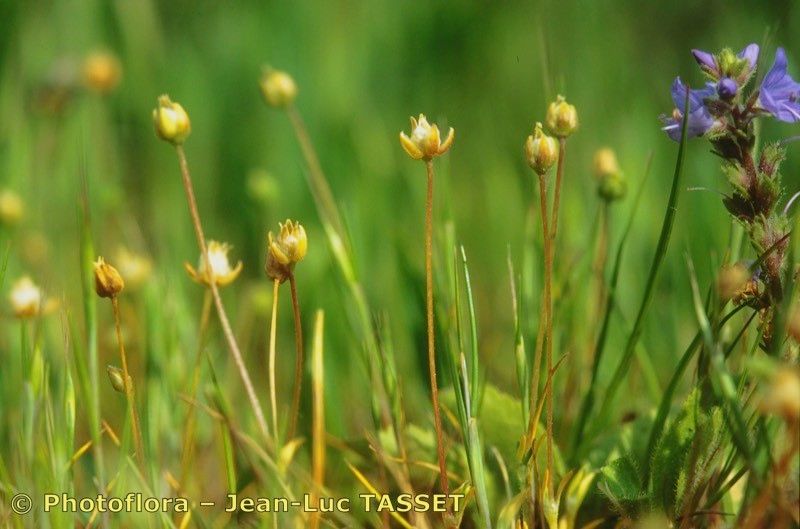
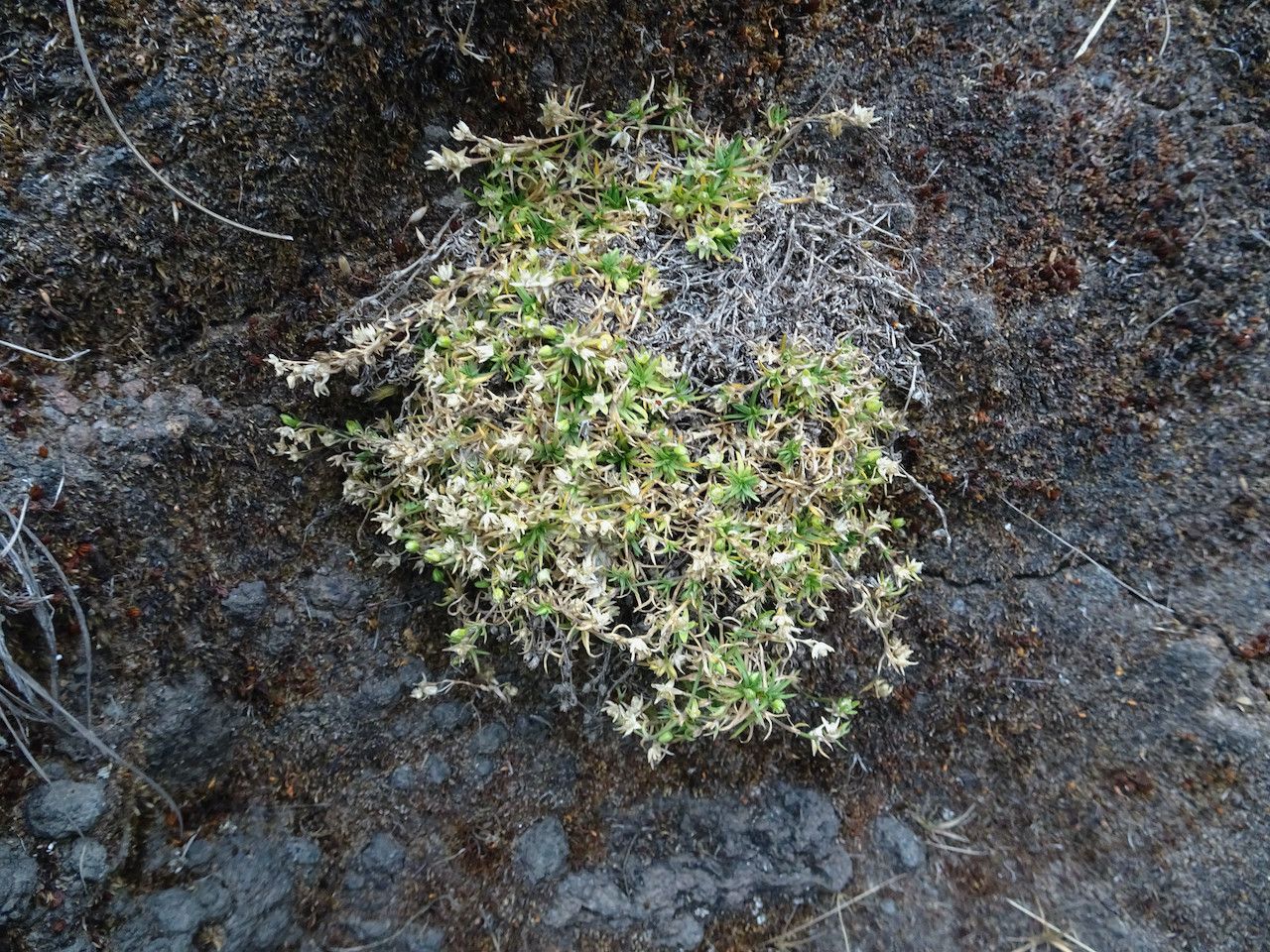
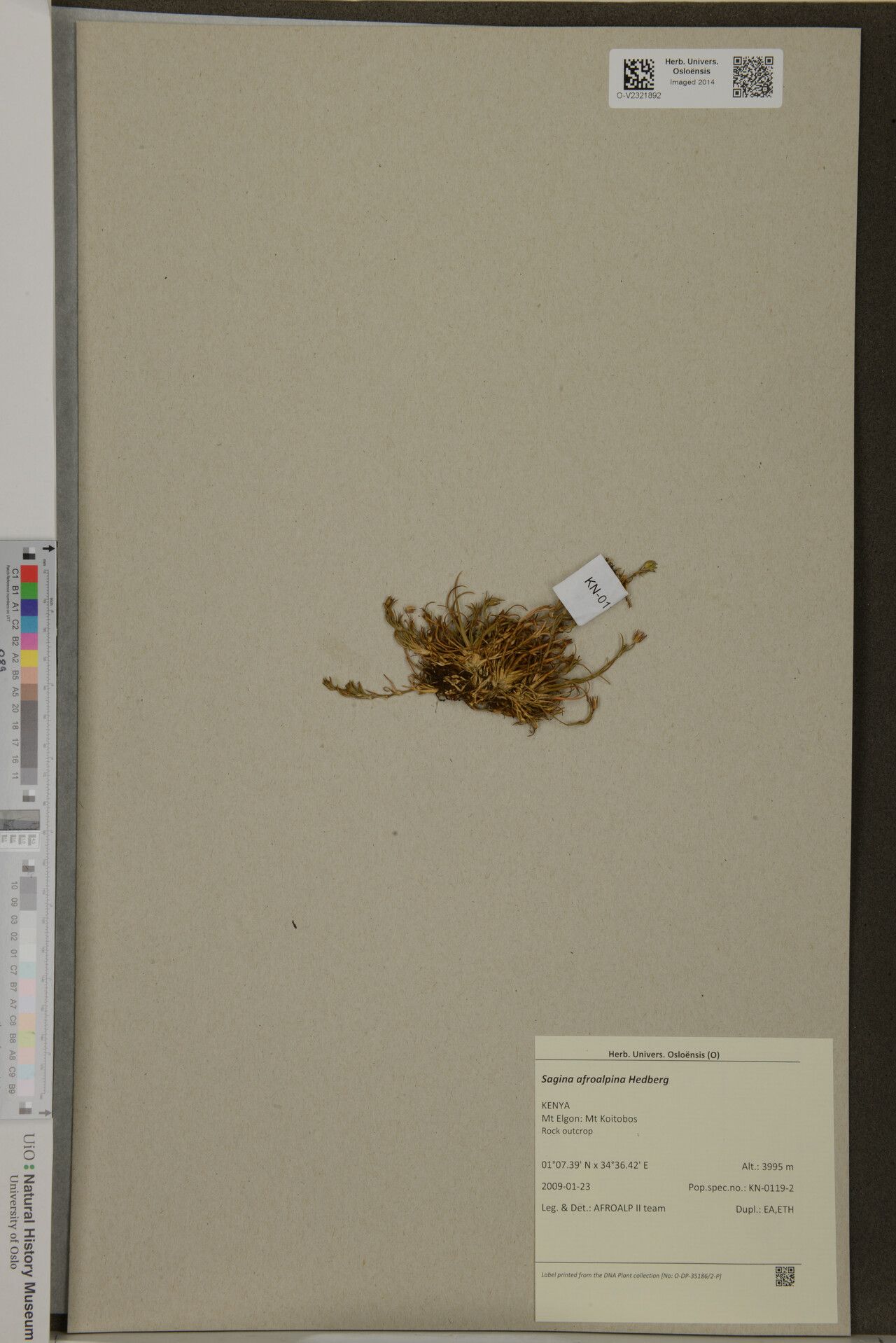
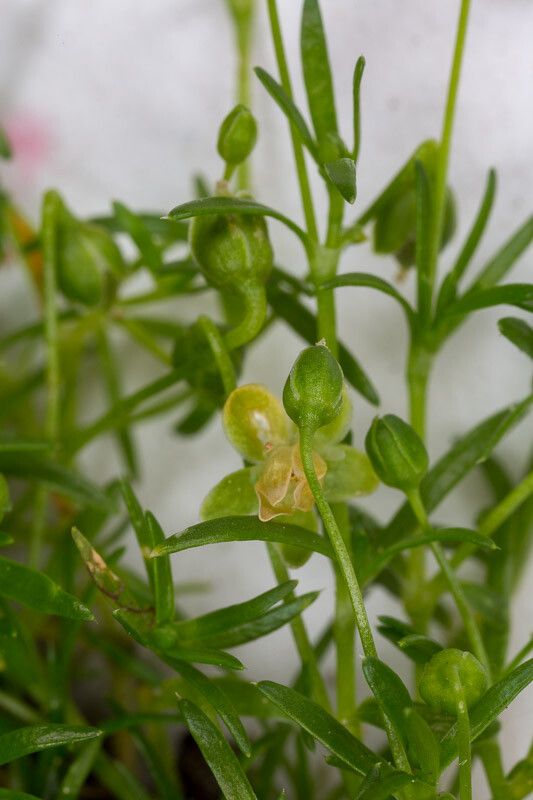
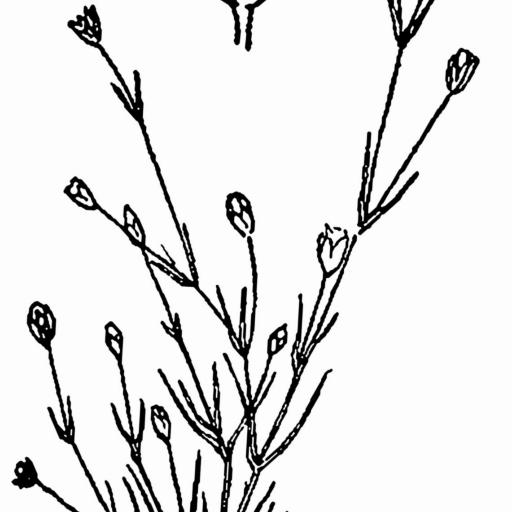
Sagina subulata, commonly known as Irish moss or pearlwort, is a low-growing perennial plant that belongs to the Caryophyllaceae family. Native to Europe and Asia, it has been widely cultivated in other parts of the world for its ornamental appeal. The plant forms a dense mat of tiny, bright green leaves that are less than one centimeter long and needle-like in shape. In late spring or early summer, it produces small white flowers on short stalks that rise above the foliage. Irish moss thrives in moist, well-drained soil and partial shade but can also tolerate full sun if provided with adequate moisture. It is often used as ground cover in rock gardens or between stepping stones, and serves well as an edging plant for borders due to its low-growing habit and attractive appearance. Traditionally, the plant has been used for medicinal purposes, such as treating respiratory ailments like coughs and bronchitis, due to its expectorant properties. However, it should be noted that it can cause skin irritation in some individuals. Overall, Sagina subulata is a visually appealing ornamental ground cover with delicate foliage that enhances any garden setting. Additionally, its medicinal properties offer benefits beyond mere aesthetics.
Trailing pearlwort has strong disease resistance and is generally not prone to illnesses. Nevertheless, it can be affected by pests and diseases present in its surroundings. These infections are typically mild. In terms of care, the plant requires moderate maintenance. It needs regular pruning to maintain a tidy appearance and support healthy growth. Fertilizing can also help encourage flowering. Trailing pearlwort is suitable for anyone with outdoor space, such as a garden or patio, and does not demand much prior care experience. It may need more attention when grown indoors.
How to keep Sagina Subulata.
Light
Trailing pearlwort is native to habitats with dappled sunlight, such as forest understories or rocky sites that provide natural shade. It does best in partial sun but can also adapt to full sun conditions.
Water
With Irish moss, getting the irrigation levels just right might be difficult. Brown spots will appear if you move too far in any direction. The plant isn't drought-tolerant and can't handle excessive moisture. Irish moss thrives with regular, mild watering.
Humidity
This plant will thrive in moderate humidity, which is probably the level in your home. However, misting it a few times a week can be very beneficial. Make sure the room has good ventilation.
Temperature
Trailing pearlwort can tolerate a wide range of temperatures, though its distribution may still be restricted by different combinations of moisture and heat. It performs best in warm summer conditions with sufficient rainfall or watering. Extended stretches of cloudy, rainy weather or prolonged high temperatures can make trailing pearlwort more likely to die. In winter, shielding the plant from cold can increase its survival chances.
Fertilizer
Trailing pearlwort benefits from regular, light applications of fertilizer to encourage healthy leaf growth. You should fertilize Trailing pearlwort about once a month during the summer. Nitrogen is essential for foliage, and supplying nitrogen-rich sources helps Trailing pearlwort thrive.
Pruning
Pruning is not required, although you may wish to cut the plant away from steps, pavers, and other structures to keep the area tidy.
Botanical profile.
- Plant Type
- Herb
- Life Cycle
- Annual
- Genus
- Sagina
- Family
- Caryophyllaceae
- Hardiness Zone
- 5-9
- Mature Height
- 0 cm to 30 cm
- Mature Spread
- 5 cm to 15 cm
- Leaf Color
- Green
- Leaf Type
- Semi-evergreen
- Flower Color
- White
- Flower Size
- 0.20 cm to 0.51 cm
- Bloom Time
- Spring
- Planting Time
- Spring, Summer, Autumn
- Harvest Time
- Late spring, Early summer, Mid summer
- Native Area
- Europe
Other names.