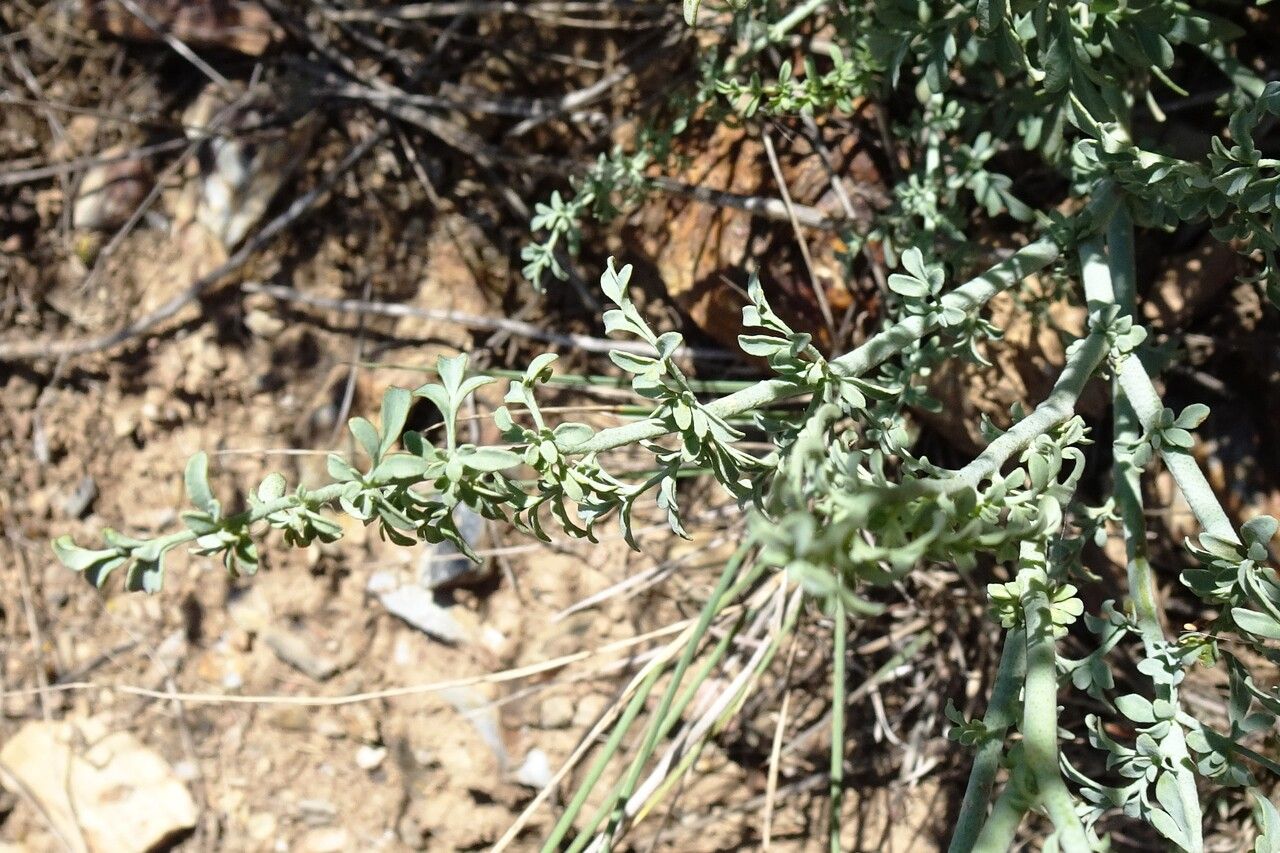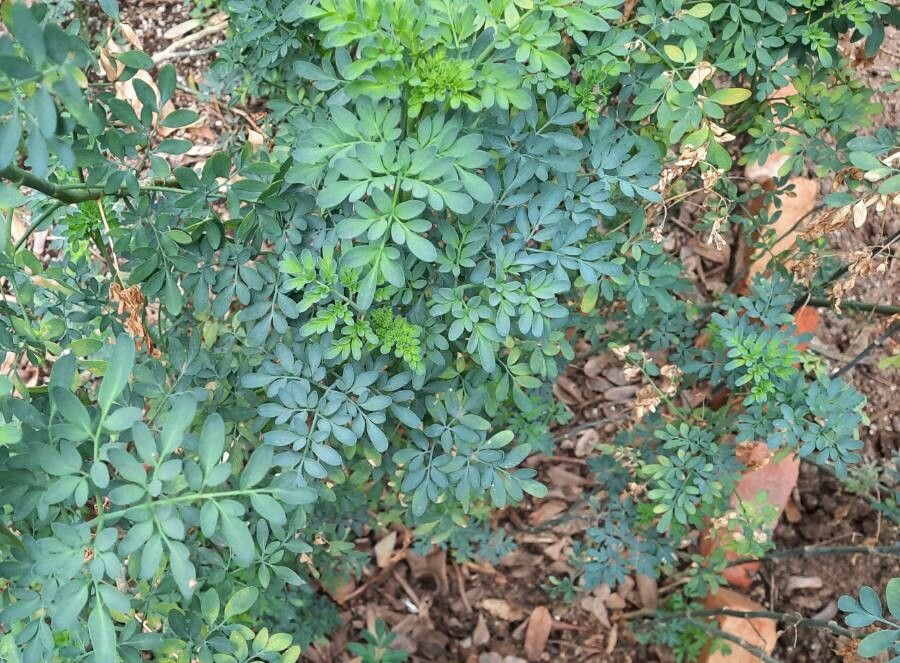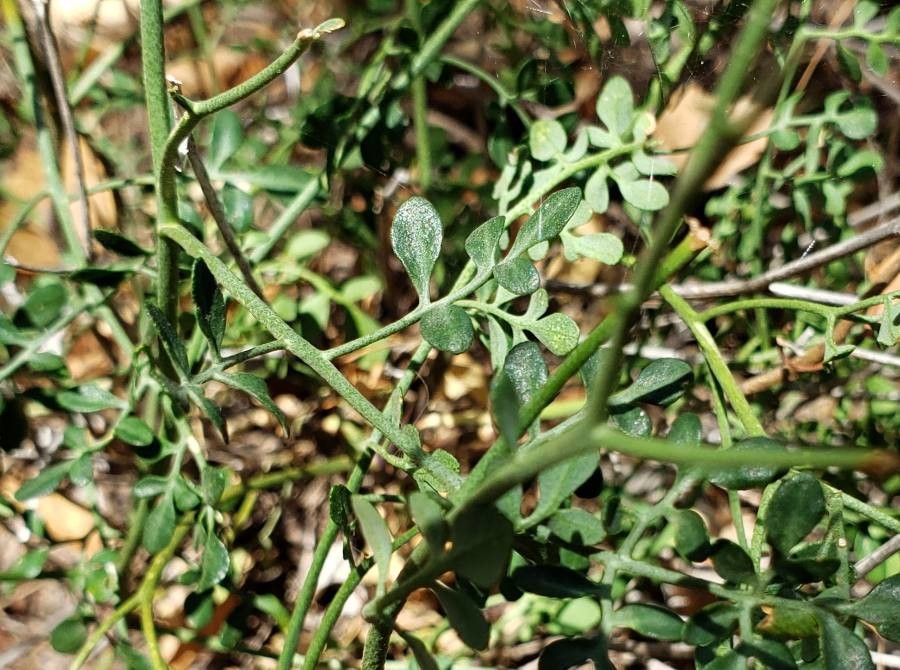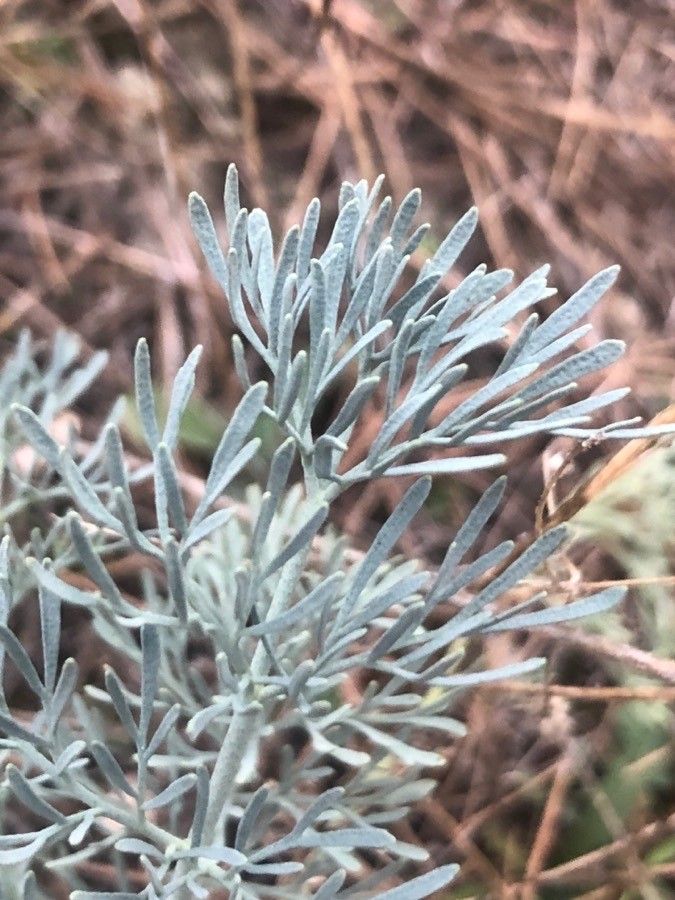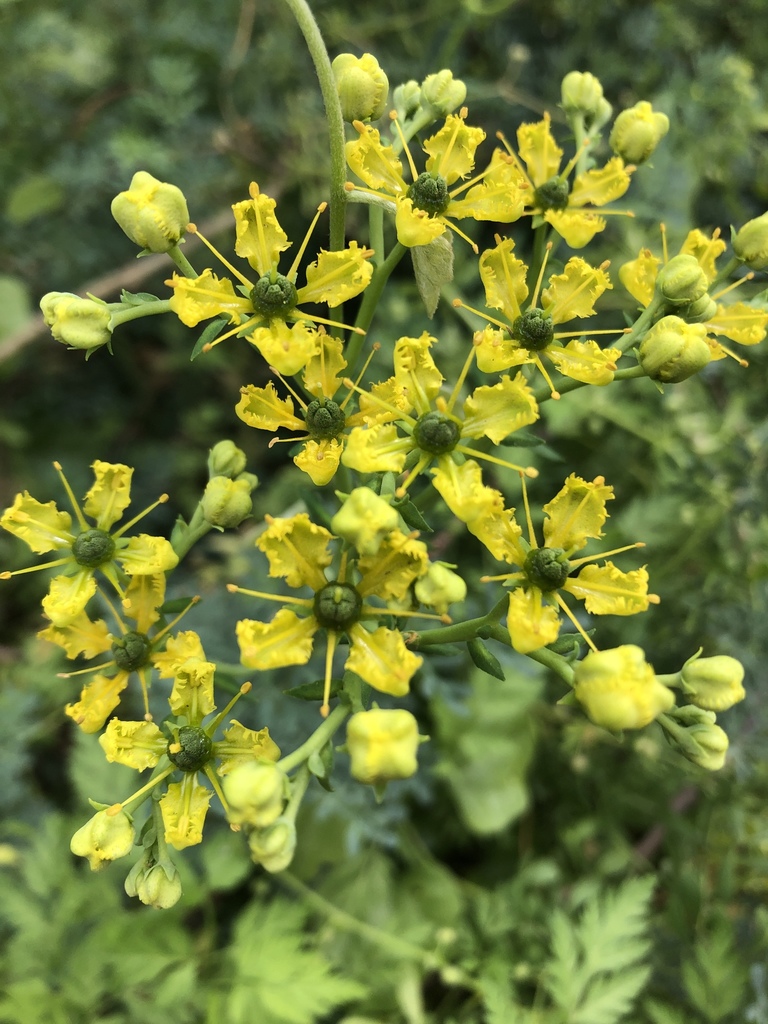
Ruta graveolens, commonly known as rue, common rue or herb-of-grace, is a species of Ruta grown as an ornamental plant and herb. It is native to the Balkan Peninsula. It is now grown throughout the world in gardens, especially for its bluish leaves, and sometimes for its tolerance of hot and dry soil conditions. It is also cultivated as a medicinal herb (famous in Ethiopia and Eritrea, where its local name is ጤና አዳም: "Tena adam"/Health for Adam), as a culinary herb, and to a lesser extent as an insect repellent and incense.
Rue is fairly disease-resistant and typically not vulnerable to illnesses. However, it can still be affected by pests and diseases present in its environment. These problems are usually mild. In terms of care, the plant requires moderate maintenance. Regular pruning is necessary to keep it looking neat and to support healthy growth. Fertilizing can also help encourage flowering. Rue is suitable for anyone with outdoor space, such as a garden or patio, and does not demand extensive care experience. It may need more attention if grown indoors.
How to keep Ruta Graveolens.
Light
Rue prefers plentiful sunlight and does best when placed where the sky is open and unobstructed. It can tolerate moderate light but may show reduced growth. Its native habitat had strong sunlight, which is important for its optimal development and health. However, too much sun can scorch the foliage, while too little light can impede its growth.
Water
Rue, a plant native to the Balkan Peninsula, grows best in well-drained soil and is tolerant of drought conditions. It requires watering about once a week. Because it is an evergreen, rue retains its leaves, which helps it conserve moisture. Typically grown outdoors, rue benefits from mulching, which helps retain soil moisture and reduces the need for frequent watering.
Humidity
This plant will thrive in moderate humidity, which is probably the level in your home. However, misting it a few times a week can be very beneficial. Make sure the room has good ventilation.
Temperature
Originating in the Mediterranean, rue favors cooler growing conditions with temperatures between 5 and 25 ℃ (41 to 77 ℉). In winter, with appropriate protection it can withstand temperatures as low as -12 ℃ (10 ℉). In summer it prefers 21 to 27 ℃ (70 to 81 ℉) and may need some shading to prevent heat stress.
Fertilizer
One fertilizer application in spring is typically enough for Rue, though several feedings can maximize growth. Apply fertilizer every month to month and a half. Fertilizing improves the leaves' appearance and function, helping maintain even color and a healthy texture. It also encourages root development and nutrient uptake, supporting the plant's long-term health.
Pruning
Rue has aromatic, bluish-green foliage and is quite resilient. To encourage dense growth, prune the plant in early to late spring by cutting back the stems by one-third. Be sure to remove any dead wood promptly. When handling rue, use gloves and sterilized tools to prevent skin irritation from its potent oils.
Pot & Repot
When repotting rue, select a pot 1–2 inches (2.5–5.1 cm) larger with good drainage. Use a well-draining potting mix. Repot in spring or fall, making sure the root ball sits slightly below the rim of the flower pot. Water thoroughly after repotting and place in a warm location with indirect sunlight.
Botanical profile.
- Plant Type
- Herb
- Life Cycle
- Perennial
- Genus
- Ruta
- Family
- Rutaceae
- Hardiness Zone
- 4-11
- Mature Height
- 61 cm to 91 cm
- Mature Spread
- 61 cm to 91 cm
- Leaf Color
- Green, Blue, Gray
- Leaf Type
- Evergreen
- Flower Color
- Yellow
- Flower Size
- 2.03 cm
- Bloom Time
- Early summer, Mid summer
- Planting Time
- Spring
- Harvest Time
- Mid summer
- Native Area
- Russia, Germany, Serbia, China, Montenegro, Bulgaria, Albania, Greece, Croatia, Slovenia, France
Other names.
Reader questions.
How should I water my Rue plant?
To properly water the Rue plant, it is recommended to use filtered water at room temperature. Tap water may contain harmful particles, so filtering it is preferable. The water should be at room temperature or slightly warmer to avoid shocking the plant, which is accustomed to warm environments. Additionally, it is best to avoid overhead watering, as it can cause issues with the foliage. Instead, direct the filtered room temperature water towards the soil until it is fully saturated. This watering method benefits the Rue plant by moistening the roots and aiding their spread in the soil, facilitating nutrient absorption.
Why is it necessary to fertilize my Rue plant?
The main structure of the Rue plant is made up of its leaves, and fertilization is key to ensuring that these leaves are vibrant and effective. With proper fertilization, your Rue will have leaves that are consistently colored and have a healthy texture. Fertilization also plays a role below the soil, promoting the growth of new roots and maintaining existing ones. This means that fertilization not only keeps your plant healthy presently, but also helps it absorb nutrients from the soil in the future.
What are the sun requirements for Rue plants?
Rue plants thrive best when exposed to full sunlight for more than 6 hours a day, but they can also tolerate partial sun, which is about 3-6 hours of sunlight. It's essential to observe how sunlight moves through your garden to pick the perfect balance of light and shade, ensuring the plant's health and happiness.
What are the ideal growth conditions for Rue?
Rue, a plant native to the Mediterranean region, thrives in a cooler growth environment with ideal temperatures ranging from 5 to 25°C (41 to 77°F). It can endure winter temperatures as low as -12°C (10°F) with appropriate protection. During summer, the plant prefers temperatures between 21 to 27°C (70 to 81°F) and may need some shading to prevent heat stress. Special frost protection measures aren't usually necessary, thanks to Rue's strong cold resistance. However, to handle extreme cold, covering the plant with soil or straw, and watering abundantly before the first freeze to maintain soil moisture, can effectively protect it.
What do I do if I give my Rue plant too much or too little water?
Overwatering is a more common issue than underwatering for Rue plants. If you give your Rue too much water, its stems and leaves may wilt and turn yellow. Over time, this can lead to diseases like root rot, mold, and mildew, which are harmful to the plant. While underwatering is less likely, it can still happen. When it does, the Rue's leaves will become dry and brown. It's important to catch any signs of overwatering early, as some diseases may not be reversible if you wait too long. If you notice these signs, reduce your watering schedule immediately. You should also check the quality of the soil and replace it with a well-draining mix if necessary. On the other hand, if your Rue is not getting enough water, simply increase your watering frequency until the signs improve.
What is the ideal time to fertilize my Rue plant?
If you grow your Rue outdoors, it will start growing new leaves in early spring. This is the signal to begin fertilization. A single application of fertilizer is usually enough, but if you want to maximize growth, you can repeat the feeding multiple times during spring and early summer. Feeding the Rue about once every month to a month and a half is recommended if you choose this option.
What are the essential care tips for Rue regarding sunlight exposure?
Rue plants have a strong preference for abundant sun exposure and perform best in clear, unobstructed sky-view locations. Though they can endure moderate sunlight, insufficient sunlight may lead to stunted growth. Originating from habitats with intense sunlight, rue needs ample exposure for optimal growth and health. However, too much sunlight can scorch its leaves, while too little can inhibit growth. When natural light is insufficient, especially during winter or in shaded areas, artificial lighting can provide a beneficial alternative, helping to promote healthier, more vigorous growth.
How do low temperatures affect Rue, and what are the remedies?
Rue is notably cold-tolerant, optimally flourishing when the temperature remains above its minimum suitable growth temperature. During winter, it's crucial to keep it above the minimum tolerable growing temperature to avoid damage. If temperatures drop below the critical growth limit, you might not observe immediate changes; however, this can lead to decreased sprouting or a complete lack of sprouting by spring. To mitigate these effects, any non-sprouting parts should be removed in spring.
How frequently do I need to water my Rue plant?
If your Rue plant is in a pot, the best way to determine if it needs water is by checking the soil with your finger. If the top two to three inches of soil are dry, it's time to water. If you're growing Rue outdoors in the ground, you can also use this method. When the first few inches of soil are dried out, it's time to water. In the spring and early fall, you'll usually need to water once a week using this method. During extremely hot weather, you may need to water twice or more per week. However, mature and well-established Rue plants can withstand drought well.
When is the best time to not add fertilizer to my Rue plant?
During the late fall and winter, your Rue goes into a dormant phase and stops producing new growth. So, it's recommended not to fertilize your Rue during this time. In spring and summer, if you decide to fertilize, gradually decrease the amount of fertilizer as summer comes closer, as the growth rate of your Rue will also decrease. It's important to avoid fertilizing your Rue when the weather is unusually hot or when the soil is very dry, as this can cause stress and premature death for your Rue.
How can artificial lighting support Rue plant growth?
Artificial lighting is crucial for indoor Rue plants, especially when natural sunlight is inadequate. LED lights, given their ability to be customized to provide specific light wavelengths, are recommended. For full sun plants, 30-50 watts per square foot is ideal; for partial sun plants, 20-30 watts per square foot; and for full shade plants, 10-20 watts per square foot. The distance of the light source should be 12-36 inches from the plant to mimic natural sunlight, and the duration should align with the natural daylight hours most plants need, which is about 8-12 hours per day.
What should be done if Rue experiences high temperatures?
Rue should ideally be kept below its maximum suitable growth temperature during summer. Exceeding the maximum tolerable growing temperature can cause leaves to lighten in color, curl, become susceptible to sunburn, or in extreme cases, lead to the wilting and drying of the plant. To counteract these issues, trim away sunburned and dried-up parts of the plant. Relocate the plant to a shadier location or use a shade cloth for protection during the midday and afternoon sun. Additionally, watering the plant in the morning and evening will help keep the soil sufficiently moist.