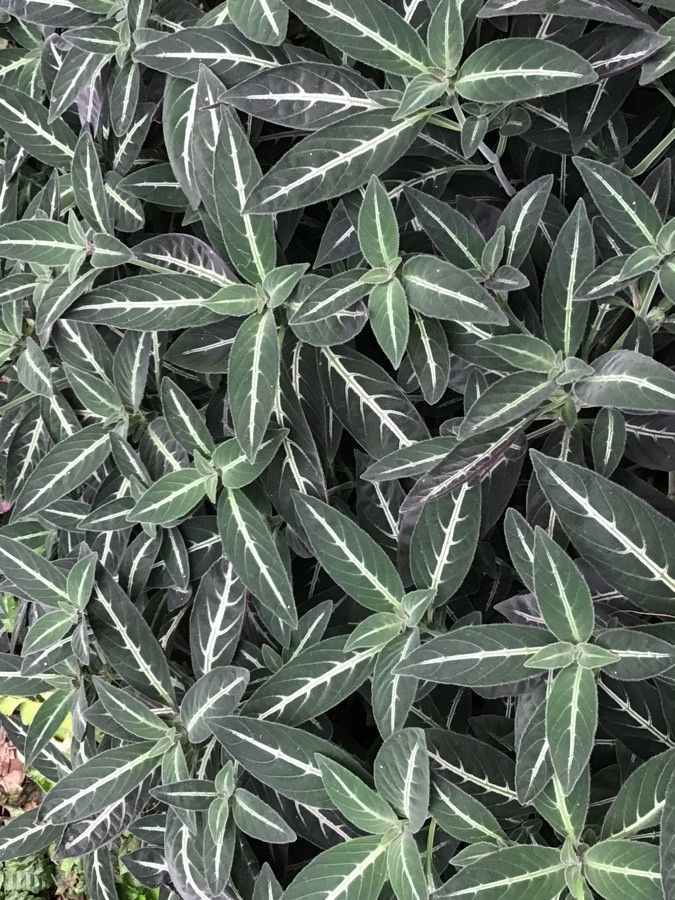
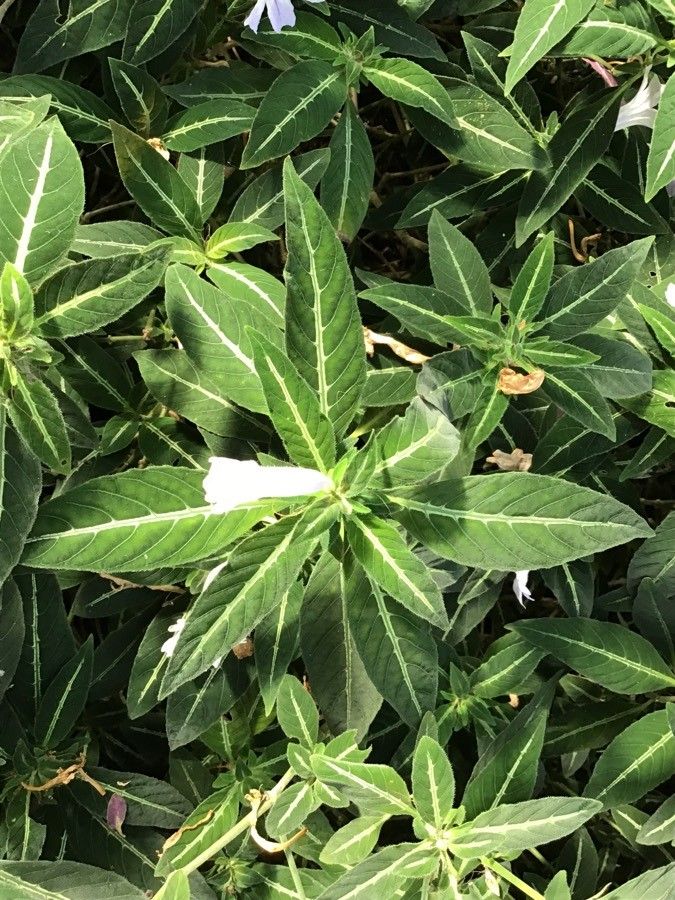
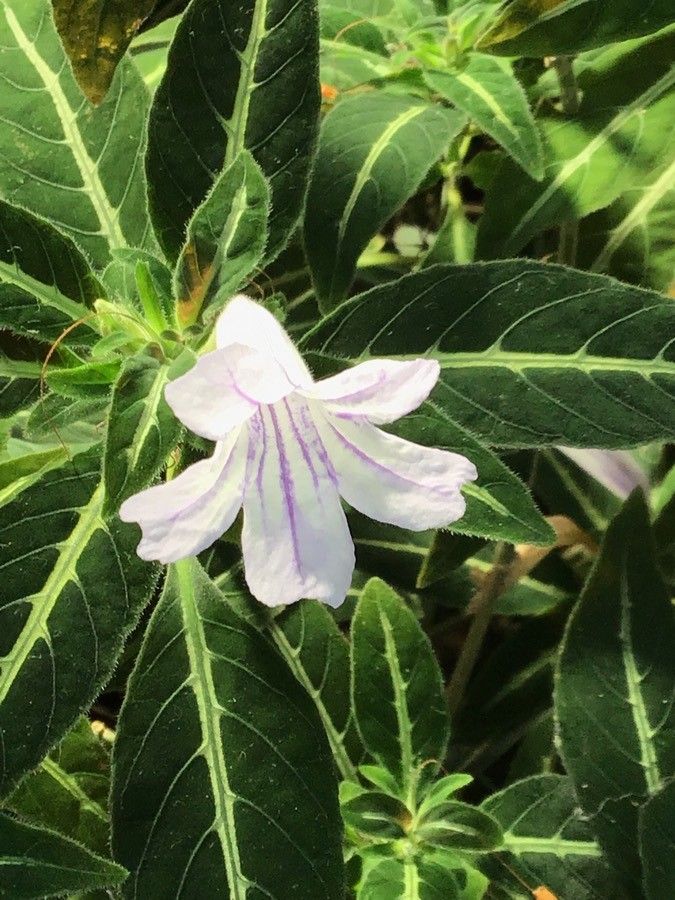
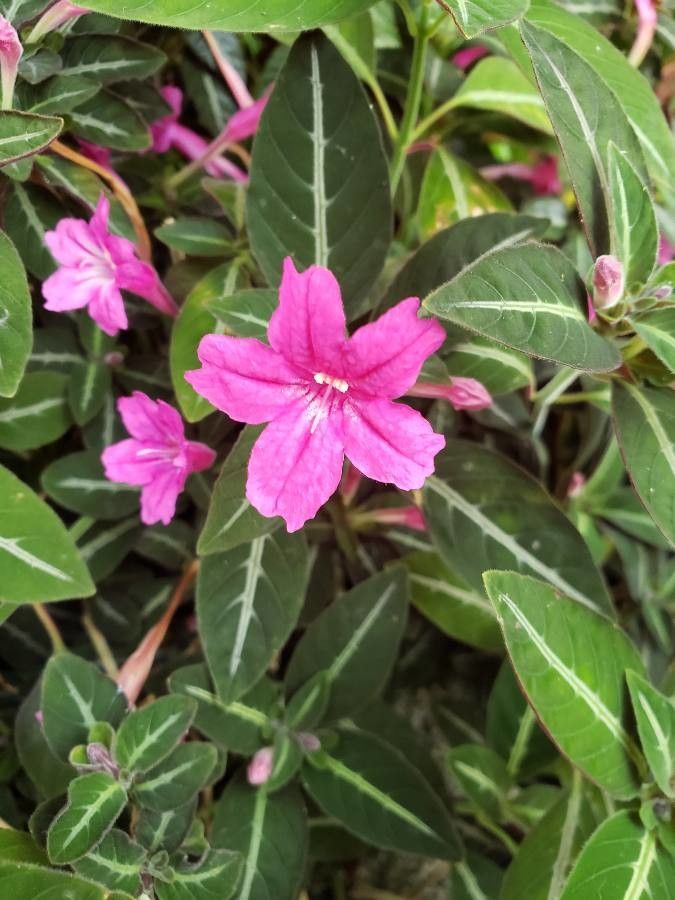
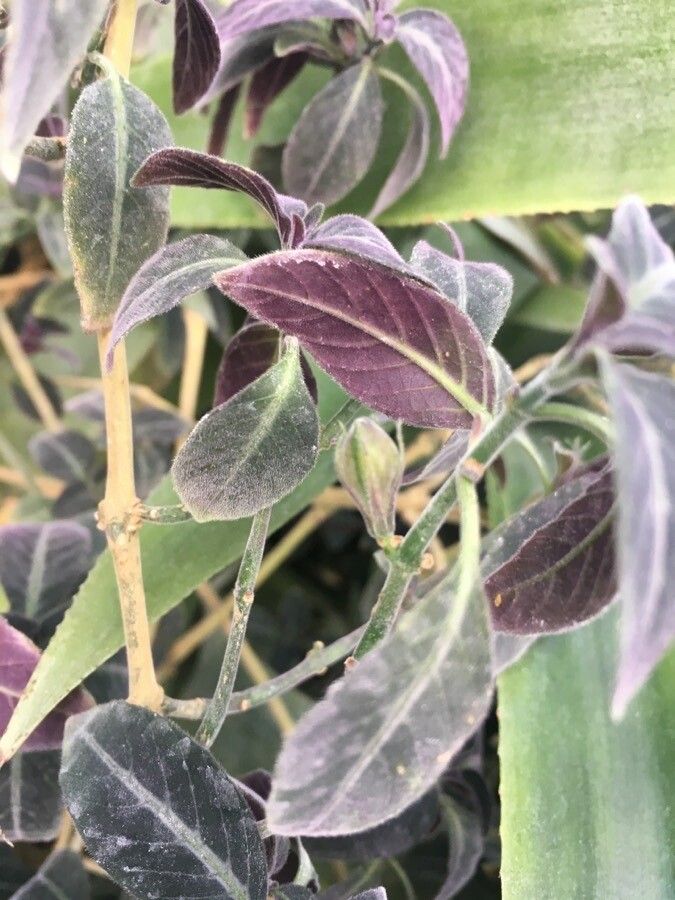
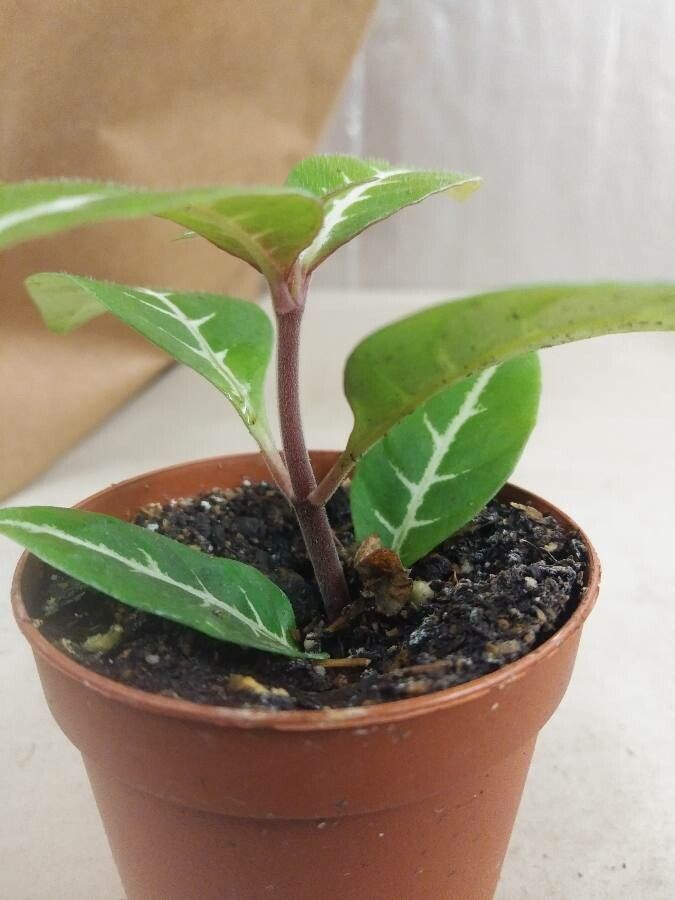
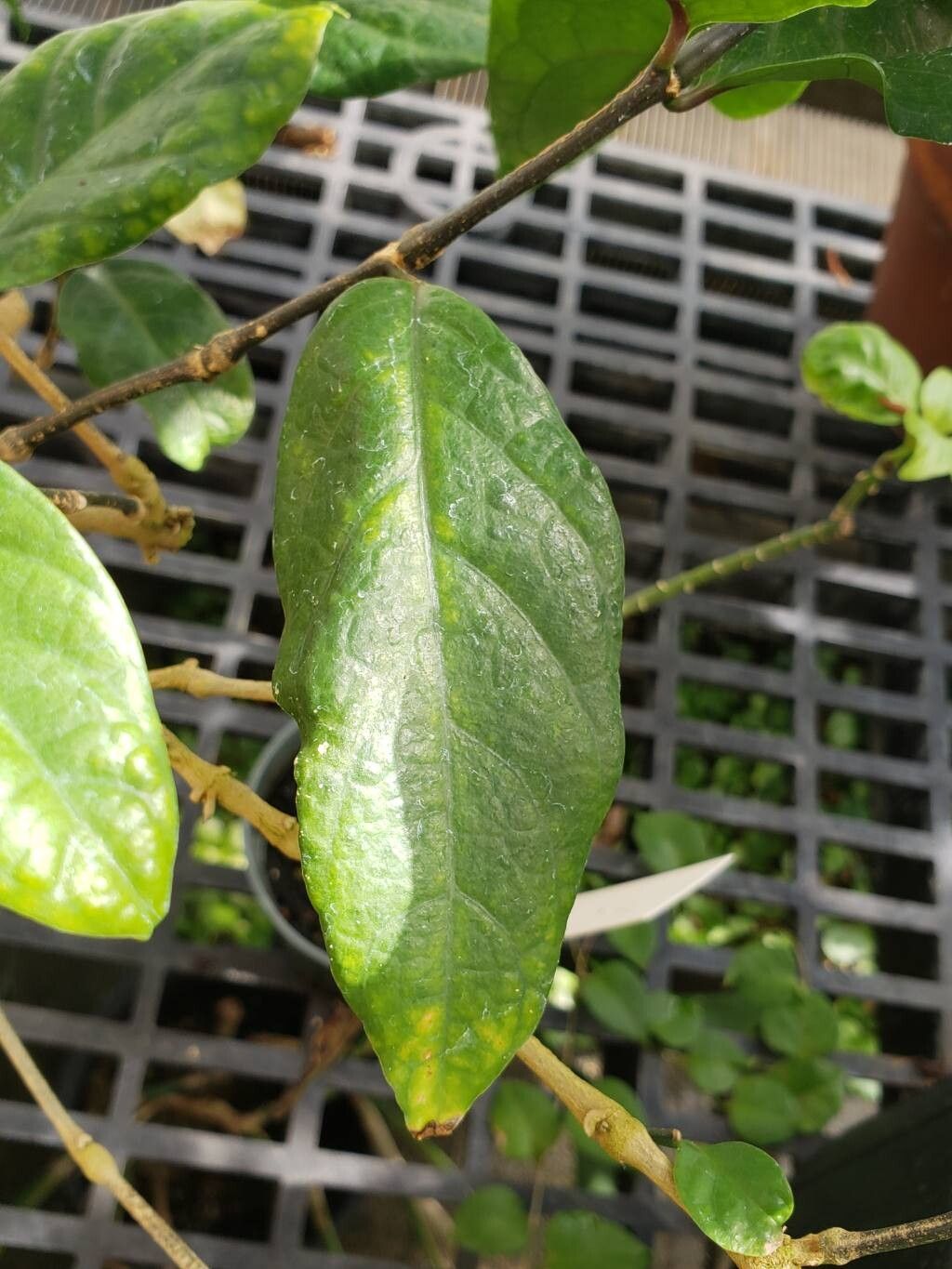
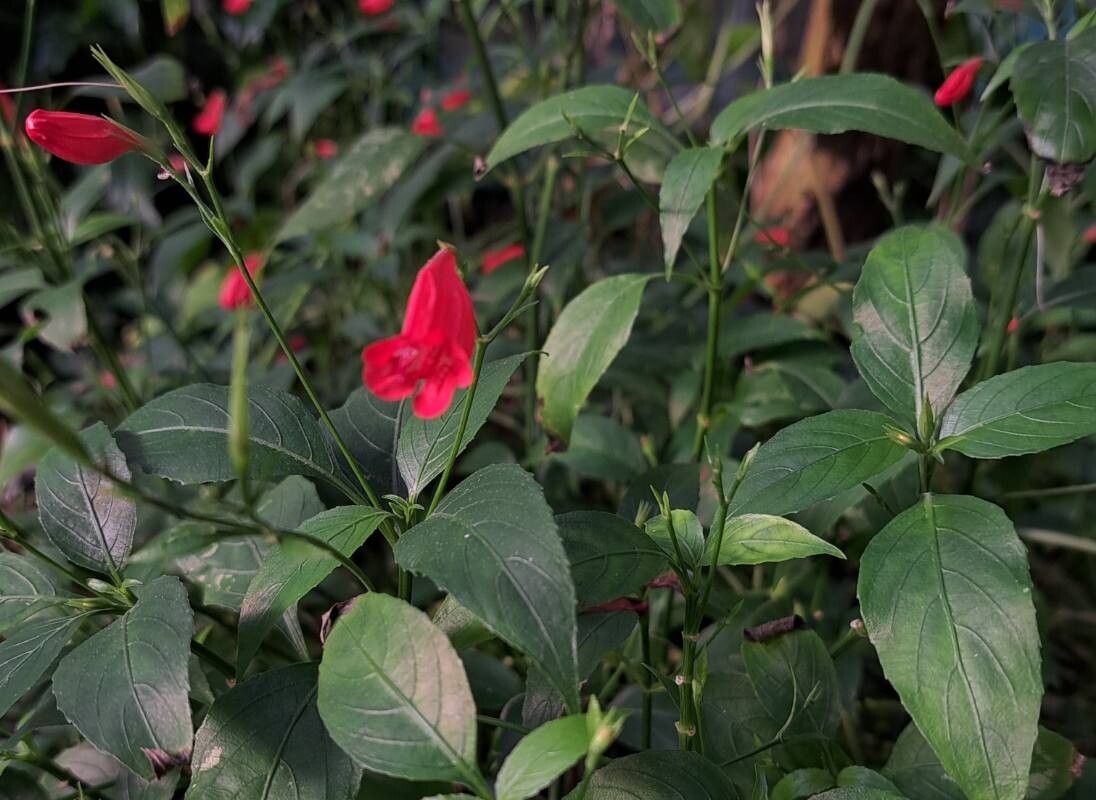
Ruellia makoyana, commonly known as the trailing velvet plant or monkey plant, is a popular houseplant native to Brazil. This low-growing perennial, belonging to the Acanthaceae family, can reach heights of up to 30 cm. The plant is characterized by its dark green leaves with prominent veins and a soft, velvety texture on both sides.
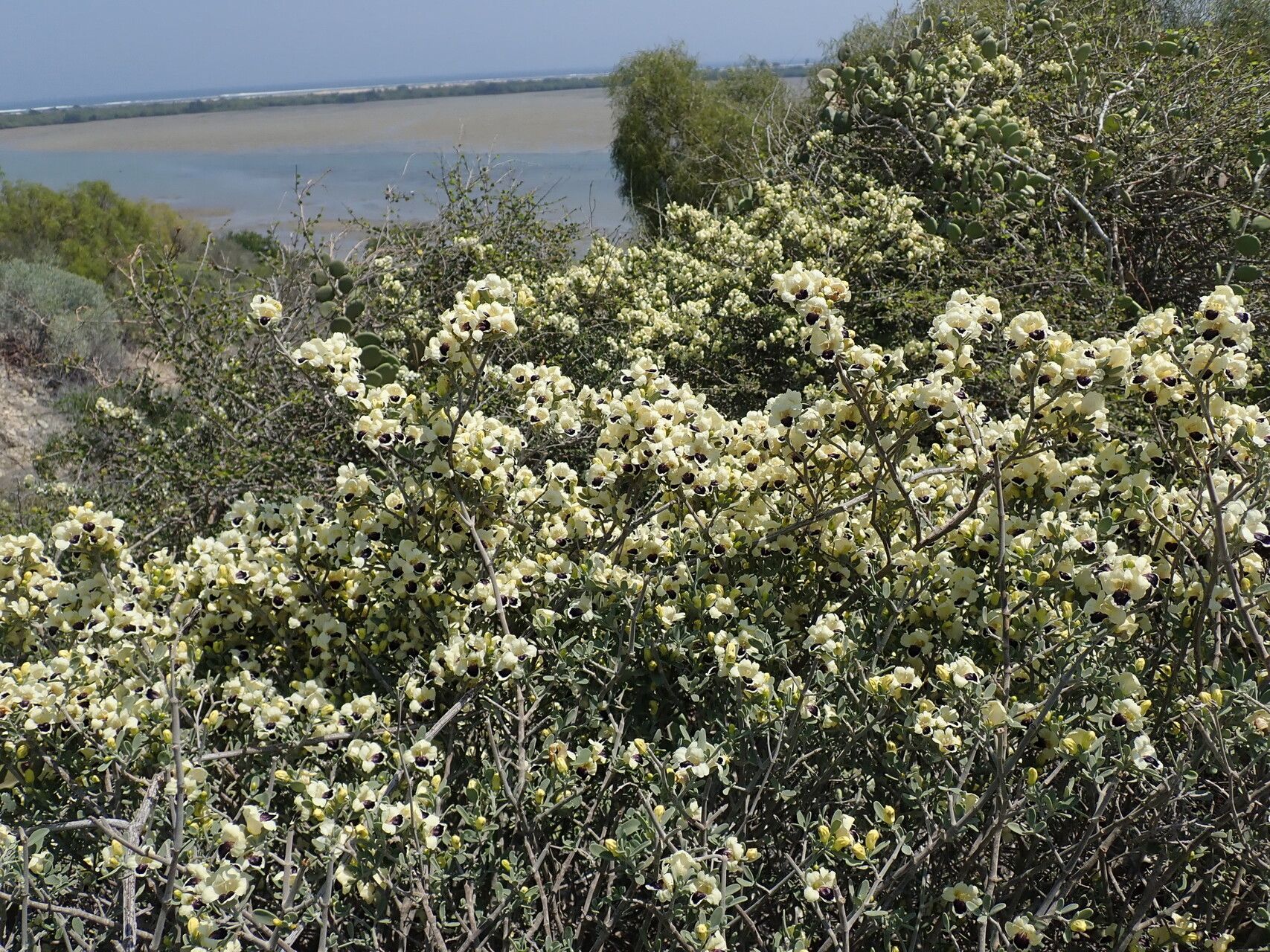
One of the most striking features of Ruellia makoyana is its beautiful flowers. These trumpet-shaped blooms are a deep purple color with a white throat and appear in clusters throughout the year, adding color and vibrancy to any indoor space.
Ruellia makoyana thrives in bright but indirect light and well-draining soil that is kept moist but not waterlogged. While it can tolerate some drought, it does not fare well in overly wet conditions.
This easy-to-care-for plant is an excellent addition to any indoor garden and works wonderfully in hanging baskets on patios or balconies due to its trailing habit. With proper care, Ruellia makoyana can thrive for many years indoors, providing year-round beauty!
The Monkey Plant, scientifically known as Ruellia makoyana, derives its genus name from Jean de la Ruelle, a French herbalist who served as a physician to Francis I of France. This plant earns its common name, "Monkey Plant," because its seeds are said to resemble a monkey's face.
Monkey plant has strong disease resistance and is generally not prone to illness. However, it can be vulnerable to leaf spots when light and ventilation are poor and watering is excessive. The care level for this plant is considered easy, as it mainly requires regular watering and little else. Monkey plant is suitable for people who do not have the time and energy to devote to regular care.
How to keep Ruellia Makoyana.
Light
Monkey plant thrives in areas with moderate sunlight, though it can adjust to abundant sun. Its native environment features diffused light that promotes healthy growth. Excessive sunlight can stress the plant, while insufficient light can impede its development.
Water
The monkey plant, native to humid tropical regions, flourishes in high humidity and consistently moist soil. To keep it healthy, water it once a week. For indoor settings, regular misting is also helpful to mimic its natural environment, supporting vibrant growth during its active season.
Temperature
The monkey plant comes from moderately temperate areas and does best at temperatures of 68 to 100.4 °F (20 to 38 ℃). It prefers warmer indoor conditions during the season, but a slight temperature reduction in winter is acceptable.
Fertilizer
Proper fertilization is essential for Monkey plant's health and appearance. Fertilize Monkey plant during summer, repeating monthly throughout the season. Nutrients fuel growth and maintain plant components. Fertilization improves Monkey plant's flower display, ensuring the best blooms.
Pruning
The monkey plant is a tropical perennial that benefits from pruning between early spring and late winter. To maintain its shape and health, trim away any unhealthy stems. Light pruning encourages denser growth and more blooms. However, avoid heavy pruning during the blooming period to reduce stress and ensure the plant remains vibrant and healthy.
Pot & Repot
When repotting a Monkey plant, pick a pot 1–2 inches (2.5–5.1 cm) larger that provides ample drainage. Use a well-draining potting mix. Repot in spring or fall, making sure the root ball sits slightly lower than the rim of the flower pot. Water thoroughly after repotting and place the plant in a warm spot with indirect sunlight.
Botanical profile.
- Plant Type
- Herb
- Life Cycle
- Perennial, Annual
- Genus
- Ruellia
- Family
- Acanthaceae
- Hardiness Zone
- 9-11
- Mature Height
- 61 cm
- Mature Spread
- 46 cm
- Leaf Color
- Green, Gray, Variegated, Silver, Purple
- Leaf Type
- Evergreen
- Flower Color
- Pink, Purple
- Flower Size
- 2.54 cm to 5.08 cm
- Bloom Time
- All year round
- Planting Time
- Spring, Summer, Autumn
- Harvest Time
- All year round
- Native Area
- Brazil
Other names.
Reader questions.
What should I do if I give my Monkey plant too much or too little water?
When caring for your Monkey plant, both overwatering and underwatering can harm its health. However, overwatering is a more common issue. If your Monkey plant receives too much water, its stems and leaves may wilt and turn yellow. Overwatering for a long time can also cause diseases like root rot, mold, and mildew, which can kill the plant. Underwatering is less likely because the Monkey plant can tolerate drought. But if it happens, the leaves may become brittle and brown. It's important to notice signs of overwatering quickly. Some diseases from overwatering, like root rot, can't be corrected if you wait too long. If you see early signs of overwatering, reduce watering immediately. Consider replacing the soil if it drains poorly. On the other hand, if your Monkey plant lacks water, simply water it more regularly until the signs disappear.
Why should I put fertilizer on my Monkey plant?
Fertilizer and soil nutrients are like fuel for your Monkey plant's growth. Plants use these nutrients to develop new plant material and keep themselves in good condition. For Monkey plants, fertilization is especially important to have beautiful flowers, which are the main attraction. Gardeners should prioritize fertilization to ensure the best blooms.
What are the sunlight requirements for a Monkey Plant?
The Monkey Plant requires partial sun, about 3-6 hours of sunlight per day, but it can also thrive in full sun conditions, which mean more than 6 hours of sunlight daily. It's essential to observe how sunlight moves through your garden to find spots that offer a balance of light and shade, ensuring optimal growth conditions for your Monkey Plant. Overexposure or insufficient light can stress the plant, hindering its development.
What are the ideal conditions for growing a Monkey Plant?
The Monkey Plant, known botanically as Ruellia makoyana, thrives in environmentally moderate regions, preferring a temperature range between 68 to 100.4 °F (20 to 38 °C). It's extremely heat-loving and does not tolerate cold temperatures well. During seasonal changes, it flourishes in warmer indoor settings, although a slight decrease in temperature during winter is tolerable. To support its growth, it's ideal to maintain temperatures above 20°C, especially through the colder months. For outdoor-grown Monkey plants, it's advised to bring them indoors during autumn, placing them near a bright window but away from direct heat sources to avoid harm.
How much should I water my Monkey plant?
If your Monkey plant is in a pot, you can determine if it needs water by putting your finger in the soil. If the top two to three inches of soil are dry, it's time to water it. When growing the Monkey plant outdoors, you can also use this method. Once the top few inches of soil have dried out, it's time to water it. Typically, during spring and early fall, watering once a week should suffice. However, during very hot weather, you may need to water it two or more times a week. It's important to note that mature Monkey plants are quite resilient and can withstand drought.
When should I fertilize my Monkey plant?
The Monkey plant goes through two main phases each year. The first phase is the dormant phase, which occurs during winter. During this phase, the plant experiences minimal new growth. The second phase is the active growth phase, which takes place in spring and fall. This is when fertilization is most important for your Monkey plant. It is recommended to start fertilizing in the spring and continue once a month throughout spring and most of the summer. As fall approaches, you can gradually decrease the frequency of fertilization.
What essentials should be considered for optimal growth of a Monkey Plant?
For optimal growth, a Monkey Plant flourishes in moderate sun exposure but can adjust to generous sunlight, thanks to its native habitat known for diffused light. When natural sunlight is not enough, especially in winter or darker spaces, artificial lighting becomes crucial. LED lights are recommended because they can provide specific light wavelengths needed by plants. The amount of artificial light required varies: 30-50W/sq ft for full sun plants, 20-30W/sq ft for partial sun, and 10-20W/sq ft for full shade plants. The light should be placed 12-36 inches above the plant, mimicking natural sunlight for 8-12 hours daily.
How do you care for a Monkey Plant during low temperature conditions?
Monkey Plants prefer warm environments and struggle with low temperatures, thriving best when the mercury stays above 20°C. During winter, it's crucial to keep the temperature above 0°C to avoid damage. Exposure to temperatures below -5°C can result in lighter leaf color, gradually turning brown or black after frost damage, accompanied by symptoms such as wilting and drooping. To safeguard the Monkey Plant in cold conditions, trim off frost-damaged parts and move the plant indoors to a warm spot, preferably near a south-facing window for ample sunlight. Avoid placing it near heaters or air conditioning vents to prevent air dryness.
How much water does my Monkey plant require?
To properly water your Monkey plant, don't hold back on the amount of water you give it. Wait until the top two to three inches of soil are dry and then give it a thorough watering. Make sure to water it enough so that the soil is completely soaked. You'll know you've added enough water when you see excess water flowing out of the drainage holes at the bottom of the pot. If you don't see any excess water draining, you likely didn't give the plant enough water. However, be careful not to let the water accumulate in the soil as this can harm the plant. On the other hand, if you don't see any water draining from the pot, it may mean that the soil doesn't drain well, which is not good for the plant's health. Lastly, if the plant is outside, one inch of rain per week will be sufficient.
When is it not a good idea to fertilize my Monkey plant?
To support the growth of Monkey plants without risking root burn, it is important to provide extra nutrients during the active growth stage in spring and summer. However, fertilizing should be stopped during the fall and winter when the plant enters its dormant stage.
What are common symptoms of inadequate light in Monkey Plants?
Symptoms of inadequate light in Monkey Plants include smaller new leaves, leggy or sparse growth, faster leaf drop, slowed or stopped growth, lighter-colored or irregularly patterned new leaves indicating chlorophyll and nutrient deficiency. Overexposure can lead to chlorosis (yellowing leaves due to chlorophyll breakdown), sunscald (damaged leaves/stems from intense light), leaf curling (a defense mechanism against sunlight), wilting (loss of turgor pressure due to excessive water loss), and leaf scorching (brown, dry edges on leaves from too much sun).
What should you do if a Monkey Plant is exposed to high temperatures?
During the summer, it's important to ensure that a Monkey Plant's surrounding temperature doesn't exceed 38°C. Exposure to temperatures above 43°C can cause the leaves to lighten in color and increase susceptibility to sunburn. To care for a Monkey Plant in high temperatures, trim away any sunburned and dried-up parts. Relocate the plant to a spot shielded from the midday and afternoon sun. Watering the plant in the morning and evening can help keep the soil moist, further protecting it from the adverse effects of high temperatures.