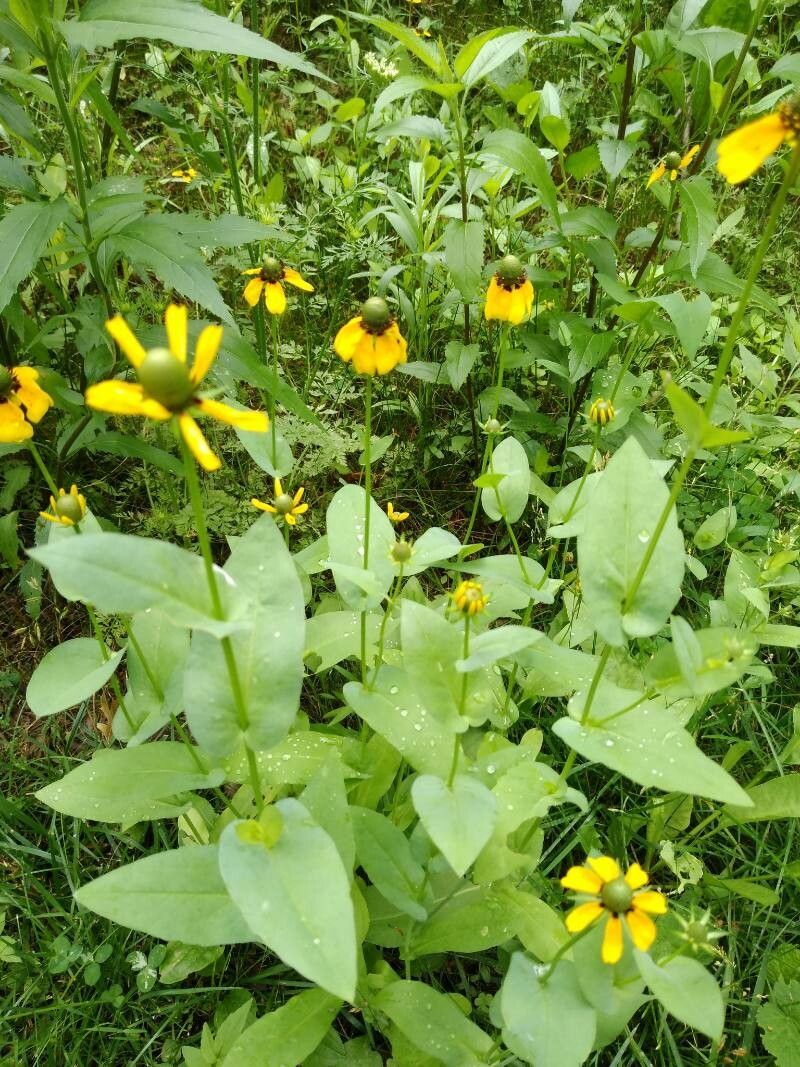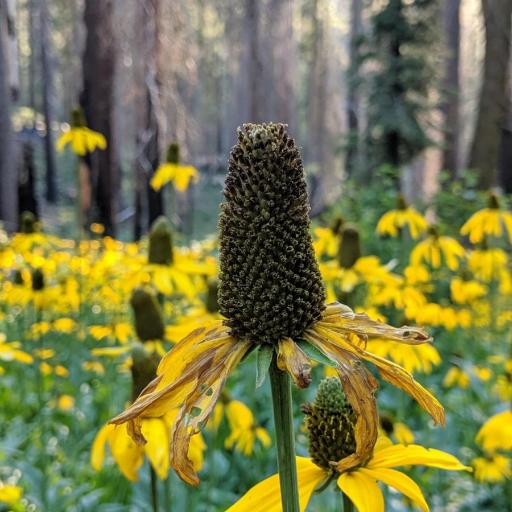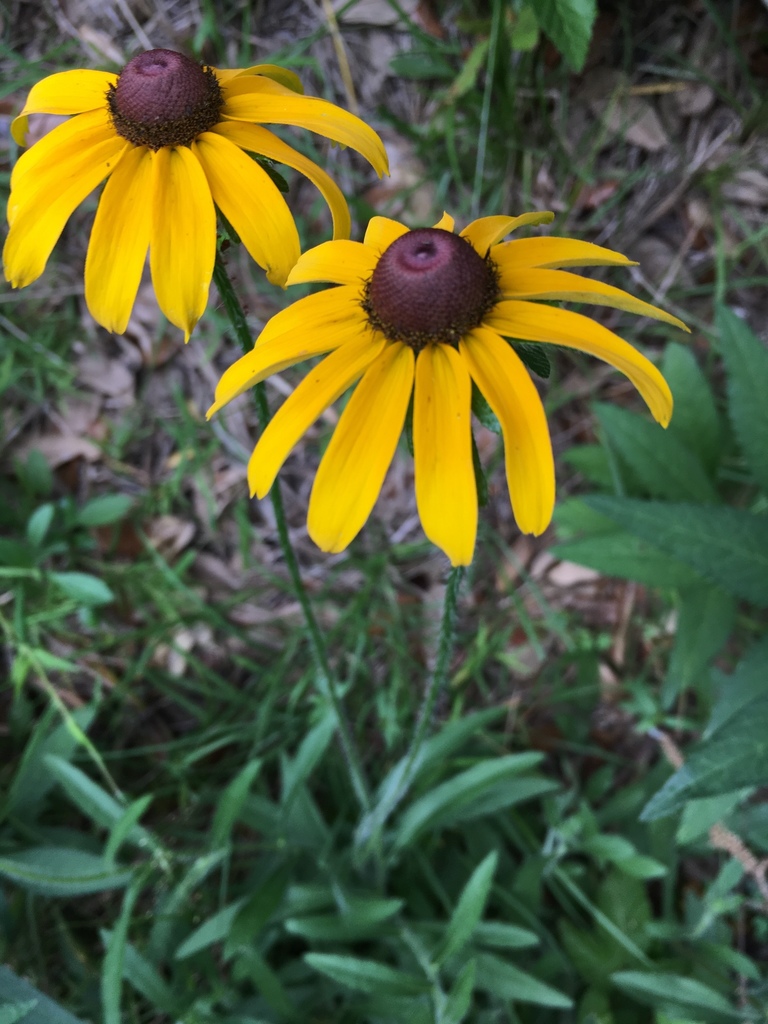
Rudbeckia, commonly known as Black-eyed Susan, is a genus of flowering plants in the sunflower family. These plants are native to North America and are widely cultivated for their vibrant yellow or orange daisy-like flowers with dark centers. The blossoms appear from mid-summer to early fall and attract bees, butterflies, and other pollinators.
Rudbeckia plants are easy to grow and require minimal care. They thrive in full sun but can tolerate some shade in hotter climates. While they prefer well-drained soil, they can adapt to various soil types.
Several species of Rudbeckia are available for cultivation, including Rudbeckia hirta (Black-eyed Susan), Rudbeckia fulgida (Orange Coneflower), and Rudbeckia laciniata (Cutleaf Coneflower). These species range in size from small annuals to large perennials.
The black-eyed Susan, a popular wildflower in the United States, symbolizes encouragement and motivation. In 1918, Rudbeckia hirta was designated as the state flower of Maryland. FUN FACT · FROM THE LIBRARY
Beyond their ornamental value, some Rudbeckia species have medicinal properties historically used by Native Americans. The roots were applied as a poultice for snake bites, and the leaves were brewed into tea for treating ailments such as colds and flu.
Overall, Rudbeckia is a delightful addition to any garden or landscape, with its bright, pollinator-attracting blooms and useful medicinal properties that extend its value beyond mere aesthetics.
The name "Black-eyed Susan" originates from a poem by John Gay, in which he personified the black-eyed Susan (Rudbeckia hirta) and sweet William (Dianthus barbatus) to narrate a love story. This name is still in use today. Interestingly, despite its name, the stamen of the black-eyed Susan is not truly black; it is actually brown.
Black-eyed Susan has good disease resistance and is generally unlikely to develop illnesses. However, it can be susceptible to pests and diseases present in its environment, though these issues are usually not severe. In terms of care, this plant requires moderate maintenance. It needs regular pruning to keep a good appearance and support healthy growth. Fertilizing can also help encourage flowering. Black-eyed Susan is suitable for anyone with outdoor space, such as a garden or patio, and does not require a lot of care experience. It may need more attention when grown indoors.
How to keep Rudbeckia Hirta.
Light
The black-eyed susan does best with plenty of light, doing well in spots where the sun is strong and unobstructed. It can also tolerate situations with less available sunshine. In its natural range it grows well in open, sun-filled areas. Too little light may result in weak, leggy growth, while too much can lead to leaf scorch.
Water
The black-eyed Susan thrives in moist environments and needs consistent watering to avoid waterlogging. For optimal growth, water the plant twice a week, making sure the soil stays damp but well-drained. Its vibrant blooms rely on sufficient hydration during the active growing season.
Humidity
This plant will thrive in moderate humidity, which is probably the level in your home. However, misting it a few times a week can be very beneficial. Make sure the room has good ventilation.
Temperature
Black-eyed susan is native to temperate regions and thrives in temperatures of 68 to 95 °F (20 to 35 ℃). It is hardy in both spring and fall because of its wide temperature tolerance. Adjust watering during extreme summer or winter to prevent stress.
Fertilizer
The best time to fertilize a Black-eyed susan is in early spring, as it comes out of dormancy and starts active growth. Fertilization supplies essential nutrients for healthy development. Although Black-eyed susan has relatively low fertilizer needs, applying fertilizer annually can boost its survival and encourage better, longer-lasting flowers.
Pruning
The Black-eyed Susan is a plant known for its bright yellow petals and dark center. To encourage extended flowering, regularly remove spent blooms. In early spring, prune the plant to remove any damaged growth by cutting above the leaf nodes. This practice improves air circulation, increases sunlight exposure, and reduces the risk of disease, ultimately promoting a healthier and more attractive plant.
Pot & Repot
When repotting Black-eyed susan, select a pot 1–2 inches (2.5–5.1 cm) larger with ample drainage. Use a well-draining potting mix. Repot in spring or fall, ensuring that the root ball is slightly lower than the rim of the flower pot. Water thoroughly after repotting and place in a warm spot with indirect sunlight.
Botanical profile.
- Plant Type
- Herb
- Life Cycle
- Perennial, Annual
- Genus
- Rudbeckia
- Family
- Asteraceae
- Hardiness Zone
- 4-10
- Mature Height
- 30 cm to 91 cm
- Mature Spread
- 30 cm to 46 cm
- Leaf Color
- Green
- Leaf Type
- Deciduous
- Flower Color
- Yellow
- Flower Size
- 5.08 cm to 10.16 cm
- Bloom Time
- Summer
- Planting Time
- Spring
- Harvest Time
- Mid summer, Late summer, Early fall
- Native Area
- Central U.S.
Other names.
Reader questions.
When Should I Water My Black-eyed Susan?
Watering your black-eyed Susan correctly is crucial for its health and growth. It's important to watch for signs that indicate when it needs water. Check the leaves for any color changes or wilting and the soil's top 1-2 inches for dryness. The plant requires more water during the growing season (spring and summer) and less during its dormant season (fall and winter). Over-watering can lead to root rot and other diseases, while under-watering can dehydrate the plant. Use visual and tactile methods to determine the plant’s watering needs accurately.
Why should I put fertilizer on my Black-eyed susan?
Fertilization is important for the Black-eyed susan and other plants because it provides key nutrients that help the plant grow. The Black-eyed susan's fertilization needs are relatively low, and it can sometimes survive without it. However, annual fertilization is highly beneficial as it keeps the plant alive and encourages the growth of better and longer-lasting flowers. Therefore, those who want their Black-eyed susan to look its best should prioritize annual fertilization.
What are the sun requirements for Black-eyed Susan?
Black-eyed Susan, known botanically as Rudbeckia hirta, requires a significant amount of sunlight to thrive optimally. It is classified into two categories based on sunlight needs: full sun, which is above 6 hours of sunlight, and partial sun, around 3-6 hours of sunlight. The plant flourishes best under full sun exposure, which is strong and unhindered, but it can also adapt to less abundant sunshine, prospering amidst open sunlit expanses in its native habitat. Adequate sunlight is crucial as insufficient light can lead to unhealthy and leggy growth, while excessive exposure might cause leaf scorch. Observing the movement of sunlight through your garden will help determine the ideal spots that offer a perfect balance of light and shade.
What are the ideal growing temperatures for Black-eyed Susan?
Black-eyed Susan thrives in temperate environments, with ideal temperatures ranging from 68 to 95 °F (20 to 35 ℃). Its broad temperature tolerance allows it to grow heartily in both spring and fall. To ensure its optimal growth, it's essential to adjust watering practices during the extreme temperatures of summer or winter to prevent stress.
How Should I Water My Black-eyed Susan?
For a healthy black-eyed Susan, the 'soaker method' is preferred, which involves using a soaking hose or a watering can directed at the base of the plant to avoid wetting the foliage. Despite being drought-tolerant, regular watering is necessary, but ensure the top 2 inches of soil are dry before doing so. To minimize the risk of over or under-watering, consider using a moisture meter. Water at the base to avoid wet leaves and petals, which can lead to fungal diseases, and pay extra attention during dryer months.
When should I put fertilizer on my Black-eyed susan?
The recommended time to fertilize a Black-eyed Susan is in late winter to early spring when it is transitioning from dormancy to active growth. Fertilizing at this time promotes healthy growth for the upcoming season. Fertilizing in early spring is the most beneficial, but it is also acceptable to fertilize in the fall. However, it is not advised to fertilize during summer or winter.
How to use artificial lighting for growing Black-eyed Susan indoors?
When natural sunlight is insufficient for Black-eyed Susan, particularly during winter or in less sunny spaces, artificial lighting becomes essential for promoting optimal growth. For effective use of artificial lights, follow these guidelines: choose LED lights for their customization in providing specific wavelengths needed by the plant, with full sun plants requiring 30-50W/sq ft, partial sun plants 20-30W/sq ft, and full shade plants 10-20W/sq ft of artificial light. Place the light source 12-36 inches above the plant, mimicking natural sunlight while ensuring the light covers evenly. Additionally, simulate the natural daylight hours specific to your plant species, typically between 8-12 hours per day, to foster healthier growth.
Does Black-eyed Susan require special frost protection measures during winter?
Although Black-eyed Susan possesses strong cold resistance, special frost protection measures are usually unnecessary. However, if winter temperatures are expected to drop below -30°C, providing cold protection is important. This can be achieved by covering the plant with materials such as soil or straw. Additionally, watering the plant abundantly before the first freeze of autumn can help ensure the soil remains moist and enters a frozen state, preventing drought and water scarcity during winter and early spring.
How Much Water Does Black-eyed Susan Really Need?
The water requirements of black-eyed Susan vary, with a pot of about 30 cm in diameter needing roughly 2 liters (0.5 gallons) of water. However, factors such as pot size, root depth, and the plant's size influence its needs. Look for dark green foliage and vibrant flowers as signs of adequate hydration. Be cautious of over-watering and underwatering, both of which can harm the plant. It's important to allow soil to dry out slightly between waterings.
When is it not a good idea to fertilize my Black-eyed susan?
To properly care for your Black-eyed susan, it's important to only fertilize during late winter and early spring. This plant doesn't require much fertilization, so a single feeding each year is enough. Overfertilizing during spring, summer, and fall can cause problems, unless you didn't fertilize in spring, in which case it's okay to feed it in the fall. Additionally, there's no need to fertilize during winter when the Black-eyed susan is in a dormant phase and not growing.
What are the symptoms of incorrect lighting for Black-eyed Susan?
Incorrect lighting can manifest through various symptoms in Black-eyed Susan plants. Under low light conditions, signs include smaller new leaves compared to older ones, leggy or sparse growth due to elongated spaces between leaves or stems, faster leaf drop as a conservation effort, delayed or halted new growth indicating a survival mode, and paler new leaves or chlorosis, showing a lack of chlorophyll. Excessive sunlight exposure can cause symptoms like sunscald, which appears as pale or bleached patches on plant tissue, leaf curling as a defense mechanism to reduce surface area exposure, wilting from increased transpiration, and leaf scorching, marked by brown, crispy edges on leaves. These symptoms either indicate a lack or excess of sunlight, impacting the plant's health.
What symptoms indicate that a Black-eyed Susan is experiencing low temperatures, and what are the solutions?
Black-eyed Susan is cold-tolerant and performs best when temperatures are above 20°C, requiring maintenance above 0°C during winter. If temperatures fall below -30°C, there may not be noticeable changes during winter, but there could be a decrease in sprouting or no sprouting at all during springtime. The solution for this issue is to remove any parts that fail to sprout in the spring.