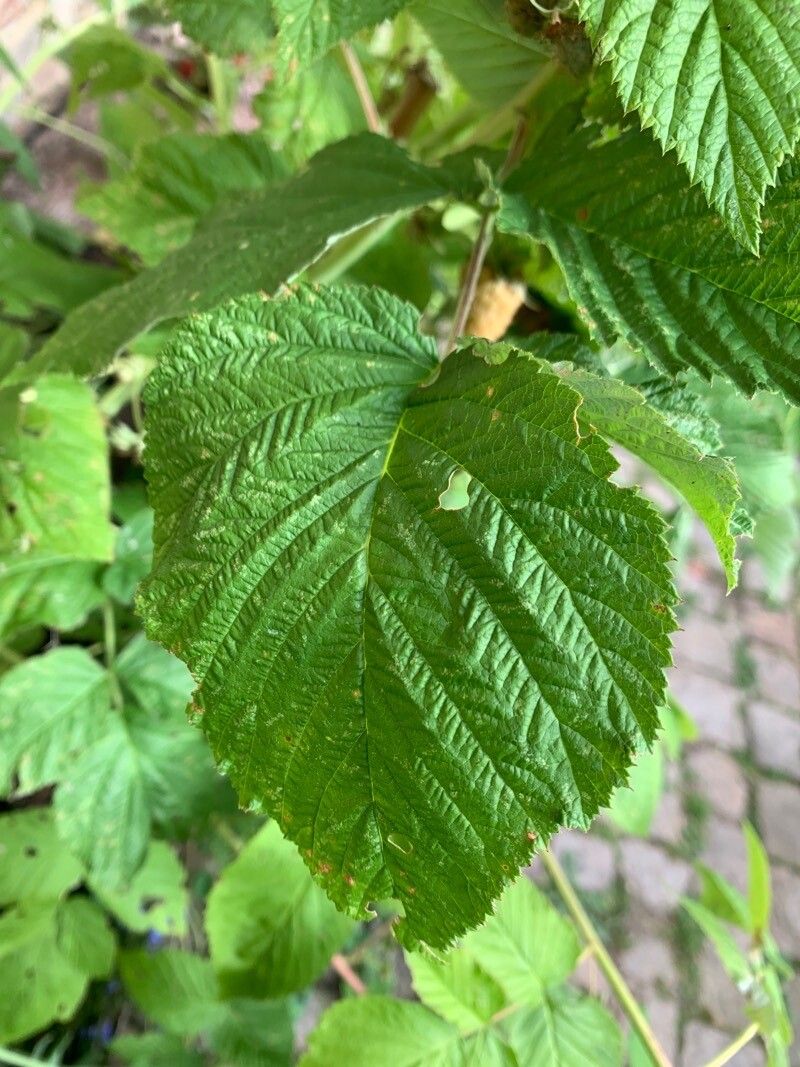
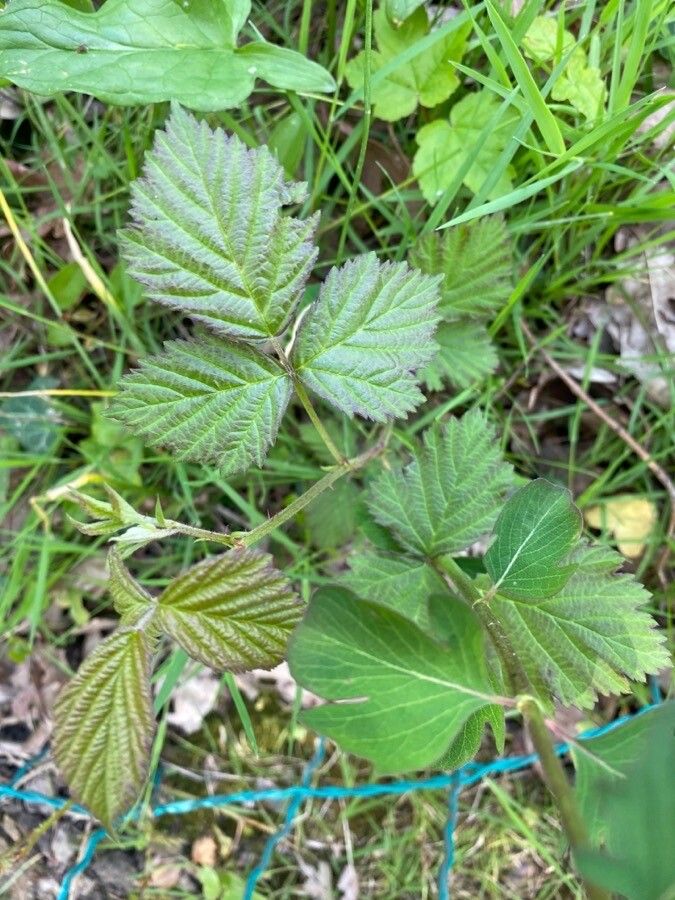
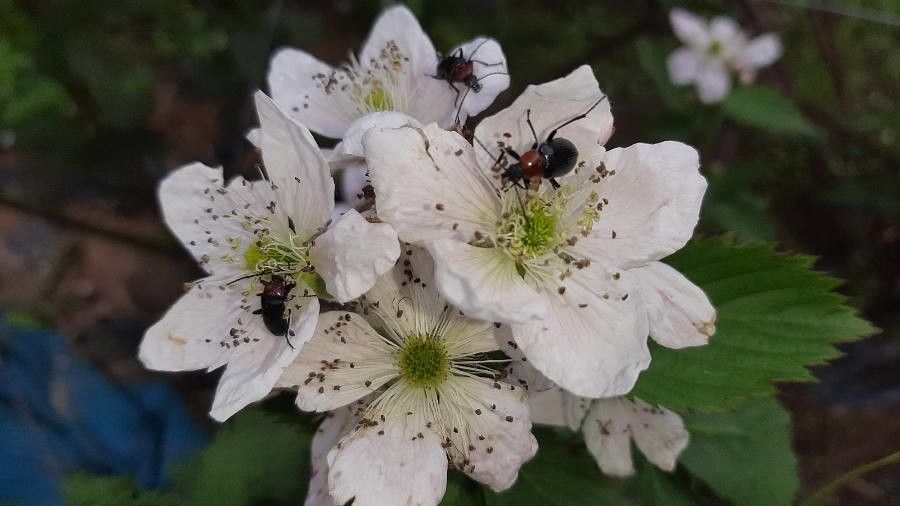
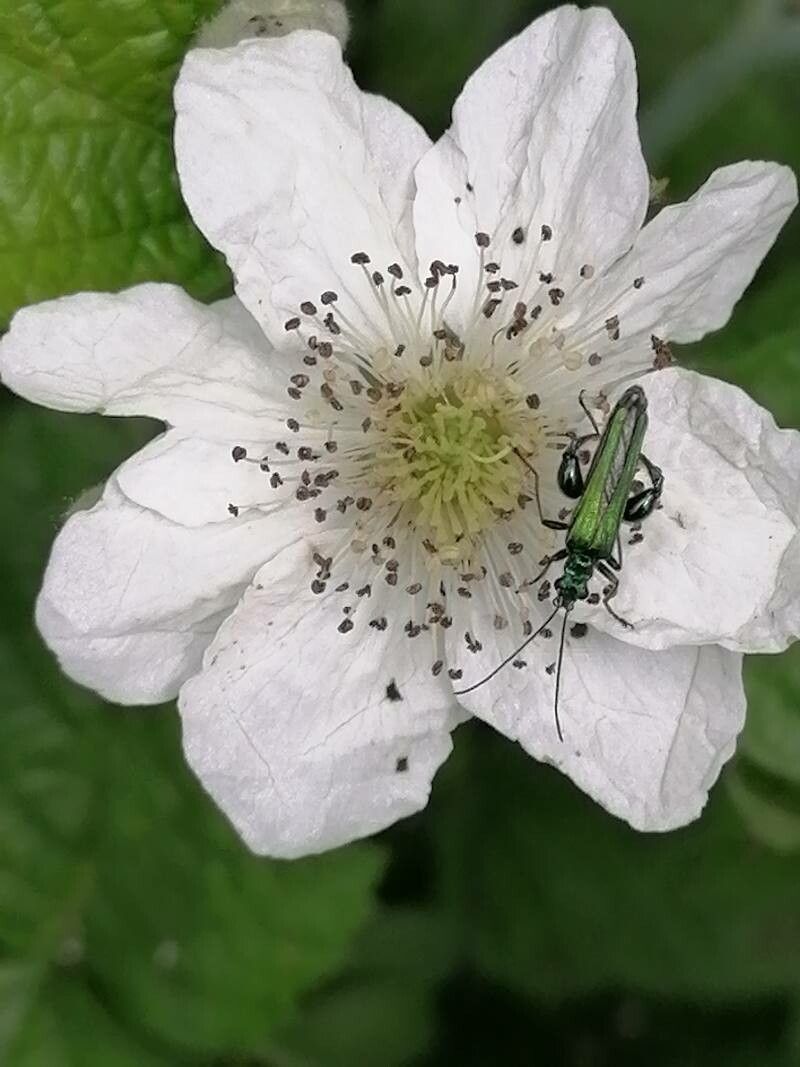
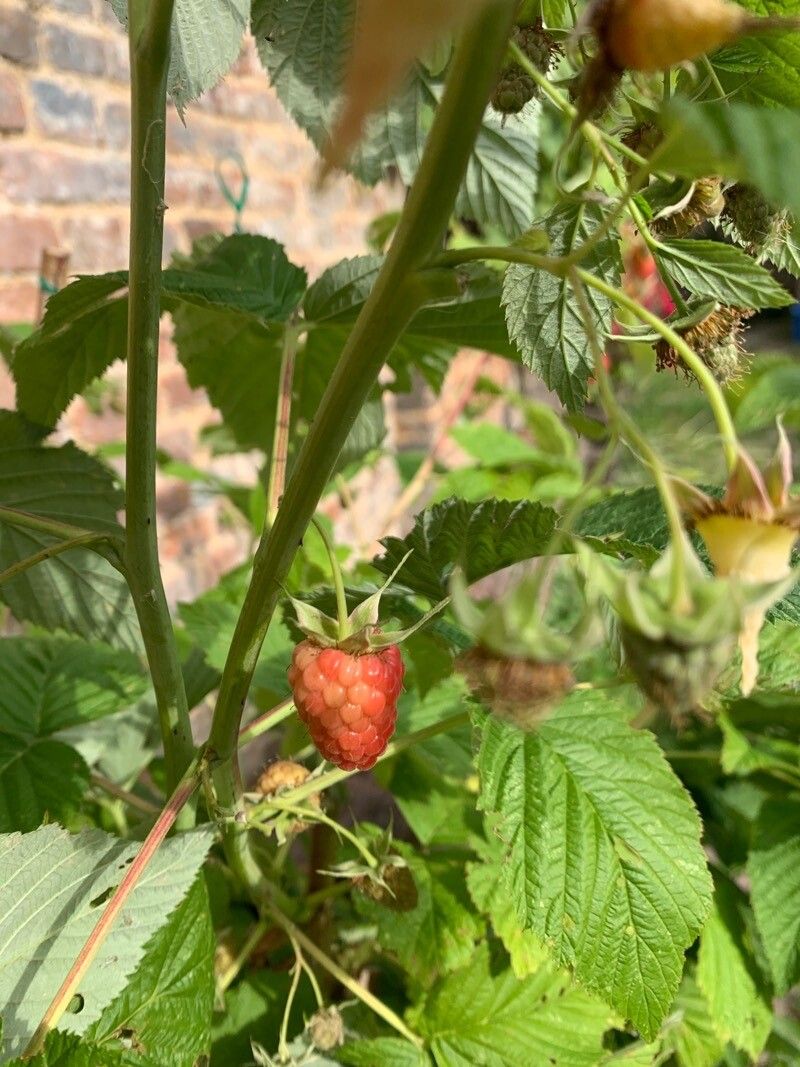
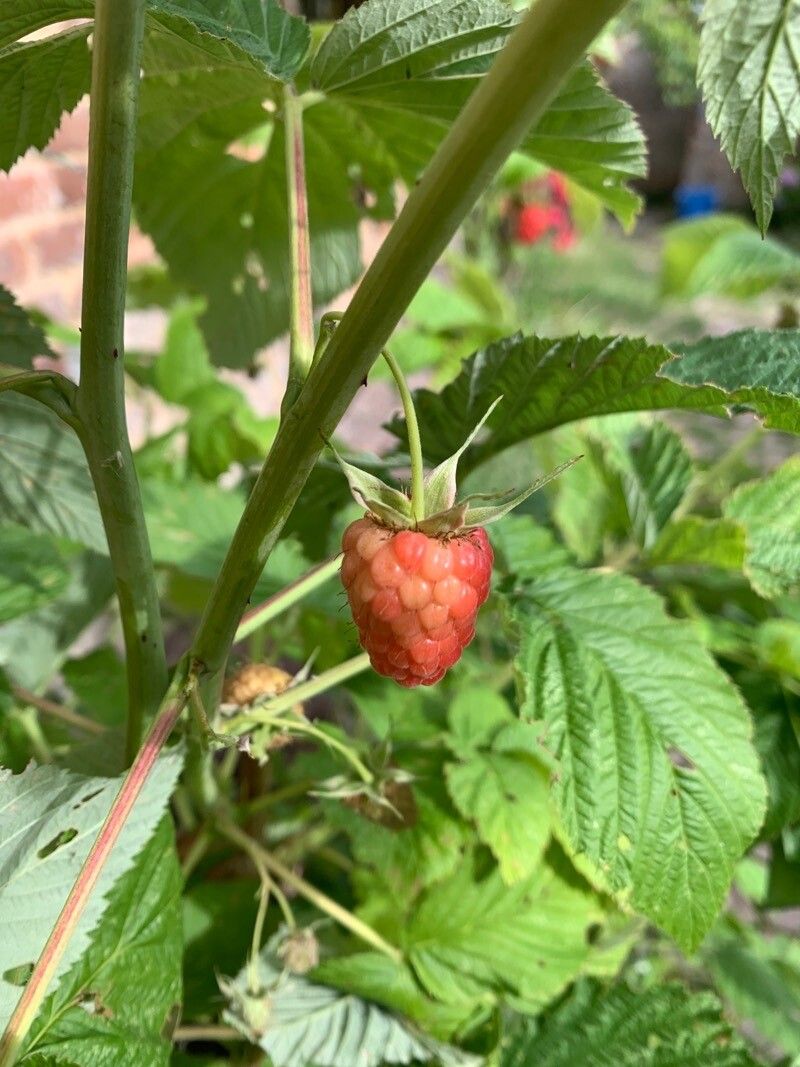
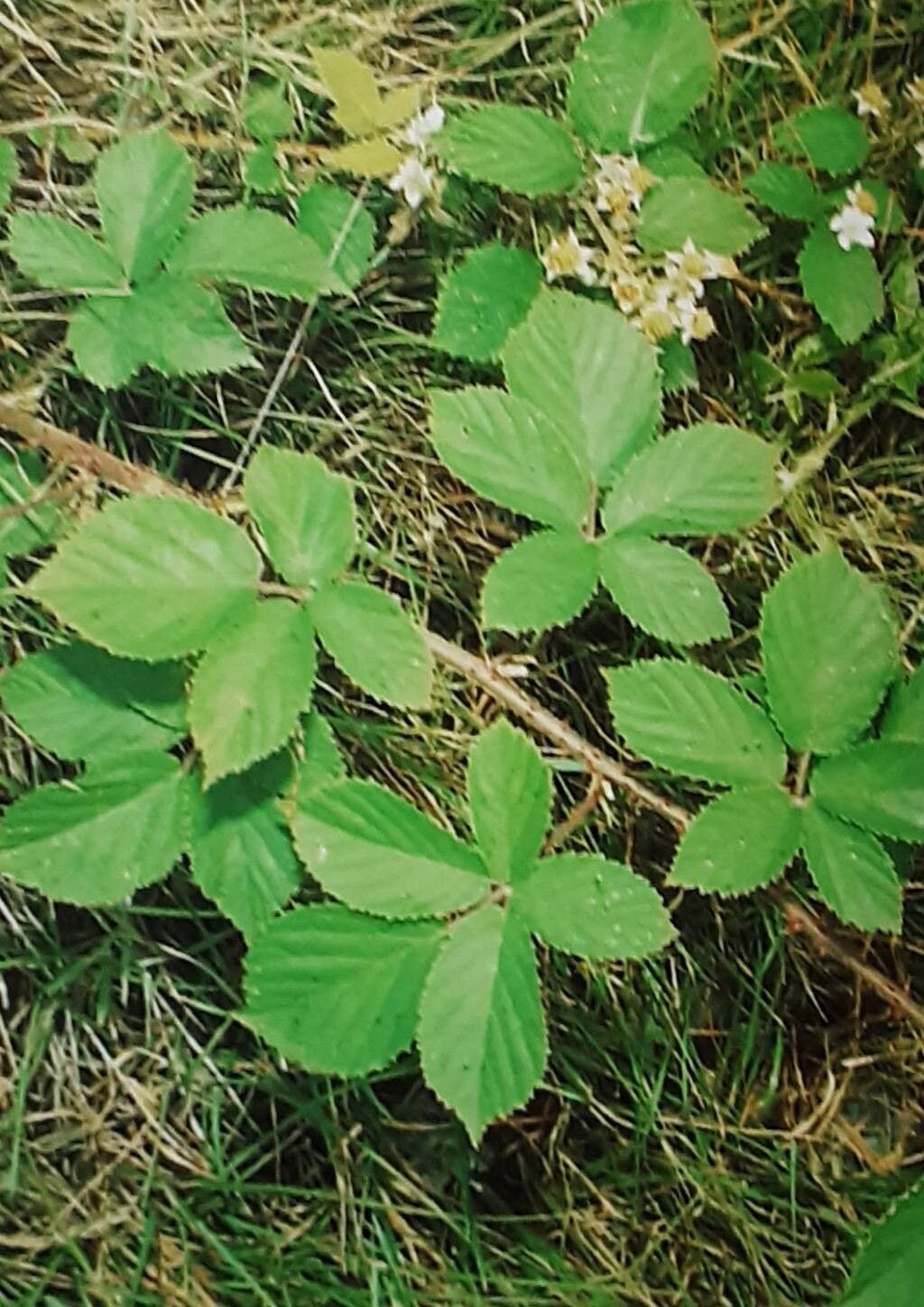
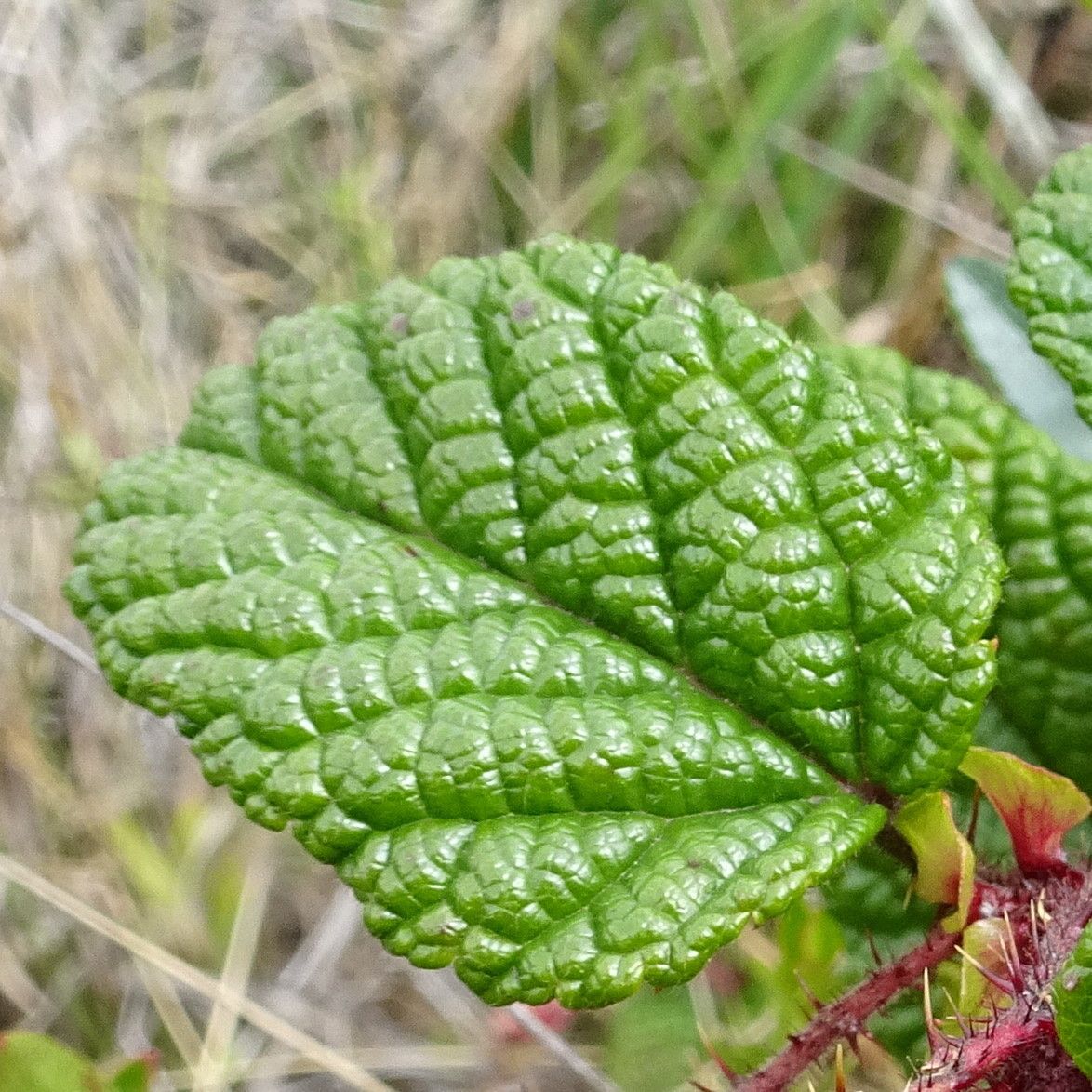
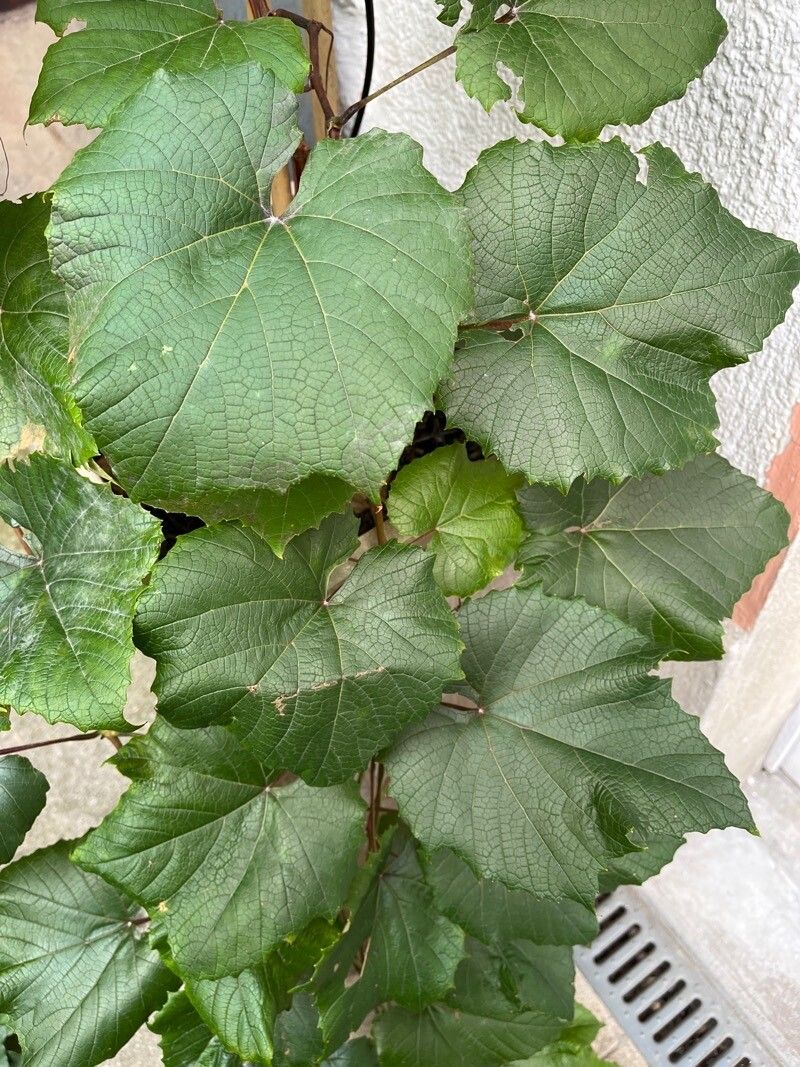
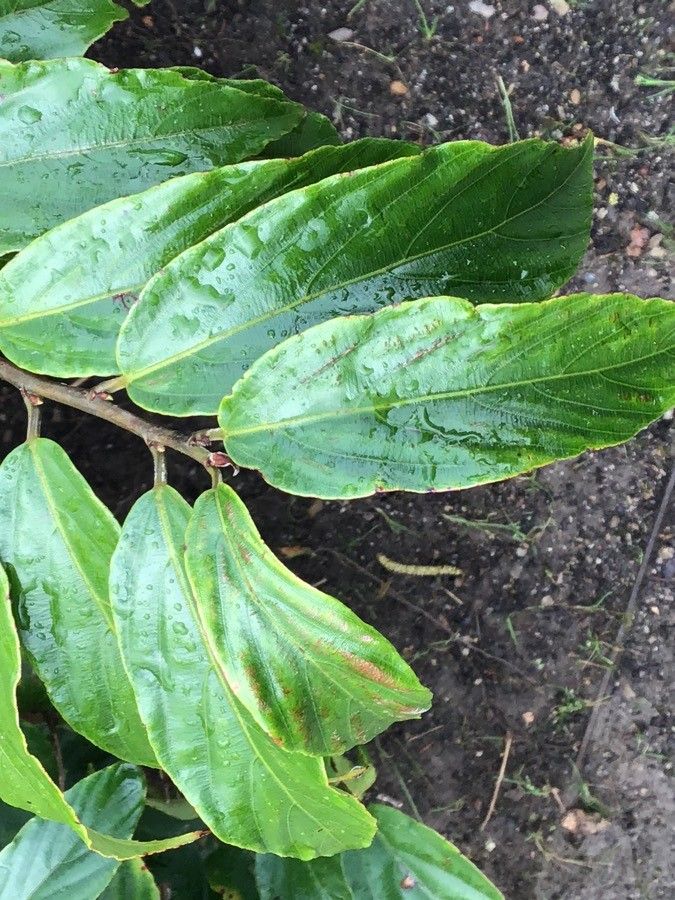
Rubus pruinosus, commonly known as the dusty or hoary raspberry, is a species of flowering plant in the rose family. Native to North America, it thrives in a variety of habitats such as forests, meadows, and roadsides. Typically growing up to 2 meters tall, the plant features thorny stems with leaves that are green on top and white or grayish underneath due to a powdery coating. The dusty raspberry blooms with small white flowers from May to July, which are followed by edible red berries that ripen from July through September. The fruit offers a sweet yet slightly tart taste and can be enjoyed fresh or used in making jams, jellies, pies, and other desserts. Historically, Native Americans have utilized this plant for medicinal purposes, brewing tea from its leaves to treat diarrhea and various other ailments. The plant also shows potential as an antioxidant owing to its high levels of phenolic compounds. Rubus pruinosus serves as an attractive addition to gardens, boasting ornamental value with its showy spring flowers and colorful summer fruit. However, it can spread aggressively through underground runners, so it should be planted with caution if it is not intended to serve as ground cover. Overall, Rubus pruinosus is a versatile plant that offers both ornamental beauty and edible fruit, along with potential medicinal benefits, making it a compelling choice for gardeners interested in native plants.
Pruinose Bramble has strong disease resistance and is typically not susceptible to illnesses. Regarding care, this plant is fairly low-maintenance. When grown outdoors it needs little watering, and larger specimens usually do not require pruning. Smaller plants, however, should be trimmed after they finish blooming. Pruinose Bramblet is appropriate for anyone with an outdoor area, such as a garden or deck, and does not demand extensive caregiving experience.
How to keep Rubus Pruinosus.
Light
Pruinose Bramble grows naturally in habitats like forest understories or rocky areas, where it receives natural shade. It prefers partial sun but can tolerate full sun or full shade, showing its hardy, adaptable nature.
Temperature
Pruinose Bramble shows strong adaptability to a variety of climate conditions, from very hot summers to cold winters. Nonetheless, it has a preferred temperature range for growth. If temperatures become too high, the plant is vulnerable to heat and humidity stress, which can lead to its death. In areas where temperatures approach the lower limit of its cold tolerance, taking insulation measures to protect the plant is important.
Fertilizer
The Pruinose Bramble plant needs adequate nutrients to reach optimal fruit production. Fertilize in early spring to encourage new growth and bloom development. Regular feeding helps the plant remain healthy, produce more delicious fruit, and prevents nutrient-deficiency problems like yellow leaves and poor fruit production.
Botanical profile.
- Plant Type
- Shrub
- Life Cycle
- Perennial
- Genus
- Rubus
- Family
- Rosaceae
- Hardiness Zone
- 5-9
- Mature Height
- 0.91 m to 2.13 m
- Mature Spread
- 0.91 m to 1.52 m
- Leaf Color
- Green, Dark Green
- Leaf Type
- Deciduous
- Flower Color
- White
- Flower Size
- 2.03 cm to 3.05 cm
- Bloom Time
- Late spring, Early summer
- Planting Time
- Autumn, Winter
- Harvest Time
- Mid summer, Late summer
- Native Area
- Russia, Norway, Germany, Austria, Sweden, Czech Republic, Denmark, Netherlands, Finland, Ireland, United Kingdom, France
Other names.