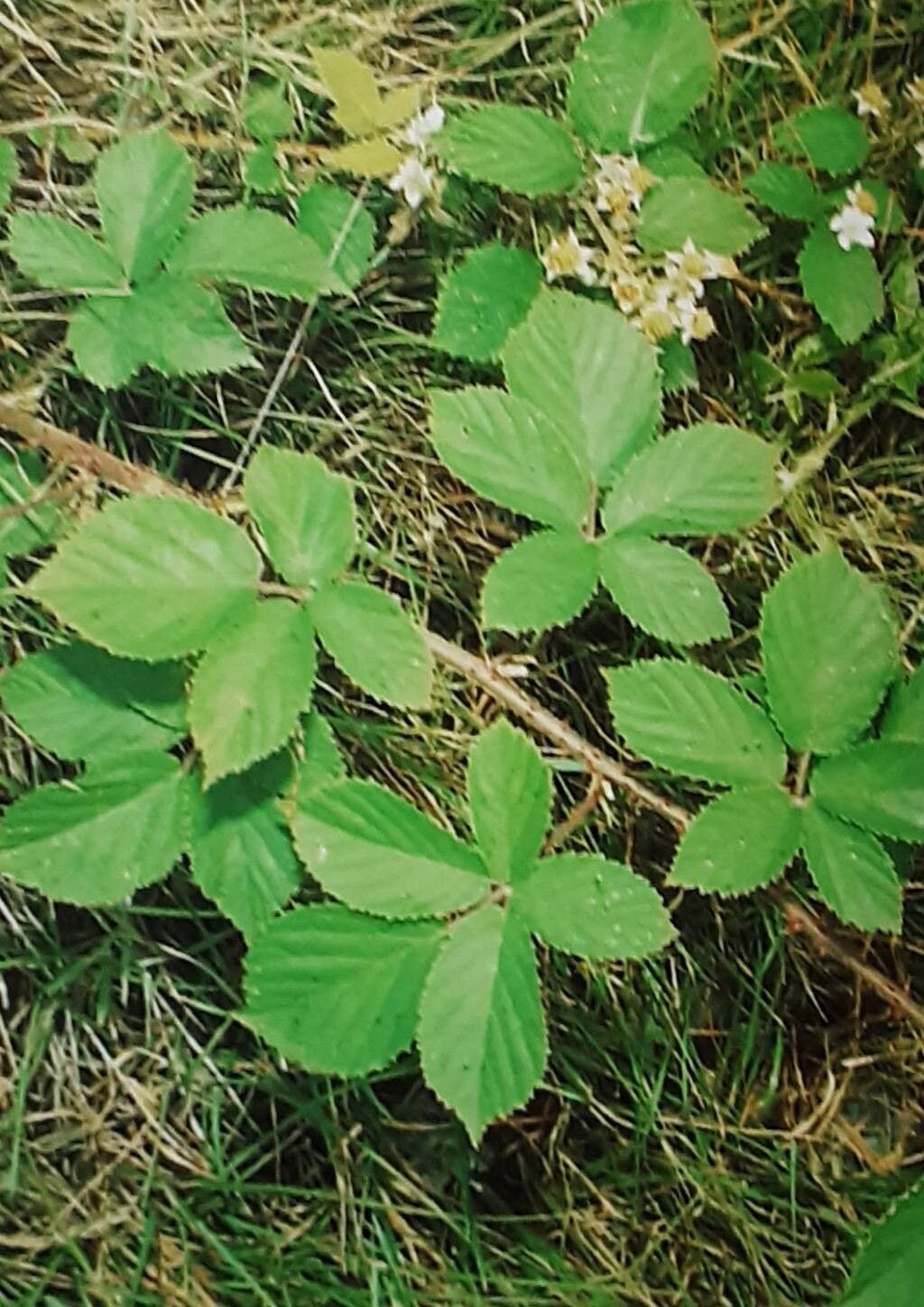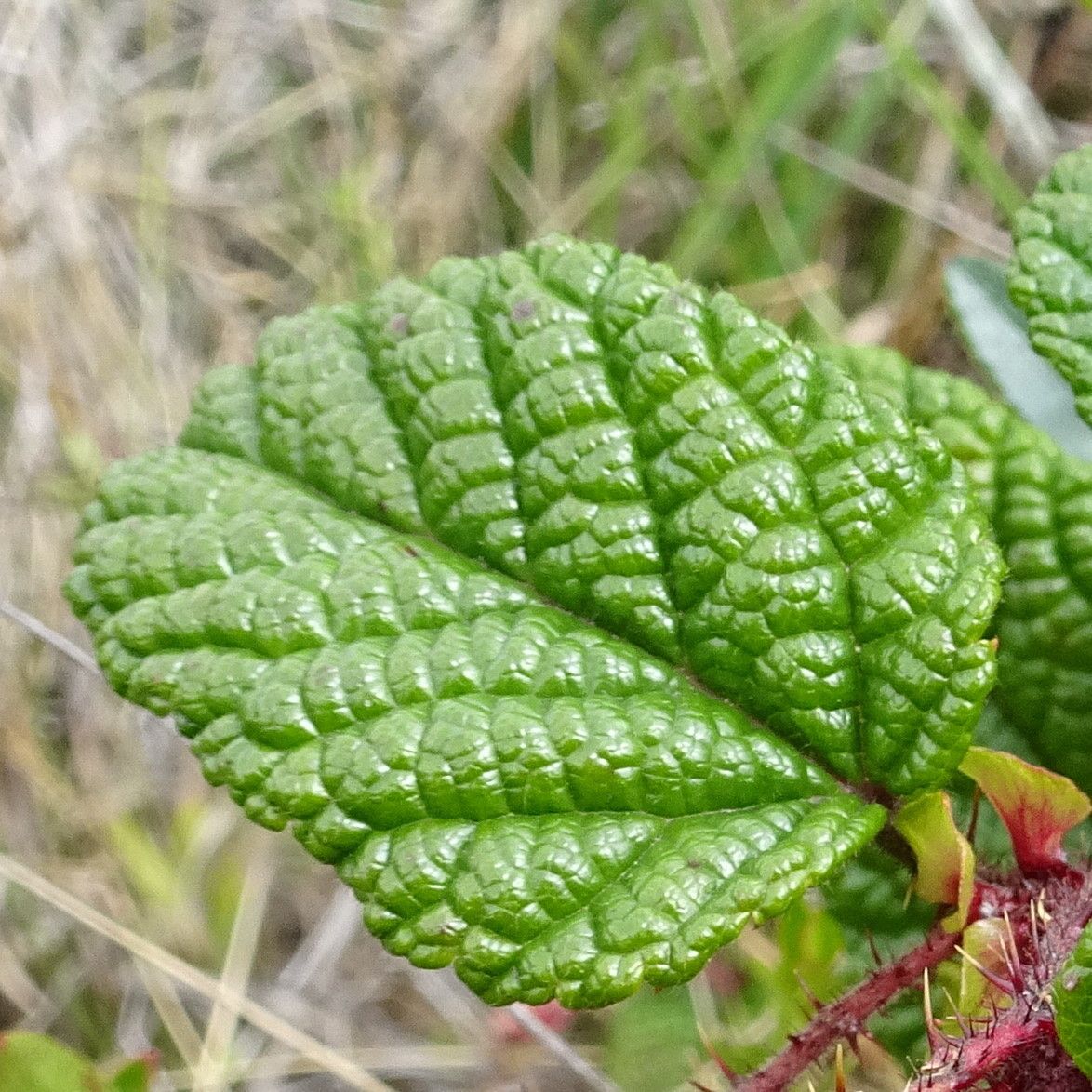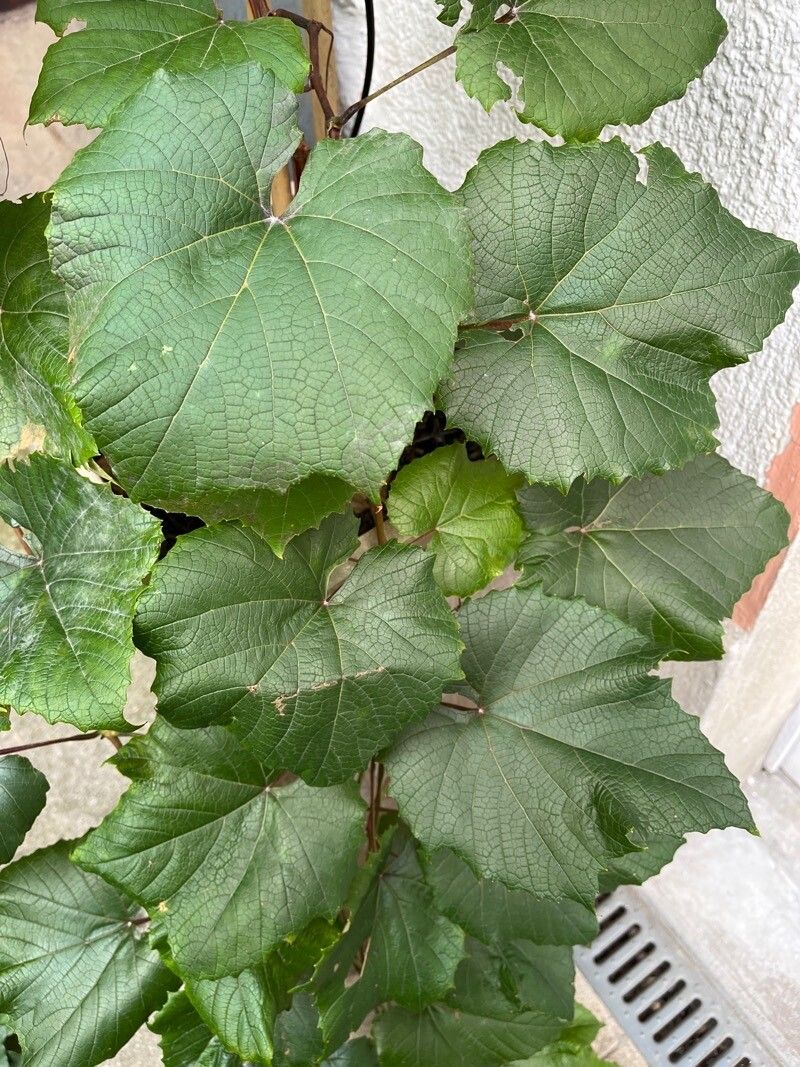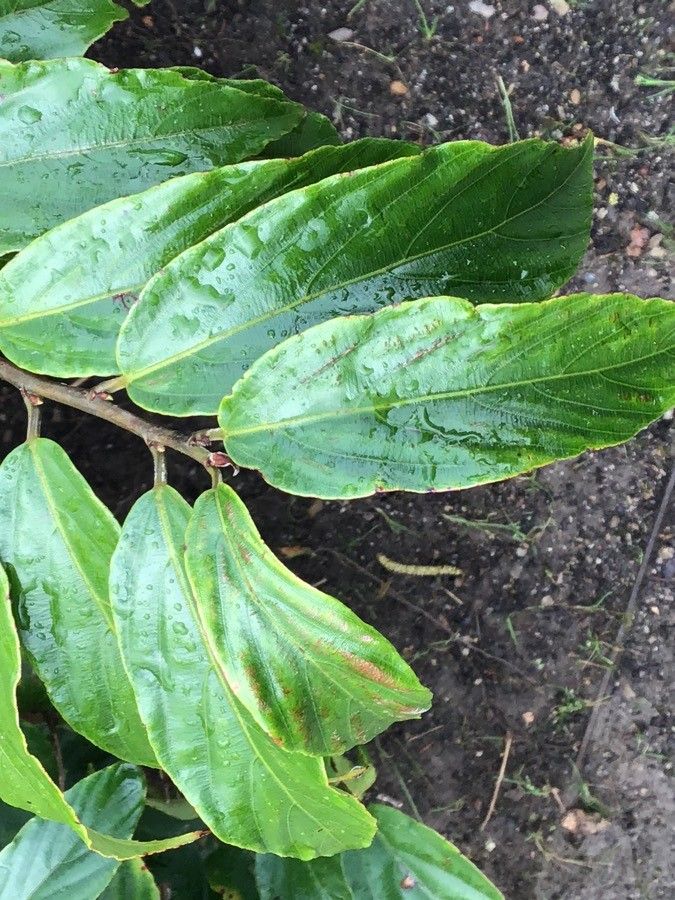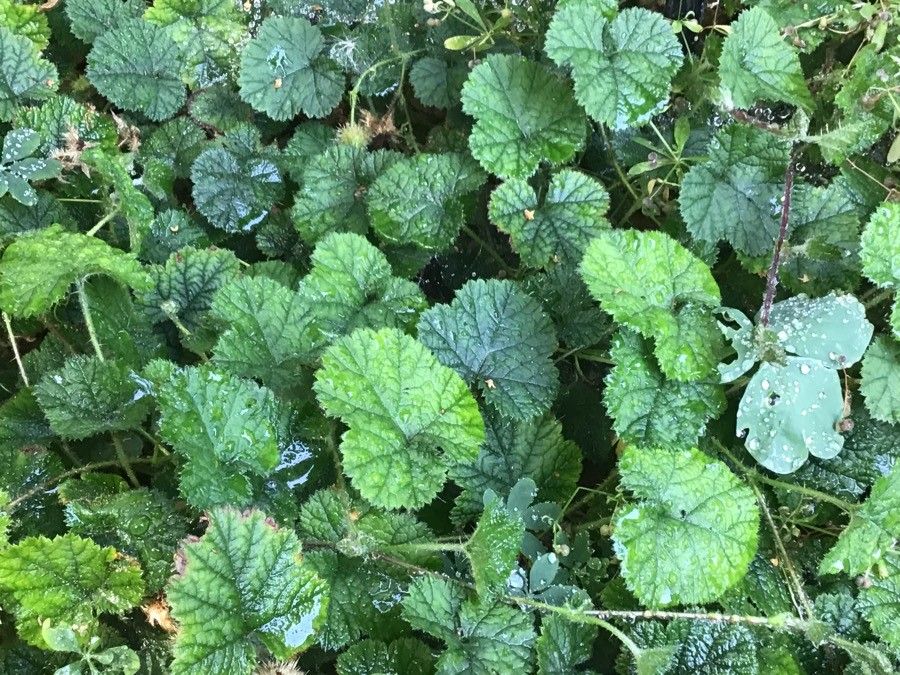
Rubus pectinellus, commonly known as atibulnak, is a species of brambles in the rose family. It is native to Japan, southern China, Taiwan, and the Philippines. They usually grow in forests and valleys at elevations of 700 to 3,000 m (2,300 to 9,800 ft). It is also known as kobanofuyuichigo (コバノフユイチゴ) in Japanese and huáng pào (黄泡) in Mandarin Chinese. Atibulnak fruits are edible, either raw or cooked, and have a pleasant subacid flavor. The leaves are also eaten as a vegetable in the Philippines.Atibulnak is a small trailing woody shrub, usually around 0.5 to 1 m (1.6 to 3.3 ft) long. The leaves are either heart-shaped or with three lobes and have a rough and hairy texture with serrated margins. The leaves are around 3 to 6 cm (1.2 to 2.4 in) in diameter. They are borne alternate on the stems. Both the leaves and the stems are covered with small spines. It has white flowers around 2 cm (0.79 in) in diameter. These bear fruits around 1.4 to 1.6 cm (0.55 to 0.63 in) in diameter which turn bright red when ripe.
Atibulnak has good resistance to diseases and is generally not prone to them. However, it can be susceptible to pests and diseases present in its surroundings. These infections are usually not severe. In terms of care, this plant requires moderate maintenance. It should be pruned regularly to keep a neat appearance and support healthy growth. Fertilization can also help promote flowering. Atibulnak is suitable for anyone with outdoor space, such as a garden or patio, and does not require extensive care experience. It may need more attention when grown indoors.
How to keep Rubus Pectinellus.
Light
Atibulnak occurs naturally in habitats like forest understories or rocky areas, where it grows under natural shade. It prefers partial sun but can tolerate full sun or full shade, illustrating its adaptable and hardy character.
Water
Atibulnak thrives in consistently moist conditions and does best with weekly watering to maintain its lush foliage. Although it can tolerate short periods of dryness, it flourishes outdoors where it can take advantage of natural rainfall. This makes it ideal for gardens in areas that experience frequent rain during the growing season.
Temperature
Atibulnak can tolerate a wide range of temperatures, but its distribution can still be restricted by various combinations of water and heat conditions. It does best in warm summer climates with sufficient rainfall or watering. Extended stretches of cloudy, rainy weather or prolonged high temperatures can raise the chance of Atibulnak dying. In winter, appropriate protection from cold can increase the plant's survival rate.
Fertilizer
The Atibulnak plant needs adequate nutrients to achieve optimal fruit production. Fertilize in early spring to encourage new growth and bloom development. Consistent fertilization keeps the plant healthy, supports production of more delicious fruit, and prevents nutrient deficiency problems like yellowing leaves and poor fruit production.
Pruning
Prune Atibulnak from early to late spring to encourage growth and fruit production. Focus on removing dead canes and thinning older stems to improve air circulation. Trim long canes to control the plant’s size, and ensure regular pruning to minimize pests and enhance vigor.
Botanical profile.
- Plant Type
- Herb, Shrub
- Life Cycle
- Perennial
- Genus
- Rubus
- Family
- Rosaceae
- Hardiness Zone
- 5-9
- Mature Height
- 8 cm to 20 cm
- Mature Spread
- 91 cm
- Leaf Color
- Green, Dark Green
- Leaf Type
- Deciduous
- Flower Color
- White
- Flower Size
- 2.03 cm
- Bloom Time
- Late spring, Early summer
- Planting Time
- Spring, Autumn
- Harvest Time
- Mid summer, Late summer
- Native Area
- Philippines, Japan, China
Reader questions.
What are the sunlight requirements for Atibulnak (Rubus pectinellus)?
Atibulnak (Rubus pectinellus) thrives in conditions that meet specific sunlight requirements. For 'Full sun,' the plant requires above 6 hours of sunlight daily, which is essential for its optimal growth and flowering. For 'Partial sun,' about 3-6 hours of sunlight per day is necessary. It's important to observe the movement of sunlight through your garden to select the ideal spots that provide a good balance of light and shade, ensuring your Atibulnak plants are healthy and happy.
What is Atibulnak?
Atibulnak, known botanically as Rubus pectinellus, does not have specified essential details, symptoms related information, or additional content provided at this time. Further information may be required to fully describe its uses, characteristics, or any related data.