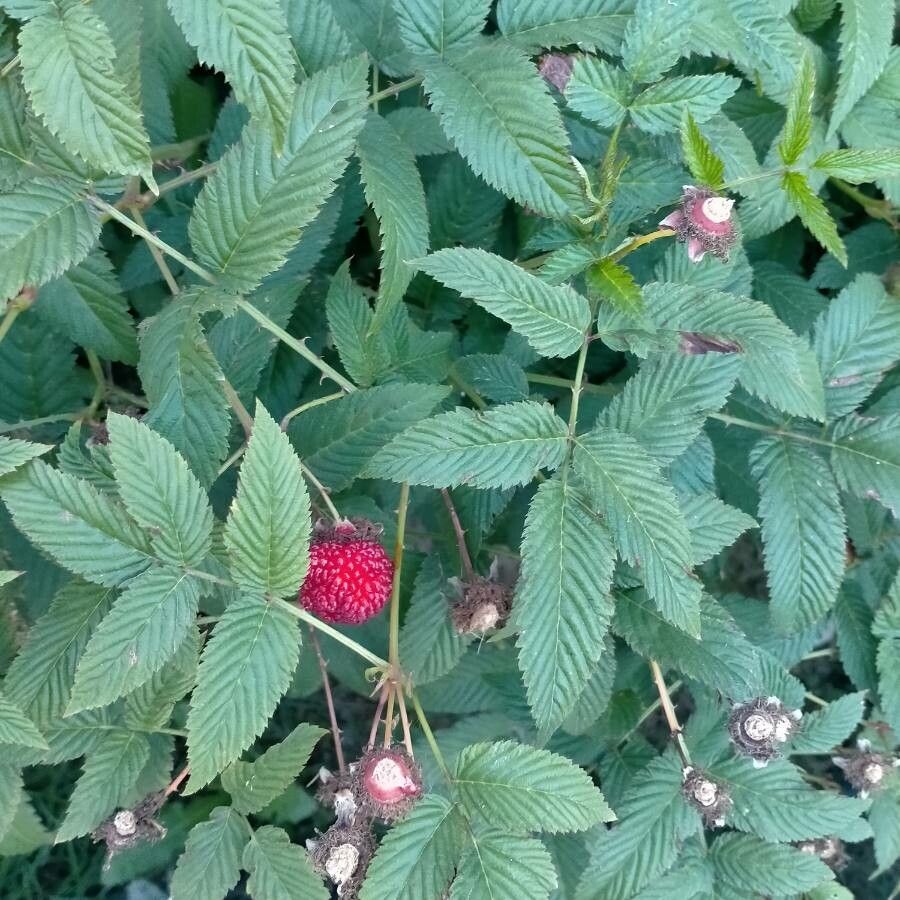
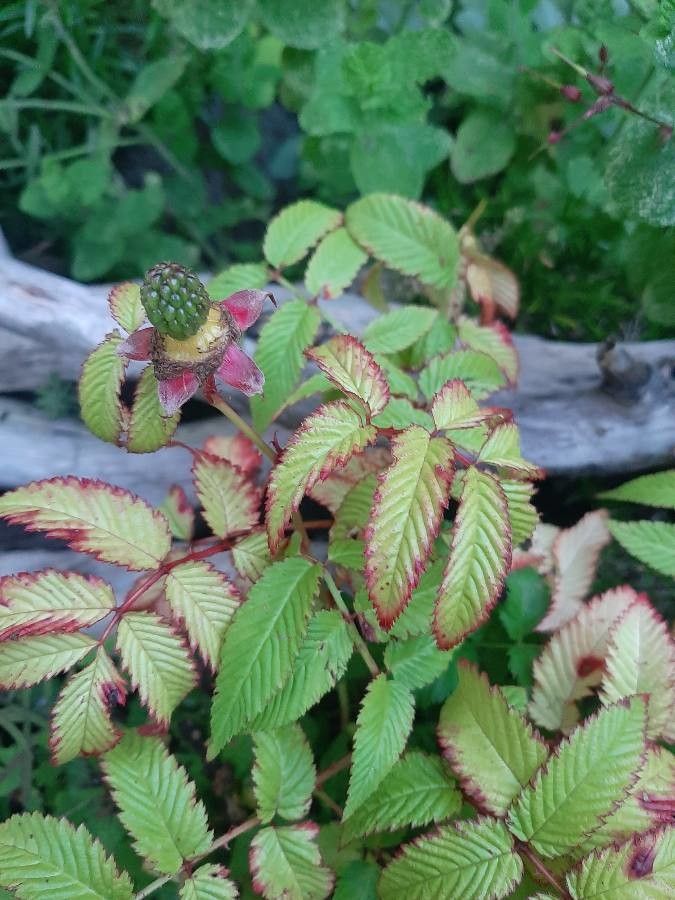
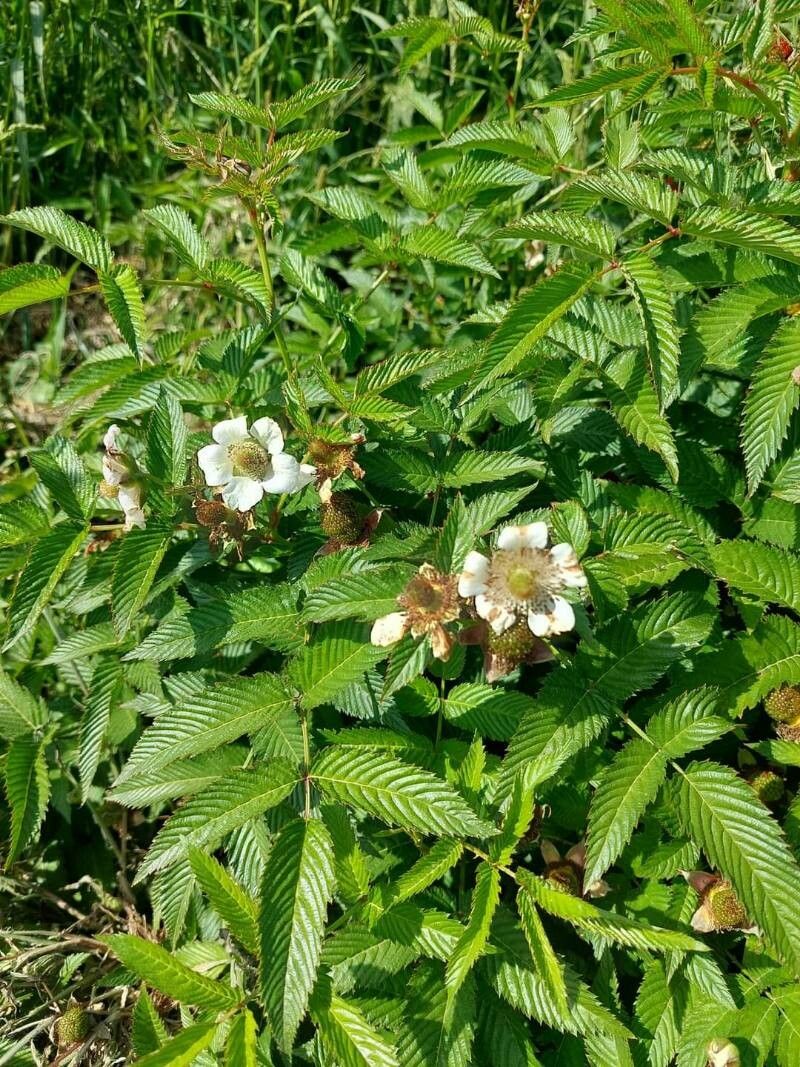
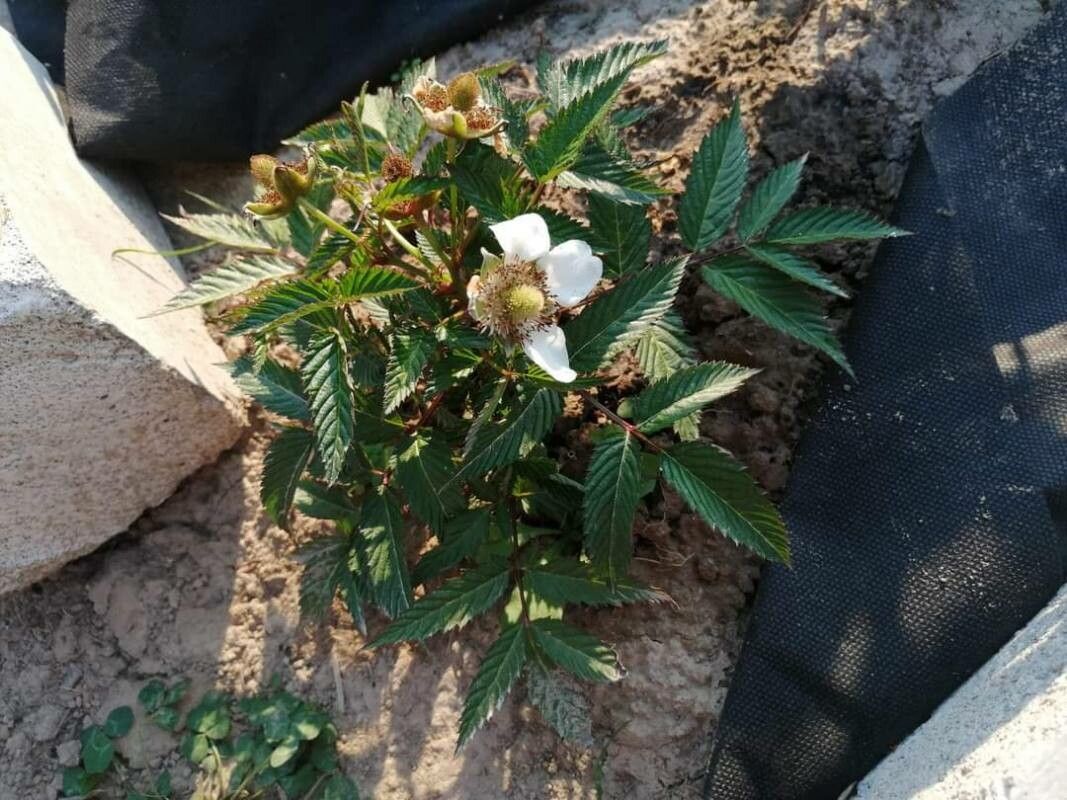
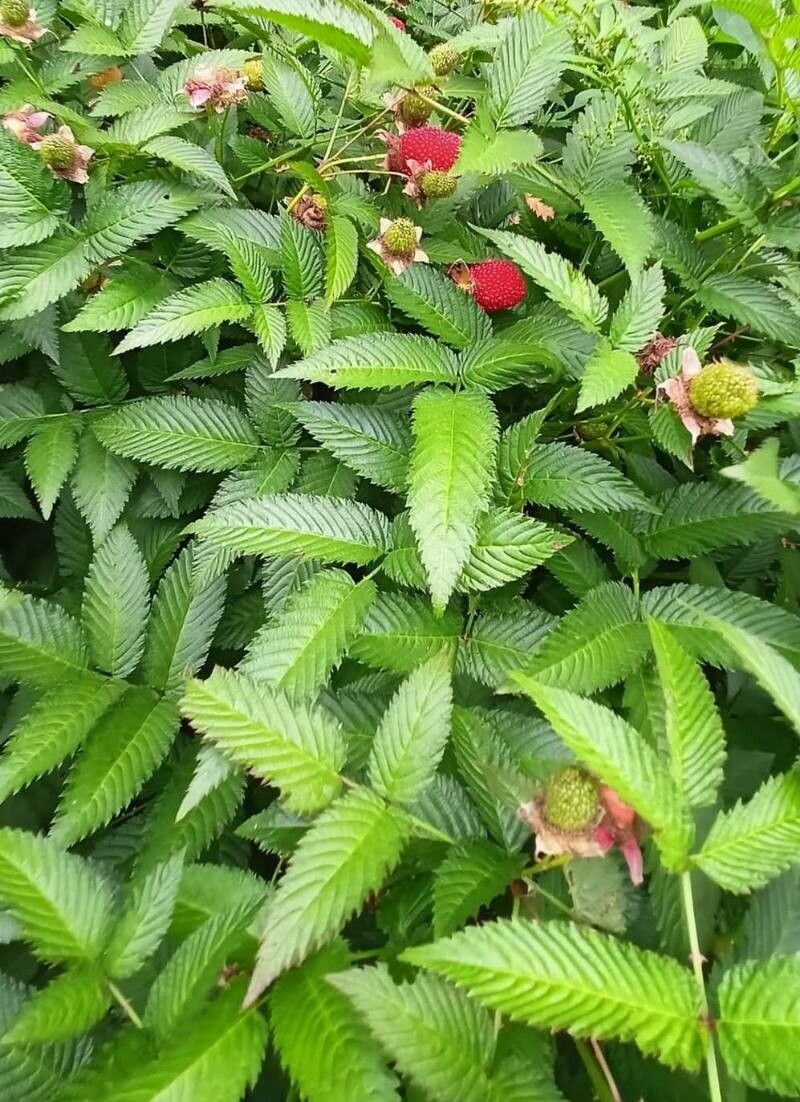
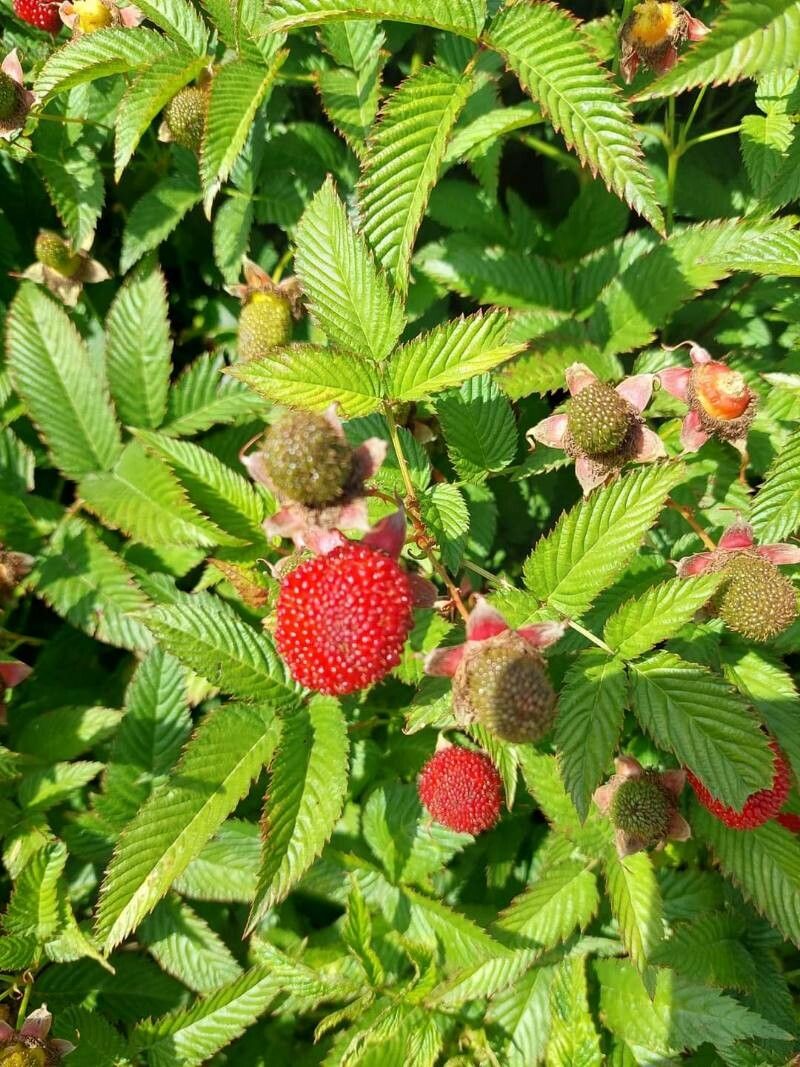
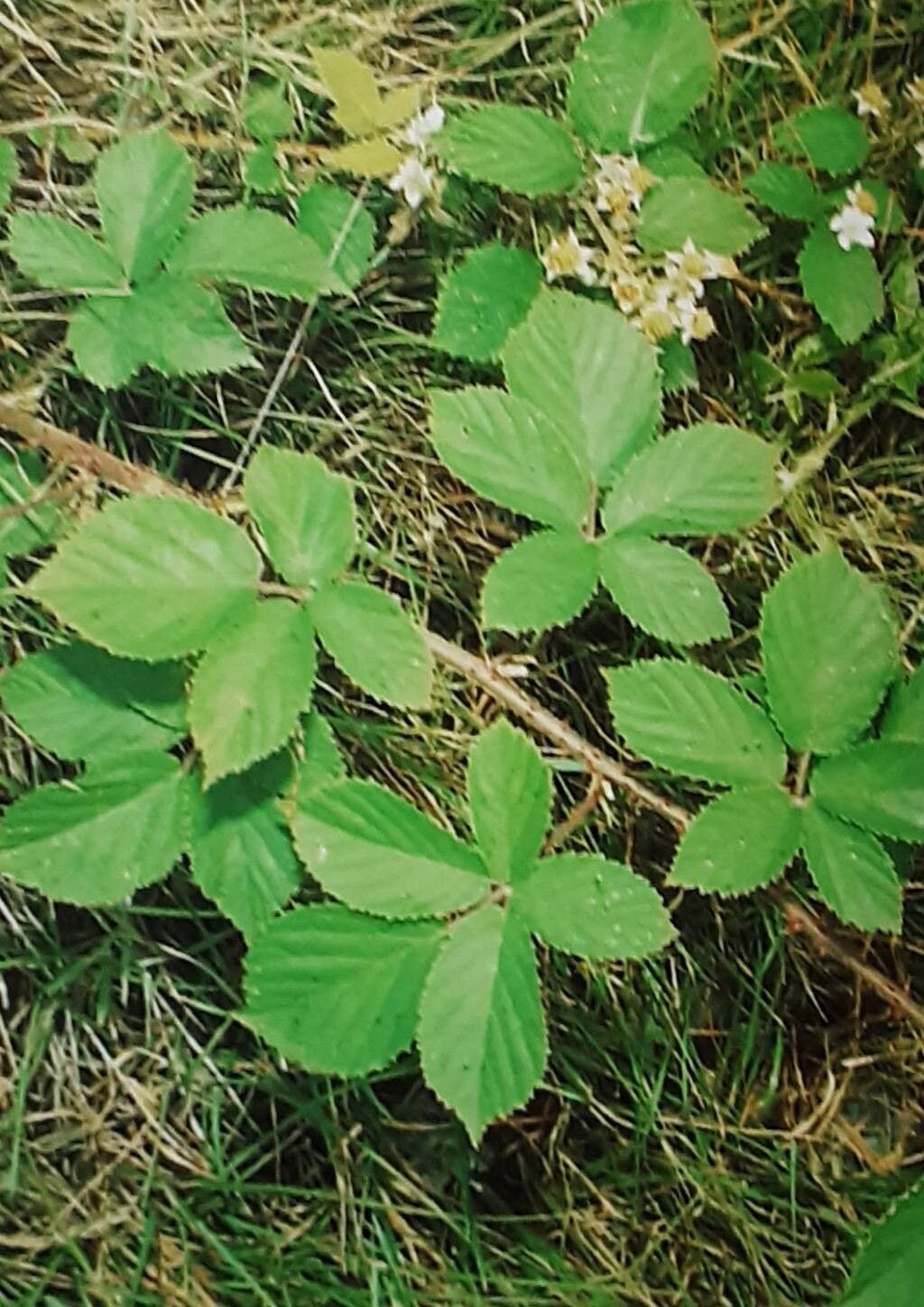
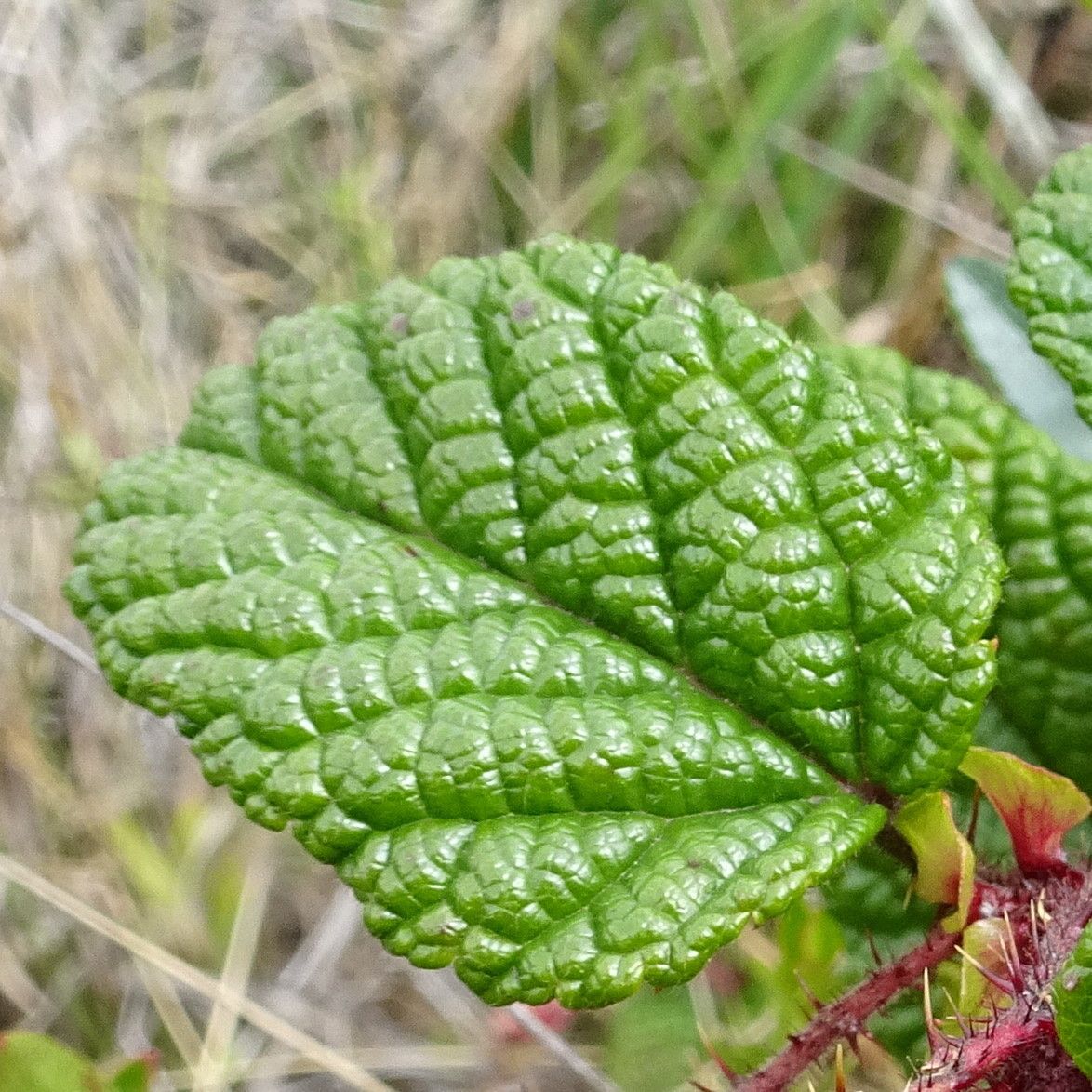
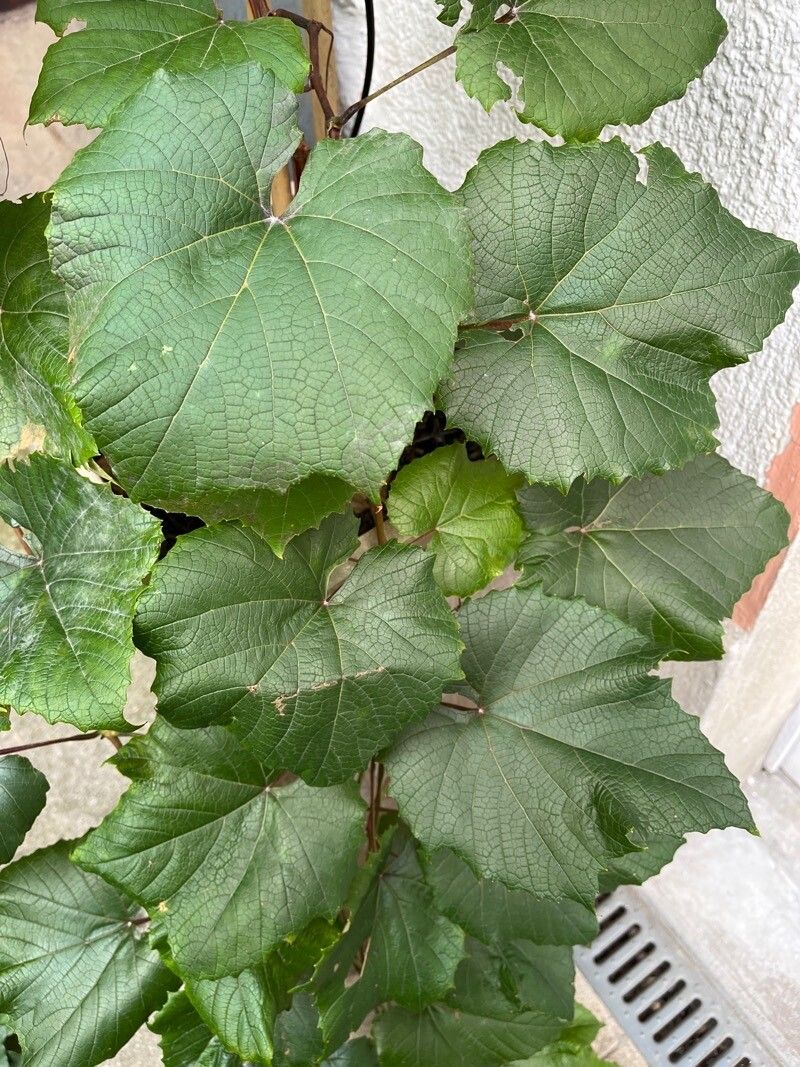
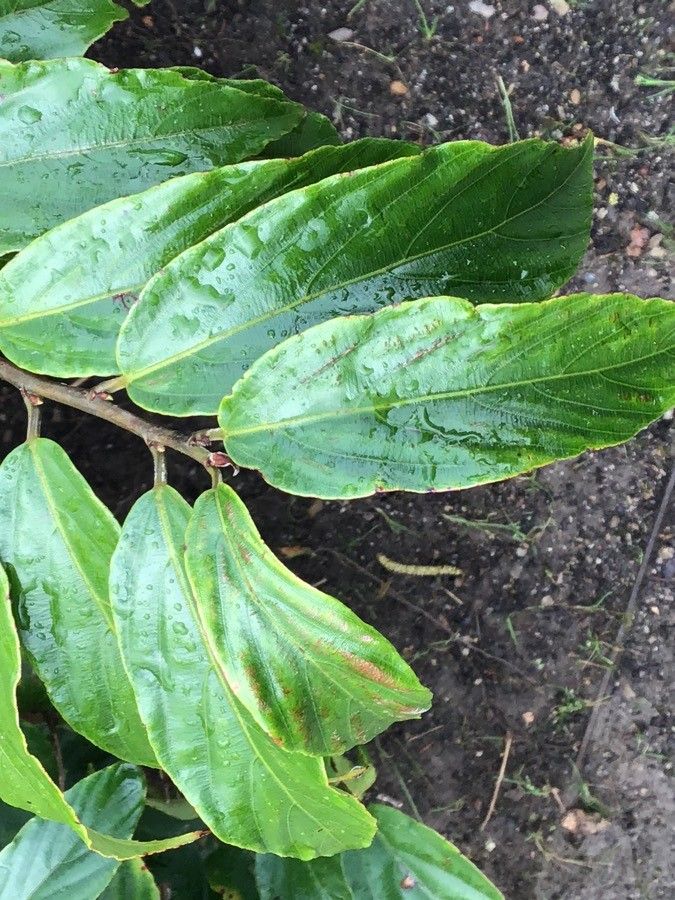
Rubus illecebrosus is a red-fruited species of Rubus that originally came from Japan (where is it called バライチゴ, roseberry), but is also very popular in some European countries like Lithuania. Common names include balloon berry and strawberry raspberry. It has become sparingly naturalized in scattered locations in Canada, the United States, and South America.Rubus illecebrosus is a thorny shrub up to 150 cm (5 ft) tall. Leaves are pinnately compound. Flowers are produced either one at a time or in clumps of 2–3, each with 5 petals up to 18 mm (23⁄32 in) long (longer than those of most related species). Fruits are also unusually large for the genus, each oblong, red, up to 2 cm (3⁄4 in) long with 50–100 drupelets.
Strawberry raspberry displays good resistance to disease and is generally not susceptible to illnesses. With regard to care, this plant is fairly low-maintenance. When grown outdoors it needs only minimal watering, and larger plants typically do not require pruning. Smaller plants, however, should be pruned after they finish blooming. Strawberry raspberryt is suitable for anyone who has an outdoor space, such as a garden or deck, and does not demand a great deal of care experience.
How to keep Rubus Illecebrosus.
Light
Strawberry raspberry naturally occurs in places like forest understories or rocky sites, where it grows under natural shade. It prefers partial sun but can tolerate both full sun and full shade, reflecting its versatile and hardy nature.
Water
Once established, strawberry raspberry plants require minimal care and need about 1 inch (2.54 cm) of water each week. For plants in pots, adjust the watering based on the soil's condition. Water deeply when the top layer of soil seems dry, and make sure the soil is well-drained.
Temperature
Strawberry raspberry shows strong adaptability to different climate conditions, whether during blistering summers or frigid winters. Still, it has a preferred temperature range for proper growth. If temperatures climb too high, the plant is susceptible to heat and humidity stress, which can cause it to die. In areas where temperatures near the lower edge of its cold tolerance, it is necessary to provide insulation to protect the plant.
Fertilizer
The Strawberry raspberry plant needs adequate nutrients to produce fruit optimally. Fertilize in early spring to encourage new growth and flower development. Regular feeding keeps the plant healthy, yields tastier fruit, and prevents nutrient deficiency problems such as yellowing leaves and poor fruit production.
Pruning
Strawberry raspberries benefit from being pruned in early spring. Focus on removing dead or weak branches to encourage new growth. Thinning out crowded areas improves sunlight exposure and air circulation, which can increase fruit yield. To keep the plants healthy and vigorous, ensure you prune at the right time and use clean tools.
Botanical profile.
- Plant Type
- Shrub
- Life Cycle
- Perennial
- Genus
- Rubus
- Family
- Rosaceae
- Hardiness Zone
- 4-9
- Mature Height
- 30 cm to 49 cm
- Mature Spread
- 49 cm to 91 cm
- Leaf Color
- Green, Dark Green
- Leaf Type
- Deciduous
- Flower Color
- White
- Flower Size
- 2.54 cm
- Bloom Time
- Early summer, Mid summer
- Planting Time
- Spring, Summer
- Harvest Time
- Late summer, Early fall
- Native Area
- Japan
Other names.