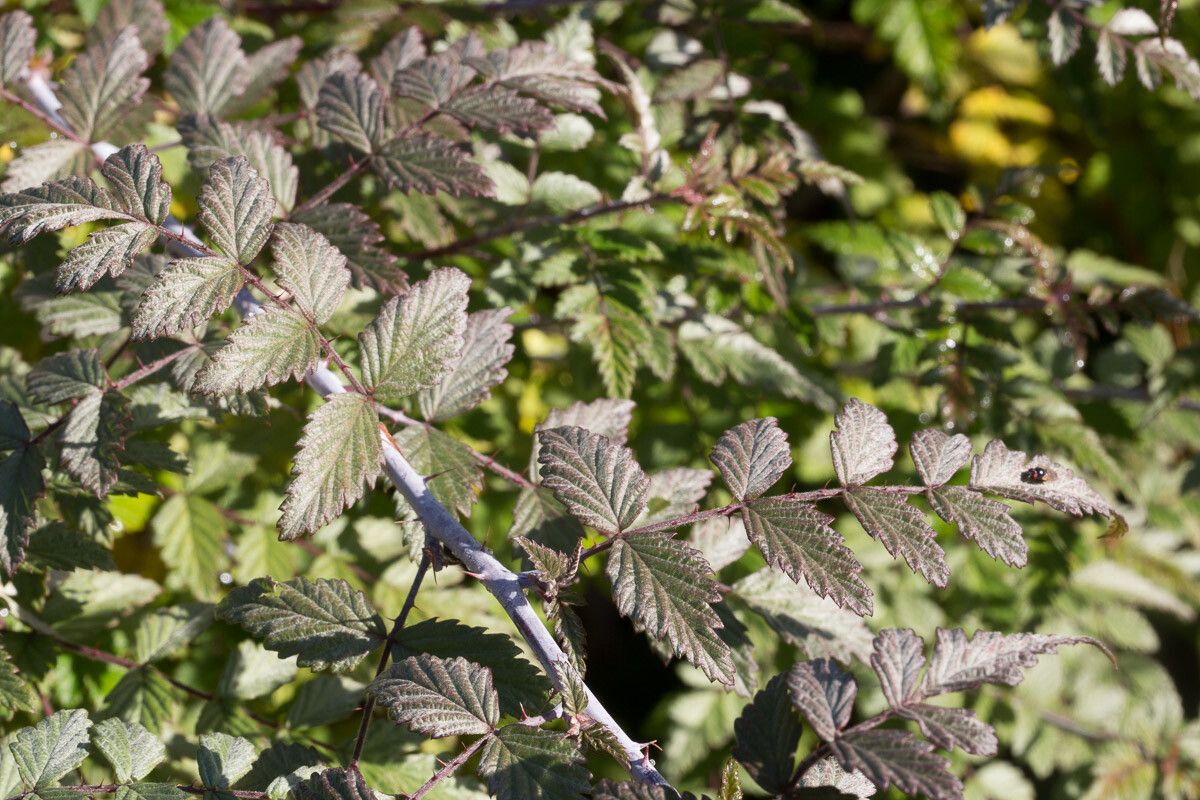
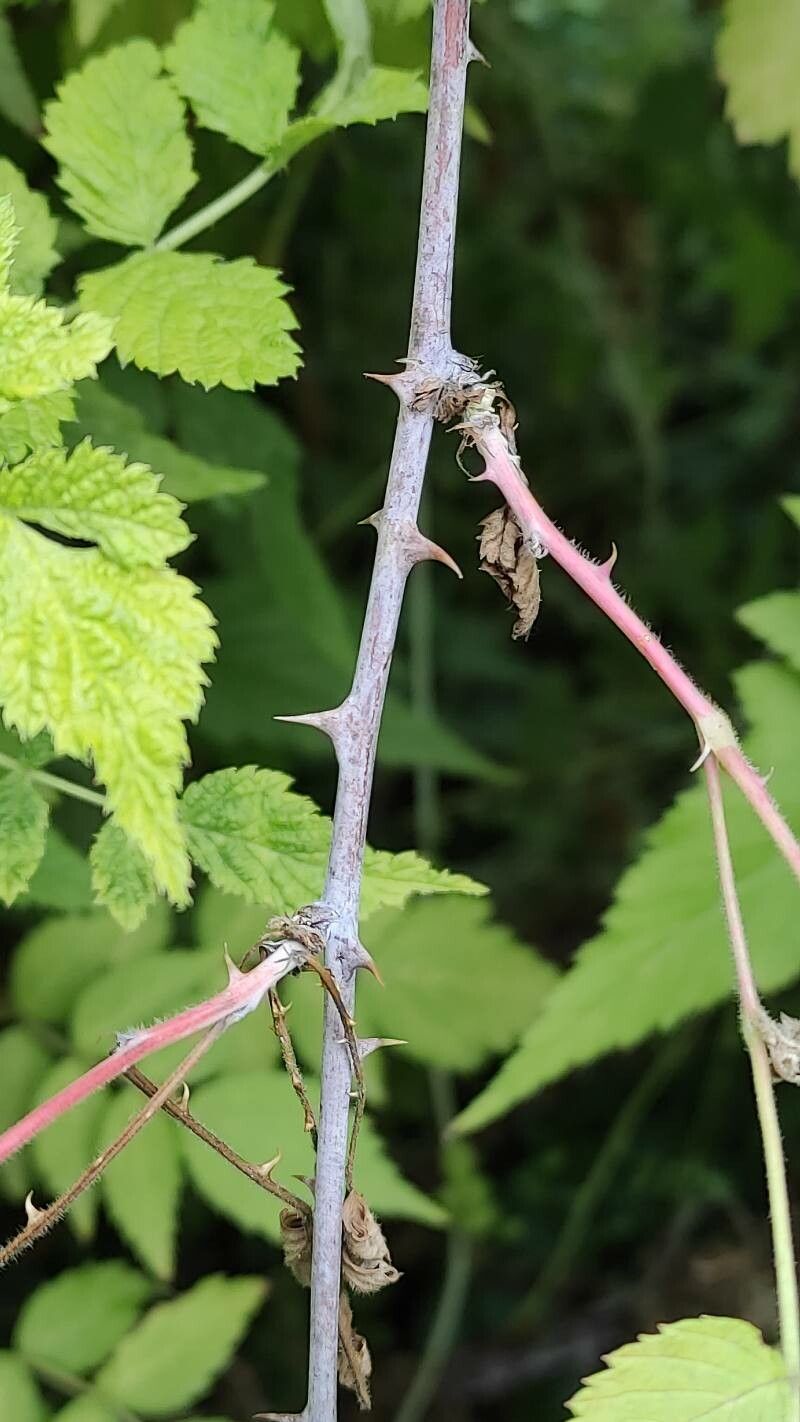
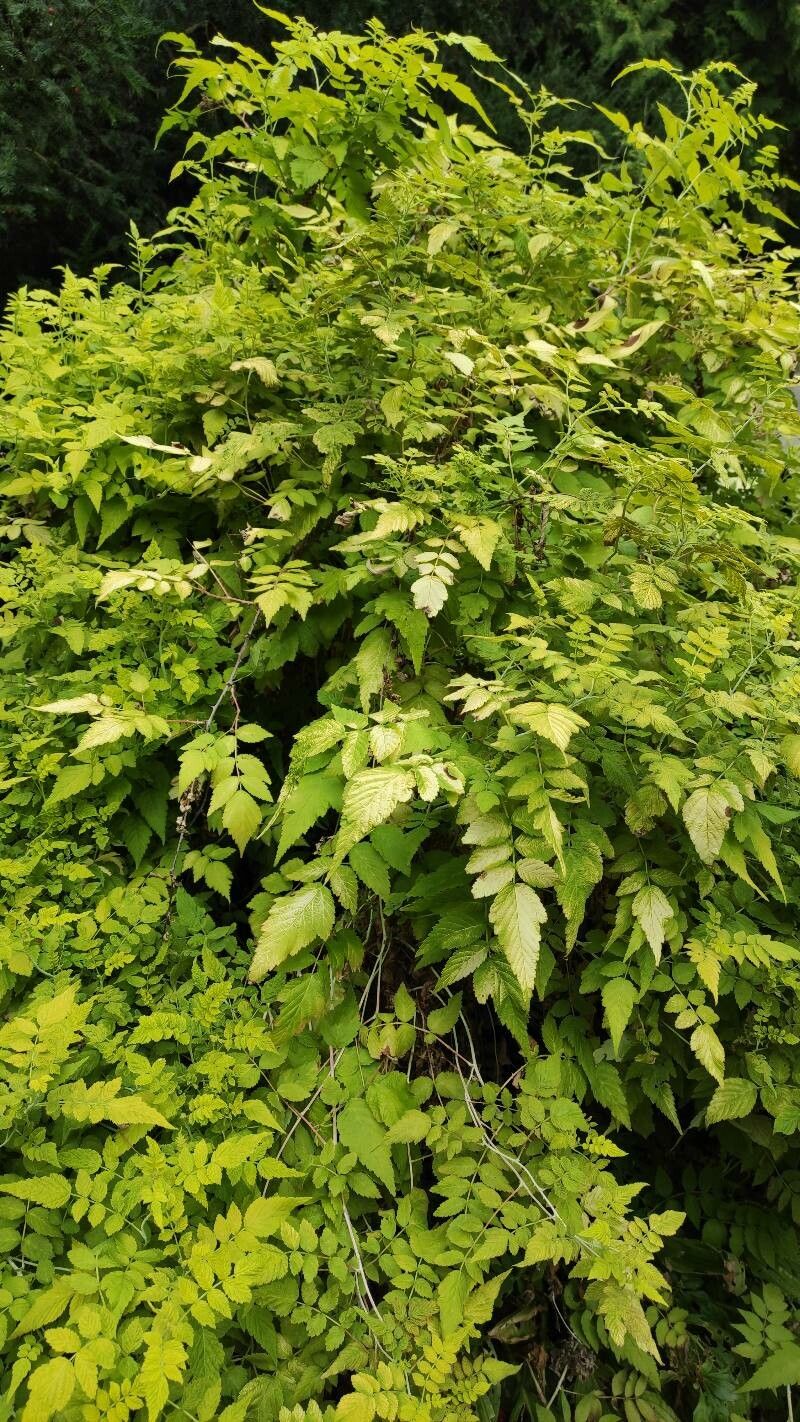
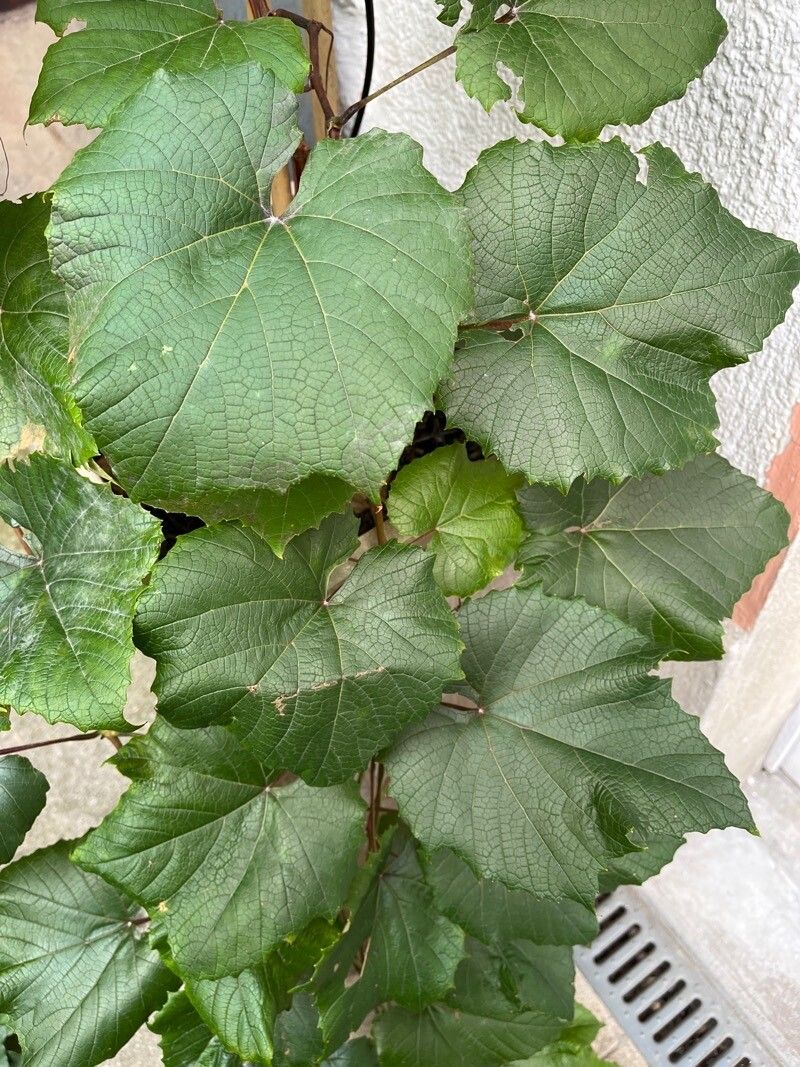
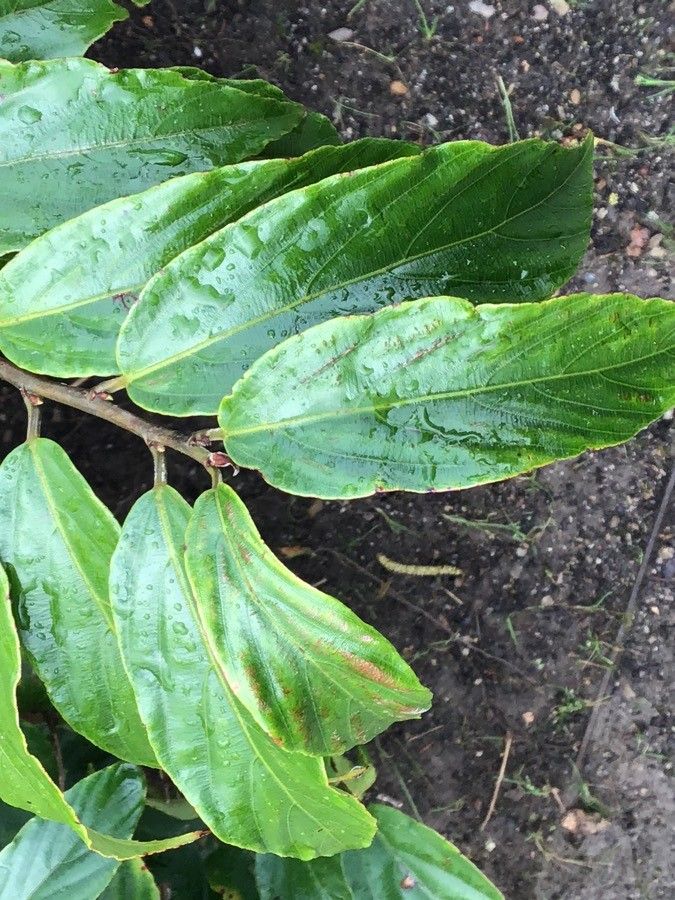
Rubus cockburnianus, commonly known as the white-stemmed bramble or ghost bramble, is a deciduous shrub from the rose family. Native to China, it has been introduced to various parts of the world as an ornamental plant. It typically grows up to 3 meters tall with arching stems covered in white or grayish-white bark, giving it a distinctive appearance.
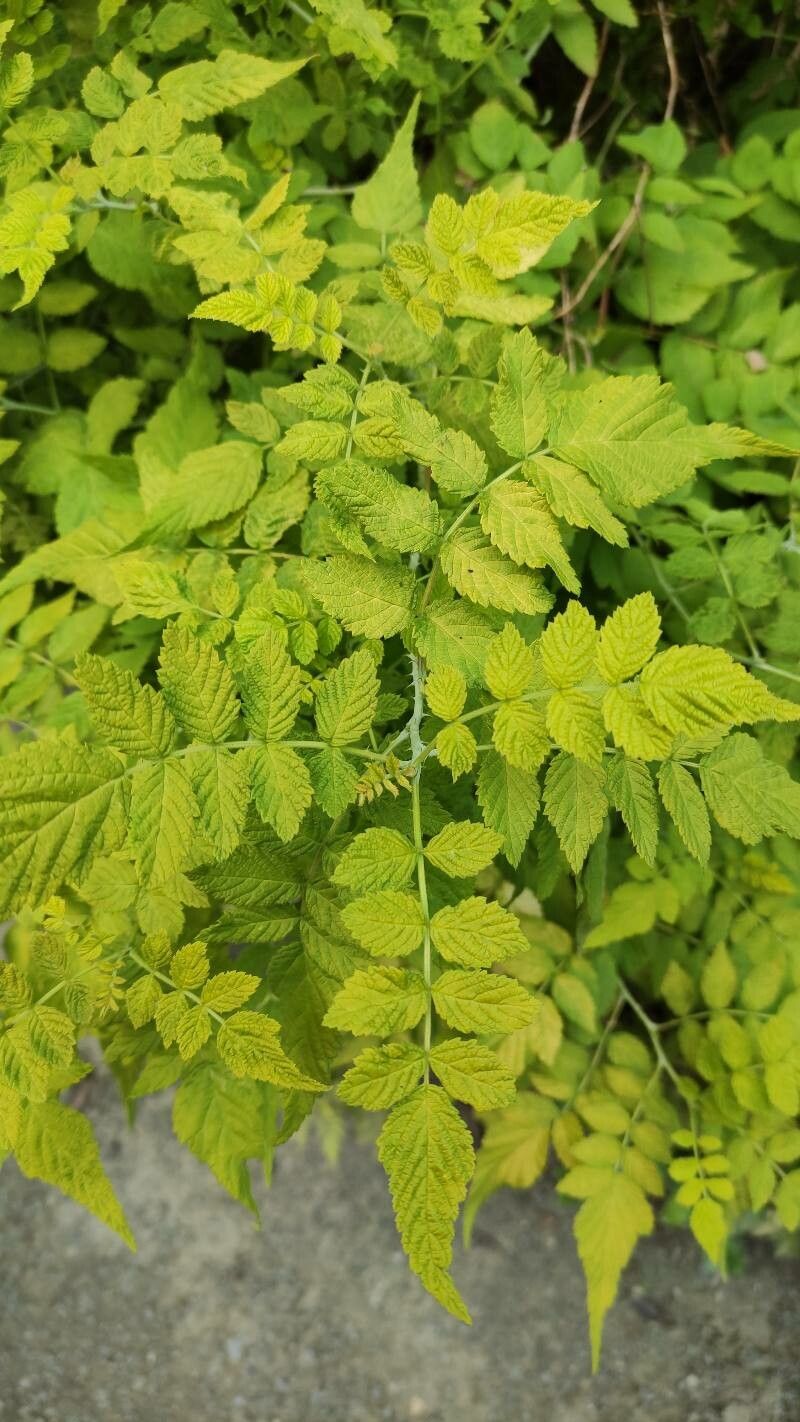
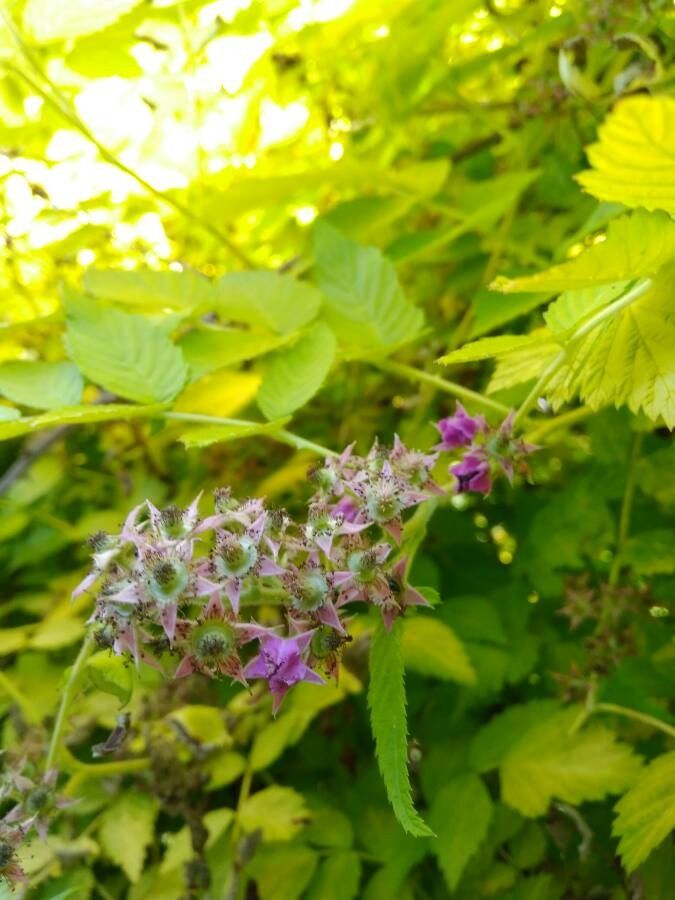
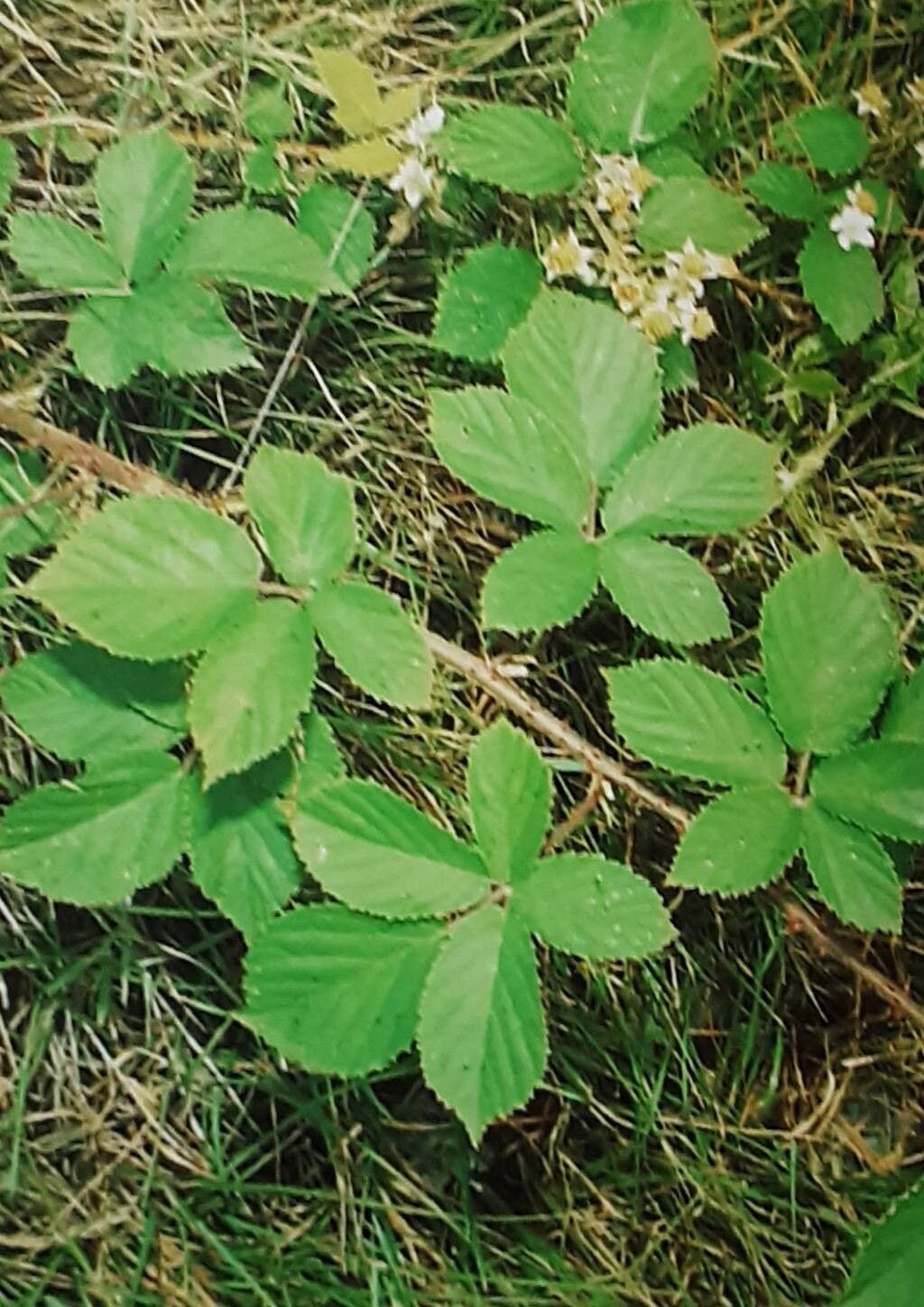
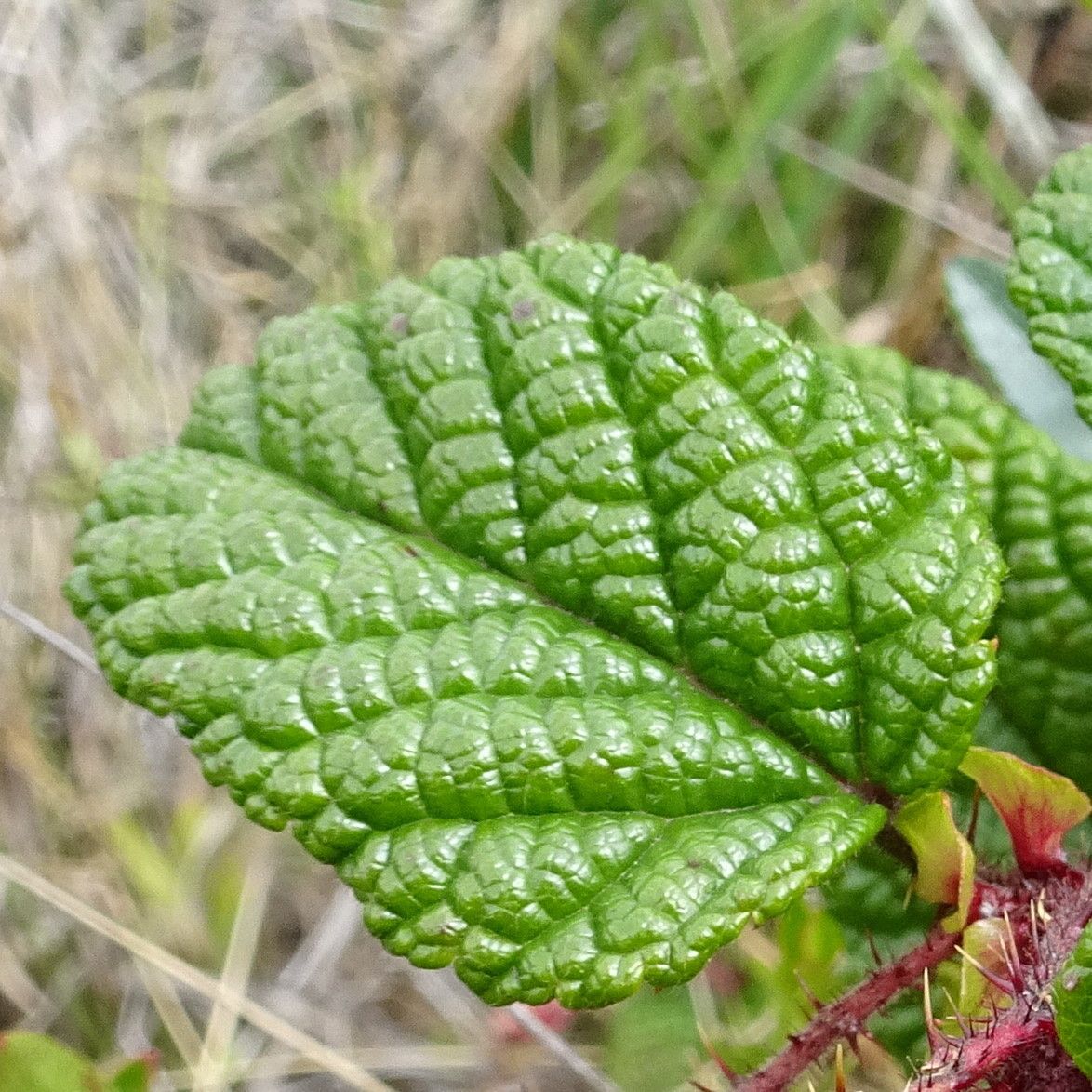
The leaves of Rubus cockburnianus are dark green with serrated edges. They are oval-shaped and can reach up to 10 cm in length. The plant produces small, white or pinkish-white flowers that bloom in late spring or early summer on short stalks.
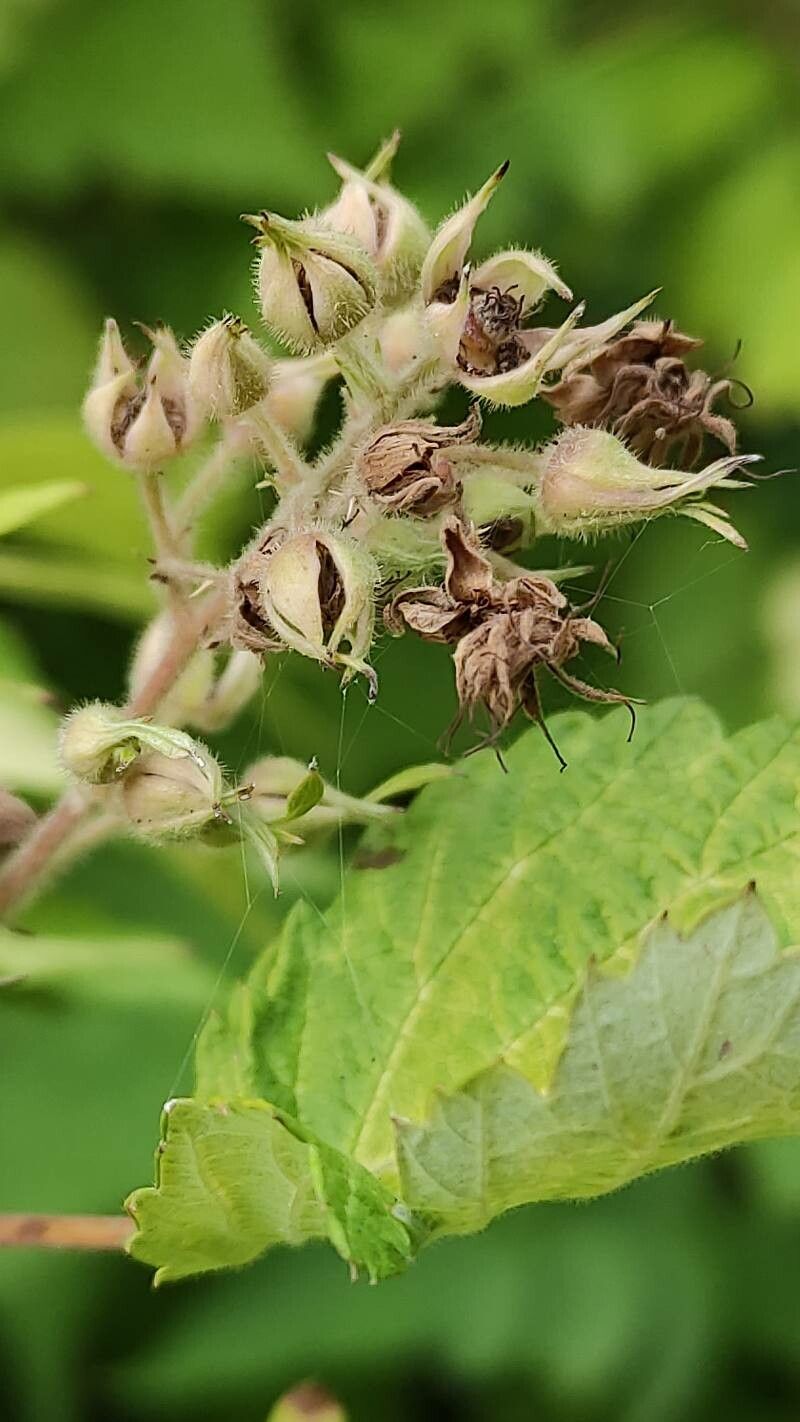
Although the fruit of Rubus cockburnianus is edible, it is not commonly consumed due to its small size. The fruit is red when ripe but may also appear black or purple, depending on the variety.
Rubus cockburnianus thrives in moist soil but can tolerate drought once established. It prefers full sun but can also grow in partial shade.
This plant is frequently used for ornamental purposes because of its attractive bark, which provides an interesting contrast to other plants during the winter months when it sheds its leaves. It also serves as a habitat for wildlife, including birds that feed on its fruit during summer.
Overall, Rubus cockburnianus makes an excellent addition to any garden thanks to its unique winter appearance and low maintenance needs, making it easy to care for even by novice gardeners.
White-stemmed bramble is disease-resistant and generally not susceptible to illnesses. Regarding care, this plant is fairly low-maintenance. Planted outdoors it needs little watering, and larger specimens typically do not need pruning. Smaller plants, however, should be pruned after they have finished blooming. White-stemmed bramblet is appropriate for anyone with an outdoor area, such as a garden or deck, and does not require extensive gardening experience.
How to keep Rubus Cockburnianus.
Light
White-stemmed bramble comes from open habitats, such as sunny meadows and the edges of forests, which offer plenty of light. It thrives in full sun but can also tolerate partial sun, adapting well to different light conditions.
Water
The white-stemmed bramble flourishes in moderately humid environments, striking a balance between drought tolerance and a preference for moisture. It is best to water it every 1-2 weeks. Being a deciduous plant, the white-stemmed bramble goes through seasonal changes that affect its water requirements, needing more water during the growing season.
Temperature
The white-stemmed bramble is highly adaptable to a range of climate conditions, from sweltering summers to cold winters. Still, it has an optimal temperature range for growth. If temperatures become overly high, the plant is susceptible to heat and humidity stress, which can be lethal. In areas where temperatures near the lower bound of its cold tolerance, applying insulation to protect the plant is important.
Fertilizer
Timing is important when fertilizing the White-stemmed bramble. Apply fertilizer in early spring and continue monthly through early summer. Fertilizer promotes attractive blooms and supplies energy during both dormant and active growth periods.
Pruning
The white-stemmed bramble is known for its unique white, frosted stems. To maintain its health and encourage new growth, prune it in early spring by removing any unhealthy wood. Every 2-3 years, trim the old canes down to ground level to improve air circulation and light penetration. Make sure to use sharp tools and wear gloves for protection while pruning.
Botanical profile.
- Plant Type
- Shrub
- Life Cycle
- Perennial
- Genus
- Rubus
- Family
- Rosaceae
- Hardiness Zone
- 3-9
- Mature Height
- 2.44 m
- Mature Spread
- 2.44 m
- Leaf Color
- Yellow, Green
- Leaf Type
- Deciduous
- Flower Color
- White
- Flower Size
- 2.54 cm
- Bloom Time
- Early summer, Mid summer
- Planting Time
- Spring, Summer, Autumn
- Harvest Time
- Late summer, Early fall
- Native Area
- China
Other names.
Reader questions.
What are the sunlight requirements for White-stemmed bramble (Rubus cockburnianus)?
White-stemmed bramble (Rubus cockburnianus) thrives in various sunlight conditions. For optimal growth, it requires full sun, which means the plant should receive above 6 hours of sunlight daily. However, it can also grow well in partial sun, defined as about 3-6 hours of sunlight each day. When planning where to plant your White-stemmed bramble, it's important to observe your garden throughout the day. Noticing how sunlight moves through the space will help you pick spots that provide the ideal balance of light and shade, ensuring your plants are happy and healthy.
What is White-stemmed Bramble?
White-stemmed Bramble, scientifically known as Rubus cockburnianus, is a species of plant. The specific details about its characteristics, such as essentials and symptoms of its presence, have not been provided. It is known for its distinctive white stems, which is a feature that can be used to identify it.