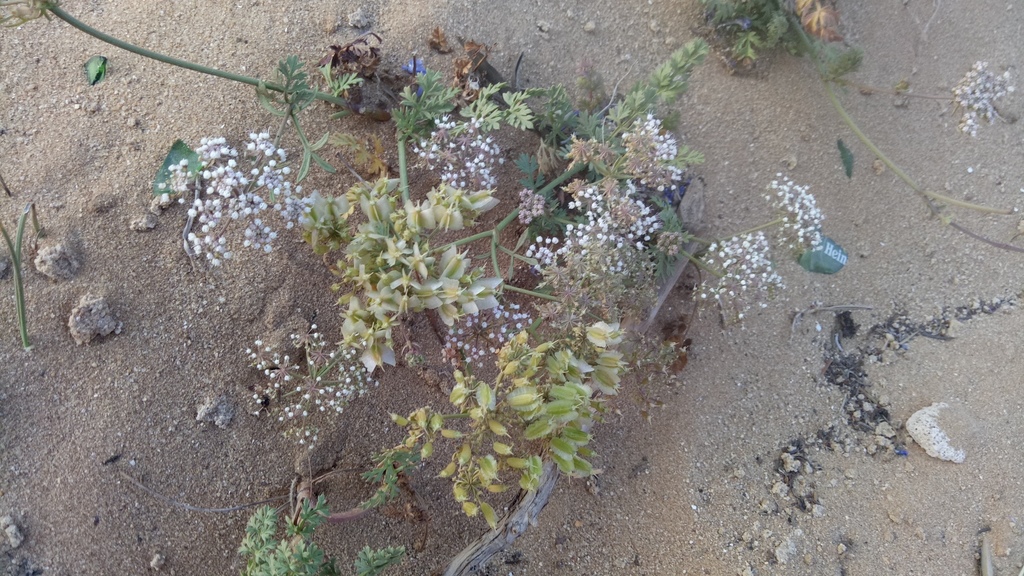
Rouya polygama, commonly known as the Desert Chicory, is a perennial plant species belonging to the Asteraceae family. It is native to the southwestern United States and northern Mexico and can grow up to 1 meter tall. The plant features a woody base with several branches covered in small, narrow leaves.
The bright yellow flowers of Rouya polygama have petals arranged in a daisy-like pattern and bloom from March through June, attracting bees and other pollinators.
Desert Chicory prefers well-drained soils in arid regions such as deserts, grasslands, or rocky slopes. It can withstand extreme temperatures ranging from -10°C to 50°C.
For centuries, Native American tribes have used Rouya polygama for medicinal purposes. The roots were used as a laxative or diuretic, while the leaves were brewed into tea to treat stomach ailments or fever.
In conclusion, Rouya polygama is an attractive desert plant that thrives under harsh conditions and offers medicinal benefits to humans.
Daucus rouyi shows strong resistance to disease and is usually not susceptible to illnesses. In terms of upkeep, this plant is fairly low-maintenance. Planted outdoors, it needs only minimal watering, and larger plants typically do not require pruning. Smaller plants, however, should be trimmed after they finish blooming. Daucus rouyit is appropriate for anyone with outdoor space, such as a garden or a deck, and does not demand much prior care experience.