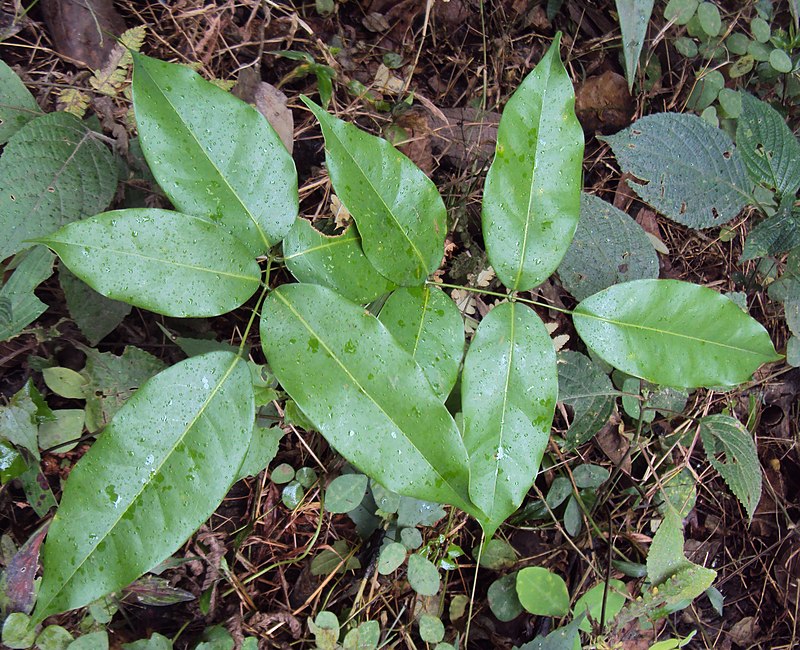
Rourea minor is a large scandent shrub from the family Connaraceae. It has been recorded from Africa, tropical Asia and the Pacific.
Rourea minor is fairly resistant to disease and typically does not suffer from illnesses. Regarding care, this species is fairly low-maintenance. When grown outdoors it needs only light watering, and larger plants generally do not require pruning. Smaller specimens, however, should be trimmed after they have finished blooming. Rourea minort is suitable for anyone with an outdoor area, such as a garden or deck, and does not demand extensive experience in plant care.
How to keep Rourea Minor.
Light
Rourea minor comes from open habitats, like sunny meadows and forest margins, where ample light is available. It thrives in Full Sun but can also tolerate Partial Sun, showing good adaptability to different sunlight conditions.
Water
Rourea minor, a plant native to tropical regions, flourishes in high humidity and consistently moist soil. To prevent waterlogging, it should be watered weekly. As an evergreen, Rourea minor retains its foliage throughout the year and requires continuous hydration. Whether grown indoors or outdoors, it thrives in a humid climate that resembles its natural habitat.
Temperature
Rourea minor comes from tropical areas, where conditions are generally warm and humid. Consequently, it is adapted to high heat and moisture. The plant is sensitive to abrupt temperature shifts and prefers a consistent thermal environment, so indoor temperature swings should be avoided. It is typically unable to withstand cold and needs relatively high temperatures to grow; if the surrounding temperature falls too much, growth may stop or the plant may die.
Fertilizer
Fertilize a Rourea minor in early spring as it comes out of dormancy. This supports overall growth and the development of flowers. Applying fertilizer improves the foliage, stems, and branches, while encouraging flowers that are larger, more vibrant, and longer-lasting. It also helps move nutrients from the roots to the flowers and boosts the plant’s health and resistance to disease.
Pruning
Pruning Rourea minor from early to late winter can significantly improve its structure and growth. Start by removing dead branches and thinning out congested areas to enhance air circulation. Be sure to make cuts just above healthy buds; this reduces stress and the risk of disease, while also encouraging vigorous blooming and overall vitality.
Botanical profile.
- Plant Type
- Shrub
- Life Cycle
- Perennial
- Genus
- Rourea
- Family
- Connaraceae
- Hardiness Zone
- 10-12
- Mature Height
- 24.99 m
- Mature Spread
- 2.13 m to 3.96 m
- Leaf Color
- Red, Green
- Leaf Type
- Evergreen
- Flower Color
- White
- Flower Size
- 1.02 cm
- Bloom Time
- Late spring, Early summer, Mid summer
- Planting Time
- Spring, Summer
- Harvest Time
- Late summer, Early fall, Mid fall
- Native Area
- Sri Lanka, Burkina Faso, Angola, India, Vanuatu, Madagascar, Nigeria, Australia, Fiji, Guinea-Bissau, Kenya, Uganda, Benin, Mali, Tanzania, Zimbabwe, Sierra Leone, Indonesia, Cambodia, Equatorial Guinea, Liberia, Mozambique, Cameroon, Ghana, Congo, Central African Republic, Philippines, Zambia, Sudan, Bangladesh, Laos, Guinea, China, Vietnam, Myanmar, Togo, Côte d'Ivoire, Singapore, Congo (DRC), Thailand, Gabon
Reader questions.
How much sunlight does Rourea minor require?
Rourea minor needs specific amounts of sunlight to thrive. For full sun exposure, the plant requires above 6 hours of sunlight daily. If you're aiming for partial sun, about 3-6 hours of sunlight a day is needed. It's important to observe the movement of sunlight through your garden to find spots that offer the ideal balance of light and shade. This ensures your Rourea minor plants remain happy and healthy.