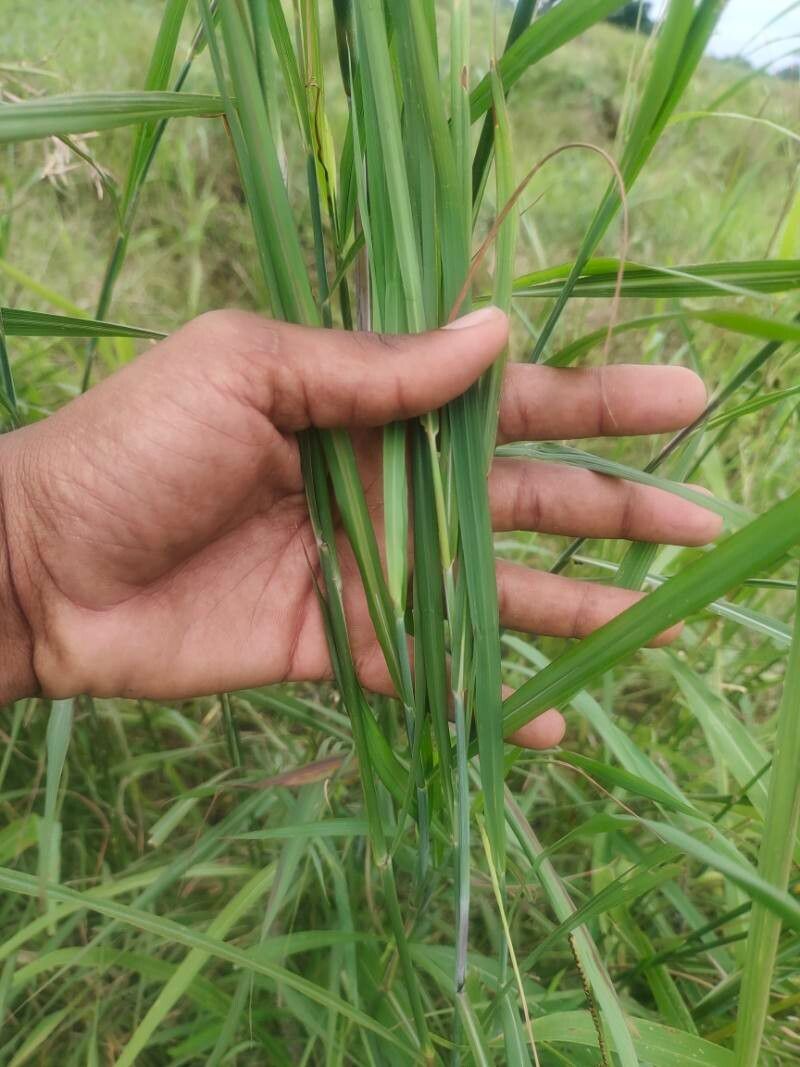
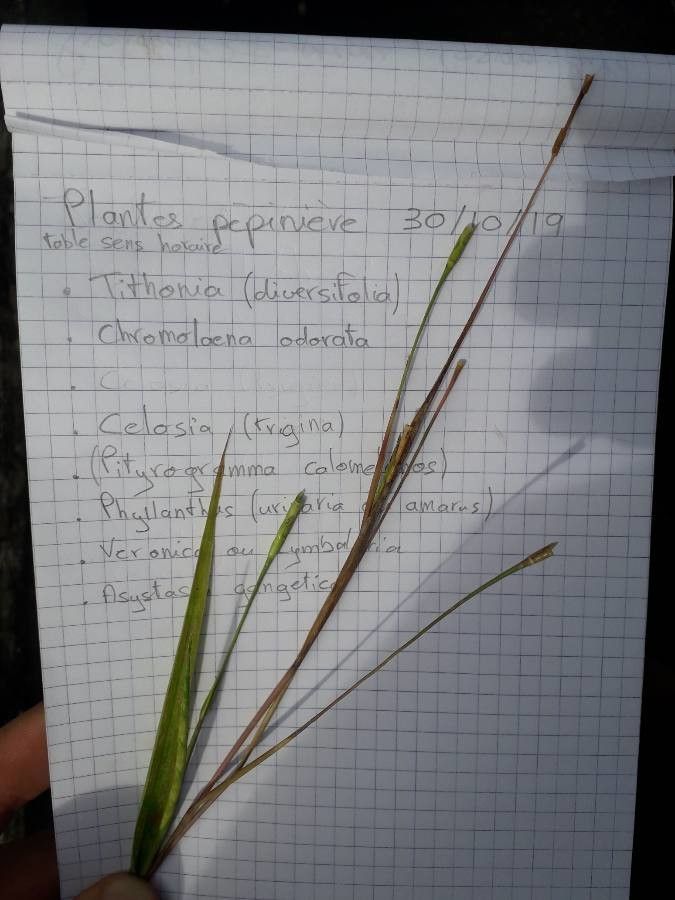
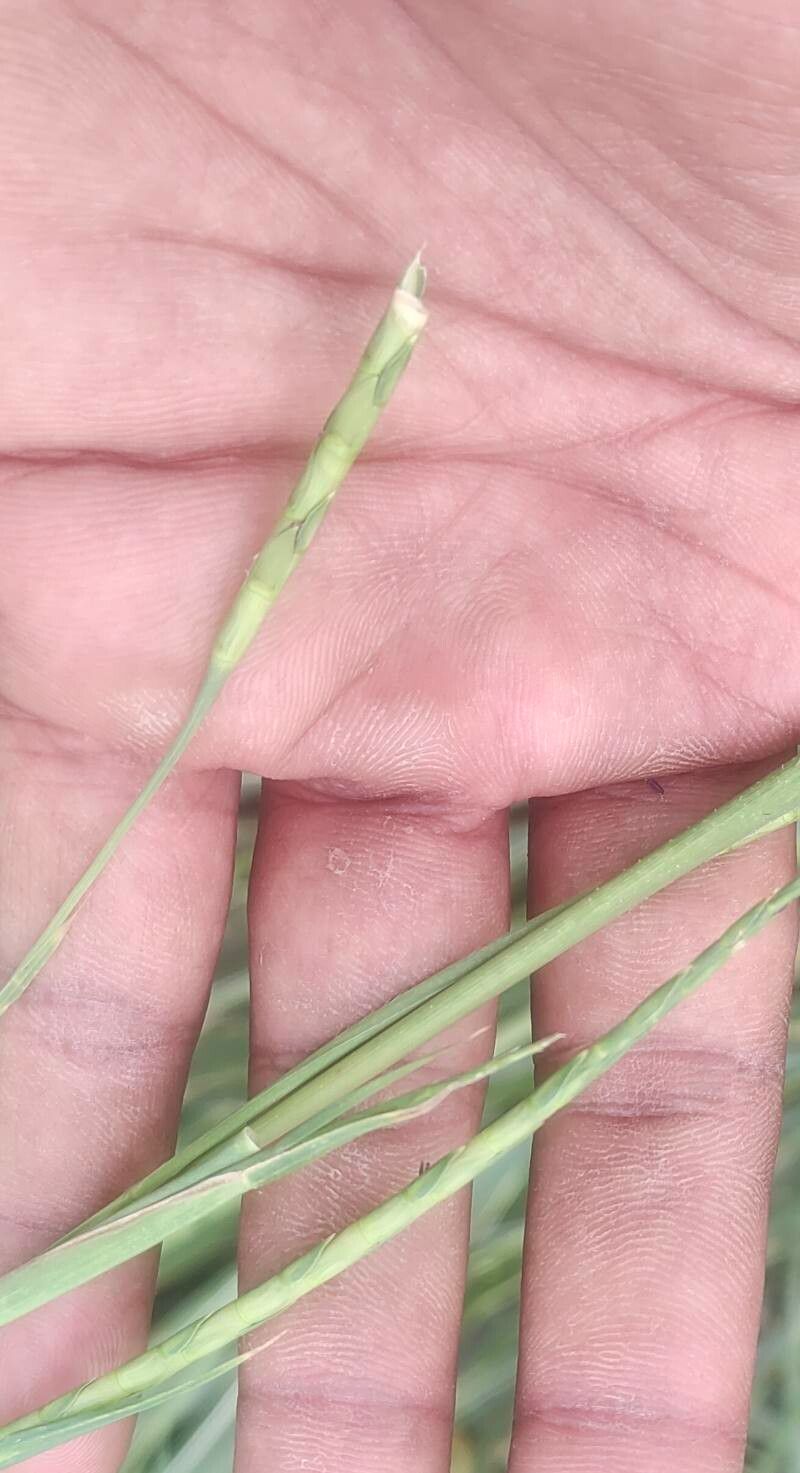
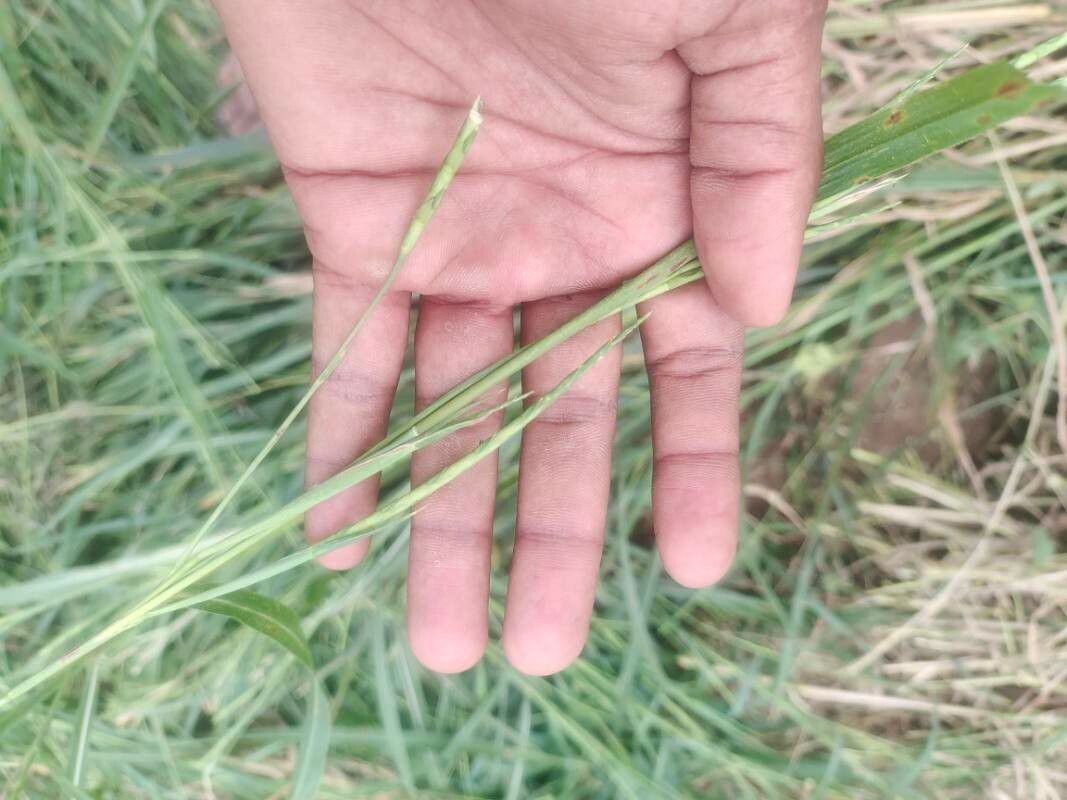
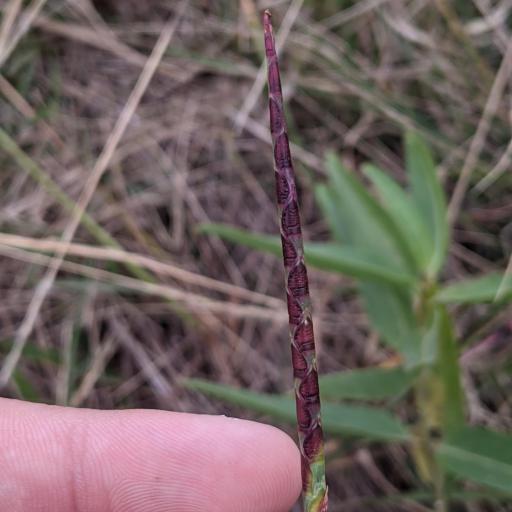
Rottboellia cochinchinensis is a species of grass known by the common names Itchgrass, Raoul grass, corngrass, Kokoma grass, Guinea-fowl grass, jointed grass, Shamwa grass and Kelly grass. It is a tall, tufted annual grass whose stems (culms) grow up to 3 metres (9 ft 10 in) in height with leaf-blades of up to 45 centimetres (1 ft 6 in) in length. The species flowers at the apex of culms in the form of spike-like racemes composed of paired spikelets. The common name Itchgrass comes from the bristly (hispid) leaf-sheath which can be irritating to the skin.Rottboellia cochinchinensis is native to tropical Asia and Africa and has also been introduced to the Americas where it is often considered to be an invasive species. It is a major weed of a wide range of crops including maize, rice, sorghum and sugar cane.
Guinea-fowl grass is well resistant to diseases and is generally unlikely to suffer from them. In terms of maintenance, this plant is fairly low-maintenance. When grown outdoors it needs only occasional watering, and larger plants usually do not require pruning. Smaller plants, however, should be cut back after they finish flowering. Guinea-fowl grass is appropriate for anyone who has an outdoor area, such as a garden or deck, and it does not demand much gardening experience.
How to keep Rottboellia Cochinchinensis.
Light
Guinea-fowl grass is native to bright, open areas where it does best in full sun. It can tolerate partial sun but prefers direct sunlight for optimal growth. This plant, which can be annual or biennial, is known for its sun-loving nature.
Water
Guinea-fowl grass thrives in tropical environments with high humidity and moisture. It prefers consistently moist soil, so it should be watered weekly, taking care not to over-saturate it. Rainwater is especially beneficial for outdoor growth, as it boosts the plant's vitality during its active growing season.
Temperature
Guinea-fowl grass comes from tropical areas, where the climate is generally warm and humid. Consequently, it is well suited to high temperatures and moisture. It is not fond of abrupt temperature changes and prefers a steady temperature, so avoiding temperature fluctuations indoors is important. It typically cannot tolerate cold and needs warmer conditions to grow. If the surrounding temperature falls too low, the plant may stop growing or even die.
Pruning
Guinea-fowl grass grows quickly and can be invasive, so it's important to prune it strategically from early to late spring. Pruning removes dead stems, promotes healthy new growth, and helps control its spread. Make sure to sanitize your tools to prevent disease. This will improve the appearance and vitality of the grass while reducing competition with nearby plants.
Botanical profile.
- Plant Type
- Grass
- Life Cycle
- Annual
- Genus
- Rottboellia
- Family
- Poaceae
- Hardiness Zone
- 8-11
- Mature Height
- 3.96 m
- Mature Spread
- 30 cm to 61 cm
- Leaf Color
- Green, Dark Green
- Leaf Type
- Semi-evergreen
- Flower Color
- Yellow, Green, Brown
- Flower Size
- 5.08 cm to 15.24 cm
- Bloom Time
- Summer, Early fall, Mid fall
- Planting Time
- Spring, Summer, Autumn
- Harvest Time
- Late summer, Fall, Early winter
- Native Area
- Sri Lanka, Burkina Faso, Somalia, India, Malaysia, Angola, Namibia, Madagascar, Eritrea, Nigeria, Yemen, Kenya, Uganda, Tanzania, Zimbabwe, Niger, Mali, Guinea-Bissau, Fiji, Benin, Sierra Leone, Indonesia, Cambodia, Equatorial Guinea, Liberia, Mozambique, Cameroon, Burundi, Oman, Ghana, Ethiopia, Botswana, Congo, Nepal, Malawi, Central African Republic, South Africa, Zambia, Sudan, Philippines, Laos, Bangladesh, Guinea, Chad, China, Solomon Islands, Vietnam, Myanmar, Japan, Togo, Papua New Guinea, Senegal, Côte d'Ivoire, Bhutan, Gambia, Congo (DRC), Thailand, Gabon
Other names.
Reader questions.
What are the sunlight requirements for Guinea-fowl grass?
Guinea-fowl grass, known botanically as Rottboellia cochinchinensis, thrives in environments that provide full sun, necessitating more than 6 hours of sunlight daily for optimal growth. It can also tolerate partial sun, where it receives about 3-6 hours of sunlight. When planning your garden, consider the movement of sunlight through the space to find spots that offer a good balance of light and shade, ensuring your plants grow happily and healthily.
How does artificial lighting support Guinea-fowl grass growth indoors?
When growing Guinea-fowl grass indoors and natural sunlight is insufficient, artificial lighting serves as a crucial supplement, especially during winter or in less sunny locations. It's recommended to select artificial lights, such as LED lights, which can be customized to deliver specific wavelengths needed by the plants. Full sun plants typically require 30-50W/sq ft of artificial light, and for the best results, position the light source 12-36 inches above the plant. Mimicking natural daylight hours, most plants would benefit from 8-12 hours of light per day, ensuring they grow faster and healthier.
What are common symptoms of inadequate sunlight for Guinea-fowl grass, and how can they be addressed?
Guinea-fowl grass shows several symptoms when it doesn't get enough sunlight, including smaller new leaves, leggy growth, faster leaf drop, halted growth, pale leaves, chlorosis, sunscald, leaf curling, wilting, and leaf scorching. To combat these issues, gradually move your plants to a sunnier spot, increasing their sunlight exposure each week until they receive at least 6 hours of direct sun daily. Utilize a south-facing window for indoor plants and ensure maximum natural light exposure by keeping curtains open. For plants that are large or not easily moved, consider using artificial light sources for at least 8 hours daily. Outdoor plants can also benefit from gradual relocation to sunnier spots to prevent sunburn. If needed, reduce light obstructions or transplant smaller plants to more suitable locations with ample sunlight during their dormant period.