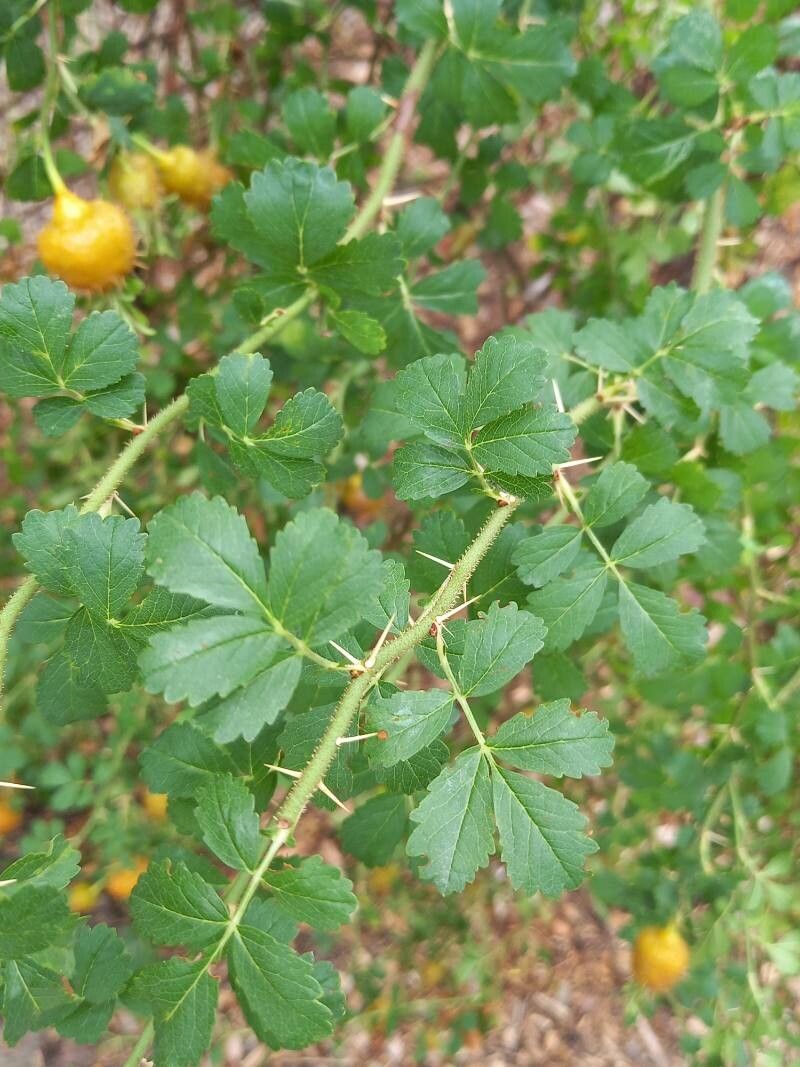
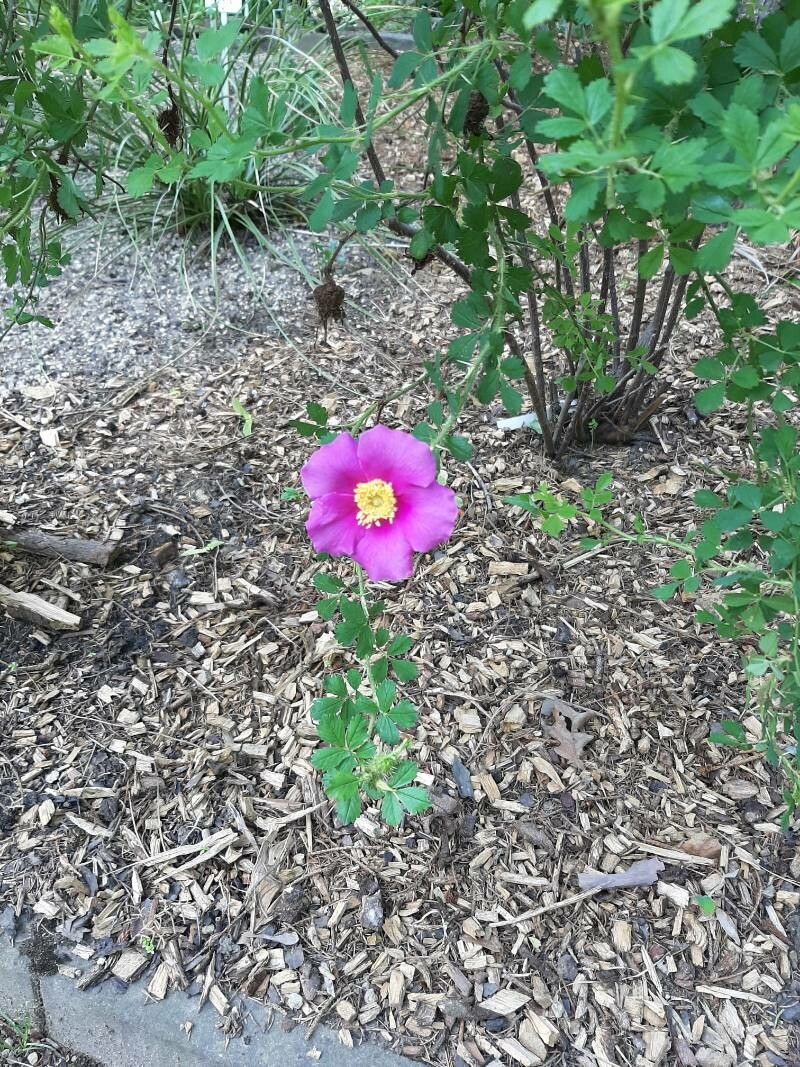
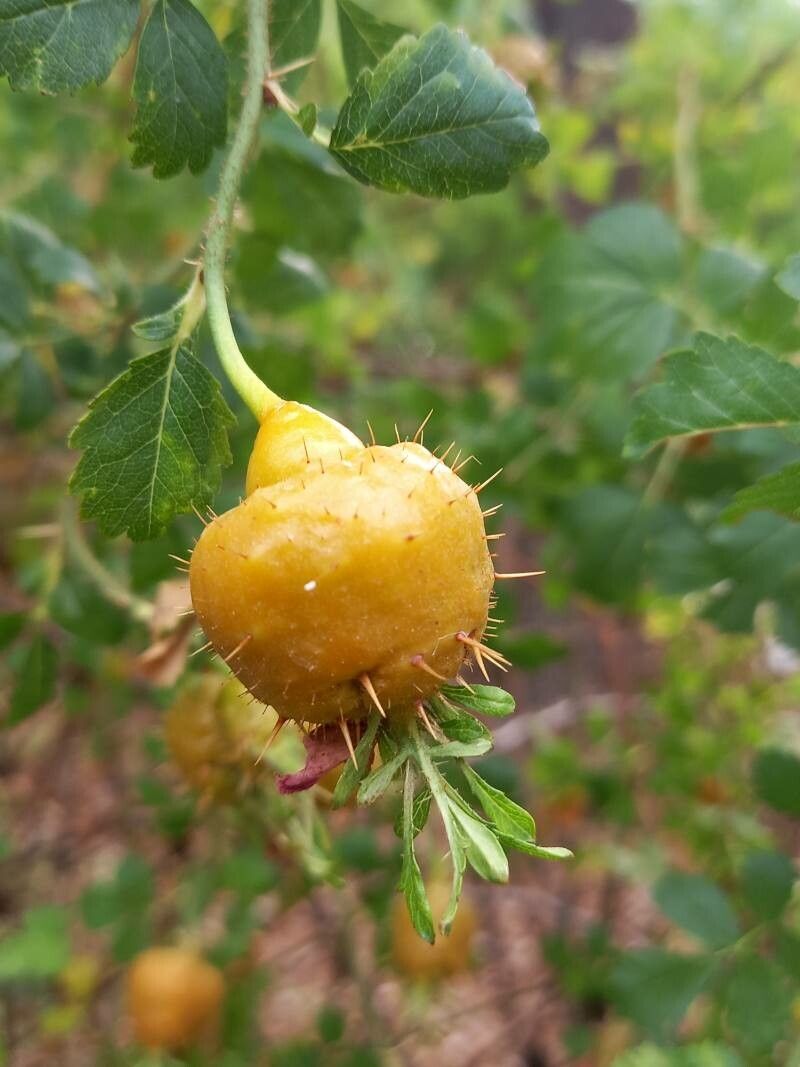
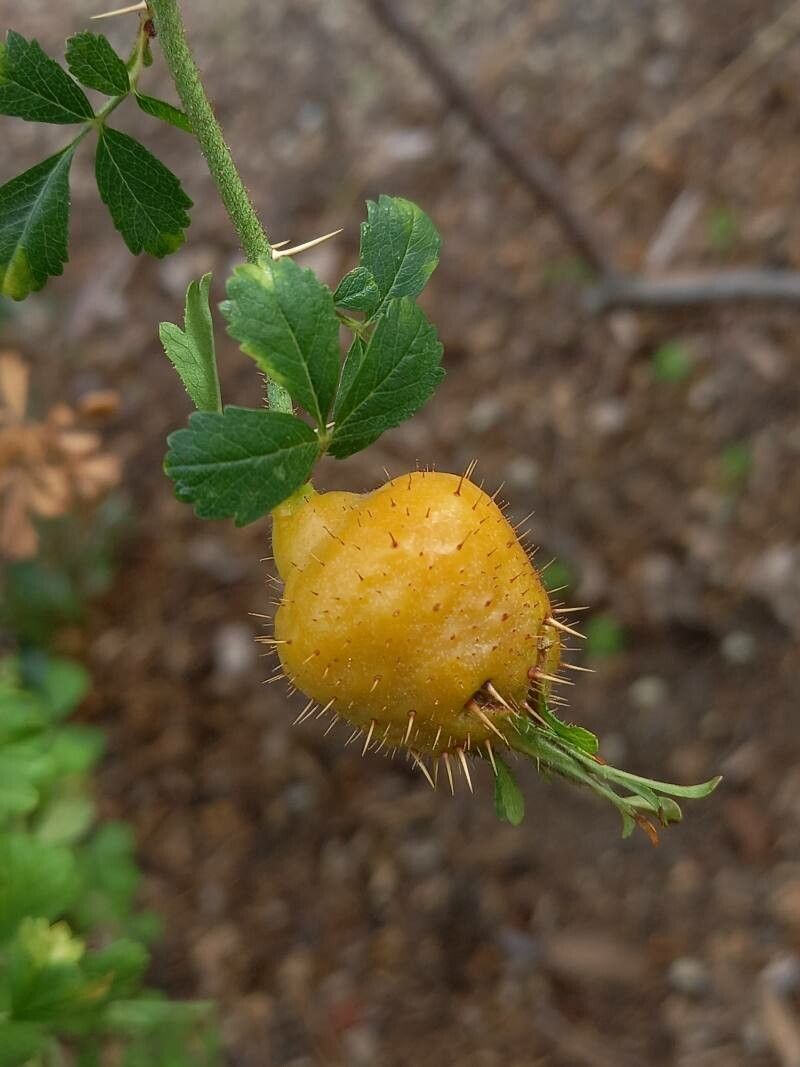
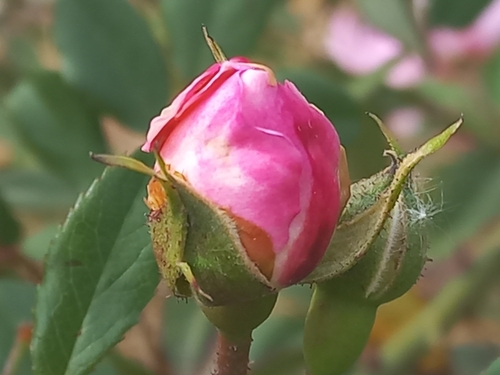
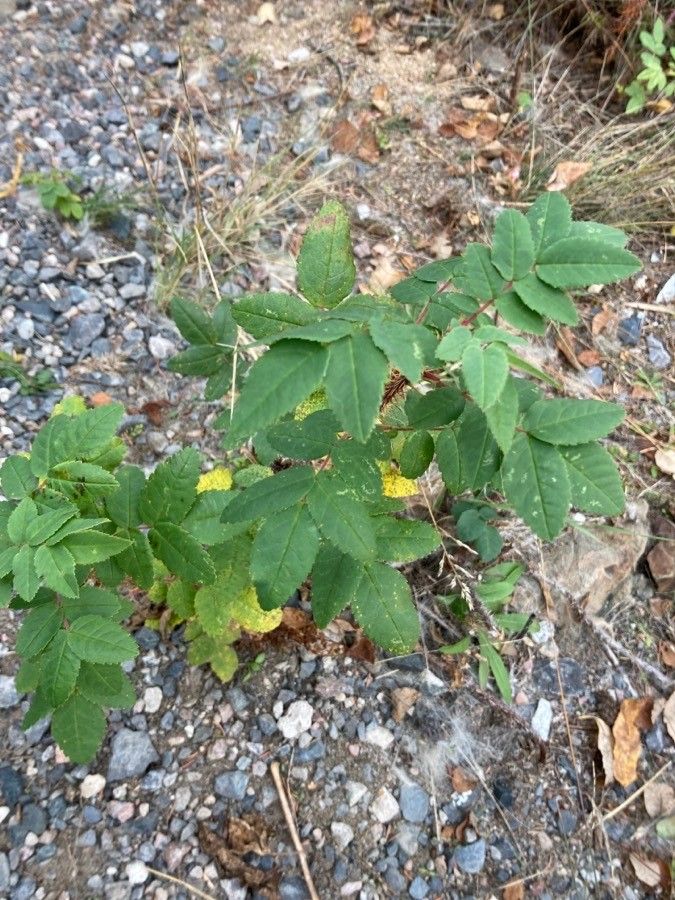
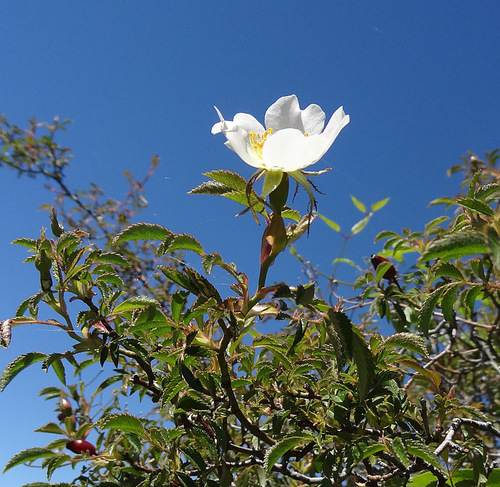
Rosa stellata is a species of rose known by the common names desert rose, gooseberry rose, and star rose. In Texas this type of rose grows on dry rocky places to 6,500 feet (2,000 m), such as the Trans-Pecos. It occurs in the mountain canyons of Arizona and New Mexico. It also grows in dry, rocky places. It has trifoliate leaves, deep rose purple blossoms and yellowish white prickles on the petioles and stems. It is a perennial shrub with velvety, deciduous leaves. Some horticulturists consider it to be a browse plant.Rosa stellata can be used as a groundcover or small shrub and grows best when partially exposed to sunlight. The purple flowers bloom in the summer and it typically grows to be between 16 and 24 inches tall. It attracts native bees and bumble bees. Native bees also use the plant for nesting materials.
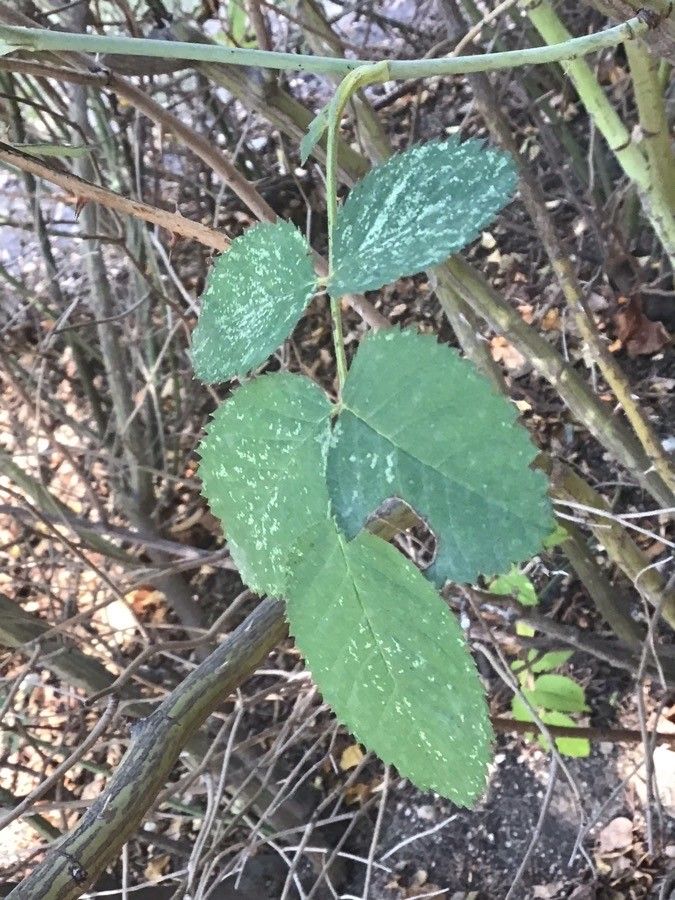
Desert rose has low resistance to disease and is highly prone to various leaf spots. It is also vulnerable to different insect pests, and if infestations are severe, most of its leaves may fall off. Its care is regarded as difficult, since it needs regular watering, fertilizing before flowering, and pruning after flowering and in winter. Preventive spraying might be required, or treatment may be necessary if the plant becomes diseased. Desert rose is appropriate for people who can dedicate some time and energy to plant care, but keeping it healthy and flourishing may demand additional growing experience and effort.
How to keep Rosa Stellata.
Light
Desert rose is native to open habitats, like sunny meadows and forest edges, that provide abundant light. It thrives in Full Sun but can also tolerate Partial Sun, adapting well to a range of sunlight conditions.
Water
The desert rose thrives in arid environments by carefully balancing water absorption and evaporation, making it well-suited to drought conditions. It is recommended to water the plant every 1-2 weeks. When grown outdoors, the desert rose enters a dormant phase during dry seasons, which significantly decreases its water needs.
Temperature
Desert rose shows considerable adaptability to a range of climates, from scorching summers to chilly winters. However, it has a preferred temperature range for healthy growth. If temperatures rise too high, the plant becomes vulnerable to heat and humidity stress, which can cause it to die. In areas where temperatures approach the lower limit of its cold tolerance, insulating measures should be used to protect the plant.
Fertilizer
The timing of fertilizing a Desert rose is important. Begin fertilizing in early spring and continue once a month through early summer. Fertilizer encourages attractive blooms and supplies energy during both dormant and active growth periods.
Pruning
The desert rose is a drought-tolerant plant known for its star-shaped flowers. To keep it healthy and encourage more blooms, it’s important to prune it annually, ideally in early spring. This involves removing dead branches and thinning out parts of the plant to promote good air circulation. Regular pruning boosts the plant’s vigor and increases flower production. Additionally, always use sterilized tools when pruning to prevent the spread of diseases and maintain the plant’s health.
Botanical profile.
- Plant Type
- Shrub
- Life Cycle
- Perennial
- Genus
- Rosa
- Family
- Rosaceae
- Hardiness Zone
- 7-10
- Mature Height
- 30 cm to 91 cm
- Mature Spread
- 30 cm to 61 cm
- Leaf Color
- Green
- Leaf Type
- Deciduous
- Flower Color
- Pink
- Flower Size
- 3.05 cm to 5.08 cm
- Bloom Time
- Mid spring, Late spring
- Planting Time
- Spring, Summer
- Harvest Time
- Mid summer, Late summer
Other names.
Reader questions.
What are the sunlight requirements for a Desert Rose?
The Desert Rose (Rosa stellata) thrives under specific sunlight conditions. It requires 'Full sun', which is defined as receiving more than 6 hours of sunlight per day, for optimal growth. However, it can also tolerate 'Partial sun', meaning it can grow with about 3-6 hours of sunlight a day. It's important to observe the movement of sunlight through your garden carefully. This will help you identify spots that offer the right balance of light and shade, ensuring the Desert Rose's well-being.