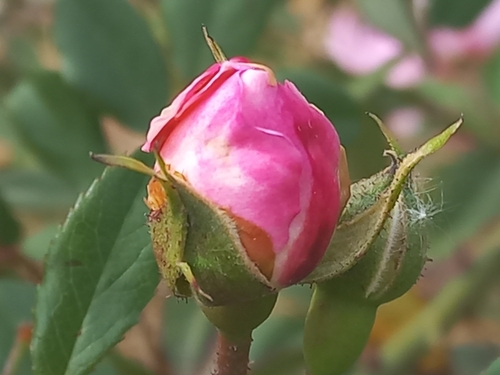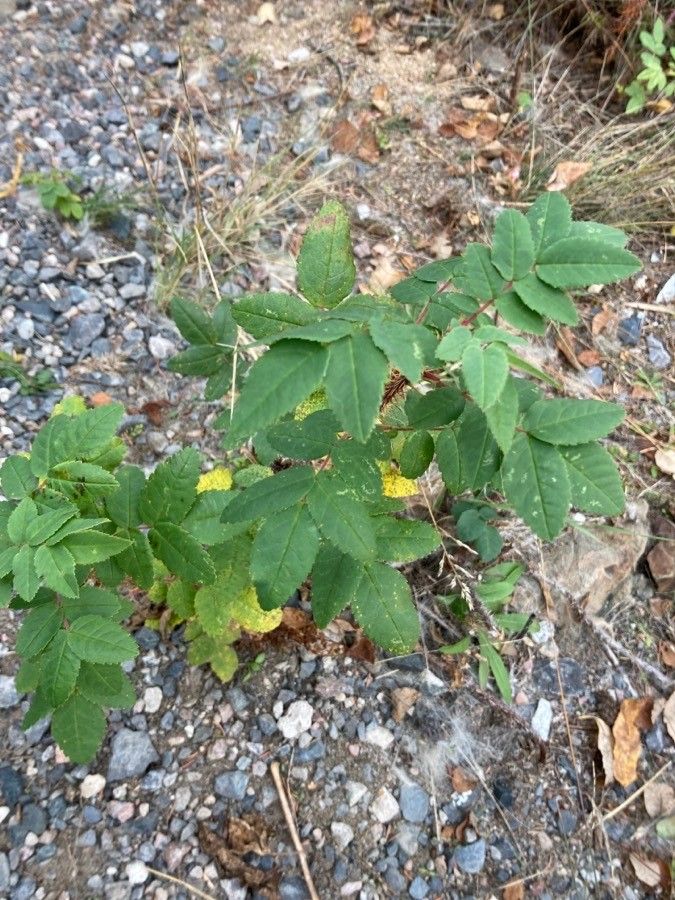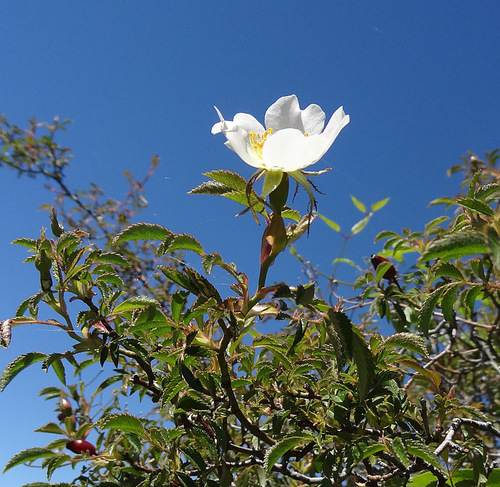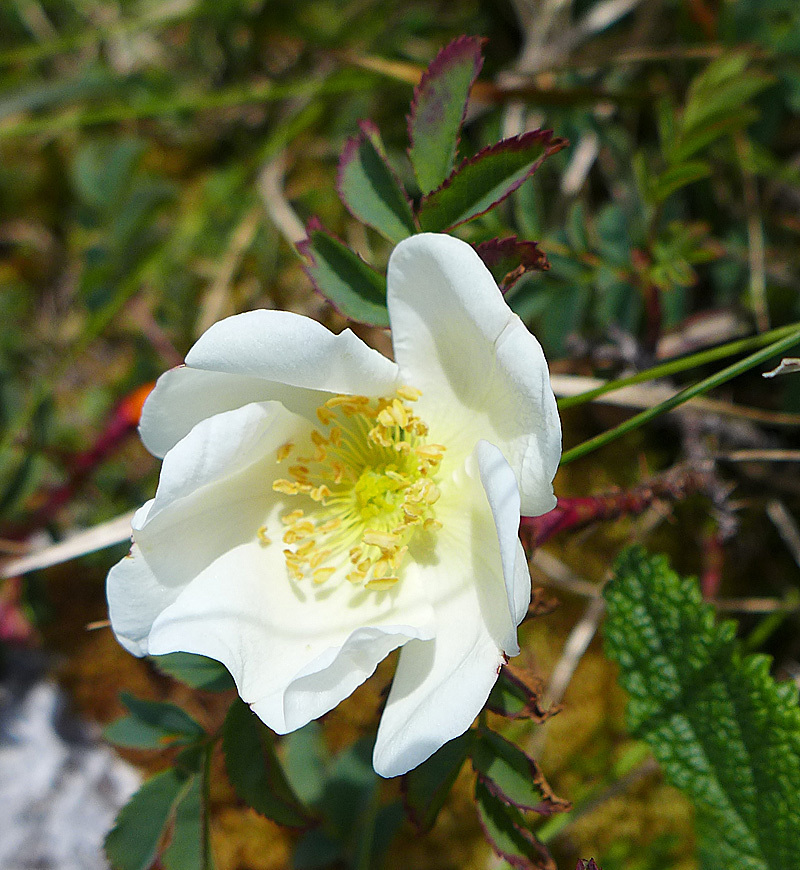
Rosa spinosissima, commonly known as the Scots rose or burnet rose, is a deciduous shrub in the Rosaceae family. Native to Europe and Western Asia, it thrives in rocky areas, heaths, and coastal cliffs. The shrub typically reaches a height and spread of 1 to 2 meters.
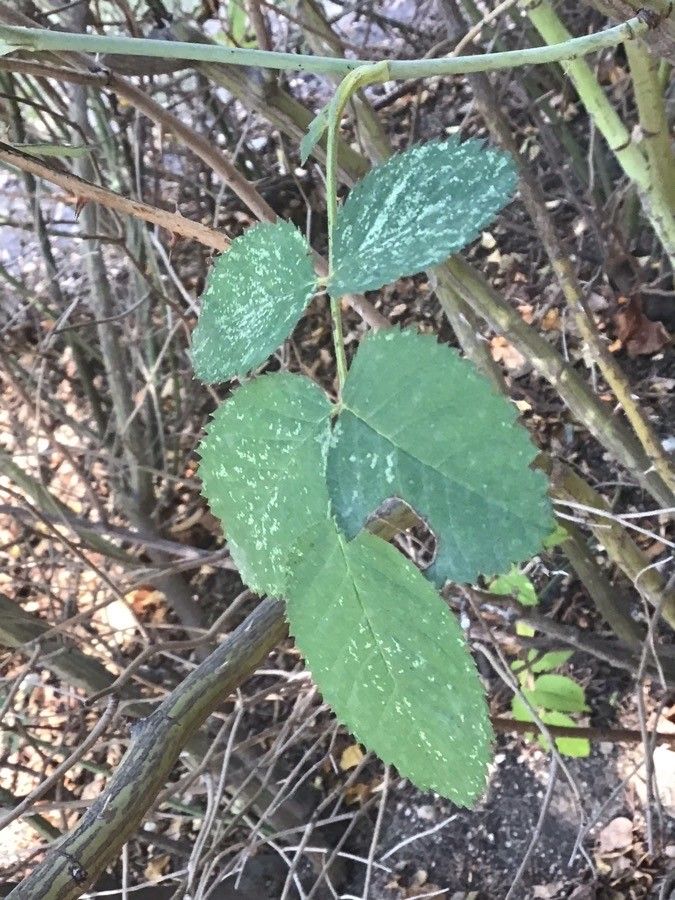
The Scots rose features dark green, pinnate leaves with serrated edges. Its flowers, usually pink or white with five petals and a yellow center, bloom from late spring to early summer.
One of the plant's unique characteristics is its thorny stems, making it an excellent choice for hedges or security barriers.
Historically, the Scots rose has been valued for its medicinal properties, particularly its anti-inflammatory effects. During the Victorian era, it was also used as an ingredient in perfumes.
Overall, Rosa spinosissima is a hardy shrub that can flourish in various soil types and weather conditions, making it a great addition to any garden or landscape design project.
Burnet rose has weak resistance to disease and is highly prone to various leaf spot problems. It is also susceptible to different insect pests, and if an infection is severe, most of its leaves may fall off. The plant is considered difficult to care for, because it needs regular watering, fertilizing before flowering, and pruning after flowering and in winter. Preventive spraying may be required, or treatment will be necessary if the plant contracts a disease. Burnet rose is suitable for people who have some time and energy to devote to its care, but keeping it healthy and vigorous may demand more growing experience and additional energy.
How to keep Rosa Spinosissima.
Light
The burnet rose does best when exposed to full sun for most of the day, though it can tolerate locations with a bit less light. Lack of adequate sunlight, however, can stunt its growth and cause its health to decline. Its native habitat is one with abundant sunlight.
Water
The Burnet rose is moderately drought-tolerant and thrives when watered every 1-2 weeks, provided it is in well-drained soil. Its resilience enables it to adapt to different climate zones, making it suitable for a variety of landscape applications in regions with varying rainfall.
Temperature
Native to colder regions, burnet rose tolerates temperatures from 32 to 95 °F (0 to 35 ℃). It prefers cooler climates but can withstand occasional heat. During hotter seasons it may require some shading or cooling.
Fertilizer
Proper timing matters for fertilizing the Burnet rose. Apply fertilizer in early spring and continue monthly until early summer. Fertilizer encourages beautiful blooms and supplies energy both during dormant periods and active growth.
Pruning
The Burnet rose benefits greatly from early spring pruning, which encourages a well-shaped plant and healthy blooms. To start, remove any dead or crossing branches and thin out older stems to improve air circulation. This plant can handle heavy pruning, which helps rejuvenate it and control its spread. For detailed care tips, refer to horticultural guides.
Botanical profile.
- Plant Type
- Shrub
- Life Cycle
- Perennial
- Genus
- Rosa
- Family
- Rosaceae
- Hardiness Zone
- 3-9
- Mature Height
- 91 cm
- Mature Spread
- 1.22 m
- Leaf Color
- Green
- Leaf Type
- Deciduous
- Flower Color
- White, Pink
- Flower Size
- 5.08 cm to 7.62 cm
- Bloom Time
- Late spring, Early summer
- Planting Time
- Spring
- Harvest Time
- Mid summer
- Native Area
- Turkey, Austria, Slovakia, Montenegro, Croatia, Slovenia, Belarus, Russia, Germany, Iceland, Romania, Belgium, Netherlands, France, Czech Republic, Bulgaria, Armenia, Poland, Greece, Ukraine, Serbia, China, Norway, Italy, Kazakhstan, Spain, Switzerland, Denmark, Mongolia, Iran, Albania, Ireland, United Kingdom, Hungary, Algeria, Azerbaijan
Other names.
Reader questions.
What is the easiest way to water my Burnet rose plant?
To ensure excellent root development, place a garden hose at the base of the plant. It's important to avoid spraying the leaves directly, especially if they are exposed to direct sunlight outdoors. Moistening the roots can be done by using bubblers or soaker hoses placed on each plant. When adding or removing plants, utilize soaker hoses to deeply water the entire garden or bed. After watering, drain any excess water and allow the soil to dry before watering again. Watering at ground level is recommended to prevent diseases. If it's a sunny day, consider spraying the entire bush with water. Whether the Burnet rose is in a pot or in the ground, remember to prioritize deep watering rather than light sprinkling.
Why should I add fertilizer to my Burnet rose?
Fertilizing your Burnet rose is important for multiple reasons. Firstly, it will help your rose produce beautiful blooms. The best time to fertilize is in early spring, as this ensures excellent flowers during the season. Additionally, fertilizer provides the rose with energy that it can store in the ground when it is not actively growing. By giving your Burnet rose extra nutrients during fall planting or late spring, you help it store more energy for future growth.
What are the sunlight requirements for Burnet Rose?
The Burnet Rose thrives best when exposed to full sunlight for the majority of the day, requiring above 6 hours of sunlight. It can also tolerate partial sun, meaning about 3-6 hours of sunlight. However, the plant's health and growth can decline without sufficient sunlight. To ensure your plants are happy, it's crucial to monitor the movement of sunlight through your garden and choose locations that offer an optimal balance of light and shade.
What is the origin and preferred climate of the Burnet rose?
The Burnet rose, with its botanic name Rosa spinosissima, originates from colder regions and has adapted to a wide temperature range of 32 to 95 °F (0 to 35 °C). It thrives best in cooler climates but can tolerate intermittent heat periods. Special attention, such as shading or cooling, might be necessary during hotter seasons to ensure the plant's well-being.
What should I do if I give the Burnet rose too much or too little water?
An overwatered Burnet rose can exhibit several symptoms, including yellowing and dropping leaves, wilting, and a dull, unhealthy appearance with mushy stems. When these signs begin to show, it's advisable to adjust your watering schedule accordingly. Conversely, wilting can also indicate under watering, characterized by crispy, dry leaves. In this case, check the soil for dryness and give the plant a thorough watering when necessary. Sufficient water will restore the Burnet rose, but it may still exhibit yellow and dry leaves in the following days due to root damage. Once it returns to normal, the yellowing of leaves will cease. When growing a Burnet rose indoors, regularly monitor the moisture levels, avoiding overwatering and being vigilant for black spots. If present, allow the soil in the pot to dry out by refraining from watering for a few days. Overwatering can lead to root rot, which may necessitate transferring the plant to a different pot if discolored and slimy roots are observed. Therefore, it is essential to prevent root rot by not letting the soil become excessively soggy. When planting a Burnet rose outdoors, dig slightly deeper, and if the soil feels too dry when checking with your fingers, this indicates underwatering. Adequate watering is necessary to facilitate the plant's recovery.
When should I put fertilizer on my Burnet rose?
To effectively fertilize Burnet rose, timing is crucial. Applying fertilizer too early when the rose is dormant will render it ineffective, as it can easily be washed away by rainfall, resulting in waste and pollution. The recommended approach is to begin fertilizing in early spring and continue monthly applications until early summer.
How does artificial lighting support Burnet Rose growth indoors?
Indoor Burnet Roses require adequate lighting for optimal growth, especially when natural sunlight is insufficient, such as during winter or in less sunny spaces. Artificial lights, particularly LED lights, are beneficial as they can provide specific wavelengths needed by the plants. For full sun plants, 30-50W/sq ft of artificial light is needed, partial sun plants require 20-30W/sq ft, and full shade plants need 10-20W/sq ft. The light source should be placed 12-36 inches above the plant to mimic natural sunlight, ensuring plants receive 8-12 hours of light per day.
How should I protect my Burnet rose in winter?
Burnet rose exhibits strong resistance to cold and does not usually require special frost protection. However, if temperatures are expected to fall below -35°C, it's important to protect the plant. This can be done by wrapping the trunk and branches with insulating materials like non-woven fabric or cloth. Additionally, watering the plant abundantly before the first freeze of autumn is suggested to help the soil remain moist and frozen, which aids in preventing drought and water scarcity during winter and early spring.
How often do I need to water my Burnet rose?
The Burnet rose prefers deep watering, especially when planted in pots. Watering once with a gallon of water is sufficient, considering that pots have limited water storage and the soil tends to dry out quickly. If you live in a cold region, water the plant every 3 to 5 days. Water in the morning when the soil is dry, whether you have the plant indoors or outdoors. One way to determine if watering is necessary is by checking the soil - if the top 2-3 inches are dry, give the plant a good watering. In hot weather, you may need to check the soil moisture daily as it can dry out rapidly. If you have a garden, irrigate the soil regularly. In hot climates, watering once a week is sufficient. Only water when the top 2 to 3 inches of soil are dry. Consider the amount of rainwater that has fallen and avoid additional watering to prevent root rot. During rainy periods, you may not need to water at all. The Burnet rose mainly grows during spring and fall. For outdoor plants, add a layer of mulch about 3 to 4 inches deep to help retain moisture. Adjust watering frequency based on soil type - sandy soil drains faster, so more frequent watering is needed, while clay soil requires less frequent watering, allowing the plant to dry out for 2-3 days to avoid root rot. To keep track of watering, mark the dates on your calendar. If the leaves start to droop, it could indicate that you are a day late with watering.
When is the best time to not use fertilizer on my Burnet rose?
To ensure optimal growth and bloom production in Burnet rose, it is important to be mindful of fertilizer usage. Excessive nitrogen in fertilizers should be avoided, as this may result in leafy growth without many blooms. Look for fertilizers that have a lower nitrogen content compared to other nutrients. It is advisable to refrain from fertilizing Burnet rose after early autumn, as this can induce excessive growth just before winter. Similarly, during hot and dry periods, it is not recommended to apply fertilizer to Burnet rose, as dry soil is less effective in delivering nutrients compared to moist soil. Fertilizing during this time can promote growth that requires more water, potentially leading to insufficient water availability. Ideally, fertilizer application should be done earlier in the season when temperatures are cooler. Lastly, it is crucial to be cautious of adjacent plants or lawns that may absorb the applied fertilizer. Take care to avoid inadvertently giving other plants or shrubs a double-dose of fertilizer.
What are the symptoms of insufficient sunlight for Burnet Rose?
Burnet Roses sensitive to light deficiency may exhibit symptoms such as smaller new leaves, leggy or sparse growth, faster leaf drop, slower or no new growth, paler new leaves, and chlorosis—yellowing leaves due to chlorophyll breakdown. Also, excessive sunlight exposure can cause symptoms like sunscald, leaf curling, wilting, and leaf scorching, indicating the plant's distress under inappropriate lighting conditions.
What are the temperature thresholds for Burnet rose?
Burnet rose is cold-tolerant and best thrives when temperatures stay above 0°C during winter and should ideally be kept above -30°C. When temperatures drop below -35°C, the plant might not show immediate damage in winter but come spring, its branches could become brittle, and it may fail to produce new shoots. During summer, it is advisable to keep temperatures below 35°C as exceeding 38°C could result in lighter colored leaves, dry and withered tips, and increased susceptibility to sunburn.