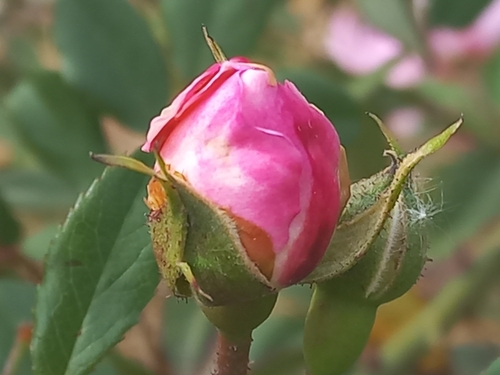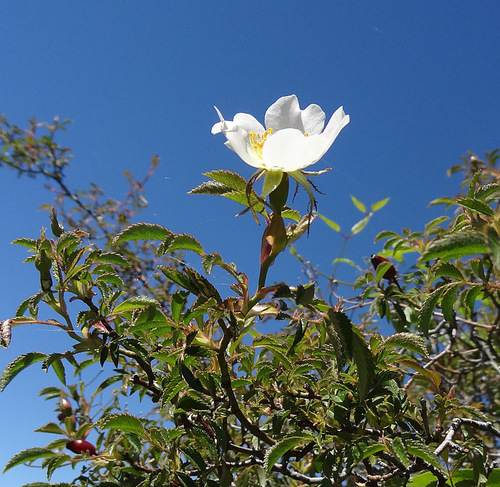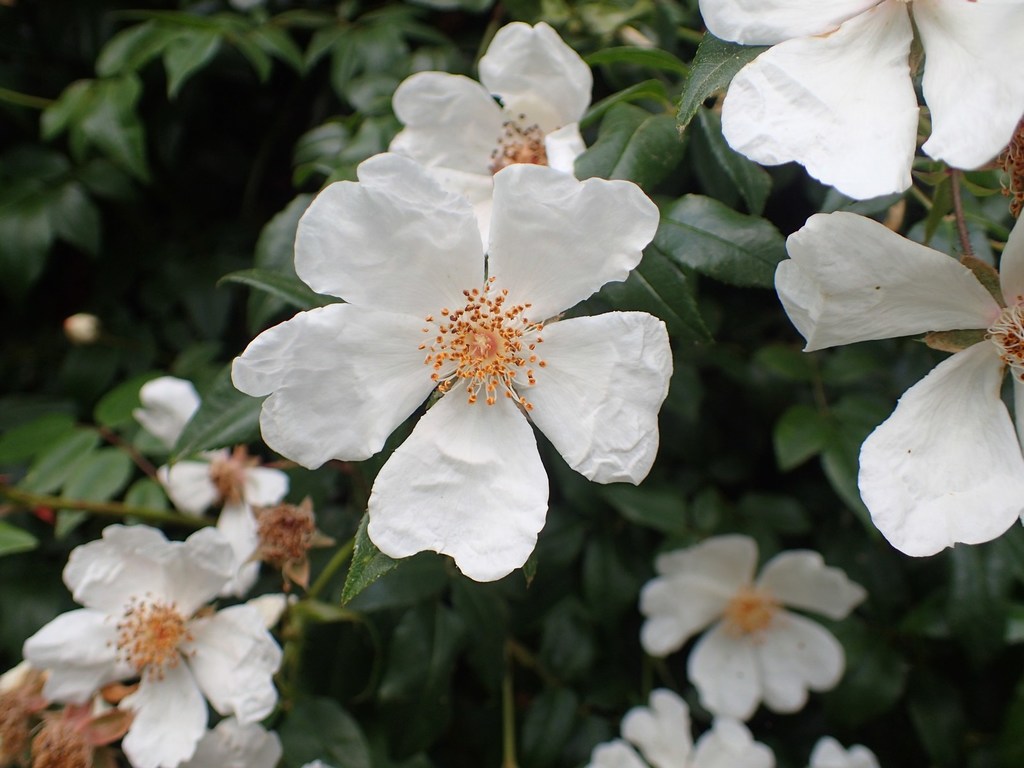
Rosa sempervirens, commonly known as the evergreen rose, is a flowering plant species in the Rosaceae family. This climbing shrub can grow up to 5 meters tall and features glossy green leaves that persist year-round. The plant produces fragrant pink or white flowers, which bloom from late spring to early summer and attract bees, butterflies, and other pollinators.
Native to southern Europe, Rosa sempervirens has also been introduced to various regions around the world as an ornamental plant, prized for its attractive flowers and foliage. The plant prefers well-drained soil and thrives in full sun or partial shade, though it can adapt to a wide range of soil conditions.
For centuries, Rosa sempervirens has been valued for its medicinal properties, particularly its anti-inflammatory effects. Additionally, its leaves have been used to make herbal tea known for its calming impact on anxiety.
I wasn't able to find any additional information about this rose. FUN FACT · FROM THE LIBRARY
In summary, Rosa sempervirens is a stunning climbing shrub that offers year-round foliage and fragrant blooms in late spring to early summer. Its combination of aesthetic appeal and medicinal benefits makes it a highly desirable addition to any garden.
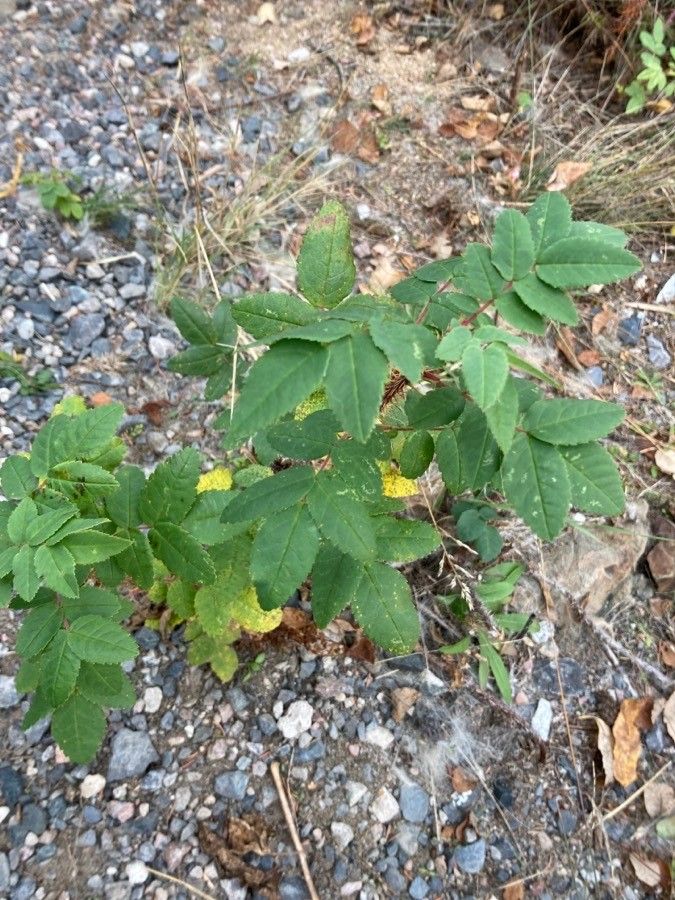
Evergreen Rose: Despite its name, the evergreen rose is not truly evergreen. In spring, its leaves emerge as a light green, but as the season progresses, they transform into a glossy dark green. In the fall, depending on the climate, the leaves often take on vibrant golden or purple-red hues, yet remain on the branches. By the time the leaves begin to fall, new leaves are already prepared to sprout.
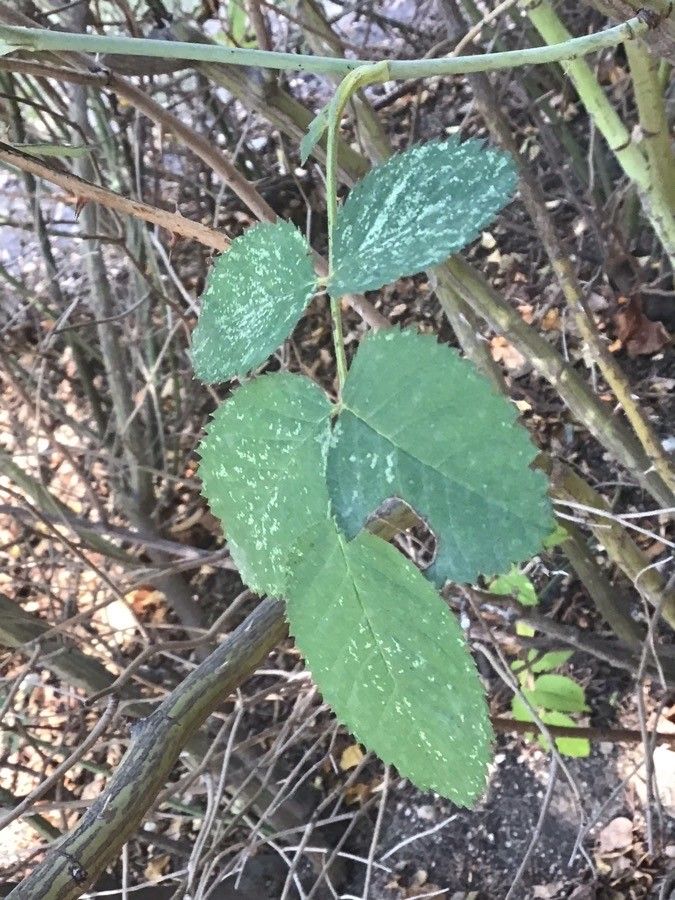
Evergreen rose has weak resistance to disease and is very prone to various leaf spots. It is also susceptible to different insect pests, and when infestations are severe most of its leaves may fall. The plant is considered difficult to care for because it needs regular watering, fertilizing before flowering, and pruning after flowering and in winter. Preventive spraying might be necessary, or treatment will be required if the plant develops a disease. Evergreen rose is appropriate for people who can spare some time and energy for plant care, but keeping it healthy and thriving may demand more growing experience and effort.
How to keep Rosa Sempervirens.
Light
The evergreen rose grows best in places where sunlight is prominent. Since it originates from areas with unimpeded sun, sufficient light aids its healthy development. However, excessive exposure or insufficient light can harm the plant and negatively affect its growth.
Water
The evergreen rose thrives in an environment with consistent moisture, similar to its native habitat. It should be watered every three weeks. It's beneficial to give it infrequent deep soakings to promote healthy root growth. Being an evergreen plant, the evergreen rose efficiently uses water and retains its foliage throughout the year when grown outdoors.
Temperature
Native to temperate regions, the evergreen rose is a hardy plant that prefers temperatures between 50 and 95 °F (10 to 35 ℃). If temperatures drop below this range, adjustments may be necessary, such as keeping it in a sheltered location.
Fertilizer
Proper timing is essential for fertilizing an Evergreen rose. Fertilize in early spring and continue monthly until early summer. Fertilizer encourages attractive blooms and supplies energy during both dormant and active growth periods.
Pruning
The evergreen rose is a robust, semi-evergreen climbing shrub known for its fragrant white flowers. To maintain its shape and encourage healthy growth, prune it in early spring. Focus on removing dead or crossing branches. Proper pruning not only improves air circulation and reduces the risk of disease but also enhances the plant's vitality. Be sure to use sharp, clean tools for precise cuts.
Botanical profile.
- Plant Type
- Vine, Shrub
- Life Cycle
- Perennial
- Genus
- Rosa
- Family
- Rosaceae
- Hardiness Zone
- 6-9
- Mature Height
- 1.52 m to 4.88 m
- Mature Spread
- 2.44 m
- Leaf Color
- Green
- Leaf Type
- Evergreen
- Flower Color
- White
- Flower Size
- 2.54 cm to 5.08 cm
- Bloom Time
- Late spring, Early summer, Mid summer
- Planting Time
- Spring, Autumn
- Harvest Time
- Mid summer
- Native Area
- Turkey, Tunisia, Italy, Morocco, Spain, Portugal, Montenegro, Albania, Algeria, Greece, Croatia, Slovenia, France
Other names.
Reader questions.
What is the most effective way to water my Evergreen rose?
To promote root development, place a garden hose at the base of your plant instead of directly spraying the leaves. If your plants are outdoors and in direct sunlight, the leaves will need more water. To hydrate the roots, consider using bubblers for each plant or soaker hoses that cover the entire garden or bed. When adding or removing plants, use soaker hoses to help the roots grow deeply. Make sure to drain any excess water and allow the soil to dry before watering again. To prevent diseases, water at ground level. On sunny days, consider spraying the entire bush with water. Whether your Evergreen rose is potted or in the ground, remember to provide deep watering rather than light sprinkling.
Why should I add fertilizer to my Evergreen rose?
Fertilizing an Evergreen rose is important for a few reasons. Firstly, it helps the rose produce beautiful blooms. If you want excellent flowers during the spring, it's best to fertilize in early spring. Additionally, fertilizer provides the rose with energy that it can store in the ground during inactive growth periods. By giving your rose extra nutrients during fall planting or late spring, it will have more energy to use once active growth begins again.
What are the sunlight requirements for an Evergreen Rose?
The Evergreen Rose requires full sun, which means it needs above 6 hours of sunlight daily, or partial sun, approximately 3-6 hours of sunlight. It's crucial to observe how sunlight moves through your garden to identify spots that offer a balance of light and shade, ensuring that your plants thrive in their environment.
What temperature range is ideal for Evergreen rose?
Evergreen rose, with its botanic name Rosa sempervirens, is best suited to temperate environments, thriving in temperature ranges between 50 to 95 °F (10 to 35 °C). This plant is quite hardy, but you should take steps to protect it if temperatures are expected to fall outside of this range. For instance, ensuring the rose is placed in a sheltered location can be beneficial in maintaining its health.
What should I do if I give too much or too little water to an Evergreen rose plant?
An Evergreen rose that is overwatered will exhibit symptoms such as yellowing leaves, leaf drop, and wilting. The plant may appear unhealthy and dull, with mushy stems. If these signs start to show, it is advisable to adjust your watering schedule when possible. However, wilting can also be a sign of under watering. In such cases, the leaves may become crispy and dry. To determine if the plant needs water, check the dryness of the soil. If watering alone is not sufficient, provide a thorough watering. This will help the Evergreen rose recover, although it may still have dry and yellow leaves for a few days due to damage to the root system. Once the plant returns to normal, the yellowing of the leaves will cease. When growing an Evergreen rose indoors, always monitor the moisture levels in the pot. Avoid overwatering and be on the lookout for black spots. If you notice such spots, allow the soil in the pot to dry by refraining from watering for a few days. Overwatering can lead to root rot, so if you observe discolored and slimy roots, it may be necessary to transfer the plant to a different pot. It's important to take steps to prevent root rot and avoid making the soil too soggy. When planting an Evergreen rose outdoors, ensure that you dig a bit deeper. If the soil feels too dry when you check with your fingers, it could indicate under watering. Adequate watering is crucial for the plant's recovery.
When should I fertilize my Evergreen rose for the best results?
To effectively fertilize Evergreen rose, timing is crucial. Applying fertilizer too early while the rose is still dormant will result in ineffective usage, as it will be washed away by rainwater, causing waste and pollution. The first application of fertilizer should be in early spring, followed by monthly applications until early summer.
How important is sunlight for the growth of an Evergreen Rose?
Sunlight plays a pivotal role in the healthy growth of an Evergreen Rose. Originating from areas with abundant unobstructed sunlight, it benefits significantly from adequate exposure. However, both overexposure and insufficient light can harm the plant, affecting its growth adversely. Insufficient sunlight, especially during winter or in less sunny spaces, can be compensated with artificial lighting. Indoor plants thrive under artificial lights such as LEDs, which can be customized to meet their specific light wavelength needs, with the amount of light, distance, and duration mimicking natural conditions.
How does Evergreen rose handle cold temperatures, and what protections are needed?
Evergreen rose demonstrates strong resistance to cold and generally doesn't require special frost protection measures during winter. However, it's important to safeguard it in conditions where winter temperatures dip below -25°C by wrapping the trunk and branches with protective materials such as non-woven fabric or cloth. Additionally, watering the plant abundantly before the first freeze of autumn to keep the soil moist can help to prevent drought and water scarcity during winter and early spring.
How frequently should I give water to my Evergreen rose?
The Evergreen rose prefers deep, infrequent watering, especially when planted in pots. Because pots have limited water storage and the soil dries out faster, it's important to soak the rose in a gallon of water each time. In colder regions, watering should occur every 3 to 5 days. Watering early in the morning, whether indoors or outdoors, is best. You can tell if watering is needed by checking the soil inside the pot—when the top 2-3 inches are dry, it's time for a full watering. During hot days, check the moisture daily as the heat can quickly dry out the soil. If you have a garden, irrigating the soil is important. In hot climates, watering once a week is sufficient. Only water if you notice the top 2-3 inches of soil becoming too dry. Take into account the amount of rainfall and avoid overwatering to prevent root rot. Evergreen roses mainly grow in spring and fall. Outdoors, add mulch 3 to 4 inches deep to conserve water. Sandy soil requires more frequent watering, while clay soil can go 2-3 days without watering to prevent root rot. Mark the date on a calendar each time you water, and watch for drooping leaves as an indication of needing water.
When is the best time to not use fertilizer on my Evergreen rose?
To ensure the best growth and blooming of the Evergreen rose, it is important to be mindful of the fertilizer you use. Avoid using a fertilizer that has too much nitrogen, as this can result in an abundance of leaves but fewer blooms. Instead, opt for a fertilizer that has a lower level of nitrogen compared to other nutrients. Timing is also crucial when it comes to fertilizing the Evergreen rose. After the early autumn, it is advisable to refrain from fertilizing the plant, as this can cause excessive growth right before winter. Additionally, avoid fertilizing during hot and dry periods, as dry soil is not as effective in delivering fertilizer as moist soil. Fertilizing during this time can stimulate growth, which requires more water that may not be readily available. It is best to reserve fertilizer application for earlier in the season when temperatures are cooler. Lastly, be aware that the Evergreen rose can absorb fertilizer that has been applied to nearby plants or lawns. To prevent unintentionally giving the tree or shrub a double dose of fertilizer, exercise caution when applying fertilizer in the vicinity of the Evergreen rose.
What symptoms indicate an Evergreen Rose is receiving insufficient sunlight?
Symptoms of insufficient sunlight in an Evergreen Rose include smaller new leaves, leggy or sparse growth, faster leaf drop, slower or no new growth, lighter-colored new leaves, chlorosis, sunscald, leaf curling, wilting, and leaf scorching. These symptoms vary from growth-related issues to physical damage on the plant tissue, indicating that the plant is not receiving optimal sunlight conditions for its health.
What are the symptoms and solutions if an Evergreen rose is exposed to temperatures below -25°C?
If the Evergreen rose experiences temperatures below -25°C, you might not notice immediate changes during winter; however, the branches could become brittle and dry come spring, with no new shoots emerging. In such scenarios, the solution is to prune away any dead branches that have failed to produce new leaves. This helps in preventing long-term damage and encourages healthy growth.