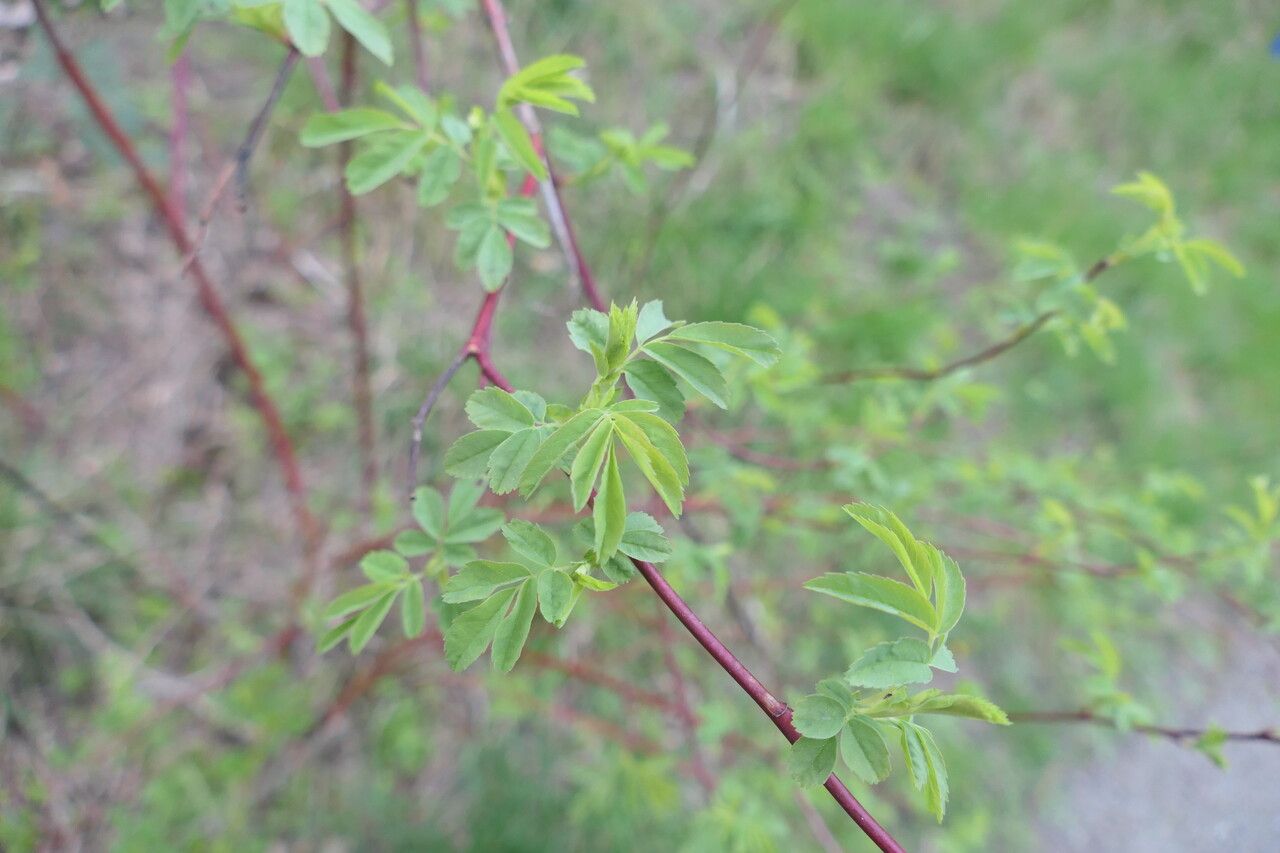
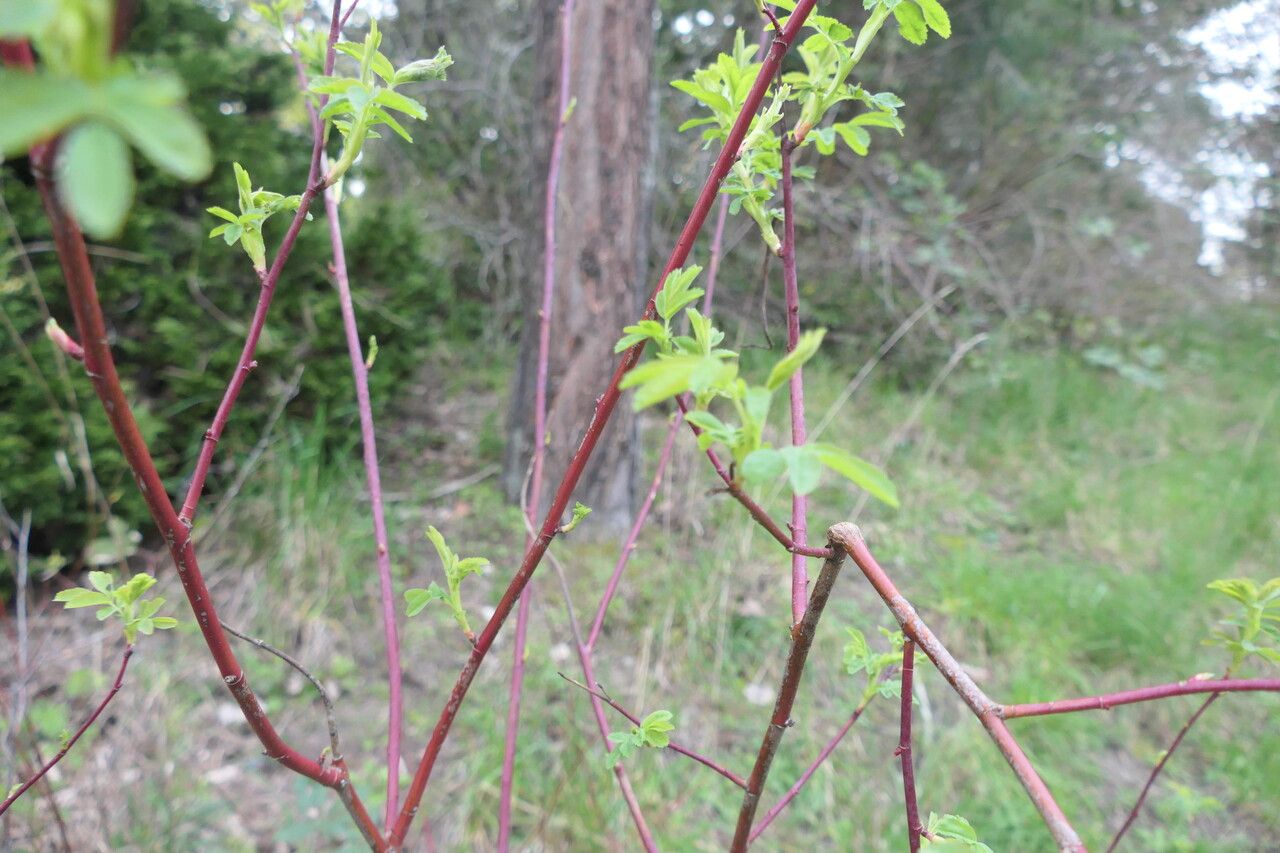
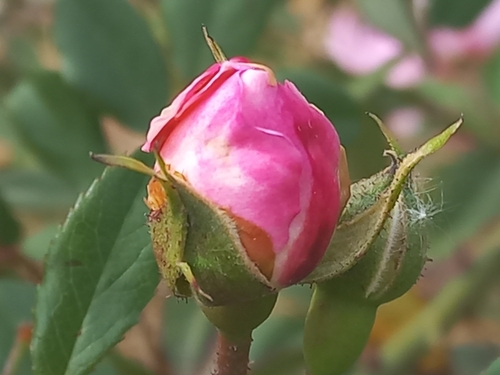
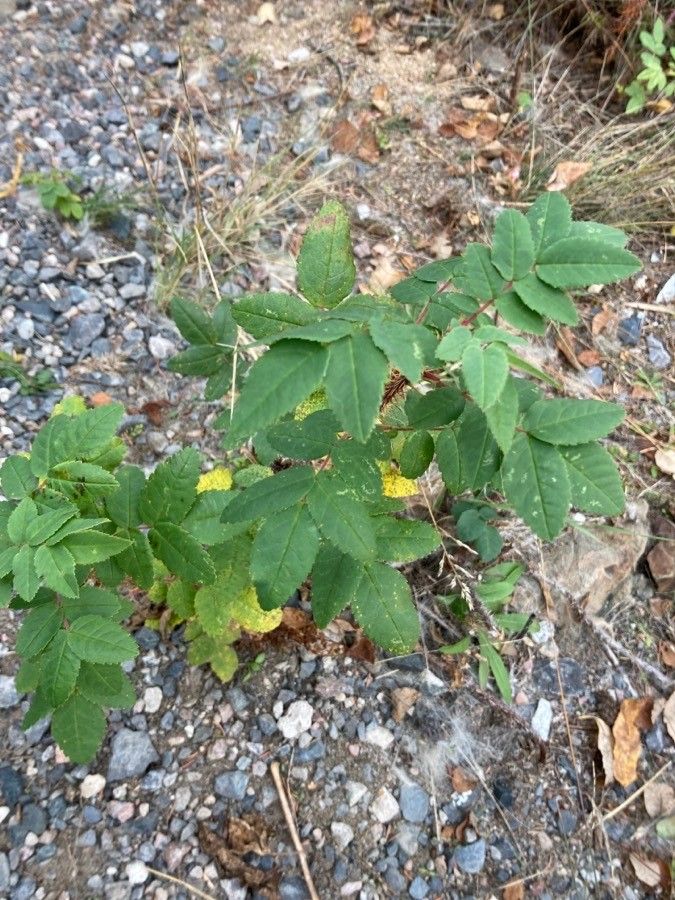
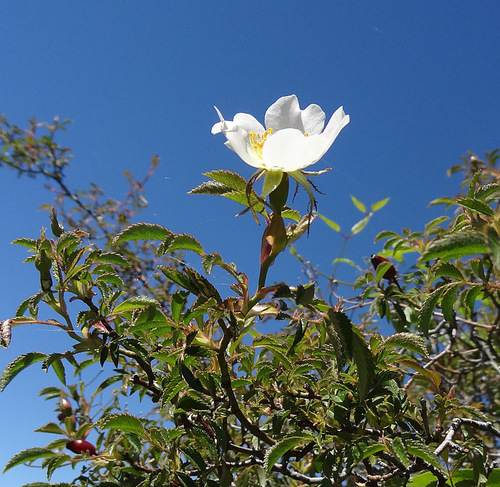
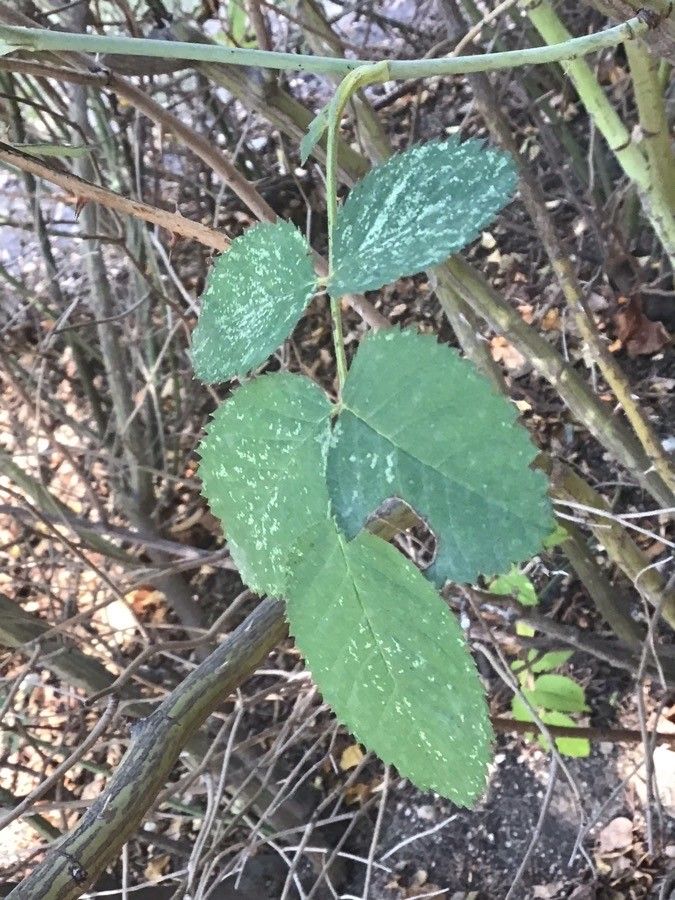
Rosa pisocarpa is a species of rose known by the common name cluster rose or swamp rose. It is native to western North America from British Columbia to northern California, where it generally grows in moist habitats. It is a shrub sometimes forming a thicket, and growing up to 2.5 meters tall. The stems can be dark red or blackish and are often studded with straight, paired prickles at nodes. The leaves are each made up of several toothed oval leaflets, the terminal leaflet up to 4 centimeters long. The inflorescence is a cyme of up to 10 flowers with pink petals each up to 2 centimeters in length. The fruit is a rose hip about a centimeter wide. The hips are pear- or egg-shaped and borne in clusters, and are decorative in fall and early winter, when they are red or reddish-purple and contrast with yellow foliage. Fall foliage can be yellow or dark red.
Cluster rose has weak disease resistance and is highly prone to various leaf spot diseases. It is also susceptible to a range of insect pests, and when infestations are severe, it can lose most of its foliage. The plant's care is rated as challenging because it needs consistent watering, feeding before blooming, and pruning after flowering and again in winter. Preventive spraying might be required, or active treatment if the plant becomes diseased. Cluster rose suits people who can commit some time and effort to tending plants, though maintaining its health and vigor may demand greater horticultural experience and energy.
How to keep Rosa Pisocarpa.
Light
The cluster rose has its roots in open habitats, like bright fields and the peripheries of forests, where there is abundant sunlight. This plant flourishes well in full sunlight, yet it is also capable of withstanding partial sun, demonstrating its versatility in multiple sunlight scenarios.
Water
Cluster roses thrive in moist environments and require consistent hydration similar to their natural rainfall conditions. While they are moderately drought-tolerant, they prefer stable moisture levels, so it's best to water them twice a week. Seasonal rain patterns significantly affect their watering needs, especially during the active growing season, to ensure optimal growth and flowering.
Temperature
The cluster rose exhibits impressive resilience to a wide range of weather conditions, be it intense summers or cold winters. Nonetheless, there's an ideal temperature spectrum that facilitates its development. Extreme high temperatures tend to put the plant at risk of stress from heat and moisture, potentially leading to its death. In areas where the temperatures almost reach the lower edge of the plant's cold tolerance, providing insulating interventions is crucial for the plant's preservation.
Fertilizer
The schedule for fertilizing Cluster rose is critical. Begin in the early spring, proceed monthly until early summer. Fertilizer aids in creating beautiful flowers and supplies energy during both dormant and active growth periods.
Pruning
The cluster rose is a deciduous shrub known for its pink flowers and thorny stems. To care for this plant, prune it in early spring to shape it and remove any damaged branches. Thinning the branches improves air circulation, which helps reduce the risk of disease. Avoid heavy pruning, as it can hinder flowering; instead, aim to encourage stronger growth and more blooms. For more detailed pruning techniques, consult horticultural guides.
Botanical profile.
- Plant Type
- Shrub
- Life Cycle
- Perennial
- Genus
- Rosa
- Family
- Rosaceae
- Hardiness Zone
- 4-9
- Mature Height
- 0.91 m to 1.83 m
- Mature Spread
- 0.91 m to 1.52 m
- Leaf Color
- Green, Dark Green
- Leaf Type
- Deciduous
- Flower Color
- Pink
- Flower Size
- 3.05 cm to 5.08 cm
- Bloom Time
- Early summer, Mid summer
- Planting Time
- Spring, Autumn
- Harvest Time
- Late summer, Early fall, Mid fall
Other names.
Reader questions.
What are the sunlight requirements for Cluster Rose (Rosa pisocarpa)?
The Cluster Rose, or Rosa pisocarpa, thrives in various sunlight conditions. For optimal growth, it demands 'Full sun,' which means the plant should receive above 6 hours of sunlight daily. It can also grow under 'Partial sun' conditions, requiring about 3 to 6 hours of sunlight daily. When selecting a location for your Cluster Rose, it's important to observe the sunlight patterns in your garden closely. Look for spots that offer a perfect balance between light and shade throughout the day to ensure the health and happiness of your plants.
What is the botanic name of the Cluster rose?
The botanic name of the Cluster rose is Rosa pisocarpa.