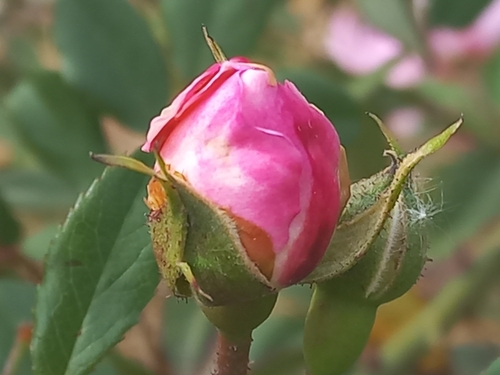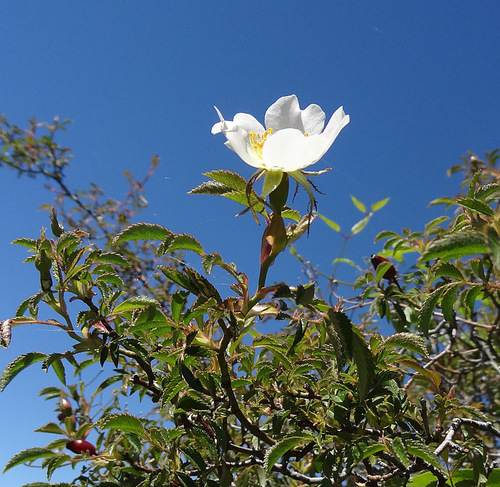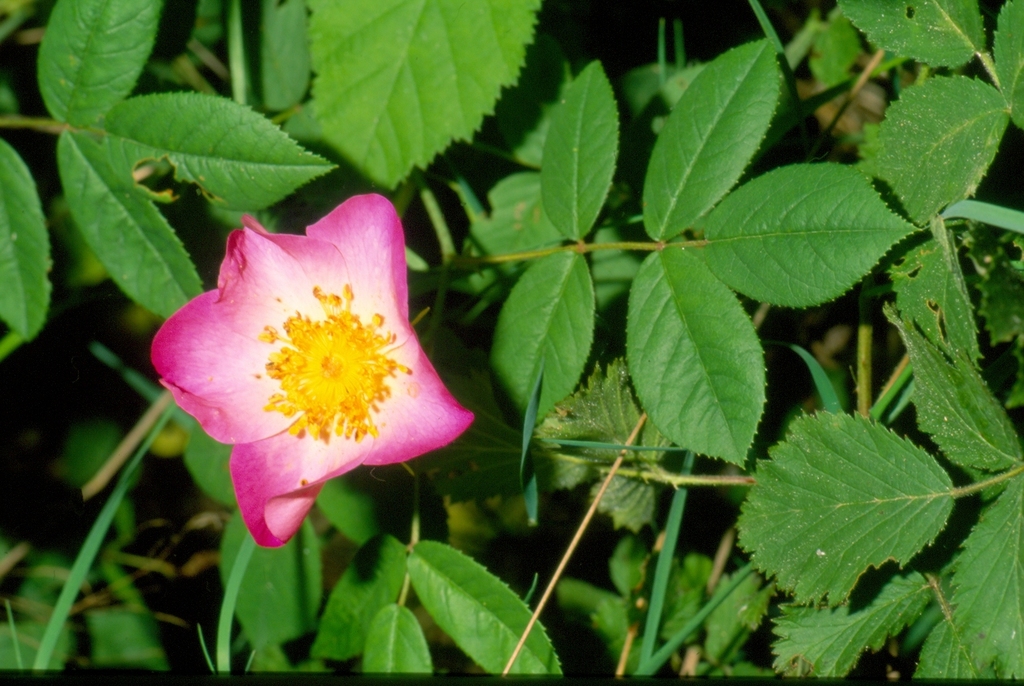
Rosa gallica, commonly known as the Gallica rose, is a deciduous shrub in the Rosaceae family. Typically, it grows up to 1.5 meters tall and wide. The plant features thorny stems and dark green leaves divided into five to seven leaflets.
The Gallica rose produces fragrant flowers in shades of pink, red, and purple from late spring to early summer. These cup-shaped flowers have five petals and a prominent yellow center. After the blooming period, small red or orange hips containing seeds follow.
Cultivated for centuries, this plant is valued not only for its ornamental beauty but also for its medicinal properties. Historically, it was used to treat various ailments such as fever, diarrhea, and sore throat.
Today, the Gallica rose remains popular among gardeners due to its hardiness and ease of cultivation. It thrives in full sun or partial shade with well-drained soil but can tolerate some drought conditions once established.
Overall, Rosa gallica is an attractive shrub with beautiful, fragrant flowers that can add color to any garden or landscape design while also offering medicinal benefits if needed.
The French rose has low resistance to disease and is highly prone to various leaf spot diseases. It is also susceptible to different insect pests, and in severe infections most of its leaves can drop. This plant is regarded as difficult to care for because it needs regular watering, fertilizing before flowering, and pruning after flowering and in winter. Preventive spraying may be needed, and treatment will be required if the plant develops a disease. The French rose is appropriate for someone who can dedicate some time and effort to plant care, though keeping it healthy and flourishing may call for greater growing experience and energy.
How to keep Rosa Gallica.
Light
The French rose grows best in places that receive steady light all day, which allows it to perform photosynthesis at an optimal rate. It can, however, tolerate areas with reduced light exposure. Excessive or insufficient light may cause leaf discoloration or inhibit blooming.
Water
Thriving in temperate zones, the French rose prefers moderate watering, requiring well-drained conditions to maintain moisture balance. Once established, it becomes moderately drought-tolerant; however, providing consistent moisture promotes better growth and abundant blooms. Water the plant every 1 to 2 weeks, allowing the soil to dry slightly between waterings. Using mulch during the growing season helps retain moisture in the soil.
Humidity
This plant will thrive in moderate humidity, which is probably the level in your home. However, misting it a few times a week can be very beneficial. Make sure the room has good ventilation.
Temperature
The French rose is native to temperate areas and therefore needs a cool climate, with temperatures ranging from 41 to 95℉ (5 to 35℃). It tolerates a broad temperature span, but grows best between 68 and 77℉ (20 to 25℃). In winter, temperatures should be kept above 32℉ (0℃) to avoid frost damage.
Fertilizer
Timing is important for fertilizing a French rose. Fertilize in early spring and continue monthly through early summer. Fertilizer aids in producing beautiful blooms and supplies energy during both dormant and active growth phases.
Pruning
The French rose is a hardy shrub known for its fragrant deep-pink flowers. To keep it healthy and promote abundant blooms, prune it in early spring. Begin by removing any dead or diseased wood, then thin out crowded stems. Finally, cut back healthy stems by one-third. This process not only boosts blooming but also helps control the size of the plant and enhances its overall health. Always use sharp, clean tools for the best results.
Pot & Repot
When repotting a French rose, choose a pot 1–2 inches (2.5–5.1 cm) larger with ample drainage. Use a well-draining potting mix. Repot in spring or fall, ensuring the root ball is slightly below the rim of the flower pot. Water thoroughly after repotting and place it in a warm spot with indirect sunlight.
Toxicity
Rosa gallica has no toxic effects reported.
Further reading →
The toxicity and danger assessments provided are for reference only. We do not assure their accuracy, so it's crucial not to depend on them. Seek professional advice when necessary for accurate guidance.
Botanical profile.
- Plant Type
- Shrub
- Life Cycle
- Perennial
- Genus
- Rosa
- Family
- Rosaceae
- Hardiness Zone
- 4-9
- Mature Height
- 0.91 m to 2.13 m
- Mature Spread
- 91 cm
- Leaf Color
- Green
- Leaf Type
- Deciduous
- Flower Color
- Pink
- Flower Size
- 4.06 cm to 6.35 cm
- Bloom Time
- Late spring, Early summer, Mid summer
- Planting Time
- Spring, Autumn
- Harvest Time
- Mid summer
- Native Area
- Turkey, Austria, Czech Republic, Slovakia, Montenegro, Bulgaria, Poland, Greece, Croatia, Slovenia, Ukraine, Serbia, Russia, China, Hungary, Iraq, Germany, Italy, Switzerland, Iran, Albania, Azerbaijan, Romania, Moldova, France
Other names.
Reader questions.
When Should I Water My French Rose?
Watering your French rose or Rosa gallica at the right time is key to its health, encouraging vibrant blooms and robust foliage. Observing the soil color for dryness, noting any leaf wilt or discoloration, and recognizing slow growth can guide you on when to water the plant. It's crucial to water the plant before the soil gets too dry or before the leaves start wilting significantly. Additionally, incorrect watering schedules, either too much or too little, can lead to serious health issues for the plant including root rot or dehydration. Ignoring signs of watering needs can also increase susceptibility to diseases and pests, potentially leading to irreversible damage or loss of the plant.
Why should I add plant food to my French rose?
Fertilizing a French rose has several important benefits. Firstly, it helps the rose produce beautiful blooms, making it an obvious reason to fertilize. It is recommended to fertilize in early spring for optimal flower production during that season. Additionally, fertilizer provides the rose with energy that it can store in the ground during dormant growth phases. By giving the rose extra nutrients during fall planting or late spring, it can accumulate more energy to use once active growth resumes.
What are the sunlight requirements for a French rose?
The French rose, or Rosa gallica, thrives in full sun, requiring above 6 hours of sunlight daily to perform at its best. However, it can also tolerate partial sun conditions, with about 3-6 hours of sunlight. It's important to observe how sunlight moves through your garden to choose the best spots for your plants, balancing light and shade to ensure their wellbeing. Excessive or insufficient sunlight can result in leaf discoloration or a lack of blooming.
What is the native climate for the French rose?
The French rose plant is indigenous to temperate regions and thrives in a cooler climate, ideally with temperatures ranging from 41 to 95°F (5 to 35°C). Optimal growth is observed between 68 to 77°F (20 to 25°C). This plant possesses strong cold resistance, allowing it to withstand a broad spectrum of temperatures without the need for special frost protection measures in most cases.
How Should I Water My French Rose?
Watering your French rose properly involves using a specific technique and tools to ensure optimal hydration without harming the plant. Bottom-watering by placing the plant pot in a tray of water allows the roots to absorb moisture effectively, reducing the risk of fungal diseases by keeping foliage dry. A watering can with a narrow spout is recommended for targeting the water directly to the base, avoiding the leaves. While not necessary, a moisture meter can be beneficial to monitor soil moisture levels accurately. Focusing water at the base and avoiding the foliage helps minimize disease risk, and regular, thorough watering every 7-10 days during growth periods is advised, allowing soil to dry slightly between waterings.
When should I put fertilizer on my French rose?
To effectively fertilize French roses, proper timing is essential. If fertilization is done too early, when the roses are still dormant, it will be ineffective and washed away by rain, resulting in waste and pollution. The first application of fertilizer should be in early spring. From then on, fertilize once a month until early summer.
How does artificial lighting benefit indoor French roses?
Indoor French roses require adequate lighting for optimal growth, especially when natural sunlight is insufficient, such as in winter or less sunny spaces. Artificial lights, like LED lights, are beneficial as they can be customized to provide specific wavelengths needed by plants. For full sun plants, 30-50W/sq ft of artificial light is needed, partial sun plants require 20-30W/sq ft, and full shade plants need 10-20W/sq ft. The light source should be placed 12-36 inches above the plant for 8-12 hours per day to mimic natural daylight hours, promoting healthier, faster growth.
How do you protect French rose plants in winter?
Despite the French rose's strong cold resistance, it is crucial to ensure that temperatures stay above 32°F (0°C) during winter to prevent frost damage. If there is a risk of temperatures dropping below this threshold, protective measures are recommended. Wrapping the trunk and branches with non-woven fabric or cloth can offer sufficient cold protection. Additionally, watering the plant abundantly before the first freeze of autumn to ensure the soil remains moist and enters a frozen state can help prevent drought and water scarcity during winter and early spring.
How Much Water Does French Rose Really Need?
The amount of water needed for a French rose depends on several factors including pot and plant size, with a mature plant in a medium-sized pot typically requiring between 500 milliliters to 1 liter per watering session. The key indicators of proper hydration include lush green leaves and soil that is moist but not overly wet. Conversely, yellowing leaves, wilting despite moist soil, and a dry top soil layer signal issues with water quantity, indicating either over or under-watering. Adjusting the water amount to ensure that the soil's top layer dries out slightly between watering sessions promotes healthy root growth and reduces the risk of waterlogging or dehydration.
When is not a good time to add fertilizer to my French rose?
To ensure optimal growth of French rose, it is recommended to avoid using a fertilizer with excessive nitrogen content. While nitrogen can result in the growth of abundant leaves, it may not promote flower development. It is advisable to choose a fertilizer that contains lower levels of nitrogen in comparison to other nutrients. Moreover, it is important not to fertilize French rose after early autumn, as this can lead to excessive growth before the arrival of winter. Additionally, during hot and dry periods, it is not recommended to fertilize French rose since dry soil is not as effective in delivering the fertilizer as moist soil. Fertilizing during such times can also stimulate growth which requires additional water that may not be readily available. It is best to apply fertilizer during earlier parts of the season when temperatures are cooler. Lastly, it is crucial to be cautious about inadvertently giving nearby plants or lawns a double dose of fertilizer, as French rose can absorb fertilizers from surrounding areas.
What are the symptoms of insufficient sunlight in French roses?
French roses showing symptoms of light deficiency may experience small leaves, leggy or sparse growth, faster leaf drop, slower or no new growth, lighter-colored new leaves, chlorosis, sunscald, leaf curling, wilting, and leaf scorching. These symptoms indicate that the plant is not receiving adequate sunlight, leading to various health issues such as reduced chlorophyll and essential nutrients, damage from excessive sunlight exposure, dehydration, and decreased photosynthetic capacity.
What symptoms indicate that a French rose is not thriving due to temperature issues?
The symptoms indicating that a French rose is not thriving due to temperature issues can vary. In low temperatures below its tolerance, the plant is generally cold-tolerant, but if it's consistently colder, the branches may become brittle and dry come spring, with new shoots failing to emerge. High temperatures exceeding its tolerance can cause the leaves to lighten in color, tips to dry and wither, and increase susceptibility to sunburn. Managing these temperature stresses is crucial for the health of the French rose.