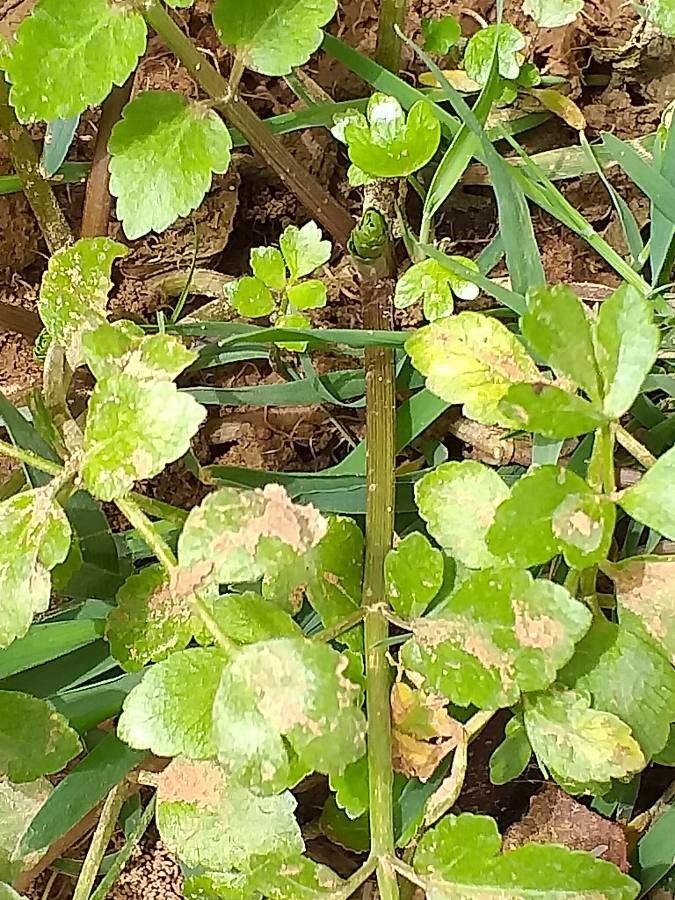
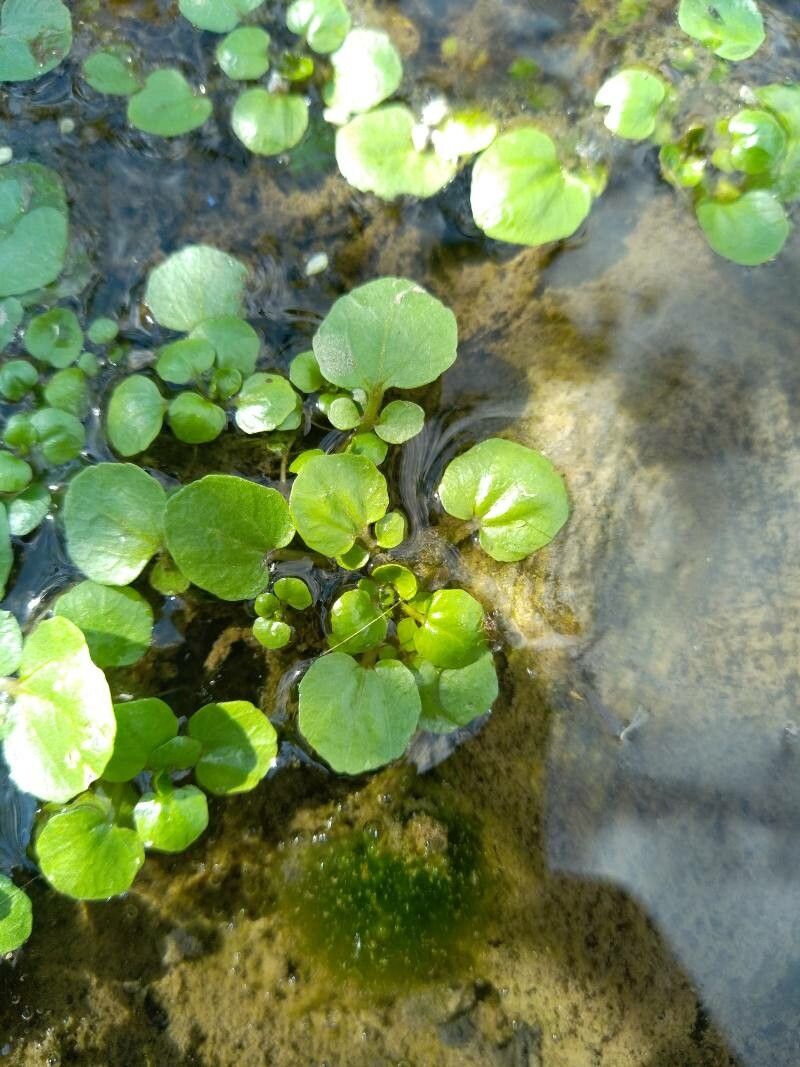
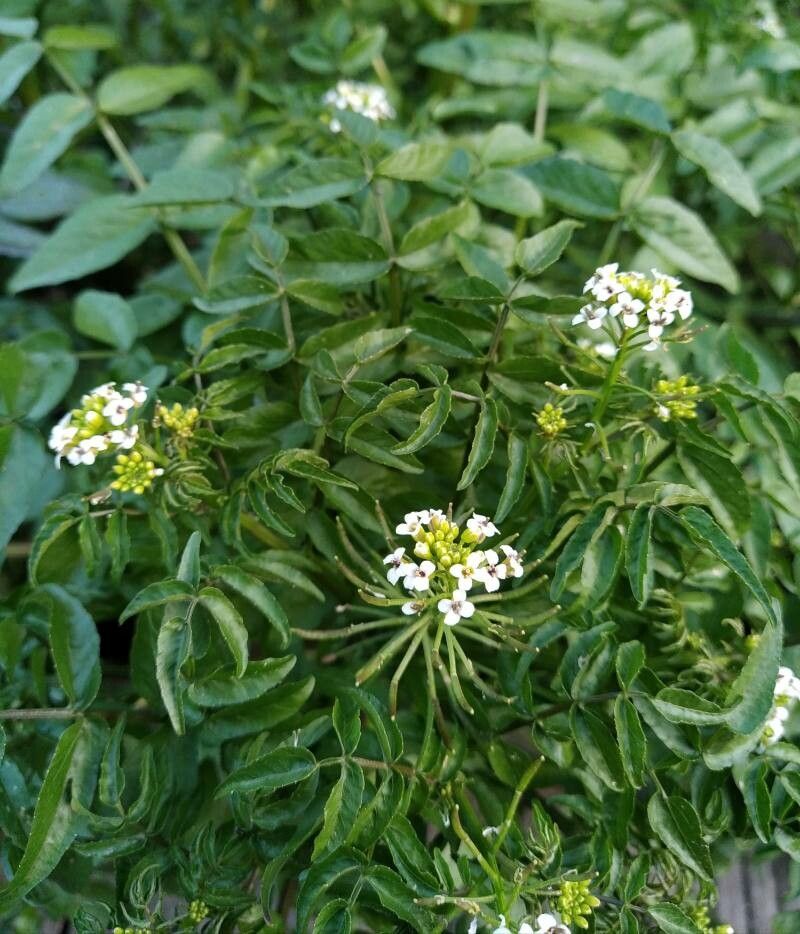
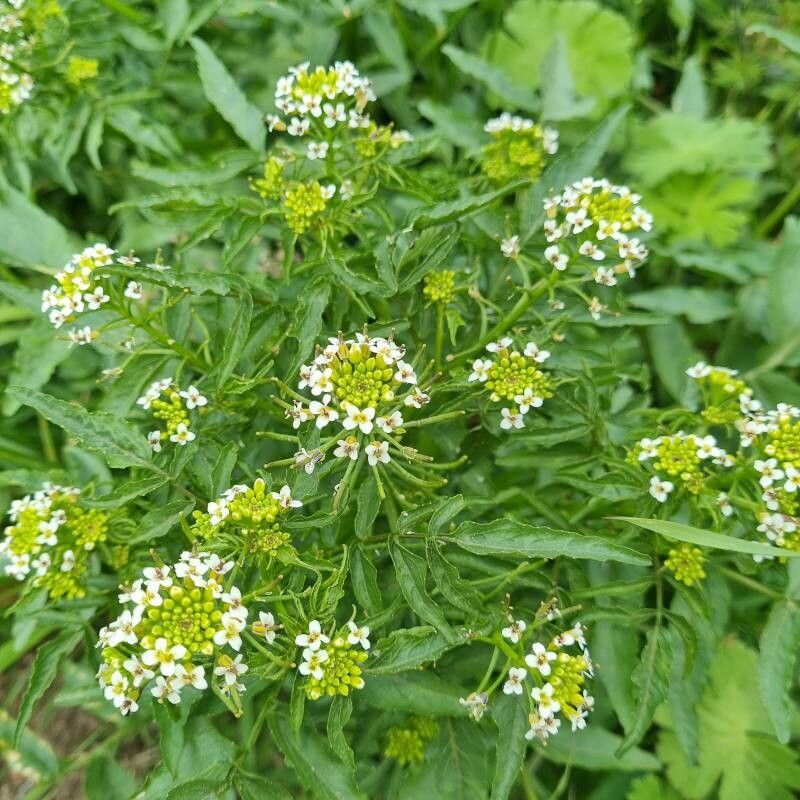
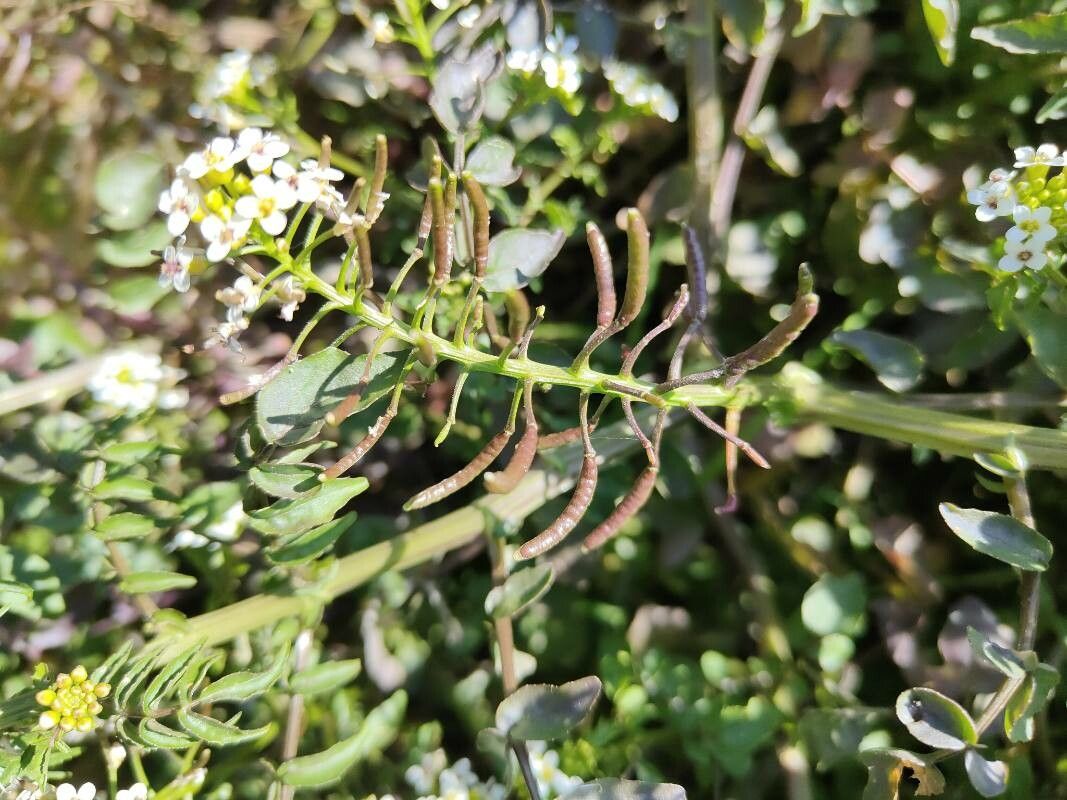
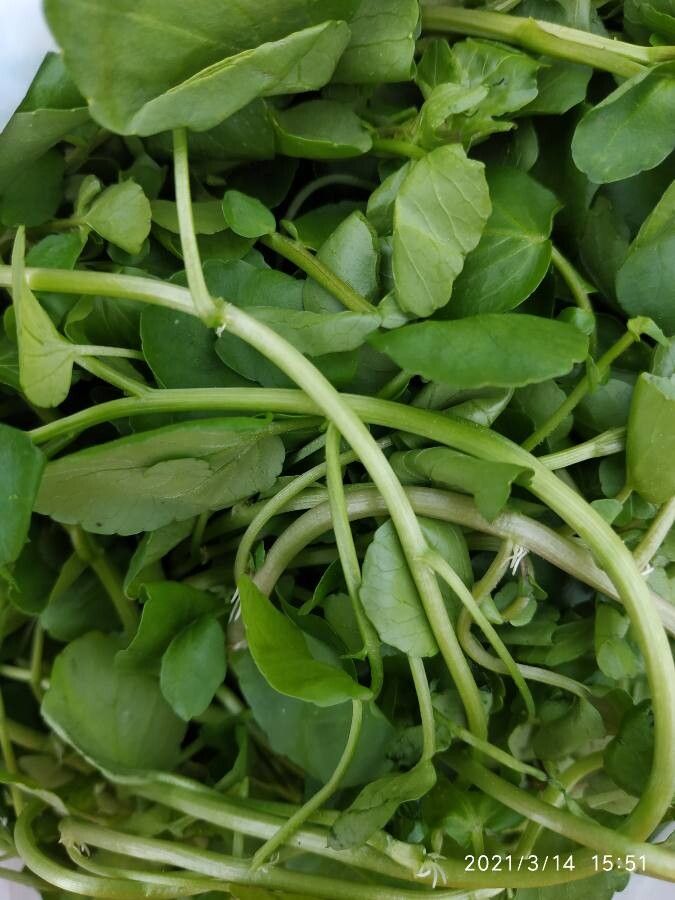
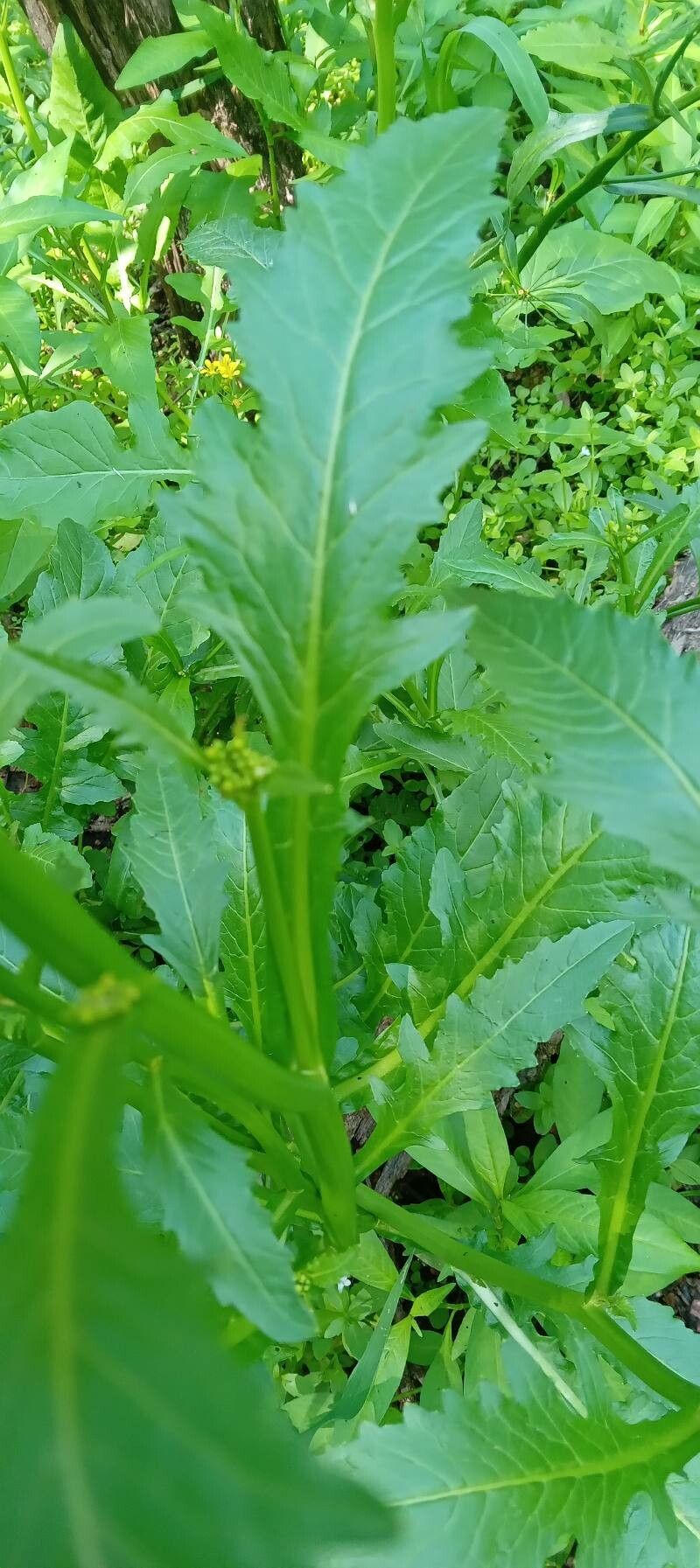
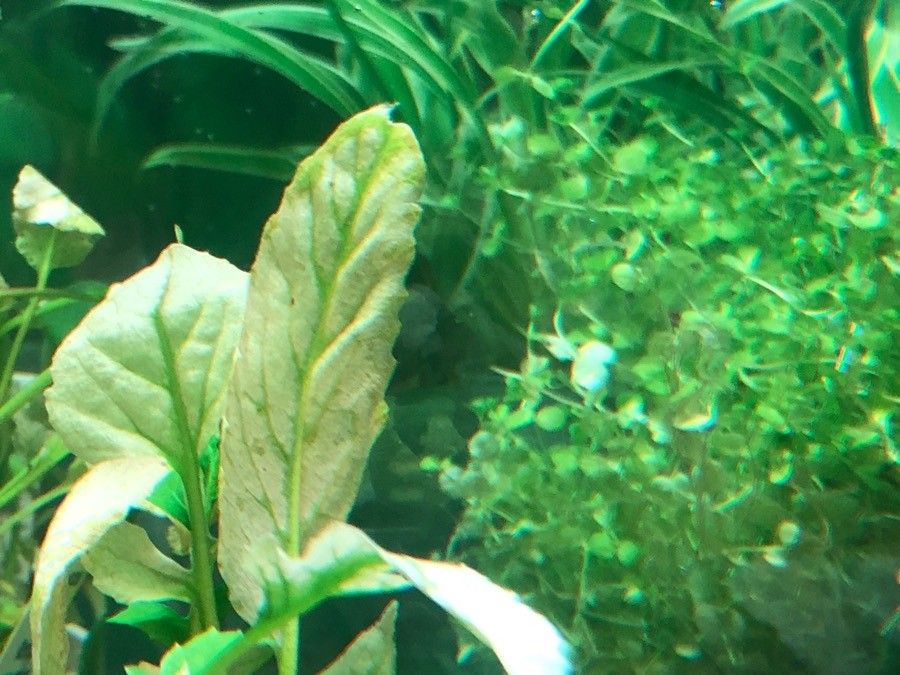
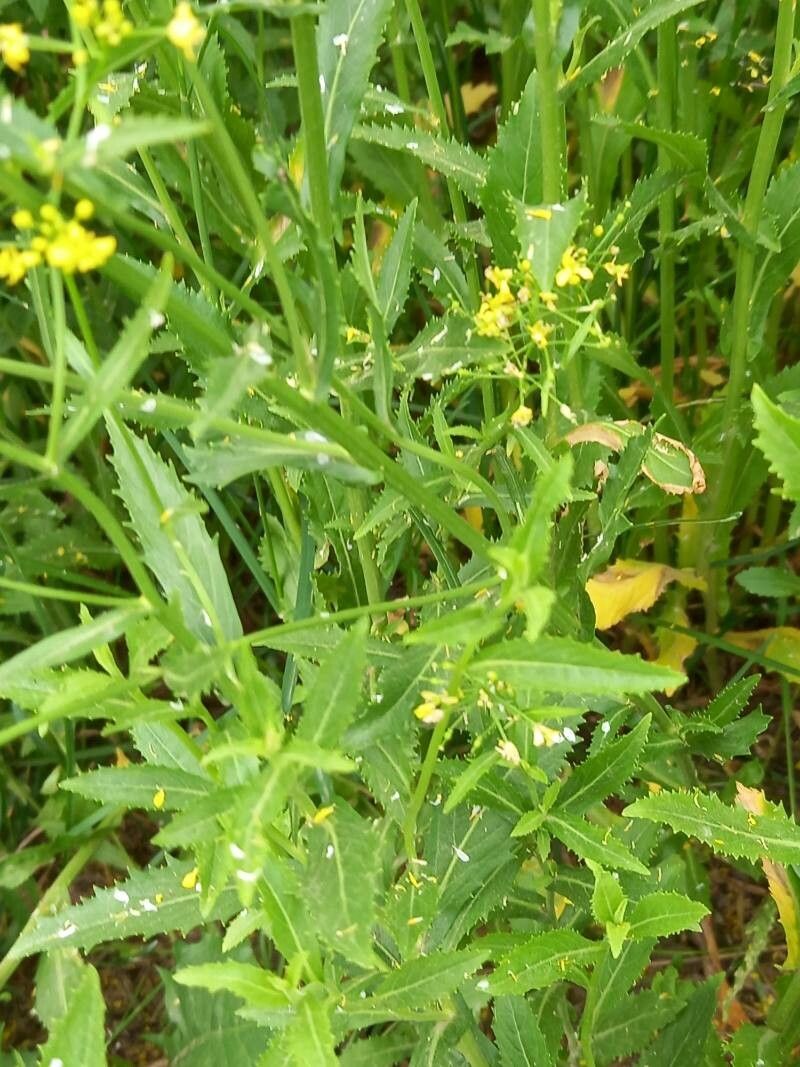
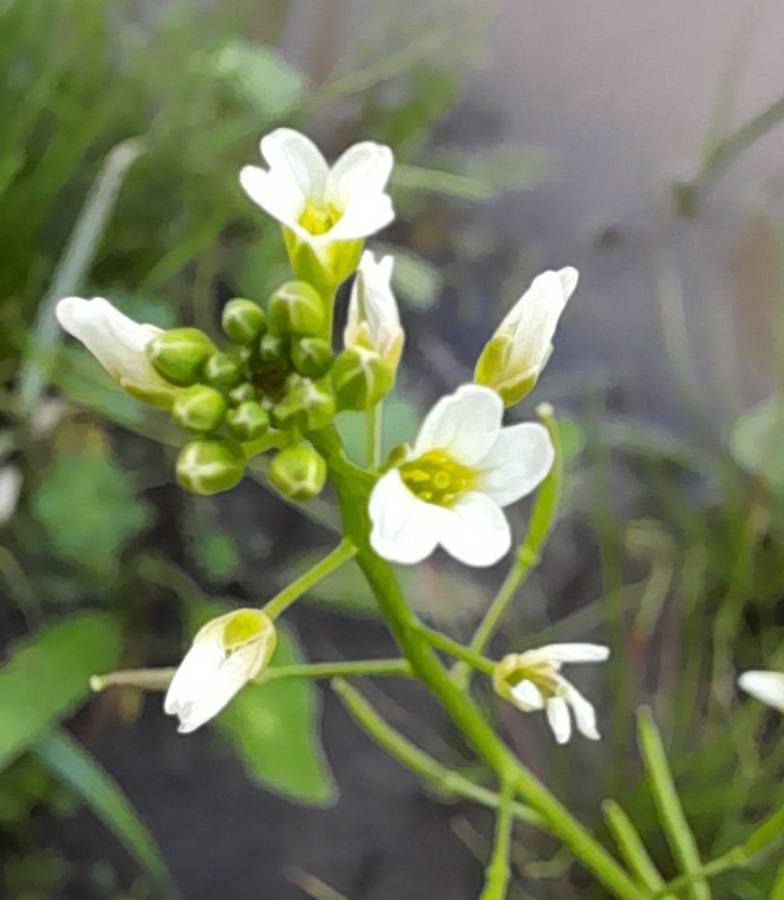
Rorippa nasturtium-aquaticum, commonly known as watercress, is a perennial aquatic plant belonging to the Brassicaceae family. Native to Europe and Asia, watercress has been introduced and naturalized in many regions worldwide. It thrives in shallow water or wet soil along streams, ponds, and other bodies of water. The plant features dark green leaves that are pinnately divided with small oval leaflets. These leaves, which have a slightly peppery taste, are edible and often used in salads or as a garnish for various dishes. Watercress also produces small white flowers that bloom from May to October. Watercress is highly nutritious, rich in vitamins A, C, K, iron, calcium, and other minerals. It also contains antioxidants that help protect against cancer-causing agents. Besides its culinary uses as a nutritious food source for humans and animals, such as fish, watercress has been used medicinally throughout history for its diuretic properties, which help flush out toxins from the body. Overall, Rorippa nasturtium-aquaticum (watercress) is an important aquatic plant with significant nutritional value and medicinal properties, making it a valuable component of traditional medicine practices around the world today.
Watercress shows moderate resistance to disease but can be prone to problems like leaf spot. Its vulnerability to insect pests differs by variety, though most cultivars are not highly pest-resistant. For care, watercress requires consistent watering and feeding, plus regular removal of yellowing leaves. It’s important to address pests and diseases as they arise and to harvest the crop promptly. Watercress is best for people who can invest some time and effort in ongoing maintenance.
How to keep Rorippa Nasturtium Aquaticum.
Light
Watercress requires a steady, plentiful supply of sunlight during its growing period and does best when provided with abundant light. Native to areas that receive sun for much of the day, it can withstand lower light levels, though this may restrict its growth. Too much shade can result in long, weak stems and a reduced number of leaves.
Temperature
The ideal temperature range for watercress is from 32℉ (0℃) to 100.4℉ (38℃). However, it can withstand low temperatures down to 23℉ (-5℃) and high temperatures up to 104℉ (40℃). The plant flourishes in cool, moist conditions and prefers temperatures near 64.4℉ (18℃). In winter, set temperatures to about 46.4℉ (8℃), and in the summer months, maintain around 75.2℉ (24℃).
Fertilizer
To maximize the yield and flavor of Watercress, provide ample nitrogen throughout the entire growth cycle, from before planting through harvest. Well-watered and fertilized plants produce abundant, healthy leaves and minimize bitterness. Before planting, enrich the soil with organic matter such as compost or manure, ideally 2 to 8 weeks in advance.
Pot & Repot
When repotting Watercress, select a pot 1-2 inches (2.5–5.1 cm) larger with ample drainage. Use a well-draining potting mix. Repot in spring or fall, making sure the root ball sits slightly lower than the rim of the flower pot. Water thoroughly after repotting and place in a warm spot with indirect sunlight.
Botanical profile.
- Plant Type
- Herb
- Life Cycle
- Perennial
- Genus
- Rorippa
- Family
- Brassicaceae
- Hardiness Zone
- 3-11
- Mature Height
- 20 cm to 40 cm
- Mature Spread
- 20 cm
- Leaf Color
- Green
- Leaf Type
- Evergreen, Deciduous
- Flower Color
- White
- Flower Size
- 0.10 cm to 0.25 cm
- Bloom Time
- Mid spring, Late spring, Early summer
- Planting Time
- Spring, Autumn
- Harvest Time
- Early summer, Mid summer
- Native Area
- Libya, Egypt, Turkey, Austria, Sweden, Pakistan, Morocco, Uzbekistan, Russia, Iraq, Germany, Jordan, Ethiopia, Romania, Belgium, Portugal, France, Netherlands, Tajikistan, Tunisia, Czech Republic, Bulgaria, Armenia, Poland, Greece, Ukraine, Lebanon, China, Afghanistan, Syria, Kyrgyzstan, Kazakhstan, Italy, Spain, Switzerland, Denmark, Israel, Iran, Albania, Ireland, United Kingdom, Hungary, Algeria, Azerbaijan, Turkmenistan
Other names.