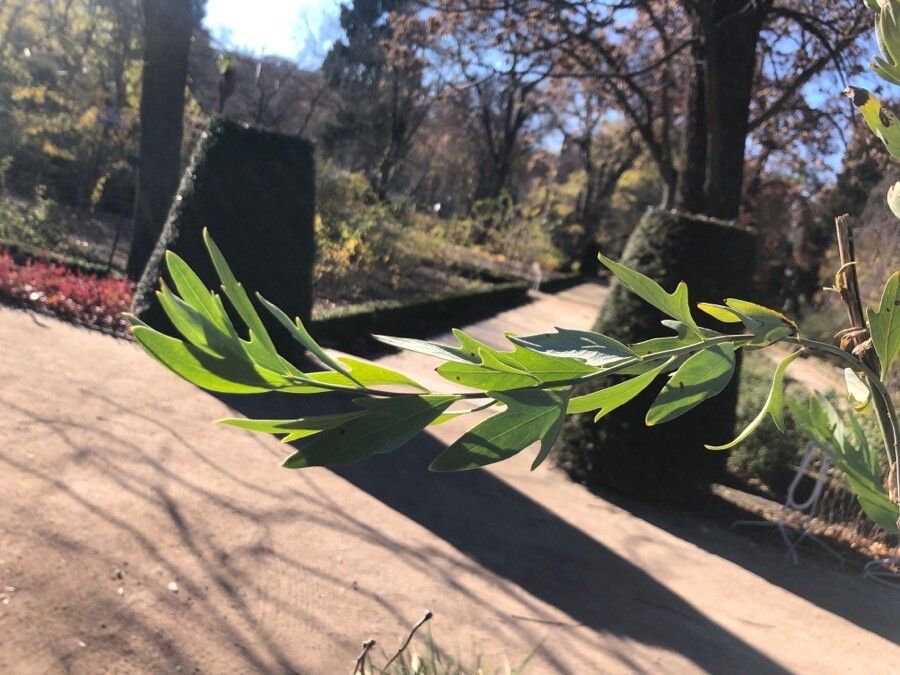
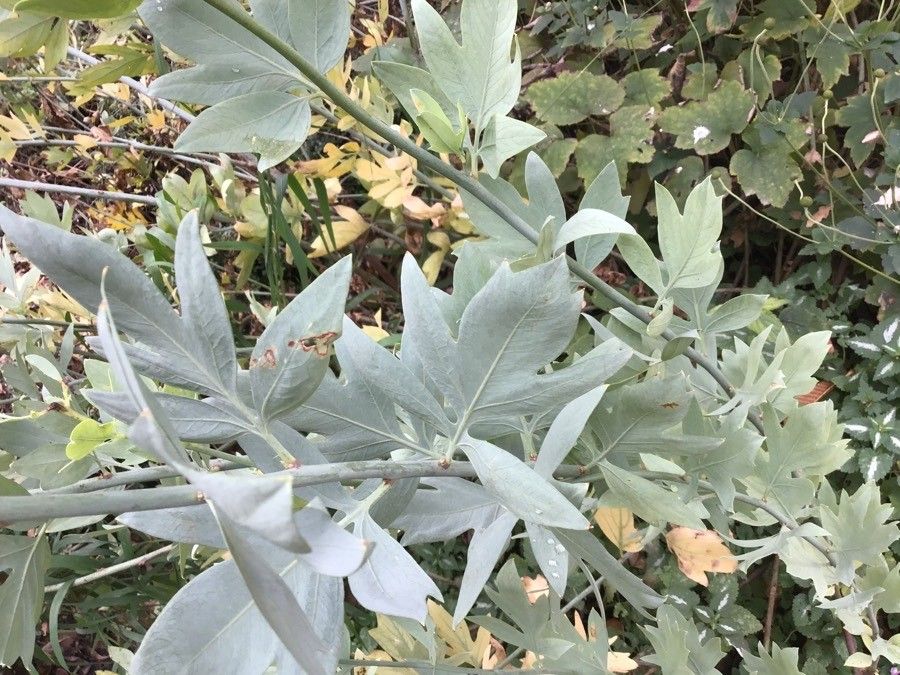
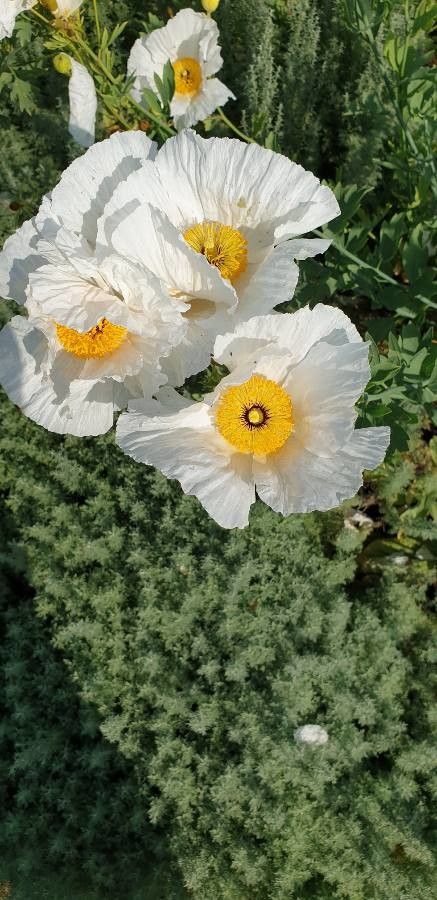
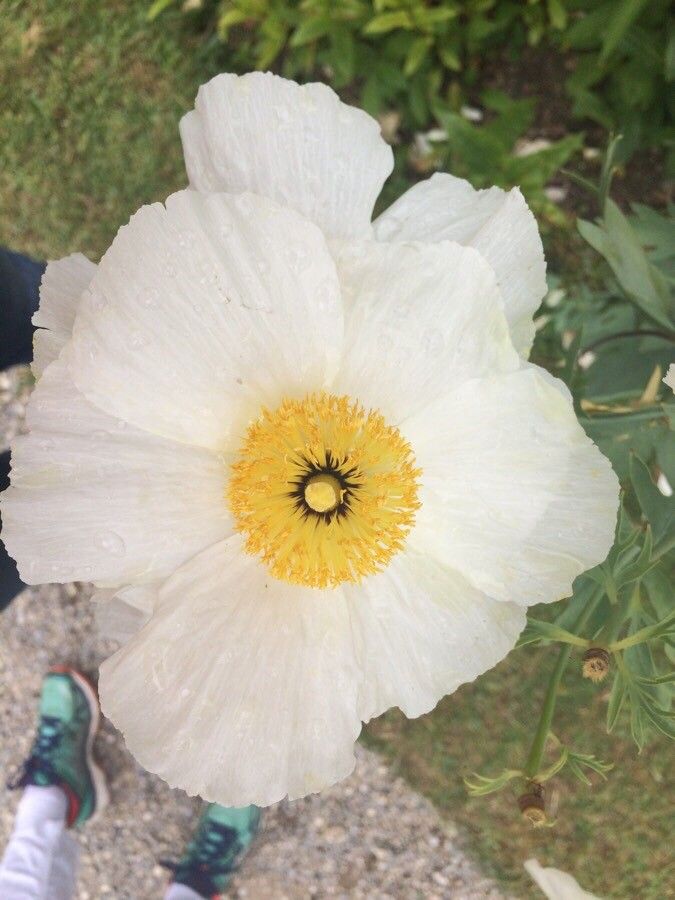
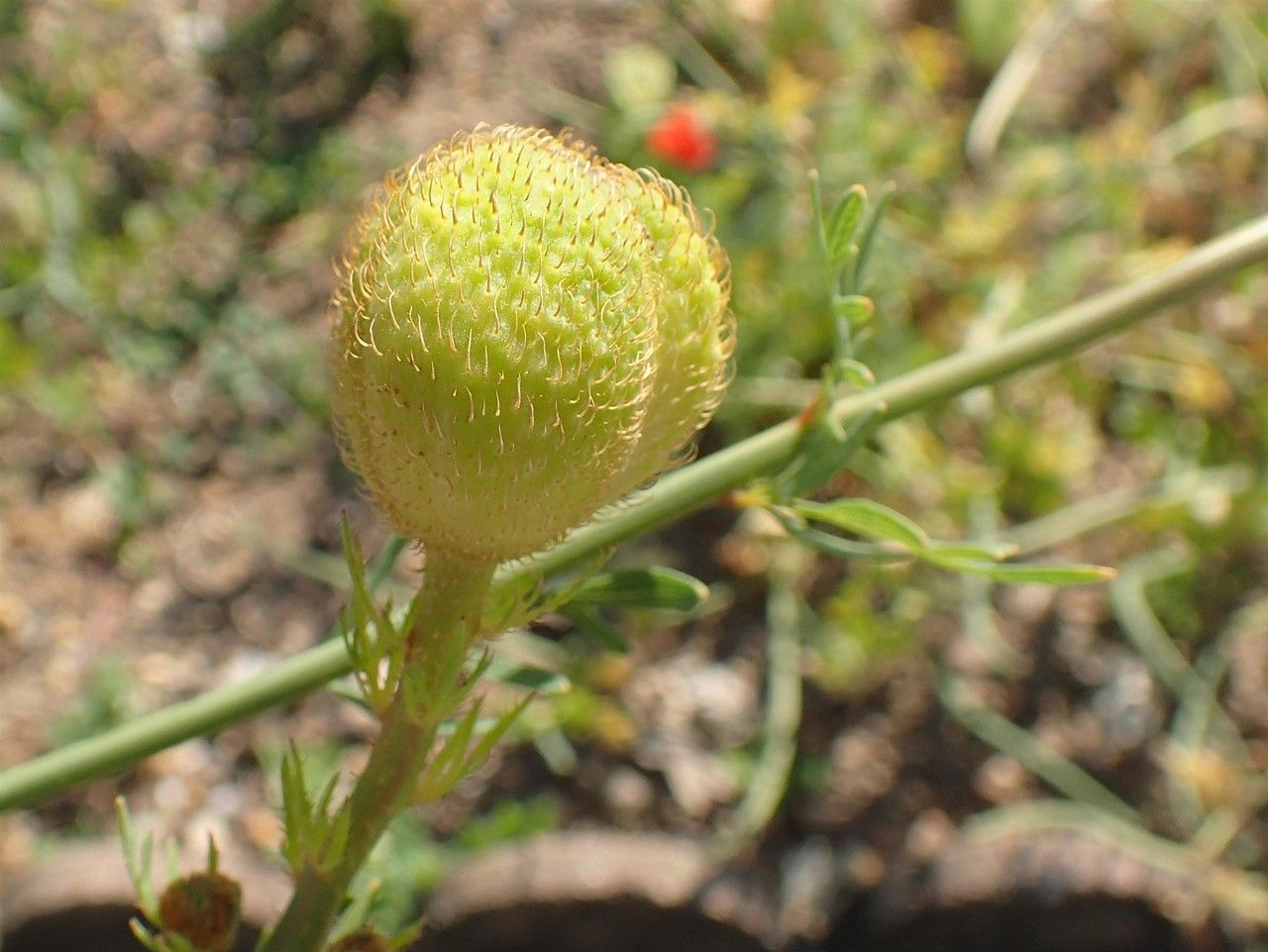
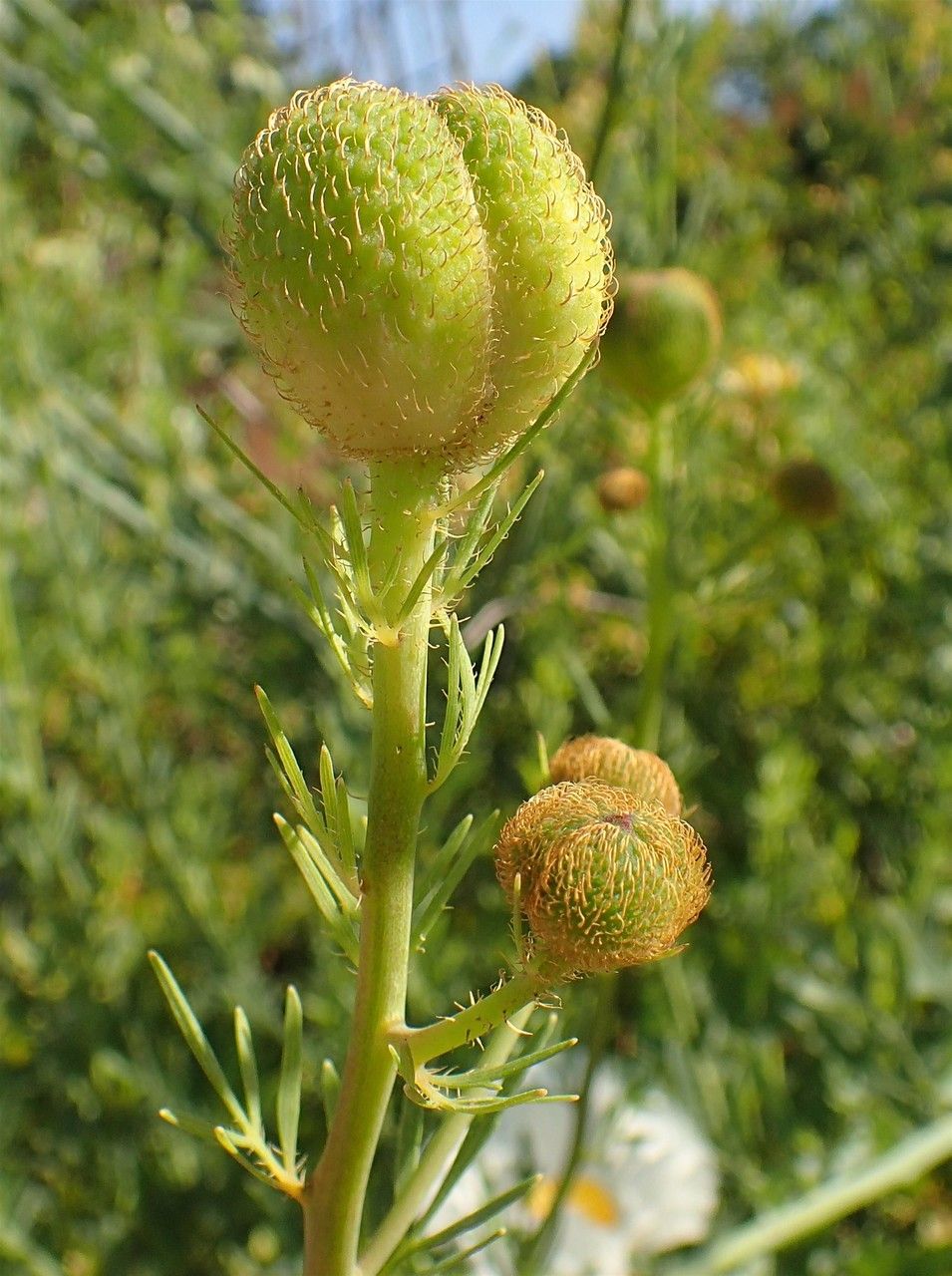
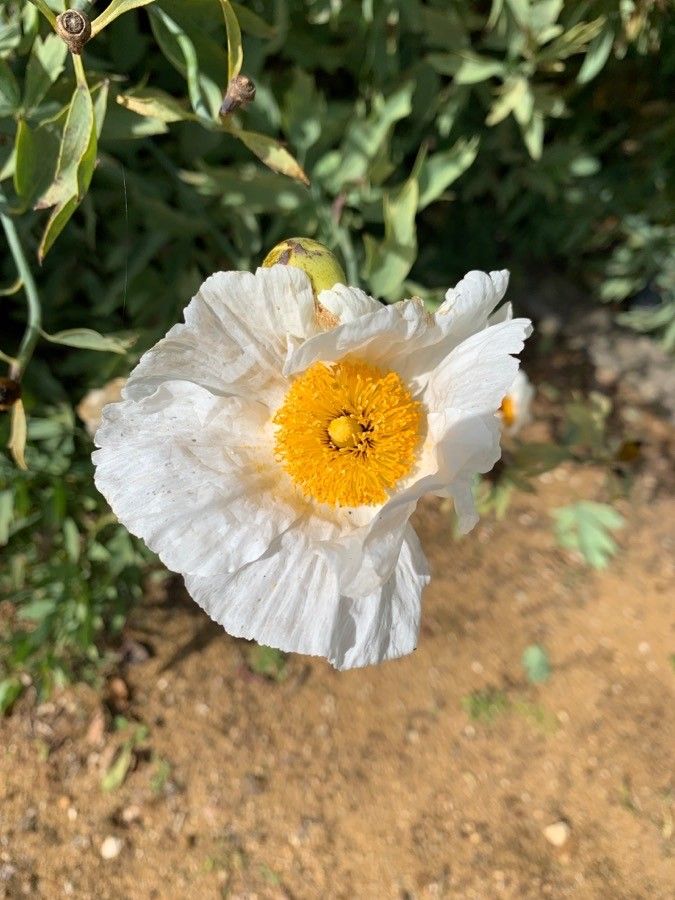
Romneya coulteri, the Coulter's Matilija poppy or California tree poppy, is a perennial species of flowering plant in the poppy family Papaveraceae. Native to southern California, USA, and Baja California, Mexico, it grows in dry canyons in chaparral and coastal sage scrub plant communities, sometimes in areas recently burned. It is a popular ornamental plant, kept for its large, showy flowers. The specific epithet coulteri commemorates Thomas Coulter, an Irish botanist and explorer.This herbaceous perennial may exceed 2 m (7 ft) in height, its stem growing from a network of rhizomes. The gray-green, waxy-textured leaves are each divided into a few lance-shaped lobes, the blades growing up to 20 centimeters (7.8 in) long. The inflorescence is a large, solitary flower with six crinkly white petals each up to 10 cm (4 in) long. At the center of the flower is a cluster of many yellow stamens. The fruit is a bristly capsule, 3–4 cm (1–2 in) long, containing many tiny seeds. This plant often grows aggressively once planted. It spreads clonally by underground rhizomes and can appear several feet away from the original plant.This plant bears the largest flowers of any species native to California, rivaled only by Hibiscus lasiocarpos. It was nominated for the honor of California state flower in 1890, but the California poppy won the title in a landslide.In cultivation in the UK, Romneya coulteri and the cultivar ‘White Cloud’ have gained the Royal Horticultural Society’s Award of Garden Merit.
California tree poppy is fairly disease-resistant and typically does not suffer from many illnesses. Still, it can be affected by pests and diseases present in its environment. These issues are generally minor. For care, the plant requires moderate maintenance. It should be pruned regularly to keep an attractive appearance and healthy growth. Fertilizing can also help encourage flowering. California tree poppy suits anyone with outdoor space, such as a garden or patio, and does not demand extensive gardening experience. It may need more attention when grown indoors.
How to keep Romneya Coulteri.
Light
The California tree poppy does best when it gets plenty of sunlight throughout the day. It can also tolerate moderate sun exposure. Observations of its habitat show it benefits from environments where sunlight is abundant. Both excessive and inadequate light can potentially impede its healthy growth.
Water
The California tree poppy is well-suited for dry Californian environments due to its remarkable drought tolerance. It requires minimal watering, typically only once a week. This plant thrives in arid climates, making it perfect for xeriscaping, as it prefers drier conditions and has a natural resilience to low water availability.
Temperature
In its native range, the California tree poppy is well adapted to temperatures of 68 to 100 °F (20 to 38 ℃). As seasons shift, it does best when temperatures are slightly adjusted to stay within its preferred range.
Fertilizer
A single fertilizer application in spring is typically enough for California tree poppy, though repeated feedings can maximize growth. Feed every month to a month and a half. Fertilizing improves leaf appearance and function, helping maintain even color and a healthy texture. It also promotes root growth and nutrient absorption, supporting long-term plant health.
Pruning
The California tree poppy is a resilient shrub known for its large white flowers and fern-like leaves. To encourage a bushy shape and improve flowering, prune it from early to late spring, removing any dead or leggy stems. Be sure to use clean, sharp tools during pruning to prevent disease and minimize damage.
Pot & Repot
When repotting California tree poppy, pick a container 1-2 inches (2.5–5.1 cm) larger with ample drainage. Use a well-draining potting mix. Repot in spring or fall, making sure the root ball sits slightly below the rim of the pot. Water thoroughly after repotting and place it in a warm spot with indirect sunlight.
Botanical profile.
- Plant Type
- Herb
- Life Cycle
- Perennial, Annual
- Genus
- Romneya
- Family
- Papaveraceae
- Hardiness Zone
- 7-11
- Mature Height
- 2.44 m
- Mature Spread
- 1.52 m
- Leaf Color
- Green, Gray, Silver
- Leaf Type
- Deciduous
- Flower Color
- White
- Flower Size
- 10.16 cm to 22.86 cm
- Bloom Time
- Mid summer
- Planting Time
- Spring
- Harvest Time
- Mid summer, Late summer
- Native Area
- Mexico
Other names.
Reader questions.
How should I water my California tree poppy in the best way?
When watering the California tree poppy, it's best to use filtered water at room temperature. Tap water may contain harmful particles for this plant. To prevent shock, the water should be at room temperature or slightly warmer since the California tree poppy originates from a warm environment. Avoid overhead watering as it can cause problems with the foliage. Instead, apply filtered room temperature water directly to the soil until it is completely soaked. This benefits the plant by moistening the roots and aiding their spread in the soil to gather necessary nutrients.
Why should I put fertilizer on my California tree poppy?
The California tree poppy relies on its leaves for structure, so fertilization is crucial for maintaining their appearance and function. Proper fertilization ensures that the leaves have vibrant color and a healthy texture. Additionally, fertilization benefits the plant below the surface by promoting root growth and maintaining the existing root system. This long-term effect results in improved nutrient absorption and overall plant health.
What are the sunlight requirements for a California tree poppy?
The California tree poppy requires full sun, which means it thrives in conditions where it can receive above 6 hours of sunlight daily. It can also tolerate partial sun, with approximately 3-6 hours of sunlight. Observing how sunlight moves through your garden can help in choosing the best spots for these plants, ensuring a balance of light and shade for optimal growth.
What are the essential care tips for a California tree poppy?
The California tree poppy thrives in temperatures ranging between 68 to 100 °F (20 to 38 ℃), adapting well to minor seasonal temperature changes within this range. It exhibits a strong resistance to cold, making special frost protection measures generally unnecessary. However, if winter temperatures are expected to drop significantly, it's crucial to cover the plant with soil or straw for cold protection. Additionally, ample watering before the first freeze of autumn is recommended to keep the soil moist, helping to prevent drought and water scarcity throughout winter and early spring.
What should I do if I give my California tree poppy too much or too little water?
Overwatering and underwatering can both harm the health of your California tree poppy, but overwatering is more commonly seen. When this species receives excessive water, its stems and leaves wilt, turning yellow. Prolonged overwatering can lead to diseases like root rot, mold, and mildew, which can be fatal for your plant. While underwatering is less common, the California tree poppy has good drought tolerance. However, it is still possible, and in such cases, the leaves become brittle and brown. Promptly recognizing the signs of overwatering is crucial for the care of your California tree poppy. Delaying action can make certain diseases, such as root rot, irreversible. If you notice early signs of overwatering, reduce your watering immediately and assess the soil quality, replacing it with a well-draining potting mix if it drains poorly. Conversely, if your California tree poppy shows signs of insufficient water, increase watering until these signs disappear.
When should I fertilize my California tree poppy for the best results?
If you grow your California tree poppy outdoors, it will shoot out new growth in early spring. This is a signal that it's time to start fertilizing for the year. Usually, one application of fertilizer in spring is enough for a California tree poppy to thrive. However, if you want to maximize growth, you can fertilize multiple times during the spring and early summer. In this case, you can feed your California tree poppy about once a month to a month and a half.
What essentials should be considered for the growth of a California tree poppy?
California tree poppy thrives in ample sunlight, needing generous exposure to the sun's rays throughout the day for robust growth. Moderate amounts of sunlight can also support its growth, highlighting the importance of a well-lit environment. In conditions where natural sunlight is insufficient, especially during winter or in less sunny spaces, artificial lighting can provide a supplemental solution. Indoor plants benefit from artificial light sources, such as LED lights, which should cover a range of 10-50W/sq ft depending on the plant's sunlight needs, placed 12-36 inches above the plant for 8-12 hours per day to mimic natural daylight conditions.
How does low temperature affect the California tree poppy, and what are the solutions?
The California tree poppy is cold-tolerant and thrives best when the temperature is kept above a certain minimum threshold. During winter, it's important to ensure that temperatures do not drop below this minimum, as it can lead to a reduction in springtime sprouting or, in some cases, no sprouting at all. If there are parts of the plant that fail to sprout in spring due to cold damage, it's recommended to remove these parts to encourage new growth.
How frequently do I need to water my California tree poppy?
If you have your California tree poppy in a pot, the best way to check if it needs water is by putting your finger into the soil. If the top two to three inches of soil are dry, it's time to water it. For those who have their California tree poppy planted outdoors in the ground, you can use the same method to test the soil. Once the top few inches of soil have dried out, it's time to water. Normally, during the spring and early fall, watering once a week should be sufficient. However, if it's extremely hot, you may need to water twice a week or more. It's worth mentioning that mature and well-established California tree poppies can tolerate drought well.
When is the best time to not fertilize my California tree poppy?
During the late fall and winter, your California tree poppy enters a dormant phase and stops producing new growth. It is not recommended to fertilize the tree during this time. In spring and summer, if you choose to fertilize, gradually reduce the amount as summer approaches because the tree's growth rate slows down. It is important to avoid fertilizing when the weather is unseasonably hot or the soil is extremely dry as this can stress the tree and cause it to die prematurely.
What are the symptoms of light deficiency in California tree poppy?
Symptoms of light deficiency in California tree poppy include smaller new leaves, leggy or sparse growth, faster leaf drop, slower or halted new growth, and lighter-colored or pale new leaves. These issues arise from inadequate lighting, reflecting the plant's struggle with insufficient chlorophyll and essential nutrients. Conversely, excessive sunlight exposure can cause leaf scorching, curling, wilting, sunscald, and chlorosis, indicating too much direct light can be just as detrimental.
How does high temperature affect the California tree poppy, and what are the solutions?
In the summer, it's crucial to keep the California tree poppy below a certain maximum temperature threshold to prevent damage. Exceeding this threshold can cause the leaves to lighten in color, become prone to curling, and be susceptible to sunburn; in severe cases, the plant may wilt and dry out completely. To mitigate these effects, trim away sunburned and dried-up parts, move the plant to a shadier location or use a shade cloth during the midday and afternoon sun. Additionally, watering the plant in the morning and evening helps keep the soil moist and supports the health of the plant.