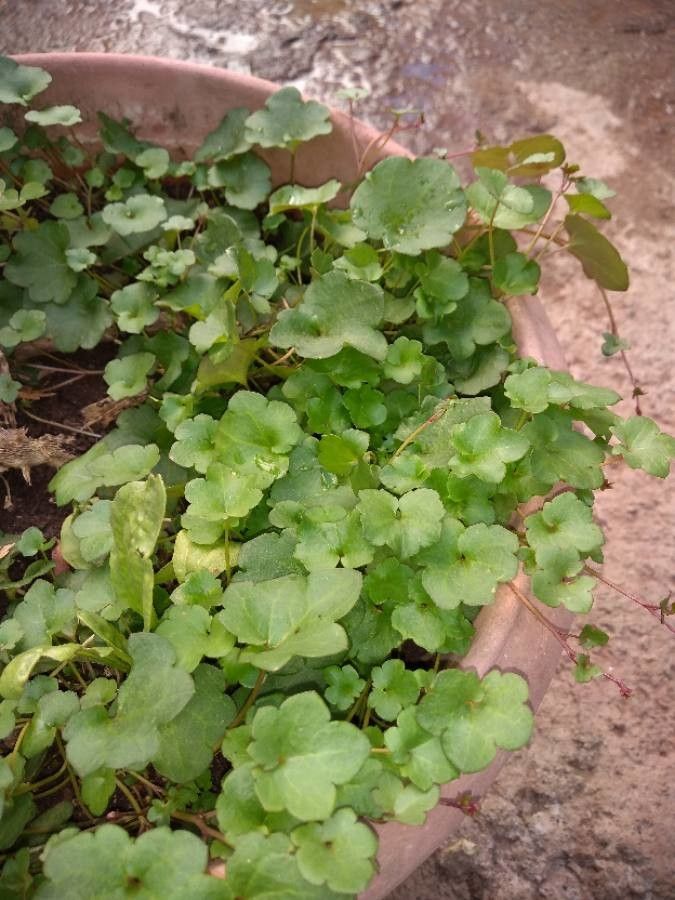
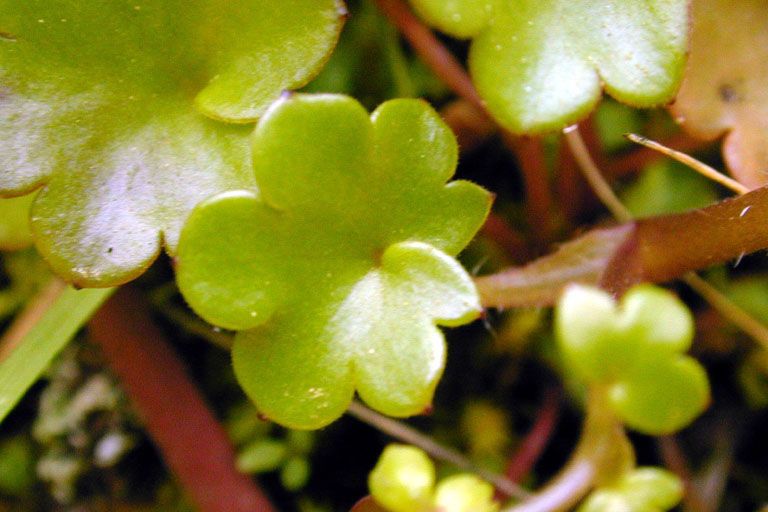
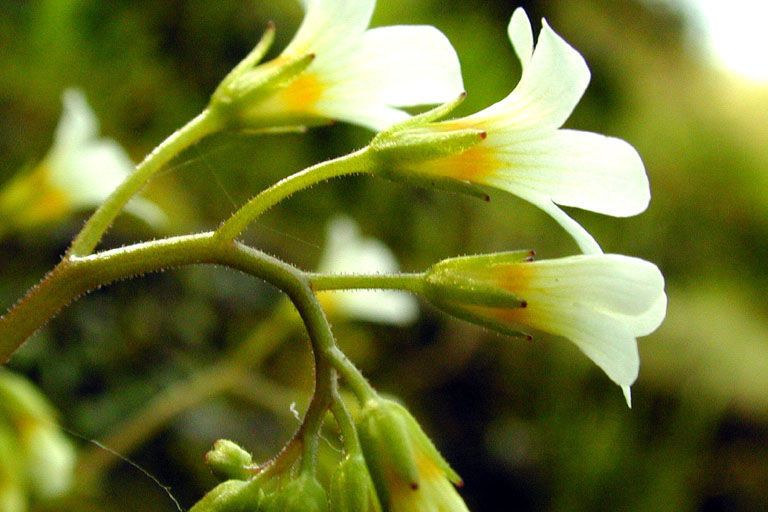
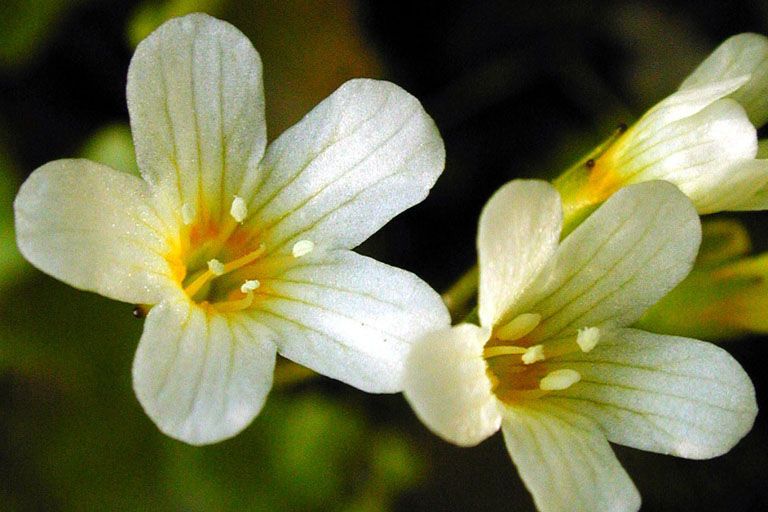
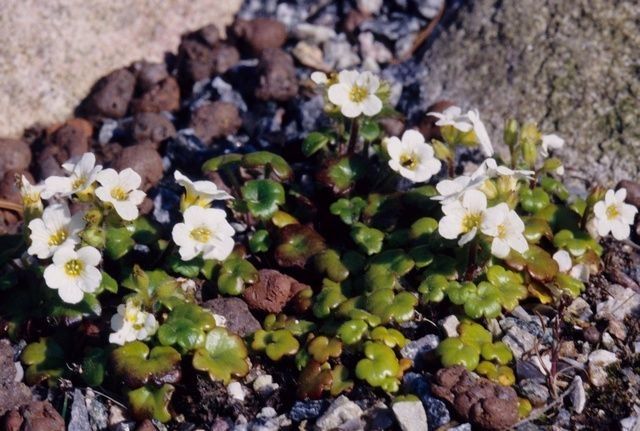
Romanzoffia californica, commonly known as California mistmaiden, is a delicate and charming herbaceous plant that belongs to the waterleaf family. Native to California, it typically thrives in moist meadows, along streambanks, and in shaded areas of the Sierra Nevada mountain range.
This small plant is characterized by slender stems that can grow up to 10 centimeters tall. Its bright green, oval-shaped leaves form rosettes at the base of each stem. The plant produces tiny white or pinkish-white flowers with five petals, which cluster at the ends of the stems.
California mistmaiden is an important food source for pollinators such as bees and butterflies due to its nectar-rich flowers. Its delicate beauty also makes it a popular choice for ornamental gardening.
The plant prefers moist soil conditions but can tolerate some drought once established. It thrives best in partial shade or filtered sunlight.
Overall, Romanzoffia californica is a lovely addition to any garden or natural landscape, appreciated both for its delicate appearance and its ecological role as a pollinator food source.
California mistmaiden is fairly disease-resistant and generally not prone to illness. Still, it can be vulnerable to pests and diseases found in its environment, though these problems are typically mild. Its care level is moderate. Regular pruning is needed to keep a neat appearance and support healthy growth. Fertilizing can also encourage more blooms. California mistmaiden is well suited to anyone with outdoor space, such as a garden or patio, and does not require extensive experience in plant care. It may demand more attention if grown indoors.
How to keep Romanzoffia Californica.
Light
The California mistmaiden is native to habitats like forest understories or rocky areas, where it grows in natural shade. It prefers partial sun but can tolerate full sun or full shade, illustrating its versatility and hardiness.
Water
The California mistmaiden thrives in moist environments, needing consistent soil moisture and regular watering twice a week. This drought-sensitive plant flourishes outdoors in natural light and benefits greatly from rainwater, which supports its healthy growth cycle.
Temperature
California mistmaiden can tolerate a wide range of temperatures, but its distribution may still be restricted by particular combinations of moisture and heat. It performs best in warm summer climates with adequate rainfall or watering. Extended periods of cloudy, rainy weather or prolonged high temperatures can increase the risk of California mistmaiden dying. In winter, suitable protection from cold can raise the plant’s survival rate.
Fertilizer
For California mistmaiden, the primary time to apply fertilizer is in early spring when the flowers are forming. Using an appropriate fertilizer promotes improved blooms and enables the plant to produce attractive flowers. Feeding in early spring guarantees strong blooms throughout the season and supplies energy for dormant growth stages.
Pruning
The California mistmaiden is a delicate perennial plant characterized by its small, white, star-shaped flowers. To maintain its health and appearance, prune the plant from early to late spring. Remove any dead stems and trim back excessive growth to improve its shape and enhance air circulation. Regular pruning encourages blooming and helps prevent the plant from becoming leggy. Be sure to use clean, sharp tools during pruning to avoid spreading infections.
Botanical profile.
- Plant Type
- Herb
- Life Cycle
- Perennial
- Genus
- Romanzoffia
- Family
- Boraginaceae
- Hardiness Zone
- 7-9
- Mature Height
- 10 cm to 30 cm
- Mature Spread
- 10 cm to 20 cm
- Leaf Color
- Green, Dark Green
- Leaf Type
- Deciduous
- Flower Color
- White
- Flower Size
- 0.51 cm to 1.02 cm
- Bloom Time
- Early spring, Mid spring
- Planting Time
- Spring, Summer, Autumn
- Harvest Time
- Late spring, Early summer
Other names.
Reader questions.
What are the sunlight requirements for California mistmaiden (Romanzoffia californica)?
California mistmaiden, or Romanzoffia californica, thrives under specific sunlight conditions. For partial sun exposure, it requires about 3-6 hours of sunlight daily. If you're aiming for full sun exposure, it needs above 6 hours of sunlight each day. It's important to observe how sunlight moves through your garden carefully. Finding the perfect balance between light and shade will ensure the happiness and health of your California mistmaiden plants.