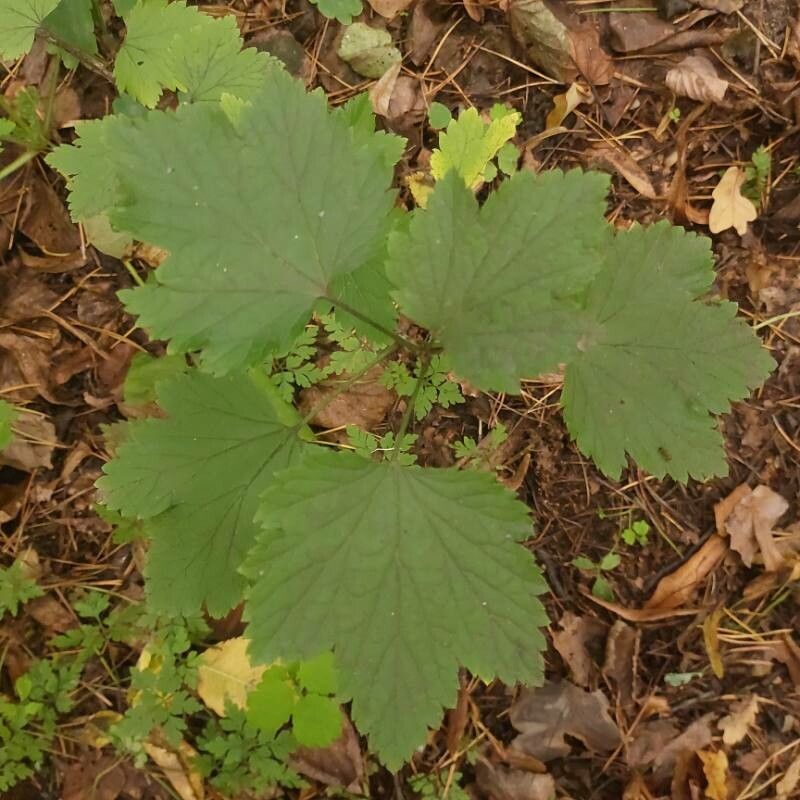
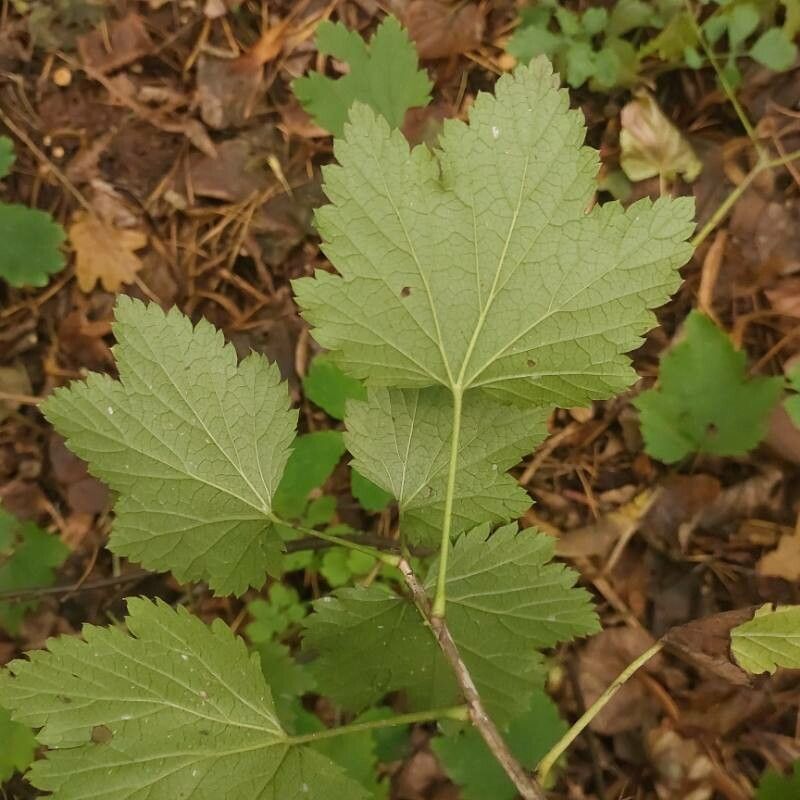
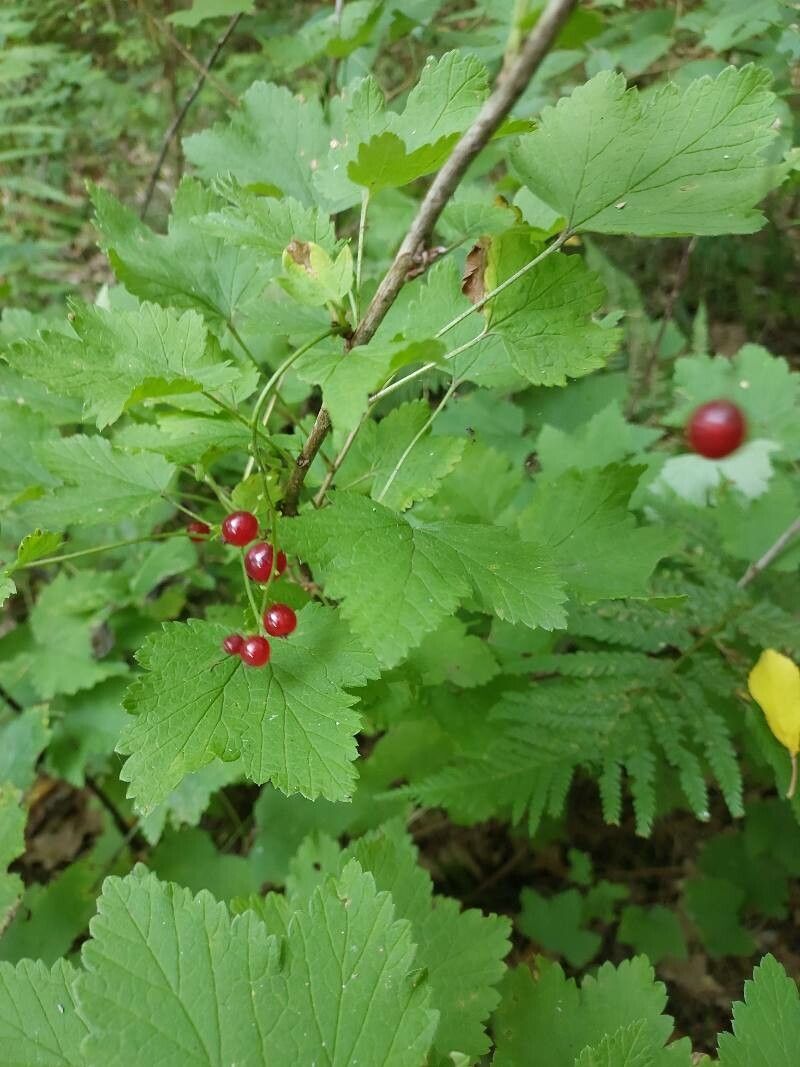
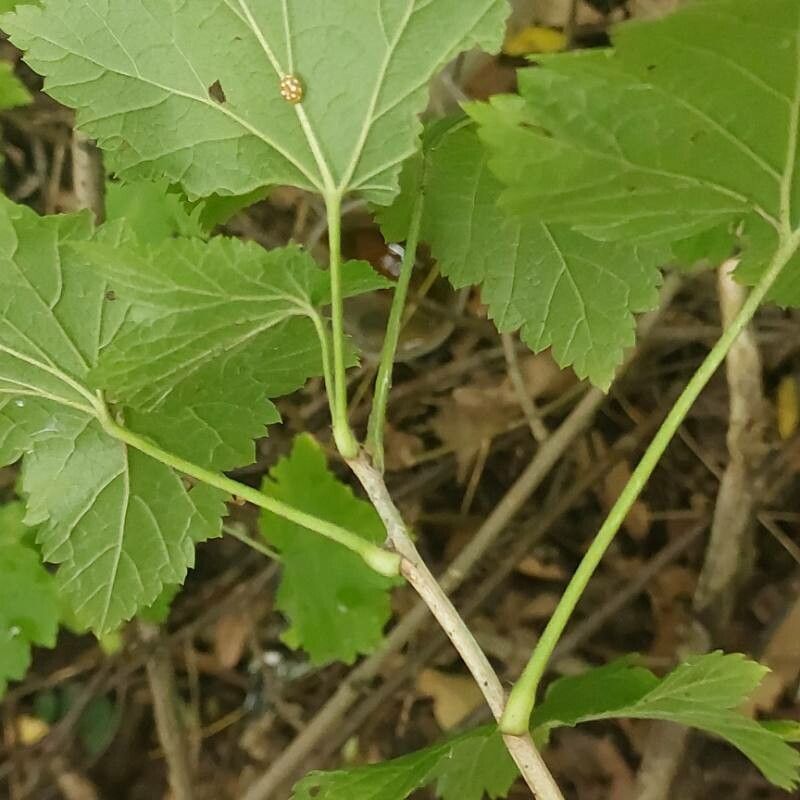
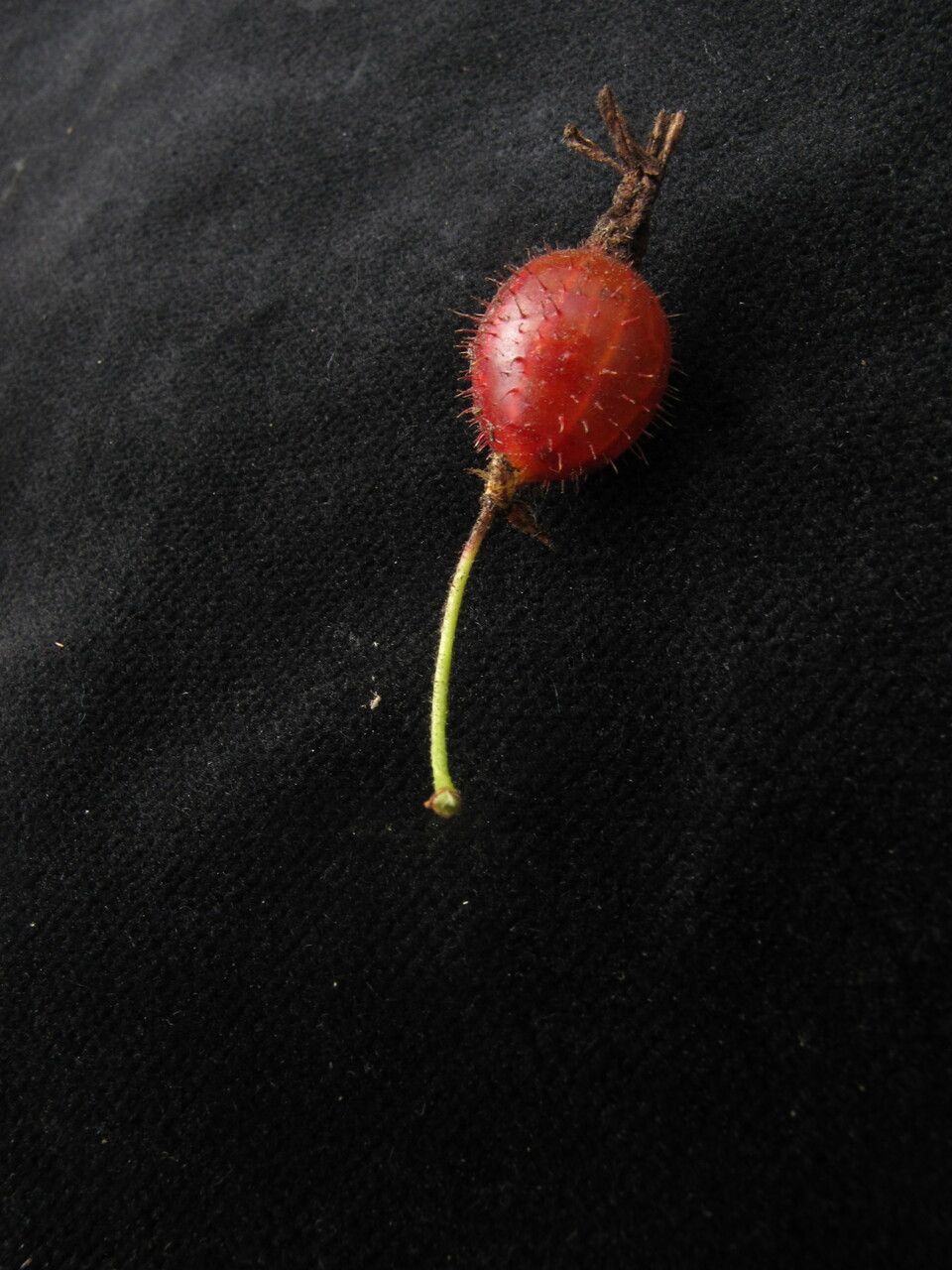
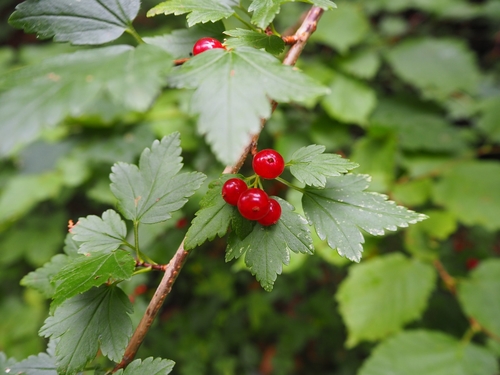
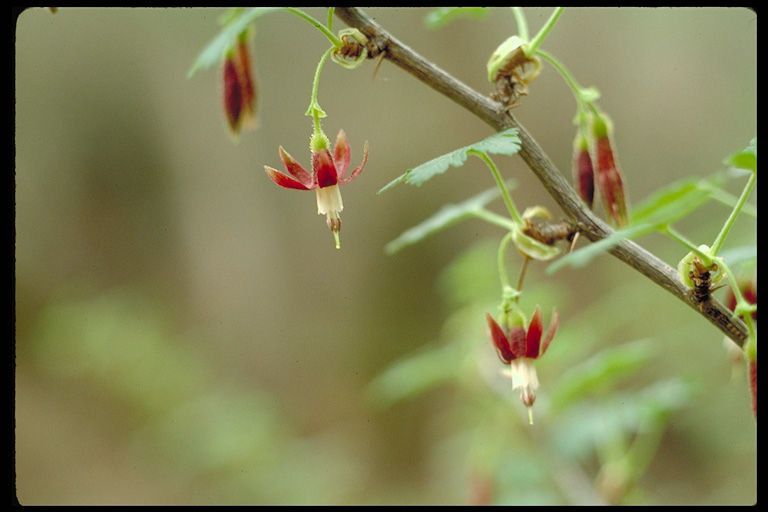
Ribes spicatum, the downy currant or Nordic currant, is a species in the genus Ribes, native to northern Europe and northern Asia. Its bright red berries are edible and quite good‑tasting. It can be differentiated from the more common redcurrant (Ribes rubrum) not so much by its leaf hairs, as these tend to fall off as the leaf ages, but by other characteristics: the leaves of R. spicatum are a duller and darker green than R. rubrum with its paler yellowish‑green leaves. R. spicatum holds its leaves at a right angle to the stem, whereas R. rubrum leaves are less erect, markedly distinguishing the overall form of the bushes. R. spicatum has green petioles, but R. rubrum petioles are more orange‑ish.
Downy currant has strong resistance to disease and is generally not susceptible to illnesses. As for care, the plant is fairly low-maintenance. When grown outdoors it needs only light watering, and larger specimens typically do not require pruning. Smaller plants, however, should be pruned after they finish blooming. Downy currant is appropriate for anyone with outdoor space, like a garden or deck, and does not demand extensive gardening experience.
How to keep Ribes Spicatum.
Light
Downy currant is naturally found in habitats like forest understories and rocky areas, which offer natural shade. It prefers partial sun but can tolerate full sun or full shade, showing its adaptable and hardy nature.
Water
The downy currant thrives in environments with consistent moisture and should be watered twice a week. Indoors, it needs higher humidity levels, while outdoors, it requires well-draining soil to prevent waterlogging. Although it can withstand short periods of dryness, keeping it properly hydrated is crucial for its overall health.
Temperature
Downy currant shows strong adaptability to a variety of climates, from scorching summers to cold winters. However, it does have an ideal temperature range for growth. When temperatures become too high, the plant can suffer heat and humidity stress, which may cause it to die. In areas where temperatures approach the lower limit of its cold tolerance, it is important to provide insulation to protect the plant.
Fertilizer
The Downy currant plant needs adequate nutrients to achieve optimal fruit production. Fertilize in early spring to encourage new growth and flower development. Regular fertilization keeps the plant healthy, produces more flavorful fruit, and prevents nutrient-deficiency problems like yellowing leaves and poor fruit production.
Pruning
Downy currant benefits greatly from pruning in early spring. During this time, remove any dead or damaged branches and thin out crowded areas to improve air circulation and allow more light to reach the plant. This process promotes healthy growth and boosts fruit production. Be sure to sanitize your tools before use to prevent the spread of disease.
Botanical profile.
- Plant Type
- Shrub
- Life Cycle
- Perennial
- Genus
- Ribes
- Family
- Grossulariaceae
- Hardiness Zone
- 3-7
- Mature Height
- 0.91 m to 2.13 m
- Mature Spread
- 0.91 m to 1.52 m
- Leaf Color
- Green, Dark Green
- Leaf Type
- Deciduous
- Flower Size
- 0.51 cm to 0.76 cm
- Bloom Time
- Early spring, Mid spring
- Planting Time
- Spring, Summer
- Harvest Time
- Mid summer, Late summer
Other names.
Reader questions.
What are the sunlight requirements for Downy currant (Ribes spicatum)?
Downy currant (Ribes spicatum) thrives in varying degrees of sunlight, depending on your garden's specific needs. For 'Full sun' conditions, it requires above 6 hours of sunlight daily. In situations labeled as 'Partial sun', about 3-6 hours of sunlight each day is sufficient. It's important to observe how sunlight moves through your garden, selecting locations that provide an ideal balance of light and shade. This careful placement ensures your Downy currant plants remain healthy and happy.
What is Downy Currant?
Downy currant, scientifically known as Ribes spicatum, is the focus of discussion here. Unfortunately, no specific details about its essentials, symptoms, or additional characteristics were provided.