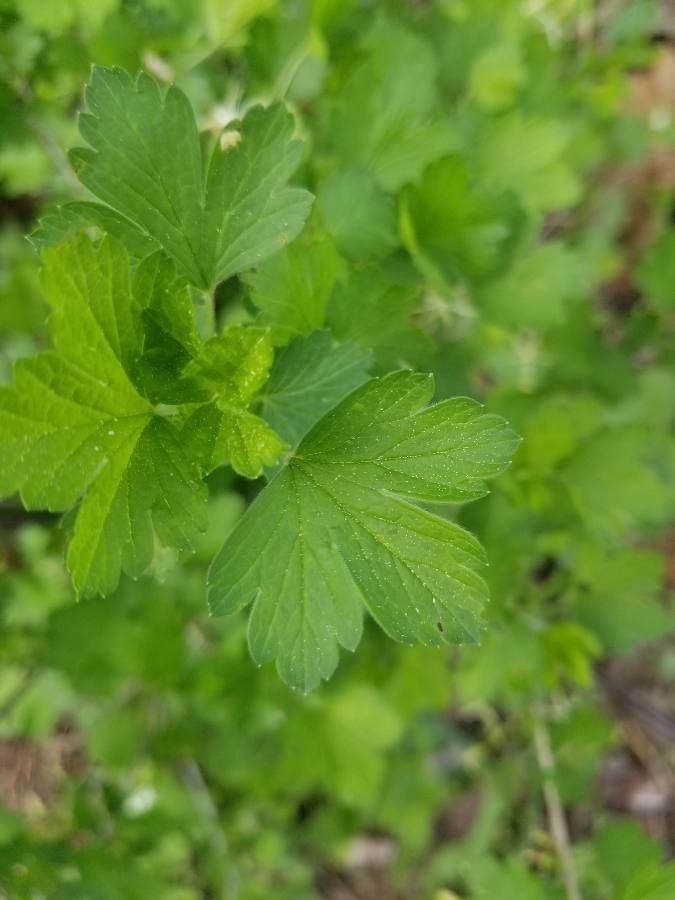
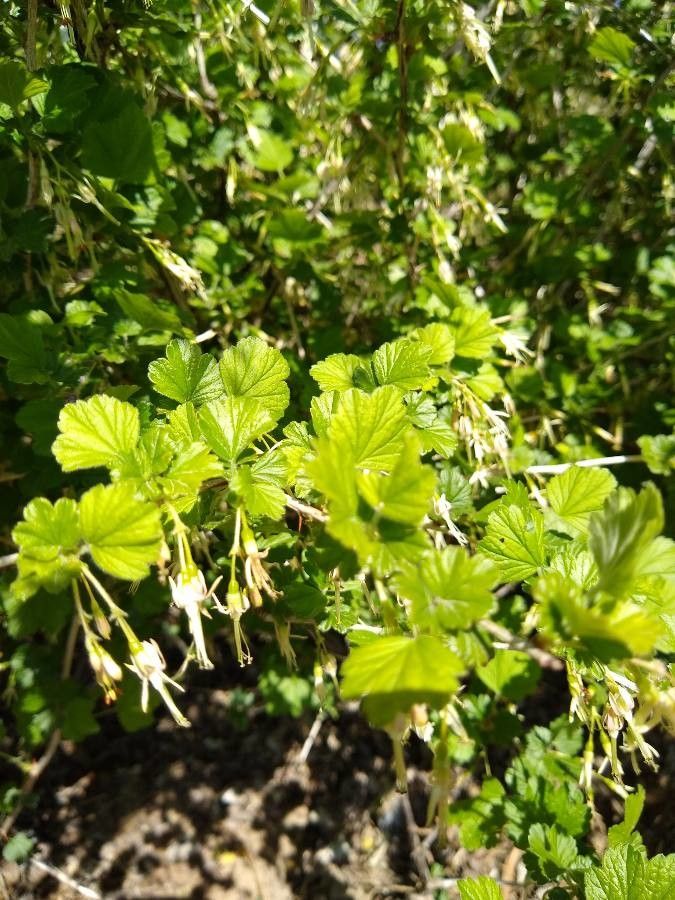
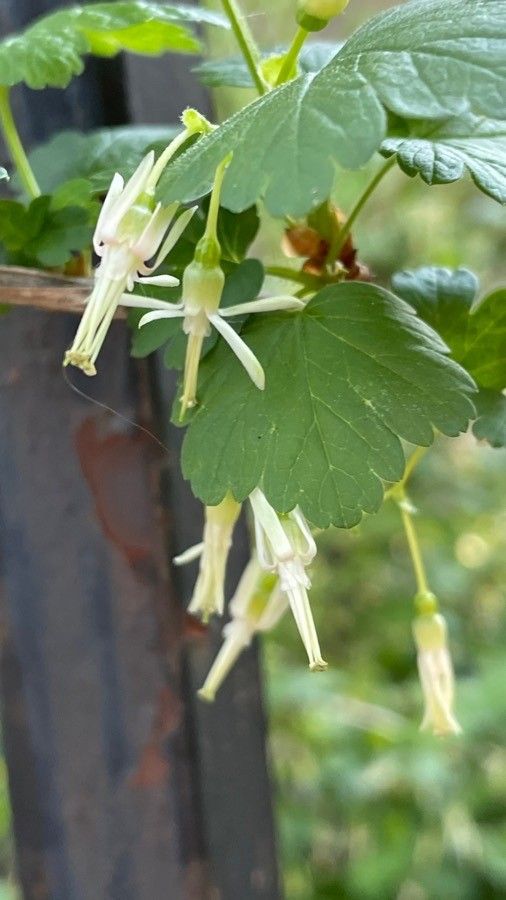
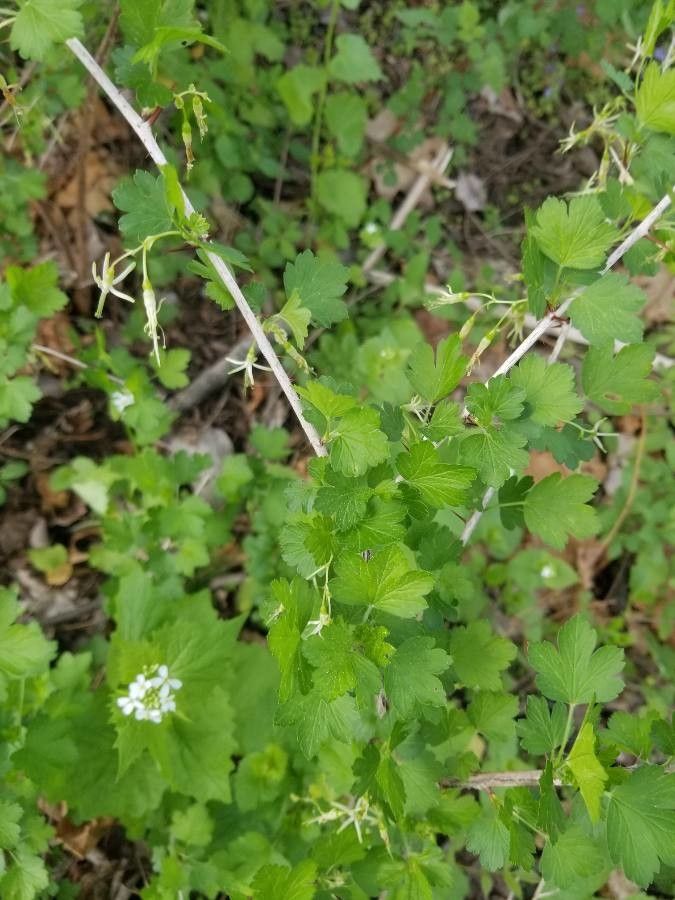
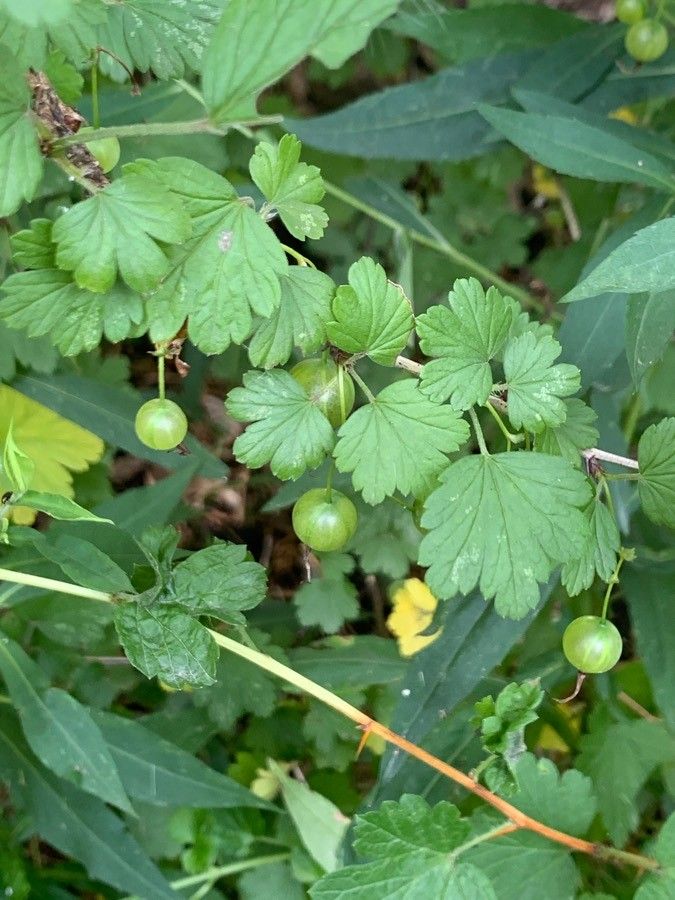
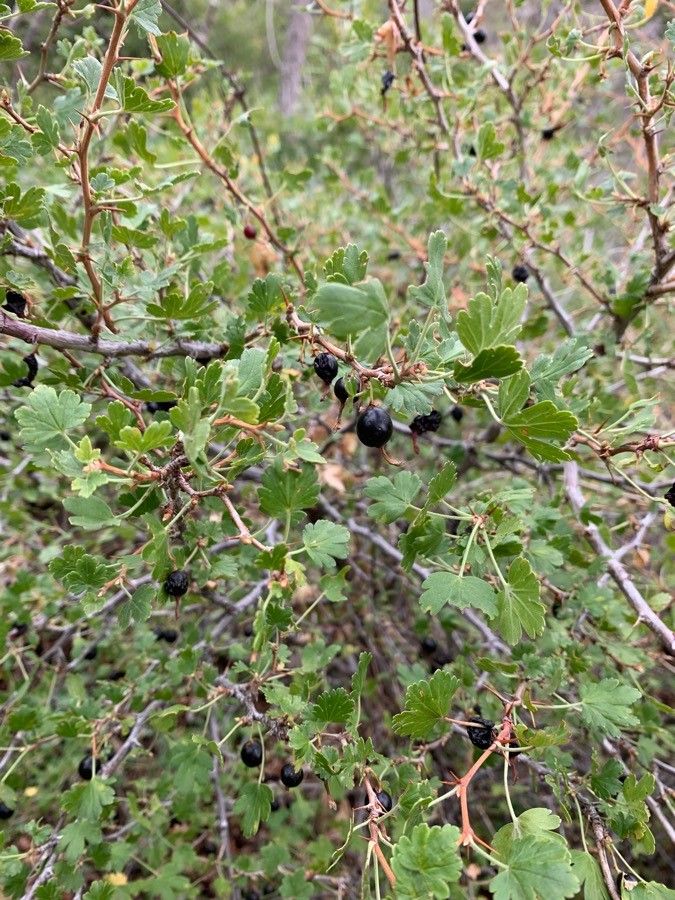
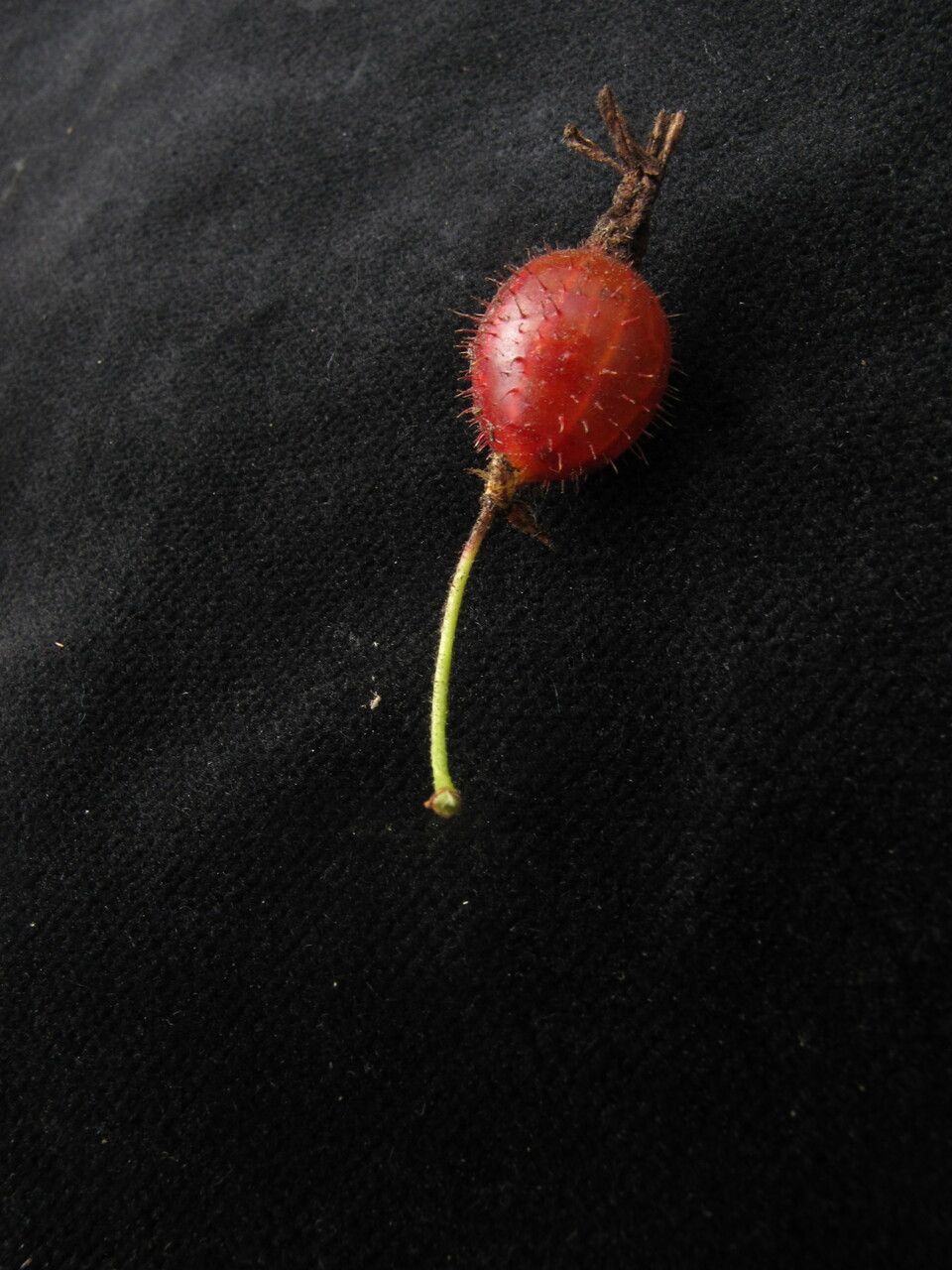
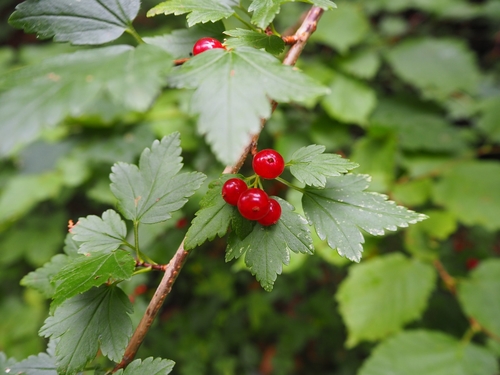
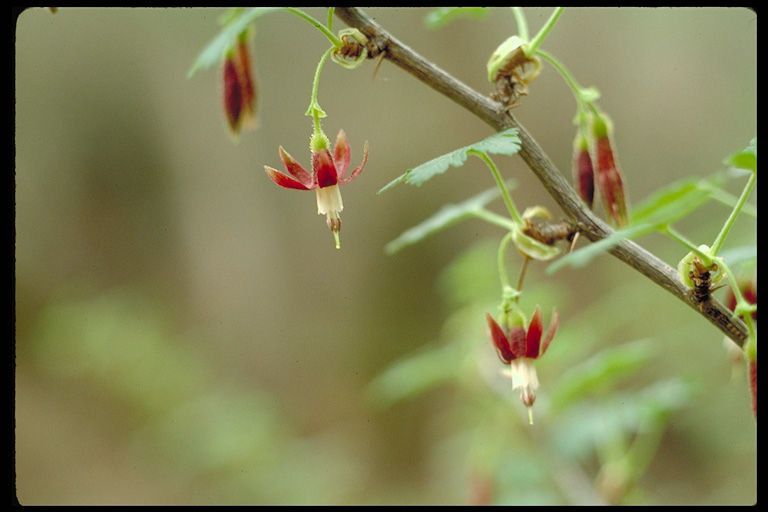
Ribes missouriense, the Missouri gooseberry, Missouri currant or wild gooseberry, is a prickly, many-stemmed shrub native to the north-central United States (Great Lakes, upper Mississippi and lower Missouri Valleys). Scattered populations have been found farther east, most of them very likely escapes from cultivation.The Missouri gooseberry was once common as far east as Ohio, but was nearly extirpated there during the 19th and 20th centuries (partly due to early 20th-century efforts to prevent the spread of white pine blister rust by removing as many Ribes hosts as possible). Since 1982, however, the Missouri gooseberry has been granted protected status as an endangered species in Ohio, It is also endangered in New Jersey and Pennsylvania.The edible berries of the shrub are commonly called "gooseberries" by locals, but since it is taxonomically closer to currants than to the European gooseberry, they are sometimes called "currants" when grown outside their historic range.
American black currant has strong disease resistance and is generally not prone to diseases. In terms of care, this plant is relatively low maintenance. When planted outdoors, it requires minimal watering, and larger plants generally do not need to be pruned. However, smaller plants should be pruned after they have bloomed. American black currant is suitable for anyone with an outdoor space, such as a garden or deck, and does not require a lot of care experience.
How to keep Ribes Missouriense.
Light
The American black currant requires plentiful sunlight for best growth, though it can tolerate some shaded spots without harming its vigor. Its formative period is when abundant sunlight is most important. Coming from naturally sun-rich habitats, insufficient light can stunt its growth, while excessive exposure may cause dry conditions.
Water
The Missouri gooseberry is drought-tolerant and well-suited for low-moisture environments, needing only occasional watering every 2 to 3 weeks. It thrives outdoors by effectively conserving water during its dormant period, aligning with natural seasonal precipitation patterns.
Temperature
The American black currant is native to regions with moderate temperatures, naturally preferring a range of 32 to 90 °F (0 to 32 ℃). Making seasonal temperature adjustments to replicate that native environment helps encourage healthy growth.
Fertilizer
The American black currant needs adequate nutrients for the best fruit production. Fertilize in early spring to support new growth and flowering. Regular feeding keeps the plant healthy, produces more delicious fruit, and prevents nutrient deficiency problems like yellow leaves and poor fruit production.
Pruning
The Missouri gooseberry has spiny stems and produces edible berries. To promote growth and increase fruit yield, it's important to prune the plant annually in early spring. This process involves removing dead wood, thinning the branches, and shaping the plant. Additionally, using clean tools is crucial to prevent infections, which helps improve the plant's vigor and reduce the risk of disease.
Botanical profile.
- Plant Type
- Shrub
- Life Cycle
- Perennial
- Genus
- Ribes
- Family
- Grossulariaceae
- Hardiness Zone
- 3-7
- Mature Height
- 0.61 m to 1.52 m
- Mature Spread
- 1.22 m to 1.83 m
- Leaf Color
- Green, Dark Green
- Leaf Type
- Deciduous
- Flower Color
- White
- Flower Size
- 2.54 cm
- Bloom Time
- Mid spring, Late spring
- Planting Time
- Autumn
- Harvest Time
- Mid summer
Other names.
Reader questions.
What should I do if I give too much/not enough water to the Missouri gooseberry plant?
Overwatering a Missouri gooseberry can cause yellow leaves, leaf drop, and wilting. The plant may also appear dull and unhealthy, with mushy stems. If these signs are present, it's best to adjust your watering schedule. Additionally, wilting can also be a sign of under watering, which is characterized by crispy and dry leaves. When the soil is dry and regular watering is not enough, provide a full watering. However, even with sufficient water, the damaged root system may cause the plant to still have dry and yellow leaves after a few days. Once the plant returns to normal, the yellowing of leaves will stop. When growing a Missouri gooseberry indoors, always check the moisture levels and avoid overwatering. Look out for signs of black spots, and if present, allow the soil to dry for a few days before watering again. Overwatering can lead to root rot, so it is important to prevent this by not letting the soil become too soggy. If root rot is present, consider transferring the plant to a different pot, especially if the roots are discolored and slimy. When planting a Missouri gooseberry outdoors, ensure that the soil is adequately watered. If the soil feels too dry when checked with your fingers, it may indicate underwatering. Provide proper watering to help the plant recover.
What are the sun requirements for Missouri gooseberry?
Missouri gooseberry requires a location that provides a full day's sun exposure for optimal growth, although it can also thrive in locations where it receives partial sun for part of the day. Full sun is defined as above 6 hours of sunlight, while partial sun refers to about 3-6 hours of sunlight. It's important to observe your garden to find the best spots that offer the right balance of light and shade, ensuring the plant's happiness and health.
What is the native climate for Missouri gooseberry?
Missouri gooseberry (Ribes missouriense) is native to regions with temperatures ranging from 41 to 90 °F (5 to 32 °C). This plant thrives in environments that offer moderate warmth along with occasional spells of cool weather. Adapting your plant's surroundings to reflect these conditions is key to facilitating its growth cycle. In areas that experience winter, it is crucial to protect the Missouri gooseberry from freezing temperatures, although it does have a strong resistance to cold. Even though the plant is generally resilient to frost, extra precautions should be taken if temperatures are anticipated to drop below -30°C by covering the plant's trunk and branches with protective materials like non-woven fabric. It is also advisable to water the plant generously before the onset of the first freeze in autumn to keep the soil moist, which helps prevent drought and water shortage during the colder months and into early spring.
How often do I need to water my Missouri gooseberry plant?
The Missouri gooseberry prefers deep, infrequent watering. When planted in pots, it's important to soak them in a gallon of water each time due to limited water storage and faster soil drying. In cold regions, watering is needed every 3 to 5 days, preferably in the morning when the soil is dry. To determine if watering is necessary, check the soil moisture - if the top 2-3 inches are dry, it's time to water. During hot days, check the moisture daily as heat can quickly dry out the soil. For gardens, irrigation is required and in hot climates, watering once a week is advisable. Pay attention to the soil dryness of about 2 to 3 inches and refrain from watering if there is sufficient rainfall to avoid root rot. Adding mulch 3 to 4 inches deep around outdoor plants helps conserve water. Sandy soil requires more frequent watering, while clay soil requires less to prevent root rot. Keep track of watering dates on a calendar and be aware of drooping leaves as a sign that watering may be needed.
How does artificial lighting affect the growth of indoor Missouri gooseberry plants?
When natural sunlight is insufficient, particularly in winter or in less sunny spaces, artificial lighting becomes crucial for the growth of indoor Missouri gooseberry plants. It's recommended to use LED lights as they can be customized to provide specific wavelengths of light needed by the plants. Full sun plants need 30-50W/sq ft, partial sun plants require 20-30W/sq ft, and full shade plants need 10-20W/sq ft. The light source should be placed 12-36 inches above the plant, mimicking natural sunlight's distance, and the plants should be exposed to artificial light for 8-12 hours a day to promote faster, healthier growth.
How should I care for Missouri gooseberry in extreme temperatures?
Missouri gooseberry is notably cold-tolerant, preferring temperatures above 5°C and aiming to keep winter conditions above -25°C. Should temperatures fall below -30°C, while there might not be immediate visible damage, come spring, you may notice the branches becoming brittle and dry with no new shoots emerging. In such cases, it's advisable to prune away any dead branches that failed to produce new leaves. In contrast, during the summer months, it's important to ensure that temperatures remain below 32°C to prevent damage. Exceeding 35°C may result in the leaves lightening in color, the tips becoming dry and withered, and an increased risk of sunburn. Addressing this involves trimming away the sunburned and dried parts of the plant, relocating it to a shaded area away from midday and afternoon sun, or using a shade cloth. Adequate watering in the morning and evening is also vital to keep the soil moist and support the plant's well-being during hotter periods.
How much water should I give my Missouri gooseberry plant?
The Missouri gooseberry typically needs about a gallon of water on a regular basis. For potted plants, water them deeply until you see water dripping from the bottom of the pot, then wait for the soil to dry before watering again. To determine the amount of water given to your plant in a week, you can use a water calculator or a moisture meter. During the flowering period, provide plenty of water, but allow the moisture to evaporate to prevent root rot. If you are planting the Missouri gooseberry outdoors and there is adequate rainfall, it may not need additional watering. However, when the Missouri gooseberry is young or newly planted, ensure it receives 1-2 inches of rain per week. As the Missouri gooseberry continues to grow, it can survive solely on rainfall. Only when the weather is excessively hot or there is no rainfall for 2-3 weeks, consider giving the Missouri gooseberry a full watering during the cooler part of the day to prevent heat damage. Additional watering will be necessary during extended periods of dry weather.
What are the symptoms of light deficiency in Missouri gooseberry?
Missouri gooseberry can show several symptoms when it's not receiving an adequate amount of light. These include the appearance of small leaves, leggy or sparse growth, faster leaf drop, slower or stopped growth, lighter-colored new leaves, chlorosis or yellowing of leaves due to breakdown of chlorophyll, sunscald indicated by pale or necrotic spots from intense light exposure, leaf curling as a response to extreme sunlight conditions, wilting from excessive water loss through transpiration, and leaf scorching characterized by brown, dry, crispy edges on leaves.
Should I water my Missouri gooseberry more or less depending on the time of year or the weather?
The Missouri gooseberry prefers to be outdoors and relies on rain for watering, but it may need additional watering during persistent dry weather. In the spring and fall, the soil should be kept moist but not soggy, and alternating between dry and moist soil conditions will promote healthy growth. In the summer, hot weather and lack of rain can cause the water to evaporate quickly, so more frequent watering may be necessary to maintain moisture. During the winter, the Missouri gooseberry needs less water as it will become dormant. Using well-draining soil and terracotta pots can help the water evaporate faster. Once the plant starts to leaf out in the spring and go dormant, watering can be skipped as it can rely on rainfall during this period. Adequate drainage is important throughout the year, especially during the winter. If the plant is in a pot, it will have limited root growth and should be watered regularly, particularly in the summer. Deep watering once or twice a week is recommended, avoiding shallow sprinkles that only wet the leaves and encourage fungal growth. It's important to prevent the plants from drying out completely even during dormancy in the fall and winter. Overwatering should be avoided as it can lead to root rot. Applying mulch can help reduce stress, conserve water, and promote healthy blooms.
What solutions are available for overcoming light deficiency in Missouri gooseberry?
To address light deficiency in Missouri gooseberry, different strategies can be employed depending on whether the plant is kept indoors, outdoors, or in the ground. Indoors, gradually moving plants to sunnier locations each week until they reach at least 6 hours of direct sunlight daily is recommended, and artificial lights should be used if moving the plant isn't feasible. Outdoors, plants should be relocated to sunnier spots gradually to avoid shock. Reduce obstructions like overhanging branches to increase sunlight exposure. For plants in the ground, minimizing obstructions and transplanting during the dormant period to a location with ample sunlight and good drainage can significantly benefit plant health. Note that parts of the plant affected by insufficient sunlight might not recover, but new growth post-adjustment will be healthy.
What do I need to watch out for when I water my Missouri gooseberry in different seasons, climates, or when it's growing at different times?
If you plant Missouri gooseberry in the ground, it mostly relies on rain. However, if there is no rainfall for 2-3 weeks, make sure to give the plants a deep watering. When watering in the summer, it's best to do it in the morning to avoid stressing the roots with a large temperature difference. Avoid watering the bushes when it's too hot outside. Start mulching them in the spring when the ground is not too cold. The age of the plants is important. Newly planted ones often fail to grow due to lack of water. Once they are established, reduce the watering schedule. In the fall and winter, especially if there is a water-retaining material in the soil, decrease watering. Dry winds in these seasons can dry out the plants, and newly planted ones are at risk of drought. Windy seasons require more watering. Potted plants require more attention. They tend to dry out faster, so they need more watering. If you notice less blooming and drying leaves, increase watering frequency. Be careful not to let the potted plant sit in water, and avoid using containers with saucers, bowls, or trays. Overwatering in the fall can cause mottled or yellowish foliage. Always be cautious about excessive watering regardless of the current climate or season. During the flowering months, consider increasing the watering frequency, but once the plants are fully grown, reduce watering. Give them an adequate amount of water once every 3 to 5 days, but avoid sticking to a strict schedule. Check the soil's dryness by using your finger or a moisture meter. Overwatering or underwatering can cause root rot and lead to plant death, so be careful regardless of the climate or season in your area.
Why is it necessary to water my Missouri gooseberry?
Watering the Missouri gooseberry is essential for transporting nutrients from the soil to the rest of the plant. To keep this species healthy, it is crucial to understand the appropriate amount of water to provide. The watering requirements depend on the weather conditions in your area and the type of soil the plant is in. The Missouri gooseberry thrives on moist soil but cannot withstand excessive waterlogging. When planting them in the ground, it is important to use enough mulch, and be sure to never underwater them. When potted, they should be watered until the soil is moist at the base to achieve the best blooms. For foliage growth, the plants should be watered up to a depth of 10 to 20 inches. If it is raining, it is unnecessary to water them, as they can obtain the necessary nutrients from the rainwater.