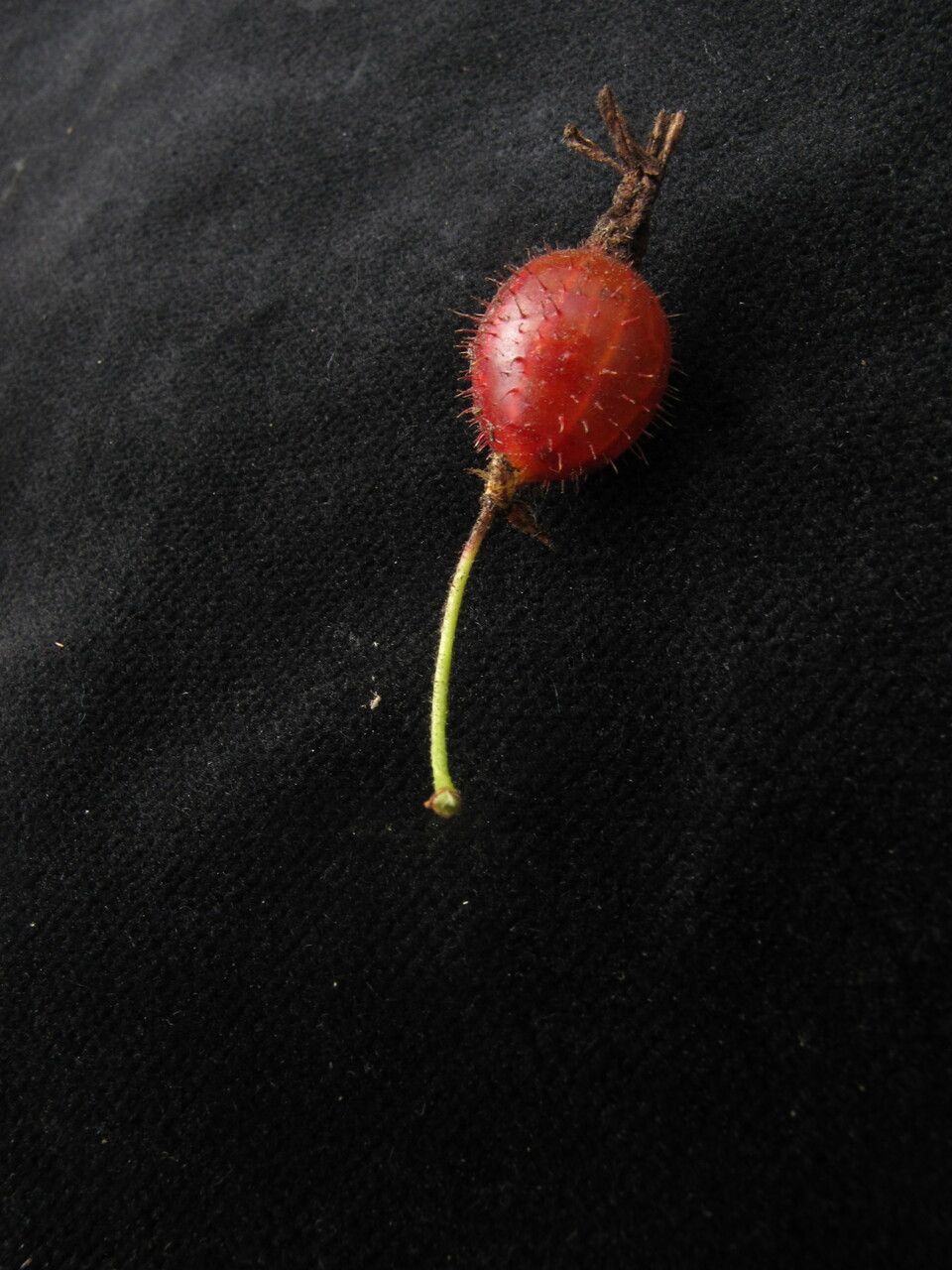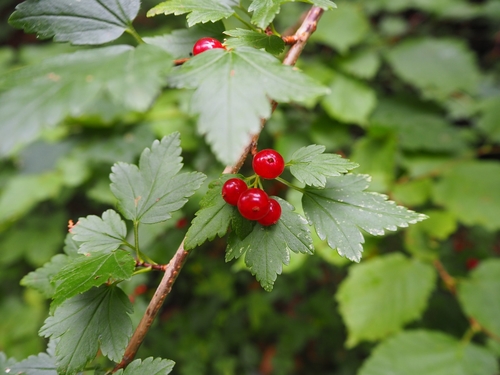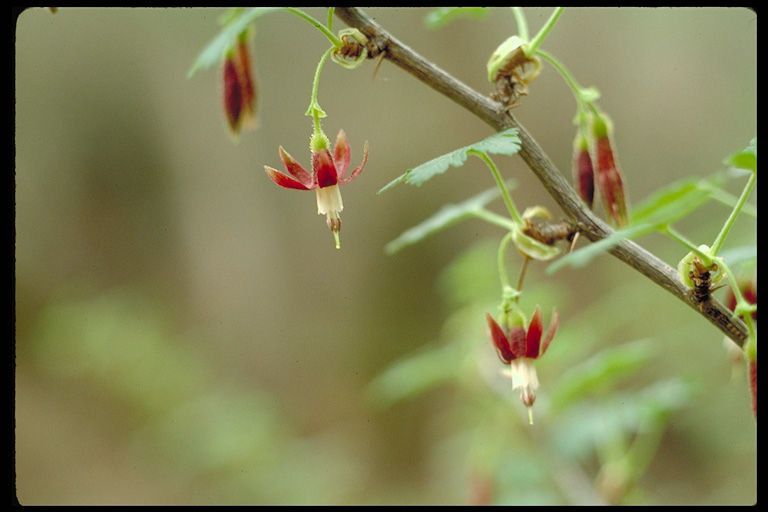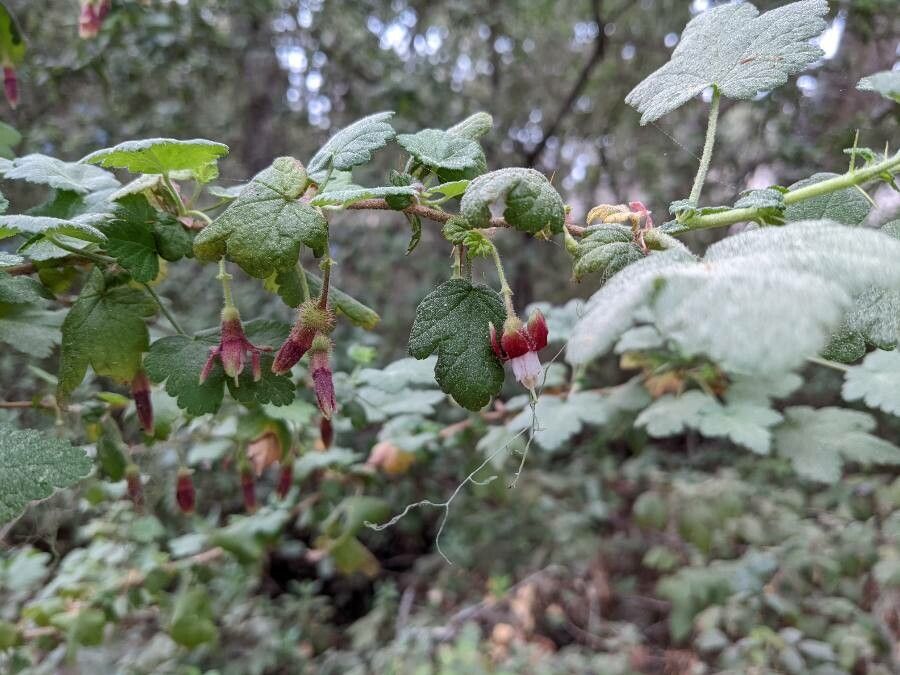
Ribes menziesii, the canyon gooseberry, is a species of currant found only in California and Oregon. There are five to six varieties of the species found across the low elevation mountains of California, especially the Coast Ranges, and the coastal canyons and foothills, into southern Oregon. It can be found in the chaparral plant community.
Canyon gooseberry has strong disease resistance and is typically not susceptible to illnesses. As for upkeep, this plant is fairly low-maintenance. When grown outdoors it needs only light watering, and larger plants usually do not require pruning. Smaller plants, however, should be pruned after they finish blooming. Canyon gooseberryt is appropriate for anyone with an outdoor area, such as a garden or deck, and does not demand much experience in plant care.
How to keep Ribes Menziesii.
Light
Canyon gooseberry does best in a spot with full sun for optimal health and growth. The plant can tolerate reduced light, but less sun may lessen its ability to thrive. Excessive or insufficient sunlight can lead to poor growth. This preference reflects its origin in sun-rich habitats.
Water
The canyon gooseberry is a drought-tolerant plant that thrives with very little water. It only needs to be watered every 2-3 weeks. This plant is native to arid climates and effectively manages water storage. Its waxy leaf coating helps reduce water loss during dry spells.
Temperature
Canyon gooseberry is native to areas with mild climates and prefers temperatures from 41 to 90 °F (5 to 32 °C). In periods of extreme cold or heat, consider giving it shelter or shade to keep growth conditions optimal.
Fertilizer
The Canyon gooseberry plant needs adequate nutrients to achieve optimal fruit production. Fertilize in early spring to promote new growth and bloom development. Regular feeding keeps the plant healthy, results in more flavorful fruit, and prevents nutrient deficiency problems like yellowing leaves and poor fruit yield.
Pruning
The canyon gooseberry is a thorny shrub known for its drooping branches, clusters of flowers, and edible berries. To keep the plant well-shaped, improve airflow, and encourage healthy growth, prune it in late spring after it has finished flowering. Regularly remove dead or crowded branches, ensuring you use clean tools to prevent the spread of disease.
Botanical profile.
- Plant Type
- Shrub
- Life Cycle
- Perennial
- Genus
- Ribes
- Family
- Grossulariaceae
- Hardiness Zone
- 4-8
- Mature Height
- 1.22 m to 1.52 m
- Mature Spread
- 0.91 m to 1.52 m
- Leaf Color
- Dark Green
- Leaf Type
- Deciduous
- Flower Color
- Pink, White
- Flower Size
- 1.02 cm to 1.52 cm
- Bloom Time
- Late winter, Early spring, Mid spring
- Planting Time
- Spring
- Harvest Time
- Summer
Other names.
Reader questions.
What are the sunlight requirements for Canyon gooseberry?
Canyon gooseberry thrives best when it is fully exposed to the sun, requiring above 6 hours of sunlight daily for optimal health and development. It can also tolerate partial sun, with about 3-6 hours of sunlight, but less exposure may impact its ability to flourish. It's essential to watch how sunlight moves through your garden and choose spots that offer the right balance of light and shade, ensuring your plants' happiness and healthy growth.
What is the native climate for Canyon gooseberry?
Canyon gooseberry, botanically known as Ribes menziesii, thrives in mild climates, preferring temperatures that range between 41°F to 90°F (5°C to 32°C). It is well-suited to environments that do not experience extreme cold or harsh heat. During colder months, it shows strong resistance to frost, indicating that special frost protection measures are generally not needed. However, in conditions where temperatures are expected to plummet below -30°C, providing additional cold protection by wrapping the trunk and branches with insulating materials is advisable. Additionally, to prepare the plant for winter, it's beneficial to water it abundantly before the first freeze of autumn to ensure the soil remains moist, which helps in preventing drought and water scarcity during the colder seasons.
How does artificial lighting benefit indoor Canyon gooseberry plants?
For indoor Canyon gooseberry plants, adequate lighting is crucial, especially when natural sunlight is insufficient, such as during winter or in less sunny spaces. Artificial lights, particularly LED lights, are beneficial as they can be customized to provide specific wavelengths needed by plants. Full sun plants require 30-50W/sq ft, partial sun plants need 20-30W/sq ft, and full shade plants need 10-20W/sq ft of artificial light. The light source should be placed 12-36 inches above the plant for 8-12 hours per day to mimic natural daylight hours and promote faster, healthier growth.
How does Canyon gooseberry respond to low temperatures, and what are the recommended solutions?
Canyon gooseberry exhibits commendable cold tolerance, thriving best at temperatures above 5°C and ideally being kept above -25°C during winter. When temperatures drop below -30°C, the plant might not show immediate changes during the winter months. However, come spring, you may notice the branches becoming brittle and dry, with an absence of new shoots. To address this, it's recommended to prune away any dead branches that have failed to produce new leaves in spring, which helps the plant recover and maintain its health.
What symptoms indicate Canyon gooseberry is receiving inadequate light?
When Canyon gooseberry does not receive enough light, it may show several symptoms, including smaller new leaves, leggy or sparse growth, faster leaf drop, slower or no new growth, and lighter-colored new leaves. Additionally, excessive sunlight can lead to chlorosis, sunscald, leaf curling, wilting, and leaf scorching. These symptoms indicate a lack of chlorophyll and essential nutrients or damage caused by intense sunlight exposure, affecting the plant's ability to photosynthesize and maintain overall health.
How does Canyon gooseberry react to high temperatures, and what steps should be taken?
During the summer, it's crucial to ensure that the Canyon gooseberry's environment does not exceed 32°C, as temperatures above 35°C can cause the leaves to lighten in color and the tips to become dry and withered. Such conditions increase the plant's susceptibility to sunburn. To mitigate these effects, prune the sunburned and dried-up areas of the plant. Relocating the plant to a shaded area, particularly away from the midday and afternoon sun, or using a shade cloth, can offer necessary protection. It is also beneficial to water the plant during cooler times of the day, such as in the morning and evening, to keep the soil adequately moist.
How can I address light-related issues for my Canyon gooseberry?
To address light-related issues for Canyon gooseberry, gradually acclimate your plant to receive at least 6 hours of direct sunlight daily by moving it to a sunnier location each week. For indoor plants, consider using artificial light if moving the plant is not feasible, keeping a lamp on for at least 8 hours daily or investing in professional plant grow lights. Outdoors, avoid sudden changes in light intensity to prevent sunburn. Minimize obstructions like trees by pruning, or for smaller plants, consider transplanting during their dormant period to a location with ample sunlight and good drainage. Note that parts of the plant affected by insufficient sunlight may not recover, but new growth should be healthy after increasing light exposure.