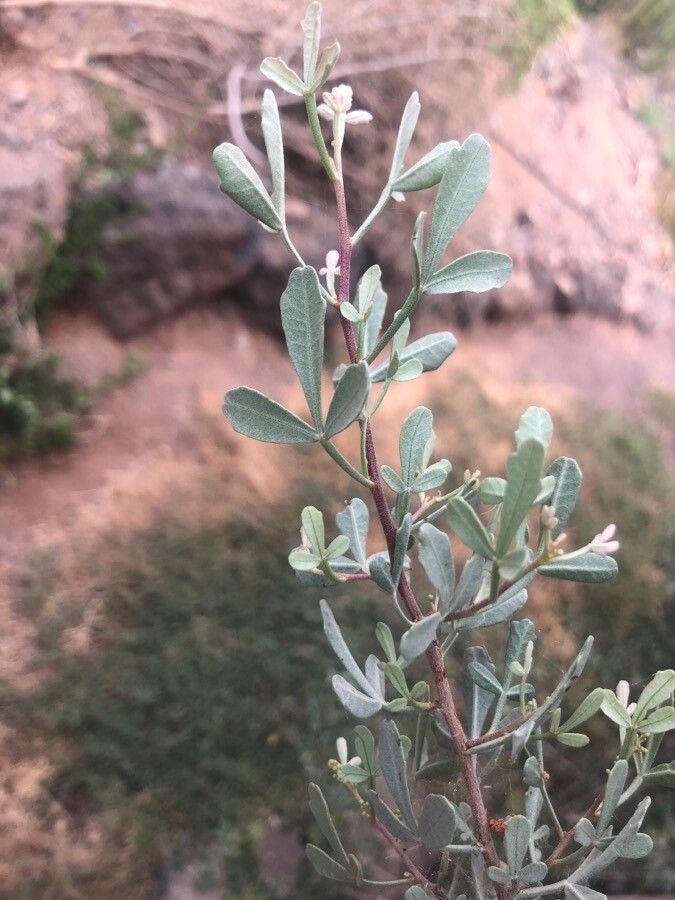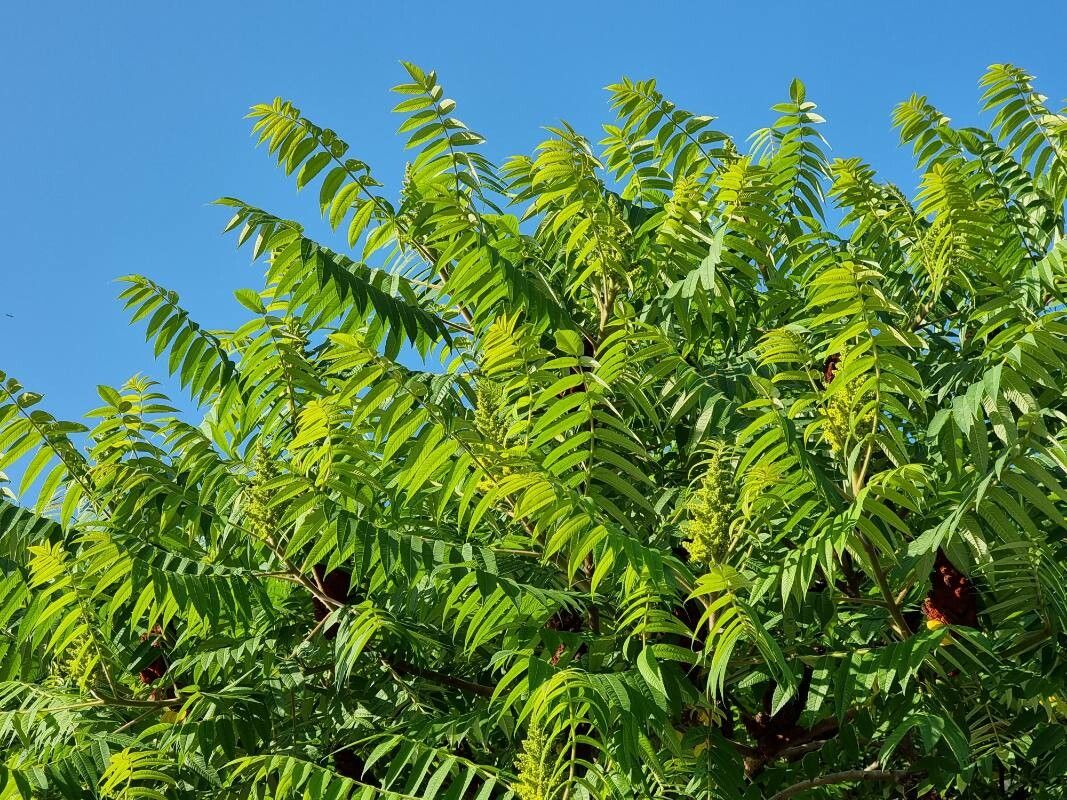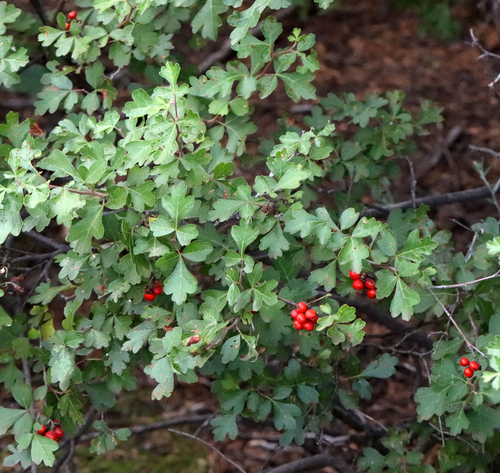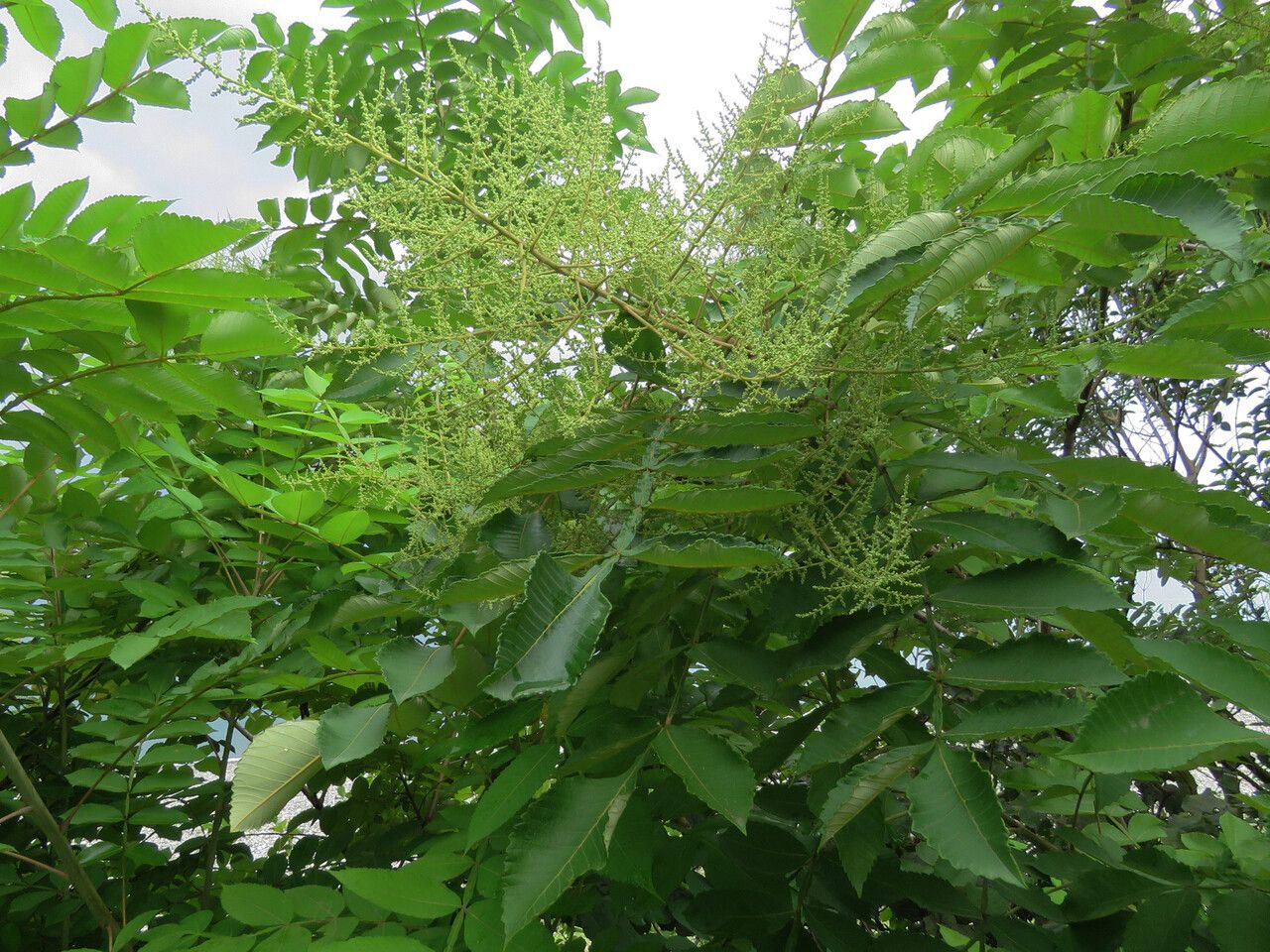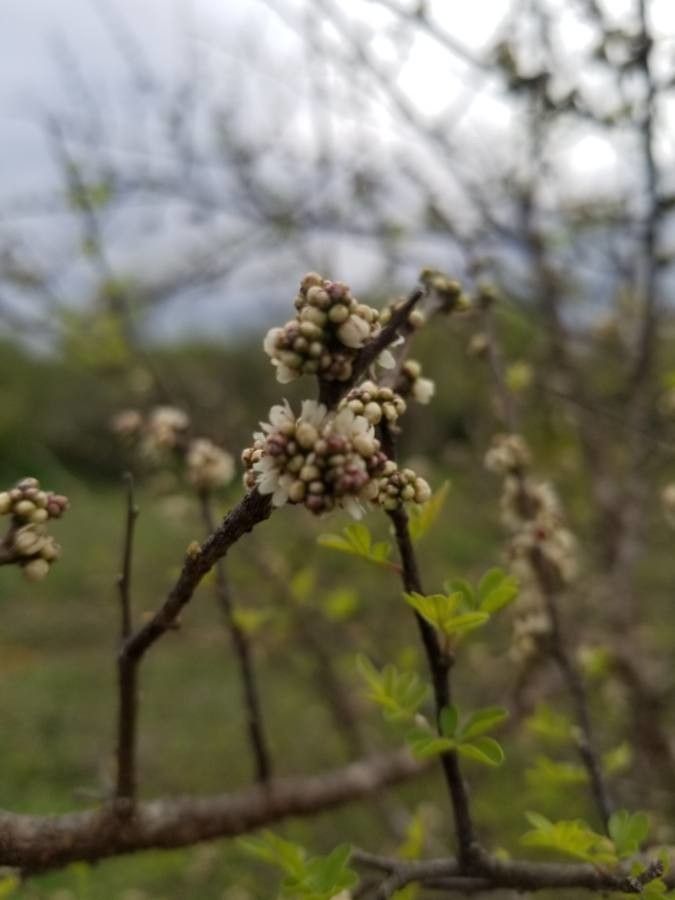
Rhus microphylla, commonly known as littleleaf sumac, is a deciduous shrub in the Anacardiaceae family. Native to the southwestern United States and northern Mexico, this plant thrives in arid regions, such as deserts, canyons, and rocky slopes.
Typically, Rhus microphylla grows up to 6 feet tall with a spread of 6 to 8 feet. Its small green leaves turn red in the autumn before falling off. The leaves are pinnately compound, featuring 11 to 21 leaflets, each about an inch long.
In the spring, Rhus microphylla produces small yellow-green flowers, which are followed by clusters of red berries in the summer. These berries persist into the winter, providing an essential food source for birds and other wildlife.
Once established, this plant is drought-tolerant but prefers well-drained soil with moderate moisture levels. It can be propagated by seeds or cuttings.
In traditional medicine, Rhus microphylla has been valued for its anti-inflammatory properties, used to treat various ailments such as arthritis and sore throat.
Overall, Rhus microphylla is an attractive shrub that provides food for wildlife while requiring minimal maintenance, making it an excellent addition to any arid landscape garden or natural area restoration project.
Little leaf sumac is resistant to disease and is generally not prone to illnesses. In terms of care, this plant is relatively low-maintenance. When grown outdoors it needs minimal watering, and larger specimens typically do not require pruning. However, smaller plants should be pruned after they have finished blooming. Little leaf sumac is suitable for anyone with an outdoor area, such as a garden or deck, and does not require extensive gardening experience.
How to keep Rhus Microphylla.
Light
Little leaf sumac originates in open habitats, such as sunny meadows and forest edges, which supply abundant light. It thrives in Full Sun yet can also tolerate Partial Sun, adapting well to a variety of sunlight conditions.
Water
Originating from arid regions, the little leaf sumac is highly drought-tolerant, needing to be watered only once a week. It is typically grown outdoors and is ideal for xeriscaping, as it conserves water by requiring minimal supplemental irrigation.
Temperature
Little leaf sumac adapts well to temperature, able to endure higher heat and wide temperature swings. In hot weather, care should be taken to water properly and provide some shade to avoid sunburn. Conversely, Little leaf sumac is not very cold-tolerant; it can handle a certain amount of chill, but very low temperatures may cause frost damage.
Fertilizer
Fertilize your Little leaf sumac in early spring to encourage healthy growth. Regular feeding improves its overall health, leading to vigorous growth, greater resilience to tough conditions, and enhanced resistance to diseases and pests. Follow a specific fertilization schedule for your Little leaf sumac to maintain vibrant foliage with deep color and a lush appearance.
Pruning
The little leaf sumac is characterized by its small, fern-like leaves and red berries. To maintain its health and appearance, it is important to prune it annually. The best time for this is in early spring. Begin by removing any dead branches to encourage new growth and improve air circulation. Additionally, thinning out dense areas can help prevent disease and promote better fruit production. Make sure to always use clean, sharp tools when pruning.
Botanical profile.
- Plant Type
- Shrub
- Life Cycle
- Perennial
- Genus
- Rhus
- Family
- Anacardiaceae
- Hardiness Zone
- 5-9
- Mature Height
- 1.83 m to 3.66 m
- Mature Spread
- 2.13 m to 3.05 m
- Leaf Color
- Green, Dark Green
- Leaf Type
- Deciduous
- Flower Color
- White
- Flower Size
- 0.25 cm to 0.51 cm
- Bloom Time
- Early spring, Mid spring
- Planting Time
- Spring, Autumn
- Harvest Time
- Summer
- Native Area
- Mexico