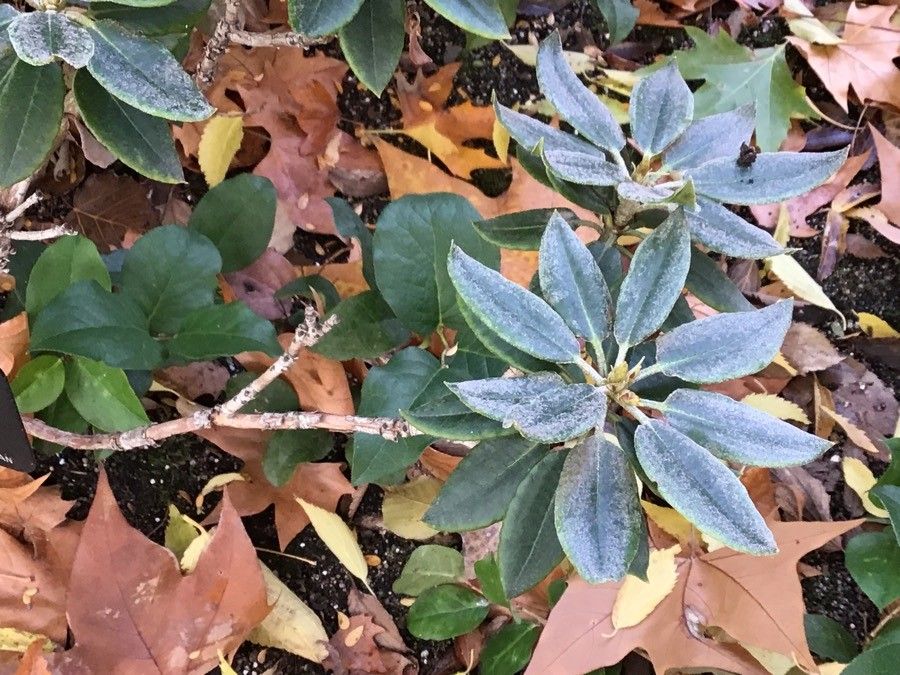
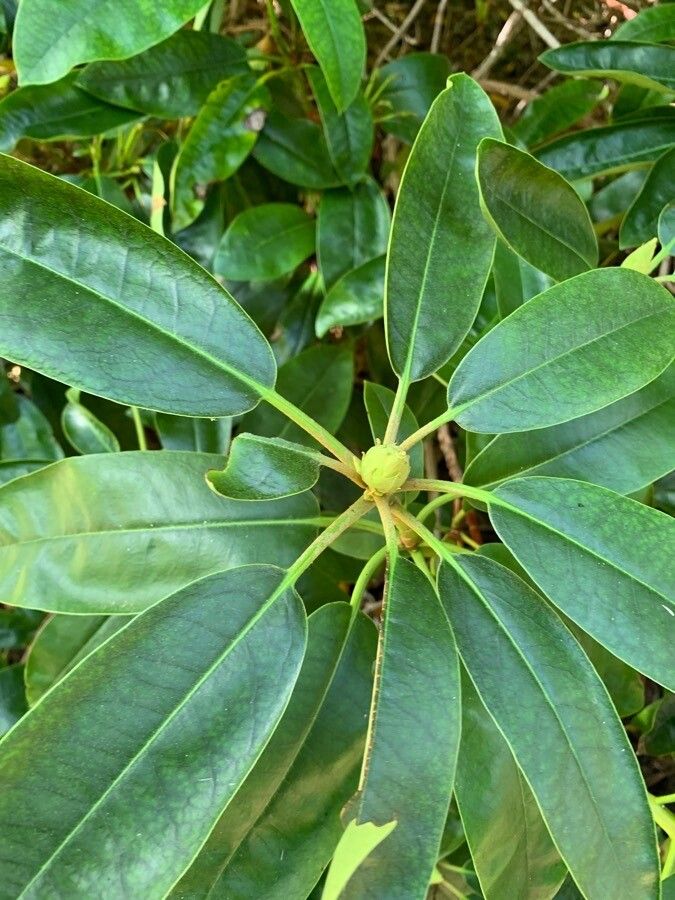
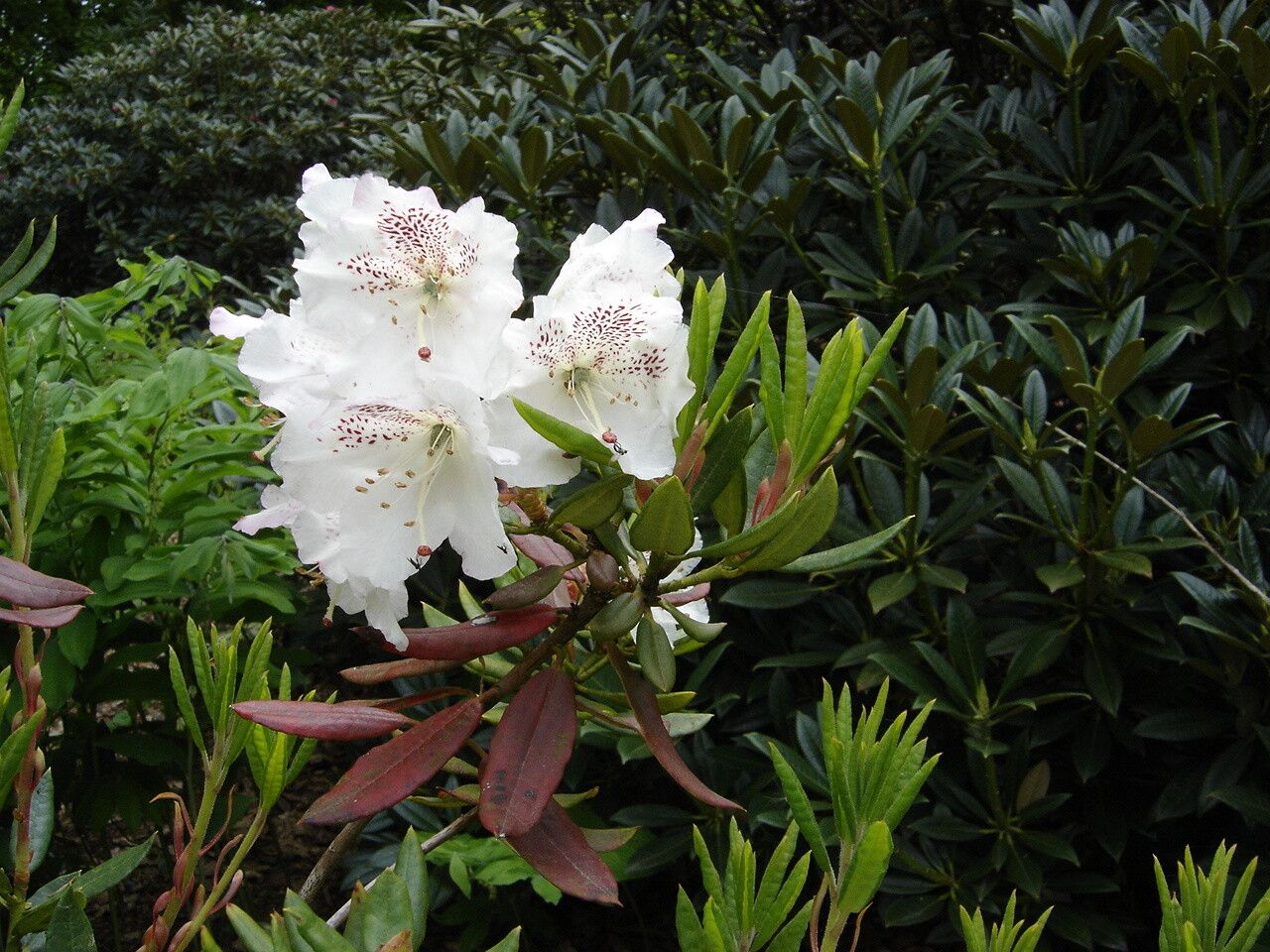
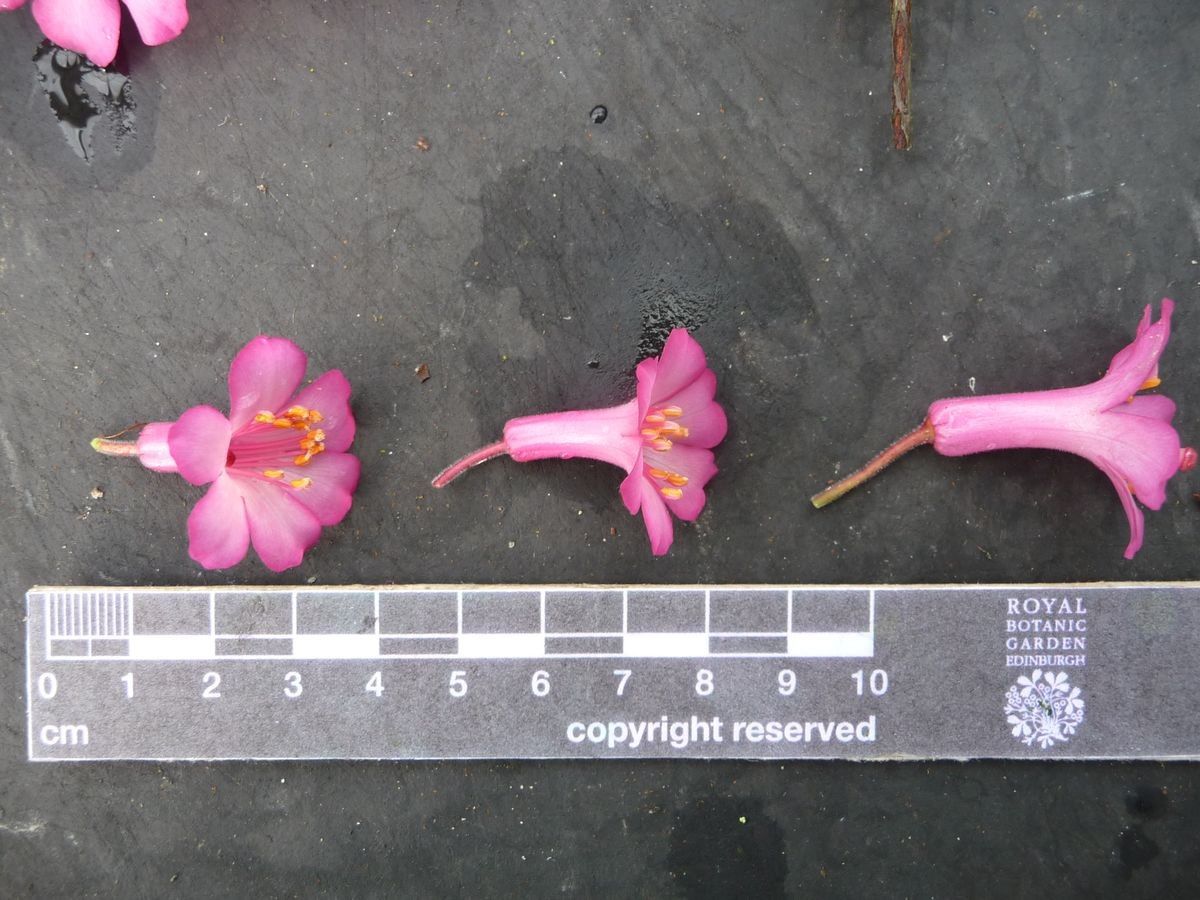
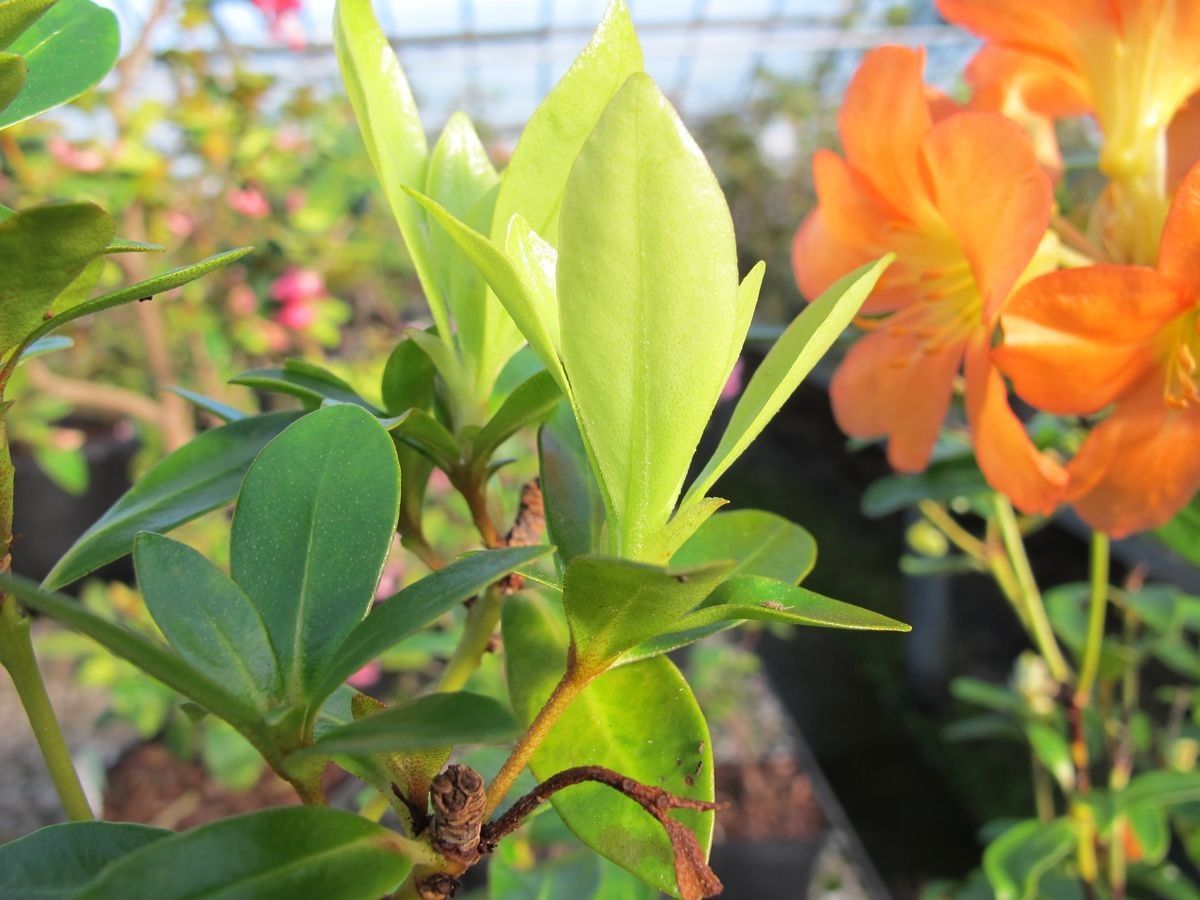
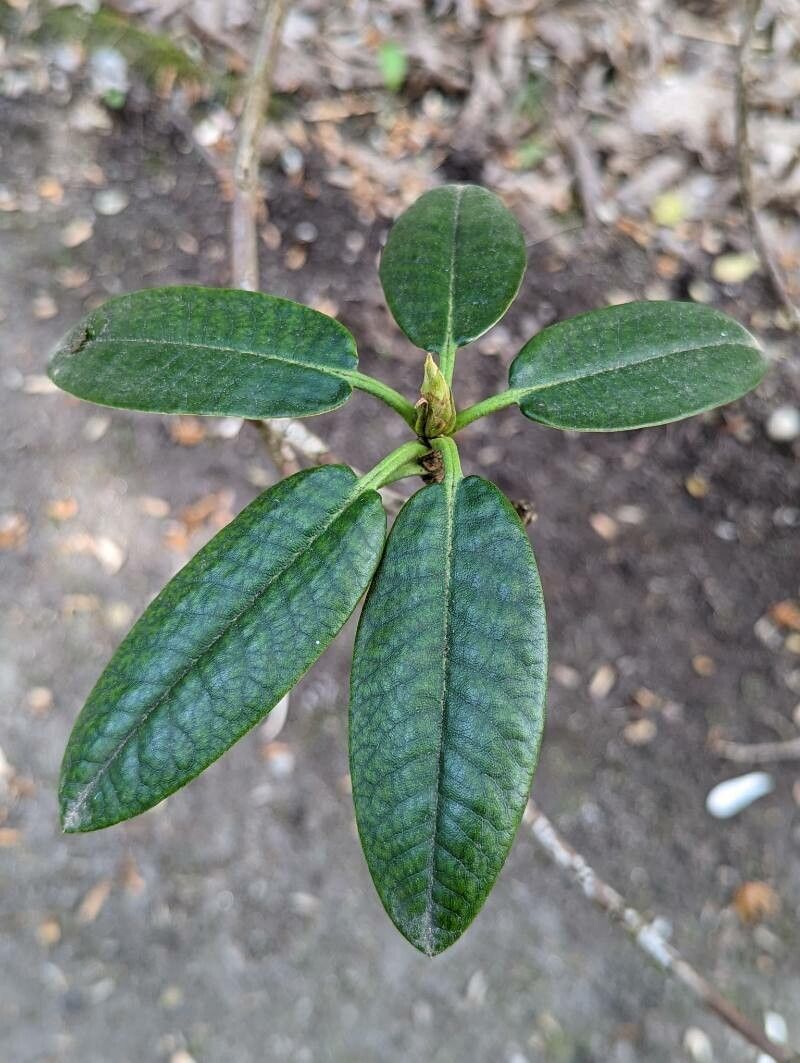
Rhododendron pseudochrysanthum (Chinese: 阿里山杜鵑; pinyin: Ālǐshān dùjuān; lit. 'Alishan azalea'), the false-gold-flower rhododendron, is a species of flowering plant in the heath family Ericaceae, native to Taiwan. It is a low-growing evergreen shrub growing to 2.5 m (8.2 ft) tall and broad. In spring, trusses of pink buds appear, opening to pale pink flowers spotted with deeper pink on the inner surface.In cultivation in the UK Rhododendron pseudochrysanthum has gained the Royal Horticultural Society’s Award of Garden Merit. It is hardy down to −20 °C (−4 °F) but like most rhododendrons it requires a sheltered spot in dappled shade, and an acid soil enriched with leaf mould.
The False-gold-flower rhododendron is fairly disease resistant and usually not susceptible to many illnesses. Carewise, it is a low-maintenance plant. When grown outdoors it needs only light watering, and larger specimens typically do not require pruning. Smaller plants, however, should be trimmed after they finish blooming. The False-gold-flower rhododendron is appropriate for anyone with outdoor space, such as a garden or deck, and does not demand a great deal of gardening experience.
How to keep Rhododendron Pseudochrysanthum.
Light
False-gold-flower rhododendron thrives with abundant sunlight for optimal growth. It tolerates bright, sunlit locations that are not completely exposed. Its character reflects its native habitat, which receives plenty of light. Too much or too little light can impair its health and vigor.
Water
The false-gold-flower rhododendron flourishes in moist, high-altitude environments. To prevent the soil from becoming waterlogged, it should be watered regularly every 1 to 2 weeks. As an evergreen plant, it requires careful watering during the growing season to maintain its vibrant blooms and lush foliage. While it shows moderate drought tolerance, it still benefits from consistent moisture.
Temperature
False-gold-flower rhododendron originates from regions with a moderate climate and requires temperatures of 50 to 95 °F (10 to 35 ℃). Although it can endure a broad temperature range, false-gold-flower rhododendron favors gentler conditions. Seasonal adjustments in extreme climates are recommended.
Fertilizer
The timing of fertilizing False-gold-flower rhododendron is important. Apply fertilizer in early spring and continue doing so monthly until early summer. Fertilizer encourages attractive blooms and supplies energy during both dormant and active growth periods.
Pruning
The false-gold-flower rhododendron is a shrub known for its dense foliage and vibrant blossoms. To maintain its shape and health, prune it in late spring once the blooming period has ended. Light trimming is beneficial as it promotes better airflow, which helps prevent fungal infections. Additionally, thinning the branches allows more light to reach the inner parts of the plant, enhancing its overall vitality. It's important to avoid heavy pruning, as this can diminish the shrub's flowering potential.
Botanical profile.
- Plant Type
- Shrub
- Life Cycle
- Perennial
- Genus
- Rhododendron
- Family
- Ericaceae
- Hardiness Zone
- 6-9
- Mature Height
- 2.44 m
- Mature Spread
- 1.52 m to 2.44 m
- Leaf Color
- Green
- Leaf Type
- Evergreen
- Flower Color
- Pink, White
- Flower Size
- 4.06 cm
- Bloom Time
- Mid spring, Late spring
- Planting Time
- Spring, Summer, Autumn
- Harvest Time
- Mid summer, Late summer, Early fall
- Native Area
- China
Reader questions.
What are the sunlight requirements for False-gold-flower rhododendron?
The False-gold-flower rhododendron requires an abundance of sun exposure for optimal growth. It thrives in locations that receive above 6 hours of sunlight daily (full sun) but can also tolerate areas with about 3-6 hours of sunlight (partial sun). Observing how sunlight moves through your garden can help in choosing spots that provide the right balance of light and shade, ensuring the plant's happiness and health. Its nature, linked to its origin habitat, supports its need for plenty of light, although too much or too little can adversely affect its vitality.
What is the native climate of the false-gold-flower rhododendron?
The false-gold-flower rhododendron, known botanically as Rhododendron pseudochrysanthum, thrives in moderate climates. It prefers temperatures ranging from 50 to 95 °F (10 to 35 °C), demonstrating a preference for milder conditions. This plant is adaptable to a wide range of temperatures; however, in areas with extreme climates, adjusting care routines seasonally is beneficial. Despite its strong resistance to cold, in instances where winter temperatures drop below -25°C, taking steps to protect the plant is crucial. This can include wrapping the plant's trunk and branches with insulating materials like non-woven fabric or cloth. Ensuring the soil around the plant is moist before the onset of the first freeze in autumn is recommended to help the plant avoid drought and water scarcity during the colder months.
How can artificial lighting be used for False-gold-flower rhododendron?
When natural sunlight is insufficient, especially during winter or in less sunny spaces, artificial lighting can be a vital solution for maintaining the health and growth of False-gold-flower rhododendron indoors. LED lights are recommended due to their ability to provide specific wavelengths of light needed by plants. For full sun plants, 30-50W per square foot is necessary, while partial sun plants require 20-30W per square foot. The light source should be placed 12-36 inches above the plant, mimicking natural sunlight for 8-12 hours a day to promote faster, healthier growth.
How does the false-gold-flower rhododendron react to low temperatures?
The false-gold-flower rhododendron is remarkably cold-tolerant, thriving best when temperatures remain above 10°C. During the winter, it's essential to keep it above -15°C for optimal health. If temperatures fall below -25°C, the plant may not show immediate distress, but come spring, you might notice the branches becoming brittle and dry, with no new shoots emerging. To address this, it's advised to prune away any dead branches that failed to produce new leaves in the spring, thus encouraging healthier growth.
What are the signs of inadequate lighting for False-gold-flower rhododendron?
Signs of inadequate lighting in False-gold-flower rhododendron include smaller new leaves, leggy or sparse growth, faster leaf drop, slower or no new growth, lighter-colored or irregularly colored new leaves, chlorosis (yellowing of leaves), sunscald, leaf curling, wilting, and leaf scorching. These symptoms indicate either too much or too little light, impacting the plant's ability to photosynthesize and maintain overall health.
What are the recommended care instructions for the false-gold-flower rhododendron during high temperatures?
During the summer months, it's important to ensure that the false-gold-flower rhododendron is kept in temperatures below 35°C to prevent heat stress. Exposure to temperatures above 38°C can lead to the leaves becoming lighter in color, tips becoming dry and withered, and an increased risk of sunburn for the plant. To mitigate these effects, it is advised to trim away any sunburned or dried parts of the plant. Moving the plant to a shaded area during the midday and afternoon sun, or using a shade cloth, can help protect it from excessive sun exposure. Additionally, watering the plant in the morning and evening can help maintain soil moisture and keep the plant healthy during hotter periods.
What solutions are available for False-gold-flower rhododendron experiencing inadequate lighting?
For indoor plants, gradually move them to sunnier locations or use artificial light, keeping a lamp on for at least 8 hours daily, or invest in professional plant grow lights. Outdoors, adapt plants gradually to sunnier spots to avoid sunburn, and consider that damaged parts might not recover, but new growth will be healthy upon improved light exposure. To mitigate obstructions outdoors, prune blocking trees or vegetation, and consider transplanting smaller plants during their dormant period to areas with better sunlight and drainage.