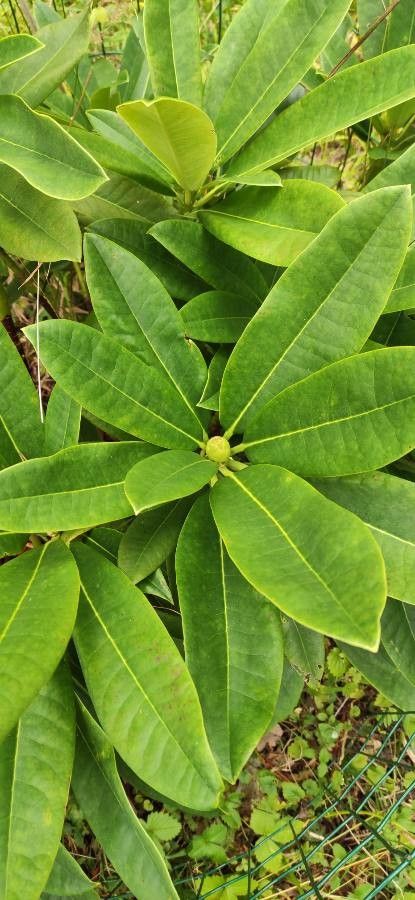
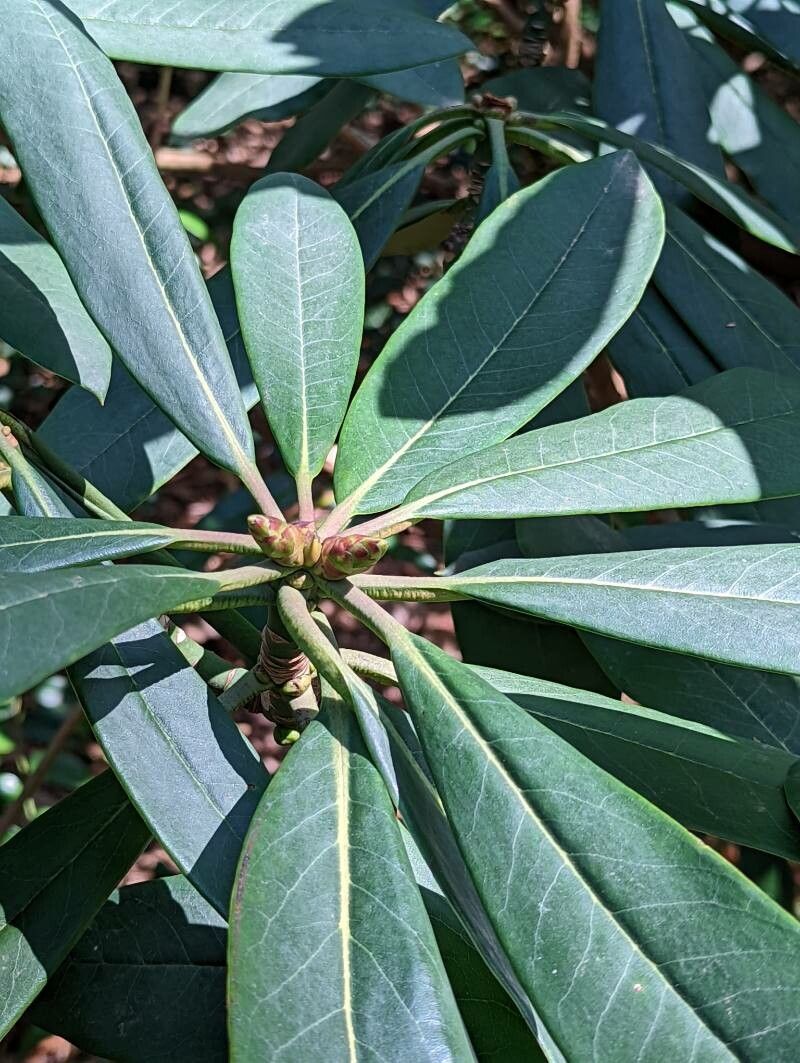
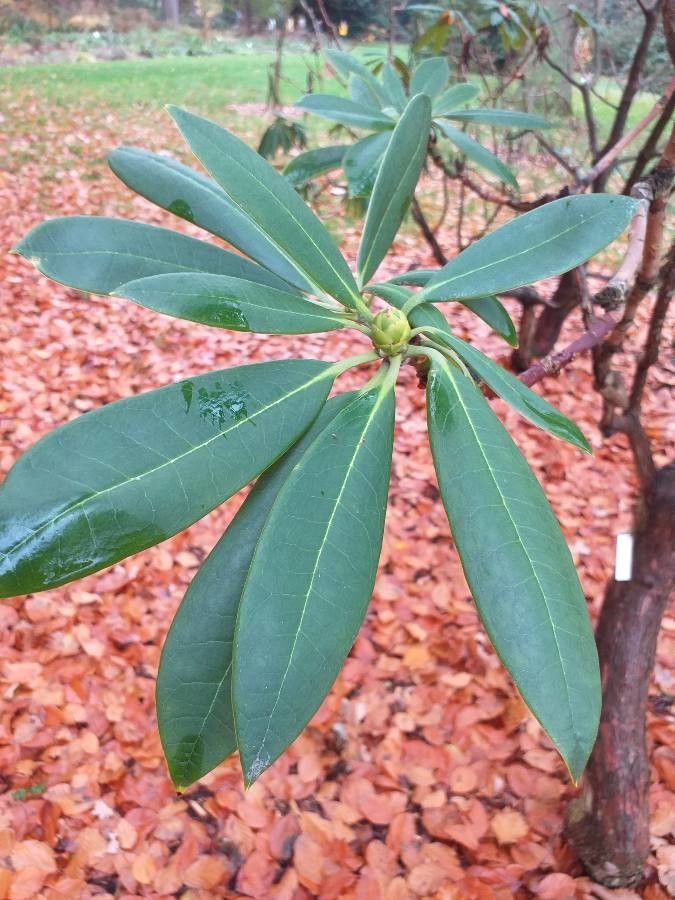
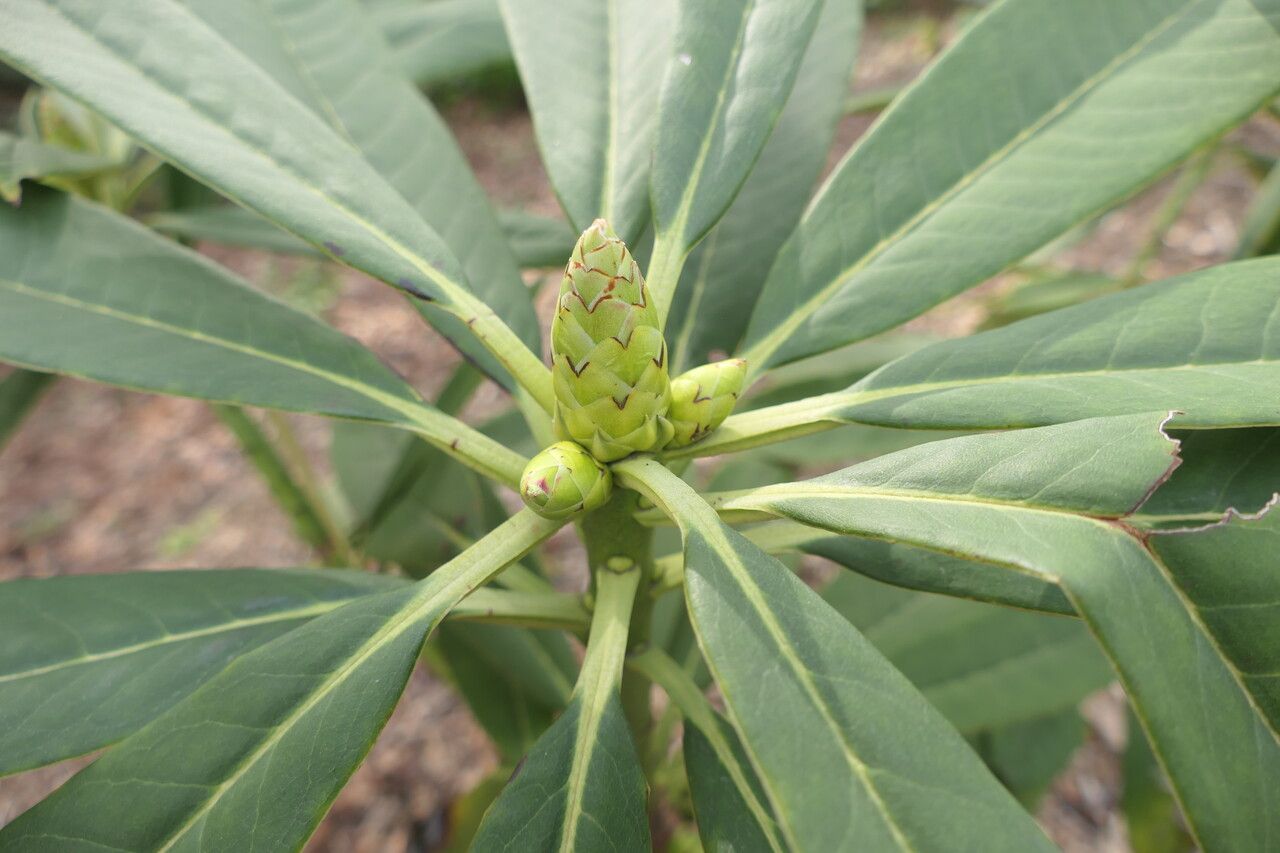
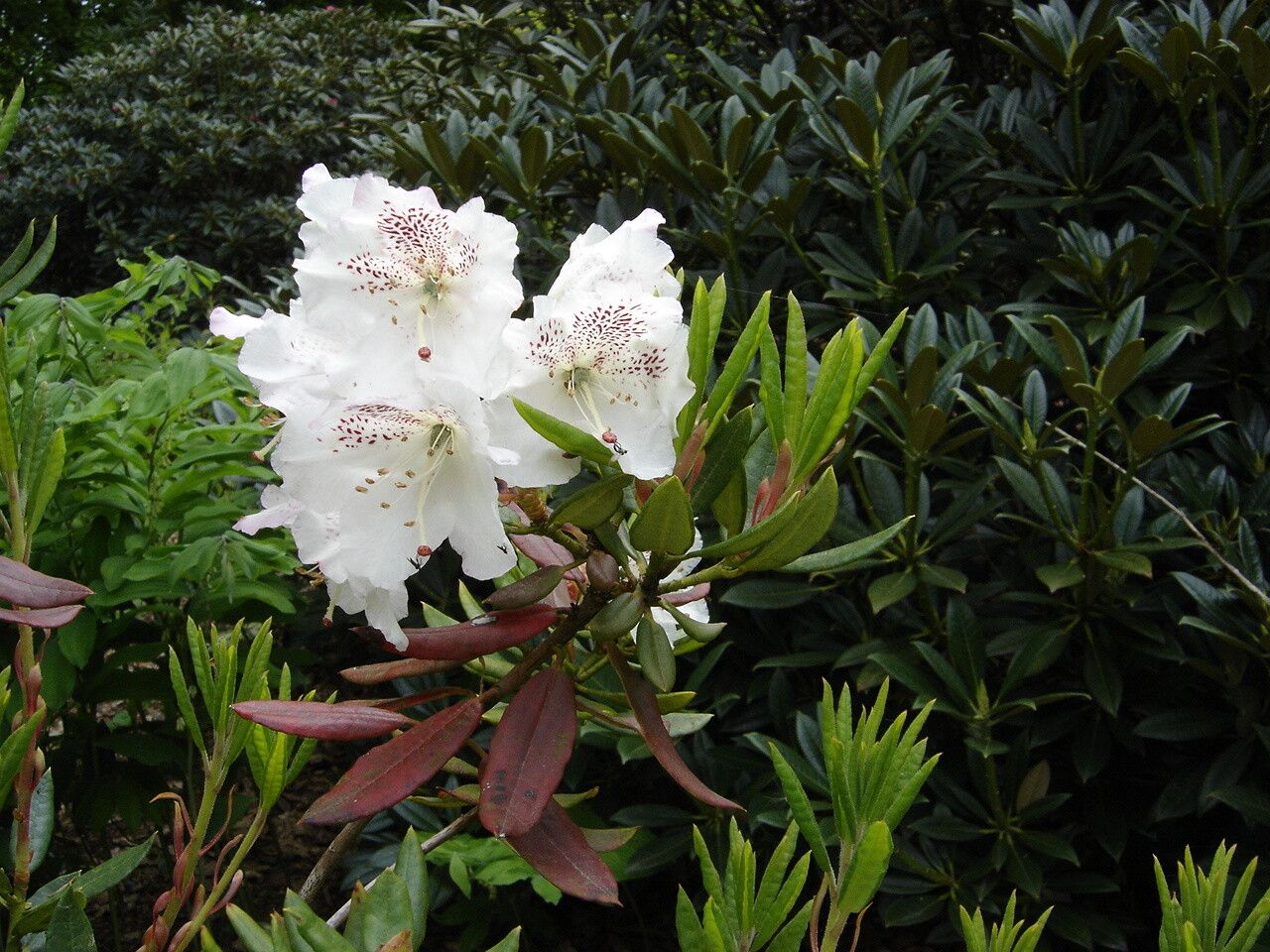
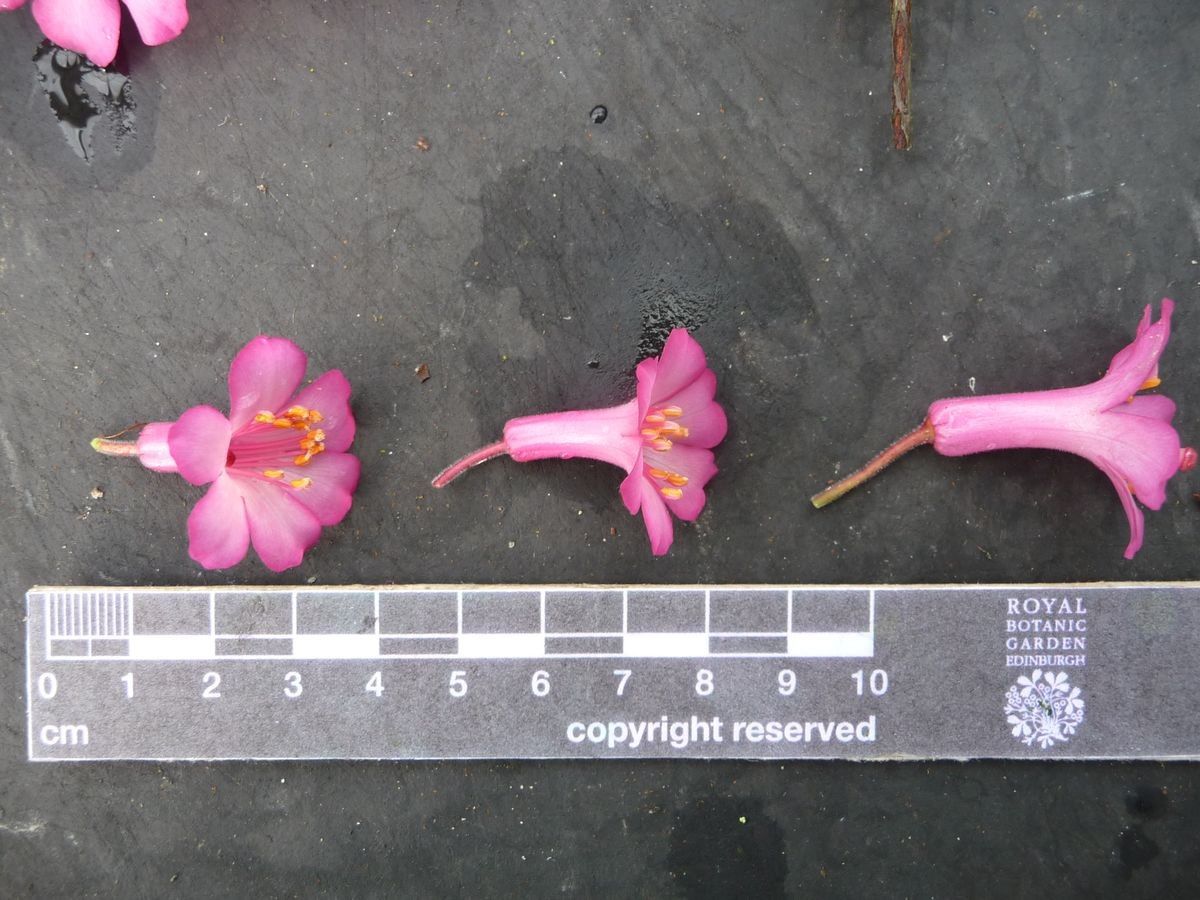
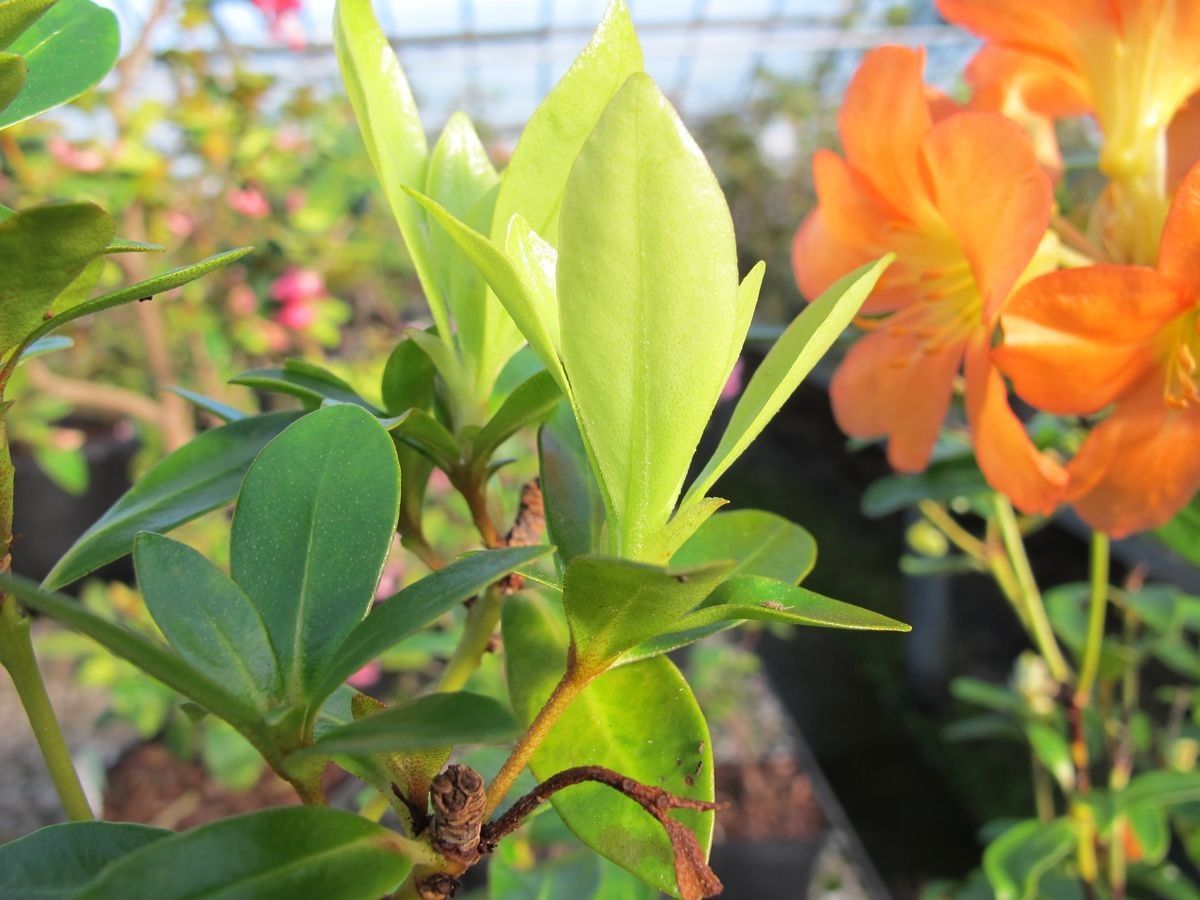
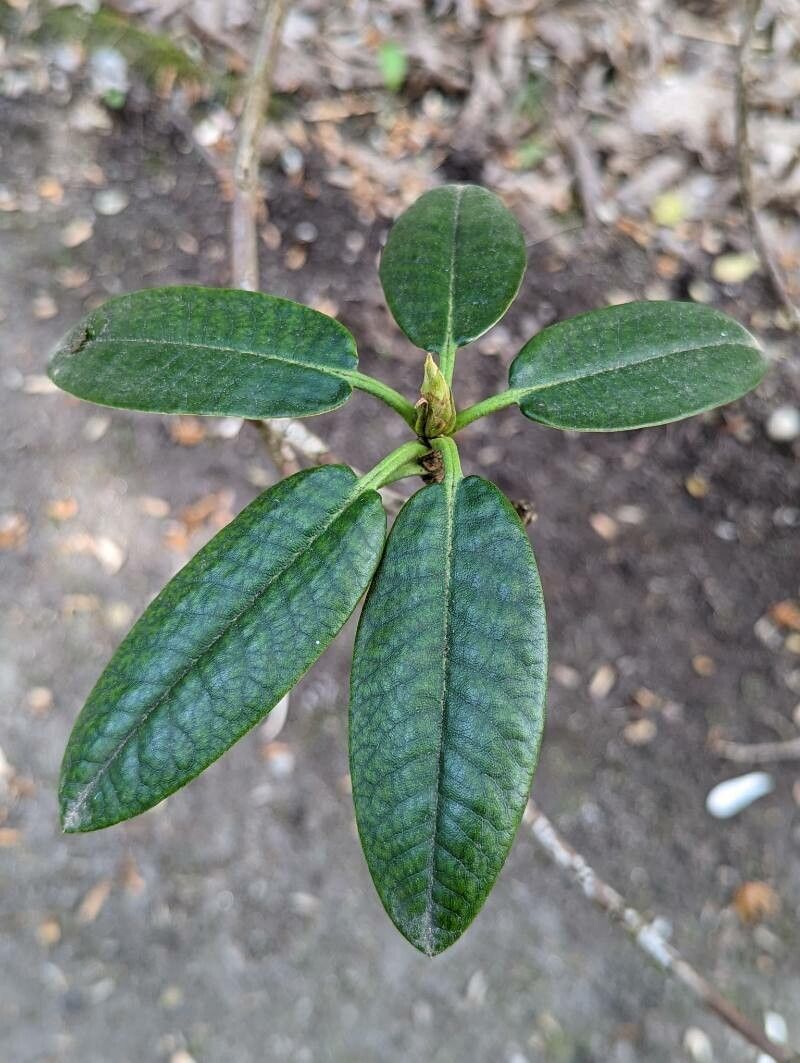
Rhododendron calophytum, the beautiful-face rhododendron, is a species of flowering plant in the heath family Ericaceae that is native to the forests of central and eastern China, where it lives at altitudes of 1,400–4,000 m (4,600–13,100 ft). Growing to 12 m (39 ft) tall and 8 m (26 ft) broad, it is a substantial evergreen shrub. The leathery leaves are narrow and up to 30 cm (12 in) long. In early Spring trusses of bell-shaped, white or pale pink flowers, spotted with maroon inside, are produced.In cultivation in the UK, Rhododendron calophytum has gained the Royal Horticultural Society’s Award of Garden Merit. Like most rhododendrons it prefers an acid soil. It is hardy down to −15 °C (5 °F).
Rhododendron calophytum has strong resistance to disease and is typically not susceptible to illnesses. Regarding maintenance, this plant is fairly low-maintenance. When grown outdoors it needs only minimal watering, and larger specimens usually do not require pruning; however, smaller plants should be trimmed after they finish flowering. Rhododendron calophytum is appropriate for anyone with outdoor space, such as a garden or a deck, and does not demand extensive plant-care experience.
How to keep Rhododendron Calophytum.
Light
Rhododendron calophytum occurs naturally in habitats such as forest understories or rocky sites, where it is found in natural shade. It prefers partial sun but can tolerate full sun or full shade, reflecting its hardy and adaptable character.
Water
For optimal care of Rhododendron calophytum, use rainwater or melted snow instead of tap water. During periods of vigorous growth, water the plant abundantly, but reduce the amount during the winter months. As winter ends, gradually increase the frequency of watering. In summer, water the plant in the morning and mist the leaves. During rainy seasons, adjust your watering schedule to prevent waterlogging.
Temperature
Rhododendron calophytum shows strong tolerance to a range of climates, from very hot summers to cold winters. That said, it does have a preferred temperature window for growth. If temperatures climb too high, the plant can experience heat and humidity stress that may kill it. In areas where temperatures approach the lower limit of its cold tolerance, using insulation to protect the plant is important.
Fertilizer
Fertilize your Rhododendron calophytum in early spring to encourage healthy growth. Regular feeding boosts overall health, leading to vigorous growth, increased tolerance of difficult conditions, and improved resistance to pests and diseases. Keep to a defined fertilization schedule to maintain vibrant, deeply colored foliage and a lush appearance.
Pruning
Rhododendron calophytum boasts vibrant blooms and glossy leaves. To maintain its health and appearance, prune in early spring by removing dead or damaged branches and thinning out overcrowded areas to improve air circulation. Regularly remove spent flowers to promote reblooming. Additionally, ensure that your tools are clean to prevent disease, which will help enhance bloom production and the plant's overall health.
Botanical profile.
- Plant Type
- Shrub
- Life Cycle
- Perennial
- Genus
- Rhododendron
- Family
- Ericaceae
- Hardiness Zone
- 6-9
- Mature Height
- 3.96 m to 6.1 m
- Mature Spread
- 3.05 m to 3.96 m
- Leaf Color
- Dark Green, Forest Green
- Leaf Type
- Evergreen
- Flower Color
- White, Pink
- Flower Size
- 5.08 cm to 6.35 cm
- Bloom Time
- Early spring, Mid spring
- Planting Time
- Spring, Summer, Autumn
- Harvest Time
- Mid summer, Late summer, Early fall