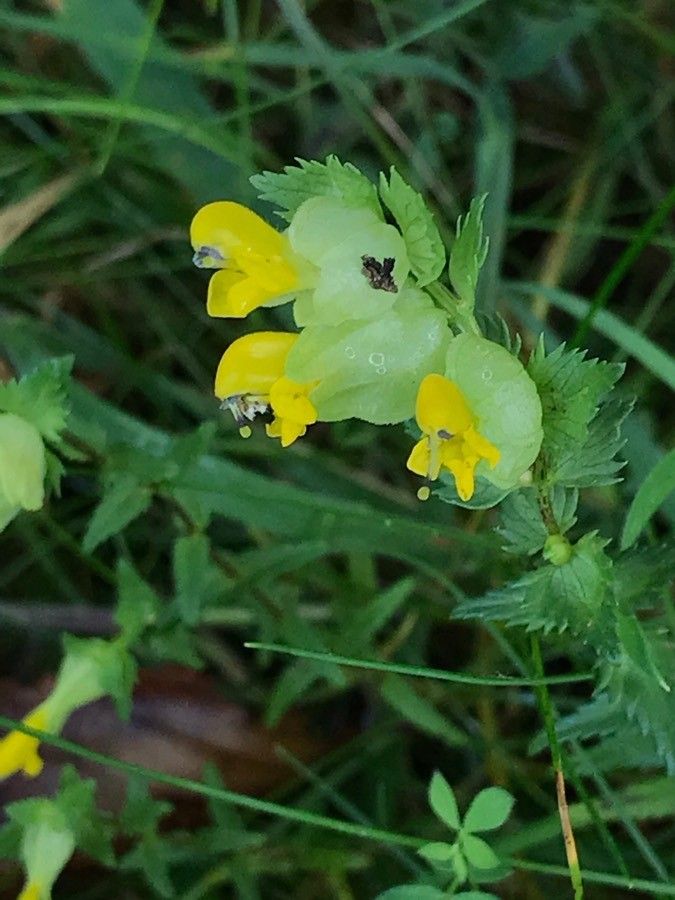
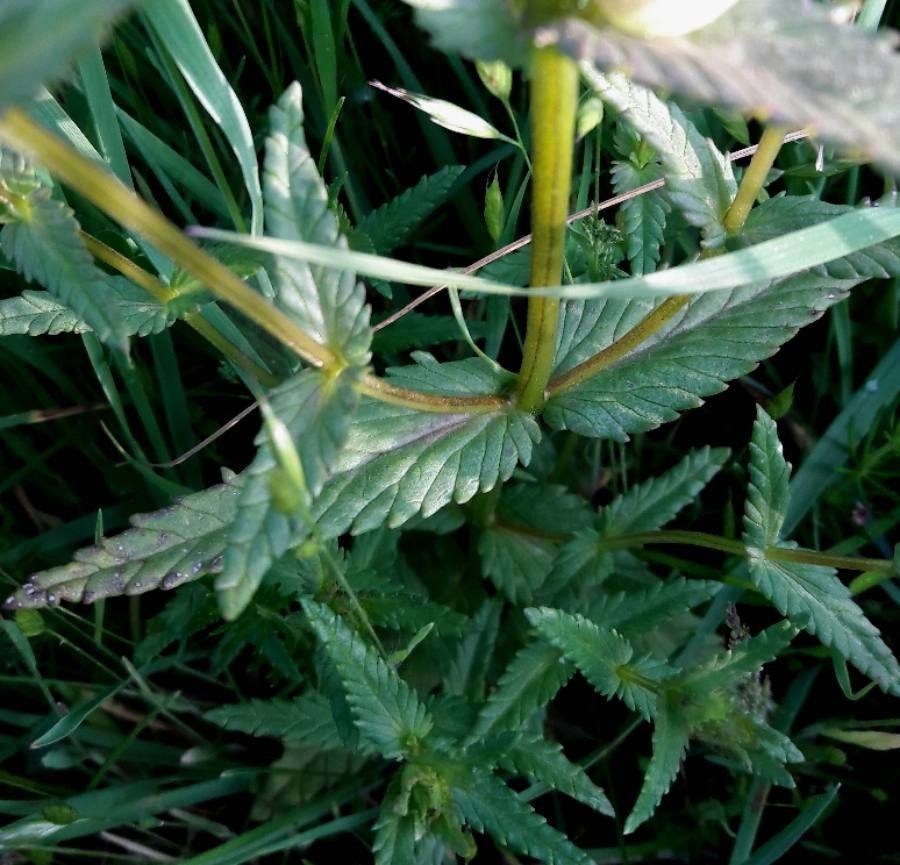
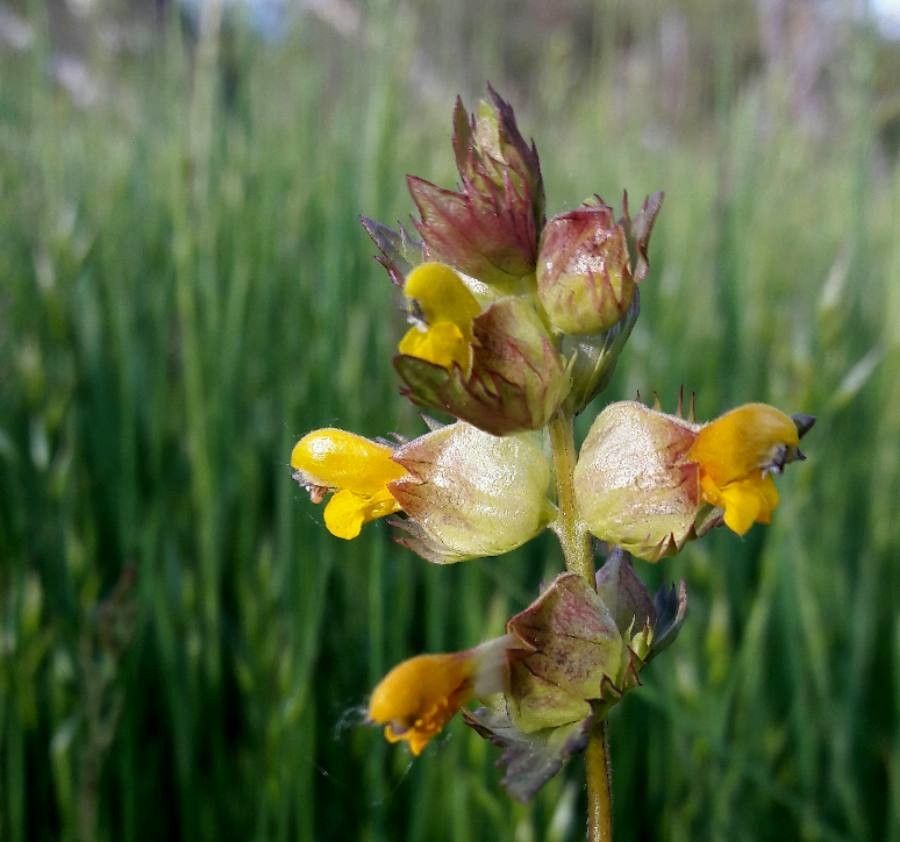
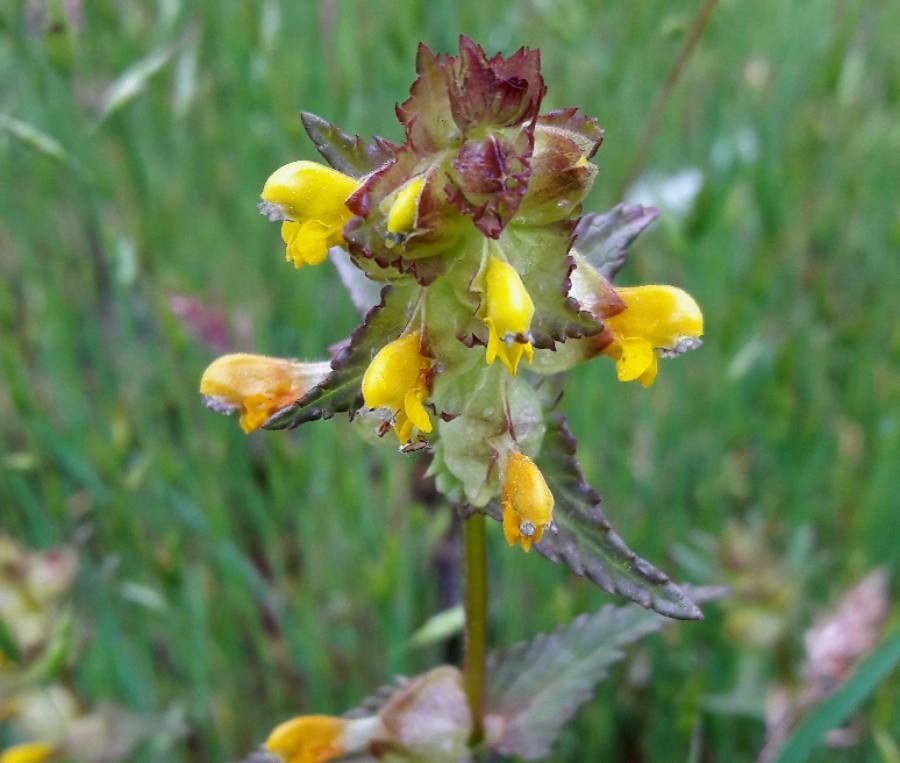
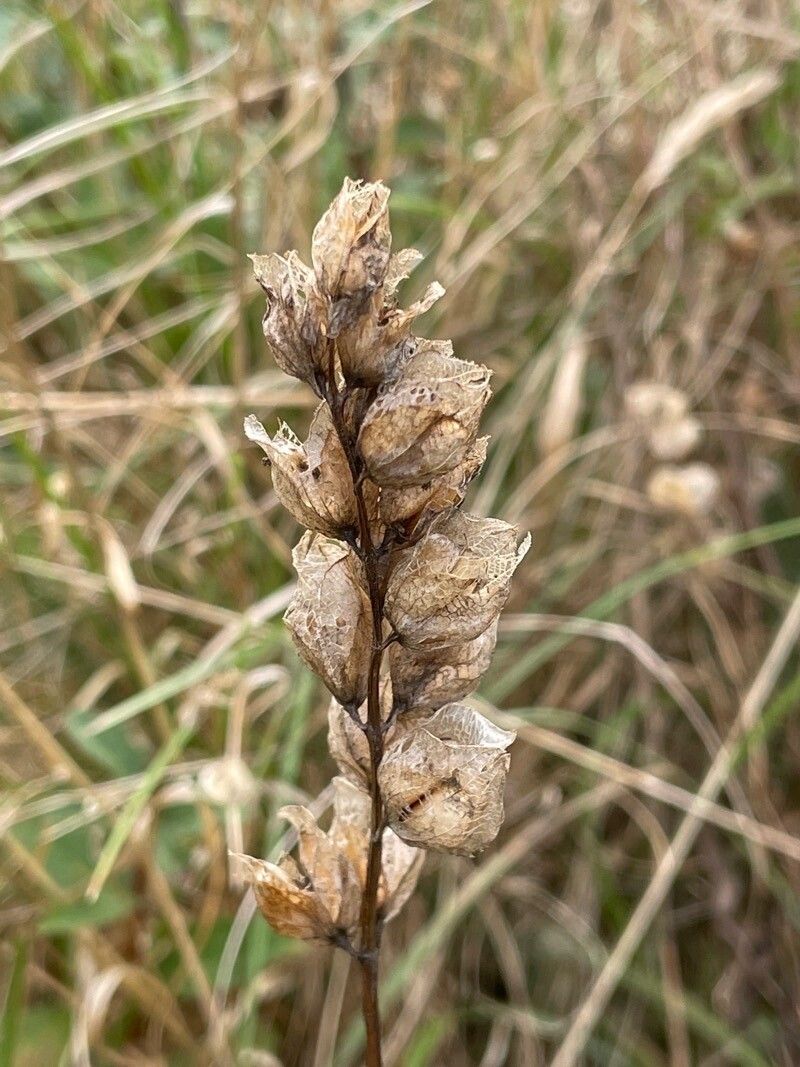
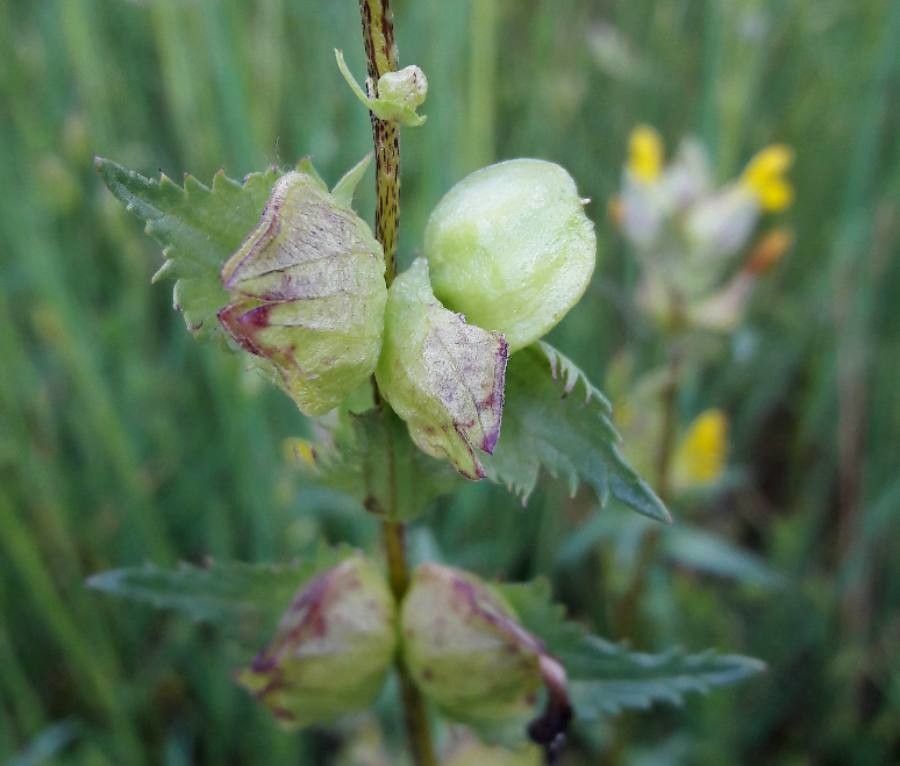
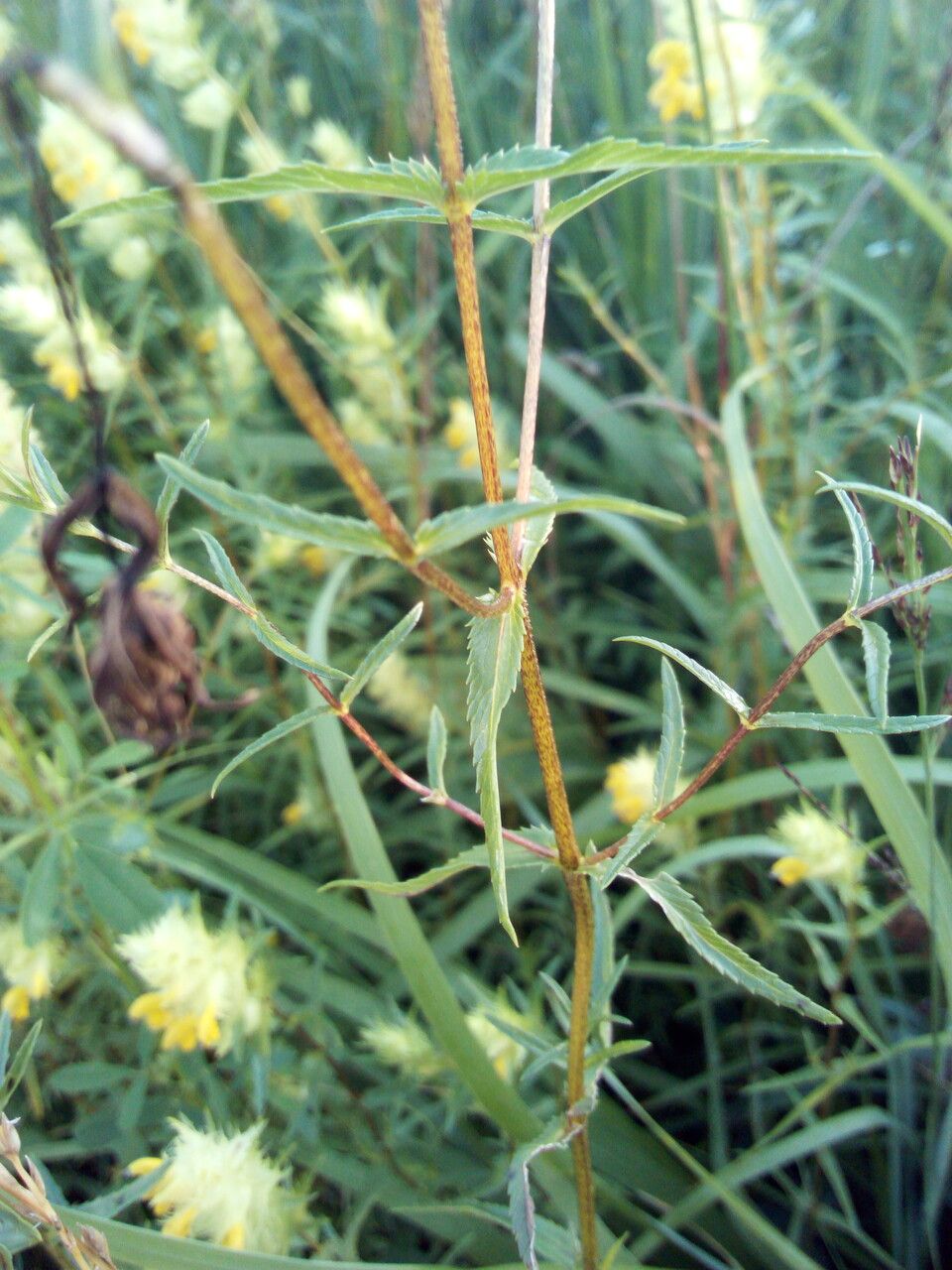
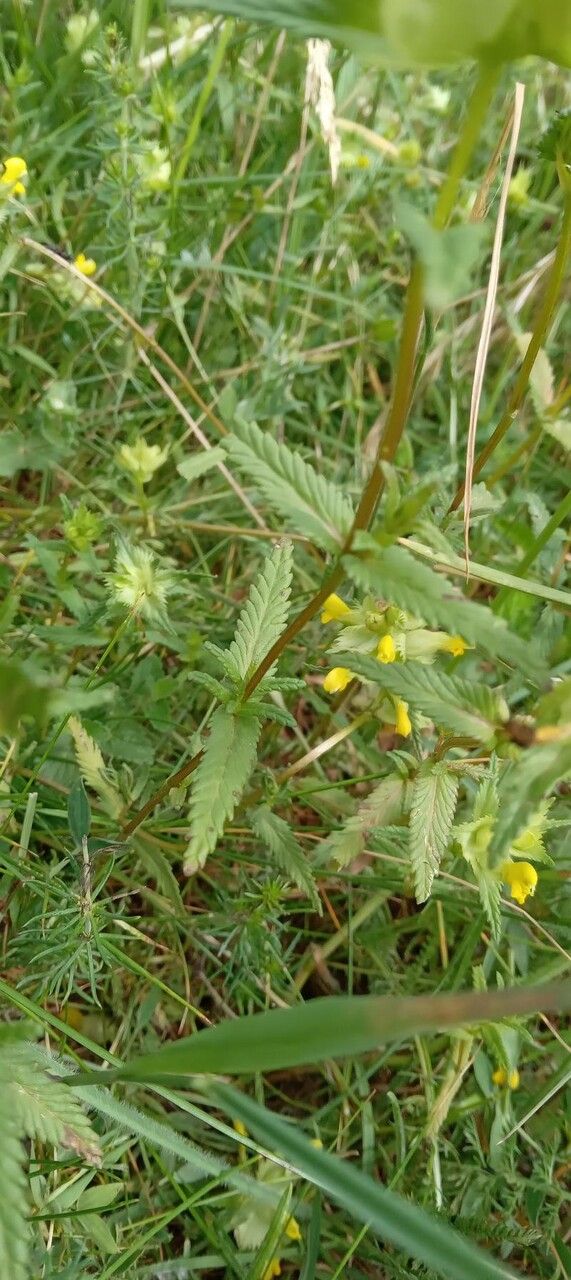
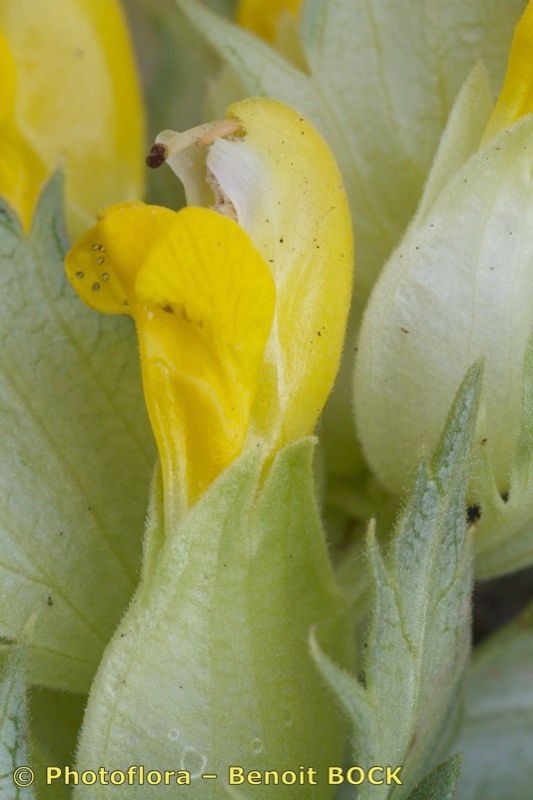
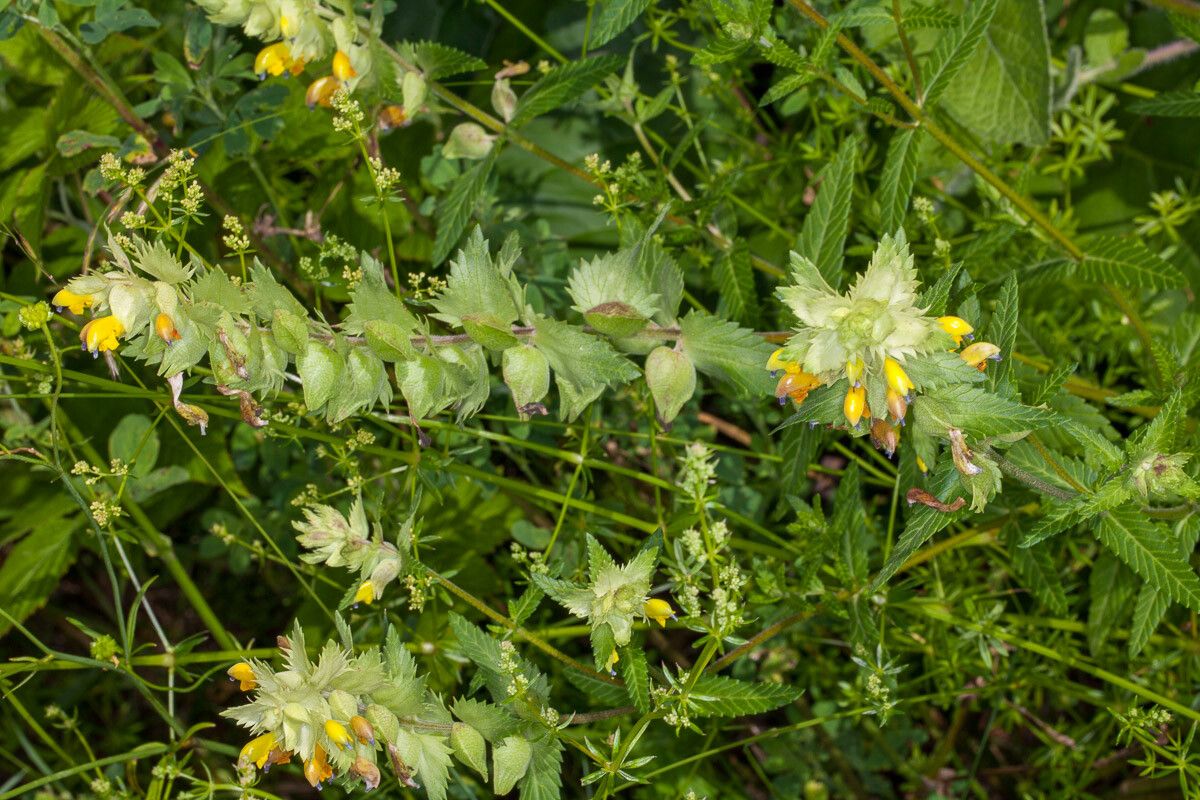
Rhinanthus minor, known as yellow rattle, is a herbaceous wildflower in the genus Rhinanthus in the family Orobanchaceae (the broomrapes). It has circumpolar distribution in Europe, Russia, western Asia, and northern North America. An annual plant, yellow rattle grows up to 10–50 centimetres (3.9–19.7 in) tall, with upright stems and opposite, simple leaves. The fruit is a dry capsule, with loose, rattling seeds. The preferred habitat of Rhinanthus minor is dry fields or meadows; it tolerates a wide range of soil types. It flowers in the summer between May and September. It is hemiparasitic, notably on Poaceae (grasses) and Fabaceae (legumes), and farmers consider it to be a pest, as it reduces grass growth. Yellow rattle is used to create or restore wildflower meadows, where it maintains species diversity by suppressing dominant grasses and the recycling of soil nutrients. The seed is sown thinly onto grassland from August to November—to germinate the following spring, the seeds need to remain in the soil throughout the winter months.
Arctic rattlebox shows good resistance to disease and is generally not prone to illnesses. Still, it can be affected by pests and diseases present in its environment. These outbreaks are typically minor. Regarding care, it needs a moderate level of attention. It should be pruned regularly to keep a neat appearance and healthy growth. Applying fertilizer can also help encourage flowering. Arctic rattlebox is appropriate for anyone with outdoor space, such as a garden or patio, and does not demand extensive plant-care experience. It may need more attention if cultivated indoors.
How to keep Rhinanthus Minor.
Light
Arctic rattlebox thrives in environments that provide ample light. A location with generous sunlight enables its best growth. While it can tolerate conditions with partial shade, the plant’s overall health may not achieve its full potential. Both too much and too little light can impair its development, reflecting its ancestry in habitats characterized by abundant sun exposure.
Water
The Arctic rattlebox thrives in moderately moist conditions and can withstand short periods of dryness. It prefers evenly moist soil, so it benefits from weekly watering. Typically grown outdoors, this plant synchronizes its growth cycle with seasonal rainfall, efficiently utilizing water during its active season.
Temperature
Arctic rattlebox is originally native to temperate environments. It prefers a temperature range of 68 to 95 °F (20 to 35 ℃). Care should be taken to maintain this temperature, making seasonal adjustments as necessary.
Fertilizer
Arctic rattlebox responds well to regular, dilute applications of fertilizer to encourage healthy leaf growth. You should feed Arctic rattlebox roughly once a month during the summer. Nitrogen is essential for the foliage, and providing nitrogen-rich supplements helps Arctic rattlebox thrive.
Pruning
To maintain the health and appearance of the Arctic rattlebox, it's important to prune it minimally. Focus primarily on removing any dead or damaged stems from early to late spring to improve airflow and prevent disease. Avoid heavy trimming to ensure healthy growth and flowering. Always use clean, sharp tools to prevent infections and enhance the plant's resilience.
Botanical profile.
- Plant Type
- Herb
- Life Cycle
- Annual, Biennial, Perennial
- Genus
- Rhinanthus
- Family
- Orobanchaceae
- Hardiness Zone
- 3-9
- Mature Height
- 25 cm to 76 cm
- Mature Spread
- 20 cm
- Leaf Color
- Green
- Leaf Type
- Semi-evergreen
- Flower Color
- Yellow
- Flower Size
- 2.54 cm
- Bloom Time
- Late spring, Early summer, Mid summer
- Planting Time
- Spring
- Harvest Time
- Mid summer
Other names.
Reader questions.
How should I water my Arctic rattlebox plant?
To water Arctic rattlebox, you have several options: a garden hose with a spray nozzle, a watering can, or any other common watering tool. The plant is not too particular about how it receives water and can survive on rainwater, tap water, or filtered water. However, it's best to avoid watering from above as this may harm the leaves and flowers and could potentially cause disease. A drip irrigation system is often the most effective way to water this plant, as it provides even and direct watering to the soil. If you're growing Arctic rattlebox in a container, you can use a cup, watering can, or tap water to directly water the soil.
Why should I add fertilizer to my Arctic rattlebox?
Not all plants require fertilizer to grow, but they all need nutrients. The Arctic rattlebox is one of those plants that rely on nutrients for their growth and internal functions. The main nutrients plants use include nitrogen, phosphorus, and potassium. When it comes to the growth of foliage, nitrogen is the most important nutrient. However, Arctic rattlebox often struggle to obtain enough nitrogen from the soil alone, which is why many gardeners choose to supplement by providing additional nitrogen through fertilizers.
What are the sunlight requirements for Arctic rattlebox?
Arctic rattlebox requires environments with generous sunlight to thrive, ideally in full sun conditions, meaning it should receive above 6 hours of sunlight daily. It can also tolerate partial sun, which consists of about 3-6 hours of sunlight. However, its growth may not reach full potential under lesser light conditions, and both excessive or inadequate light can negatively affect its development. Observing how sunlight moves through your garden will help in choosing the right spots that offer a perfect balance of light and shade, ensuring the plant's happiness.
What is the native climate of the Arctic Rattlebox?
The Arctic Rattlebox, scientifically known as Rhinanthus minor, is originally native to environments with temperate climates. It thrives in a temperature range of 68 to 95 °F (20 to 35 °C), indicating its preference for moderate to warm conditions. Despite its strong cold resistance, care should be taken to maintain this temperature range, adjusting as necessary with the changing seasons.
What should I do if I give my Arctic rattlebox plant too much water or too little water?
To adequately water your Arctic rattlebox, remember that underwatering is easily fixed by increasing the frequency of watering. However, overwatering can have more serious consequences, potentially leading to diseases and plant death. To prevent this, choose a suitable location for your plant with adequate sunlight and good drainage to keep the soil dry. If you overwater your potted Arctic rattlebox, consider changing to a pot with better drainage and using loose soil during repotting.
When should I fertilize my Arctic rattlebox plant?
To help your Arctic rattlebox thrive, you can apply fertilizer about once a month while it is actively growing. It's important to remember that this should only be done during the spring and summer months when the plant is more active and needs more nutrients. During the fall and winter, when the plant is less active, you can skip fertilizing. To know when to start fertilizing, keep an eye out for signs of new growth. Once you see these signs, it's a good indicator that your plant is ready for some extra nutrients. Whether you're growing your Arctic rattlebox outdoors or indoors in a container, the fertilization schedule remains the same. However, if your plant is in a container, you may not need to fertilize for the first one to two months. The potting soil made for container plants already contains enough nutrients. Only start fertilizing after your plant has been in the same soil for a while.
Can Arctic rattlebox be grown with artificial lighting, and how?
Yes, Arctic rattlebox can be grown with artificial lighting, especially when natural sunlight is insufficient, like during winter or in less sunny spaces. Adequate lighting is crucial for optimal growth. LED lights, being a popular choice, can be customized to provide the specific wavelengths of light your plants need. For full sun plants, 30-50W/sq ft of artificial light is required, partial sun plants need 20-30W/sq ft, and full shade plants require 10-20W/sq ft. The light source should be placed 12-36 inches above the plant to mimic natural sunlight, and most plants need 8-12 hours of light per day.
What are the cold protection measures for the Arctic Rattlebox during winter?
Although the Arctic Rattlebox displays strong cold resistance, special frost protection measures should be considered if winter temperatures are expected to drop below -35°C. Protection can be achieved by covering the plant with insulating materials such as soil or straw. Additionally, it is recommended to water the plant abundantly before the first freeze in autumn to ensure the soil remains moist and enters a frozen state, which helps prevent drought and water scarcity during the winter and early spring.
How frequently should I water my Arctic rattlebox?
Arctic rattlebox requires regular watering throughout the growing season. In spring, water once a week. As the season progresses and it gets warmer, increase watering to two to three times per week. However, be cautious not to overwater as it can harm the plant. It is important to keep the soil moist but not wet. When watering Arctic rattlebox in a pot, you'll need to water more frequently compared to a plant in the ground. Generally, water a potted Arctic rattlebox a few times per week, while an in-ground plant only needs watering once per week.
When is it not a good idea to fertilize my Arctic rattlebox?
To ensure the wellbeing of your Arctic rattlebox, avoid fertilizing it if it is already unhealthy, such as when it has a disease or insect pests. Similarly, refrain from fertilizing a dehydrated plant as it can worsen the problem. Only apply fertilizer to plants that are in good health. When watering, take care not to splash fertilizer onto the leaves or stem, as this can cause burnt spots. Unless you are using a specialized foliage fertilizer, avoid direct contact between the plant and the fertilizer.
What are the symptoms of light deficiency in Arctic rattlebox?
When Arctic rattlebox is grown indoors with inadequate light, it may show symptoms of light deficiency, including small new leaves, leggy or sparse growth, faster leaf drop, slower or no new growth, lighter-colored new leaves, chlorosis, sunscald, leaf curling, wilting, and leaf scorching. These symptoms indicate that the plant is not receiving enough light, which can lead to reduced health and stunted growth.
How does low temperature affect Arctic Rattlebox and what are the solutions?
Arctic Rattlebox is highly cold-tolerant and performs best when the temperature remains above 20°C. During winter, it's important to keep it above 0°C to avoid damage. Temperatures falling below -35°C may not cause noticeable changes during winter but could result in a decrease in sprouting or failure to sprout in spring. To remedy this, in spring, any parts of the plant that have failed to sprout should be removed to promote new growth.