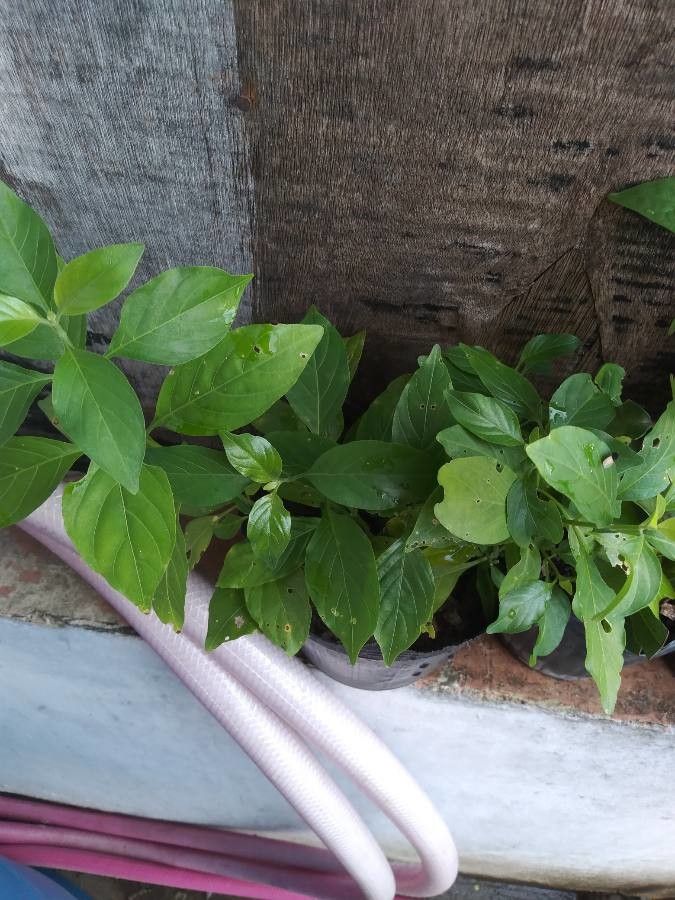
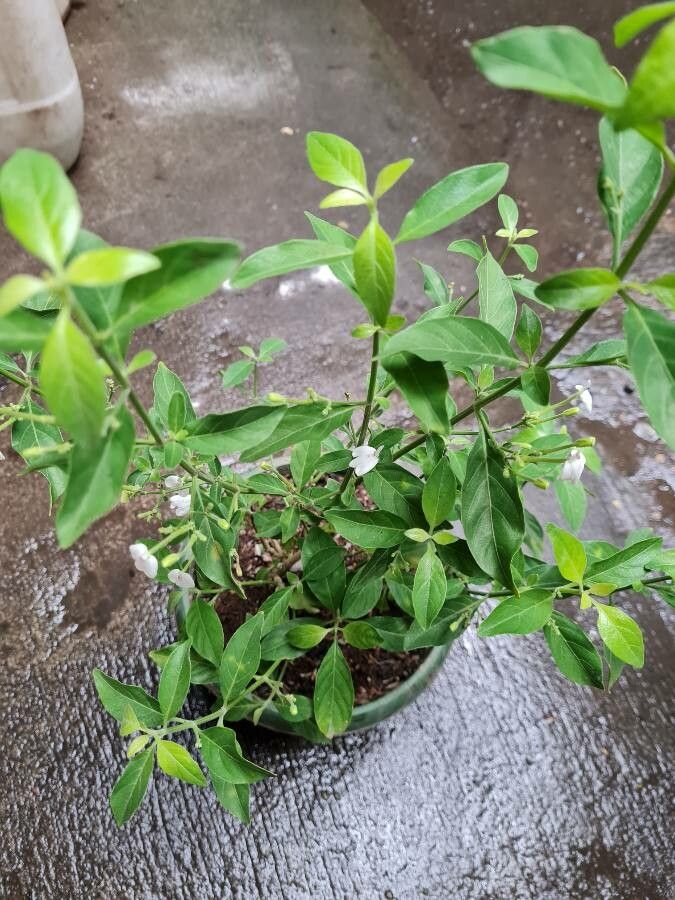
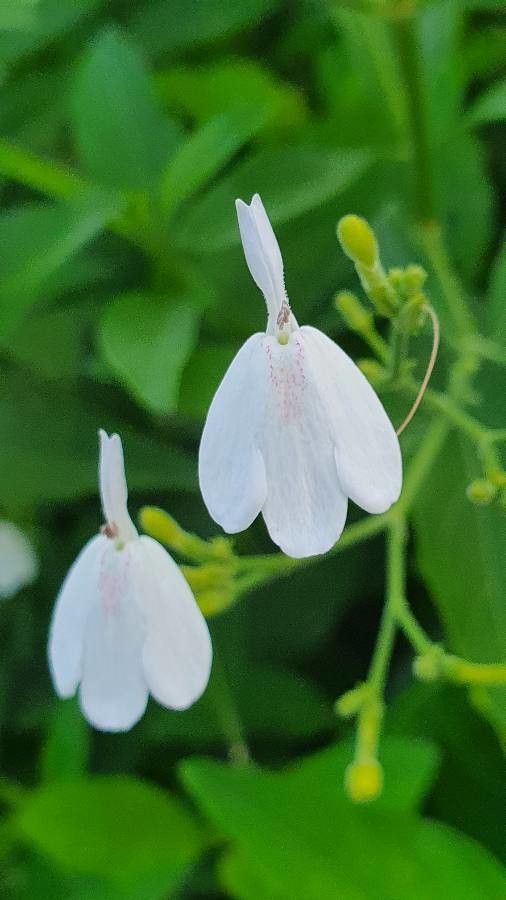
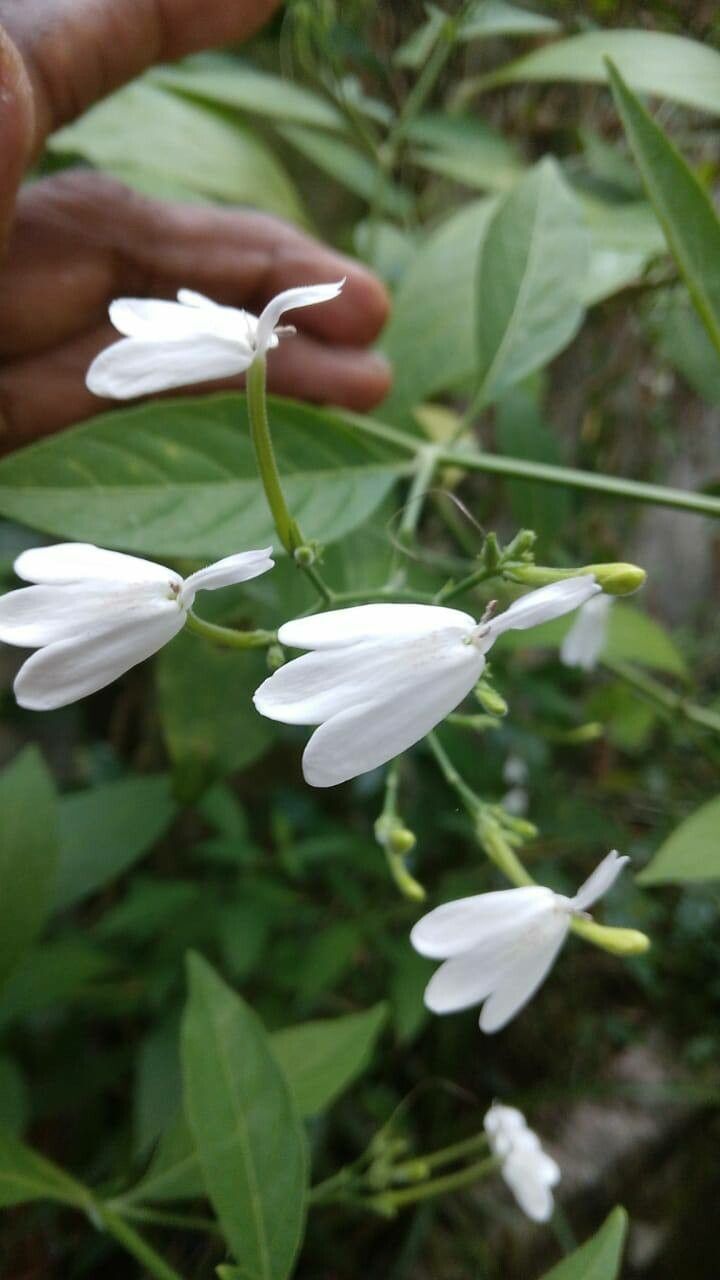
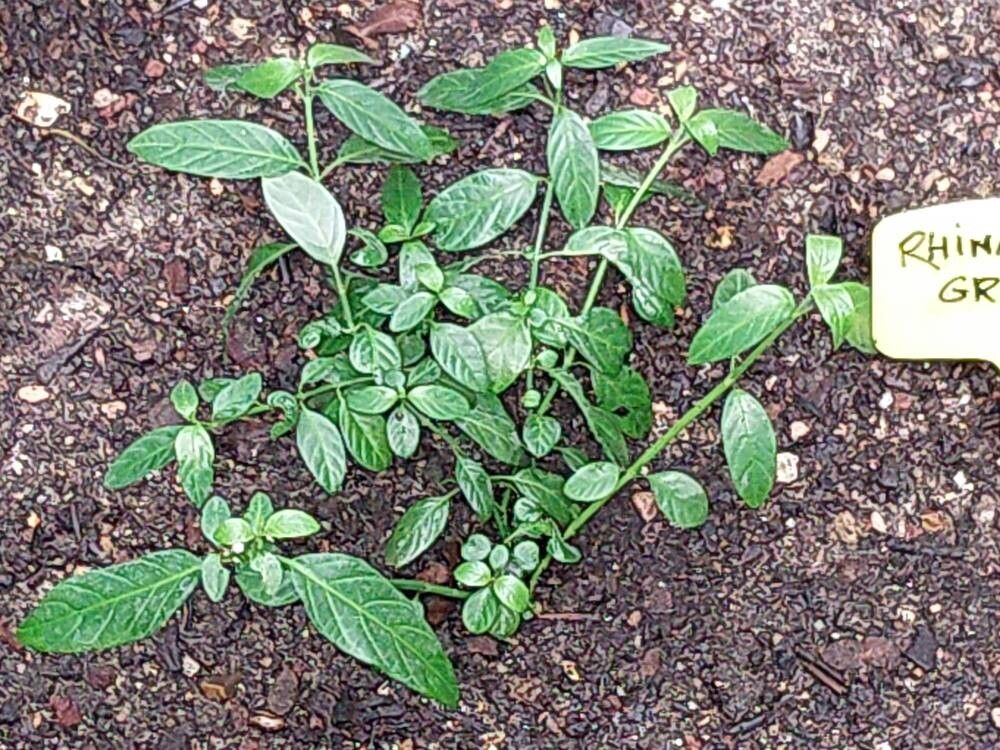
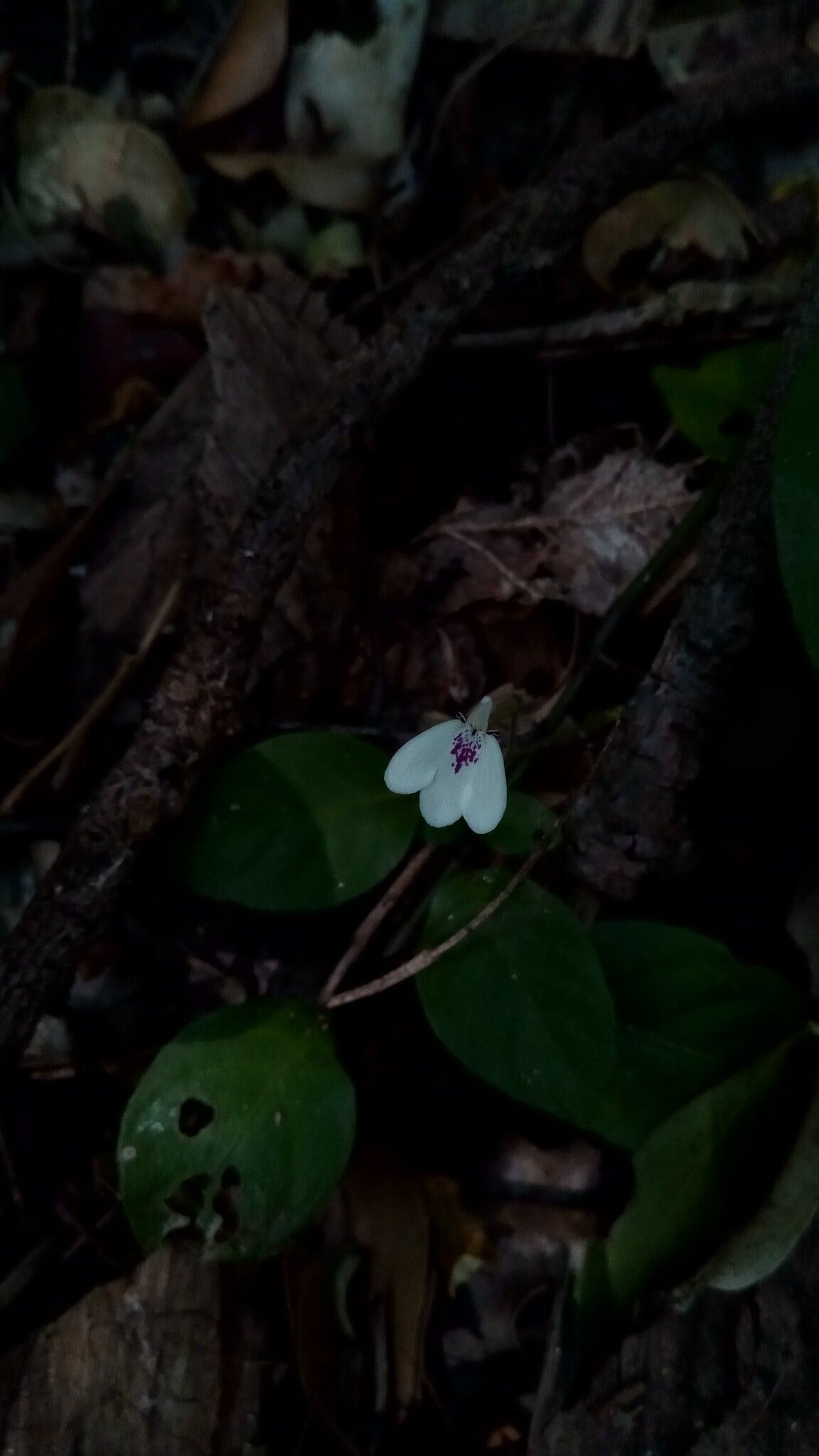
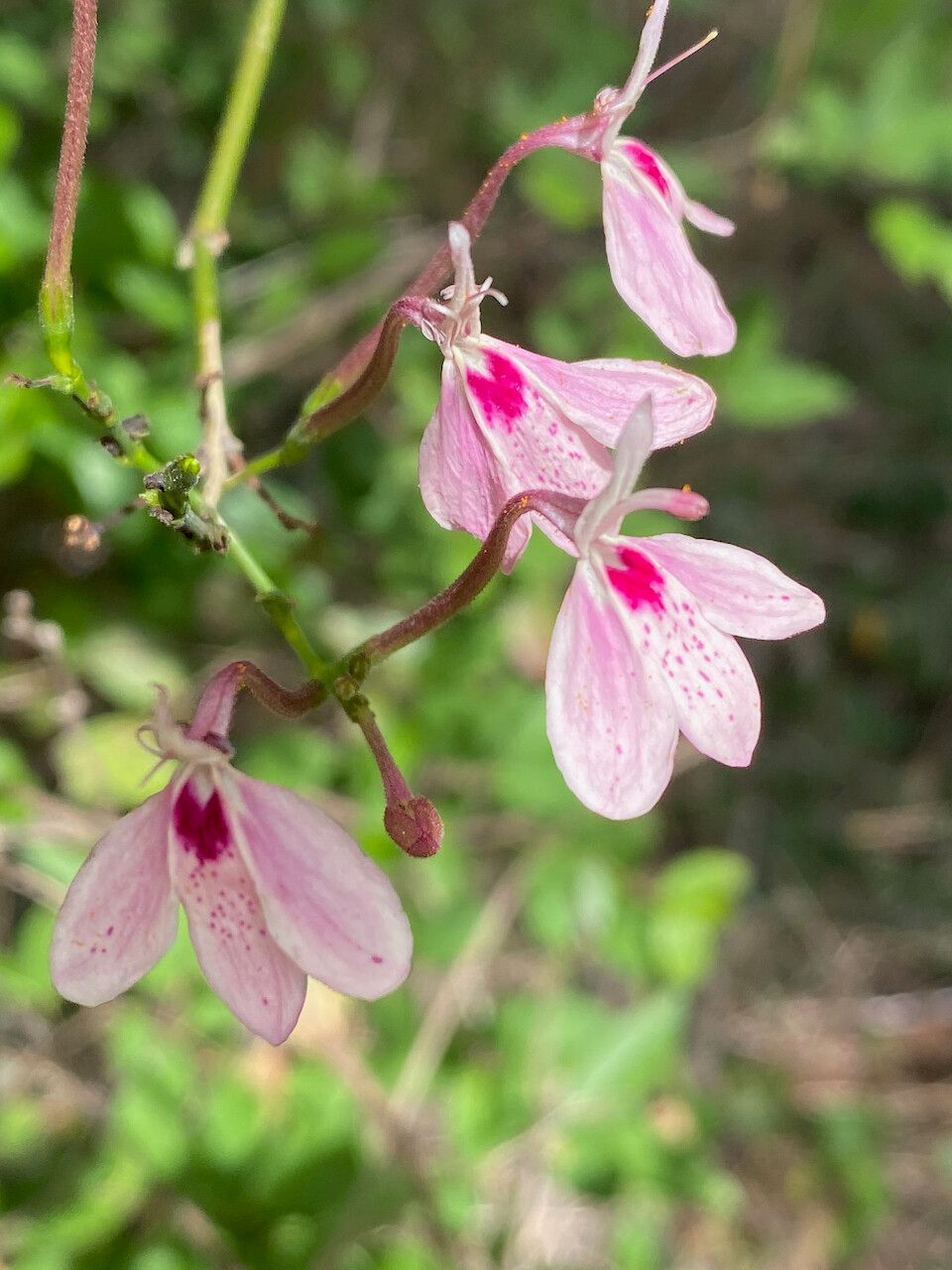
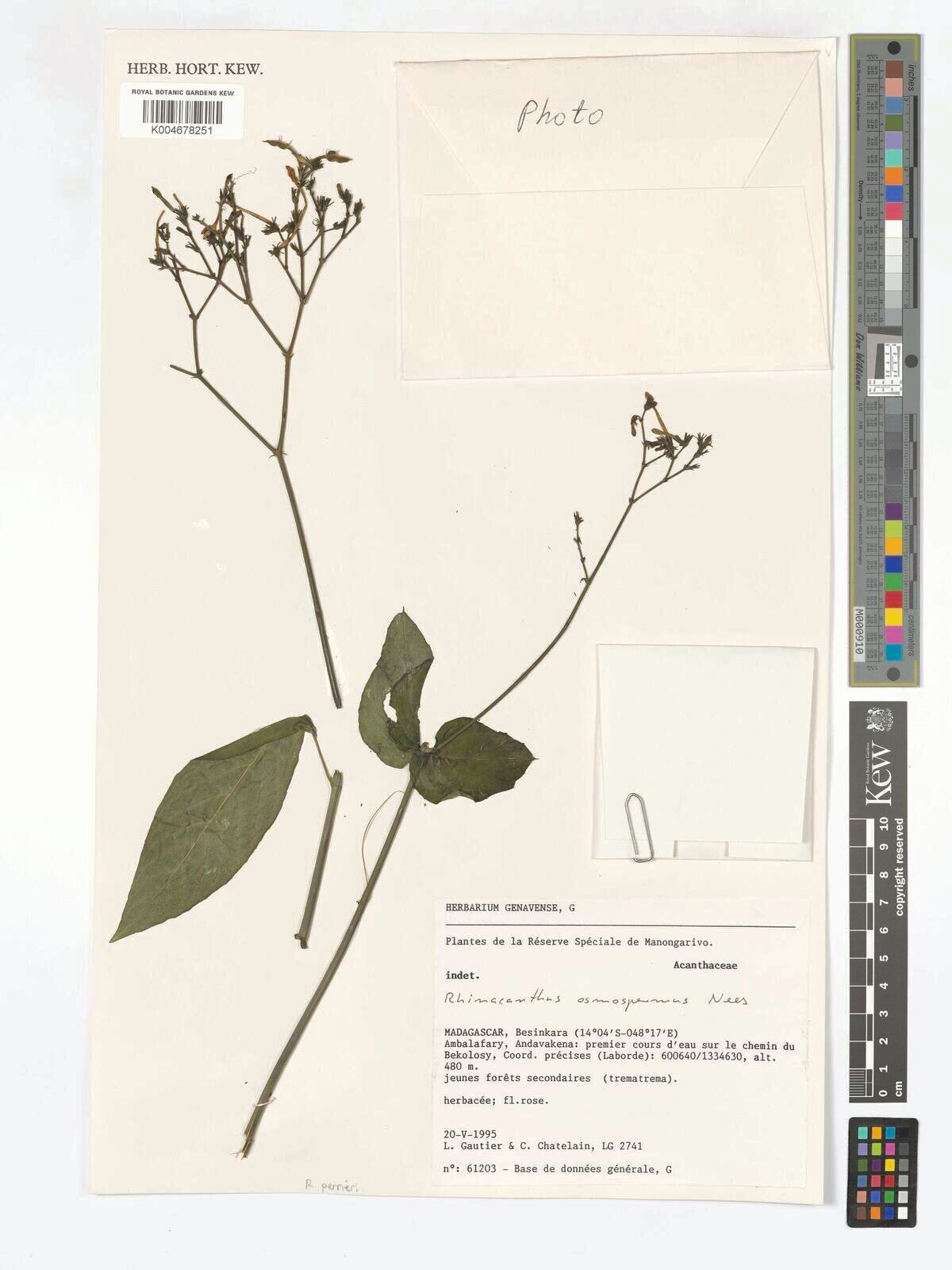
Rhinacanthus nasutus, commonly known as snake jasmine, is a plant native to tropical Asia and the western Indian Ocean. It is a slender, erect, branched, somewhat hairy shrub 1–2 m in height. The leaves are oblong, 4–10 cm in length, and narrowed and pointed at both ends. The inflorescence is a spreading, leafy, hairy panicle with the flowers usually in clusters. The calyx is green, hairy, and about 5 mm long. The corolla-tube is greenish, slender, cylindric, and about 2 cm long. The flowers is 2-lipped; the upper lip is white, erect, oblong or lancelike, 2-toothed at the apex, and about 3 mm in both length and width; and the lower lip is broadly obovate, 1.1-1.3 cm in both measurements, 3-lobed, and white, with a few, minute, brownish dots near the base. The fruit (capsule) is club-shaped and contains 4 seeds.
Snake jasmine is resistant to disease and generally not susceptible to illnesses. In terms of care, this plant is fairly low-maintenance. When grown outdoors it needs little watering, and larger plants usually do not require pruning. Smaller plants, however, should be pruned after they finish blooming. Snake jasmine is suitable for anyone with an outdoor area, such as a garden or deck, and does not demand much gardening experience.
How to keep Rhinacanthus Nasutus.
Light
Snake jasmine originates in open habitats, like sunny meadows and forest edges, where light is plentiful. It does best in Full Sun but can also tolerate Partial Sun, adapting well to various sunlight conditions.
Water
Snake jasmine is well-suited to dry conditions and requires very little moisture, showing strong drought tolerance. To prevent over- or under-watering, it should be watered every 2-3 weeks. In warm climates, when grown outdoors, snake jasmine's growth corresponds with the sporadic availability of rainfall.
Temperature
Snake jasmine comes from tropical areas, where the climate is generally warm and humid. Therefore it is well adapted to high temperatures and moisture. It does not tolerate sudden temperature shifts and prefers a stable thermal environment, so indoor temperature fluctuations should be avoided. It usually cannot withstand cold and needs higher temperatures to grow. If the environmental temperature falls too low, the plant may stop growing or even die.
Fertilizer
The best time to fertilize a Snake jasmine is in early spring, when it comes out of dormancy. This supports overall growth and flower development. Feeding the plant improves its foliage, stems, and branches, and encourages flowers that are larger, more vibrant, and longer-lasting. It also helps transport nutrients from the roots to the flowers and enhances the plant’s health and resistance to disease.
Pruning
Snake jasmine features white, tubular flowers and glossy green leaves. To promote growth and maintain its shape, prune the plant in early spring by removing dead branches and thinning crowded areas. Trim any leggy stems to encourage bushiness. Regular pruning not only enhances flowering but also improves the overall health of the plant. Always use clean, sharp tools to prevent the spread of diseases.
Botanical profile.
- Plant Type
- Shrub
- Life Cycle
- Perennial
- Genus
- Rhinacanthus
- Family
- Acanthaceae
- Hardiness Zone
- 10-12
- Mature Height
- 0.91 m to 2.13 m
- Mature Spread
- 30 cm to 61 cm
- Leaf Color
- Green, Dark Green
- Leaf Type
- Semi-evergreen
- Flower Color
- White
- Flower Size
- 2.54 cm
- Bloom Time
- Winter, Spring
- Planting Time
- Spring, Summer, Autumn
- Harvest Time
- Spring, Early summer
- Native Area
- Sri Lanka, India, Malaysia, Indonesia, Cambodia, Vietnam, Myanmar, Philippines, Madagascar, Bangladesh, Laos, Thailand, China
Other names.
Reader questions.
How much sunlight does snake jasmine require?
Snake jasmine thrives best in full sun, requiring above 6 hours of sunlight daily, but it can also adapt to partial sun, managing well with about 3 to 6 hours of sunlight. Originating from open environments like sunny meadows and forest edges, this plant adapts well to various sunlight conditions. It's essential to watch how sunlight moves through your garden, choosing spots that offer the right balance of light and shade to ensure your plants' happiness.
Can snake jasmine be grown with artificial lighting?
Yes, snake jasmine can be grown with artificial lighting, especially when natural sunlight is insufficient. This is often the case in winter or less sunny spaces indoors. Adequate lighting is crucial for optimal growth. LED lights are a popular choice because they can provide the specific wavelengths needed by your plants. Full sun plants typically require 30-50W/sq ft, partial sun plants need 20-30W/sq ft, and full shade plants need 10-20W/sq ft of artificial light. The light source should be placed 12-36 inches above the plant and turned on for 8-12 hours per day to mimic natural daylight hours.
What are the signs of light deficiency in snake jasmine?
Snake jasmine may exhibit several symptoms if receiving insufficient light. These include smaller new leaves, leggy or sparse growth, faster leaf drop, slower or no new growth, and lighter-colored new leaves. Conditions such as chlorosis, where leaves turn yellow due to lack of chlorophyll, sunscald with pale or necrotic areas on the plant, leaf curling as a defense against too much sun, wilting from loss of turgor pressure, and leaf scorching indicated by brown, dry edges, can all result from inappropriate light levels.
How can I help my snake jasmine recover from light deficiency?
To help snake jasmine recover from light deficiency, gradually increase its exposure to sunlight. If indoors, move the plant to a sunnier location each week, targeting at least 6 hours of direct sunlight daily. Utilize a south-facing window and keep curtains open during the day. For plants that are large or not easily movable, consider using artificial light for at least 8 hours daily. Outdoors, choose the best spot for sunlight and move plants there gradually to prevent sunburn. Observe the surrounding environment to reduce obstructions like tree branches, or consider transplanting smaller plants to sunnier locations during their dormant period for better light access.