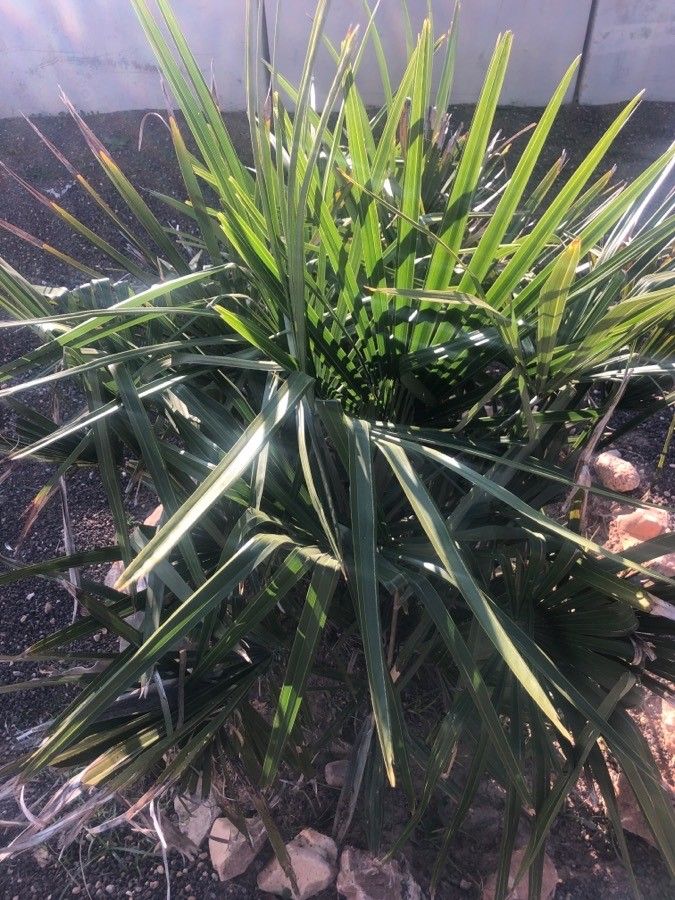
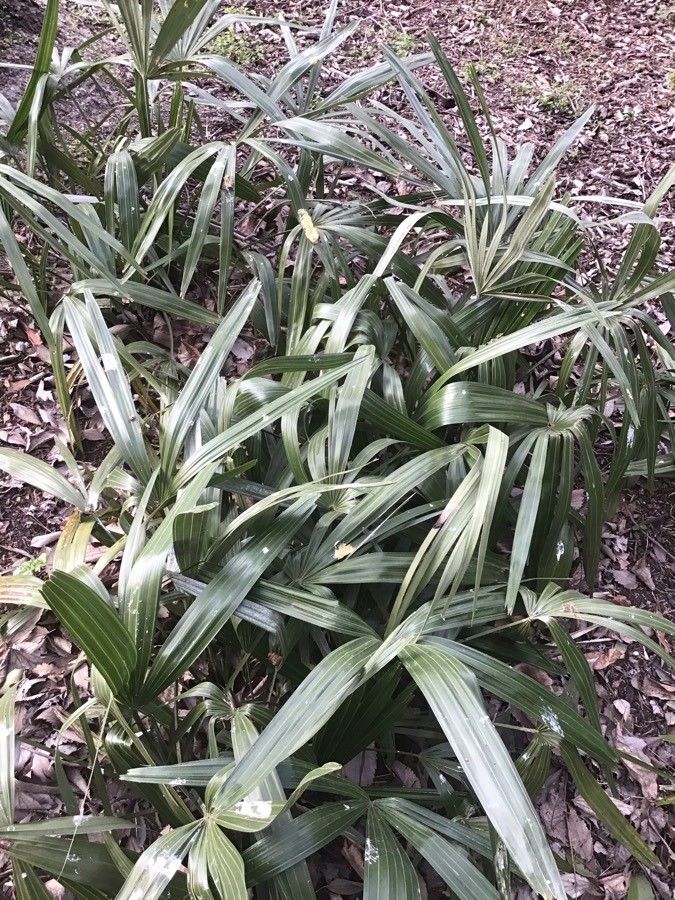
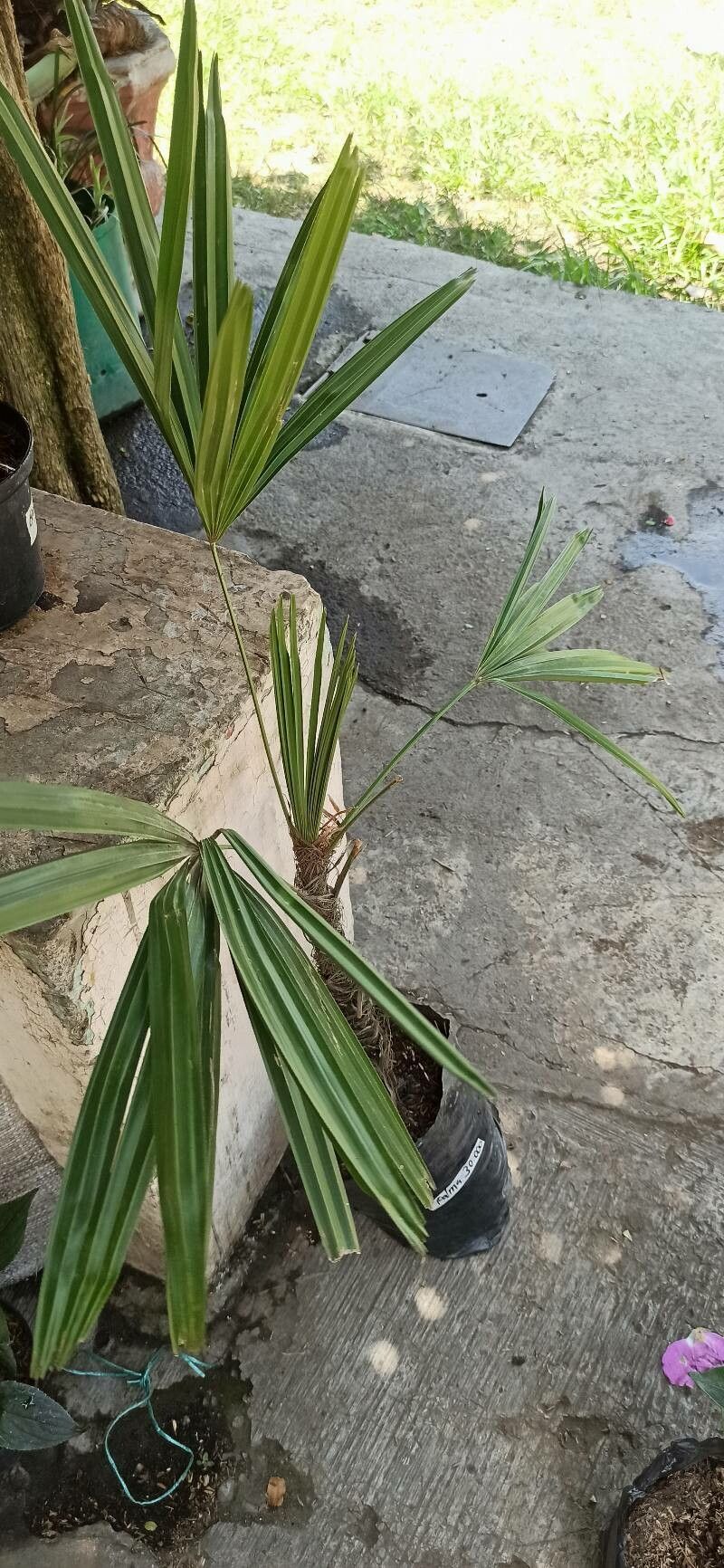
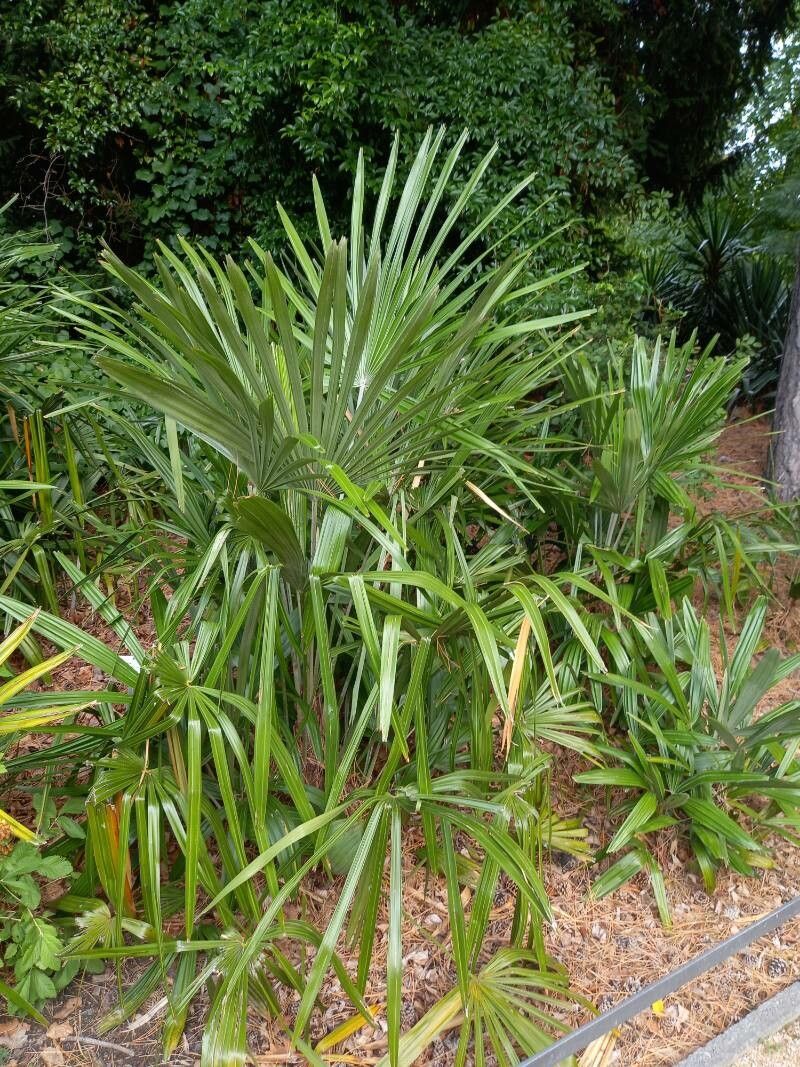
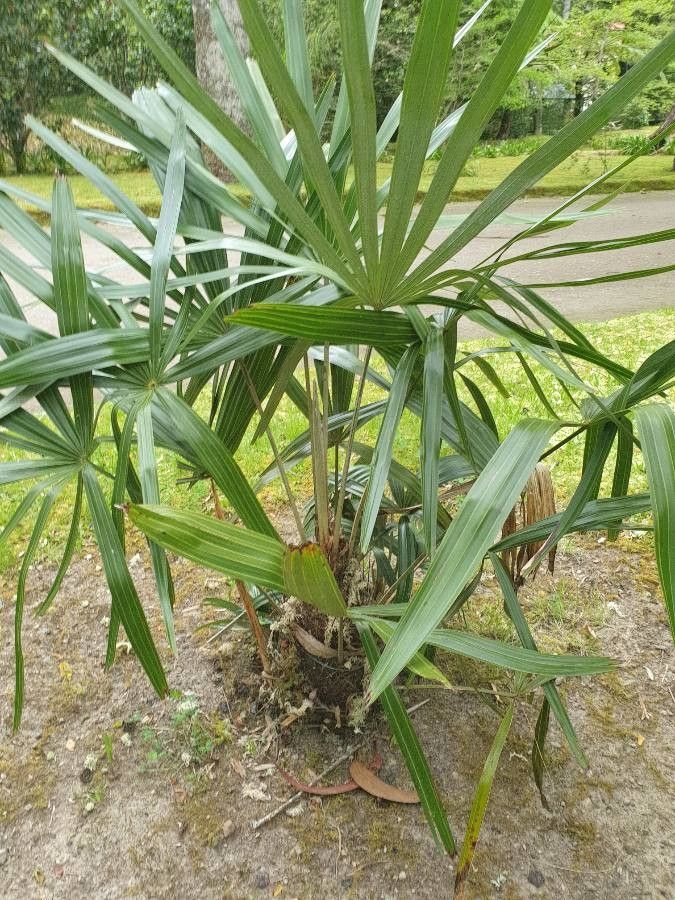
Rhapidophyllum hystrix, the needle palm, is a palm, the sole member of the genus Rhapidophyllum. It is native to coastal margins of the subtropical eastern Gulf and south Atlantic states of the United States. Endemic populations can be found from coastal southeast South Carolina, southward to Florida and west across the coastal plain of Mississippi and southern Alabama. It is one of the most cold-hardy palms in the world, and can be found growing in several areas with warm temperate climates.The needle palm assumes a shrublike clumping form with several stems growing from a single base, the stems growing very slowly and tightly together, eventually forming a dense base 1–1.2 m (3.3–3.9 ft) tall, with numerous sharp needle-like spines produced between the leaves; these are 10–25 cm (3.9–9.8 in) long and protect the stem growing point from browsing animals. The whole plant can reach 2–3 m (6.6–9.8 ft) tall to the top of the erect central leaves. It is a fan palm (Arecaceae, subfamily Coryphoideae), with the leaves with a long petiole terminating in a rounded fan of 8–16 leaflets; each leaf is up to 2 m (6.6 ft) long, with the leaflets up to 60–80 cm (24–31 in) long. The flowers are borne in dense, short clusters at the top of the stems; it is usually dioecious with male and female flowers on separate plants. The fruit is a brown drupe about 2 cm (0.79 in) long.The scientific name Rhapidophyllum means "needle-leaf", while hystrix is from the scientific name of a genus of porcupines. The English name likewise refers to the needle-like spines produced at the petiole bases; for similar reasons, it is also occasionally called "porcupine palm".
Needle palm is highly resistant to disease and is generally not susceptible to illnesses. In terms of care, this plant is fairly low-maintenance. When planted outdoors it needs little watering, and larger plants typically do not require pruning. Smaller plants, however, should be pruned after they have bloomed. Needle palm is suitable for anyone with an outdoor area, such as a garden or deck, and does not require a great deal of plant-care experience.
How to keep Rhapidophyllum Hystrix.
Light
The needle palm thrives where sunlight is dappled, though it can tolerate places with full sun exposure. Its native home in shaded forest understories has adapted it to lower light levels, which support healthy growth. Still, too much sun can cause leaf damage, while too little light can hinder its development.
Water
The needle palm, native to the southeastern United States, thrives in moderately humid climates and can withstand short periods of drought. It requires well-draining soil and should be watered every 1-2 weeks, allowing the soil to dry out slightly between waterings. As an evergreen, the needle palm needs consistent moisture to maintain its foliage, so it benefits from natural rainfall when grown outdoors.
Humidity
This plant will thrive in moderate humidity, which is probably the level in your home. However, misting it a few times a week can be very beneficial. Make sure the room has good ventilation.
Temperature
Needle palm naturally occurs in areas with temperatures ranging from 50 to 95 °F (10 to 35 ℃). The plant favors warmer climates but is able to tolerate somewhat cooler conditions. During colder seasons, consider providing a microclimate or warmer indoor conditions.
Fertilizer
Fertilize your Needle palm in early spring to encourage healthy growth. Regular feeding improves overall health, producing vigorous growth, increased tolerance of difficult conditions, and enhanced resistance to diseases and pests. Follow a set fertilization schedule for your Needle palm to maintain foliage that is richly lush and vividly colored.
Pruning
The needle palm is a hardy plant characterized by its needle-like spines and requires minimal pruning. To keep the plant healthy and visually appealing, it is recommended to remove any dead or damaged fronds in early spring. This practice also helps improve air circulation. However, be cautious not to over-prune, as excessive cutting can stress the plant due to its slow growth rate.
Pot & Repot
Repot your needle palm every 1-2 years during the spring. Use a slightly larger pot to accommodate its bushy form and strong roots. Keep the soil consistently moist, but be careful not to overwater, as this can lead to root rot. With this careful attention, your needle palm will remain resilient with minimal effort.
Botanical profile.
- Plant Type
- Shrub
- Life Cycle
- Perennial
- Genus
- Rhapidophyllum
- Family
- Arecaceae
- Hardiness Zone
- 6-10
- Mature Height
- 0.91 m to 1.83 m
- Mature Spread
- 1.22 m to 2.44 m
- Leaf Color
- Green, White, Gray, Silver
- Leaf Type
- Evergreen
- Flower Color
- Yellow, Purple, Red, Brown
- Flower Size
- 2.54 cm
- Bloom Time
- Mid spring, Late spring
- Planting Time
- Summer
- Harvest Time
- Late summer, Early fall, Mid fall
Other names.
Reader questions.
What are the sunlight requirements for the Needle Palm?
The Needle Palm requires partial to full sunlight to thrive properly. Partial sun is defined as about 3-6 hours of sunlight, while full sun means the plant should receive above 6 hours of sunlight. Observing the movement of sunlight and selecting locations that provide a balance of light and shade can ensure the plant's health and happiness.
What is the native climate of the Needle palm?
The Needle palm is native to environments where the temperature fluctuates between 50 to 95 °F (10 to 35 °C). It thrives in warmer climates but can also survive in slightly cooler zones. The plant has a strong resistance to cold, making it adaptable to a range of environmental conditions.
What essentials do I need to know about the Needle Palm's lighting needs?
The Needle Palm flourishes best in filtered sunlight but can also thrive in full sun exposure thanks to its origins in shady woodland understories. However, too much direct sunlight can lead to leaf damage, whereas insufficient sunlight may hinder the plant's growth. For indoor plants not getting enough natural light, using artificial lighting like LED lights (which should provide 30-50W/sq ft for full sun plants, 20-30W/sq ft for partial sun plants, and 10-20W/sq ft for full shade plants) can be a great solution. Ensure the lights are placed 12-36 inches above the plant and are kept on for 8-12 hours per day to mimic natural daylight conditions.
How should you protect Needle palm in winter?
Although Needle palm has strong cold resistance, protection from extreme cold (below -25°C) is recommended. Wrapping the trunk and branches with non-woven fabric or cloth can provide necessary cold protection. Additionally, it's beneficial to water the plant abundantly before the first freeze in autumn to ensure the soil remains moist, helping the plant to avoid drought and water scarcity during winter and early spring.
What are the symptoms of incorrect lighting for a Needle Palm?
Incorrect lighting can cause a range of symptoms in Needle Palms. Insufficient light may result in smaller leaves, leggy or sparse growth, faster leaf drop, delayed or halted growth, and the development of lighter-colored or irregularly patterned leaves. Excessive sunlight can cause chlorosis (leaves turning yellow), sunscald, leaf curling, wilting, and leaf scorching. These issues can have a negative impact on the plant's health and appearance.
What are the symptoms of low temperature damage in Needle palm?
Needle palm is tolerant to cold and performs best when temperatures are above 10°C. In winter, it should ideally be kept above -15°C. If temperatures fall below -25°C, there might not be noticeable changes during winter, but by springtime, the branches may become brittle and dry, and no new shoots will emerge. Pruning away any dead branches that failed to produce new leaves in spring is a recommended solution for these symptoms.
How can I address lighting issues for my Needle Palm?
For indoor Needle Palms, gradually introducing them to sunnier spots or using artificial lights like desk or ceiling lamps and professional grow lights can help optimize growth. Outdoor plants should be moved gradually to sunnier locations to avoid shock and sunburn. Reducing obstructions such as pruning branches can improve sunlight exposure. It's important to understand that parts of the plant affected by poor lighting might not recover, but new growth should be healthy with proper light conditions. Additionally, consider transplanting smaller plants during their dormant period to better-lit locations.
How does high temperature affect Needle palm, and what are the solutions?
During summer, the Needle palm should be kept below 35°C. Temperatures exceeding 41°C may cause the leaves to lighten in color, with tips becoming dry and withered, making the plant more susceptible to sunburn. To mitigate these effects, trim away sunburned and dried-up parts, move the plant to a shadier location, or use a shade cloth. Ensure the soil remains moist by watering in the morning and evening.
What is the botanical name of the Needle palm?
The botanical name of the Needle palm is Rhapidophyllum hystrix.