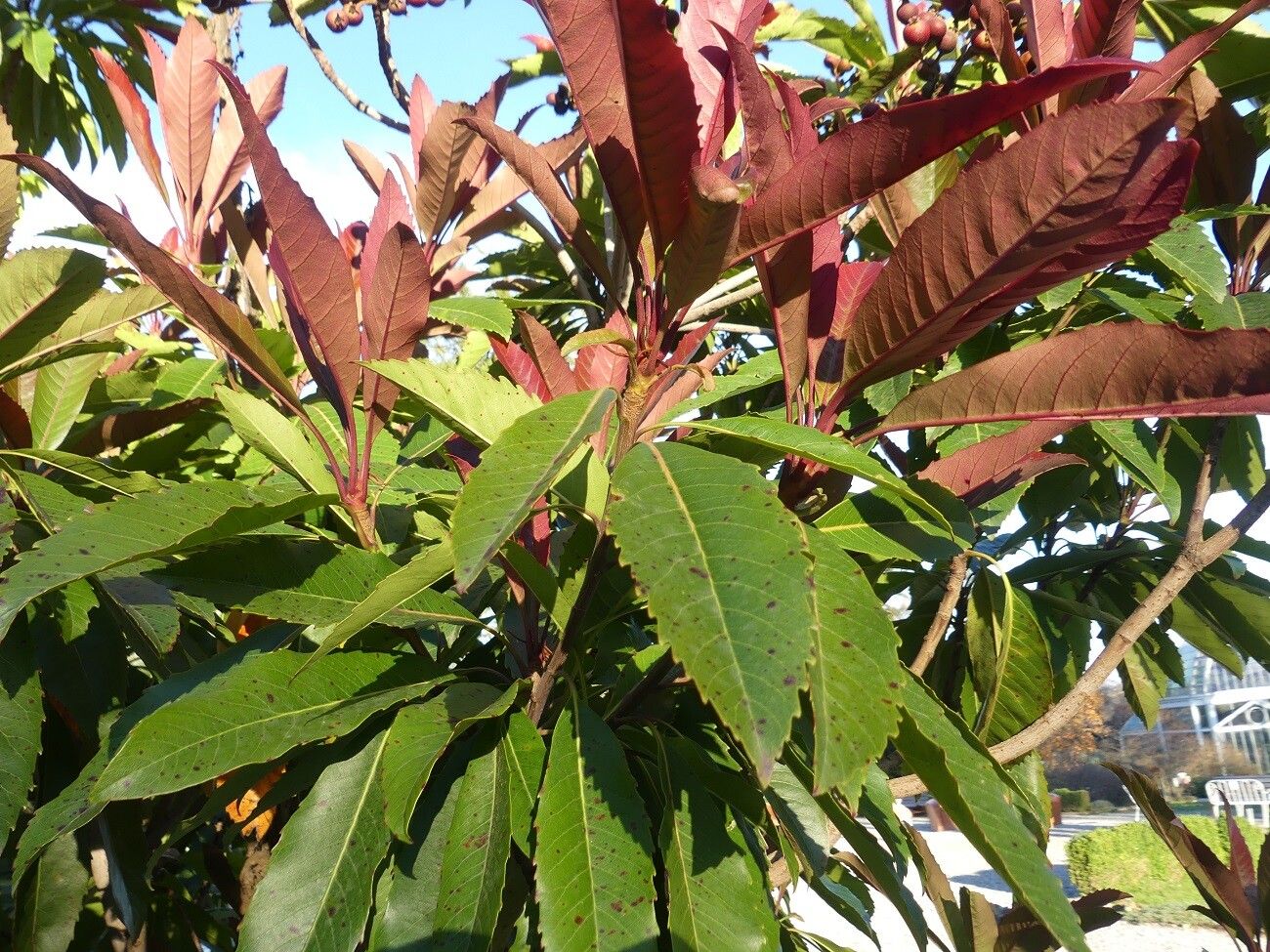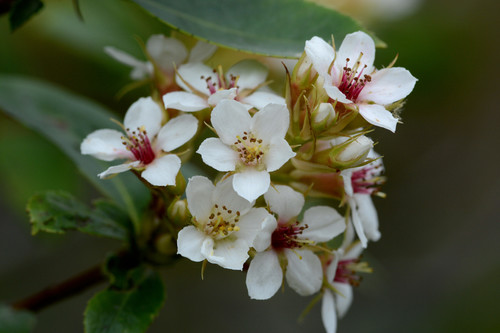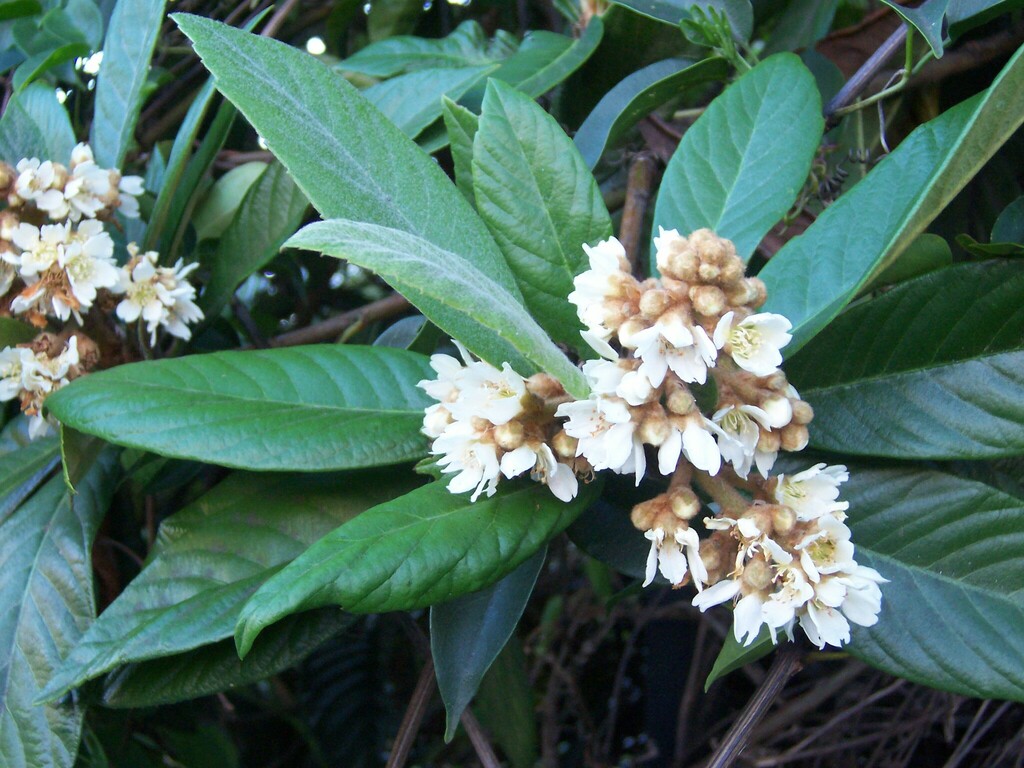
The loquat (Eriobotrya japonica) is a large evergreen shrub or tree grown commercially for its orange fruit and for its leaves, which are used to make herbal tea. It is also cultivated as an ornamental plant. The loquat is in the family Rosaceae and is native to the cooler hill regions of south-central China. In Japan, the loquat is known as biwa (枇杷, びわ) and has been grown for over 1,000 years. The loquat has been introduced to regions with subtropical to mild temperate climates throughout the world.Eriobotrya japonica was formerly thought to be closely related to the genus Mespilus and is still sometimes mistakenly known as the Japanese medlar. It is also known as Japanese plum and Chinese plum, as well as pipa in China, naspli in Malta, Wild or Japanese pear in Farsi, lukaat in Pakistan and India, lucat or loket in Sri Lanka, níspero in Spain, nêspera in Portugal, shések in Israel, akidéné in Lebanon, ebirangweti in Kisii, nespolo in Italy (where the name is shared with Mespilus germanica), and golabi jangali (jungle pear) in Iran.
Botanical profile.
- Genus
- Rhaphiolepis
- Family
- Rosaceae