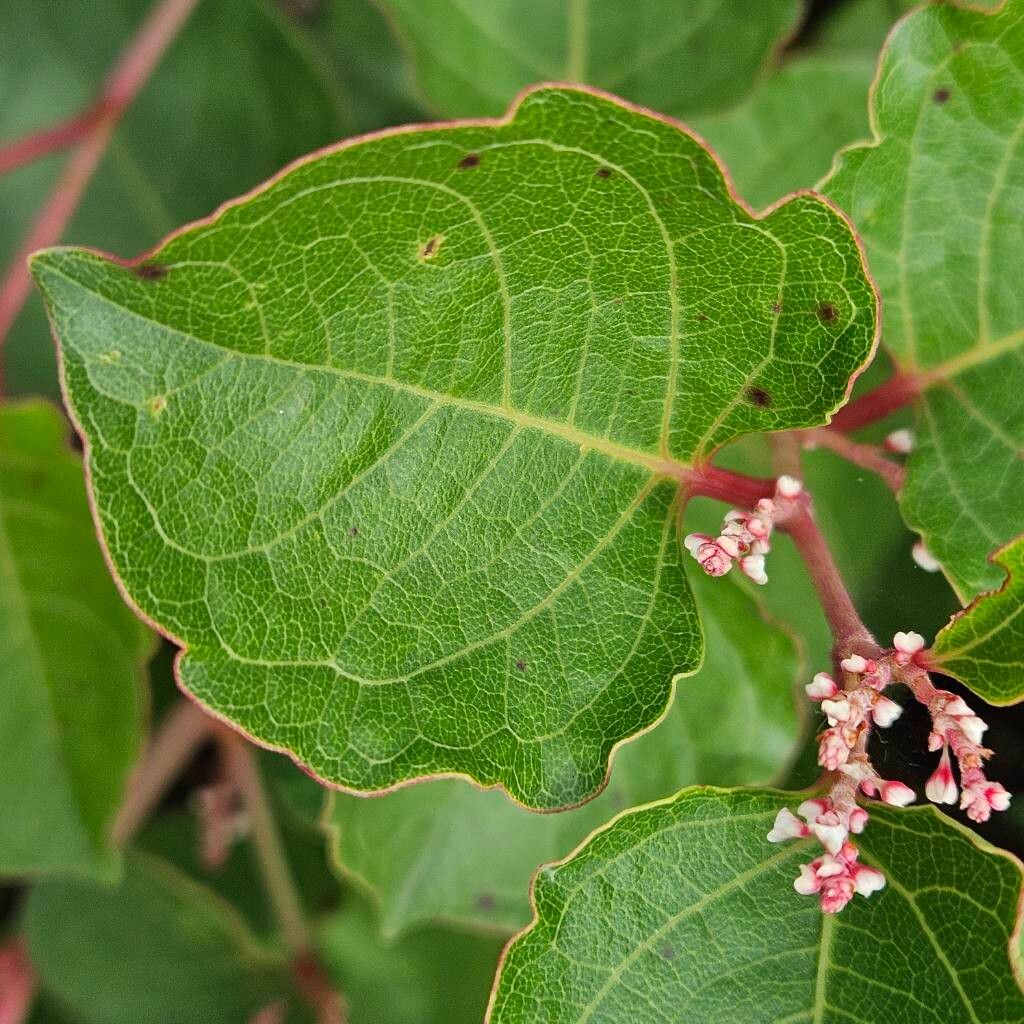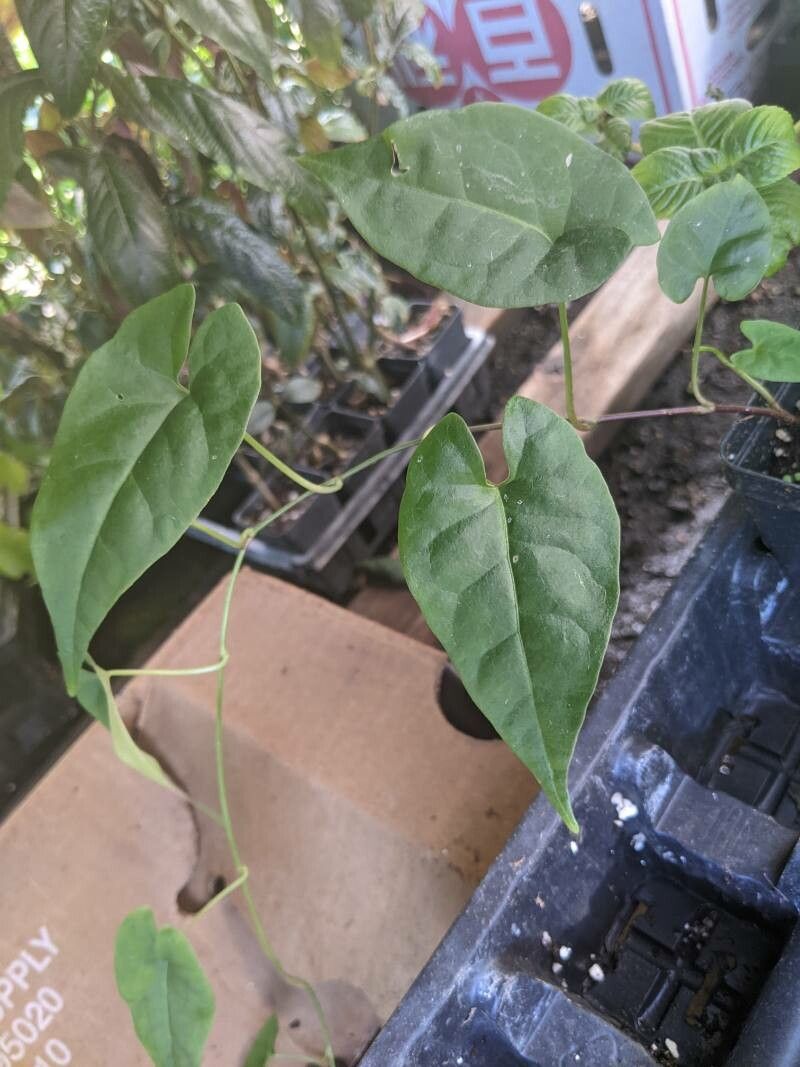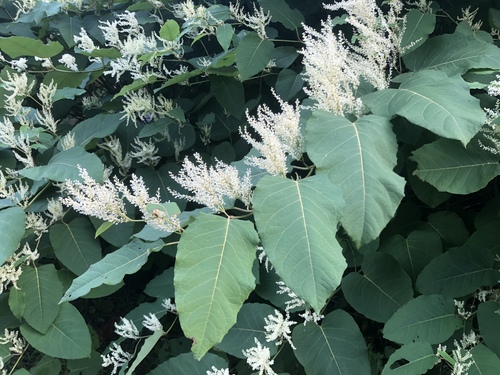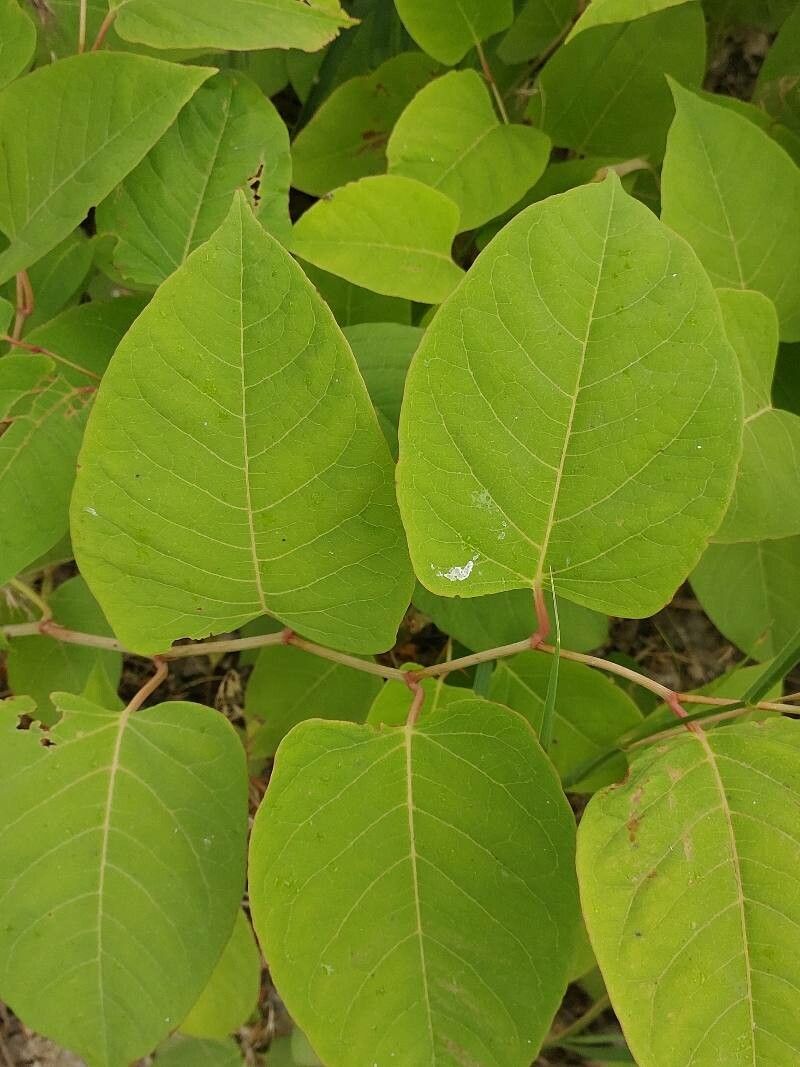
Reynoutria x bohemica, commonly known as Bohemian knotweed, is a hybrid plant resulting from the cross between Japanese knotweed and giant knotweed. This perennial herbaceous plant can grow up to 3 meters tall and features large, heart-shaped leaves with pointed tips. Its hollow stems are marked with distinctive purple speckles.
Bohemian knotweed thrives in wetlands, along riverbanks, and in disturbed areas such as roadsides. It has become an invasive species in many regions worldwide due to its rapid growth and ability to outcompete native plants.
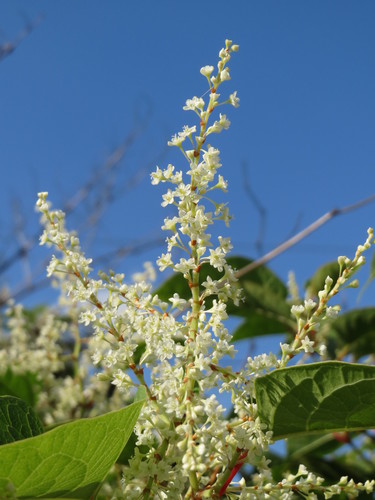
The plant produces small white or greenish flowers from late summer to early autumn, followed by small winged fruits containing seeds. Its roots can extend up to 3 meters deep into the soil, making it difficult to control.
Historically, Bohemian knotweed has been used for its anti-inflammatory properties in traditional medicine. However, it is important to note that the plant contains high levels of oxalic acid, which can pose health risks if consumed in large quantities.
Overall, Reynoutria x bohemica is a fascinating yet problematic plant species, offering both beneficial medicinal properties and significant invasive tendencies.
Botanical profile.
- Genus
- Reynoutria
- Family
- Polygonaceae