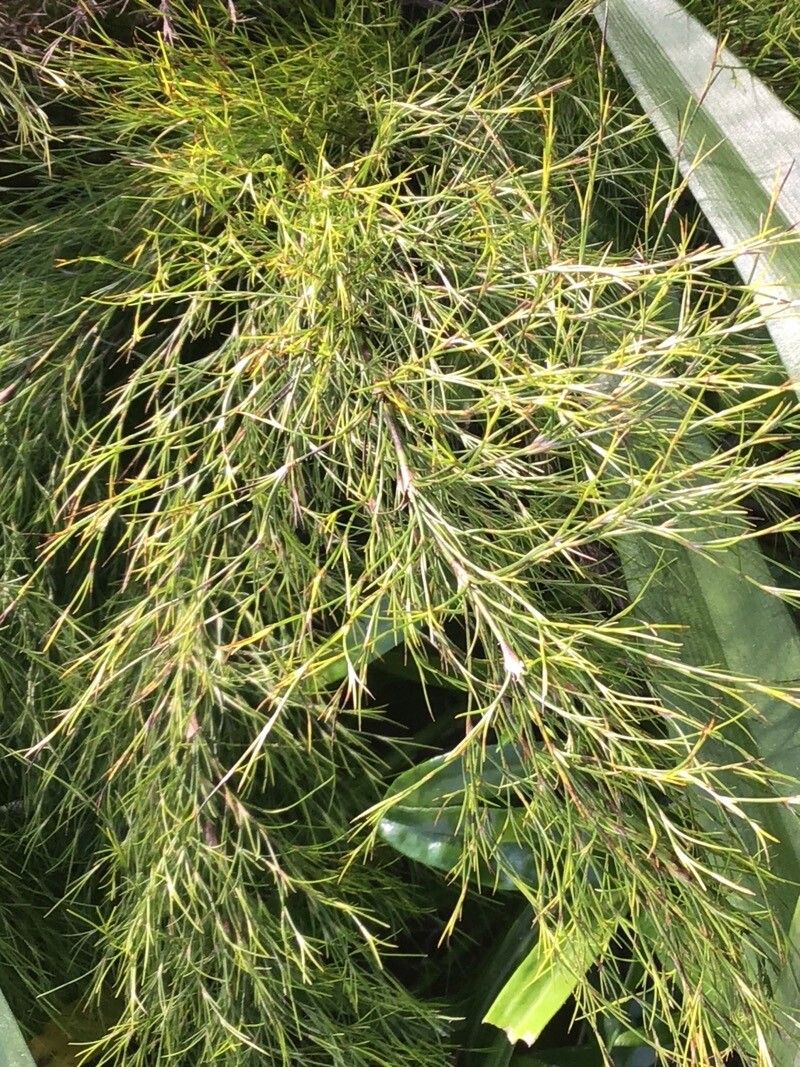
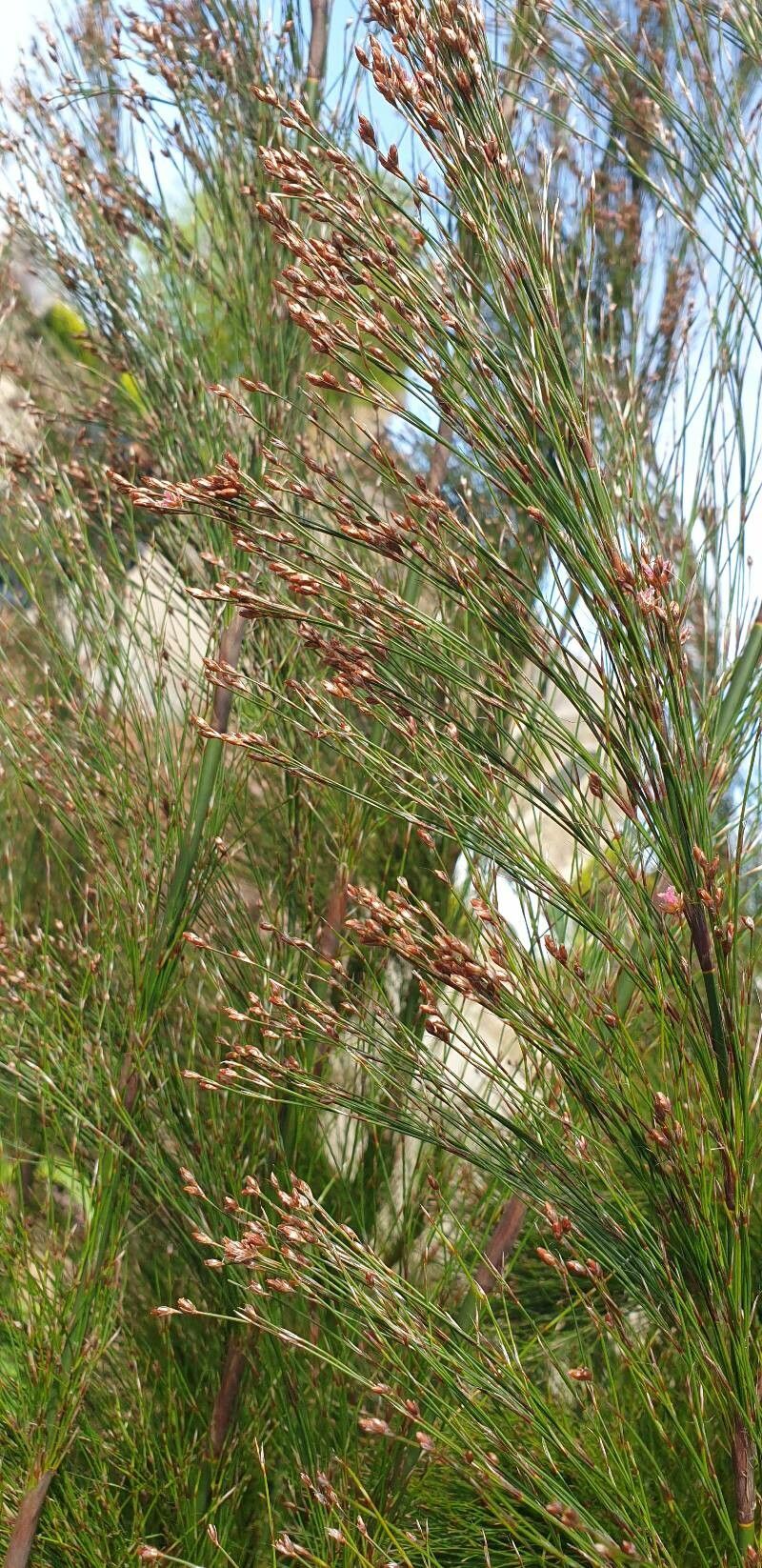
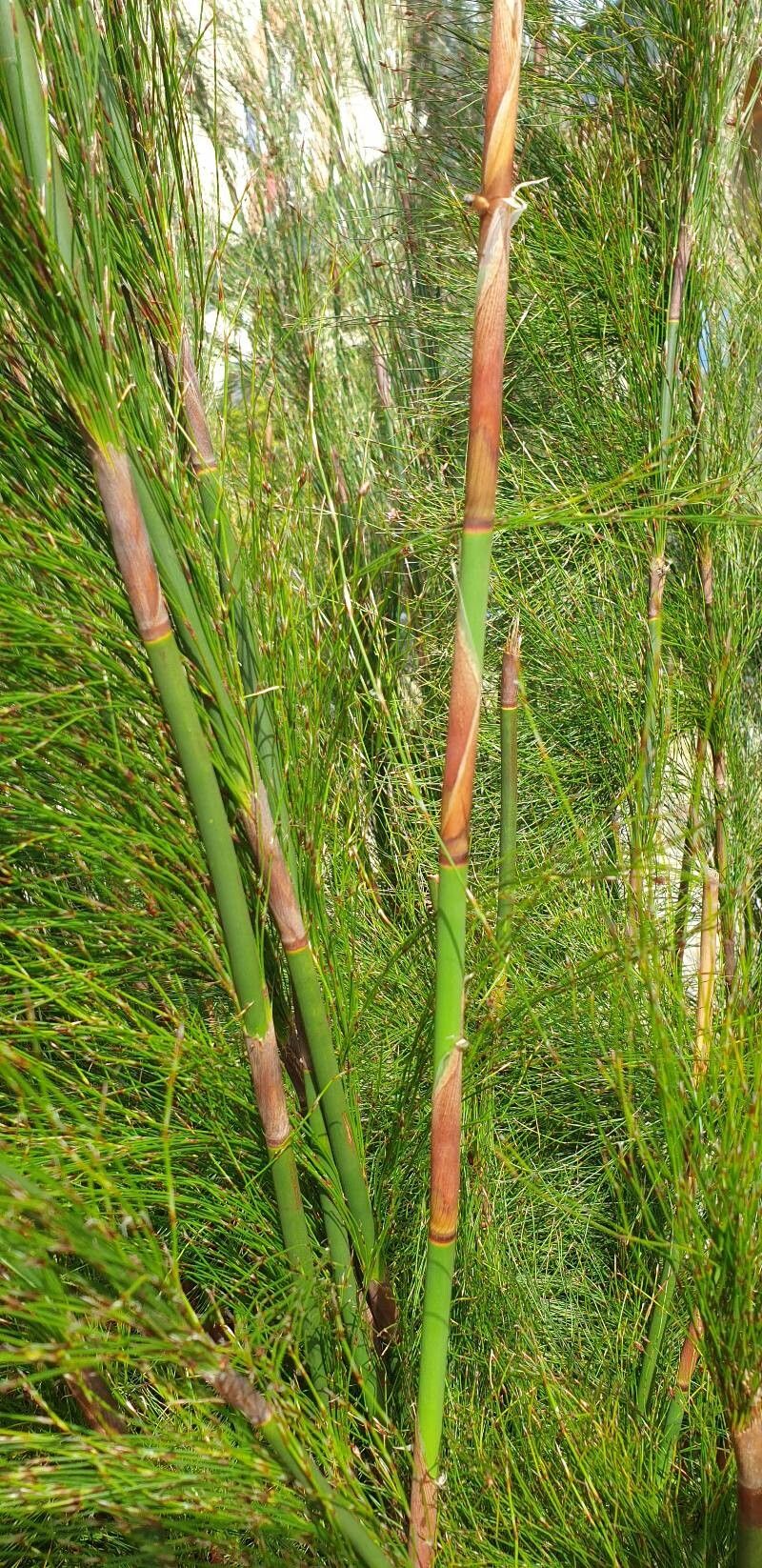
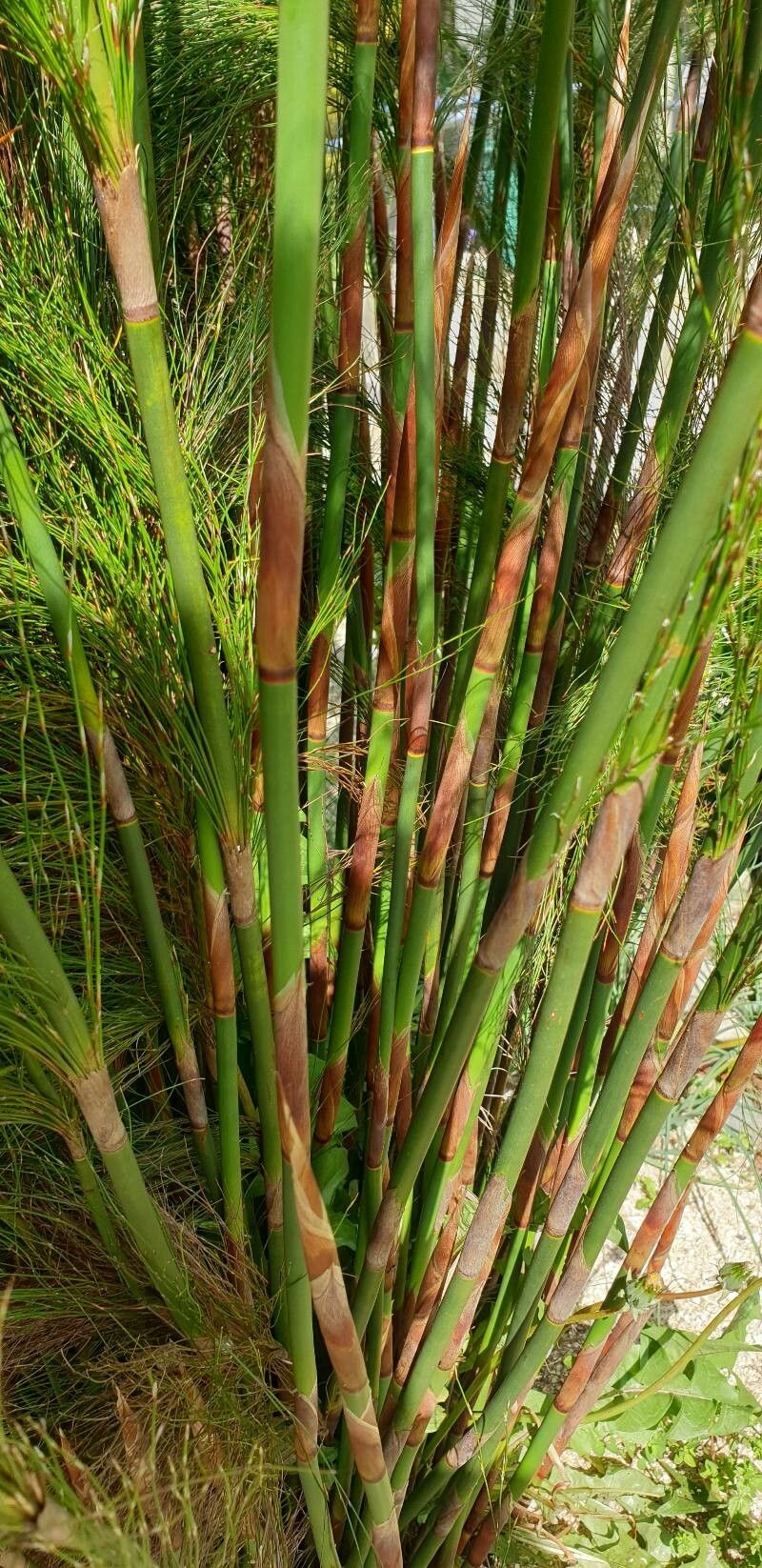
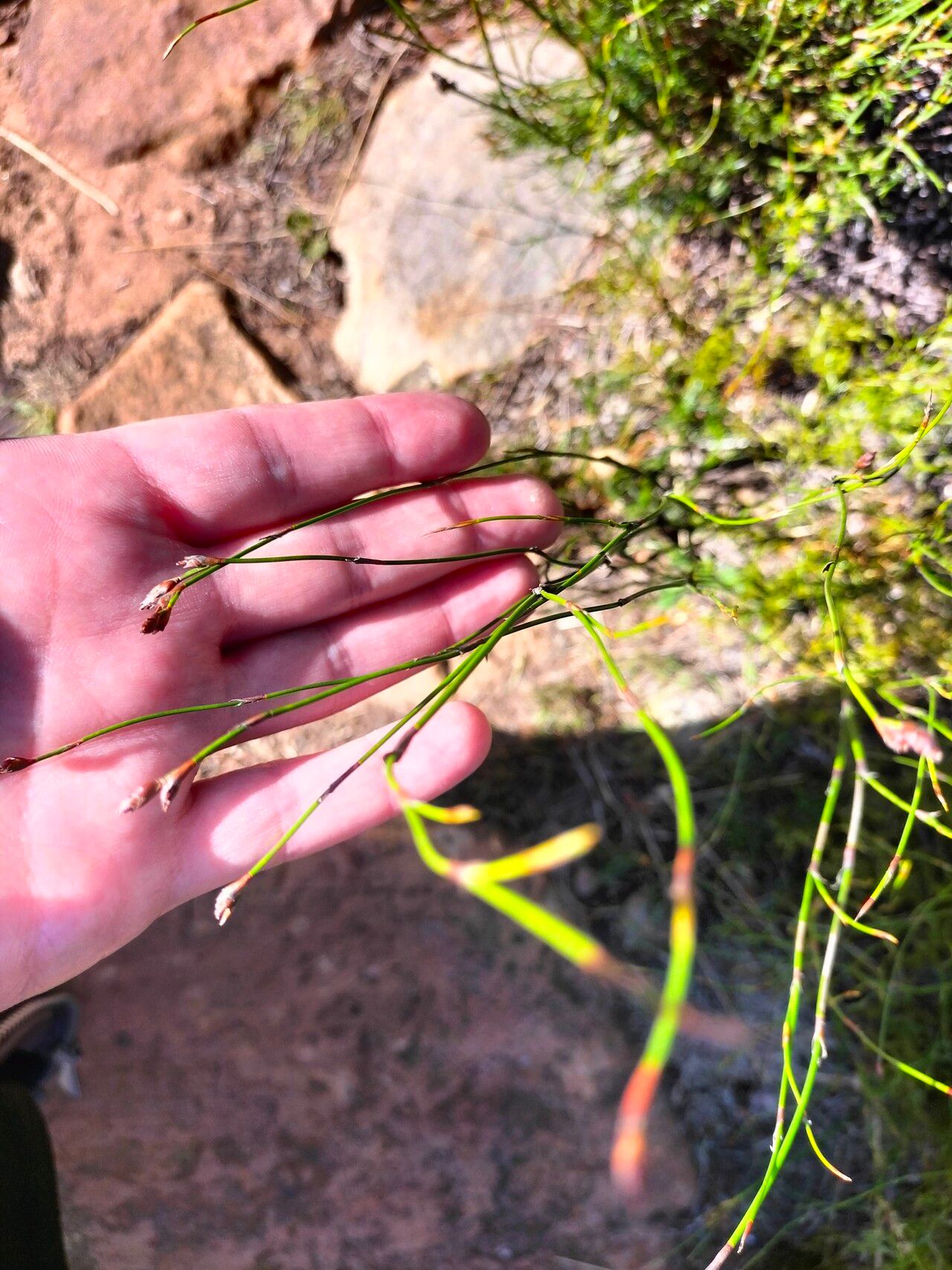
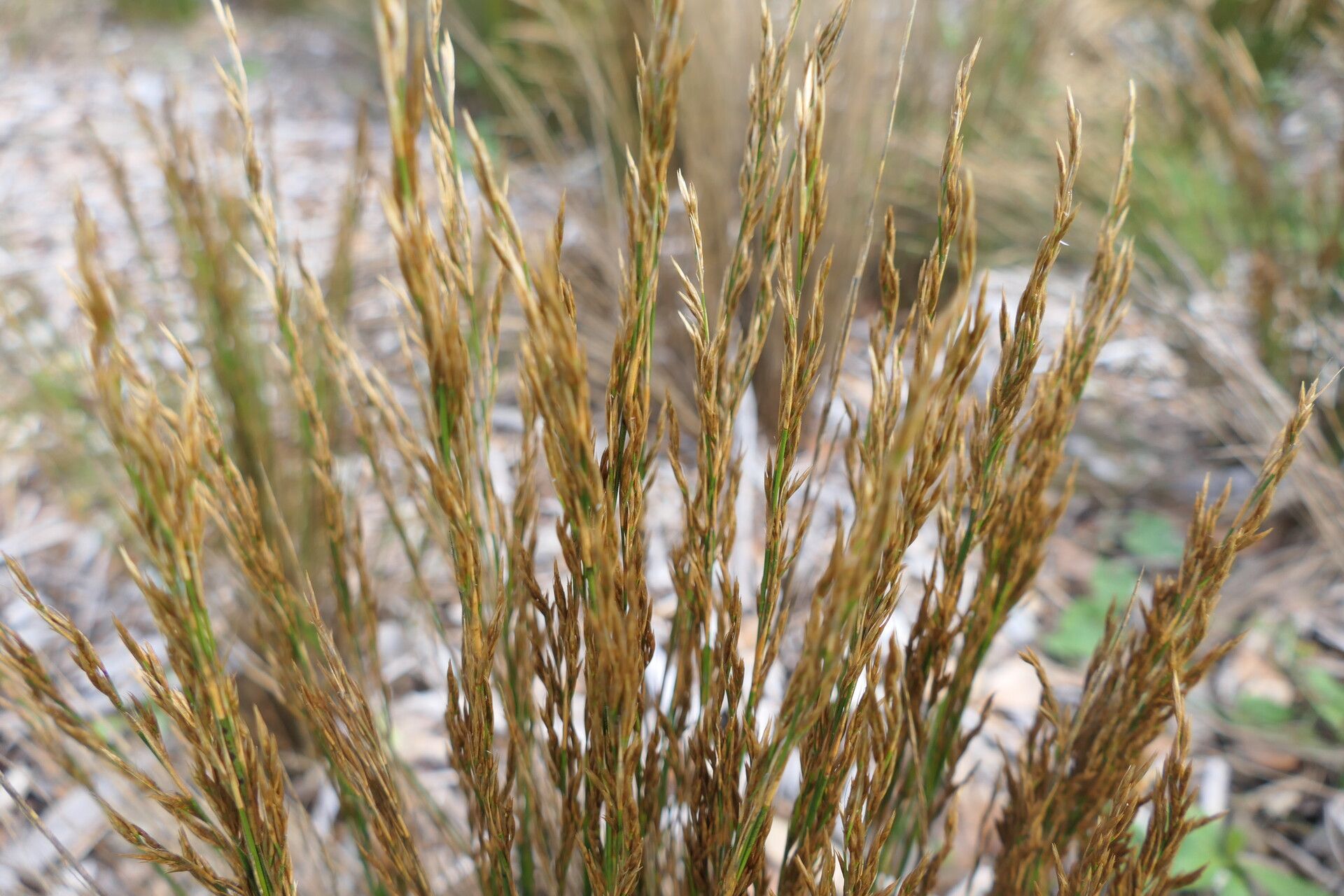
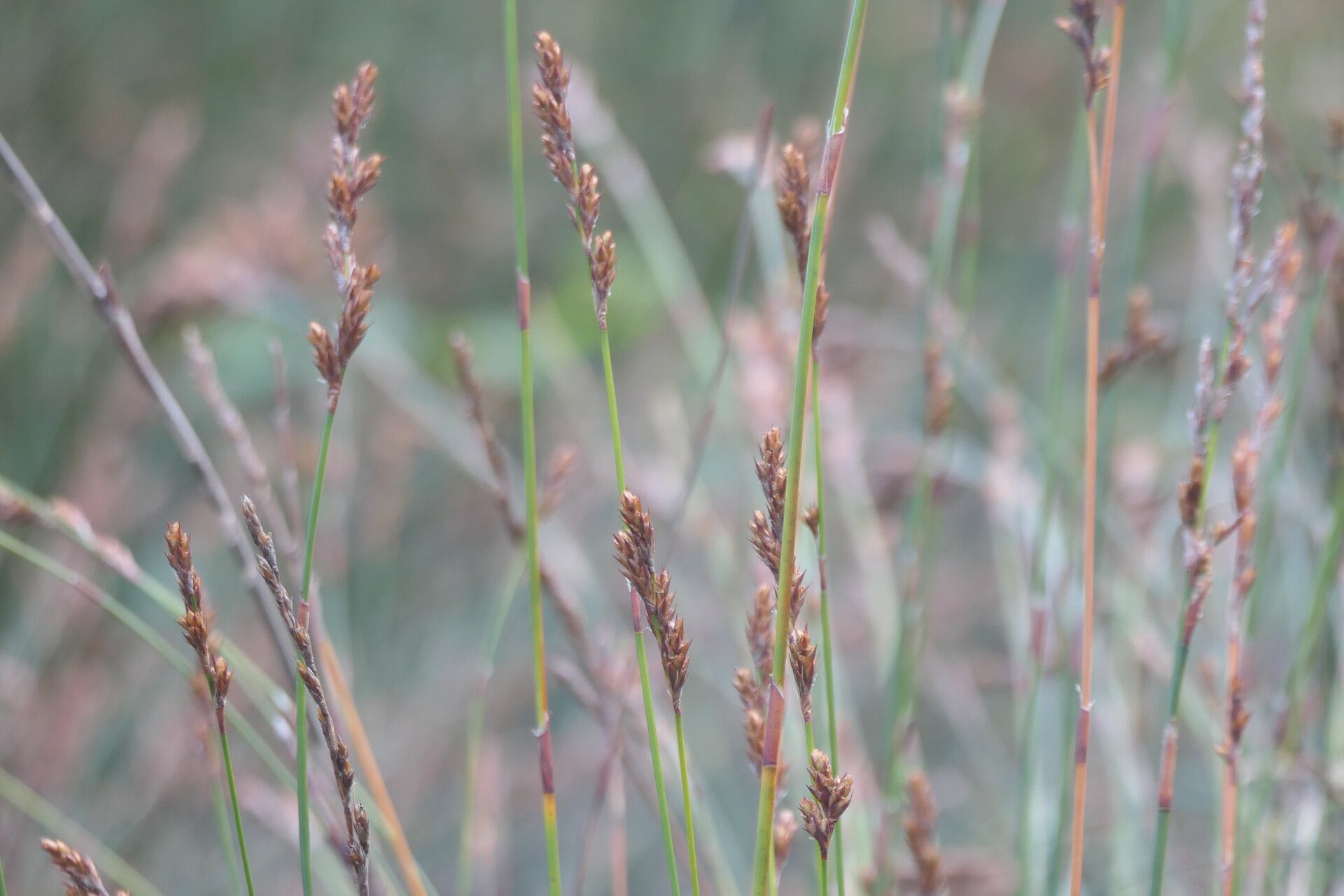
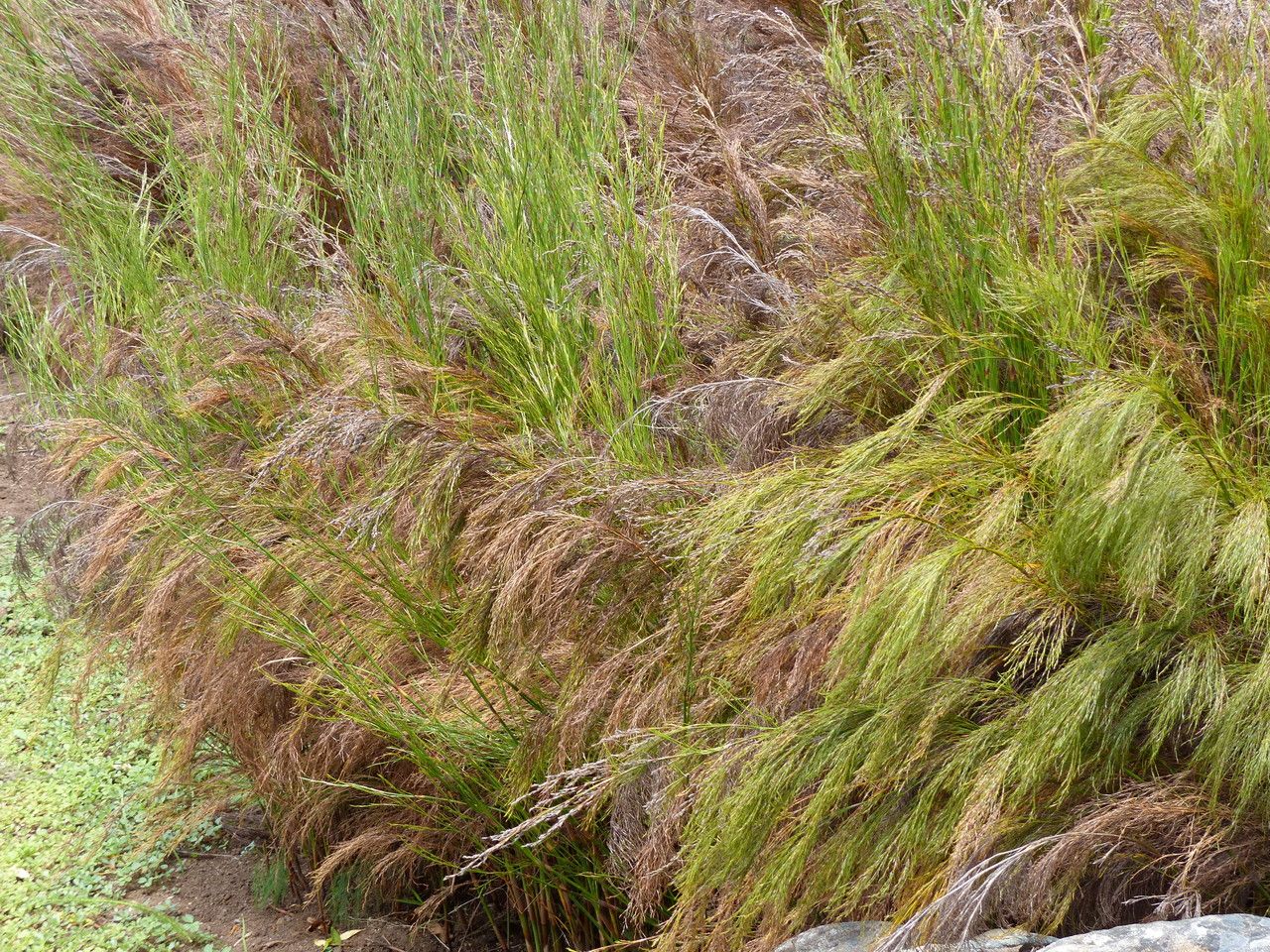
Restio subverticillatus, the whorled restio, is a species of flowering plant in the family Restionaceae, native to temperate South Africa. Growing to 2.5 m (8.2 ft) tall and 1.5 m (4.9 ft) broad, it is a tufted perennial with arching reed-like stems. Modified branches at each node produce whorls of foliage. It is dioecious, meaning that female and male plants are separate. Flowering in Spring, female flowers are white, while male flowers are yellow/grey. This plant has won the Royal Horticultural Society's Award of Garden Merit. It is grown primarily for its elegant arching foliage. As it does not bear temperatures below freezing, it requires protection during the winter months in colder areas.
Dune reed resists disease well and is generally not susceptible to illnesses. Regarding care, this plant is fairly low-maintenance. When grown outdoors it needs only light watering, and larger specimens usually do not need pruning. Smaller plants, however, should be cut back after they finish blooming. Dune reed is suitable for anyone with an outdoor area, such as a garden or deck, and does not demand much experience in plant care.
How to keep Restio Subverticillatus.
Light
Dune reed is a sun-loving, perennial herbaceous plant native to open habitats, commonly flourishing in meadows and grasslands. It prefers full sun but can also tolerate partial sun.
Temperature
Dune reed is fairly adaptable to temperature, capable of withstanding higher heat and wider temperature fluctuations. In hot conditions, attention should be given to watering and providing adequate shade to prevent sunburn. Conversely, dune reed tolerates low temperatures relatively poorly. While it can endure some cold, excessively low temperatures can result in frost damage.
Fertilizer
Dune reed needs extra nutrients to encourage healthy new growth. In spring, putting compost around the base of the plant can effectively supply the nourishment it requires. Fertilizing helps support vigorous growth and enables the plant to better withstand diseases and pests.
Pruning
To encourage new growth and reduce the risk of disease, prune dune reed annually in early spring. Trim dead stems back to the base and thin out crowded areas to improve air circulation. Use clean tools for effective pruning and adhere to local care guidelines for the best results.
Pot & Repot
When repotting Dune reed, select a pot 1-2 inches (2.5–5.1 cm) larger with good drainage. Use a well-draining potting mix. Repot in spring or fall, making sure the root ball is slightly lower than the rim of the flower pot. Water thoroughly after repotting and place it in a warm spot with indirect sunlight.
Botanical profile.
- Plant Type
- Grass
- Life Cycle
- Perennial
- Genus
- Restio
- Family
- Restionaceae
- Hardiness Zone
- 8-11
- Mature Height
- 1.52 m
- Mature Spread
- 1.52 m
- Leaf Color
- Green
- Leaf Type
- Evergreen
- Flower Color
- White, Yellow, Green
- Bloom Time
- Fall
- Planting Time
- Spring, Summer, Autumn
- Harvest Time
- Winter
- Native Area
- South Africa