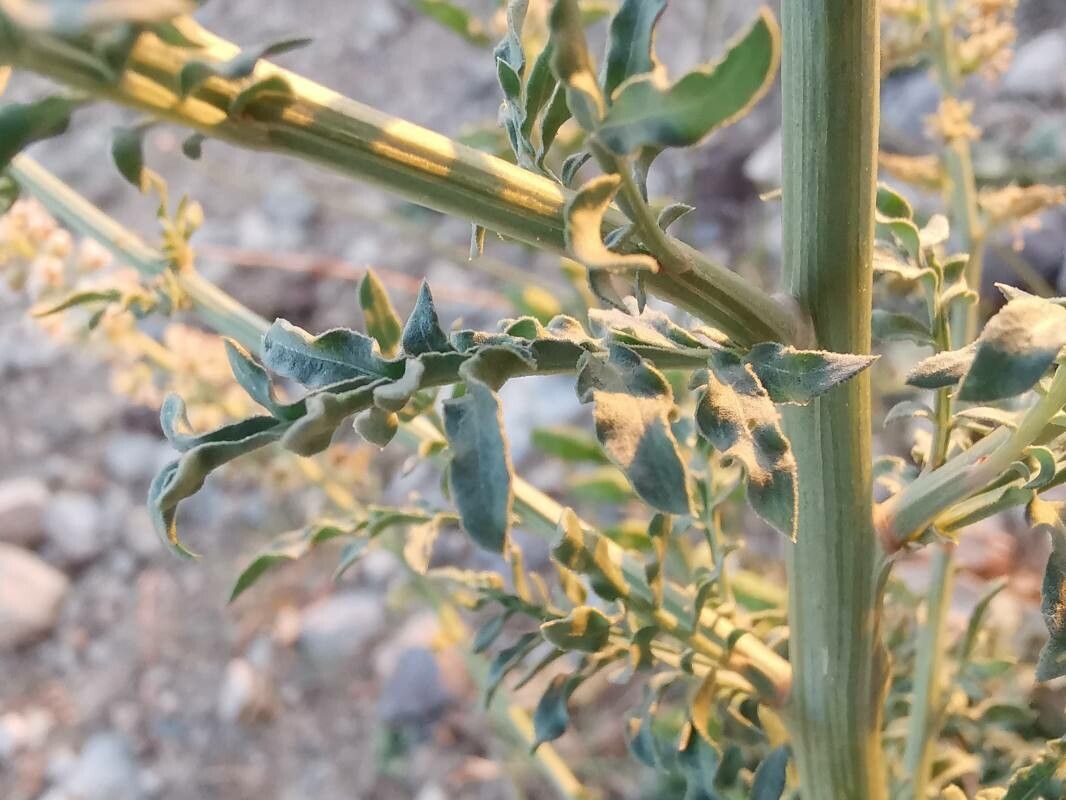
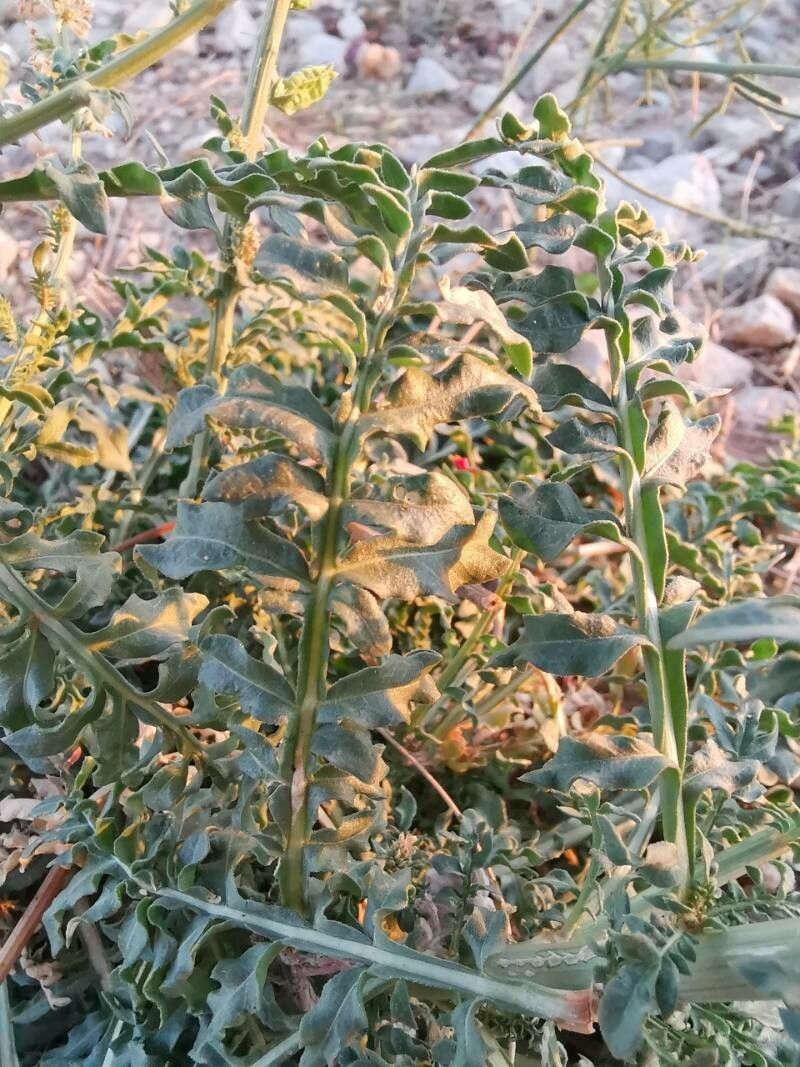
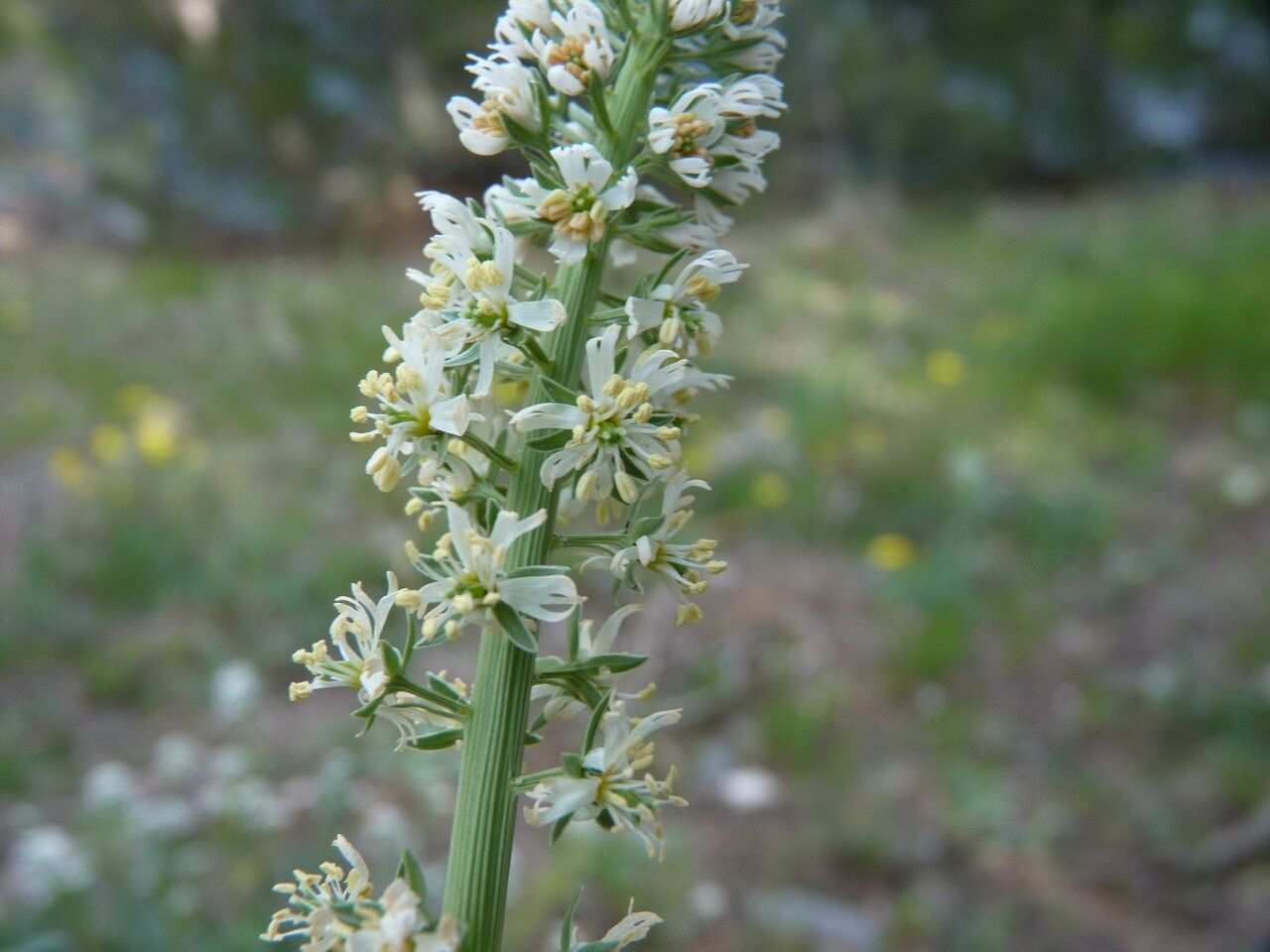
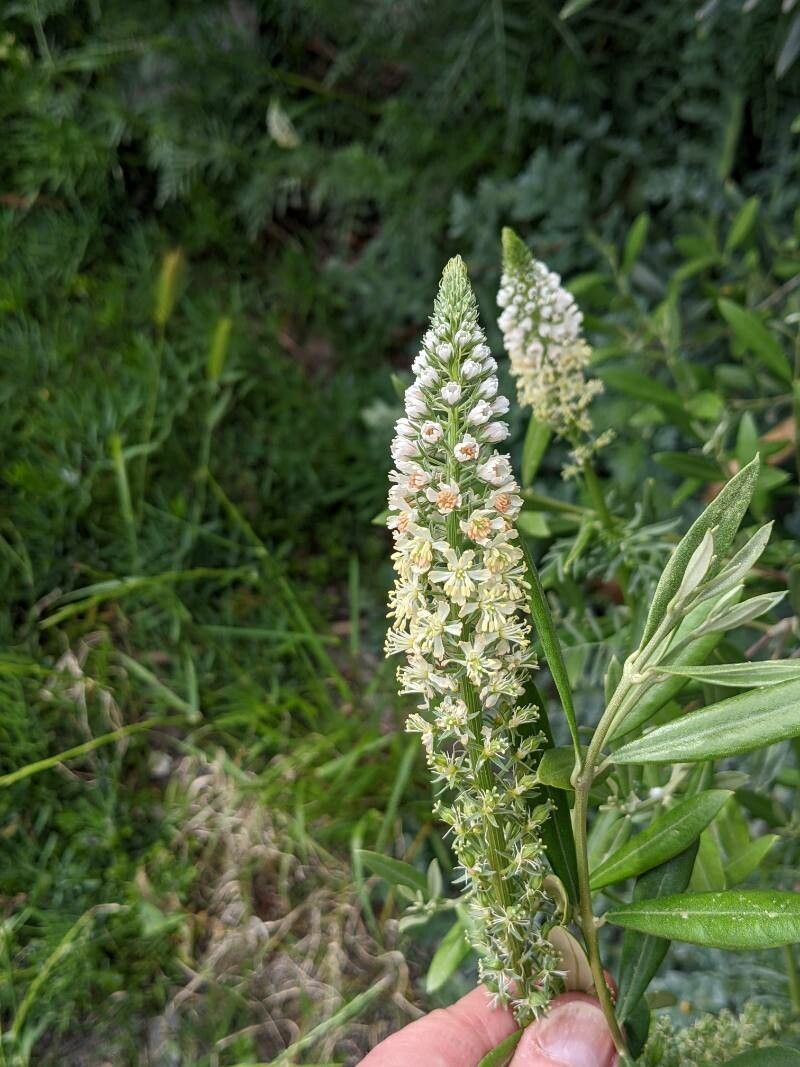
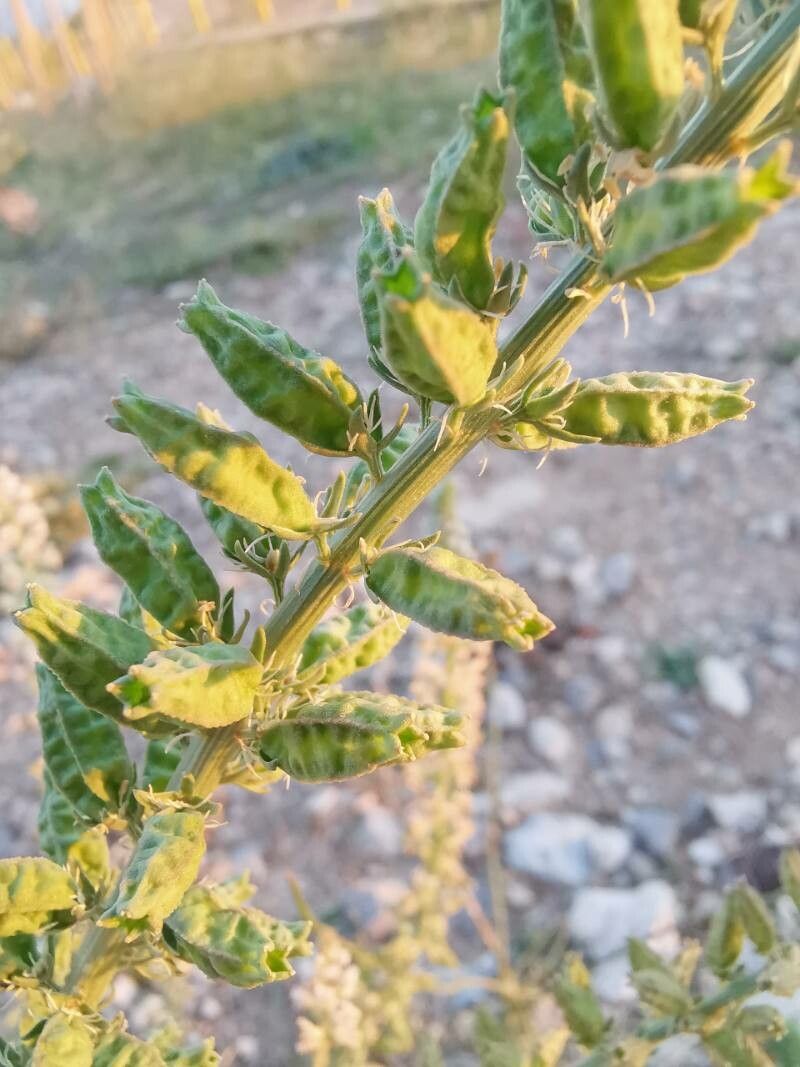
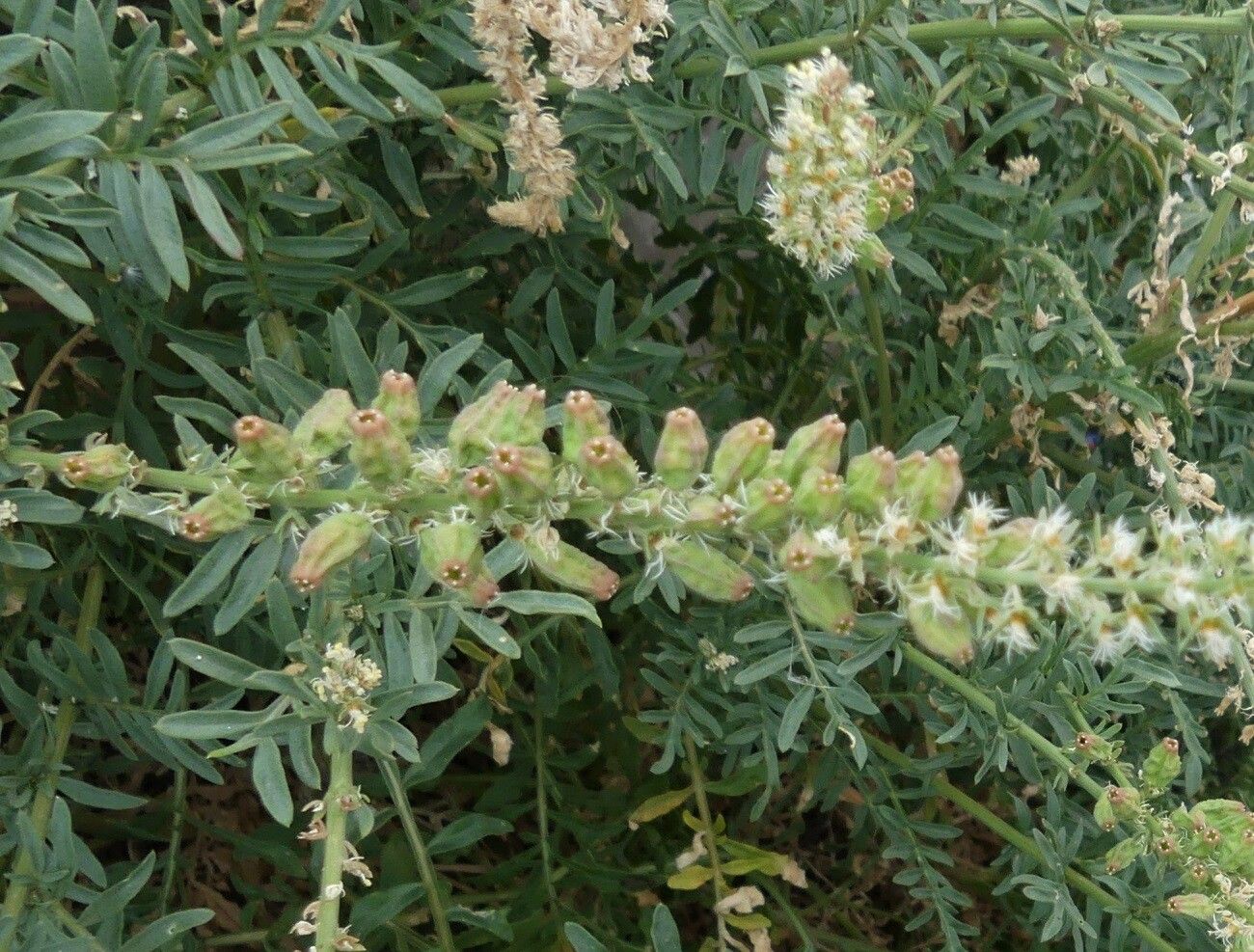
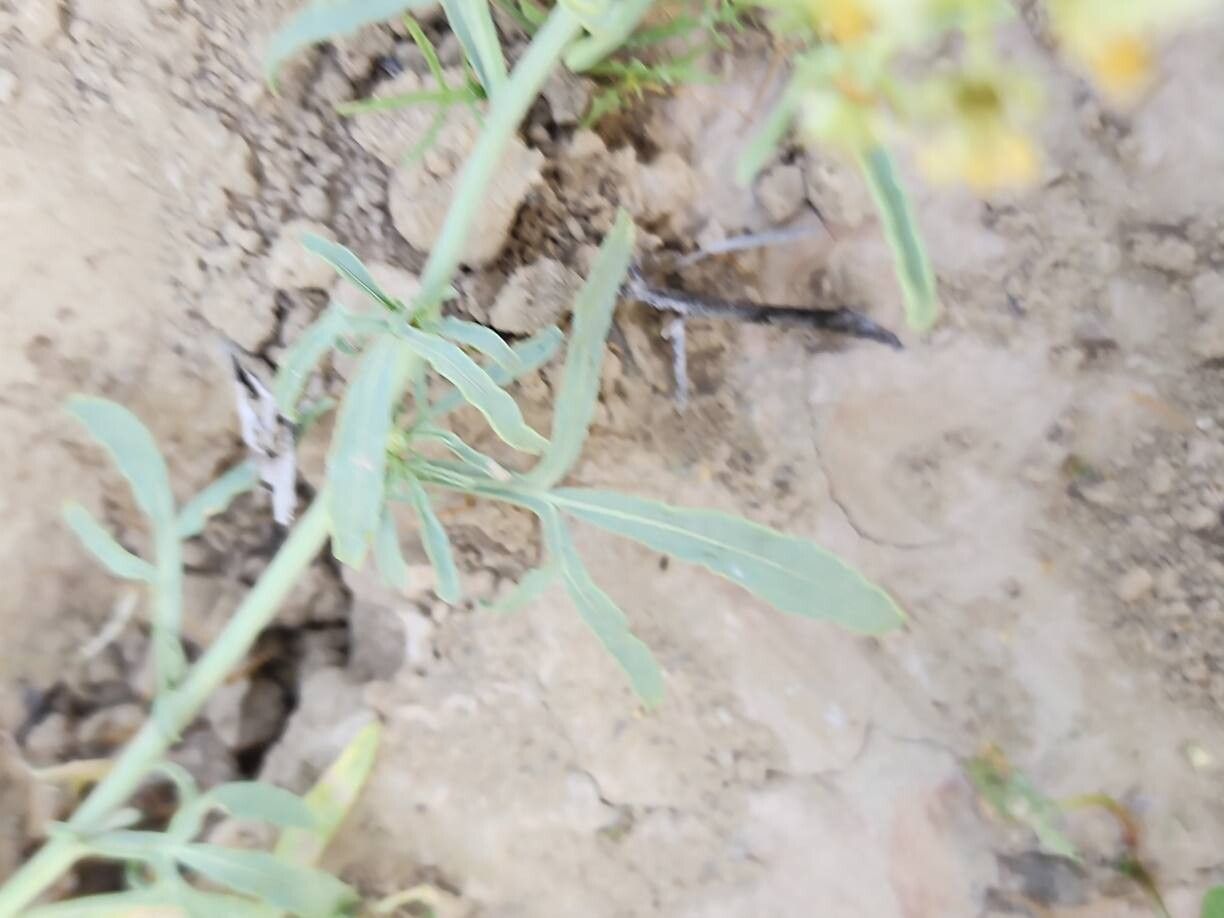
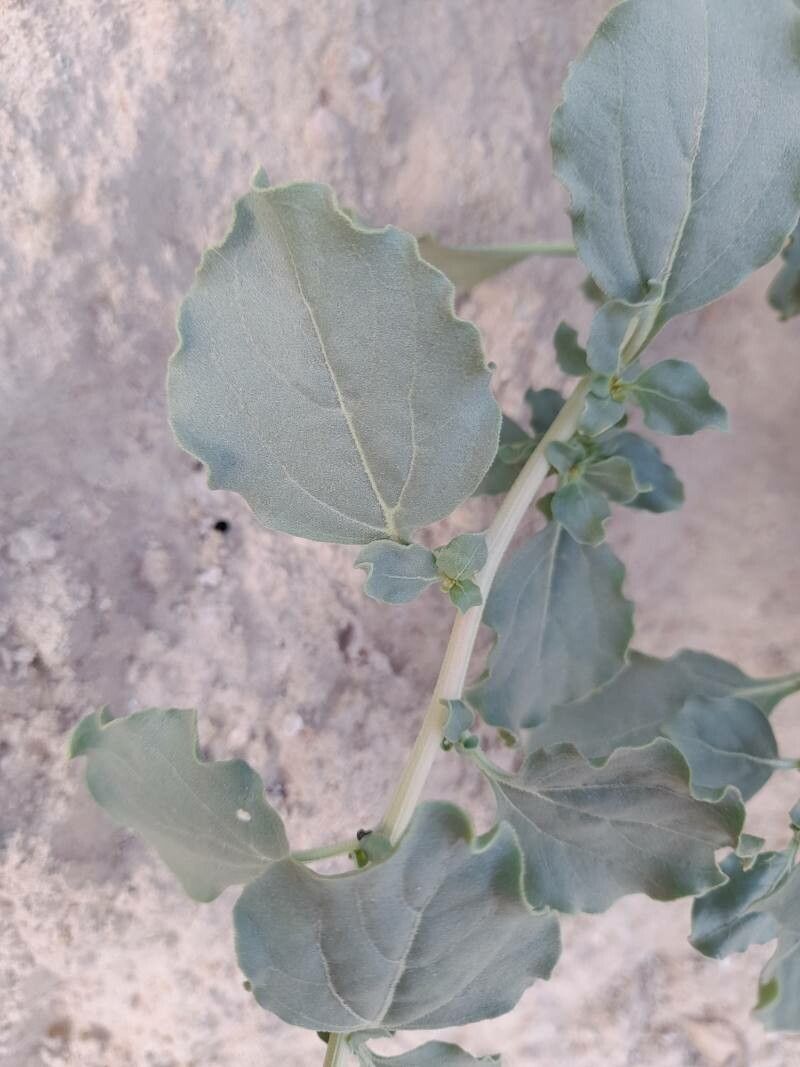
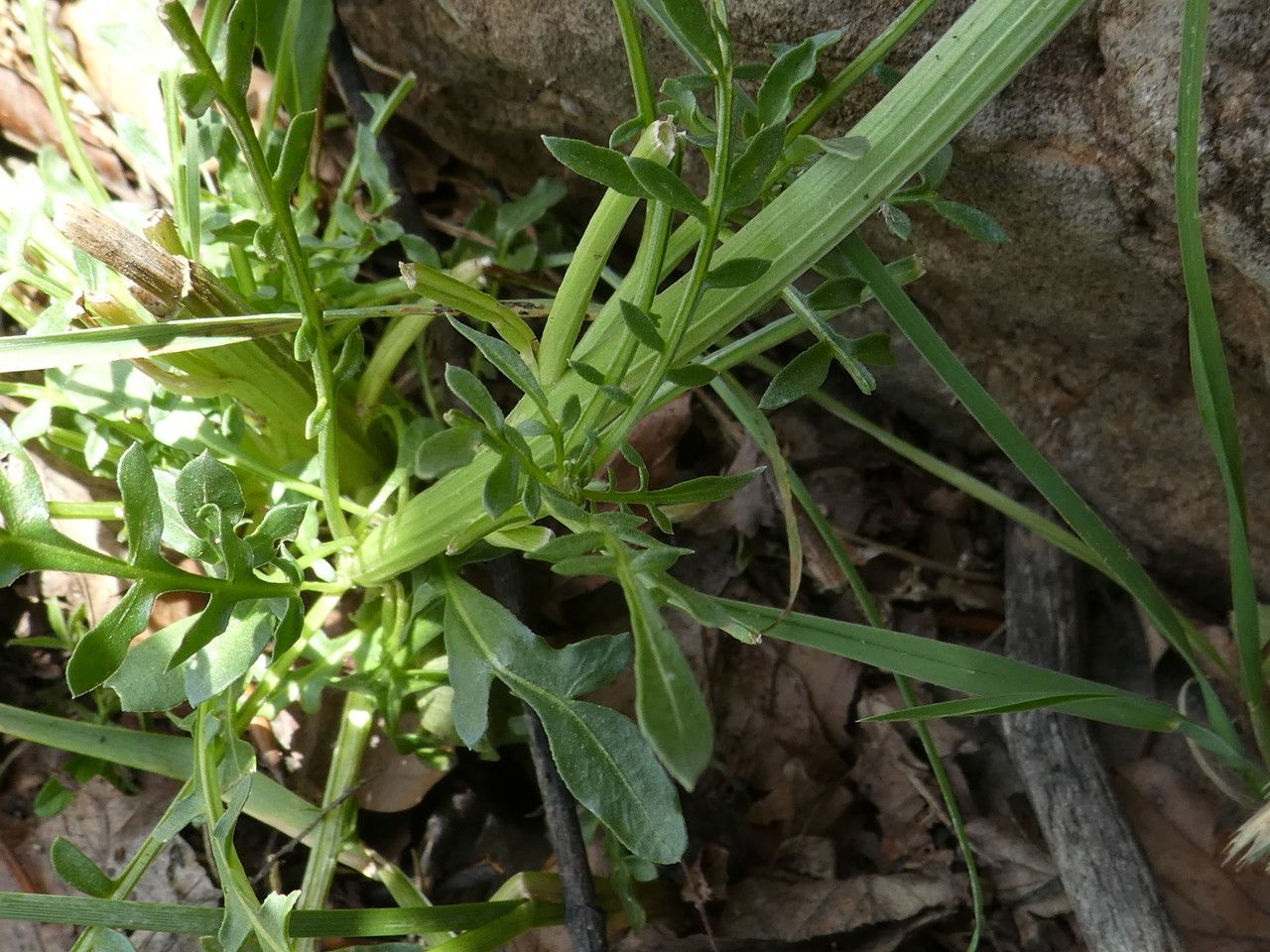
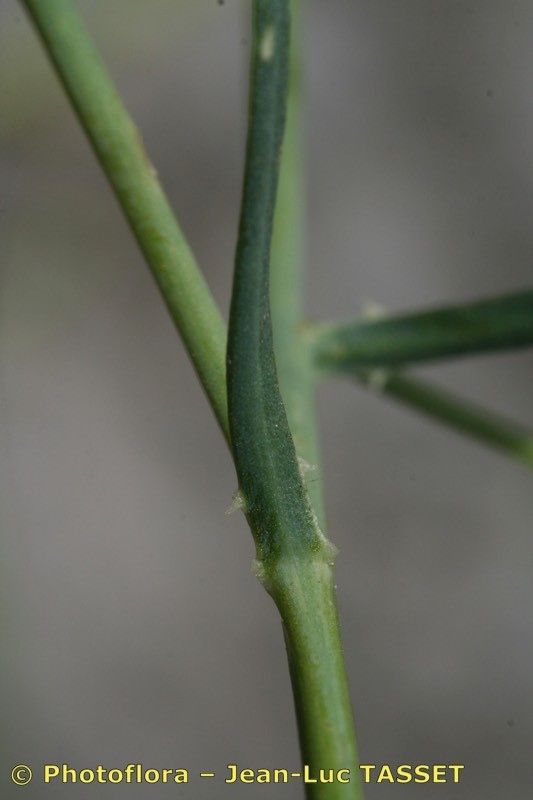
Reseda alba is a species of flowering plant in the reseda family known by the common names white mignonette or white upright mignonette. It is native to Europe, Asia, and North Africa, and it can be found in parts of the Americas and Australia as an introduced species. It is also cultivated as an ornamental plant for its spikelike racemes of fragrant white flowers. This is an annual or perennial herb growing up to a meter tall. The leaves are divided deeply into many narrow lobes. The inflorescence, which may take up most of the upper stem, is densely packed with many white flowers. Each flower has five or six petals, each of which is divided into three long, narrow lobes, making the raceme appear frilly. The fruit is a nearly rectangular four-angled capsule up to 1.4 centimeters in length.
White upright mignonette is largely disease-resistant and typically not prone to illness. Nonetheless, it can be vulnerable to pests and diseases present in its environment. Such infections are usually mild. In terms of care, the plant requires moderate maintenance. It should be pruned regularly to maintain a neat appearance and healthy growth. Fertilizing can also help encourage flowering. White upright mignonette is suitable for anyone with outdoor space, like a garden or patio, and does not demand extensive care experience. It may need more attention if cultivated indoors.
How to keep Reseda Alba.
Light
White upright mignonette prefers a habitat with plenty of daytime sunlight exposure but can also tolerate areas with less intense sun. During some growth stages, excessive light can be harmful, causing sunburn, while insufficient light may result in weaker growth and fewer blossoms.
Water
Originating from the Mediterranean, white upright mignonette thrives in moderate climates with well-drained soil and consistent moisture. Mimicking its natural conditions with weekly watering helps it flourish, while using rainwater can further boost growth by providing additional nutrients. This plant does particularly well in temperate gardens, where it benefits from supplemental natural irrigation.
Temperature
White upright mignonette is native to habitats where temperatures generally fall between 68 and 100 °F (20 and 38 °C). It favors warmer climates, and care adjustments may be needed during colder seasons to maintain optimal growth.
Fertilizer
Once White upright mignonette has opened most of its blooms to full size, it's time to begin fertilizing again. Around the peak flowering period, resume fertilizing every three to four weeks, weather permitting. Then, when the plant starts producing fewer new blooms, stop fertilizing; there’s no need to feed it when it can no longer produce additional flowers.
Pruning
The white upright mignonette showcases fragrant white flowers and grows in an upright manner. To promote new growth and flowering, prune it from early to late spring. Remove any dead branches and thin out crowded areas to improve air circulation. Light pruning is recommended to encourage bushier growth. Avoid heavy pruning to maintain the plant's overall health.
Botanical profile.
- Plant Type
- Herb
- Life Cycle
- Annual, Biennial, Perennial
- Genus
- Reseda
- Family
- Resedaceae
- Hardiness Zone
- 9-11
- Mature Height
- 61 cm to 91 cm
- Mature Spread
- 25 cm to 30 cm
- Leaf Color
- Green, Light Green
- Leaf Type
- Deciduous
- Flower Color
- White
- Flower Size
- 2.54 cm
- Bloom Time
- Mid spring, Late spring, Summer, Early fall
- Planting Time
- Spring, Autumn
- Harvest Time
- Summer, Fall
Other names.
Reader questions.
How should I water my White upright mignonette plant?
To water White upright mignonette, you have a few options. You can use a garden hose with a spray nozzle, a watering can, or any other common watering tool. This plant is not too particular about the type of water it receives, so rainwater, tap water, or filtered water are all fine. However, it's generally best to avoid overhead watering as it can harm the leaves and flowers and may cause disease. A drip irrigation system is often the preferred method for watering this plant, as it provides even and direct watering to the soil. For container-grown White upright mignonette, you can use a cup, watering can, or tap to water the plant directly into the soil.
Why is it necessary to add fertilizer to my White upright mignonette plant?
Plants, including White upright mignonette, require nutrients to survive. This is a well-known fact among gardeners, regardless of their experience level. If White upright mignonette does not receive the necessary nutrients, it will die out shortly after the first pollination. To ensure its continuous growth and production of large, beautiful flowers throughout the blooming season, it is important to provide the right type and amount of nutrients. Fertilizing White upright mignonette also aids in developing a strong and healthy root system. Given that this plant has a thin and fragile root system, fertilizing at planting time helps it establish a solid base, providing stability and setting the stage for impressive flowering. By timing fertilization correctly, the flowering period of White upright mignonette can be significantly prolonged.
What are the sunlight requirements for White upright mignonette?
White upright mignonette thrives best when exposed to full sun, which means it requires more than 6 hours of sunlight per day. However, it can also tolerate partial sun conditions, with about 3-6 hours of sunlight per day. It's important to observe the movement of sunlight in your garden to ensure your plants receive the ideal balance of light and shade, thus promoting their health and growth.
What is the optimal temperature range for White upright mignonette?
White upright mignonette (Reseda alba) is native to environments with temperatures typically ranging between 68 to 100 °F (20 to 38 °C). It thrives in warmer climates, which is essential for its optimal growth. As an extremely heat-loving plant, it requires adjustments in care during the colder seasons to ensure it continues to grow healthily. During autumn, it's advisable to bring the plant indoors if it was previously outside, placing it near a bright window but away from direct heat sources. Maintaining indoor temperatures above 20°C during winter benefits the plant's growth, whereas temperatures approaching 0°C can be detrimental.
What should I do if I give my White upright mignonette plant too much or too little water?
If you notice that your White upright mignonette plant lacks moisture, the remedy is simple - water it more regularly. However, overwatering can be a bigger problem if not addressed early. Overwatered plants are more susceptible to diseases that can cause them to decline and eventually die. To prevent this, choose a growing location for your White upright mignonette that gets plenty of sunlight to dry the soil and has good drainage to prevent water from pooling. If you have overwatered your potted White upright mignonette, you may need to change it to a new pot. Ensure that the new pot has good drainage holes and use loose soils when repotting to promote efficient drainage.
When should I fertilize my White upright mignonette plant?
White upright mignonette grows rapidly early in the growing season, once the last frost has passed. It's best to fertilize during this time, specifically when planting the plant in the ground or in planters. This initial application will be the only dose of fertilizer until later in the year when the blooms are in full force. Once the season is in full swing and the plant has opened most of its full-sized blooms, it's time to resume fertilizing. This should be done every three to four weeks, depending on the weather, while the blooms are at their peak. However, once the plant starts producing fewer new blooms, fertilizing should be stopped as there is no need when the plant cannot produce any more blooms.
How does the White upright mignonette respond to varying sunlight conditions?
The White upright mignonette is adaptable to different sunlight conditions. It prefers an ample amount of daylight exposure but can survive in areas with less intense sun rays. Too much direct light, especially at certain stages of growth, may cause sunburn, while insufficient light may result in weaker growth and reduced flowering. For indoor plants or those in areas with inadequate natural light, using artificial lighting such as LED lights can provide the necessary wavelengths for optimal growth. The intensity and duration of artificial light should be tailored to match the plant's natural sunlight requirements.
How does low temperature affect White upright mignonette and what are the solutions?
White upright mignonette prefers warm temperatures and is not tolerant of low temperatures, thriving best when the temperature is above 20°C. It should be kept above freezing during winter. When temperatures fall below -5°C, the plant's leaves may lighten in color, and frost damage can cause leaves to turn brown or black with evident wilting and drooping. The solution involves trimming off the frost-damaged parts and moving the plant to a warmer indoor setting for protection. Placing the plant near a south-facing window ensures ample sunlight while avoiding excessive dryness by ensuring it's not too close to heaters or air conditioning vents.
How frequently should I water my White upright mignonette?
To keep your White upright mignonette healthy, it's important to water it regularly. In the spring, watering once a week should be sufficient. However, as the weather gets warmer, you may need to increase the frequency to two or three times a week. Just be careful not to water it too much, as that can harm the plant. It's also important to keep the soil moist but not overly wet. If your White upright mignonette is in a pot, you'll need to water it more frequently compared to if it were planted in the ground. Potted plants tend to dry out faster, so watering a few times a week is usually necessary, as opposed to just once a week for plants in the ground.
When is not a good time to fertilize my White upright mignonette?
Regular fertilizing is important for White upright mignonette, but it's crucial to apply it at the right time. In certain situations, it's necessary to hold back on fertilizing. These situations are often related to the climate or controllable factors. Essentially, if there is a problem with the plant, soil, or climate, it's best to wait until things have improved and the plant has recovered before fertilizing again. For example, if there are sudden or severe changes in the weather, it's not the right time to fertilize. If there is a cold snap in the middle of summer, wait until it warms up again before starting to fertilize. Similarly, if the soil becomes too dry or compacted to absorb anything, fertilizing wouldn't be effective as it would go straight to the roots instead of being diffused by the soil first. The roots of the White upright mignonette don't like this. Also, avoid applying fertilizer during the hottest parts of the day when temperatures reach around 90 degrees Fahrenheit. Fertilizer can be broken down at different speeds depending on the temperature, so it's important not to let hot temperatures break it down too quickly. In addition, any pests or diseases should be treated and cleared up before applying fertilizer again.
What are common symptoms of inadequate lighting in White upright mignonette?
Inadequate lighting can lead to several noticeable symptoms in White upright mignonette. These include smaller new leaves, leggy or sparse growth, premature leaf drop, halted growth, and the development of pale or irregularly colored new leaves. Excessive light exposure can cause chlorosis, sunscald, leaf curling, wilting, and leaf scorching. These symptoms reflect the plant's struggle with adapting to light conditions that are either too intense or insufficient for its growth and development.
How does high temperature affect White upright mignonette and what are the solutions?
In the heat of summer, it's crucial to keep White upright mignonette below 38°C to prevent heat stress. When temperatures soar above 43°C, the plant's leaves may lighten in color, making it susceptible to sunburn. To mitigate damage, trim away sunburnt and dry parts, and relocate the plant to a shadier spot, particularly shielding it from the midday and afternoon sun. To assist in keeping the soil moist, it's advisable to water the plant in the morning and evening. Such measures help in protecting the plant from extreme heat while promoting healthy growth.