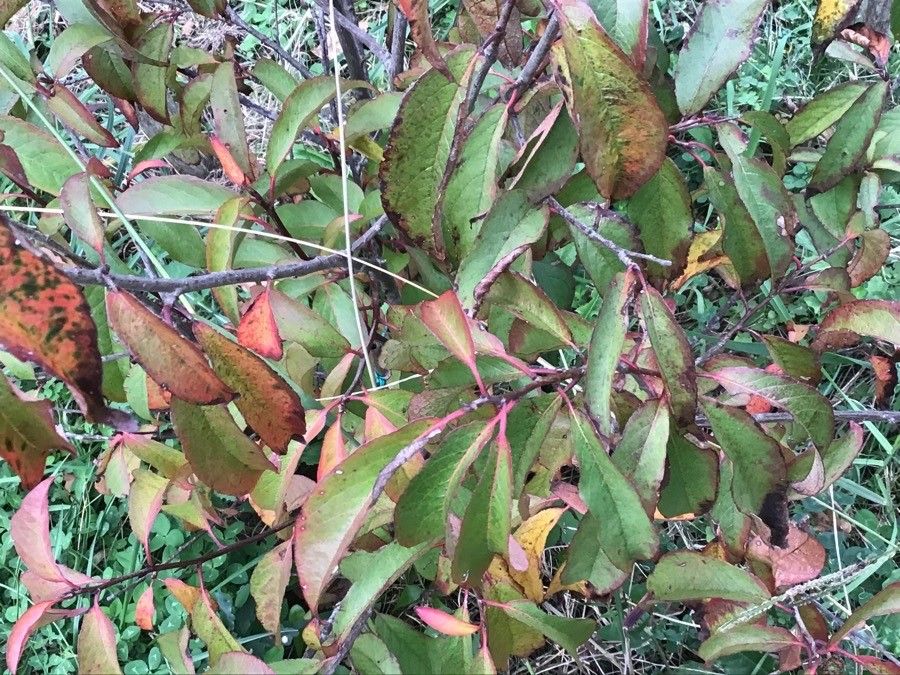
Rehderodendron macrocarpum is a species of flowering plant in the family Styracaceae, native to southwestern China (Guangxi, Sichuan, Yunnan) and northern Vietnam, where it grows at altitudes of 1,000–1,500 m. It is threatened by habitat loss.It is a deciduous small tree growing to 7–10 m tall, with a trunk up to 25 cm diameter. The leaves are alternate, simple, 7–13 cm long and 3.5–5.5 cm broad, oblong-ovate to oblong-lanceolate, with a finely serrated margin, and a reddish 7–15 mm long petiole. The flowers are 15–18 mm long, with five white petals; they are produced in cymes of four to eight together, in late spring. The fruit is a dry, woody drupe 5–7 cm long and 2.5–3 cm broad, containing a single (rarely two) seed 2–5 cm long and 5 mm broad.It has been introduced to Europe and North America, where it is occasionally planted as an ornamental tree for its decorative flowers.
Chinese rehderodendron has strong disease resistance and is generally unlikely to get sick. In terms of upkeep, this plant is fairly low-maintenance. When planted outside, it needs only light watering, and larger plants typically do not require pruning. Smaller plants, however, should be pruned after they finish blooming. Chinese rehderodendront is appropriate for anyone who has an outdoor area, such as a garden or a deck, and it does not demand much gardening experience.
How to keep Rehderodendron Macrocarpum.
Light
The Chinese rehderodendron grows best with sun exposure all day, though it can tolerate spots that receive light only part of the day. Native to regions with plentiful sunlight, insufficient or excessive sun can respectively restrict its growth or damage the plant.
Water
The Chinese rehderodendron thrives in conditions similar to its native habitat, where it experiences cycles of wet and dry periods. It should be watered every three weeks and is capable of withstanding brief droughts. When grown outdoors in temperate regions, using mulch is beneficial as it helps retain moisture and protects the plant from fluctuations in temperature.
Temperature
In its native habitat, the Chinese rehderodendron does best where temperatures range from 59 to 89.6°F (15 to 32℃). It favors this moderate warmth, though minor temperature adjustments may be required across seasons for optimal growth.
Fertilizer
Timing is essential when fertilizing a Chinese rhododendron. Apply fertilizer in early spring and continue monthly until early summer. Fertilizer promotes attractive blooms and supplies energy during both dormant and active growth periods.
Pruning
The Chinese Rehderodendron is a small to medium-sized deciduous tree admired for its large, showy flowers and smooth, gray bark. To maintain its health and appeal, prune the tree in early spring. This helps remove dead branches, improves air circulation, promotes robust growth, and minimizes pest issues, enhancing its attractiveness in the landscape.
Botanical profile.
- Plant Type
- Tree
- Life Cycle
- Perennial
- Genus
- Rehderodendron
- Family
- Styracaceae
- Hardiness Zone
- 8
- Mature Height
- 7.01 m to 10.06 m
- Mature Spread
- 4.88 m to 7.92 m
- Leaf Color
- Dark Green, Forest Green
- Leaf Type
- Deciduous
- Flower Color
- White, Cream
- Flower Size
- 4.06 cm to 5.08 cm
- Bloom Time
- Mid spring, Late spring
- Planting Time
- Spring, Summer, Autumn
- Harvest Time
- Late summer, Early fall, Mid fall
- Native Area
- Vietnam, China
Reader questions.
What are the sunlight requirements for Chinese rehderodendron?
The Chinese rehderodendron requires full sunlight for optimal growth, which means it should receive more than 6 hours of sunlight daily. However, it can also tolerate partial sun, or about 3-6 hours of sunlight. It's crucial to observe the movement of sunlight in your garden to ensure your plants receive the appropriate balance of light and shade. This balance promotes the happiness and health of the plants.
What are the ideal temperature conditions for Chinese rehderodendron?
Chinese rehderodendron thrives in its native environment where the temperatures range between 59 to 89.6°F (15 to 32°C). It prefers moderate warmth, though slight adjustments in temperature might be needed across different seasons to ensure optimal growth. The plant has strong cold resistance, so specific frost protection measures usually aren't necessary during winter. However, if temperatures are expected to drop below -10°C, it's important to provide cold protection, such as wrapping the trunk and branches with non-woven fabric or cloth. Before the first freeze in autumn, it's recommended to water the plant abundantly to keep the soil moist, which helps prevent drought and water scarcity during winter and early spring.
How does artificial lighting benefit indoor Chinese rehderodendron plants?
Artificial lighting is essential for the growth of indoor Chinese rehderodendron plants, especially when natural sunlight is insufficient, like during winter or in less sunny spaces. LED lights are recommended because they can be customized to provide specific wavelengths needed by plants. For full sun plants, 30-50W per square foot is required; partial sun plants need 20-30W per square foot, and full shade plants need 10-20W per square foot. The light source should be placed 12-36 inches above the plant to mimic natural sunlight as closely as possible, and plants generally require 8-12 hours of light per day.
How does Chinese rehderodendron react to low temperatures?
Chinese rehderodendron is cold-tolerant, best thriving when the temperature remains above 15°C. During winter, it should be kept above -5°C. If temperatures fall below -10°C, while there may not be any noticeable changes during winter, branches can become brittle and dry by springtime, with no new shoots emerging. In spring, it's advised to prune away any dead branches that have failed to produce new leaves.
What are the symptoms of insufficient sunlight in Chinese rehderodendron?
When a Chinese rehderodendron doesn't receive enough sunlight, it may exhibit various symptoms indicating light deficiency. These include smaller new leaves, leggy or sparse growth, faster leaf drop, slower or no new growth, lighter-colored new leaves, and conditions such as chlorosis (loss of leaf green color), sunscald (damage from intense sunlight), leaf curling (defense mechanism against overexposure), wilting (loss of turgor pressure), and leaf scorching (brown, dry, crispy leaf edges). These symptoms collectively indicate the plant's health is suffering due to inadequate light.
What should be done if Chinese rehderodendron experiences high temperatures?
During the summer, it's important to keep Chinese rehderodendron temperatures below 32°C. If temperatures exceed 35°C, the leaves may lighten in color, tips can become dry and withered, and the plant becomes more susceptible to sunburn. The solution involves trimming away the sunburned and dried parts, moving the plant to a shaded location away from the midday and afternoon sun, or using a shade cloth. Additionally, watering the plant in the morning and evening helps keep the soil moist and supports the plant's needs during high temperatures.
How can I address and prevent light deficiency symptoms in Chinese rehderodendron?
To address light deficiency in Chinese rehderodendron, gradually move the plants to receive at least 6 hours of direct sunlight daily, using a south-facing window for indoor plants, and consider artificial lighting like desk or ceiling lamps for at least 8 hours a day or professional grow lights. For outdoor plants, carefully adjust their location each week to avoid sunburn. Reducing obstructions such as pruning trees can help outdoor plants get more sunlight. Transplanting smaller plants during their dormant period to a sunnier location with good drainage can also be beneficial. Note that parts of the plant affected by previous low light may not recover, but new growth should be healthy with improved light conditions.